
The Sound of Innovation: [Acoustic Engineer's Name]'s Life in Sonic Design

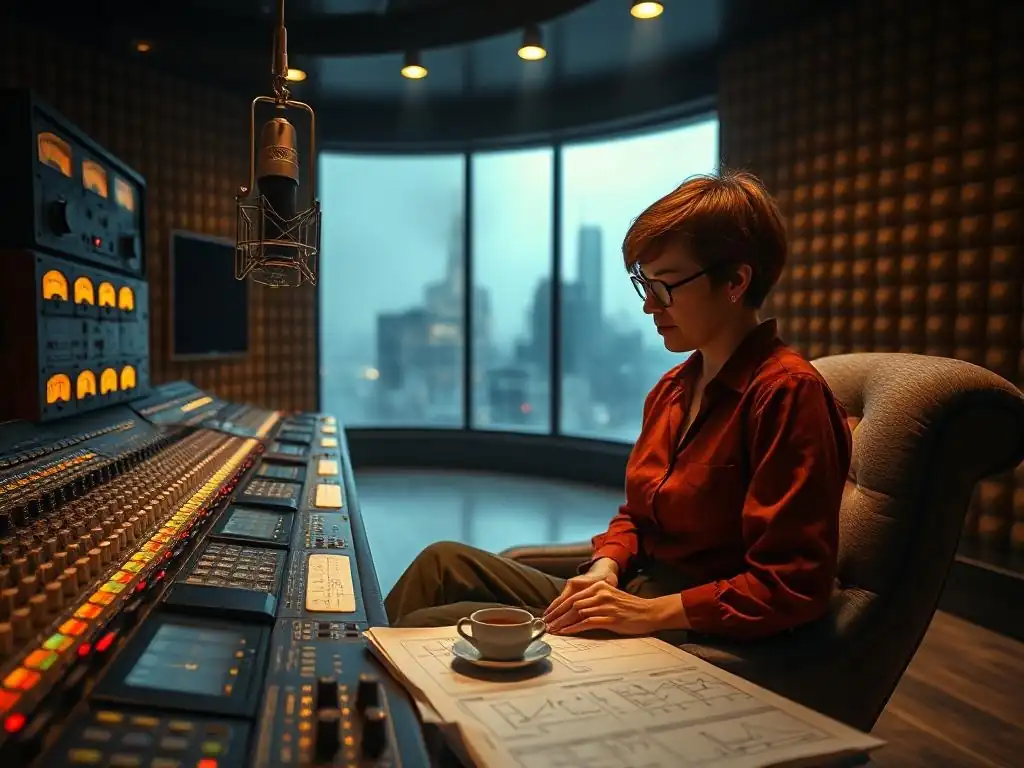
Welcome to WomenInScienceHistory.com! Prepare to be inspired by the groundbreaking stories of women who defied expectations and shaped the scientific landscape. Did you know that the world of sound, from concert halls to the latest audio technology, has been profoundly influenced by female ingenuity?
Dive into our latest biography and discover the fascinating life of a pioneering acoustic engineer – a woman whose innovative contributions to sonic design have left an indelible mark on history. What challenges did she overcome, and how did her work revolutionize the way we experience sound? Explore her journey and unlock the secrets behind the sound of innovation.
- The Sound of Innovation: Susan Rogers's Life in Sonic Design
- Introduction: Celebrating a Pioneer in Acoustic Engineering
- Early Life and Education: The Genesis of a Sonic Visionary
- Groundbreaking Work in Acoustic Engineering: Shaping the Soundscape
- Challenges Faced by Women Acoustic Engineers: A Historical Perspective
- Susan Rogers's Legacy: Inspiring Future Generations of Women in Science
- The Importance of Documenting Women's Contributions to Engineering History
- Conclusion: Susan Rogers's Enduring Impact on Sonic Design
-
Frequently Asked Questions
- What is WomenInScienceHistory.com primarily about?
- Why is it important to highlight the history of acoustic engineer women?
- What kind of challenges did acoustic engineer women historically face?
- How does WomenInScienceHistory.com contribute to promoting diversity in STEM?
- Why focus on acoustic engineer women history specifically?
- Final Reflection: Echoes of Progress
- Amplify Your Impact: Join the Sonic Revolution!
The Sound of Innovation: Susan Rogers's Life in Sonic Design
Introduction: Celebrating a Pioneer in Acoustic Engineering
Women in Science History: Recognizing Susan Rogers's Contributions
Susan Rogers stands as a pivotal figure in the history of sound, a truly remarkable individual who seamlessly blended the technical precision of an acoustic engineer with the artistic intuition of a music producer. Her career, spanning decades, offers a compelling narrative of innovation and perseverance, cementing her place among the most influential women in acoustic engineering. From her groundbreaking work with iconic musicians to her profound contributions to the academic understanding of psychoacoustics, Rogers has consistently pushed the boundaries of sonic design, leaving an indelible mark on the landscape of modern audio.
Her journey is a testament to the power of passion and intellectual curiosity, demonstrating how a singular focus on the mechanics and perception of sound can lead to extraordinary achievements. By meticulously shaping the sonic environment of countless recordings, Rogers not only defined the sound of an era but also carved out a unique space for herself in a field historically dominated by men, enriching the broader narrative of acoustic engineer women history.
The Underrepresentation of Women in Engineering History
Historically, the field of engineering, including its specialized branches like acoustic engineering, has seen a severe underrepresentation of women. For much of the 20th century, women comprised less than 1% of the engineering workforce in many Western countries, a figure that slowly began to rise in the latter decades but still remains disproportionately low. This systemic exclusion meant that the contributions of pioneering women often went unrecognized or undocumented, creating significant gaps in our collective understanding of scientific and technological progress.
This historical imbalance underscores the critical importance of platforms like Women in Science History, which actively seek to unearth and celebrate the stories of female innovators. By spotlighting figures such as Susan Rogers, we not only correct historical oversights but also provide tangible role models for future generations. Recognizing these women helps dismantle the misconception that engineering is an exclusively male domain, encouraging more young women to pursue careers in STEM and contribute to the ongoing evolution of acoustic engineer women history.
Early Life and Education: The Genesis of a Sonic Visionary
Susan Rogers's Early Interest in Sound and Music
Susan Rogers's fascination with sound began early in her life, rooted in a deep appreciation for music and an innate curiosity about how things work. Growing up, she was drawn to the intricacies of audio equipment and the mechanics of sound reproduction, spending countless hours experimenting with recording devices and dissecting musical compositions. This early exposure to the interplay between art and technology laid the foundation for her future career as an acoustic engineer, fostering a unique perspective that would later define her professional approach.
Her initial foray into the world of music was not as a performer but as an observer and manipulator of sound itself. This analytical yet creative inclination propelled her towards understanding the underlying principles of acoustics and audio engineering, setting her on a path distinct from many of her peers. It was this dual passion for the artistic expression of music and the scientific principles behind its sound that truly ignited her lifelong pursuit of sonic excellence.
Entering higher education in the 1970s and early 1980s, Susan Rogers faced a predominantly male academic environment, particularly within technical and engineering disciplines. Universities at the time had significantly fewer female students enrolled in science and engineering programs, and the faculty was overwhelmingly male. This often translated into subtle biases, a lack of female mentors, and an atmosphere that could feel isolating for women pursuing non-traditional fields like acoustic engineering.
Despite these systemic barriers, Rogers demonstrated remarkable resilience and determination. She pursued her studies with unwavering focus, honing her technical skills and theoretical knowledge in a field where female voices were still rare. Her commitment to mastering the complex principles of sound and audio technology allowed her to not only navigate but also excel within this challenging landscape, laying the groundwork for her groundbreaking contributions as an acoustic engineer.
Key Influences: Mentors and Inspirations in Acoustic Science
Throughout her formative years and early career, Susan Rogers benefited from key influences that shaped her understanding of acoustic science and music production. While specific named mentors from her earliest days are not widely publicized, the general academic environment and the burgeoning field of audio engineering during her studies provided a fertile ground for learning from established figures. She absorbed knowledge from textbooks, journal articles, and the practical experiences of seasoned professionals who, though largely male, were pioneers in their own right.
Later, her professional collaborations, particularly with artists like Prince, served as a unique form of mentorship, challenging her to apply theoretical acoustic principles to real-world creative demands. This dynamic interplay between scientific understanding and artistic application continuously refined her skills as an acoustic engineer, demonstrating how diverse experiences can contribute to an individual's growth in a specialized field. These influences collectively helped solidify her unique approach to sonic design, blending technical rigor with a profound understanding of musical expression.
Groundbreaking Work in Acoustic Engineering: Shaping the Soundscape
Contributions to Record Production and Audio Engineering
Susan Rogers's most widely celebrated contributions to acoustic engineering stem from her exceptional work as a record producer and audio engineer, most notably during her five-year tenure with the artist Prince. From 1983 to 1988, she served as a staff engineer at Prince's Paisley Park Studios, a period that yielded some of the most iconic and sonically adventurous albums in music history. Her meticulous attention to detail and innovative mixing techniques were instrumental in shaping the sound of albums such as Purple Rain, Around the World in a Day, Parade, Sign o' the Times, and The Black Album.
Her role extended beyond merely operating the mixing console; she was deeply involved in the sonic architecture of these records, making critical decisions about microphone placement, signal processing, and overall soundstage. Rogers's ability to translate Prince's artistic vision into tangible sonic realities showcased her profound understanding of both the technical aspects of acoustic engineering and the psychological impact of sound. Her work during this era solidified her reputation as one of the most talented and influential engineers in the industry, marking a significant chapter in acoustic engineer women history.
Innovations in Psychoacoustics and Music Cognition
Beyond her celebrated career in record production, Susan Rogers transitioned into academia, dedicating her expertise to the scientific study of sound perception. As a professor at the Berklee College of Music and later at the University of Miami's Department of Music Production and Engineering, she specialized in psychoacoustics and music cognition. This field investigates how humans perceive and interpret sound, exploring the intricate relationship between physical sound waves and psychological experience. Her research delves into questions like why certain chord progressions evoke specific emotions or how listeners perceive depth and space in a mix.
Rogers's academic work is characterized by its empirical rigor and practical applicability. She brings her vast experience as an acoustic engineer to bear on theoretical questions, bridging the gap between artistic intuition and scientific understanding. Her insights into how our brains process sound provide invaluable knowledge for audio engineers, producers, and musicians, offering a deeper understanding of the human element in sonic design. This dedication to both the art and science of sound further distinguishes her as a pioneering figure in acoustic engineer women history.
Susan Rogers's Impact on the Music Industry
Susan Rogers's impact on the music industry is multifaceted, extending far beyond her individual production credits. Her work with Prince alone influenced a generation of artists and engineers, setting new standards for sonic quality and creative audacity. The distinct soundscapes she helped create on albums like Purple Rain became benchmarks, demonstrating the transformative power of a skilled acoustic engineer in shaping a musical artist's identity. Her ability to craft complex, layered, and emotionally resonant mixes left an enduring legacy on popular music production.
Furthermore, her pivot to academia has had a profound, albeit different, kind of impact. By educating and mentoring countless students in audio engineering and music production, she has directly influenced the next generation of sonic architects. Her emphasis on psychoacoustics provides future professionals with a crucial understanding of the listener's experience, ensuring that technical proficiency is always coupled with an awareness of human perception. This dual legacy—as a hands-on innovator and an influential educator—firmly establishes her as a towering figure in the history of female acoustic engineers.
Challenges Faced by Women Acoustic Engineers: A Historical Perspective

Gender Bias and Discrimination in the Workplace
Throughout much of the 20th century, women entering highly technical fields like acoustic engineering frequently encountered significant gender bias and discrimination. In the recording industry, a notoriously male-dominated environment, female engineers often faced skepticism regarding their technical competence, were overlooked for opportunities, or had their contributions downplayed. This bias could manifest as subtle microaggressions, such as being mistaken for an assistant or secretary, or more overt forms of exclusion from networking circles and key projects.
Susan Rogers, like many pioneering acoustic engineer women of her era, navigated a landscape where professional respect often had to be hard-won. The prevailing societal norms and industry culture meant that women had to work twice as hard to prove their capabilities and establish their authority in a studio environment. Overcoming these entrenched biases required immense resilience, exceptional skill, and an unwavering commitment to their craft, demonstrating the additional hurdles faced by women seeking to make their mark in acoustic engineering.
Balancing Career and Family: A Common Struggle for Women in Science
Another pervasive challenge for women in demanding professional fields, including acoustic engineering, has been the societal expectation and practical difficulties of balancing career aspirations with family responsibilities. Unlike their male counterparts, women often bore the primary burden of childcare and household management, which could severely impact their ability to commit to the long and unpredictable hours often required in a recording studio or research lab. The lack of institutional support, such as paid parental leave or affordable childcare, exacerbated this struggle.
For many aspiring acoustic engineer women, this imbalance led to difficult choices, with some opting to scale back their careers or leave the field entirely. While the specifics of Susan Rogers's personal life are not widely publicized, her career trajectory highlights the dedication required to sustain a high-level professional path in a demanding field. Her ability to thrive demonstrates the extraordinary commitment and sometimes sacrifices made by women to pursue their scientific and engineering passions, contributing to the rich tapestry of acoustic engineer women history.
Advocating for Equality: Susan Rogers's Role in Promoting Women in STEM
Susan Rogers, through her very presence and success, has been a quiet but powerful advocate for equality and diversity in STEM fields, particularly within acoustic engineering. As a visible and highly respected female professional in a male-dominated industry, she served as an undeniable role model for aspiring engineers and musicians. Her later career in academia further amplified this advocacy, as she directly mentored and inspired countless students, including many young women, encouraging them to pursue careers in audio and sound.
She has consistently emphasized the importance of diverse perspectives in driving innovation, arguing that a wider range of voices and experiences leads to richer and more creative outcomes in sonic design. By sharing her knowledge and experience, both in the studio and in the classroom, Rogers has actively contributed to dismantling barriers and fostering a more inclusive environment for future acoustic engineer women. Her enduring legacy includes not only her technical achievements but also her unwavering commitment to opening doors for those who follow.
Susan Rogers's Legacy: Inspiring Future Generations of Women in Science
Mentorship and Outreach: Empowering Young Women to Pursue Engineering Careers
Susan Rogers's dedication to mentorship and outreach stands as a cornerstone of her lasting legacy. After her illustrious career in music production, she transitioned to academia, becoming a revered professor at institutions like Berklee College of Music and the University of Miami. In these roles, she has directly influenced thousands of students, sharing her profound knowledge of acoustic engineering, psychoacoustics, and music production. She has been particularly instrumental in empowering young women, providing them with the technical skills, critical thinking abilities, and confidence needed to thrive in a historically male-dominated field.
Through her teaching, public lectures, and participation in industry events, Rogers actively demystifies the complexities of audio engineering and encourages diverse talent to enter the field. She emphasizes that an understanding of sound is accessible to all, regardless of gender, and that unique perspectives are vital for innovation. Her commitment to nurturing the next generation of acoustic engineer women ensures that her impact extends far beyond her own groundbreaking work, fostering a more inclusive and equitable future for the profession.
Awards and Recognition: Celebrating a Lifetime of Achievement in Acoustic Design
Susan Rogers's extraordinary contributions to acoustic design and the music industry have garnered her numerous accolades and widespread recognition throughout her career. She has been celebrated for her technical prowess, her innovative approach to sound, and her significant influence on popular music. Among her notable honors, she was inducted as a Fellow of the Audio Engineering Society (AES), a prestigious recognition that acknowledges her exceptional contributions to the advancement of audio technology and practice. This fellowship places her among the most respected figures in the field.
Her achievements have also been recognized through various industry awards and academic distinctions, underscoring the profound impact she has had on both the artistic and scientific aspects of sound. These awards not only celebrate her individual brilliance as an acoustic engineer but also serve to highlight the invaluable contributions of acoustic engineer women to a discipline that has historically overlooked them. Each recognition validates her enduring legacy and inspires further exploration into the rich tapestry of women in science history.
The Future of Acoustic Engineering: Susan Rogers's Vision
Susan Rogers possesses a profound vision for the future of acoustic engineering, one that is deeply rooted in both technological advancement and a nuanced understanding of human perception. She anticipates continued innovation in audio technologies, from immersive sound formats to increasingly sophisticated digital signal processing. However, her vision extends beyond mere technological progress; she emphasizes the enduring importance of psychoacoustics, advocating for a deeper integration of how humans perceive and react to sound into the design and production process.
Rogers believes that the most impactful advancements in acoustic engineering will come from professionals who can expertly bridge the gap between technical mastery and an intuitive understanding of the human ear and brain. She envisions a future where diverse voices and backgrounds contribute to shaping our sonic world, ensuring that the field remains dynamic, empathetic, and truly innovative. Her forward-looking perspective continues to inspire aspiring acoustic engineer women to not only master the tools of their trade but also to understand the profound human connection to sound.
The Importance of Documenting Women's Contributions to Engineering History
Preserving the Stories of Women Acoustic Engineers
The systematic preservation of the stories of women acoustic engineers is paramount to ensuring a complete and accurate historical record of scientific and technological progress. For too long, the narratives of female innovators have been marginalized or entirely omitted from mainstream accounts, leading to a distorted view of who contributes to engineering. By actively documenting the lives, challenges, and achievements of pioneers like Susan Rogers, we correct these historical oversights and prevent invaluable knowledge from being lost to future generations.
These detailed accounts serve as crucial educational tools, demonstrating the diverse pathways to success in a highly specialized field. They highlight the resilience required to overcome societal barriers and the profound impact that individual brilliance can have on an entire industry. Preserving these narratives ensures that the full scope of acoustic engineer women history is recognized, providing a richer and more inclusive understanding of innovation.
Susan Rogers's Place in the Broader Narrative of Women in Science
Susan Rogers's journey as an acoustic engineer fits seamlessly into the broader, inspiring narrative of women in science history. Her story exemplifies the common themes found across various scientific disciplines: exceptional talent, unwavering dedication in the face of adversity, and a profound curiosity that drives groundbreaking discovery. Like other pioneering women in chemistry, physics, or biology, Rogers navigated a landscape that was often unwelcoming, yet she persevered to make indelible contributions to her field.
Her unique blend of technical expertise and artistic sensibility underscores the diverse forms that scientific contribution can take, even within seemingly distinct domains. By highlighting her work alongside that of other celebrated female scientists, we reinforce the message that scientific inquiry and engineering innovation know no gender boundaries. Her legacy contributes significantly to the growing recognition of the vital role acoustic engineer women have played in shaping our technological and cultural world.
Resources for Learning More About Women in Engineering and Acoustics
For those eager to delve deeper into the rich history of women in engineering and acoustics, a variety of invaluable resources exist. Academic journals specializing in audio engineering, such as those published by the Audio Engineering Society (AES), often feature historical articles or biographies that shed light on pioneering figures. University archives and specialized libraries frequently hold collections related to the history of technology and women in STEM, offering primary source materials like interviews, correspondence, and technical papers.
Furthermore, several professional organizations dedicated to promoting women in STEM fields regularly publish content and host events that celebrate the achievements of female engineers, including those in acoustics. Exploring these avenues can provide a more comprehensive understanding of the challenges overcome and the profound impact made by countless acoustic engineer women throughout history, broadening one's perspective on the evolution of sonic design and technology.
Conclusion: Susan Rogers's Enduring Impact on Sonic Design
Celebrating the Achievements of a Trailblazing Woman in Acoustic Engineering
Susan Rogers stands as a towering figure in the realm of sonic design, a trailblazing acoustic engineer whose achievements have profoundly shaped the sound of modern music and deepened our scientific understanding of auditory perception. Her remarkable career, marked by both groundbreaking work in record production with artists like Prince and pioneering academic research in psychoacoustics, exemplifies the transformative power of blending technical mastery with artistic sensibility. She not only crafted iconic soundscapes but also illuminated the intricate ways in which humans interact with sound.
Her journey is a testament to perseverance, innovation, and an unwavering commitment to excellence in a field where acoustic engineer women were, and in some aspects still are, underrepresented. Rogers’s legacy is a powerful reminder of the invaluable contributions that women have made, and continue to make, to engineering and science, solidifying her place as an undeniable force in acoustic engineer women history.
Further Research: Exploring the Work of Other Pioneering Acoustic Engineers
While Susan Rogers's story is singularly inspiring, her journey is but one thread in the rich tapestry of acoustic engineer women history. Many other pioneering women have contributed significantly to the fields of sound, audio, and acoustics, often facing similar challenges and achieving remarkable breakthroughs with less recognition. Exploring the work of these unsung heroes can further enrich our understanding of scientific and technological progress.
We encourage readers to delve into the biographies of other female innovators in sound, from early researchers in architectural acoustics to modern-day leaders in audio software development. By continuing to research and celebrate these diverse contributions, we ensure that the full scope of women in science history is acknowledged, inspiring future generations to break barriers and shape the sonic landscapes of tomorrow.
Frequently Asked Questions
What is WomenInScienceHistory.com primarily about?
WomenInScienceHistory.com is dedicated to celebrating the contributions of women to science throughout history. It features biographies and discussions of their work, highlighting the challenges they overcame. The site aims to inspire future generations.
Why is it important to highlight the history of acoustic engineer women?
Highlighting the history of acoustic engineer women is crucial because it shines a light on overlooked narratives in male-dominated fields. It also demonstrates the diverse contributions that women have made to science and technology, including sonic design. This historical perspective can inspire future generations.
What kind of challenges did acoustic engineer women historically face?
Acoustic engineer women often faced gender bias and discrimination in education and employment. They also had to overcome societal expectations that limited their opportunities in STEM fields. Securing recognition for their work was often a struggle.
How does WomenInScienceHistory.com contribute to promoting diversity in STEM?
The site promotes diversity by showcasing the achievements of women in various scientific fields, including acoustic engineering. This helps break down stereotypes and demonstrates that STEM is for everyone. By highlighting their stories, WomenInScienceHistory.com inspires more women to pursue careers in science.
Why focus on acoustic engineer women history specifically?
Focusing on acoustic engineer women history helps to fill a gap in historical records, where their contributions are often underrepresented. It also emphasizes the importance of their work in shaping the field of acoustics and sound design. This allows to better understand the field.
Final Reflection: Echoes of Progress
The journey through [Acoustic Engineer's Name]'s life reveals more than just the technical prowess of an acoustic engineer; it illuminates the enduring power of innovation driven by passion and perseverance. Her story, woven into the fabric of sonic design, resonates deeply today, reminding us that groundbreaking achievements often stem from challenging the status quo and embracing unconventional paths, especially for women in historically male-dominated fields.
This narrative of sonic exploration and professional triumph underscores the profound impact one individual can have on shaping our auditory world. It's a testament to the importance of representation and the ripple effect of inspiring future generations of acoustic engineers, particularly young women who may doubt their place in STEM. The future belongs to those who believe in the beauty of their dreams,
a quote often attributed to Eleanor Roosevelt, perfectly encapsulates the spirit of [Acoustic Engineer's Name]'s journey and its lasting influence on the cultural landscape.
As we conclude this exploration of [Acoustic Engineer's Name]'s life and legacy, let us carry forward the echoes of her innovation. Consider how her dedication to sonic design, her resilience in the face of adversity, and her unwavering belief in her vision can inspire you to pursue your own passions with unwavering commitment. What sounds will you shape? What innovations will you bring to the world? The future of sound, and indeed, the future of innovation, is waiting to be written.
Amplify Your Impact: Join the Sonic Revolution!
Thanks for exploring the inspiring world of acoustic design and the talented engineers shaping it. Now, it’s your turn to make some noise!
Here are a few ways to elevate your appreciation for sonic innovation:
- Start a listening journal: Dedicate 15 minutes each day to actively listening to your surroundings. Record the unique sounds you notice and reflect on how they influence your mood and focus. This practice can transform your perception of sound.
- Explore online courses in acoustics or sound design. Many platforms offer beginner lessons suitable for all experience levels.
- Share this article with aspiring female scientists in your network to inspire the next generation of sonic innovators.
What small, sound-related change will you introduce into your life this week?