
Dorothy Hodgkin's Quest: Deciphering Penicillin's Structure in the 1940s

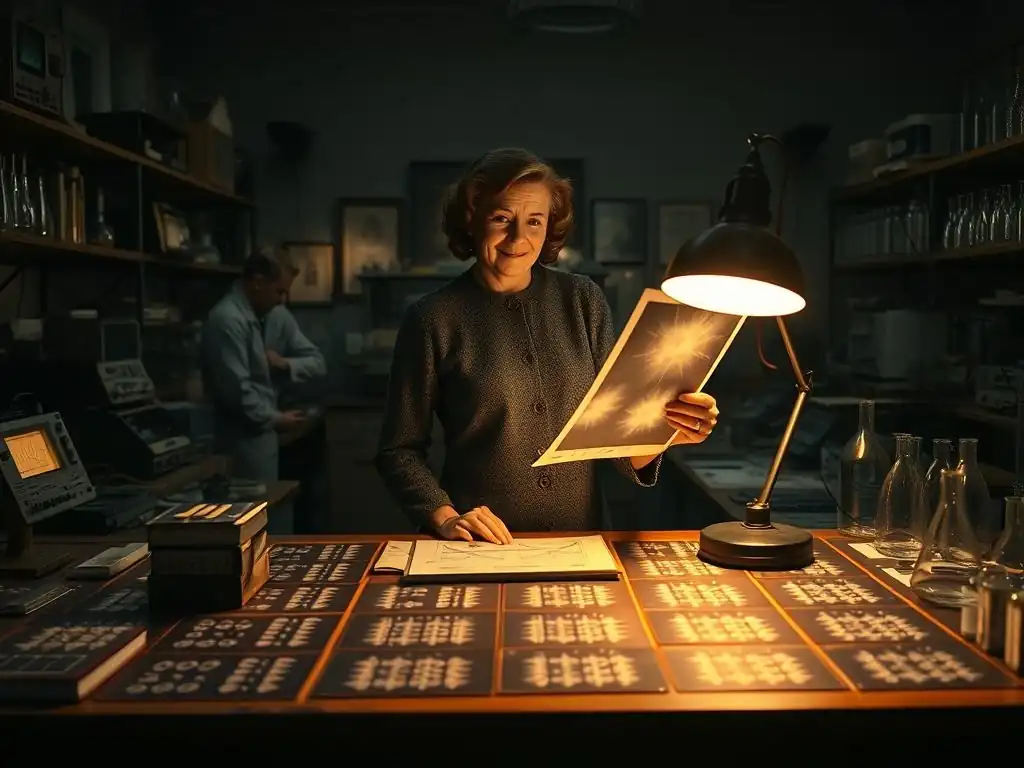
Welcome to WomenInScienceHistory.com!
Delve into the remarkable world of scientific discovery, where we illuminate the often-unsung contributions of women throughout history. Today, we embark on a fascinating journey into the 1940s, exploring Dorothy Hodgkin's groundbreaking work in deciphering the complex structure of penicillin. Her relentless quest not only revolutionized medicine but also paved the way for future advancements. What obstacles did she overcome in a male-dominated field to achieve this monumental breakthrough? Prepare to be inspired as we uncover the story behind this pivotal moment in science!
- Introduction: Dorothy Hodgkin, Pioneer of X-ray Crystallography and Her Work on Penicillin
- The Scientific Landscape of the 1940s: Setting the Stage for Penicillin Research
- Dorothy Hodgkin: A Biographical Overview
- The Penicillin Challenge: Unlocking the Molecular Structure
- X-ray Crystallography Techniques Applied to Penicillin
- Deciphering Penicillin's Structure: A Breakthrough
- The Significance of Hodgkin's Penicillin Research
- Hodgkin's Legacy: Inspiring Future Generations of Women in Science
- Conclusion: Dorothy Hodgkin's Enduring Impact on Science and Women in Science History
-
Frequently Asked Questions
- What was Dorothy Hodgkin's significant contribution to science during the 1940s?
- Why was determining the structure of penicillin so important?
- What challenges did Dorothy Hodgkin face as a woman in science during that era?
- Besides penicillin, what other significant structures did Dorothy Hodgkin determine?
- How did Dorothy Hodgkin's work influence future generations of scientists?
- Final Reflection: The Enduring Legacy of Scientific Perseverance
- Unleash Your Inner Explorer: Decipher the World Around You!
Introduction: Dorothy Hodgkin, Pioneer of X-ray Crystallography and Her Work on Penicillin
Dorothy Hodgkin's Groundbreaking Contributions
Dorothy Hodgkin stands as a towering figure in the annals of science, particularly for her pivotal role in advancing X-ray crystallography as a tool for understanding complex biological molecules. Her meticulous and groundbreaking work transformed the field, moving it from theoretical physics into a powerful method for chemical and biological discovery.
Before her monumental achievement with penicillin, Hodgkin had already made significant strides, including determining the structure of cholesterol in 1937, a feat that showcased her exceptional skill and foresight in applying this nascent technique to organic compounds. Her contributions laid the essential groundwork for deciphering the intricate architectures of life's fundamental building blocks.
Her dedication to precision and her intuitive understanding of diffraction patterns allowed her to tackle molecules that were far too complex for the chemical methods of the time. This pioneering spirit in the application of X-ray crystallography to biological substances not only solidified the technique's utility but also opened up entirely new avenues for research in biochemistry and medicine. The ability to visualize molecules at an atomic level, a concept that seemed almost futuristic in the early 20th century, became a tangible reality through her persistent efforts and brilliant insights.
Hodgkin's Impact on Biology & Medicine
Dorothy Hodgkin's structural determinations had a profound and lasting impact on both biology and medicine, fundamentally altering how scientists approached drug design and understood disease mechanisms. By revealing the precise three-dimensional arrangements of atoms within crucial biological molecules, she provided an unprecedented view into their function and interaction. This was particularly true for her work on the Dorothy Hodgkin penicillin structure in the 1940s, which directly informed the synthesis and modification of this life-saving antibiotic.
Her discoveries provided the blueprints necessary for chemists to synthesize compounds more effectively, develop new therapeutic agents, and even understand how existing drugs exerted their effects at a molecular level. For instance, knowing the exact structure of penicillin was crucial for understanding its mechanism of action against bacteria and for developing semi-synthetic penicillins that could combat antibiotic resistance. Hodgkin's legacy extends far beyond individual structures; she established a paradigm for structural biology that continues to drive pharmaceutical innovation and our fundamental understanding of biological processes today.
The Scientific Landscape of the 1940s: Setting the Stage for Penicillin Research
The Urgent Need for Antibiotics During World War II
The 1940s represented a period of immense global turmoil, dominated by the ravages of World War II. Amidst the conflict, military and civilian populations alike faced a grim reality: bacterial infections were often as deadly as the wounds themselves. Simple cuts, scrapes, and surgical procedures frequently led to sepsis, gangrene, and other severe infections, resulting in high mortality rates among soldiers and civilians. Pneumonia, tuberculosis, and other infectious diseases also claimed countless lives, with limited effective treatments available.
This dire medical crisis created an unprecedented urgency for the development of potent antibacterial agents. Governments and scientific institutions, particularly in the Allied nations, poured resources into research efforts aimed at finding new ways to combat these silent killers. Penicillin, first discovered by Alexander Fleming in 1928 but largely unexploited, suddenly became the focus of intense, clandestine research due to its promising antibacterial properties demonstrated by Howard Florey and Ernst Chain at Oxford. The race was on to produce it in sufficient quantities and understand its exact chemical makeup to ensure its widespread therapeutic application.
X-ray Crystallography: A Technique for Molecular Structure Determination
In the 1940s, X-ray crystallography, though still a relatively young field, was emerging as the most powerful technique for elucidating the precise atomic arrangements within molecules. Developed earlier in the century by pioneers like the Braggs, the method involved directing a beam of X-rays at a crystal. When X-rays interact with the electrons in the atoms of the crystal, they are diffracted in specific patterns that can be captured on photographic film. These diffraction patterns, though complex, contain all the information needed to reconstruct the three-dimensional electron density map of the molecule.
Interpreting these patterns was an arduous, highly mathematical, and often intuitive process, especially in the pre-computer era. Scientists had to manually calculate Fourier transforms and construct models based on the observed reflections. Despite its challenges, X-ray crystallography offered a unique advantage: it could reveal the exact positions of individual atoms, providing an unparalleled level of detail compared to traditional chemical analysis. This made it the ideal, albeit difficult, method for tackling the complex structure of a molecule like penicillin, whose precise configuration was a mystery.
Dorothy Hodgkin: A Biographical Overview
Early Life and Education
Dorothy Mary Crowfoot Hodgkin was born in Cairo, Egypt, in 1910, to British parents who were passionate about archaeology and classics. Her early life was marked by intellectual curiosity and an unusual exposure to scientific exploration, fostered by her parents' travels and scholarly pursuits. Even as a child, she exhibited a keen interest in chemistry, reportedly conducting experiments in her family's attic. This early fascination with the natural world and its underlying chemical principles set the stage for her illustrious career.
Her formal education began with a strong foundation in the sciences. She attended Somerville College, Oxford, where she studied chemistry, graduating in 1932. It was during her time at Oxford that she was introduced to X-ray crystallography, a technique that would define her professional life. Following her graduation, she moved to Cambridge University to pursue her doctoral studies under the guidance of J.D. Bernal, a leading figure in the burgeoning field of structural biology, further cementing her expertise in this specialized area.
Hodgkin's Mentors and Influences in Crystallography
Dorothy Hodgkin's intellectual journey was profoundly shaped by several key mentors, most notably J.D. Bernal, with whom she worked at Cambridge University. Bernal was a visionary who recognized the immense potential of X-ray crystallography for understanding biological molecules, a then-radical idea. He exposed Hodgkin to cutting-edge research, including the first X-ray diffraction patterns of proteins, inspiring her to dedicate her efforts to applying the technique to increasingly complex biological structures. His mentorship provided her with both the technical skills and the philosophical framework for her pioneering work.
Another significant influence was her earlier tutor at Oxford, H.M. Powell, who instilled in her a rigorous approach to experimental science and a deep appreciation for the precision required in crystallography. These foundational experiences, combined with her innate intellectual prowess and unwavering determination, equipped her to tackle some of the most challenging structural problems of her time. Hodgkin's unique blend of scientific rigor and intuitive insight, honed under the guidance of these influential figures, enabled her to push the boundaries of what was thought possible in structural chemistry.
Overcoming Obstacles: Challenges Faced by Women Scientists
Dorothy Hodgkin's career unfolded in an era when women in science faced pervasive and systemic obstacles. Academia was largely a male-dominated domain, characterized by deeply ingrained sexism and limited opportunities for female researchers. Women often encountered skepticism regarding their intellectual capabilities, faced difficulties securing permanent positions, and were frequently paid less than their male counterparts for equivalent work. Hodgkin herself navigated these challenges, often working with fewer resources and less institutional support than her male colleagues.
Beyond professional barriers, Hodgkin also contended with personal health challenges, including severe rheumatoid arthritis which began in her twenties and progressively worsened throughout her life, often causing her considerable pain and physical limitation. Despite these immense personal and professional hurdles, her unwavering dedication to scientific inquiry and her extraordinary intellect propelled her forward. Her ability to persevere and excel in such an unsupportive environment makes her achievements, including the elucidation of the Dorothy Hodgkin penicillin structure in the 1940s, all the more remarkable and serves as a powerful testament to her resilience.
The Penicillin Challenge: Unlocking the Molecular Structure
The Discovery of Penicillin and the Need for Structural Elucidation
The story of penicillin began in 1928 with Alexander Fleming's serendipitous discovery of a mold's antibacterial properties. However, it was not until the late 1930s and early 1940s that Howard Florey, Ernst Chain, and their team at Oxford successfully purified penicillin and demonstrated its potent therapeutic effects against bacterial infections. This breakthrough ignited intense interest, particularly during World War II, as the Allied powers recognized its immense potential to save lives on the battlefield and in civilian hospitals.
Despite its proven efficacy, the exact chemical structure of penicillin remained a mystery. Chemists were divided on its molecular arrangement, proposing several different possibilities. Knowing the precise structure was paramount for several reasons: it was essential for understanding how the antibiotic worked, for synthesizing it chemically on a large scale (as natural production was difficult and inefficient), and for developing new, more stable, or more potent derivatives. Without this fundamental structural knowledge, the full potential of penicillin could not be realized, making the elucidation of the Dorothy Hodgkin penicillin structure in the 1940s a top scientific priority.
Securing Penicillin Samples: The Collaboration with Medical Research Council
Given the immense strategic importance of penicillin during World War II, samples of the purified antibiotic were incredibly scarce and highly prized. Access to these precious crystals was a significant hurdle for any researcher attempting to determine its structure. Dorothy Hodgkin's unparalleled expertise in X-ray crystallography, particularly for complex organic molecules, made her the ideal candidate for this critical task. She collaborated closely with Ernst Chain and Edward Abraham at the Sir William Dunn School of Pathology in Oxford, who were responsible for the painstaking purification of penicillin.
These collaborations were crucial. Hodgkin received tiny, often imperfect, crystals of penicillin, painstakingly grown and purified by the Oxford team. The quantity of material available for her analysis was extremely limited, underscoring the trust placed in her abilities and the high stakes of the research. The Medical Research Council, recognizing the urgency and importance of the work, facilitated these collaborations, ensuring that Hodgkin had access to the material necessary to undertake one of the most significant structural determinations of the mid-20th century.
X-ray Crystallography Techniques Applied to Penicillin

Preparing Penicillin Crystals for Diffraction Analysis
The success of X-ray crystallography hinges entirely on the quality of the crystals used for analysis. For Dorothy Hodgkin's work on penicillin, this meant meticulously preparing tiny, well-ordered crystals of the antibiotic suitable for X-ray diffraction. Penicillin, being an organic molecule, presented unique challenges compared to simpler inorganic salts. The crystals had to be perfectly formed, free of impurities, and sufficiently robust to withstand the X-ray beam.
Hodgkin and her team worked with the scarce samples provided, often experimenting with different crystallization conditions to obtain the best possible specimens. Once grown, these minute crystals, often less than a millimeter in size, had to be carefully mounted in glass capillaries or on fine fibers. This delicate preparation was crucial, as any imperfections or disorder within the crystal lattice would lead to diffuse or uninterpretable diffraction patterns, making the already difficult task of determining the Dorothy Hodgkin penicillin structure in the 1940s even more formidable.
Collecting and Interpreting X-ray Diffraction Data
With the penicillin crystals prepared, the next phase involved collecting X-ray diffraction data. In the 1940s, this was a laborious and time-consuming process. Hodgkin used specialized X-ray cameras, where the crystal was rotated in an X-ray beam, and the diffracted rays were recorded on photographic film. Each film captured a unique pattern of spots, known as reflections, representing the diffraction of X-rays by the electron clouds within the crystal's atoms. A single complete data set for a complex molecule like penicillin could involve hundreds of such films, each requiring precise exposure times.
Interpreting these vast quantities of data was an art form, demanding exceptional spatial reasoning and mathematical acumen. Hodgkin and her assistants had to manually measure the positions and intensities of thousands of individual spots on these photographic plates. This raw data then served as the input for complex calculations, often performed with mechanical calculators or even by hand, to reconstruct the electron density map of the molecule. The sheer volume and complexity of the data made this an undertaking of immense intellectual and physical effort.
The Tedious Process of Structure Determination: The Phase Problem
The most significant challenge in X-ray crystallography, especially in the 1940s, was the "phase problem." While the intensity of the diffracted X-rays could be directly measured from the photographic films, the crucial "phase" information – which describes the relative timing of the diffracted waves – was lost during the recording process. Without these phases, the electron density map, which directly reveals the atomic positions, could not be calculated straightforwardly. This problem was a major hurdle for any structural determination, particularly for a molecule as intricate as penicillin.
To overcome the phase problem for the Dorothy Hodgkin penicillin structure in the 1940s, Hodgkin employed indirect methods and relied heavily on chemical intuition and iterative refinement. She used techniques like Patterson functions, which could provide information about interatomic distances, and cleverly compared diffraction patterns from different penicillin derivatives or modified forms.
The process involved proposing a tentative structure, calculating its theoretical diffraction pattern, comparing it to the experimental data, and then iteratively refining the model until it matched the observed patterns as closely as possible. This was an incredibly tedious, often frustrating, but ultimately rewarding process of deduction and verification.
Deciphering Penicillin's Structure: A Breakthrough
Hodgkin's Key Insights and Interpretations of the Diffraction Patterns
Dorothy Hodgkin's exceptional ability to interpret complex X-ray diffraction patterns was central to her breakthrough with penicillin. Unlike many contemporaries who struggled with the sheer volume and nuance of the data, Hodgkin possessed an almost intuitive grasp of how the faint, often ambiguous spots on the photographic plates translated into the three-dimensional arrangement of atoms. She meticulously analyzed thousands of reflections, identifying subtle clues that revealed the molecule's unique architecture.
Her key insights often involved recognizing patterns that others missed, allowing her to piece together fragments of the structure like a complex puzzle. She was adept at visualizing the electron density maps derived from her calculations, identifying the peaks corresponding to individual atoms and tracing the bonds between them. This iterative process of calculation, visualization, and model building, performed largely without the aid of modern computers, underscored her profound understanding of both crystallography and chemical bonding. It was this extraordinary interpretive skill that allowed her to resolve the ambiguities that had stumped other researchers.
The Revelation of the Beta-Lactam Ring: A Critical Discovery
The most significant and surprising revelation from Dorothy Hodgkin's determination of the Dorothy Hodgkin penicillin structure in the 1940s was the presence of a strained four-membered beta-lactam ring. Prior to her work, many leading organic chemists, including prominent figures in the wartime penicillin project, favored an alternative, more stable structure involving a thiazolidine-oxazolone ring system. The concept of such a highly strained, reactive beta-lactam ring as the core of the molecule was initially met with skepticism due to its chemical instability.
However, Hodgkin's X-ray data unequivocally showed the beta-lactam ring. This critical discovery was not just an academic detail; it was paramount to understanding penicillin's unique and potent antibiotic activity. The strained nature of this ring makes it highly reactive, allowing it to easily open and bind to bacterial enzymes responsible for cell wall synthesis, thereby disrupting their function and killing the bacteria. Her crystallographic proof settled a major chemical debate and provided the fundamental insight into how penicillin achieved its life-saving effects, paving the way for rational drug modification.
Publishing the Penicillin Structure
The determination of the Dorothy Hodgkin penicillin structure in the 1940s was completed by 1945, a monumental achievement that marked the culmination of years of intense, secretive wartime research. Due to the strategic importance of penicillin during World War II, the research findings, including the detailed chemical structure, were initially kept confidential by the Allied powers. This secrecy was intended to prevent enemy forces from gaining access to the vital information that could aid their own medical efforts.
The full details of the penicillin structure, including Hodgkin's crystallographic evidence, were eventually published in a comprehensive, collaborative report in 1949. This landmark publication, titled "The Chemistry of Penicillin," brought together the collective efforts of numerous research groups from both the United Kingdom and the United States. While the structure had been formally announced earlier, this extensive volume provided the complete scientific justification and detailed data, cementing Hodgkin's crucial contribution and making the knowledge widely accessible to the scientific community for further research and development of antibiotics.
The Significance of Hodgkin's Penicillin Research
Impact on Antibiotic Development and Medicine
Dorothy Hodgkin's elucidation of the Dorothy Hodgkin penicillin structure in the 1940s had an immediate and transformative impact on antibiotic development and, consequently, on the practice of medicine worldwide. By revealing the precise atomic arrangement of penicillin, particularly the crucial beta-lactam ring, her work provided the essential blueprint for synthetic chemists. This structural knowledge allowed for the rational design and synthesis of penicillin analogues, leading to the development of new, semi-synthetic penicillins that were more stable, had a broader spectrum of activity, or could overcome emerging antibiotic resistance mechanisms.
The ability to chemically modify the penicillin molecule, based on Hodgkin's structural insights, was a game-changer. It enabled the pharmaceutical industry to scale up production and diversify the range of penicillin-based drugs, making these life-saving medicines widely available. Her research not only underpinned the golden age of antibiotic discovery but also laid the groundwork for understanding how drugs interact with biological targets at a molecular level, fundamentally changing the approach to drug design and the treatment of infectious diseases.
Laying the Foundation for Future Structural Biology Research
The determination of the Dorothy Hodgkin penicillin structure was far more than just the solution to a critical wartime problem; it was a watershed moment that firmly established X-ray crystallography as an indispensable tool for structural biology. Before penicillin, the technique had primarily been applied to simpler inorganic compounds or small organic molecules. Hodgkin's success with penicillin demonstrated, beyond doubt, its power to unravel the complexities of biologically significant molecules, even those with hundreds of atoms.
This landmark achievement paved the way for her subsequent, even more complex, structural determinations, including that of vitamin B12 in 1956 and, most notably, insulin in 1969. Her work on penicillin served as a proof of concept, inspiring a new generation of scientists to apply crystallographic methods to proteins, nucleic acids, and other macromolecules. It fundamentally shifted the landscape of biochemical research, laying the robust foundation upon which the entire field of structural biology would grow and flourish, leading to countless insights into the molecular basis of life and disease.
Hodgkin's Nobel Prize and Recognition for Her Contributions
Dorothy Hodgkin's monumental contributions to science, including her pioneering work on the Dorothy Hodgkin penicillin structure in the 1940s, were formally recognized with the Nobel Prize in Chemistry in 1964. The Nobel Committee awarded her the prestigious prize "for her determinations by X-ray techniques of the structures of important biochemical substances." While her work on penicillin was a cornerstone of her achievements, the prize acknowledged her broader body of work, which also included the elucidation of the structures of cholesterol and, most famously, vitamin B12.
Her Nobel Prize was a significant milestone, making her only the third woman to receive the Nobel Prize in Chemistry, following Marie Curie and Irène Joliot-Curie. This recognition not only celebrated her extraordinary scientific acumen and perseverance but also brought much-needed attention to the capabilities and contributions of women in scientific research. The Nobel Prize cemented her status as one of the most influential chemists of the 20th century and a beacon for aspiring scientists around the globe.
Hodgkin's Legacy: Inspiring Future Generations of Women in Science
Developments in X-ray Crystallography
Dorothy Hodgkin's pioneering work, particularly her success with the Dorothy Hodgkin penicillin structure in the 1940s, significantly catalyzed the development and refinement of X-ray crystallography. In her era, the process was incredibly laborious, relying on manual calculations, photographic film, and mechanical aids. Her achievements demonstrated the technique's immense potential, spurring advancements that would revolutionize the field.
Over the decades following her initial breakthroughs, X-ray crystallography evolved dramatically. Computing power increased exponentially, allowing for automated data collection and rapid, complex calculations that were impossible in the 1940s. The development of advanced detectors, synchrotron light sources providing incredibly intense X-ray beams, and sophisticated software transformed the process from a decades-long endeavor for a single structure into a highly efficient method capable of solving thousands of structures annually. Hodgkin's foundational work provided the impetus for these technological leaps, ensuring that crystallography remains a vital tool in drug discovery, materials science, and fundamental biological research.
Dorothy Hodgkin: A Role Model for Aspiring Female Scientists
Dorothy Hodgkin's life and scientific career serve as an enduring inspiration and a powerful role model for aspiring female scientists. She demonstrated that intellectual rigor, unwavering dedication, and profound curiosity could overcome significant societal and personal obstacles. In an era when women were often marginalized in scientific fields, she not only carved out a distinguished career but also achieved breakthroughs of global significance, such as the Dorothy Hodgkin penicillin structure in the 1940s.
Her quiet determination, meticulous approach, and profound contributions proved that gender was no barrier to scientific excellence. Despite battling chronic illness and balancing family life with demanding research, she consistently pushed the boundaries of knowledge. Her legacy encourages young women to pursue their scientific passions, reminding them that their intellectual contributions are invaluable and that perseverance can lead to extraordinary achievements, even in challenging environments.
The Importance of Women in STEM Fields
Dorothy Hodgkin's story powerfully underscores the critical importance of fostering and supporting women in STEM (Science, Technology, Engineering, and Mathematics) fields. Historically, and often still today, women have been underrepresented in scientific research, leading to a significant loss of talent, perspective, and innovation. Hodgkin's unique insights and her ability to solve problems that eluded others highlight the diverse cognitive approaches and creative solutions that women bring to scientific inquiry.
Ensuring equitable access to education, mentorship, and leadership opportunities for women in science is not merely a matter of fairness; it is essential for scientific progress. Diverse teams are more innovative, more effective at problem-solving, and better equipped to address the complex challenges facing humanity. By recognizing and actively promoting the contributions of women like Dorothy Hodgkin, society reinforces the message that scientific excellence knows no gender and that a truly inclusive scientific community is a stronger, more capable one.
Conclusion: Dorothy Hodgkin's Enduring Impact on Science and Women in Science History
Celebrating Dorothy Hodgkin's Contributions to Understanding Penicillin Structure
Dorothy Hodgkin's quest to decipher the Dorothy Hodgkin penicillin structure in the 1940s stands as one of the most remarkable scientific achievements of the 20th century. Her unwavering dedication, intellectual brilliance, and mastery of X-ray crystallography provided the definitive blueprint for this life-saving antibiotic, a revelation that had profound and immediate consequences for medicine and drug development. Her work not only resolved a critical chemical mystery but also furnished the essential knowledge required for the large-scale production and therapeutic application of penicillin, directly saving countless lives during World War II and beyond.
Her meticulous analysis of the complex diffraction patterns, leading to the unambiguous identification of the beta-lactam ring, was a testament to her exceptional skill and foresight. This pivotal discovery paved the way for a new era of rational drug design and laid the foundational principles for the entire field of structural biology. We celebrate her extraordinary contribution not just for the scientific breakthrough itself, but for the profound human impact it generated, forever changing the landscape of medicine.
The Importance of Recognizing and Supporting Women in Scientific Research
Dorothy Hodgkin's extraordinary life and career serve as a powerful reminder of the enduring importance of recognizing and actively supporting women in scientific research. Her journey, marked by both groundbreaking discoveries and significant personal and professional challenges, highlights the resilience and brilliance of female scientists who have often operated in the shadows of a male-dominated world. By celebrating her achievements, platforms like WomenInScienceHistory.com contribute to a more complete and accurate narrative of scientific progress, one that acknowledges the invaluable contributions of women.
Continued efforts to champion, mentor, and provide equitable opportunities for women in STEM are crucial. Ensuring that aspiring female scientists have access to resources, recognition, and an inclusive environment is vital for fostering innovation and addressing the complex global challenges of our time. Dorothy Hodgkin's legacy inspires us to continue breaking down barriers, empowering future generations of women to pursue scientific inquiry with the same passion and rigor that defined her own groundbreaking quest.
Frequently Asked Questions
What was Dorothy Hodgkin's significant contribution to science during the 1940s?
Dorothy Hodgkin is renowned for her pioneering work in X-ray crystallography, which she used to decipher the complex structure of penicillin during the 1940s. This was a crucial breakthrough in medicine.
Why was determining the structure of penicillin so important?
Understanding penicillin's structure allowed scientists to synthetically produce it, leading to its mass production and widespread availability. This revolutionized the treatment of bacterial infections and saved countless lives.
What challenges did Dorothy Hodgkin face as a woman in science during that era?
Hodgkin, like many women in science at the time, faced gender bias and limited opportunities within the male-dominated scientific community. She had to overcome institutional barriers to pursue her research.
Besides penicillin, what other significant structures did Dorothy Hodgkin determine?
Beyond penicillin, Hodgkin also determined the structures of insulin and vitamin B12, both of which were groundbreaking achievements. Her work on these complex molecules advanced biochemistry significantly.
How did Dorothy Hodgkin's work influence future generations of scientists?
Hodgkin's work served as an inspiration to aspiring scientists, particularly women, demonstrating the power of dedication and perseverance in the face of adversity. She proved that women could make significant contributions to scientific fields.
Okay, here's a final reflection crafted to fit your article's theme and SEO goals, using the structure you provided:
Final Reflection: The Enduring Legacy of Scientific Perseverance
The story of Dorothy Hodgkin's relentless pursuit to unveil the structure of penicillin, a feat achieved in the 1940s, resonates powerfully today. Her dedication to unraveling the complexities of the natural world serves as a potent reminder of the transformative power of scientific curiosity and unwavering determination. In a world increasingly reliant on scientific advancements, Hodgkin's legacy underscores the importance of supporting and celebrating those who dare to push the boundaries of knowledge.
The impact of Hodgkin's work extends far beyond the realm of chemistry; it fundamentally altered the course of medicine and continues to shape our understanding of antibiotics. Her meticulous approach and innovative use of X-ray crystallography not only revealed the structure of penicillin but also paved the way for countless other breakthroughs in structural biology. Science is not national. It is universal.
This quote, often attributed to Pasteur, perfectly encapsulates Hodgkin's spirit, highlighting her commitment to a global pursuit of knowledge that transcends borders and benefits all of humanity.
As we reflect on Dorothy Hodgkin's remarkable achievement, let us be inspired to embrace our own intellectual curiosity and persevere in the face of challenges. Consider how you can contribute to a world that values scientific inquiry and supports the pursuit of knowledge. Let Hodgkin's story be a catalyst for your own journey of discovery and a reminder that even the most complex problems can be solved with dedication, ingenuity, and a relentless pursuit of truth.
Unleash Your Inner Explorer: Decipher the World Around You!
Thank you for delving into Dorothy Hodgkin's inspiring journey and the groundbreaking work that unveiled the structure of Penicillin. You've gained insights into the dedication and brilliance required to push the boundaries of scientific understanding. Now, it's your turn to make an impact.
Here's how you can continue to explore and contribute:
- Embark on your own scientific exploration: Choose a question that fascinates you and dedicate time this week to researching it thoroughly. Don't be afraid to dive deep!
- Share Hodgkin's inspiring story: Tell a friend, family member, or student about Dorothy Hodgkin's life and her revolutionary work in X-ray crystallography. Spread the inspiration!
- Visit a local science museum or attend a science lecture: Immerse yourself in the world of scientific discovery and broaden your horizons.
What scientific question are you most eager to unravel, and what's the first step you'll take to investigate it?