
The Female Architects of Gene Editing: Transforming Biology and Medicine

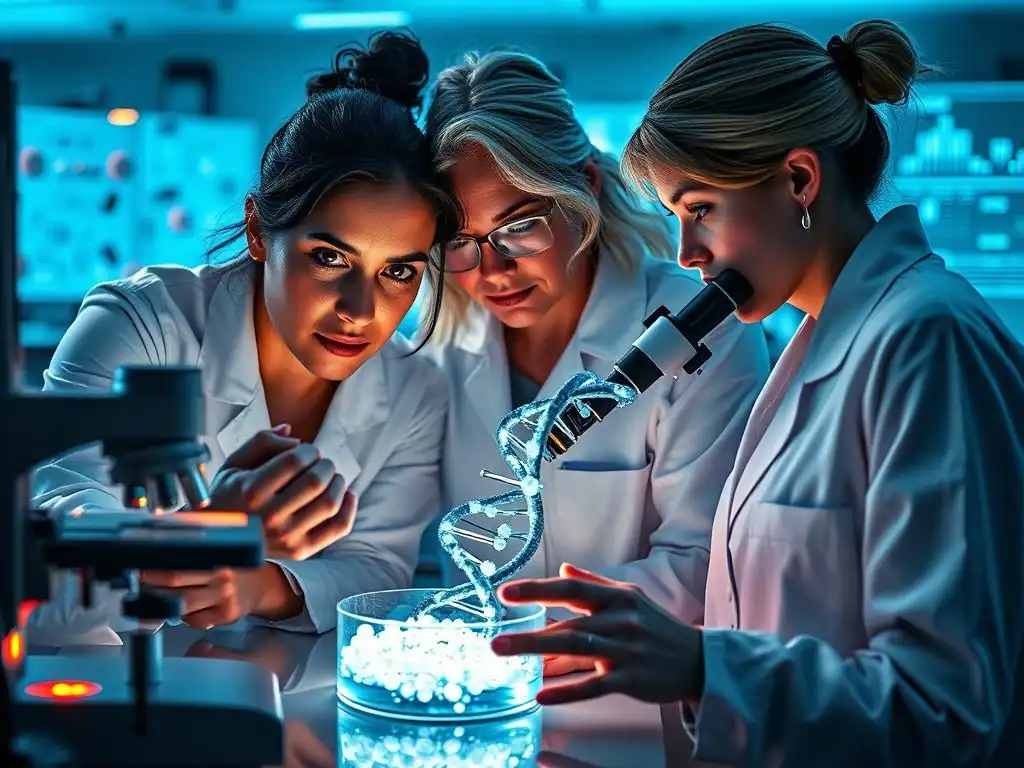
Welcome to WomenInScienceHistory.com!
Delve into the untold stories of brilliant minds who shaped the world of science. This site is dedicated to unveiling the remarkable contributions of women throughout scientific history. Today, we explore a fascinating frontier: the pivotal Women’s role in gene editing. Discover how their groundbreaking work is transforming biology and medicine, and uncover the challenges they overcame to leave an indelible mark on this revolutionary field. Ready to explore the female architects behind this biological revolution?
- Introduction: Highlighting Women's Role in Gene Editing's Evolution
- Pioneering Women in Early Gene Editing Research
- Key Female Figures in CRISPR-Cas9 Development
- Women Leading the Way in Gene Editing Applications
- Addressing Ethical Considerations in Gene Editing: A Female Perspective
- Overcoming Challenges and Breaking Barriers in Gene Editing Research
- Inspiring Future Generations: Female Role Models in Gene Editing
- The Future of Gene Editing: Women Shaping the Next Generation of Discoveries
- Conclusion: Celebrating the Indelible Mark of Women in Gene Editing
-
Frequently Asked Questions
- What is gene editing, and why is women's role in gene editing significant?
- Can you name a pioneering woman scientist involved in the development of gene editing technologies?
- What challenges did female scientists likely face while contributing to gene editing advancements?
- How does "WomenInScienceHistory.com" contribute to understanding the women's role in gene editing?
- Why is it important to celebrate and recognize the contributions of female scientists in fields like gene editing?
- Final Reflection: Shaping the Future of Life
- Unveil the Future: Your Role in Gene Editing's Evolution
Introduction: Highlighting Women's Role in Gene Editing's Evolution
Gene Editing: A Revolutionary Frontier in Biology and Medicine
Gene editing represents one of the most profound scientific advancements of the 21st century, offering unprecedented control over the fundamental building blocks of life. This revolutionary technology allows scientists to precisely modify DNA sequences, enabling the correction of genetic mutations, the introduction of new traits, and the study of gene function with remarkable specificity. Its applications span a vast spectrum, from developing novel therapies for debilitating genetic diseases like cystic fibrosis and Huntington's disease to engineering more resilient and nutritious crops, promising to reshape medicine, agriculture, and our understanding of biology itself.
The power of gene editing lies in its ability to directly address the root causes of many disorders at the genomic level. By offering the potential to "rewrite" faulty genetic code, it provides a pathway to cure conditions previously deemed untreatable, moving beyond symptomatic relief to definitive interventions. This frontier continues to expand rapidly, with new tools and techniques constantly emerging, pushing the boundaries of what is possible in manipulating life's blueprint.
Overcoming Historical Bias: Recognizing Women's Contributions
Throughout history, the groundbreaking contributions of women in science have often been overlooked, marginalized, or attributed to their male counterparts. This pervasive historical bias has created an incomplete narrative, particularly in fields as transformative as genetics and molecular biology. Recognizing the women’s role in gene editing is not merely about correcting the historical record; it is about acknowledging the intellectual prowess, resilience, and collaborative spirit that have been indispensable to the field's progression.
From foundational discoveries that laid the groundwork for understanding DNA to the development of cutting-edge gene editing tools and their ethical oversight, women have been central figures. Their persistent efforts, often against significant societal and institutional barriers, have profoundly shaped this domain. Highlighting these narratives is crucial for inspiring future generations and ensuring that the full spectrum of scientific talent is recognized and celebrated.
Pioneering Women in Early Gene Editing Research
Rosalind Franklin's X-ray Diffraction and Its Impact on Understanding DNA Structure
Before the advent of targeted gene editing, a fundamental understanding of DNA's structure was paramount, and Rosalind Franklin's work was pivotal. As a physical chemist, Franklin employed X-ray diffraction techniques to study the molecular structure of DNA fibers at King's College London in the early 1950s. Her meticulous experimental work yielded remarkably clear X-ray diffraction patterns, most notably "Photograph 51," which provided critical insights into the helical nature and precise dimensions of the DNA molecule.
Franklin's detailed measurements and interpretations of these patterns, including the spacing between base pairs and the helical pitch, were instrumental. Though her contributions were not fully recognized during her lifetime, her data, shared without her explicit permission, directly informed James Watson and Francis Crick's groundbreaking double helix model of DNA published in 1953. This foundational understanding of DNA's structure was an indispensable prerequisite for all subsequent advancements in molecular biology, including the eventual development of gene editing technologies that specifically target and manipulate this genetic material.
Barbara McClintock and the Discovery of Transposable Elements: A Foundation for Gene Manipulation
Decades before gene editing became a laboratory reality, Barbara McClintock's revolutionary work on maize genetics challenged the prevailing view of a static genome. Beginning in the 1940s, McClintock meticulously studied patterns of kernel coloration in corn, observing unexpected variations that could not be explained by traditional Mendelian genetics. Her groundbreaking research led her to propose the existence of "controlling elements" – genetic segments that could move or "jump" from one position on a chromosome to another.
This discovery of transposable elements, or "jumping genes," was initially met with skepticism by the scientific community, as it contradicted the established dogma of stable gene positions. However, subsequent research in the 1970s confirmed her findings, revealing that these mobile elements are ubiquitous across diverse organisms, from bacteria to humans.
McClintock's foresight in demonstrating the dynamic nature of the genome provided a conceptual cornerstone for gene manipulation, illustrating that genetic material was not immutable and could be intentionally moved or altered—a concept that underpins all modern gene editing techniques. Her profound insights were finally recognized with the Nobel Prize in Physiology or Medicine in 1983, solidifying her women’s role in gene editing's foundational understanding.
Key Female Figures in CRISPR-Cas9 Development
Emmanuelle Charpentier: Unlocking the Potential of CRISPR-Cas9
Emmanuelle Charpentier's groundbreaking research provided a crucial piece of the puzzle in understanding the CRISPR-Cas9 system, paving the way for its transformation into a precise gene editing tool. While studying Streptococcus pyogenes, a bacterium responsible for various human infections, Charpentier's team discovered a novel RNA molecule, tracrRNA (trans-activating CRISPR RNA). This discovery was critical because tracrRNA was found to be essential for the maturation and function of the CRISPR RNA (crRNA) in guiding the Cas9 enzyme to target and cleave foreign DNA.
Her independent research, particularly her seminal 2011 paper, illuminated the molecular mechanism of the bacterial immune system, where CRISPR-Cas9 acts as a defense against viral invaders. This fundamental insight into how bacteria precisely cut foreign DNA laid the groundwork for her subsequent collaboration with Jennifer Doudna, where they demonstrated the system's programmability for targeted DNA cleavage. Their joint publication in Science in 2012 revolutionized the field, earning Charpentier, alongside Doudna, the Nobel Prize in Chemistry in 2020 for their pioneering women’s role in gene editing technology.
Jennifer Doudna: Transforming Gene Editing with CRISPR Technology
Jennifer Doudna, a biochemist with a deep expertise in RNA biology, played an equally transformative role in developing CRISPR-Cas9 into a versatile gene editing tool. Her research at the University of California, Berkeley, focused on understanding the intricate workings of RNA-guided defense systems in bacteria. It was through her collaboration with Emmanuelle Charpentier that the full potential of the CRISPR-Cas9 system for genome engineering was realized.
In their landmark 2012 publication, Doudna and Charpentier demonstrated that the bacterial CRISPR-Cas9 system could be repurposed to precisely cut any DNA sequence in a test tube by simply programming it with a synthetic guide RNA. This breakthrough simplified gene editing immensely, making it faster, cheaper, and more accurate than previous methods.
Doudna's work provided the practical blueprint for what became known as "molecular scissors," unleashing a torrent of research and applications across biology and medicine. Her tireless advocacy for responsible research and ethical considerations surrounding this powerful technology further underscores her profound women’s role in gene editing's development and societal impact.
Feng Zhang's Team: Contributions from Female Researchers
While Emmanuelle Charpentier and Jennifer Doudna demonstrated the in vitro potential of CRISPR-Cas9, Feng Zhang's team at the Broad Institute independently achieved its successful application in eukaryotic cells, including human and mouse cells, in early 2013. This crucial step propelled CRISPR from a bacterial defense mechanism to a broadly applicable tool for biomedical research. Within Zhang's pioneering team, female researchers made significant, though often less publicly highlighted, contributions to this critical adaptation.
For instance, postdoctoral researchers and graduate students, including figures like Le Cong, a key co-author on Zhang's seminal 2013 Science paper, were instrumental in the experimental work that proved CRISPR-Cas9's efficacy in mammalian systems. Their meticulous efforts in designing and validating guide RNAs, optimizing delivery methods, and characterizing the gene editing outcomes were essential to demonstrating the technology's utility for complex biological systems. These contributions underscore the collaborative nature of scientific discovery and highlight the vital, often behind-the-scenes, women’s role in gene editing's rapid translation from a bacterial curiosity to a revolutionary biotechnology.
Women Leading the Way in Gene Editing Applications
Developing Gene Therapies for Genetic Diseases: Women at the Forefront
The promise of gene editing to correct the underlying causes of genetic diseases is rapidly moving from laboratory concept to clinical reality, with women playing leading roles in this translational research. Female scientists are spearheading efforts to develop precise gene therapies for conditions like sickle cell anemia, beta-thalassemia, and Duchenne muscular dystrophy. For example, Dr. Haydar Frangoul, a female physician-scientist, was a lead investigator in the landmark clinical trial that successfully used CRISPR-Cas9 to treat sickle cell disease and beta-thalassemia, marking a significant milestone in human gene therapy.
These pioneering women are not only designing innovative gene editing strategies but also navigating the complex regulatory and ethical landscapes necessary to bring these therapies to patients. Their work involves meticulous preclinical studies, designing clinical trial protocols, and overseeing patient treatment, directly impacting the lives of individuals suffering from debilitating genetic disorders. Their leadership in these high-stakes endeavors underscores the critical women’s role in gene editing's therapeutic applications.
Victoria Gray: First CRISPR Patient
Victoria Gray's journey stands as a powerful testament to the transformative potential of gene editing, and her story is inextricably linked to the groundbreaking work of female scientists in the field. In July 2019, Ms. Gray, a patient living with severe sickle cell disease, became the first person in the United States to be treated with a CRISPR-based therapy in a clinical trial. The experimental treatment involved modifying her own bone marrow stem cells ex vivo to produce healthy hemoglobin, thereby alleviating the painful and life-threatening symptoms of her condition.
Her courageous participation in this trial, which has shown sustained positive results, represented a monumental step forward in human gene therapy. The success of Victoria Gray's treatment demonstrated the real-world efficacy and safety of CRISPR-Cas9 in a clinical setting, offering hope for millions affected by genetic blood disorders. Her case vividly illustrates the direct impact of the women’s role in gene editing research on patient outcomes, making the once theoretical promise of gene therapy a tangible reality.
Advancements in Agricultural Biotechnology Led by Female Scientists
Beyond human health, gene editing is revolutionizing agricultural biotechnology, and female scientists are at the forefront of developing innovative solutions for global food security and sustainable farming. These researchers are leveraging gene editing tools to create crops that are more resilient to climate change, resistant to pests and diseases, and enhanced in nutritional value. Their work is crucial in addressing challenges such as feeding a growing global population and reducing the environmental footprint of agriculture.
For instance, gene-edited crops with improved traits, such as non-browning apples or disease-resistant potatoes, are emerging from laboratories led by women. These advancements not only reduce food waste but also decrease the reliance on chemical pesticides, contributing to more environmentally friendly agricultural practices. The women’s role in gene editing in this sector is fundamentally reshaping how we grow food, ensuring a more robust and sustainable food supply for the future.
Pamela Ronald: Pioneering Work in Rice Disease Resistance
Dr. Pamela Ronald, a distinguished plant pathologist and geneticist at the University of California, Davis, exemplifies the profound women’s role in gene editing in agricultural biotechnology. Her pioneering research has focused on enhancing disease resistance and stress tolerance in rice, a staple crop for over half the world's population. One of her most significant achievements involves the identification and cloning of the Xa21 gene, which confers broad-spectrum resistance to bacterial blight, a devastating rice disease.
Furthermore, Dr. Ronald's lab developed a flood-tolerant rice variety known as "Sub1," which can survive prolonged submergence, a critical trait for regions prone to monsoon flooding. Her work has enabled the development of rice varieties that are more resilient and productive, directly benefiting millions of smallholder farmers in Asia and Africa. Pamela Ronald's innovative use of genetic approaches, including those that pave the way for gene editing applications, has profoundly impacted global food security and underscored the vital contributions of female scientists to sustainable agriculture.
Addressing Ethical Considerations in Gene Editing: A Female Perspective

Women's Voices in the Ethical Debate Surrounding Gene Editing Technologies
The advent of powerful gene editing technologies, particularly CRISPR-Cas9, has ignited complex ethical debates, prompting critical discussions on their societal implications. Women's voices have been notably prominent and influential in shaping this discourse, often bringing unique perspectives that emphasize social justice, equity, and the long-term impacts on humanity. Female bioethicists, scientists, and public policy experts are actively engaged in navigating questions surrounding germline editing (modifications heritable by future generations), equitable access to therapies, and the potential for exacerbating existing societal inequalities.
Their contributions often highlight the need for inclusive public engagement, ensuring that diverse perspectives, beyond those of scientists and policymakers, are considered in setting ethical boundaries. This women’s role in gene editing's ethical oversight is crucial for ensuring that these transformative technologies are developed and applied responsibly, prioritizing human well-being and societal benefit over purely technological advancement.
Françoise Baylis: Bioethics and Genome Editing
Among the leading voices in the ethical debate surrounding genome editing is Françoise Baylis, a distinguished Canadian bioethicist and philosopher. As a Professor and Canada Research Chair in Bioethics and Philosophy at Dalhousie University, Baylis has extensively published on the ethical, social, and policy implications of emerging biotechnologies, including human genome editing. She has been a vocal advocate for a cautious and globally inclusive approach to germline editing, emphasizing the profound moral and societal questions it raises.
Baylis played a key role in the World Health Organization's (WHO) advisory committee on developing global standards for governance and oversight of human genome editing, contributing significantly to international guidelines. Her arguments often center on the principle of responsible innovation, stressing the importance of democratic deliberation and ensuring that any decisions about altering the human genome are made with broad societal consent and careful consideration of potential harms. Her work exemplifies the critical women’s role in gene editing's ethical framework, guiding the responsible development of these powerful tools.
Overcoming Challenges and Breaking Barriers in Gene Editing Research
The Gender Gap in STEM: Challenges Faced by Women in Gene Editing
Despite significant advancements, the field of science, technology, engineering, and mathematics (STEM) continues to exhibit a persistent gender gap, and gene editing research is no exception. Women in gene editing often face a myriad of challenges, including unconscious bias in hiring and promotion, unequal access to funding and resources, and a disproportionate burden of family responsibilities. Studies indicate that while women may enter STEM fields in increasing numbers at junior levels, their representation significantly declines at senior faculty and leadership positions.
This disparity can lead to fewer mentorship opportunities, less visibility for their work, and slower career progression. The demanding nature of scientific research, coupled with systemic biases, creates a challenging environment where female scientists may struggle to achieve the recognition and influence commensurate with their contributions. Addressing these entrenched issues is vital for fostering an equitable and innovative future for the women’s role in gene editing.
Strategies for Promoting Diversity and Inclusion in the Field
To fully harness the intellectual potential of all scientists, concerted efforts are needed to promote diversity and inclusion within gene editing research. Effective strategies include implementing blind review processes for grants and publications to mitigate unconscious bias, establishing robust mentorship and sponsorship programs specifically for emerging female scientists, and advocating for equitable representation on scientific committees and in leadership roles. Furthermore, creating flexible work environments that support work-life balance can help retain talented women in demanding research careers.
Initiatives that encourage girls and young women to pursue STEM fields from an early age, coupled with visible role models and supportive academic cultures, are also crucial. By actively dismantling systemic barriers and fostering inclusive environments, the scientific community can ensure that the women’s role in gene editing is not only recognized but also fully empowered to drive future discoveries and applications.
Inspiring Future Generations: Female Role Models in Gene Editing
Mentorship and Outreach Programs for Young Women in Science
Inspiring the next generation of female scientists is paramount for sustained innovation in gene editing, and effective mentorship and outreach programs play a critical role. Many organizations and academic institutions are actively developing initiatives designed to connect young women and girls with established female scientists in genetics and molecular biology. These programs often include workshops, summer research internships, and one-on-one mentoring, providing invaluable guidance, fostering confidence, and demystifying scientific careers.
For instance, programs that link high school students with university researchers allow aspiring female scientists to gain firsthand experience in a lab setting, sparking their interest in gene editing and related fields. Such initiatives demonstrate that a career in science is attainable and rewarding, providing crucial support networks that help young women navigate academic and professional challenges. These efforts are essential for cultivating the future women’s role in gene editing.
Showcasing the Achievements of Women in Gene Editing to Inspire Future Scientists
One of the most powerful ways to inspire future scientists is by showcasing the remarkable achievements of women who have already made indelible marks in gene editing. By highlighting the stories of pioneers like Rosalind Franklin and Barbara McClintock, alongside contemporary leaders such as Emmanuelle Charpentier, Jennifer Doudna, Pamela Ronald, and Françoise Baylis, we provide tangible role models for young women and girls. These narratives demonstrate that despite historical and ongoing challenges, women have consistently pushed the boundaries of scientific knowledge.
Celebrating the women’s role in gene editing through accessible articles, educational resources, and public recognition helps to dismantle stereotypes about who can be a scientist. It illustrates that dedication, intellect, and perseverance know no gender, thereby encouraging a broader and more diverse pool of talent to pursue careers in this transformative field and contribute to its future advancements.
The Future of Gene Editing: Women Shaping the Next Generation of Discoveries
Emerging Technologies and Research Areas Led by Female Scientists
The field of gene editing is in a constant state of evolution, with new technologies and research areas rapidly emerging, and female scientists are actively shaping these next frontiers. Beyond the foundational CRISPR-Cas9 system, women are at the forefront of developing and applying advanced tools such as base editing, prime editing, and epigenetic editing, which offer even greater precision and versatility in genetic modifications. For example, female researchers are leading efforts to engineer more efficient delivery systems for gene editing tools, crucial for their clinical application in diverse tissues and organs.
Moreover, women are pioneering research into the application of gene editing for complex polygenic diseases, environmental remediation, and even the development of advanced diagnostics. Their innovative approaches are expanding the scope of gene editing beyond single-gene disorders, tackling challenges like cancer, neurodegenerative diseases, and climate change. This continued leadership underscores the evolving and critical women’s role in gene editing's future trajectory.
The Continued Importance of Women's Contributions to Gene Editing's Advancement
The trajectory of gene editing's advancement, from foundational research to widespread application and ethical oversight, will continue to rely heavily on the diverse perspectives and intellectual contributions of women. As the technology becomes more powerful and pervasive, the unique insights that female scientists bring—often characterized by collaborative approaches, meticulous attention to detail, and a strong emphasis on societal impact—will be indispensable. Their involvement ensures that the development of gene editing is not only scientifically rigorous but also ethically sound and equitably distributed.
Therefore, fostering an environment where women can thrive and lead in gene editing is not merely a matter of fairness; it is a strategic imperative for scientific progress. The continued and amplified women’s role in gene editing will be crucial for unlocking its full potential, addressing unforeseen challenges, and ensuring that this revolutionary technology serves the best interests of humanity.
Conclusion: Celebrating the Indelible Mark of Women in Gene Editing
Recognizing the Past, Present, and Future Contributions of Women in Gene Editing
The journey of gene editing, from the fundamental understanding of DNA to the precise tools of today, is indelibly marked by the brilliance and tenacity of women scientists. From Rosalind Franklin's critical X-ray diffraction images and Barbara McClintock's groundbreaking discovery of jumping genes to Emmanuelle Charpentier and Jennifer Doudna's co-development of CRISPR-Cas9, women have been at the very core of every major breakthrough. Their contributions extend into the present, as female researchers lead clinical trials, advance agricultural applications, and thoughtfully guide the ethical discourse surrounding these powerful technologies.
This narrative underscores that the women’s role in gene editing is not a peripheral one but rather central to its evolution and impact. Their unwavering dedication, often in the face of significant systemic barriers, has shaped the field's trajectory and continues to define its future possibilities. Recognizing these multifaceted contributions is essential for a complete and accurate understanding of scientific history.
Empowering Women in Science for Continued Innovation in Biology and Medicine
To ensure the continued and responsible innovation in biology and medicine, particularly in the rapidly expanding field of gene editing, it is imperative to actively empower women in science. This empowerment goes beyond mere recognition; it involves dismantling systemic biases, fostering equitable opportunities, and creating inclusive research environments where all talent can flourish. By investing in mentorship, promoting diverse leadership, and celebrating achievements, we can inspire a new generation of female scientists to pursue groundbreaking research.
The future of gene editing, with its immense potential to transform health, agriculture, and our understanding of life, depends on the full participation and leadership of women. By championing the women’s role in gene editing, we not only correct historical injustices but also unlock a richer, more diverse pool of intellect and creativity, ensuring that this revolutionary technology continues to advance for the benefit of all.
Frequently Asked Questions
What is gene editing, and why is women's role in gene editing significant?
Gene editing involves precisely modifying DNA sequences within living organisms. Highlighting the women's role in gene editing is crucial to recognize their contributions and combat historical underrepresentation in science.
Can you name a pioneering woman scientist involved in the development of gene editing technologies?
While many women have contributed, Jennifer Doudna is widely recognized for her co-discovery of the CRISPR-Cas9 gene editing system. This groundbreaking work revolutionized the field.
What challenges did female scientists likely face while contributing to gene editing advancements?
Historically, women in science have faced gender bias, limited access to resources, and lack of recognition compared to their male counterparts, hindering their progress and visibility.
How does "WomenInScienceHistory.com" contribute to understanding the women's role in gene editing?
The website features biographies and articles that showcase the work of female scientists involved in gene editing, illuminating their achievements and the obstacles they overcame. This is key to understanding the women's role in gene editing.
Why is it important to celebrate and recognize the contributions of female scientists in fields like gene editing?
Recognizing women's contributions inspires future generations, promotes diversity in STEM, and ensures a more complete and accurate historical record of scientific progress, particularly regarding the women's role in gene editing.
Final Reflection: Shaping the Future of Life
The journey through the groundbreaking work of female architects in gene editing reveals not just scientific prowess, but a profound shift in how we understand and interact with life itself. This revolution, driven by their ingenuity and dedication, is reshaping biology and medicine in ways previously unimaginable, impacting everything from disease treatment to agricultural advancements. Their contributions are not merely additions to the field; they are fundamental pillars upon which the future of gene editing rests.
The influence of these women extends far beyond the laboratory, permeating the cultural and social landscape with both hope and ethical considerations. Their work compels us to confront complex questions about the boundaries of science and the responsibility that comes with wielding such powerful tools. As Jennifer Doudna, a pioneer in CRISPR technology, profoundly stated: The power to control our own evolution carries with it a tremendous responsibility.
This responsibility rests not just on the shoulders of scientists, but on all of us as we navigate this new era of genetic possibility.
Now, as you reflect on the transformative power of gene editing and the vital role women play in its advancement, consider your own place in this unfolding narrative. What ethical questions resonate most deeply with you? How can you contribute to a future where this technology is used responsibly and equitably to benefit all of humanity? The future of gene editing is not just in the hands of scientists; it's in the hands of a society informed, engaged, and ready to shape its own destiny.
Unveil the Future: Your Role in Gene Editing's Evolution
Thank you for exploring the remarkable contributions of these female architects of gene editing. You now have a deeper understanding of their scientific breakthroughs and the ongoing transformation of biology and medicine. Now, it’s time to be a part of this exciting journey.
Here's how you can continue the exploration and contribute to the future of gene editing:
- Dive deeper: Research one of the female scientists mentioned in the article and create a brief presentation or infographic about her lasting impact on gene editing.
- Share your knowledge: Spark a conversation by discussing the ethical implications of gene editing with your friends, family, or colleagues.
- Support the next generation: Encourage young women to pursue careers in STEM fields by mentoring, volunteering, or donating to organizations that promote female participation in science.
What actions will you take today to support innovation in science and celebrate the achievements of women scientists?