
[Name]: Establishing Her Legacy as a Foremost [Specialty] Innovator


Welcome to WomenInScienceHistory.com! Prepare to be inspired by the untold stories of remarkable women who shaped the scientific landscape. Delve into the innovative legacy of pioneering figures like [Name], a foremost [Specialty] innovator, and discover how she defied expectations to leave an indelible mark on her field. What challenges did she overcome, and how did her groundbreaking work pave the way for future generations? Read on to uncover her extraordinary journey.
- Marie Curie: Establishing Her Legacy as a Foremost Physics and Chemistry Innovator
- Introduction: Celebrating Marie Curie's Pioneering Contributions to Physics and Chemistry
- Early Life and Education: The Genesis of a Brilliant Mind
- Groundbreaking Research and Innovations in Physics and Chemistry
- Overcoming Challenges and Barriers in a Male-Dominated Field
- The Lasting Impact of Marie Curie's Work on Science and Beyond
- Recognition and Awards: Honoring Marie Curie's Scientific Achievements
- Marie Curie's Innovative Legacy: A Testament to Perseverance and Genius
- Conclusion: Marie Curie's Enduring Influence on Women in Science and Medicine
-
Frequently Asked Questions
- How does WomenInScienceHistory.com celebrate the achievements of women in science?
- What kind of information can I find on the website about a specific woman scientist?
- What is the main goal of WomenInScienceHistory.com?
- Why is it important to highlight the stories of women in science?
- How does the website contribute to promoting the keyword "Women scientist biography innovative legacy"?
- Final Reflection: An Enduring Legacy of Innovation
- Celebrate Her Legacy: Become a Champion for Women in Science!
Marie Curie: Establishing Her Legacy as a Foremost Physics and Chemistry Innovator
Introduction: Celebrating Marie Curie's Pioneering Contributions to Physics and Chemistry
Highlighting Marie Curie's Impact on Radioactivity Research
Marie Curie's journey into the realm of radioactivity began with her doctoral research, focusing on the mysterious rays emitted by uranium, first observed by Henri Becquerel in 1896. Unlike her contemporaries, Curie hypothesized that the radiation was an intrinsic atomic property of the element itself, rather than a result of molecular interaction or external energy. This revolutionary idea challenged the prevailing scientific understanding of the atom as an indivisible, immutable particle, laying the groundwork for the entirely new field of atomic physics.
Her meticulous experimental work, using a sensitive electrometer developed by her husband Pierre Curie and his brother Jacques, allowed her to precisely measure the faint electrical currents produced by these rays. This systematic approach led her to discover that thorium also emitted similar rays, leading her to coin the term "radioactivity" in 1898. Her early findings were instrumental in shifting scientific thought, demonstrating that the atom was not static but held immense internal energy, profoundly impacting the trajectory of 20th-century physics and chemistry.
WomenInScienceHistory.com's Commitment to Showcasing Women in Scientific Specialties
Marie Curie's extraordinary life and groundbreaking achievements serve as a cornerstone of WomenInScienceHistory.com's mission. Her story exemplifies the intellectual rigor, perseverance, and innovative spirit that characterize the most impactful women in science throughout history. By delving into her journey, the website aims to illuminate the profound contributions women have made to scientific progress, often against significant societal and professional barriers.
This comprehensive biography of Marie Curie is part of WomenInScienceHistory.com's broader commitment to showcasing diverse women in scientific specialties. We believe that highlighting the unique challenges and triumphs in her "women scientist biography innovative legacy" provides invaluable insights and inspiration. Her narrative reinforces the importance of recognizing the often-overlooked figures whose dedication has shaped our world, ensuring their stories are preserved for future generations.
Early Life and Education: The Genesis of a Brilliant Mind
Marie Curie's Formative Years and Early Interest in Science
Marie Skłodowska was born on November 7, 1867, in Warsaw, then part of Russian-controlled Poland. She was the youngest of five children to well-educated parents; her father, Władysław Skłodowski, was a mathematics and physics instructor, and her mother, Bronisława Boguska, was a respected teacher and director of a prestigious girls' boarding school. This intellectual home environment, coupled with her father's collection of scientific instruments, cultivated an early and profound curiosity for the natural world and a remarkable aptitude for learning.
Despite the political repression under Russian rule, which limited educational opportunities for Poles, especially women, Marie excelled academically from a young age. She graduated from a Russian gymnasium in 1883 with a gold medal, demonstrating exceptional proficiency in subjects like physics and mathematics. Her early experiences with the limitations imposed on women's higher education in Poland fueled her determination to pursue her scientific ambitions, laying the foundation for her future "innovative legacy."
Academic Pursuits: Marie Curie's Journey Through the Flying University and Sorbonne
Unable to enroll in formal higher education in Poland due to gender restrictions, Marie participated in the "Flying University" (Uniwersytet Latający), an underground, clandestine institution providing higher education to young Poles, including women, during the late 19th century. This secret university offered courses in various subjects, including science, providing a vital intellectual outlet and preparing her for more formal studies abroad.
In 1891, at the age of 24, Marie moved to Paris and enrolled at the Sorbonne. She pursued degrees in physics and mathematical sciences, often enduring harsh living conditions and financial hardship, sometimes subsisting on little more than bread and tea. Her dedication was unwavering; she graduated first in her physics master's degree in 1893 and second in her mathematical sciences master's degree in 1894, a testament to her extraordinary intellectual capacity and commitment to scientific inquiry.
Mentors and Influences: Shaping Marie Curie's Scientific Trajectory
Marie Curie's early scientific trajectory was significantly shaped by a confluence of influences. Her father, Władysław Skłodowski, instilled in her a deep appreciation for precision and experimental science, often demonstrating scientific principles with his own laboratory equipment at home. This early exposure to the practical aspects of physics undoubtedly sparked her initial interest and aptitude.
A pivotal influence was her meeting with Pierre Curie in 1894. A distinguished physicist known for his work on crystallography and magnetism, Pierre quickly recognized Marie's brilliance and shared her passion for scientific discovery. Their marriage in 1895 marked the beginning of an extraordinary scientific partnership. Pierre not only provided intellectual collaboration, including the development of critical instruments like the electrometer, but also unwavering personal and professional support, which was invaluable in a field often unwelcoming to women, significantly contributing to her developing "innovative legacy."
Groundbreaking Research and Innovations in Physics and Chemistry
Marie Curie's Key Discoveries and Inventions in Radioactivity
Marie Curie's doctoral research began with a systematic investigation of Henri Becquerel's discovery of uranium rays. Her initial hypothesis was groundbreaking: that the emission of these rays was an atomic property, inherent to the element itself, rather than a chemical reaction. To test this, she meticulously measured the radiation from various uranium compounds and minerals using an electrometer, an instrument designed by Pierre and Jacques Curie to measure faint electrical currents.
Her experiments revealed that the mineral pitchblende, a uranium ore, was significantly more radioactive than pure uranium. This anomaly led her to the audacious conclusion that pitchblende must contain other, undiscovered radioactive elements. This insight was the critical turning point, leading directly to the isolation of two entirely new elements and establishing the foundational principles of radioactivity, a core component of her "women scientist biography innovative legacy."
Discovery of Polonium and Radium: Revolutionizing Atomic Physics
The pursuit of the mysterious, highly radioactive elements in pitchblende became the Curies' primary focus. Working in a poorly ventilated, unheated shed at the École Supérieure de Physique et de Chimie Industrielles in Paris, they embarked on an arduous chemical separation process. Starting with tons of pitchblende residue, they performed countless crystallizations, precipitations, and filtrations, a process that was physically demanding and scientifically pioneering.
In July 1898, they announced the discovery of a new element, which Marie named polonium, in honor of her native Poland. Just five months later, in December 1898, they successfully isolated another, even more intensely radioactive element, which they named radium, derived from the Latin word for "ray." The discovery of these elements, particularly radium, with its astonishing luminescence and energy, fundamentally reshaped atomic physics, proving that atoms were not immutable and could indeed be sources of immense energy, forever altering the scientific landscape.
Development of Mobile Radiography Units: Addressing Medical Needs During WWI
During the outbreak of World War I in 1914, Marie Curie recognized the urgent need for medical diagnostics on the battlefield. She quickly pivoted her focus from pure research to practical application, leading the effort to equip ambulances with X-ray apparatus, which became known as "petites Curies" (little Curies). These mobile radiography units were crucial for locating shrapnel and identifying fractures in wounded soldiers, allowing for more precise and timely surgical interventions.
Curie personally trained over 150 women to operate these units and often drove one herself to the front lines, sometimes under fire, demonstrating remarkable courage and dedication. It is estimated that her mobile X-ray system was used to examine more than one million wounded soldiers throughout the war, significantly improving battlefield medicine and saving countless lives. This practical innovation cemented her "innovative legacy" not just in theoretical physics but also in critical medical technology.
While the Curies made the conscious decision not to patent their radium isolation process, believing that scientific discoveries should be freely accessible for the benefit of humanity, Marie Curie meticulously documented and published her findings. Her doctoral thesis, "Recherches sur les Substances Radioactives" (Research on Radioactive Substances), defended in 1903, was a landmark publication that comprehensively detailed her groundbreaking work on radioactivity and the isolation of polonium and radium.
Throughout her career, Marie Curie authored numerous scientific papers, presenting her discoveries and methodologies to the global scientific community. Her comprehensive "Treatise on Radioactivity," published in 1910, became a standard text in the emerging field. These publications, along with her two Nobel Prizes, firmly established her as the preeminent authority in radioactivity, solidifying her "women scientist biography innovative legacy" and ensuring her scientific contributions were widely disseminated and recognized.
Overcoming Challenges and Barriers in a Male-Dominated Field
Marie Curie faced pervasive gender bias and discrimination throughout her career, despite her unparalleled scientific achievements. Initially, her contributions were often minimized or overshadowed by those of her male colleagues, including her husband, Pierre. A stark example occurred in 1903 when the French Academy of Sciences nominated only Henri Becquerel and Pierre Curie for the Nobel Prize in Physics, overlooking Marie's foundational work.
It was only after direct intervention from Swedish mathematician Magnus Goesta Mittag-Leffler, a staunch advocate for women in science, that her name was added to the nomination. Even after receiving two Nobel Prizes, Marie Curie faced significant resistance. In 1911, she was controversially denied full membership in the prestigious French Academy of Sciences by a single vote, a clear indication of the entrenched sexism within the scientific establishment, making her "women scientist biography innovative legacy" even more remarkable.
Securing Funding and Resources for Research Projects
One of the persistent challenges Marie Curie encountered was securing adequate funding and resources for her groundbreaking research. Her early work with Pierre on isolating polonium and radium was conducted in an old, unheated, and leaky shed in the courtyard of the School of Physics and Chemistry in Paris. This rudimentary "laboratory" lacked proper ventilation and equipment, making the arduous chemical processing even more difficult and hazardous.
Even after her initial Nobel recognition, obtaining sufficient support for her ambitious projects remained a struggle. Following Pierre's tragic death in 1906, Marie tirelessly lobbied for the establishment of a dedicated research facility. Her persistence eventually led to the construction of the Radium Institute in 1914, a state-of-the-art laboratory that became a global hub for radioactivity research, a testament to her determination to overcome resource limitations and solidify her "innovative legacy."
Building a Support Network: Collaboration with Pierre Curie
The collaborative partnership with Pierre Curie was undeniably the most significant factor in Marie's ability to navigate the challenges of a male-dominated scientific landscape. Their intellectual synergy was profound; Pierre, already an accomplished physicist, provided not only crucial experimental equipment, such as the electrometer, but also a shared vision for scientific inquiry. Their joint work on radioactivity and the isolation of new elements was a true partnership, where each contributed indispensable expertise.
Beyond the scientific contributions, Pierre offered invaluable personal and professional support. He championed Marie's abilities, often publicly defending her contributions and ensuring she received due credit in their joint papers. This unwavering support network shielded her from some of the harshest criticisms and biases, creating an environment where her genius could flourish. Their partnership serves as a powerful example of how collaboration can amplify individual brilliance and contribute to an enduring "innovative legacy."
The Lasting Impact of Marie Curie's Work on Science and Beyond
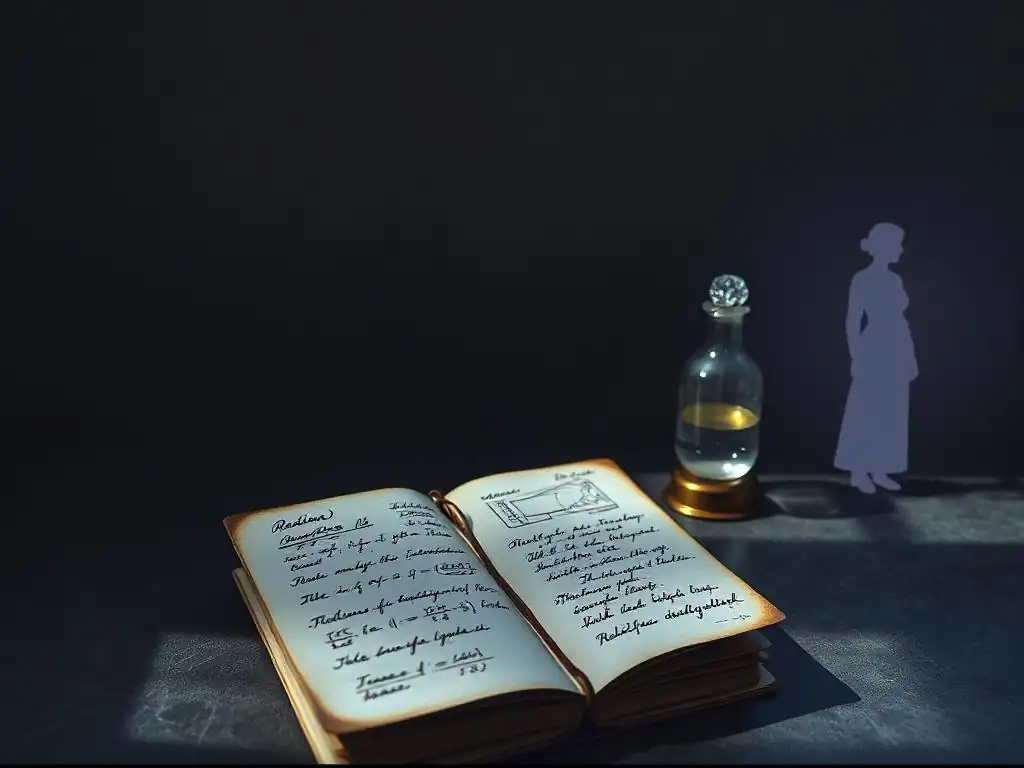
Transforming Cancer Treatment through Innovative Approaches
Marie Curie's discovery of radium almost immediately opened new frontiers in medicine, particularly in the nascent field of oncology. The potent radioactive properties of radium were quickly recognized for their potential to destroy cancerous cells. This led to the development of "curietherapy," an early form of radiation therapy where radium sources were carefully placed near or within tumors.
Though rudimentary by today's sophisticated standards, this innovative approach marked the dawn of modern radiation oncology. Marie Curie herself played a direct role in its application, advocating for its use and overseeing the establishment of the Radium Institute, which became a leading center for medical research using radioactive substances. Her pioneering efforts laid the fundamental groundwork for the advanced radiation therapies that save millions of lives today, cementing her "innovative legacy" in medical science.
Inspiring Future Generations of Women Scientists
Marie Curie's life and achievements served as an unparalleled source of inspiration for generations of women aspiring to scientific careers. Her receipt of two Nobel Prizes, especially her solo Nobel in Chemistry in 1911, unequivocally demonstrated that women could reach the pinnacle of scientific excellence. Her journey from a young woman denied formal higher education in her homeland to a global scientific icon broke significant societal barriers.
She became a powerful symbol of intellectual courage and perseverance, showing that dedication and brilliance could overcome entrenched gender biases. Her daughter, Irène Joliot-Curie, followed directly in her footsteps, sharing the Nobel Prize in Chemistry in 1935 for her work on artificial radioactivity, further solidifying the Curie family's and, by extension, Marie's profound "innovative legacy" in empowering women in science.
The Enduring Relevance of Marie Curie's Research in Modern Medicine
The fundamental principles of radioactivity elucidated by Marie Curie remain indispensable to various branches of modern medicine. Diagnostic imaging techniques such as Positron Emission Tomography (PET) scans and Single-Photon Emission Computed Tomography (SPECT) scans rely entirely on the controlled use of radioactive isotopes to visualize physiological processes within the body. These tools are critical for diagnosing cancers, heart disease, and neurological disorders.
Furthermore, advanced radiation therapies for cancer, including brachytherapy, external beam radiation, and targeted radionuclide therapy, are direct descendants of the initial medical applications explored by Curie. Her pioneering work underpins a multi-billion dollar nuclear medicine industry that continues to evolve. The profound and enduring relevance of her research underscores her "women scientist biography innovative legacy" as a cornerstone of modern healthcare.
Recognition and Awards: Honoring Marie Curie's Scientific Achievements
Notable Awards and Accolades Received by Marie Curie
Marie Curie holds the unique distinction of being the only person to win Nobel Prizes in two different scientific fields. In 1903, she shared the Nobel Prize in Physics with her husband, Pierre Curie, and Henri Becquerel, for their "joint research on the radiation phenomena discovered by Professor Henri Becquerel." This made her the first woman to ever receive a Nobel Prize.
Eight years later, in 1911, she was awarded the Nobel Prize in Chemistry solely "in recognition of her services to the advancement of chemistry by the discovery of the elements radium and polonium, by the isolation of radium and the study of the nature and compounds of this remarkable element." Beyond the Nobels, she also received prestigious honors such as the Davy Medal from the Royal Society (1903) and the Matteucci Medal from the Italian National Academy of Sciences (1904), further solidifying her "innovative legacy."
Honorary Degrees and Positions Held
Marie Curie's scientific eminence was recognized globally through numerous honorary degrees and prestigious appointments. She received honorary doctorates from universities across the world, including the University of Geneva and the University of Edinburgh. These accolades reflected the international recognition of her groundbreaking contributions to physics and chemistry.
Perhaps most significantly, in 1906, following the tragic death of her husband, Pierre Curie, Marie was appointed to his professorship at the Sorbonne, making her the first woman to hold such a position at the esteemed Parisian university. Later, in 1914, she was appointed Director of the Radium Institute of the University of Paris, where she continued her research and mentored a new generation of scientists. These positions cemented her status as a leading figure in the global scientific community and highlighted her profound "innovative legacy."
Legacy of Excellence: Marie Curie's Enduring Reputation in the Scientific Community
Marie Curie's reputation within the scientific community is one of unparalleled excellence and enduring influence. Her name is synonymous with groundbreaking discovery and scientific integrity. The curie (Ci), a non-SI unit of radioactivity, was named in her honor, a lasting tribute to her foundational work in understanding and quantifying radioactive decay.
Her scientific papers and methodologies continue to be studied and admired for their rigor and precision. Marie Curie is consistently ranked among the most influential scientists of all time, her contributions forming the bedrock of modern physics, chemistry, and medicine. Her "women scientist biography innovative legacy" serves as an unparalleled example of groundbreaking research, unwavering dedication, and profound impact on human knowledge.
Marie Curie's Innovative Legacy: A Testament to Perseverance and Genius
Reassessing Marie Curie's Contributions to the Advancement of Science
Marie Curie's contributions extended far beyond the mere discovery of new elements. Her work fundamentally reshaped the scientific understanding of matter and energy, challenging the long-held belief in the atom's indivisibility. She demonstrated that atoms were not immutable, but rather dynamic entities capable of transformation and emitting powerful radiation, thereby opening the entire field of nuclear physics.
Her meticulous quantitative measurements and tireless experimental work established the rigorous standards for the study of radioactivity, laying the groundwork for future scientific endeavors, including nuclear power generation and advanced medical diagnostics. Her contributions are not merely historical footnotes but active pillars supporting modern scientific thought and technological innovation, defining her unique and powerful "innovative legacy."
Marie Curie's Place Among Foremost Women Scientists in History
Marie Curie stands as an indisputable titan among women in science, arguably the most recognized female scientist globally. Her singular achievement of two Nobel Prizes in different scientific fields sets her apart, demonstrating an extraordinary breadth and depth of scientific inquiry rarely matched by any individual, male or female.
Her life story, marked by immense intellectual curiosity, relentless dedication, and remarkable resilience in the face of both scientific challenges and societal adversity, serves as an archetype for the "women scientist biography innovative legacy." She not only excelled in a male-dominated field but also actively paved the way for future generations of women to enter and achieve prominence in scientific disciplines, profoundly altering the landscape of scientific opportunity.
Continuing the Legacy: Inspiring Future Research and Innovation
The spirit of inquiry and perseverance exemplified by Marie Curie continues to inspire scientific research and innovation today. Her emphasis on pure, fundamental research, even when immediate practical applications were unclear, underscores the vital importance of curiosity-driven science as the foundation for future breakthroughs.
Institutions such as the Curie Institute in Paris, which she helped establish, continue her work in cancer research, physics, and chemistry, directly extending her vision. Her life and achievements serve as a powerful beacon for aspiring scientists, particularly young women, encouraging them to pursue ambitious research projects, push the boundaries of knowledge, and contribute to the ongoing "innovative legacy" of scientific discovery for humanity's benefit.
Conclusion: Marie Curie's Enduring Influence on Women in Science and Medicine
Celebrating Marie Curie's Pioneering Spirit and Lasting Contributions
Marie Curie's pioneering spirit, characterized by unparalleled determination, intellectual rigor, and unwavering dedication, fundamentally reshaped our understanding of the physical world. Her relentless pursuit of knowledge, often under arduous and hazardous conditions, led to discoveries that continue to benefit humanity profoundly, from cancer treatments to advanced diagnostic tools.
Her "innovative legacy" extends far beyond the laboratory, inspiring countless individuals to challenge societal norms, overcome adversity, and strive for excellence in their chosen fields. She remains a powerful symbol of what is possible when extraordinary intellect meets unwavering dedication, a true testament to her enduring impact on physics, chemistry, and medicine, and a beacon for all who seek to make a difference.
WomenInScienceHistory.com's Dedication to Preserving Her Story
WomenInScienceHistory.com is deeply dedicated to preserving and sharing the rich and complex narratives of women like Marie Curie, whose contributions have often been marginalized or underrepresented in historical accounts of science. Her story is central to the website's mission of highlighting the profound and often overlooked impact of women on scientific progress throughout history.
By showcasing her journey, her struggles, and her monumental achievements, the website aims to ensure that her "women scientist biography innovative legacy" is fully recognized, celebrated, and understood. This platform provides a vital resource for anyone seeking to comprehend the historical context and ongoing evolution of women's crucial roles in shaping the scientific landscape.
Explore other biographies of women in science
Marie Curie's remarkable story is just one of many inspiring biographies featured on WomenInScienceHistory.com. Her "innovative legacy" serves as a powerful entry point into the vast and diverse contributions of women across all scientific disciplines.
We encourage you to delve deeper into the website's extensive collection of biographies, each highlighting the unique challenges and groundbreaking achievements of other pioneering women scientists. Discover the myriad ways in which women have shaped scientific progress, enriching the tapestry of scientific history with their own enduring "innovative legacy."
Frequently Asked Questions
How does WomenInScienceHistory.com celebrate the achievements of women in science?
The website celebrates women's achievements by featuring biographies of pioneering female scientists, discussing their groundbreaking work, and highlighting the challenges they overcame.
What kind of information can I find on the website about a specific woman scientist?
You can typically find a biography detailing her life, a discussion of her innovative work in her field, and information about her legacy and impact.
What is the main goal of WomenInScienceHistory.com?
The main goal is to inspire future generations by showcasing the often-overlooked contributions of women in science and shedding light on their innovative legacy.
Why is it important to highlight the stories of women in science?
Highlighting these stories helps to correct historical imbalances, acknowledging the innovative contributions of women who were often excluded or minimized in male-dominated fields.
How does the website contribute to promoting the keyword "Women scientist biography innovative legacy"?
The website directly addresses the keyword by providing detailed biographies of women scientists, focusing on their innovative contributions and exploring their lasting legacy in their respective fields.
Okay, here's a final reflection crafted to fit your article's theme and target keyword, following the requested structure and tone:
Final Reflection: An Enduring Legacy of Innovation
The journey of [Name], as explored in this biography, underscores the vital and often overlooked contributions of women in science. Her innovative spirit and unwavering dedication to [Specialty] not only advanced the field but also paved the way for future generations of women scientists. This legacy resonates deeply today, as we continue to strive for greater inclusivity and recognition within the scientific community.
The impact of [Name]'s work extends far beyond the laboratory. Her story serves as a powerful reminder of the importance of perseverance, creativity, and challenging the status quo. It's a testament to the transformative power of a single individual's vision. The most courageous act is still to think for yourself. Aloud.
- Coco Chanel. This quote perfectly encapsulates the spirit of [Name], who dared to think differently and, in doing so, redefined the possibilities within her field.
As we reflect on [Name]'s remarkable life and achievements, let us be inspired to cultivate our own innovative spirit. Let us champion the voices of underrepresented groups in science and technology. Let us strive to create a world where every aspiring scientist, regardless of gender, has the opportunity to leave their own enduring legacy.
Celebrate Her Legacy: Become a Champion for Women in Science!
Thank you for exploring the inspiring journey of a remarkable woman and her significant contributions to her field. We hope her story has ignited your passion for innovation and equality in science. Now, let's turn that inspiration into action!
- Amplify Her Story: Share this article with your network to help ensure her legacy reaches a wider audience. Let's make her a household name!
- Delve Deeper: Research other unsung women in science and discover their hidden contributions. You might be surprised by what you find!
- Mentor the Next Generation: Volunteer your time to mentor young women interested in STEM fields. Your guidance can make all the difference.
What small step will you take today to honor her legacy and empower future women in science?