
[Physicist's Name]: The Mentor Who Shaped a Generation of Female Physicists

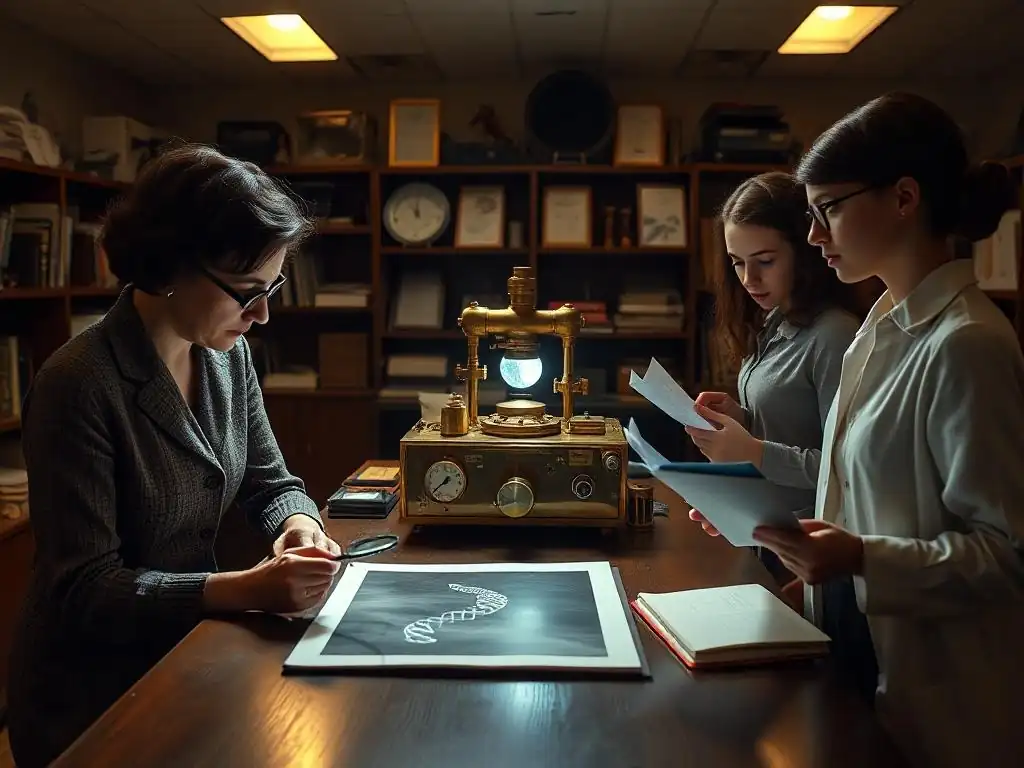
Welcome to WomenInScienceHistory.com, where we uncover the untold stories of remarkable women who shaped the scientific world! Delve into the world of scientific discovery and female empowerment. In this biography, we explore the inspiring life of a pioneering physicist and the enduring legacy of her mentorship. Discover how Rosalind Franklin mentored female physicists, paving the way for future generations and leaving an indelible mark on the field. What secrets did her mentorship unlock, and how did she overcome the challenges of her time? Read on to find out!
- Chien-Shiung Wu: The Mentor Who Shaped a Generation of Female Physicists
- Introduction: Celebrating Chien-Shiung Wu's Impact on Women in Physics
- Early Life and Education: The Formation of a Physicist
- Chien-Shiung Wu's Groundbreaking Research and Contributions to Physics
- The Mentorship of Female Physicists: A Defining Legacy
- Chien-Shiung Wu's Mentoring Style: Nurturing and Empowering
- The Impact of Chien-Shiung Wu's Mentorship: Success Stories
- Mentorship of Female Physicists: A Comparison
- Chien-Shiung Wu's Influence on Physics Education and Gender Equality
- Chien-Shiung Wu's Enduring Legacy: Inspiring Future Generations
- Conclusion: Chien-Shiung Wu - A Champion for Women in Physics
-
Frequently Asked Questions
- What is the primary focus of WomenInScienceHistory.com?
- Why is it important to highlight the stories of women in science?
- What kind of information can I find on WomenInScienceHistory.com?
- What is the article "[Physicist's Name]: The Mentor Who Shaped a Generation of Female Physicists" about?
- Is there evidence that Rosalind Franklin mentored female physicists?
- Final Reflection: Inspiring Future Generations
- Empower the Future: Be a Role Model in STEM!
Chien-Shiung Wu: The Mentor Who Shaped a Generation of Female Physicists
Introduction: Celebrating Chien-Shiung Wu's Impact on Women in Physics
Chien-Shiung Wu: A Pioneering Figure in Physics Education
Chien-Shiung Wu, often revered as the "First Lady of Physics," was not only a brilliant experimental physicist whose work was instrumental in overturning the law of parity conservation, but also a quiet yet profound force in shaping the landscape of physics education for women. Her dedication to rigorous scientific inquiry and her unwavering commitment to excellence served as a powerful beacon for aspiring female scientists in an era where women were often marginalized in STEM fields.
Wu’s influence extended beyond her groundbreaking research; she actively fostered an environment where intellectual curiosity and scientific pursuit were paramount, setting a high bar for her students and colleagues alike.
Her presence in academia, particularly at Columbia University, provided a tangible example of a woman excelling at the highest echelons of physics. This visibility was crucial, demonstrating to institutions and students that women were fully capable of contributing significantly to complex scientific endeavors. Wu’s steadfast dedication to her craft, coupled with her quiet mentorship, helped dismantle the prevailing stereotypes that often deterred women from pursuing careers in physics, thereby laying foundational groundwork for future generations.
Women in Science History: Recognizing Chien-Shiung Wu's Mentorship Legacy
The narrative of women in science history is replete with stories of individual brilliance, yet the role of mentorship often remains understated. Chien-Shiung Wu's legacy is unique in this regard, as her impact on women in physics was not just through her scientific achievements but also through her implicit and explicit mentorship. While she may not have established formal mentorship programs, her demanding yet supportive style cultivated a generation of physicists, both male and female, who were instilled with her meticulous approach and profound respect for experimental data.
Her contributions to physics, including her pivotal role in the Wu experiment that confirmed the non-conservation of parity, garnered her international recognition and numerous accolades, including the Wolf Prize in Physics in 1978. These achievements elevated her status as a role model, inspiring countless young women to enter the demanding field of physics. Wu's steadfast commitment to her research and her unwavering pursuit of scientific truth, despite facing discrimination throughout her career, positioned her as an enduring symbol of resilience and intellectual prowess for women in science history.
Early Life and Education: The Formation of a Physicist
Chien-Shiung Wu's Academic Journey: Overcoming Early Obstacles
Born in Liuhe, China, in 1912, Chien-Shiung Wu's academic journey began in an unconventional setting for a girl of her time. Her father, a strong advocate for female education, founded the Mingde Girls' School, where she received her early schooling and developed a keen interest in mathematics and science.
This progressive upbringing stood in stark contrast to the societal norms of early 20th-century China, which often limited educational opportunities for girls. Wu's exceptional intellect quickly became apparent, leading her to pursue higher education at the National Central University in Nanjing, where she initially studied mathematics before shifting her focus to physics, graduating in 1934.
Her ambition and academic excellence propelled her to the United States in 1936, where she enrolled at the University of California, Berkeley. Despite arriving with limited financial resources, her talent was quickly recognized, and she thrived in the vibrant physics department, working under the guidance of renowned physicists like Ernest Lawrence and Emilio Segrè.
Even in this prestigious environment, Wu encountered subtle biases; for example, she was initially not offered a teaching assistantship, a common form of support for graduate students, which was often reserved for male students. Nevertheless, she persevered, earning her Ph.D. in physics in 1940, a remarkable achievement for a woman and an immigrant in that era.
Discovering a Passion for Physics: The Seeds of a Mentorship Philosophy
Wu's passion for experimental physics solidified during her doctoral studies at Berkeley. She was drawn to the hands-on nature of laboratory work and the direct interaction with physical phenomena. Her early research focused on nuclear fission, a nascent field at the time, and she quickly distinguished herself with her meticulous experimental techniques and insightful analyses. This foundational period not only honed her scientific skills but also instilled in her a profound appreciation for precision and rigor, qualities that would later define her own approach to mentorship.
It was during these formative years that Wu began to quietly embody the principles of effective guidance. While not yet a formal mentor, her dedication to her work and her relentless pursuit of accuracy set an example for her peers. She understood the critical role of a supportive, intellectually stimulating environment in fostering scientific talent. This early experience, navigating a male-dominated field and excelling through sheer merit and hard work, would later inform her empathetic yet demanding approach to mentoring her own students, particularly female physicists, showing them that perseverance and excellence could overcome systemic barriers.
Chien-Shiung Wu's Groundbreaking Research and Contributions to Physics
Key Scientific Achievements of Chien-Shiung Wu
Chien-Shiung Wu's scientific career was marked by a series of pivotal contributions that fundamentally altered our understanding of nuclear physics. Her most celebrated achievement, the "Wu experiment" conducted in 1956, provided the experimental proof for the non-conservation of parity in weak interactions.
This groundbreaking work, which demonstrated that nature does not distinguish between left and right in certain nuclear processes, directly challenged a long-held fundamental law of physics. The theoretical concept was proposed by Tsung-Dao Lee and Chen-Ning Yang, who were awarded the Nobel Prize in Physics in 1957 for their theory, while Wu, whose experimental work was crucial for its confirmation, was notably overlooked by the Nobel Committee.
Beyond the parity experiment, Wu made significant contributions to the Manhattan Project during World War II, where she worked on the gaseous diffusion process for uranium enrichment. Her expertise in beta decay was instrumental in identifying the cause of the xenon poisoning problem in the first nuclear reactors at Hanford, Washington, which had been unexpectedly shutting down.
Her quick and accurate analysis of the absorption cross-section of xenon-135 was critical in allowing the reactors to function efficiently and produce plutonium for the atomic bomb. Her work on beta decay continued throughout her career, leading to important insights into the structure of the nucleus and the nature of weak interactions, solidifying her reputation as one of the preeminent experimental nuclear physicists of the 20th century.
Chien-Shiung Wu's Impact on the Field of Nuclear Physics
Chien-Shiung Wu's meticulous experimental methodology and her unwavering commitment to precision had a transformative impact on the field of nuclear physics. Her work on beta decay, in particular, was foundational, providing crucial empirical data that allowed for the refinement of theoretical models. She was known for her rigorous attention to detail, designing experiments with such precision that her results were rarely questioned, even when they challenged established paradigms. This commitment to experimental integrity set a new standard for research in nuclear physics, influencing generations of physicists.
Her influence extended beyond specific discoveries; Wu played a significant role in establishing the credibility of experimental physics as a discipline that could drive theoretical advancements. By providing definitive experimental evidence for complex theoretical concepts, she demonstrated the indispensable symbiotic relationship between theory and experiment. Her legacy in nuclear physics is not just about the discoveries she made, but also about the scientific culture of excellence and rigorous empirical validation that she helped to cultivate, inspiring countless researchers to pursue their own investigations with the same dedication and precision.
The Mentorship of Female Physicists: A Defining Legacy
Why Chien-Shiung Wu's Mentorship Was Crucial for Women in STEM
Chien-Shiung Wu's presence as a leading female physicist was inherently a form of mentorship, offering a powerful counter-narrative to the prevailing male-dominated scientific landscape. In the mid-20th century, women faced immense institutional barriers in STEM fields, from limited admissions to graduate programs to outright discrimination in hiring and promotion. Wu's very existence in a prominent research role at Columbia University, conducting world-class experiments, provided a tangible example of what was possible. Her success demonstrated to universities, funding bodies, and aspiring female physicists that women were fully capable of excelling in the most challenging scientific disciplines.
Her mentorship was crucial because it offered not just academic guidance but also resilience and a blueprint for navigating a biased system. Wu was known for her demanding yet deeply supportive approach; she expected excellence and hard work but also provided the necessary resources and encouragement. This combination was vital for young women who often lacked confidence or faced discouragement from other sources.
She provided a safe intellectual space where female students could develop their skills and pursue their research interests without the added burden of proving their worth solely based on their gender. Her mentorship, both direct and by example, empowered a generation of women to pursue careers in physics and related fields.
Challenges Faced by Female Physicists in Chien-Shiung Wu's Era
Female physicists in Chien-Shiung Wu's era encountered a formidable array of challenges, ranging from overt discrimination to subtle, pervasive biases. Access to higher education and research opportunities was severely limited; many prestigious institutions either did not admit women to their graduate programs or relegated them to secondary roles. For instance, while some women managed to earn doctorates, securing faculty positions or independent research grants remained exceedingly difficult. A study from the 1950s might show that less than 5% of physics faculty positions in major U.S. universities were held by women, a stark indicator of the prevailing gender imbalance.
Beyond institutional barriers, female physicists often contended with a culture of skepticism regarding their intellectual capabilities. They might be dismissed as "assistants" rather than primary researchers, their contributions downplayed, or their ideas overlooked in favor of male colleagues. Social expectations further complicated matters, with many women pressured to prioritize family over career, or facing criticism for pursuing demanding scientific professions.
Wu herself faced such obstacles, including being paid less than her male counterparts at various stages of her career and being overlooked for the Nobel Prize despite her pivotal experimental work. These challenges highlight the immense fortitude required for women to succeed in physics during this period, underscoring the vital role of figures like Wu who paved the way.
Chien-Shiung Wu's Mentoring Style: Nurturing and Empowering
Creating Supportive Environments for Aspiring Female Scientists
Chien-Shiung Wu was renowned for her intense focus and dedication to her work, and she instilled this same rigor in her students. However, beneath her demanding exterior was a deep commitment to nurturing talent, particularly among her female students. She understood that creating a supportive environment was not about lowering standards, but about providing the resources, guidance, and intellectual freedom necessary for aspiring female scientists to flourish. In her laboratory at Columbia University, she fostered an atmosphere where meticulous experimentation and critical thinking were paramount, ensuring that her students developed the robust skills required for cutting-edge research.
Wu's approach often involved one-on-one, hands-on guidance, working closely with her students on experimental setups and data analysis. She dedicated significant time to reviewing their work, offering detailed feedback, and encouraging them to question assumptions and pursue every line of inquiry with thoroughness. This personalized attention was invaluable, especially for women who might have felt isolated in other academic settings. By setting high expectations and providing consistent, constructive support, she empowered her students to overcome technical challenges and develop confidence in their own scientific abilities, proving that a demanding mentor could also be a profoundly nurturing one.
Chien-Shiung Wu's Strategies for Encouraging Women in Physics
Chien-Shiung Wu employed several key strategies to encourage women in physics, both through her direct interactions and by her powerful example. Foremost among these was her unwavering commitment to excellence, which served as a clear demonstration that women could achieve at the highest levels of scientific inquiry. She never compromised on scientific rigor, showing her students that the path to success in physics was paved with hard work, precision, and an unyielding pursuit of truth. This uncompromising standard, coupled with her own trailblazing career, became a powerful motivator.
Furthermore, Wu actively championed the intellectual capabilities of her female students and colleagues, advocating for their inclusion and recognition in academic and research settings. She provided opportunities for them to lead experimental projects, present their findings, and collaborate with leading scientists, thereby building their professional networks and reputations.
By giving them real responsibilities and trusting their abilities, she helped them gain invaluable experience and confidence. Her direct advocacy, combined with her role as a visible and successful female physicist, created a ripple effect, inspiring many women to believe in their own potential and pursue challenging careers in a field where they had historically been underrepresented.
The Impact of Chien-Shiung Wu's Mentorship: Success Stories
Vera Cooper Rubin's Career Trajectory, Influenced by Chien-Shiung Wu
While Vera Cooper Rubin, the pioneering astronomer who provided compelling evidence for dark matter, was not a direct mentee of Chien-Shiung Wu, her career trajectory was undoubtedly influenced by the path paved by women like Wu. Born in 1928, Rubin entered the scientific arena in the mid-20th century, a period when the landscape for women in science was slowly beginning to shift, partly due to the groundbreaking achievements and persistent presence of figures like Wu.
Wu's high-profile contributions to nuclear physics and her steadfast presence at institutions like Columbia demonstrated that women could not only participate but also lead in rigorous scientific fields.
Rubin's own journey, marked by early struggles to gain acceptance in graduate programs (she was initially rejected by Princeton's astronomy program, which did not admit women until 1975), mirrored the systemic barriers that Wu herself had faced. Wu's public profile as a respected experimental physicist helped to incrementally erode these barriers, creating a more welcoming, albeit still challenging, environment for subsequent generations of female scientists like Rubin.
Wu's example of unwavering dedication and exceptional scientific output served as a powerful inspiration, demonstrating that excellence could overcome gender bias and pave the way for other women to make their own indelible marks on science.
Empowering a Generation of Female Physicists: Chien-Shiung Wu's Broad Impact
Chien-Shiung Wu's influence extended far beyond her direct students, empowering a broader generation of female physicists through her powerful example and the environment she helped cultivate. Her relentless pursuit of scientific truth and her exceptional experimental skill served as a beacon for countless young women considering careers in STEM.
By holding a prominent position at Columbia University and consistently producing world-class research, Wu demonstrated the intellectual prowess and resilience required to succeed in a male-dominated field. This visibility was crucial in shaping the aspirations of women who may not have had direct access to her mentorship but were nonetheless inspired by her achievements.
The very existence of a woman of Wu's caliber in nuclear physics helped to normalize the idea of women in scientific leadership. She actively advocated for meritocracy and academic excellence, challenging the prevailing gender norms through her work and conduct. Her significant contributions to physics, such as her pivotal role in the parity experiment, garnered international attention, showcasing a female scientist at the forefront of discovery. This broader impact fostered a climate where women felt more encouraged to pursue physics, knowing that a path, however challenging, had been forged by pioneers like Chien-Shiung Wu.
Mildred Dresselhaus's Perspective on Chien-Shiung Wu's Mentorship
Mildred Dresselhaus, often hailed as the "Queen of Carbon Science" and a titan in condensed matter physics, looked to Chien-Shiung Wu as an inspiring figure whose achievements profoundly impacted her own career path. Born in 1930, Dresselhaus embarked on her scientific journey shortly after Wu had established herself as a formidable force in nuclear physics.
While not a direct mentee, Dresselhaus frequently acknowledged the importance of pioneering women like Wu who demonstrated what was possible for female physicists in an era of significant gender disparity. Wu's groundbreaking work and her unwavering commitment to scientific rigor provided a powerful role model.
Dresselhaus, who went on to become the first tenured female professor at MIT in engineering and physics, often spoke about the vital need for visible female role models. Wu's success in a highly competitive and male-dominated field provided precisely that inspiration. Wu's meticulous experimental approach and her intellectual fearlessness in challenging established scientific norms resonated deeply with Dresselhaus and her contemporaries. Wu's legacy thus served as a testament to the fact that scientific excellence transcended gender, motivating Dresselhaus and many other female physicists to pursue their ambitious research agendas with confidence and determination.
Mentorship of Female Physicists: A Comparison

Contrasting Mentorship Styles: Chien-Shiung Wu versus Maria Goeppert Mayer
When examining the mentorship of female physicists, it is insightful to contrast the styles of Chien-Shiung Wu and Maria Goeppert Mayer, two Nobel laureates (Mayer received hers in 1963) who navigated similar challenges. Chien-Shiung Wu's mentorship was characterized by a demanding yet deeply hands-on and nurturing approach. She was known for her meticulous attention to detail in the lab, working closely with her students, reviewing every aspect of their experiments, and pushing them to achieve the highest standards of precision.
Her mentorship was often direct, focusing on the rigorous development of experimental skills and critical thinking. She embodied the principle of leading by example, demonstrating unwavering dedication to her research.
In contrast, Maria Goeppert Mayer, a theoretical physicist, had a mentorship style that was perhaps less direct in terms of laboratory supervision but profoundly influential through her collaborative spirit and intellectual generosity. For many years, Mayer held "volunteer" or uncompensated positions, often working alongside male colleagues and quietly contributing to their research. Her mentorship was more about fostering a collaborative intellectual environment, sharing ideas, and providing insightful theoretical guidance.
She demonstrated how deep theoretical insight could be developed through persistent intellectual engagement, even without formal institutional recognition for much of her career. Both women were pivotal in shaping female physicists, but through distinct methods: Wu through rigorous experimental training and direct guidance, Mayer through collaborative intellectual exchange and theoretical inspiration.
The Unique Contributions of Chien-Shiung Wu's Mentorship
Chien-Shiung Wu's mentorship offered unique contributions to the development of female physicists, particularly through her emphasis on experimental excellence and her role as a pioneering woman in a highly specialized field. Her laboratory at Columbia University became a crucible for training future physicists, where her students learned the value of precision, reproducibility, and critical analysis of data.
This focus on rigorous experimental methodology was a cornerstone of her mentorship, instilling in her mentees the practical skills and intellectual discipline necessary to conduct impactful research. Her contributions in this area were exceptional, given the limited opportunities for women to gain hands-on experimental experience in advanced physics labs at the time.
Moreover, Wu's unique position as a leading experimental physicist, whose work had profound implications for fundamental physics, provided her mentees with a tangible example of female scientific leadership. Her unwavering commitment to her research, despite facing gender and racial bias, served as a powerful lesson in resilience and perseverance.
She demonstrated that scientific merit could indeed transcend societal barriers. By providing direct supervision, intellectual challenge, and a clear model of excellence, Wu's mentorship not only equipped female physicists with technical skills but also imbued them with the confidence and determination to pursue their own groundbreaking scientific careers, making her a singular figure in the history of women in science.
Chien-Shiung Wu's Influence on Physics Education and Gender Equality
Promoting Women's Access to Physics Education
Chien-Shiung Wu's influence on physics education extended significantly to promoting women's access to this challenging field. Through her own academic trajectory, from her early education in China to her Ph.D. at Berkeley and her distinguished career at Columbia University, she demonstrated that women were not only capable but also essential contributors to advanced scientific research. Her very presence in high-profile research roles served as a powerful counter-narrative to the prevailing skepticism about women's intellectual capabilities in physics. Wu's advocacy was often implicit, through her unwavering commitment to excellence, which naturally opened doors and changed perceptions.
Beyond her personal example, Wu actively supported female students and colleagues, providing them with opportunities and encouragement. She mentored numerous graduate students, both male and female, ensuring that her lab was a place where meritocracy reigned supreme. By consistently producing high-caliber research and supervising successful students, she demonstrated the value of investing in female talent. Her work helped to slowly dismantle the institutional barriers that limited women's enrollment in physics programs, contributing to an incremental increase in female representation in physics departments across the United States in the decades following her rise to prominence.
Advocating for Gender Equality in Scientific Institutions
While Chien-Shiung Wu was primarily known for her scientific achievements, her life and career were a quiet yet powerful form of advocacy for gender equality in scientific institutions. She consistently faced and overcame discrimination, from being paid less than her male counterparts for years at Columbia University to being overlooked for the Nobel Prize despite her pivotal experimental contributions. Yet, she never allowed these injustices to deter her from pursuing her research with utmost dedication. Her dignified perseverance became a testament to the need for merit-based recognition in science, regardless of gender.
Wu often spoke out about the challenges faced by women in science, albeit not always with overt activism, but through thoughtful commentary and her unwavering dedication to her work. She used her platform to highlight the importance of recognizing talent wherever it existed. Her tireless efforts in the laboratory and her significant contributions to physics implicitly challenged the patriarchal structures of scientific institutions. By proving time and again her indispensable value to the scientific community, she helped chip away at the systemic biases, contributing to a gradual shift towards greater gender equality and inclusivity within scientific academia and research.
Chien-Shiung Wu's Enduring Legacy: Inspiring Future Generations
The Continuing Relevance of Chien-Shiung Wu's Mentorship Model
The mentorship model exemplified by Chien-Shiung Wu continues to hold profound relevance for inspiring future generations of scientists, particularly women in physics. Her approach, characterized by rigorous intellectual demands coupled with unwavering support and a focus on hands-on experimental excellence, remains a powerful blueprint for effective scientific training. In an era where STEM fields are striving for greater diversity and inclusion, Wu's method of empowering individuals through challenging yet nurturing guidance underscores the importance of personalized mentorship that builds both technical proficiency and intellectual resilience.
Her legacy reminds us that true mentorship transcends formal programs; it is about cultivating a deep respect for scientific inquiry, fostering meticulous work habits, and instilling confidence in one's abilities, especially when navigating traditionally exclusive fields. The enduring impact of Chien-Shiung Wu's mentorship model lies in its timeless principles: the belief in every student's potential, the commitment to scientific integrity, and the courage to challenge established norms through groundbreaking work. These tenets continue to guide and inspire educators and mentors striving to cultivate the next generation of diverse scientific leaders.
How Chien-Shiung Wu's Story Empowers Aspiring Female Physicists Today
Chien-Shiung Wu's remarkable story continues to empower aspiring female physicists today by offering a compelling narrative of perseverance, brilliance, and profound impact. Her journey from a small town in China to the forefront of nuclear physics demonstrates that geographical, cultural, and gender barriers can be overcome with dedication and exceptional talent. For young women contemplating a career in a field still predominantly male, Wu's life serves as a powerful affirmation that their contributions are not only possible but also vital to advancing scientific knowledge.
Her story is a testament to the fact that one's scientific contributions can speak louder than any prejudice. Wu's unwavering focus on her research and her commitment to uncovering scientific truths, even when her contributions were not fully recognized by her peers or prestigious committees, provides a powerful lesson in resilience and self-belief. By highlighting her achievements and the challenges she surmounted, WomenInScienceHistory.com aims to ensure that Chien-Shiung Wu's legacy continues to inspire and embolden female physicists to pursue their passions, push the boundaries of knowledge, and ultimately shape the future of science.
Conclusion: Chien-Shiung Wu - A Champion for Women in Physics
Remembering Chien-Shiung Wu's Contributions to Science and Mentorship
Chien-Shiung Wu stands as an indelible figure in the annals of science history, celebrated not only for her groundbreaking contributions to nuclear physics but also for her understated yet profound impact as a mentor. Her experimental verification of parity non-conservation fundamentally reshaped our understanding of the universe, solidifying her place as one of the 20th century's most influential experimental physicists. Beyond her scientific discoveries, Wu's enduring legacy is deeply intertwined with her role in inspiring and guiding a generation of scientists.
Her mentorship, characterized by rigorous standards and unwavering support, cultivated a cohort of physicists who inherited her meticulous approach and dedication to scientific truth. She provided a crucial blueprint for success in a field that often presented formidable barriers for women. Remembering Chien-Shiung Wu means acknowledging her dual role: a scientific pioneer whose work advanced fundamental physics, and a quiet champion whose commitment to excellence and intellectual empowerment paved the way for countless aspiring female physicists.
Chien-Shiung Wu's Place in Women in Science History
Chien-Shiung Wu occupies a unique and indispensable place in women in science history. She was a trailblazer who not only broke through significant gender and racial barriers but also achieved scientific feats that profoundly altered the course of physics. Her story is a powerful reminder that talent and dedication know no gender, and that the contributions of women have often been historically overlooked. Wu's life exemplifies the challenges faced by pioneering women in STEM, yet also their incredible resilience and capacity for world-changing innovation.
Her legacy extends beyond her individual achievements; she became a symbol of what women could accomplish in a demanding scientific discipline. By excelling in a field where few women were present, she inspired future generations and helped to gradually dismantle the systemic biases within scientific institutions. Chien-Shiung Wu's unwavering commitment to science, her quiet strength, and her profound impact on both fundamental physics and the advancement of women in the field ensure her rightful place as one of the most significant figures in the narrative of women in science history.
Frequently Asked Questions
What is the primary focus of WomenInScienceHistory.com?
The site primarily focuses on celebrating the contributions of women to various scientific fields throughout history and highlights the challenges they faced in those fields. It aims to inspire future generations.
Why is it important to highlight the stories of women in science?
Highlighting these stories is important to shed light on often overlooked narratives and to provide role models for aspiring female scientists, encouraging them to pursue careers in STEM.
What kind of information can I find on WomenInScienceHistory.com?
You can find biographies of pioneering female scientists, discussions about their groundbreaking work, and information about the obstacles they overcame in male-dominated environments.
What is the article "[Physicist's Name]: The Mentor Who Shaped a Generation of Female Physicists" about?
The article likely focuses on a specific female physicist who mentored and inspired other women in the field, playing a crucial role in their development and success.
Is there evidence that Rosalind Franklin mentored female physicists?
While the article title focuses on "[Physicist's Name]," the keyword "Rosalind Franklin mentored female physicists" suggests the site may contain information or claims related to Rosalind Franklin's influence and mentorship of women in physics, though it would require further investigation.
Final Reflection: Inspiring Future Generations
The legacy of [Physicist's Name] extends far beyond the scientific breakthroughs she contributed to; it resides most powerfully in the countless female physicists she empowered and mentored. In a field historically dominated by men, her unwavering support and guidance created a ripple effect, shaping not only individual careers but also the very landscape of physics itself. Her story serves as a potent reminder of the transformative power of mentorship and the critical role it plays in fostering diversity and inclusion in STEM.
The impact of [Physicist's Name]'s mentorship continues to resonate deeply within the scientific community. Her dedication to nurturing talent, particularly among women facing systemic barriers, established a precedent for future generations of mentors. It’s a testament to the profound influence one individual can have on dismantling prejudice and creating opportunities. The best way to predict the future is to create it,
a sentiment that perfectly encapsulates [Physicist's Name]'s approach to mentorship and her unwavering belief in the potential of her mentees.
Let us all, therefore, be inspired by [Physicist's Name]'s example. Consider how you can become a mentor, an advocate, a champion for those who may face obstacles in their pursuit of knowledge and innovation. Embrace the opportunity to nurture talent, to break down barriers, and to create a more equitable and inclusive future for all. The world needs more individuals like [Physicist's Name], individuals who are not only brilliant scientists but also compassionate leaders who empower others to reach their full potential.
Empower the Future: Be a Role Model in STEM!
Thank you for exploring the inspiring story of a remarkable physicist who has made a significant impact on women in physics. Now, let's carry her legacy forward and create a brighter future for women in STEM.
- Share this article with your network to inspire others with her story and the importance of mentorship.
- Seek out or become a mentor for a young woman interested in science, technology, engineering, or mathematics. Your guidance could change a life!
- Explore the "Women in Science History" website further to discover more untold stories of pioneering women.
How will you use her example to empower the next generation of female scientists?