
Popularizing a Paradigm: How Jane Marcet Made Chemistry Accessible to All

Welcome to WomenInScienceHistory.com!
Delve into the captivating stories of women who defied expectations and shaped the scientific landscape. Ever wondered how complex scientific concepts could become accessible to all? Our latest biography explores just that, focusing on Jane Marcet and her revolutionary approach to chemistry education accessibility. Discover how this pioneering woman popularized scientific knowledge and broke down barriers, paving the way for future generations. Read on to uncover the lasting impact of her work and the secrets to her success!
- Introduction: Jane Marcet and the Democratization of Chemistry Knowledge
- Jane Marcet: A Pioneer in Chemistry Education for Women and the Public
- "Conversations on Chemistry": Marcet's Groundbreaking Educational Book
- The Impact of "Conversations on Chemistry" on Science Learning
- Overcoming Obstacles: Challenges Faced by a Female Science Writer
- Jane Marcet's Other Contributions to Science Education
- Jane Marcet's Enduring Legacy: Chemistry Education Accessibility Today
- Conclusion: Jane Marcet - A Champion for Chemistry Education Accessibility
-
Frequently Asked Questions
- How did Jane Marcet contribute to making chemistry education more accessible?
- What were some of the challenges Jane Marcet faced as a woman in science during her time?
- What was the primary goal of Jane Marcet's writing?
- Why is Jane Marcet's work significant for WomenInScienceHistory.com?
- How did Conversations on Chemistry impact the field of chemistry education?
- Final Reflection: Igniting Curiosity, Democratizing Knowledge
- Unveil Your Inner Scientist: Take Action Now!
Introduction: Jane Marcet and the Democratization of Chemistry Knowledge
Women in Chemistry History: Jane Marcet's Enduring Legacy
Within the rich tapestry of women in chemistry history, Jane Marcet stands as a towering figure whose contributions often remain understated. Born in 1769, her pioneering efforts in making complex scientific principles understandable to a broad audience, particularly women and the general public, carved a unique niche in the annals of science education. Her most celebrated work, "Conversations on Chemistry," published in 1806, not only demystified the burgeoning field of chemistry but also established a pedagogical approach that championed clarity and engagement over dry academic discourse.
Jane Marcet's enduring legacy is intrinsically tied to her profound impact on chemistry education accessibility. She demonstrated that scientific knowledge was not solely the domain of a select few male academics but could be grasped and appreciated by anyone with an inquiring mind. Her work empowered countless individuals, inspiring a deeper understanding of the natural world and laying foundational knowledge for future scientific luminaries, thereby solidifying her place as a true pioneer in the popularization of science.
The Need for Accessible Science Education in the 19th Century
The early 19th century presented a stark landscape for science education: it was largely inaccessible, confined to university lecture halls, and presented in dense, often Latin-laden texts. Chemistry, in particular, was evolving rapidly with discoveries by figures like Lavoisier and Davy, but its dissemination was limited to a privileged few. There was a critical void in literature that could translate these groundbreaking advancements into language comprehensible to the curious layperson, let alone women, who were largely excluded from formal scientific institutions.
This era desperately needed advocates for accessible chemistry education. Most scientific texts assumed prior knowledge and were written by and for an academic elite. The prevailing educational model did not prioritize public understanding or female participation in scientific discourse. Jane Marcet recognized this significant gap and dedicated her intellectual prowess to bridging it, understanding that true societal progress depended on a scientifically literate populace.
Jane Marcet: A Pioneer in Chemistry Education for Women and the Public
Background and Early Life of Jane Marcet
Jane Haldimand Marcet was born in Geneva, Switzerland, in 1769, into a prosperous and intellectually vibrant family. Her father, Anthony Francis Haldimand, was a successful Swiss merchant and banker, and her mother, Jane Margueritte, fostered an environment of intellectual curiosity. Growing up in a cosmopolitan household, Marcet was exposed to a wide array of ideas and discussions, including those from prominent intellectuals and political exiles who frequented her family's home.
Her early life provided her with a broad education, including exposure to languages, arts, and the nascent scientific discussions of the time. This rich intellectual foundation, combined with her innate curiosity, laid the groundwork for her later endeavors in popularizing complex subjects. Her marriage in 1799 to Alexander Marcet, a physician and chemist, further deepened her engagement with scientific discourse, providing her with direct access to contemporary scientific thought and practical experiments.
Jane Marcet's Unique Approach to Science Education
Jane Marcet's approach to science education was revolutionary for her time, emphasizing clarity, engagement, and practical relevance. She firmly believed that complex scientific principles could be understood by anyone, regardless of their formal educational background, if presented in an appropriate manner. Her method broke away from the didactic, lecture-based style prevalent in the 19th century, opting instead for an interactive and conversational format.
She employed a pedagogical strategy that mirrored natural learning, using dialogue between a knowledgeable tutor and curious pupils to explore concepts. This allowed her to anticipate common questions, address misconceptions, and introduce new ideas gradually, making the learning process intuitive and less intimidating. This commitment to Jane Marcet's unique approach significantly enhanced chemistry education accessibility, making it possible for readers to grasp intricate scientific ideas through relatable scenarios and clear explanations, a stark contrast to the dense academic treatises of her contemporaries.
"Conversations on Chemistry": Marcet's Groundbreaking Educational Book
The Genesis of "Conversations on Chemistry": Filling a Void in Science Literature
The inspiration for "Conversations on Chemistry" arose from Jane Marcet's own experiences attending the Royal Institution lectures of the renowned chemist Humphry Davy in the early 1800s. While fascinated by the groundbreaking discoveries, she recognized the absence of accessible texts that could translate these complex scientific ideas for a general audience, especially women who were not afforded formal scientific training. She perceived a significant void in scientific literature: books that were both accurate and engaging for those without prior specialized knowledge.
Driven by a desire to share scientific understanding beyond the confines of academic institutions, Marcet embarked on writing her seminal work. Published anonymously in 1806 under the unassuming title "Conversations on Chemistry, In Which the Elements of That Science Are Familiarly Explained and Illustrated by Experiments," the book aimed to fill this critical gap. It was a bold step, as few women dared to author scientific texts, and even fewer attempted to popularize such a complex field for a non-specialist readership.
The Conversational Style: Making Complex Chemistry Understandable
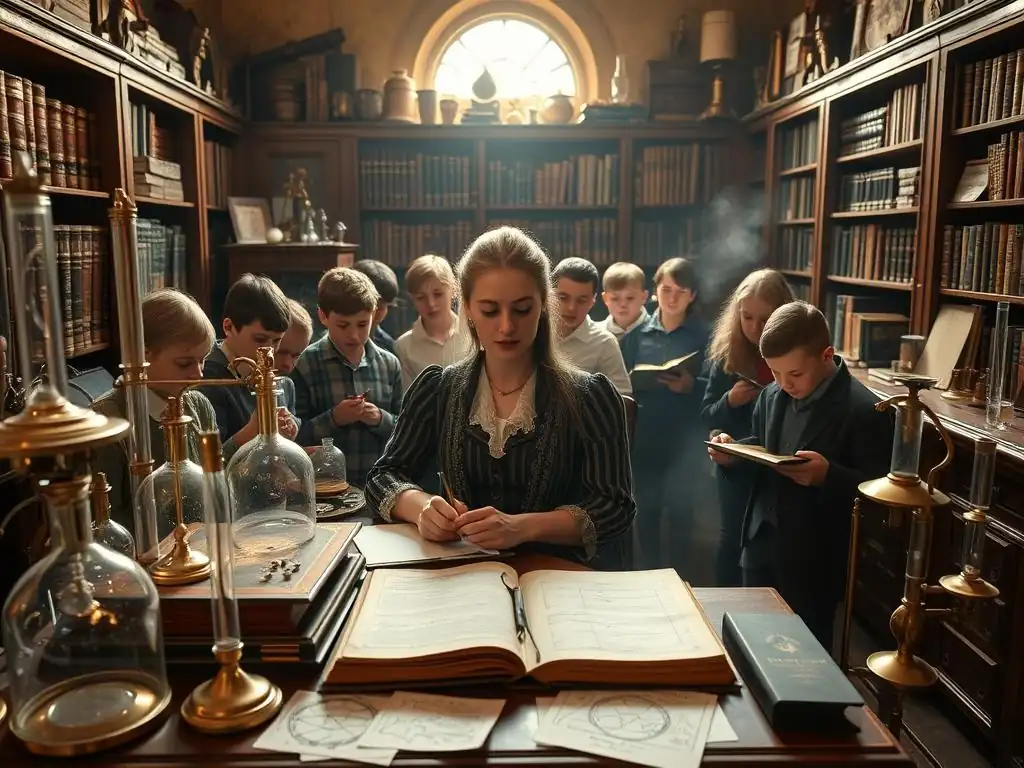
The defining feature of "Conversations on Chemistry" was its groundbreaking conversational style, a radical departure from the dry, technical treatises typical of the era. The book is structured as a series of dialogues between a knowledgeable governess, Mrs. B, and her two inquisitive pupils, Caroline and Emily. This format allowed for a natural progression of ideas, with Mrs. B patiently explaining concepts, answering questions, and clarifying doubts as they arose from the girls' inquiries.
This interactive approach was instrumental in making complex chemistry understandable. Instead of merely presenting facts, the dialogue explored the "why" and "how," guiding readers through experiments and observations. For instance, discussions about the properties of gases or the nature of acids and bases were woven into relatable scenarios, making abstract principles concrete. The conversational style was a deliberate and highly effective strategy to enhance chemistry education accessibility, breaking down intimidating barriers and fostering a sense of discovery for the reader.
Key Chemical Concepts Explained in "Conversations on Chemistry": Elements, Compounds, Chemical Reactions
"Conversations on Chemistry" systematically introduced readers to the fundamental principles of chemistry through its engaging narrative. Marcet meticulously explained core concepts that were revolutionary at the time, yet presented them with remarkable clarity. For example, she delved into the nature of elements and compounds, distinguishing between substances that could be broken down further and those that could not, a concept still central to modern chemistry.
The book explored the properties of common elements like oxygen, hydrogen, and nitrogen, detailing their roles in everyday phenomena such as combustion and respiration. It also elucidated the principles of chemical reactions, demonstrating how substances combine or transform through simple experiments and observations. Marcet even touched upon the burgeoning atomic theory, describing how particles interact. Through accessible language and practical examples, she demystified topics like acids, bases, salts, and the states of matter, providing a robust foundation in chemical knowledge for her diverse readership.
The Impact of "Conversations on Chemistry" on Science Learning
Broad Reach: Inspiring Future Scientists and Educating the Public
"Conversations on Chemistry" achieved unprecedented success, far exceeding initial expectations for a scientific text authored by a woman. It quickly became a bestseller, undergoing numerous editions – at least 16 in England alone – and being translated into French and German. Its popularity extended across the Atlantic, with multiple American editions also being published, making it a staple in both private homes and educational institutions.
The book's broad reach was a testament to its effectiveness in inspiring future scientists and educating the public. It empowered countless individuals, particularly women and the working class, who previously had no access to formal scientific instruction, to engage with chemistry. By making the subject approachable and engaging, Marcet fostered a widespread appreciation for scientific inquiry, fundamentally broadening the scope of chemistry education accessibility.
Influence on Michael Faraday: A Notable Beneficiary of Marcet's Work
One of the most remarkable instances of "Conversations on Chemistry's" profound impact is its influence on Michael Faraday, widely regarded as one of the greatest scientific minds in history. Born into a poor family in London, Faraday began his career as an apprentice to a bookbinder. During this period, he encountered Marcet's book, which was among the volumes he was tasked with binding.
Faraday, with limited formal education, devoured the contents of "Conversations on Chemistry." The book's clear explanations and engaging style ignited his nascent interest in science, particularly chemistry. It provided him with the foundational knowledge and the intellectual framework necessary to understand the scientific lectures he later attended, ultimately leading him to a position as Humphry Davy's assistant and paving the way for his groundbreaking discoveries in electromagnetism and electrochemistry.
Faraday's Acknowledgement: "That very valuable book of Mrs. Marcet's 'Conversations on Chemistry' gave me my foundation in chemical knowledge."
Michael Faraday's direct acknowledgement of Jane Marcet's influence is a powerful testament to the significance of "Conversations on Chemistry." He famously stated:
That very valuable book of Mrs. Marcet's 'Conversations on Chemistry' gave me my foundation in chemical knowledge.
This quote, from a scientist of Faraday's caliber, underscores the profound impact Marcet's work had on his intellectual development. It highlights that the book was not merely an introductory text but a foundational one, capable of imparting deep and lasting understanding. Faraday's success, in part, stands as a living embodiment of Jane Marcet's commitment to chemistry education accessibility and her belief that scientific knowledge could be effectively conveyed to anyone, regardless of their background or access to traditional schooling.
Overcoming Obstacles: Challenges Faced by a Female Science Writer

Gender Bias in Scientific Publishing and Recognition
In the early 19th century, the landscape of scientific publishing and recognition was heavily dominated by men, and pervasive gender bias presented significant obstacles for any woman daring to enter the intellectual arena. Women were generally expected to confine themselves to domestic roles, and intellectual pursuits, especially in rigorous fields like chemistry, were deemed unfeminine and beyond their capabilities. A female author writing on science was often met with skepticism, dismissiveness, or outright ridicule.
This societal prejudice meant that a woman's scientific work, regardless of its quality, was often not taken seriously. Her credibility was inherently questioned, and her intellectual contributions were frequently undervalued or overlooked. The prevailing belief was that women lacked the necessary rational faculties for serious scientific inquiry, making it incredibly challenging for a female science writer to gain acceptance and respect in a male-dominated scientific establishment.
Maintaining Anonymity and Building Credibility
Given the prevalent gender bias, Jane Marcet initially chose to publish "Conversations on Chemistry" anonymously, simply attributing it to "A Lady." This strategic decision was crucial for her work to be judged on its own merits rather than being dismissed outright due to the author's gender. By maintaining anonymity, Marcet allowed her innovative pedagogical approach and the clarity of her explanations to speak for themselves, circumventing immediate prejudice.
This anonymity helped the book gain traction and build credibility based on its content and effectiveness. As the book's popularity soared and its quality became undeniable, the identity of "A Lady" eventually became known. By that point, the book had already established itself as a valuable educational resource, making it harder for critics to dismiss it solely because it was written by a woman. This indirect approach allowed Marcet to effectively challenge and gradually overcome the gender barriers in scientific publishing, paving the way for greater chemistry education accessibility.
Jane Marcet's Other Contributions to Science Education
Beyond Chemistry: Exploring Other Scientific Disciplines
Jane Marcet's intellectual curiosity and commitment to popularizing knowledge extended far beyond the realm of chemistry. Following the immense success of "Conversations on Chemistry," she applied her unique conversational pedagogical style to a variety of other scientific disciplines. She firmly believed that the same principles of clear, engaging explanation could demystify any complex subject for a general audience.
Among her notable works in other sciences were "Conversations on Natural Philosophy" (1819), which explored topics like mechanics, optics, and astronomy, and "Conversations on Vegetable Physiology" (1829), delving into the science of plants. These books further solidified her reputation as a leading popularizer of science, demonstrating her versatility and unwavering dedication to making scientific knowledge broadly accessible to all, from the intricacies of physical laws to the wonders of botanical life.
"Conversations on Political Economy": Explaining Economic Principles
Perhaps one of Marcet's most significant contributions outside the natural sciences was her pioneering work, "Conversations on Political Economy," published in 1816. In this groundbreaking book, she applied her signature conversational method to explain complex economic theories. At a time when economics was a nascent and often abstruse field, dominated by academic treatises from figures like Adam Smith, Thomas Malthus, and David Ricardo, Marcet made these principles comprehensible to a wider, non-specialist readership.
She simplified concepts such as supply and demand, labor, capital, and trade, illustrating them with practical examples and clear dialogues. This work was instrumental in democratizing economic thought, making it accessible to women and the general public, who were typically excluded from such discussions. "Conversations on Political Economy" not only showcased her intellectual breadth but also underscored her enduring commitment to universal education and the belief that understanding complex societal mechanisms was crucial for informed citizenship.
Jane Marcet's Enduring Legacy: Chemistry Education Accessibility Today
The Continued Relevance of Marcet's Pedagogical Approach
The pedagogical approach pioneered by Jane Marcet remains remarkably relevant in contemporary education. Her emphasis on clear, conversational explanations, the use of relatable examples, and the breakdown of complex topics into understandable segments are cornerstones of effective teaching today. Educators continue to recognize that active engagement, curiosity-driven learning, and the ability to connect abstract concepts to real-world phenomena are essential for deep understanding.
Marcet's method of anticipating student questions and structuring learning as a dialogue mirrors modern constructivist theories of education, where learners actively build knowledge rather than passively receiving it. Her work is a powerful reminder that true chemistry education accessibility is achieved not just by providing information, but by presenting it in a way that empowers learners to grasp and apply it meaningfully, a principle that transcends centuries.
Modern Initiatives Promoting Accessible Science Education: Khan Academy, Science Museums
Jane Marcet's spirit of promoting accessible science education resonates strongly with numerous modern initiatives aimed at democratizing knowledge. Online platforms like Khan Academy, for instance, embody her vision by offering free, high-quality educational resources across a vast array of subjects, including chemistry, to anyone with an internet connection. Their short, digestible video lectures and practice exercises are designed to break down complex topics into manageable, understandable chunks, much like Marcet's "Conversations."
Similarly, interactive science museums around the world, such as the Exploratorium in San Francisco or the Science Museum in London, champion hands-on, experiential learning. They transform abstract scientific principles into engaging exhibits that allow visitors of all ages and backgrounds to explore and understand scientific phenomena directly. These institutions, much like Marcet's books, prioritize making science captivating and understandable, fostering a widespread appreciation for scientific inquiry and significantly enhancing science literacy for the public.
Lessons from Marcet: Empowering Women and Promoting Science Literacy
Jane Marcet's life and work offer invaluable lessons for contemporary society, particularly concerning the empowerment of women in STEM fields and the broader promotion of science literacy. Her pioneering efforts demonstrated that women possessed not only the capacity for rigorous scientific thought but also the unique ability to communicate complex ideas with clarity and empathy. She served as a powerful role model, subtly challenging the restrictive societal norms of her time and proving that intellectual leadership was not exclusive to men.
Furthermore, Marcet's unwavering commitment to chemistry education accessibility highlights the enduring importance of scientific literacy for a well-informed populace. In an increasingly complex world driven by scientific and technological advancements, the ability to understand fundamental scientific principles is crucial for critical thinking, responsible decision-making, and active participation in society. Her legacy inspires continued efforts to break down barriers to scientific knowledge and ensure that science remains an accessible and empowering pursuit for all.
Conclusion: Jane Marcet - A Champion for Chemistry Education Accessibility
Reflecting on Marcet's Impact on Science Education History
Reflecting on Jane Marcet's profound impact on science education history reveals her as a true visionary who reshaped how chemistry was perceived and understood. In an era when scientific knowledge was largely confined to elite male circles, she courageously forged a path to democratize learning, proving that complex concepts could be made accessible without sacrificing accuracy. Her "Conversations on Chemistry" was not merely a book; it was a catalyst for a new era of popular science, demonstrating the power of clear, engaging communication to bridge the gap between experts and the public.
Jane Marcet's enduring legacy is that she transformed chemistry from an exclusive, intimidating discipline into an inviting and comprehensible subject for countless individuals, including future scientific giants like Michael Faraday. Her pioneering efforts in championing chemistry education accessibility continue to inspire modern pedagogical approaches and underscore the timeless importance of making scientific knowledge available to all, empowering minds and fostering a more scientifically literate world.
Frequently Asked Questions
How did Jane Marcet contribute to making chemistry education more accessible?
Jane Marcet wrote introductory science books, specifically Conversations on Chemistry, designed to be easily understood by a general audience, including women and those without formal scientific training. This vastly improved chemistry education accessibility.
What were some of the challenges Jane Marcet faced as a woman in science during her time?
Marcet faced the pervasive gender bias of the 19th century. Women were generally excluded from formal scientific education and their contributions were often undervalued or attributed to men.
What was the primary goal of Jane Marcet's writing?
Her primary goal was to democratize scientific knowledge, making it accessible and engaging for a wider audience. She believed that scientific literacy should not be limited to academic circles.
Why is Jane Marcet's work significant for WomenInScienceHistory.com?
Marcet’s story exemplifies the overlooked contributions of women to science. She paved the way for future generations of female scientists by creating accessible educational resources and challenging societal norms.
How did Conversations on Chemistry impact the field of chemistry education?
The book became a widely popular and influential textbook, used both formally and informally. It provided a foundation for understanding chemical principles and inspired many, including Michael Faraday, to pursue scientific careers.
Final Reflection: Igniting Curiosity, Democratizing Knowledge
The journey through Jane Marcet's life and work underscores a profound truth: knowledge, especially scientific knowledge, should not be confined to the elite. Her dedication to making chemistry accessible to all, regardless of social standing or gender, resonates powerfully today as we grapple with issues of equity and inclusion in STEM fields. Her legacy reminds us that simplifying complex concepts and fostering genuine curiosity are crucial steps toward a more informed and empowered society.
The impact of Marcet's work extends far beyond the textbooks she penned. Her influence on the cultural landscape is undeniable, paving the way for future generations of scientists, particularly women, to pursue their passions. Her commitment to clear and engaging explanations fostered a love of learning and a belief that science was not an exclusive domain. By familiarizing young people with the principles of science, we are not only preparing them for the practical duties of life, but also opening to them a source of intellectual enjoyment.
This quote perfectly encapsulates Marcet's vision of science as a source of empowerment and joy, a vision that continues to inspire educators and learners alike.
As we reflect on Jane Marcet's enduring legacy, let us be inspired to champion accessibility in education. Let us strive to break down barriers, simplify complex ideas, and ignite the spark of curiosity in every learner. Consider how you can contribute to making knowledge more accessible in your own sphere of influence. Whether it's through mentoring, volunteering, or simply sharing your passion for learning, you can play a part in continuing Marcet's vital work and building a more equitable and scientifically literate world for all.
Unveil Your Inner Scientist: Take Action Now!
Thank you for exploring Jane Marcet's inspiring journey and her groundbreaking work in making chemistry accessible. Now it's your turn to build on her legacy!
- Dive Deeper into a Chemical Concept: Pick a chemical element or principle that always intrigued you and dedicate an hour to learning about its modern applications and societal impact.
- Share this article on your social media platform of choice to inspire others with the transformative power of accessible science.
- Recommend a fascinating, accessible science book to someone you know who might feel intimidated by the subject.
Which scientific concept are you most excited to explore further, and how will you share your newfound knowledge?