
From Alchemy to Atoms: Tracing Women's Hidden Contributions to Chemistry's Evolution

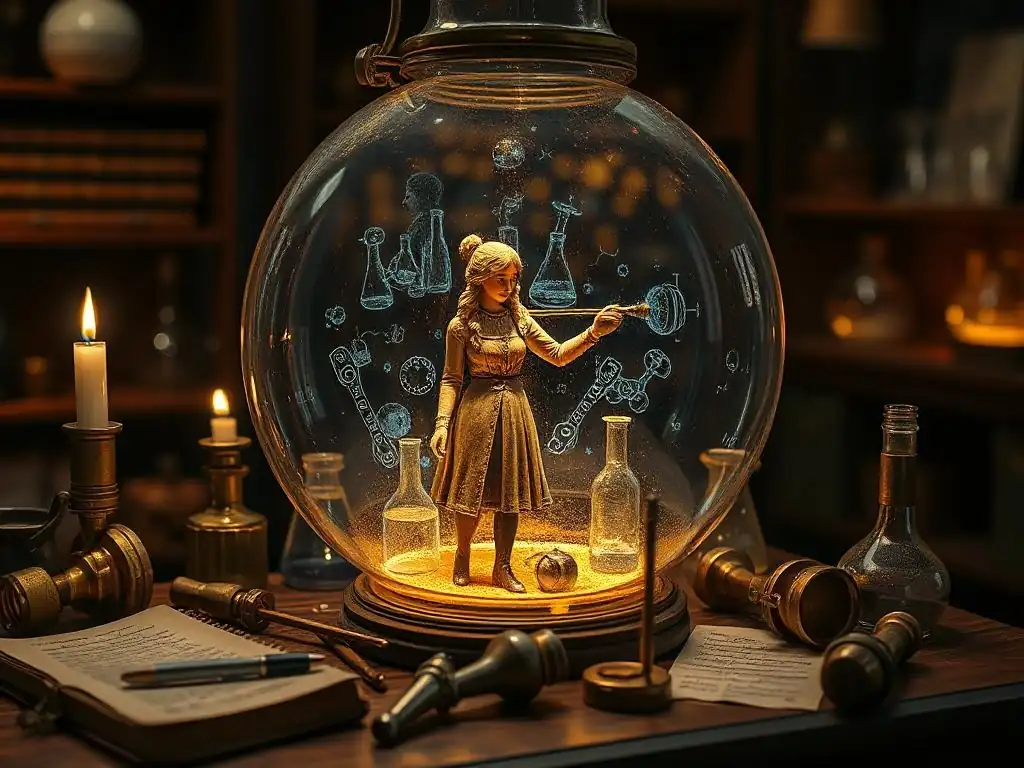
Welcome to WomenInScienceHistory.com!
Dive into the fascinating world of science and uncover the remarkable, often untold, stories of women who shaped its course. Are you ready to explore From Alchemy to Atoms: Tracing Women's Hidden Contributions to Chemistry's Evolution? This journey through women's chemistry history contributions reveals groundbreaking achievements and the hurdles these pioneers overcame. Discover how their brilliance transformed the field and continues to inspire. What innovations will you uncover? Let's begin!
- Introduction: Unveiling Women's Crucial Roles in Chemistry History
-
How to Teach Women’s Chemistry History Contributions in the Classroom: A Step-by-Step Guide
- Step 1: Laying the Foundation: What is Chemistry and Who Shaped Its Early Development?
- Step 2: Highlighting Key Figures: Women Pioneers in Chemistry
- Step 3: Designing Engaging Classroom Activities Focused on Women’s Contributions to Chemistry
- Step 4: Discussing the Challenges Faced by Women in Chemistry History
- Step 5: Resources for Educators: Further Exploring Women's Impact on Chemistry
- Conclusion: Inspiring Future Generations of Women Chemists
-
Frequently Asked Questions
- How does WomenInScienceHistory.com contribute to the recognition of women in chemistry?
- What kind of information can I find about women's chemistry history contributions on the website?
- Why is it important to highlight women’s chemistry history contributions?
- What were some of the major obstacles faced by women in chemistry history?
- What examples of women’s chemistry history contributions does the website showcase?
- Final Reflection: Illuminating Chemistry's Unsung Heroines
- Unveil Your Inner Chemist: Ignite Your Passion for Discovery!
Introduction: Unveiling Women's Crucial Roles in Chemistry History
Why is Exploring Women's Contributions to Chemistry Important?
Exploring women's contributions to chemistry is not merely an act of historical correction; it is fundamental to a comprehensive understanding of scientific progress itself. For too long, the narratives of scientific discovery have been predominantly male-centric, often overlooking or minimizing the pivotal roles played by women.
By delving into the women’s chemistry history contributions, we gain a richer, more accurate perspective on how chemical knowledge has evolved, from its alchemical roots to its modern applications. This deeper understanding reveals the diverse intellectual tapestry that truly propelled scientific innovation forward, demonstrating that groundbreaking ideas originated from various minds, irrespective of gender.
Furthermore, acknowledging these historical figures serves as a powerful source of inspiration for current and future generations. When students, particularly young women, see themselves reflected in the annals of scientific achievement, it fosters a sense of possibility and encourages them to pursue careers in STEM fields.
Highlighting the challenges these pioneers faced, such as gender bias and lack of recognition, also provides valuable context for discussions on equity and inclusion in science today. Understanding the historical women’s chemistry history contributions helps dismantle persistent stereotypes and promotes a more inclusive vision of who can be a scientist, thereby enriching the scientific community with diverse perspectives and talents.
How to Teach Women’s Chemistry History Contributions in the Classroom: A Step-by-Step Guide
Step 1: Laying the Foundation: What is Chemistry and Who Shaped Its Early Development?
Before delving into the specific women’s chemistry history contributions, it is essential to establish a foundational understanding of what chemistry is and the traditional narrative of its early development. Chemistry, as the study of matter and its properties and how matter changes, has roots in ancient practices like metallurgy, dyeing, and medicine, evolving through alchemy into a rigorous scientific discipline.
Historically, figures like Robert Boyle, Antoine Lavoisier, and John Dalton are often highlighted as the primary architects of modern chemistry, credited with establishing concepts such as elements, compounds, and the laws of conservation. This conventional introduction provides a necessary baseline for students to appreciate the revolutionary nature of the work done by women who often operated outside these mainstream, male-dominated circles.
This foundational step also sets the stage for a critical examination of historical biases. By presenting the standard narrative first, educators can then effectively introduce the often-overlooked figures and the systemic barriers that prevented their full recognition. For instance, while Lavoisier is hailed as the "Father of Modern Chemistry," the crucial role of his wife, Marie Lavoisier, in his scientific endeavors is frequently omitted. This initial framing allows students to recognize the gaps in traditional historical accounts and prepares them to actively uncover the hidden women’s chemistry history contributions that are the focus of subsequent steps.
Step 2: Highlighting Key Figures: Women Pioneers in Chemistry
- Maria the Jewess: The First Alchemist?:
Maria the Jewess, also known as Mary the Prophetess, is widely considered one of the earliest known alchemists and a significant figure in the practical development of chemical apparatus. Active between the 1st and 3rd centuries AD in Alexandria, she is credited with inventing several key pieces of laboratory equipment that are still conceptually used today.
Her most famous invention is the tribikos, a three-armed distillation apparatus used to obtain purified substances, a precursor to modern stills. She also developed the kerotakis, a reflux apparatus used for heating substances gently and collecting their vapors, often employed in processes to change the color of metals or produce pigments.
Beyond her ingenious inventions, Maria the Jewess is also recognized for her theoretical contributions to alchemical principles. She is often quoted for her maxim, "One nature delights in another nature, one nature overcomes another nature, one nature rules over another nature," which reflects an early understanding of chemical affinities and reactions. Her practical innovations provided the foundational tools necessary for subsequent alchemical and chemical experimentation, making her an indispensable, though often unacknowledged, pioneer whose direct women’s chemistry history contributions laid the groundwork for laboratory techniques.
- Marie Lavoisier: The Mother of Modern Chemistry (and Visual Communicator):
Marie-Anne Pierrette Paulze Lavoisier (1758–1836) was far more than merely the wife of Antoine Lavoisier; she was an indispensable scientific collaborator whose women’s chemistry history contributions were critical to the chemical revolution. Fluent in English, she translated important scientific texts for her husband, including Richard Kirwan's Essay on Phlogiston, which was crucial for Lavoisier's refutation of the phlogiston theory and his development of the new chemical nomenclature. Her translations were not mere linguistic conversions; they often included her own critical annotations, demonstrating a deep understanding of the scientific arguments at play.
Beyond her linguistic prowess, Marie Lavoisier was an accomplished illustrator and meticulous record-keeper. She meticulously sketched and engraved the detailed diagrams of her husband's experimental apparatus and procedures, ensuring that their groundbreaking work, particularly on combustion and respiration, was accurately documented and widely understood. These precise visual records were vital for the dissemination and replication of experiments that fundamentally changed chemistry. She also managed their laboratory, hosted influential scientific salons, and actively participated in experiments, solidifying her role as a true intellectual partner and a key figure in the establishment of modern chemistry.
- Emilie du Châtelet: Translator and Interpreter of Newton:
Gabrielle Émilie Le Tonnelier de Breteuil, Marquise du Châtelet (1706–1749), though primarily known for her work in physics and mathematics, made significant intellectual women’s chemistry history contributions through her translation and commentary on Isaac Newton's Principia Mathematica. Her 1756 French translation, Principes mathématiques de la philosophie naturelle, remains the only complete French translation of Newton's seminal work and includes her own extensive annotations and original derivations. This monumental undertaking was crucial for disseminating Newtonian physics, which provided the foundational mathematical and philosophical framework essential for the later development of physical chemistry and thermodynamics.
Du Châtelet's commentaries extended beyond mere translation; she critically analyzed Newton's ideas and incorporated the latest scientific understanding of her time, including Leibniz's concept of kinetic energy, which she argued was proportional to mass times velocity squared (mv²), rather than Newton's mv. This insight was a precursor to the modern understanding of energy conservation, a principle fundamental to chemical reactions and processes. Her rigorous intellectual work and her ability to synthesize complex scientific ideas across disciplines profoundly influenced the Enlightenment's scientific discourse, indirectly shaping the conceptual landscape upon which chemistry would later flourish.
- Rosalind Franklin: Unlocking the Secrets of DNA:
Rosalind Elsie Franklin (1920–1958) was a British biophysicist and X-ray crystallographer whose women’s chemistry history contributions were absolutely critical to the understanding of DNA's molecular structure. Working at King's College London in the early 1950s, Franklin produced remarkably clear X-ray diffraction images of DNA fibers, most notably Photo 51. This image, along with her meticulous analysis of DNA's two forms (A and B), provided crucial empirical evidence regarding DNA's helical nature, its uniform diameter, and the spacing of its nucleotide bases. Her precise data indicated a double helix structure with phosphates on the outside.
Despite her pivotal experimental work, Franklin's contributions were largely unacknowledged in the initial announcement of the DNA double helix model by James Watson and Francis Crick in 1953, who had access to her data without her explicit knowledge or permission. Tragically, she died in 1958, four years before Watson, Crick, and Maurice Wilkins (her colleague at King's College) were awarded the Nobel Prize in Physiology or Medicine for their DNA model.
Her work remains a poignant example of the challenges women faced in gaining full recognition in science, yet her precise women’s chemistry history contributions to molecular structure determination are undeniable.
- Dorothy Hodgkin: Pioneer in X-ray Crystallography:
Dorothy Mary Crowfoot Hodgkin (1910–1994) was a groundbreaking British chemist who pioneered the technique of X-ray crystallography to determine the complex structures of biomolecules, earning her the Nobel Prize in Chemistry in 1964. Her meticulous and persistent work provided the first accurate three-dimensional structures of several crucial biological molecules, revolutionizing biochemistry and medicine. Among her most significant achievements was the determination of the structure of penicillin in 1945, which confirmed its chemical formula and paved the way for its widespread production and therapeutic use.
Later, in 1955, Hodgkin elucidated the intricate structure of vitamin B12, a molecule far more complex than any previously determined by X-ray crystallography, a feat that took nearly a decade of dedicated research. Her crowning achievement came in 1969, after 35 years of work, with the determination of the structure of insulin, a protein critical for understanding and treating diabetes. Hodgkin's systematic approach and her development of advanced crystallographic methods cemented her legacy as a giant in structural chemistry, demonstrating profound women’s chemistry history contributions to understanding the molecular basis of life.
Step 3: Designing Engaging Classroom Activities Focused on Women’s Contributions to Chemistry
- Activity 1: Recreating Marie Lavoisier's Illustrations:
This activity invites students to explore the intersection of art, science, and historical documentation by recreating or analyzing Marie Lavoisier's scientific illustrations. Students can research specific experiments conducted by the Lavoisiers, such as the combustion of mercury or the analysis of air, and find reproductions of Marie's accompanying engravings. The task involves students either attempting to draw their own versions of these apparatus and experimental setups, focusing on detail and scientific accuracy, or analyzing the existing illustrations to understand how they convey scientific information, experimental design, and the state of chemical understanding in the late 18th century.
Through this hands-on activity, students gain a deeper appreciation for the visual communication of science and the meticulous nature of early chemical experimentation. They learn not only about Marie Lavoisier's direct women’s chemistry history contributions as an illustrator and recorder but also about the scientific method of the time. The activity fosters critical thinking about how scientific knowledge is documented and disseminated, highlighting the importance of clear visual data alongside written reports in advancing scientific understanding.
- Activity 2: Building a DNA Model (Inspired by Rosalind Franklin):
This activity focuses on understanding the molecular structure of DNA, emphasizing Rosalind Franklin's critical role in its discovery. Students will be tasked with building a physical model of the DNA double helix using various materials like pipe cleaners, beads, or 3D printing. However, unlike typical DNA model-building exercises, this activity should specifically prompt students to consider how the structure was deduced, drawing direct connections to Franklin's X-ray diffraction data. Educators can provide simplified X-ray diffraction patterns (like Photo 51) and discuss how the characteristic "X" shape and spacing of spots indicated a helical structure with specific dimensions.
By integrating the X-ray data, students move beyond simply assembling a model to understanding the experimental evidence that underpinned the discovery. This approach highlights Franklin's scientific rigor and her unparalleled skill in X-ray crystallography, underscoring her direct women’s chemistry history contributions to molecular biology. The activity reinforces concepts of molecular structure, experimental evidence, and the collaborative (and sometimes contentious) nature of scientific discovery, while ensuring Franklin receives her due credit.
- Activity 3: Researching and Presenting on Unsung Heroines of Chemistry:
This activity encourages independent research and public speaking, allowing students to discover a broader range of women’s chemistry history contributions beyond the most famous names. Students will be assigned or choose an "unsung heroine" of chemistry from a provided list (e.g., Lise Meitner, Ida Noddack, Irène Joliot-Curie, Gerty Cori, Stephanie Kwolek, Marie Curie, Alice Augusta Ball, Ellen Swallow Richards). Their task is to research the woman's life, scientific work, the challenges she faced, and her lasting impact on chemistry or related fields.
The culmination of this activity is a presentation, either individually or in small groups, where students share their findings with the class. This not only deepens their knowledge of specific women’s chemistry history contributions but also develops their research, synthesis, and communication skills. It fosters an appreciation for the diverse paths women have taken in science and encourages students to critically evaluate historical narratives, recognizing the often-overlooked brilliance that has shaped our modern world.
Step 4: Discussing the Challenges Faced by Women in Chemistry History
- Gender Bias and Discrimination
Throughout history, women pursuing chemistry have frequently encountered pervasive gender bias and outright discrimination, significantly hindering their progress and recognition. In many periods, formal educational institutions, particularly universities, were closed to women, or they were allowed to attend but denied degrees or full participation in laboratory work. For instance, in the 19th century, women were often relegated to "domestic science" courses rather than rigorous chemistry programs.
Even when highly skilled, they struggled to secure academic positions, research grants, or leadership roles, often being confined to unpaid assistantships or positions with limited autonomy. This systemic exclusion meant that brilliant minds were either entirely shut out of the field or forced to work in the shadows, making their women’s chemistry history contributions all the more remarkable given the oppressive environment.
This bias extended beyond education and employment; women were often excluded from scientific societies, conferences, and informal networks where crucial scientific discourse and collaboration occurred. Marie Curie, despite her two Nobel Prizes, faced considerable sexism in the French scientific establishment, being denied membership in the French Academy of Sciences in 1911 by a single vote. Such widespread discrimination meant that women's ideas were often dismissed, their experimental results doubted, or their presence in the laboratory deemed inappropriate, creating immense barriers to their ability to contribute fully to the advancement of chemistry.
- Lack of Recognition and Credit
A recurring challenge for women in chemistry has been the persistent lack of recognition and proper credit for their groundbreaking work. In numerous instances, the discoveries or crucial data generated by women were attributed to their male colleagues, supervisors, or even husbands.
Rosalind Franklin's indispensable X-ray diffraction images, which provided the critical evidence for the DNA double helix, were famously shared with Watson and Crick without her direct consent, and her contribution was not fully acknowledged in their initial publication or the subsequent Nobel Prize. Similarly, Lise Meitner, a brilliant physicist and chemist, was instrumental in the discovery of nuclear fission but was notoriously overlooked for the Nobel Prize awarded solely to Otto Hahn in 1944.
This systemic issue stemmed from various factors, including the prevailing patriarchal structures of scientific institutions, the tendency to view women as assistants rather than primary researchers, and the difficulties women faced in publishing under their own names or securing independent research positions. Even when their work was undeniable, women often found themselves in positions where their intellectual labor was appropriated, or their names were relegated to footnotes. The struggle for recognition highlights a significant oversight in the historical record of women’s chemistry history contributions, underscoring the ongoing need to actively reclaim and celebrate their true impact.
- Balancing Work and Family
Societal expectations placed immense pressure on women to prioritize domestic and family responsibilities, often making it incredibly challenging to pursue demanding scientific careers in chemistry. In many historical periods, marriage and motherhood were seen as incompatible with professional life, and women who chose to marry or have children often faced pressure to abandon their scientific pursuits. Even for those who managed to combine both, the burden of childcare, household management, and societal judgment frequently fell disproportionately on them, leaving less time and energy for rigorous research and laboratory work.
This struggle is exemplified by many figures, such as Irène Joliot-Curie, who, despite winning a Nobel Prize with her husband, still navigated the complex demands of family life alongside her intense research. While men often had wives or female relatives who managed their domestic lives, allowing them to fully dedicate themselves to science, women scientists rarely had such support structures. This inherent imbalance often meant that women had to make difficult choices, limit their career aspirations, or work under immense strain to balance their scientific passion with societal expectations, further complicating the narrative of women’s chemistry history contributions.
Step 5: Resources for Educators: Further Exploring Women's Impact on Chemistry
- Recommended Books
For educators seeking to deepen their understanding of women’s chemistry history contributions, several excellent books offer detailed biographies and historical analyses. The Madame Curie Complex: The Hidden History of Women in Science by Julie Des Jardins provides a broad overview of women's scientific struggles and triumphs, including detailed accounts of figures like Marie Curie and Rosalind Franklin.
Another highly recommended read is A Lab of One's Own: Science and Suffrage in the First World War by Helen Lefkowitz Horowitz, which explores the opportunities and challenges faced by women scientists during a pivotal historical period, often highlighting their work in chemistry and related fields.
These books, among others, move beyond simple biographical sketches to explore the societal, institutional, and personal contexts that shaped these women's lives and careers. They delve into the specific scientific problems these women tackled, the methodologies they employed, and the impact of their discoveries on the broader scientific landscape. By consulting such comprehensive texts, educators can gain nuanced perspectives on the often-complex narratives of women’s chemistry history contributions, enriching their classroom discussions with authentic historical detail and critical analysis.
- Online Databases and Archives
The digital age offers an unprecedented wealth of online databases and archives that are invaluable for exploring women’s chemistry history contributions. Institutions like the Royal Society of Chemistry and the American Chemical Society often host digital collections of historical papers, letters, and biographical information, providing primary source materials. University archives, such as those at Cambridge or Oxford, frequently contain digitized correspondence, laboratory notebooks, and personal papers of prominent female scientists, offering direct insights into their work and lives.
Furthermore, specialized online platforms dedicated to the history of science, or women in STEM, aggregate resources from various sources, making it easier to discover lesser-known figures and their impact. These digital repositories provide educators and students with direct access to original research, photographs, and historical documents, fostering an authentic research experience. Utilizing these online archives allows for a dynamic and interactive exploration of women’s chemistry history contributions, enabling students to engage directly with the historical evidence that shapes our understanding.
- Classroom Materials and Activities
Beyond books and online archives, a growing number of organizations and educational websites provide ready-to-use classroom materials and activities specifically designed to highlight women’s chemistry history contributions. Websites from science museums, educational non-profits focused on STEM, and even some university outreach programs often offer lesson plans, printable worksheets, and project ideas that can be adapted for various age groups. These resources frequently include biographical sketches, simplified explanations of complex chemical concepts, and discussion prompts tailored to engage students.
For example, resources might include activities that involve analyzing historical scientific papers, creating timelines of female chemists' discoveries, or designing "meet the scientist" presentations. Many materials also encourage hands-on experiments that replicate historical discoveries or explore the chemical principles behind them, linking theoretical knowledge to practical application. These readily available classroom materials are invaluable for educators looking to seamlessly integrate the rich narrative of women’s chemistry history contributions into their existing chemistry curriculum, making the subject more diverse, engaging, and inspiring.
Conclusion: Inspiring Future Generations of Women Chemists
The Lasting Legacy of Women's Chemistry History Contributions.
The journey from alchemy's mystical pursuits to the precise world of atomic structures is undeniably punctuated by the profound, though often obscured, women’s chemistry history contributions. From the ancient innovations of Maria the Jewess, whose practical apparatus laid foundational laboratory techniques, to the meticulous structural elucidations by Dorothy Hodgkin and Rosalind Franklin that revolutionized biochemistry, women have consistently pushed the boundaries of chemical understanding.
Their work, often conducted against formidable societal and institutional barriers, underscores not only their exceptional intellect and perseverance but also the critical importance of diverse perspectives in scientific discovery. Acknowledging this enduring legacy is essential for a complete and honest portrayal of scientific progress.
Moreover, understanding the lasting impact of women’s chemistry history contributions is crucial for inspiring future generations of women chemists. By bringing these hidden figures into the light, we provide powerful role models who demonstrate that scientific excellence knows no gender.
Their stories of overcoming adversity, achieving breakthroughs, and shaping entire fields serve as a beacon for aspiring scientists, encouraging them to pursue their passions in chemistry and beyond. The legacy of these pioneering women reminds us that fostering an inclusive scientific environment is not just an ethical imperative, but a practical necessity for accelerating innovation and ensuring that the brightest minds, regardless of background, can contribute fully to solving the world's most pressing challenges.
Frequently Asked Questions
How does WomenInScienceHistory.com contribute to the recognition of women in chemistry?
The website celebrates the contributions of women in chemistry throughout history by featuring biographies and discussions on their work. It also highlights the challenges they faced in a male-dominated field.
What kind of information can I find about women's chemistry history contributions on the website?
You'll discover biographies of pioneering female chemists, insights into their groundbreaking work, and analyses of the obstacles they overcame. This includes contributions from alchemy to modern chemistry.
Why is it important to highlight women’s chemistry history contributions?
It's crucial to inspire future generations of female scientists and correct historical oversights, ensuring that their vital contributions are acknowledged and celebrated. It also helps to combat gender bias in STEM.
What were some of the major obstacles faced by women in chemistry history?
Women often encountered discrimination, limited access to education and resources, and societal expectations that discouraged them from pursuing scientific careers. They also faced prejudice in obtaining jobs and recognition.
What examples of women’s chemistry history contributions does the website showcase?
The site features a range of contributions, from early alchemists to modern chemists working on cutting-edge research. Specific examples of their discoveries and inventions are also highlighted.
Final Reflection: Illuminating Chemistry's Unsung Heroines
The journey through the history of chemistry, as we've explored, reveals a truth that resonates powerfully today: the contributions of women have been consistently undervalued and often erased. This historical amnesia not only distorts our understanding of scientific progress but also perpetuates systemic biases that continue to affect women in STEM fields. Recognizing and rectifying this historical injustice is crucial for fostering a more equitable and innovative future for science.
The impact of these hidden figures extends far beyond the laboratory. Their stories, once obscured, now serve as beacons of inspiration, reminding us that brilliance knows no gender. The persistent struggle for recognition and the unwavering dedication to scientific inquiry displayed by these women underscore the importance of challenging preconceived notions and actively seeking out diverse perspectives. The history of science is not just a history of ideas, but also a history of the people who had them.
This quote encapsulates the essence of our journey, emphasizing the need to acknowledge the human element, particularly the often-overlooked contributions of women, in shaping scientific understanding.
As we conclude this exploration of women's chemistry history contributions, I invite you to reflect on the power of recognition and the importance of challenging historical narratives. Let us all commit to amplifying the voices of those who have been silenced, ensuring that future generations inherit a more complete and equitable understanding of scientific history. Let the stories of these alchemists and atomic pioneers inspire you to champion inclusivity and celebrate the diverse minds that drive scientific progress forward.
Unveil Your Inner Chemist: Ignite Your Passion for Discovery!
Thank you for exploring the untold stories of women who shaped chemistry's evolution. Now, it's your turn to be part of the story! Here's how you can keep the spirit of discovery alive:
- Dig deeper: Identify a contemporary woman chemist whose work inspires you and share her story with a friend or colleague.
- Explore further: Revisit a chemistry concept that once challenged you and approach it with the curiosity of an alchemist. What new connections can you make?
- Connect & Share: Share this article on your favorite social media platform to shine a spotlight on these pioneering women.
What small experiment can you conduct this week to nurture your own scientific curiosity?