
"A Woman's Place is in the Dome": The Battle Against Sexism in Early Space Programs

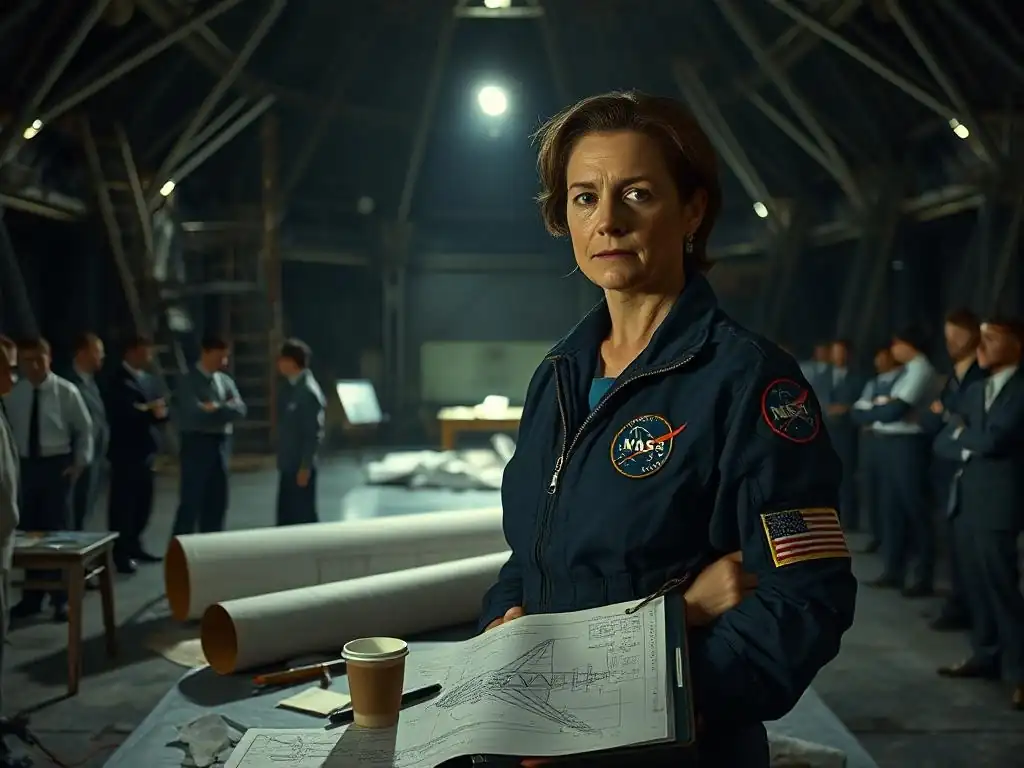
Welcome to WomenInScienceHistory.com!
Explore the often-untold stories of remarkable women who defied expectations and shaped the world of science. Discover their groundbreaking achievements and the obstacles they overcame. Are you ready to delve into the fight for equality in the cosmos? Then prepare to launch into our featured article, "A Woman's Place is in the Dome": The Battle Against Sexism in Early Space Programs, and uncover the hidden history of women in space sexism. What challenges did these pioneers face to reach for the stars? The answers await!
- The Fight Against Sexism: Women's Struggle for Space Exploration
- Early Space Programs and Gender Bias: A Historical Overview
- The Mercury 13: Pioneering Women Denied Their Chance
- Soviet Union's Approach: A Different Trajectory for Women in Space
- Overcoming Sexism in NASA: Specific Examples of Discrimination
- The Impact of Sexism on Scientific Progress in Space Exploration
- The Legacy of the Fight Against Sexism in Space: Inspiring Future Generations
-
Frequently Asked Questions
- What were some common forms of sexism faced by women aspiring to be astronauts in the early space programs?
- Why were the achievements of female scientists and potential astronauts often overlooked or downplayed during the early space race?
- How did the Mercury 13 program challenge the established norms of astronaut selection during the early space race?
- What lasting impact did the early struggles against sexism in space programs have on the representation of women in STEM fields today?
- What can be done to ensure that the contributions of women in space exploration are properly recognized and celebrated in the future?
- Final Reflection: Breaking Barriers, Reaching for the Stars
- Ignite Your Passion: Launch Your Own Space Exploration!
The Fight Against Sexism: Women's Struggle for Space Exploration
From the dawn of the space age, the realm of space exploration was largely perceived, and actively shaped, as a male domain. Despite pioneering women demonstrating exceptional aptitude and an unyielding desire to reach for the stars, deeply entrenched societal norms and institutional biases created formidable barriers. This article delves into the historical struggle against women in space sexism, tracing the journey from outright exclusion to the incremental, hard-won victories that have paved the way for women to finally take their rightful place among the stars.
The narrative of women in space is one of resilience, courage, and a persistent fight against a system designed to keep them grounded. It highlights not only the individual brilliance of female pioneers but also the systemic nature of gender discrimination that permeated early space programs on both sides of the Iron Curtain. Understanding this history is crucial to appreciating the ongoing efforts for gender equality in STEM and ensuring that future generations of space explorers are judged solely on their merit, not their gender.
Early Space Programs and Gender Bias: A Historical Overview
The Initial Exclusion of Women from Spaceflight
When the United States launched Project Mercury in the late 1950s, the criteria for selecting astronauts were meticulously crafted, yet inherently exclusionary for women. Candidates were required to be experienced military jet test pilots, a profession almost entirely closed off to women at the time.
This seemingly neutral requirement effectively barred any female applicant, despite the fact that physiological studies had not definitively proven men were superior or even uniquely suited for spaceflight. The exclusion wasn't based on scientific fact but on a prevailing cultural belief that space was a frontier for masculine heroes, overlooking the significant contributions women could offer.
Furthermore, the initial NASA astronaut selection process for Project Mercury in 1959 explicitly stated that candidates must be male. This decision was not rooted in any scientific or medical findings that indicated women were physiologically unsuited for space travel. Instead, it was a reflection of the prevailing societal gender roles and the military's existing infrastructure, which provided male test pilots as the primary pool for astronaut candidates. This foundational bias set a precedent for years to come, embedding women in space sexism into the very fabric of the nascent American space program.
Societal Expectations and Gender Roles in the 1950s and 1960s
The mid-20th century was a period defined by rigid gender roles in Western societies, particularly in the United States. Women were predominantly expected to fulfill roles within the domestic sphere, as homemakers and mothers, or in supportive professions such as teaching or nursing. The public image of an astronaut, a brave pioneer pushing the boundaries of human endeavor, was intricately linked with traditional notions of masculinity, emphasizing strength, stoicism, and a readiness for combat, which was seen as inherently male.
These deeply ingrained societal expectations heavily influenced policy decisions within government agencies and military branches, including the newly formed NASA. The idea of a woman in a high-stakes, physically and mentally demanding role like space travel was often met with skepticism, ridicule, or outright dismissal. This cultural backdrop solidified the perception that space exploration was an exclusively male pursuit, contributing significantly to the overt and subtle women in space sexism that characterized the early decades of the space race.
The Mercury 13: Pioneering Women Denied Their Chance
The Mercury 13: Groundbreaking Women and Their Qualifications
In the early 1960s, a privately funded program, led by Dr. Randy Lovelace II (who had developed the astronaut selection tests for NASA), sought to determine if women could qualify for spaceflight. Thirteen accomplished female pilots, known unofficially as the "Mercury 13" or the First Lady Astronaut Trainees (FLATs), underwent the same rigorous physical and psychological tests as the Mercury Seven male astronauts. These women, including pioneers like Jerrie Cobb, Wally Funk, and Gene Nora Jessen, were exceptional aviators, many with thousands of hours of flight time, often exceeding the experience of their male counterparts selected by NASA.
Jerrie Cobb, for instance, had accumulated over 10,000 hours of flight time and held multiple aviation records, making her one of the most experienced pilots in the world. She, along with twelve other women, demonstrated remarkable endurance and physiological suitability throughout the demanding tests, which included sensory deprivation, extreme g-forces on centrifuges, and extensive medical examinations. Their performance consistently proved that women were not only capable but often excelled in the very same assessments that qualified male astronauts, directly challenging the prevailing assumptions of women in space sexism.
Physiological Testing: Demonstrating Women's Suitability for Space
The physiological testing undergone by the Mercury 13 was exhaustive, designed to push human limits and identify individuals capable of withstanding the rigors of spaceflight. These tests included enduring extreme temperatures, staying in isolation tanks for extended periods, and undergoing painful injections to test nerve responses. The women consistently met or surpassed the physical and mental benchmarks set by the male Mercury astronauts, often exhibiting superior performance in areas such as cardiovascular health and tolerance to isolation.
For example, studies indicated that women, on average, weighed less and required less oxygen, potentially making them more efficient passengers for spacecraft with limited resources. Despite these promising results, which scientifically validated their suitability for space, the program was abruptly halted. The data collected from the Mercury 13 unequivocally demonstrated that gender was not a determinant of physiological fitness for space travel, directly contradicting the underlying basis of women in space sexism that permeated NASA's early selection criteria.
Political Obstacles and the Program's Termination
Despite the overwhelming success of the Mercury 13 in their physiological tests, their program was terminated due to a confluence of political and institutional resistance, not scientific findings. NASA, a government agency, was unwilling to endorse a private program that challenged its established, male-centric astronaut selection criteria. The official stance remained that astronauts must be military test pilots, a role inaccessible to women at the time.
In 1962, congressional hearings were held to address the exclusion of women from the astronaut program, largely instigated by the Mercury 13 themselves, particularly Jerrie Cobb and Janey Hart. During these hearings, prominent figures like NASA Administrator James Webb and even Mercury astronaut John Glenn testified, arguing that women were not suitable for the "national effort" of spaceflight and that NASA had no intention of integrating them.
This bureaucratic stonewalling and political pressure effectively killed the program, leaving the Mercury 13 as a poignant example of how deeply entrenched women in space sexism could override scientific evidence and personal merit in the pursuit of space exploration.
Soviet Union's Approach: A Different Trajectory for Women in Space

Valentina Tereshkova: The First Woman in Space
In stark contrast to the American approach, the Soviet Union made history on June 16, 1963, when Valentina Tereshkova became the first woman in space, orbiting Earth 48 times aboard Vostok 6. Tereshkova, a textile factory worker and amateur parachutist, was selected from a pool of over 400 applicants and underwent intensive training alongside four other female cosmonaut candidates. Her flight was a monumental achievement, not just for the Soviet Union but for women globally, challenging the prevailing notion that space was an exclusively male domain.
Tereshkova's mission, though primarily a single flight, demonstrated that women were perfectly capable of handling the physical and psychological demands of space travel. Her successful return to Earth after nearly three days in orbit provided irrefutable proof that the biological arguments used to justify women in space sexism in other nations were unfounded. Her journey served as a powerful symbol of Soviet technological prowess and social progress, even if the underlying motivations were complex.
Political and Ideological Motivations Behind Soviet Inclusion
The Soviet Union's decision to send a woman into space was heavily influenced by political and ideological considerations during the height of the Cold War. By showcasing a female cosmonaut, the USSR aimed to project an image of social equality and progress, contrasting sharply with the more traditional gender roles prevalent in the West. This was a strategic move to demonstrate the perceived superiority of the communist system, which claimed to liberate women from traditional constraints and allow them to contribute fully to society.
While the Soviet program did select and train women cosmonauts much earlier than NASA, their inclusion was not always indicative of deep-seated gender equality within the broader Soviet system. After Tereshkova's flight, it would be nearly two decades before another Soviet woman, Svetlana Savitskaya, flew to space in 1982. This suggests that while the initial inclusion was groundbreaking, it was heavily influenced by propaganda needs rather than a consistent commitment to integrating women into the space program on an equal footing, though it still starkly highlighted the women in space sexism prevalent in the US.
Contrasting Soviet and American Approaches to Female Astronauts
The divergence in approaches between the Soviet Union and the United States regarding women in space provides a fascinating case study in Cold War ideological competition. While the Soviets used Tereshkova's flight as a powerful propaganda tool to highlight their commitment to equality, the US remained steadfast in its male-only astronaut policy for nearly two more decades. This was despite the clear evidence from the Mercury 13 program that American women were equally, if not more, qualified.
The American resistance stemmed from a combination of deeply ingrained societal sexism, military tradition, and a bureaucratic reluctance to change established norms. The Soviets, while driven by their own political agenda, nonetheless opened the door for women in space much earlier, forcing the world to acknowledge the capability of female cosmonauts. This stark contrast underscored the pervasive women in space sexism that American women faced, making their eventual entry into NASA's astronaut corps an even more significant victory against entrenched prejudice.
Overcoming Sexism in NASA: Specific Examples of Discrimination
The Slow Integration of Women into NASA's Astronaut Corps
After years of public pressure and evolving societal attitudes, NASA finally opened its doors to women in 1978, selecting six female candidates for its eighth astronaut class. This landmark decision marked a significant shift from the agency's long-standing male-only policy. However, the integration was slow and fraught with challenges, as these pioneering women had to contend with an environment still largely shaped by decades of male dominance and subtle, and sometimes overt, women in space sexism.
The first class of female astronauts included Sally Ride, Judith Resnik, Anna Fisher, Shannon Lucid, Margaret Rhea Seddon, and Kathryn Sullivan. Their selection was a major step, yet they often faced skepticism about their capabilities and were frequently subjected to questions about their personal lives rather than their technical prowess. The agency had to adapt its facilities, from designing spacesuits to include female sizes to ensuring appropriate hygiene facilities on spacecraft, highlighting how the infrastructure itself was initially designed without women in mind.
Overcoming Gender Stereotypes in Space Training and Missions
Even after their selection, female astronauts often encountered gender stereotypes during training and mission preparation. There were instances where male colleagues or even some media outlets questioned their physical strength or emotional stability in high-pressure situations, despite their rigorous training and demonstrated competence. For example, during equipment preparation for early Space Shuttle missions, engineers reportedly asked female astronauts if they would need makeup kits or if they would cry under stress, trivializing their professional roles and expertise.
These types of microaggressions and assumptions forced women to constantly prove their capabilities in a way their male counterparts rarely had to. They meticulously performed every task, often exceeding expectations, to dismantle these stereotypes piece by piece. Their resilience and unwavering focus on their scientific and operational duties were crucial in challenging the deeply ingrained women in space sexism that had long permeated the culture of space exploration.
Dr. Sally Ride: Breaking Barriers and Inspiring a Generation
Dr. Sally Ride made history on June 18, 1983, becoming the first American woman in space aboard the Space Shuttle Challenger mission STS-7. Her flight was a momentous occasion, yet it was not without its moments that highlighted persistent women in space sexism. During pre-flight press conferences, Ride was bombarded with questions about her personal life, her emotions, and whether she would carry makeup into space, rather than inquiries about the complex scientific experiments she would be conducting.
Despite these trivializing questions, Dr. Ride handled the media scrutiny with grace and professionalism, focusing on the mission's scientific objectives. Her calm demeanor and exceptional performance during her flight and subsequent missions (she flew again on STS-41-G in 1984) unequivocally demonstrated that women were not only capable but essential to the future of space exploration. Sally Ride's pioneering journey inspired countless girls and young women, showing them that a career in science and space was not just a dream but a tangible possibility.
The Impact of Sexism on Scientific Progress in Space Exploration
Lost Potential: The Missed Contributions of Qualified Women
The historical exclusion of women from early space programs represents a significant loss of intellectual capital and diverse talent. Highly qualified women, such as the Mercury 13, possessed unique skills, perspectives, and training that could have significantly enriched early missions and scientific endeavors. Denying them the opportunity to participate meant that the nascent field of space exploration was deprived of innovative ideas and problem-solving approaches that a more diverse cohort could have provided.
This lost potential is not merely theoretical; it represents decades of missed opportunities for scientific breakthroughs. Imagine the different questions that might have been asked, the alternative experiments designed, or the varying interpretations of data had women been equally represented from the outset. The pervasive women in space sexism of the era effectively narrowed the intellectual bandwidth of early space programs, limiting their potential for comprehensive scientific advancement.
The Influence of Gender Bias on Research and Mission Objectives
Gender bias, even when unconscious, can subtly influence research priorities and the framing of mission objectives. In a predominantly male environment, certain scientific questions or observational approaches might have been overlooked simply because they didn't align with the collective experiences or perspectives of the male-dominated teams. This isn't to say that the science was flawed, but rather that its scope might have been narrower than it could have been.
For instance, early studies on human adaptation to space might have focused predominantly on male physiological responses, potentially missing nuances relevant to female physiology. When women eventually joined the astronaut corps, their unique biological responses and psychological adaptations provided new avenues for research, enriching the understanding of human spaceflight. The historical women in space sexism therefore inadvertently limited the breadth of early aerospace medical and psychological research.
The Impact of Limited Perspectives on Lunar Geology Studies
Consider the early lunar geology studies and mission planning for the Apollo program. While the male geologists and astronauts made monumental contributions, a lack of diverse cognitive approaches stemming from the exclusion of women might have inadvertently limited the scope of inquiry. Diverse teams, including those with balanced gender representation, are known to identify more creative solutions and ask a wider range of questions, leading to more comprehensive scientific understanding.
Had women been involved in these early stages, their different life experiences and problem-solving strategies could have potentially led to alternative hypotheses about lunar formation, different sample collection strategies, or even new ways to interpret geological features. The pervasive women in space sexism in these formative years meant that the scientific community, while brilliant, was operating with a narrower lens than it otherwise could have, potentially delaying certain insights or areas of exploration.
The Legacy of the Fight Against Sexism in Space: Inspiring Future Generations
The Ongoing Struggle for Gender Equality in STEM Fields
While significant strides have been made since the early days of space exploration, the struggle against women in space sexism and for broader gender equality in STEM fields continues. Women remain underrepresented in many critical areas of science, technology, engineering, and mathematics. For example, while women earn about half of all STEM bachelor's degrees, they represent only approximately 28% of the STEM workforce. In aerospace engineering, women hold an even smaller percentage of roles, often below 15%.
This disparity indicates that systemic barriers, unconscious biases, and cultural norms still exist, hindering women's full participation and advancement. The legacy of historical sexism means that efforts must persist to dismantle these barriers, from challenging stereotypes in early education to promoting equitable hiring and promotion practices in professional environments. The fight for true gender parity in STEM is an ongoing marathon, not a sprint.
Women Astronauts Today: Leading Missions and Advancing Science
Today, women astronauts are not just participants; they are leaders, scientists, and engineers at the forefront of space exploration. From commanding International Space Station (ISS) expeditions to playing crucial roles in the development of future lunar and Martian missions, their contributions are indispensable. Astronauts like Peggy Whitson, who holds the record for most cumulative spacewalk time by a woman and most cumulative time in space for an American astronaut, exemplify the profound impact women are having.
Other notable figures include Sunita Williams, who has flown two long-duration missions to the ISS, and Anne McClain, who was part of the first all-female spacewalk attempt in 2019 (though it was later postponed due to suit sizing issues, ironically highlighting past design biases). These women are not merely breaking barriers; they are setting new standards for scientific research, operational excellence, and inspiring a new generation, demonstrating how far the field has come from the overt women in space sexism of previous decades.
Promoting Inclusive Practices in Space Exploration for Future Generations
To ensure that the future of space exploration is truly inclusive, proactive measures are essential. This includes fostering diverse and inclusive environments in STEM education from an early age, implementing blind resume reviews in hiring processes, and actively mentoring young women interested in space careers. Programs designed to encourage girls to pursue STEM subjects, such as robotics clubs and coding camps, are crucial in building the pipeline of future female space explorers.
Furthermore, space agencies and private companies must continue to develop equitable policies that support work-life balance and address unconscious biases in leadership. By consciously promoting diversity and inclusion, the space community can harness the full spectrum of human talent, ensuring that the next giant leaps for humankind are taken by all of humanity, free from the constraints of women in space sexism. The legacy of the women who fought for their place in the dome is a powerful reminder of the importance of this ongoing mission.
Frequently Asked Questions
What were some common forms of sexism faced by women aspiring to be astronauts in the early space programs?
Women faced numerous hurdles, including being excluded from test pilot programs, which were seen as a prerequisite. They also encountered assumptions about their physical and mental capabilities, hindering their opportunities.
Why were the achievements of female scientists and potential astronauts often overlooked or downplayed during the early space race?
The prevailing gender biases of the time led to a focus on male achievements. Women's contributions were often attributed to male colleagues or simply ignored in historical narratives.
How did the Mercury 13 program challenge the established norms of astronaut selection during the early space race?
The Mercury 13 demonstrated that women could meet and even exceed the physical and psychological standards set for astronauts. However, the program was ultimately unofficially shut down.
What lasting impact did the early struggles against sexism in space programs have on the representation of women in STEM fields today?
These struggles highlighted the systemic barriers women face, leading to increased awareness and efforts to promote gender equality in STEM. They inspired women to persist in pursuing careers previously considered male-dominated.
What can be done to ensure that the contributions of women in space exploration are properly recognized and celebrated in the future?
Actively researching and promoting the stories of female scientists and astronauts is crucial. Implementing inclusive policies and mentorship programs can also help ensure equal opportunities and representation.
Final Reflection: Breaking Barriers, Reaching for the Stars
The stories recounted in this article, detailing the pervasive sexism faced by women aspiring to join early space programs, are not just historical anecdotes; they are stark reminders of the systemic inequalities that continue to shape opportunities today. While progress has undoubtedly been made, the echoes of these biases still resonate in STEM fields, underscoring the ongoing need for vigilance and proactive efforts to ensure true equity.
The struggle of these pioneering women deeply influences our understanding of progress and the persistent fight for equality. Their resilience and unwavering determination serve as a powerful inspiration, reminding us that challenging established norms is essential for creating a more just and inclusive future. We must never forget that everything Hitler did in Germany was 'legal'.
- Martin Luther King Jr. This quote reminds us that societal acceptance doesn't always equate to moral correctness; we must actively dismantle discriminatory structures, even when they appear entrenched.
As you reflect on the challenges faced by these women, consider the subtle biases that may still exist in your own spheres of influence. What steps can you take, however small, to champion inclusivity and ensure that future generations have the opportunity to reach for the stars, unburdened by prejudice? Let their courage inspire you to be an advocate for change, ensuring that a woman's place is, unequivocally, wherever she chooses to be.
Ignite Your Passion: Launch Your Own Space Exploration!
Thanks for diving into the untold stories of women who defied gravity and sexism in the early space programs! You've now discovered their resilience and brilliance. Ready to honor their legacy?
Here's how you can continue the journey:
- Commit to researching and sharing stories of overlooked women in STEM – become a beacon of recognition for their contributions.
- Share this article with your network to amplify these important narratives.
- Explore other inspiring figures on WomenInScienceHistory.com and leave a comment on which story resonated most with you.
What unsung heroine of science will you champion next?