
The XX Factor in STEM: Empowering Girls with Stories of Science Heroines (Resource Guide)

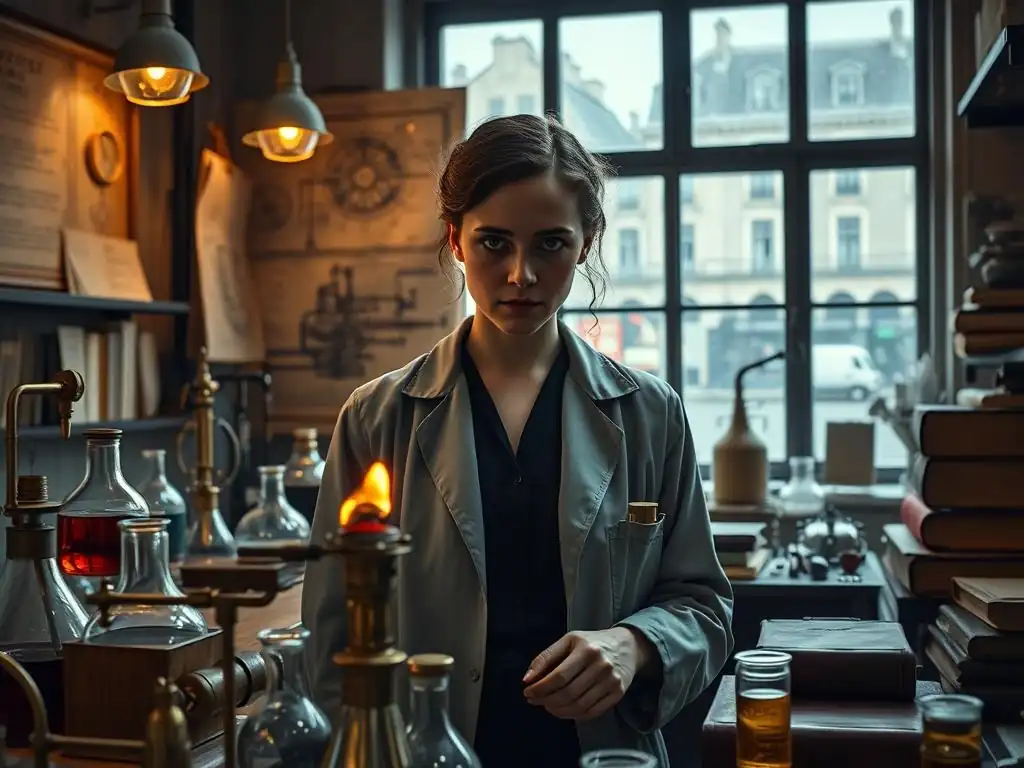
Welcome to WomenInScienceHistory.com!
Dive into the fascinating world of women scientists' historical achievements, where we uncover the untold stories of brilliant minds who shaped the landscape of STEM. But what challenges did they overcome, and how did their contributions pave the way for future generations? Explore our "XX Factor in STEM" resource guide to discover inspiring biographies and groundbreaking discoveries that will ignite your curiosity and empower the next wave of science heroines.
- Empowering Girls in STEM: Stories of Scientific Achievement (Resource Guide)
- Introduction: Inspiring Future Generations Through Representation
- Celebrating Achievements of Women Scientists: A Resource Guide
- Educational Resources Highlighting Women in Science
- Engaging Girls with Stories of Scientific Achievement: Practical Tips
- Showcasing Women Scientists and Their Impact
- The Importance of Visibility: Amplifying Voices in Science
- Conclusion: Empowering the Next Generation in STEM
-
Frequently Asked Questions
- How does WomenInScienceHistory.com aim to inspire future generations?
- What type of content can I find on WomenInScienceHistory.com?
- What's the significance of highlighting women's contributions to science historically?
- What kind of challenges did women scientists historically face in their careers?
- How does WomenInScienceHistory.com contribute to the keyword "Women scientists historical achievements"?
- Final Reflection: Igniting Future Scientific Passions
- Ignite Her Passion: Explore the Untold Stories!
Empowering Girls in STEM: Stories of Scientific Achievement (Resource Guide)
Introduction: Inspiring Future Generations Through Representation
Why Showcasing Women in STEM Matters
Highlighting the remarkable contributions of women in science throughout history is crucial for inspiring the next generation, particularly girls, to pursue STEM fields. When young girls see tangible examples of women scientists historical achievements, it shatters preconceived notions about who can excel in science and engineering. These narratives provide powerful role models, demonstrating that brilliance, perseverance, and groundbreaking discoveries are not exclusive to one gender. By showcasing these often-overlooked stories, we create a more inclusive and aspirational landscape for future innovators.
Furthermore, representation in STEM helps dismantle pervasive stereotypes that have historically limited girls' aspirations in these areas. For instance, the idea that certain scientific disciplines are "masculine" can be directly challenged by learning about women like Hypatia, who taught mathematics and philosophy in ancient Alexandria, or Ada Lovelace, who is widely recognized for her work on Charles Babbage's Analytical Engine in the 19th century. These historical accounts of women scientists historical achievements provide concrete evidence that women have always been, and continue to be, integral to scientific progress.
Addressing Gender Imbalance in Science
Despite significant progress, a notable gender imbalance persists in many STEM disciplines today. For example, while women earn about half of all bachelor's degrees in science and engineering, they account for a much smaller percentage of the workforce in fields like engineering (around 15-20%) and computer science (around 25-30%). This disparity begins to manifest early in education, often influenced by a lack of exposure to diverse role models and implicit biases. Addressing this imbalance is not just about fairness; it's about leveraging the full spectrum of talent to solve complex global challenges.
By actively promoting and celebrating the women scientists historical achievements, educational initiatives can directly counter these trends. When curricula integrate stories of women who defied societal expectations to make profound scientific discoveries, it normalizes the idea of women in leading scientific roles. This exposure can significantly impact girls' self-efficacy and interest in STEM, encouraging them to envision themselves as future scientists, engineers, or innovators, thereby contributing to a more balanced and diverse scientific community.
Celebrating Achievements of Women Scientists: A Resource Guide
Biographies of Pioneering Women in Science
Exploring the biographies of pioneering women scientists historical achievements offers a rich educational experience, providing context for their breakthroughs and the societal environments in which they worked. These detailed accounts reveal not only their scientific brilliance but also the immense personal and professional challenges they often faced. For instance, delving into the life of Emmy Noether, a groundbreaking mathematician in the early 20th century whose work profoundly impacted abstract algebra, illustrates her struggle for academic recognition and paid positions in a male-dominated German university system.
Such biographical studies are vital for understanding the full scope of women scientists historical achievements. They allow readers to connect with the human element behind the discoveries, fostering empathy and admiration for their resilience. Resources often include timelines of their lives, personal anecdotes, and explanations of their scientific work made accessible for various age groups, making these stories highly engaging and informative for students and enthusiasts alike.
Key Contributions and Discoveries
The impact of women scientists historical achievements spans every scientific discipline, from theoretical physics to environmental conservation. For example, Lise Meitner's critical role in the discovery of nuclear fission, though she was famously overlooked for the Nobel Prize, fundamentally changed our understanding of atomic energy. Similarly, Rachel Carson's seminal work Silent Spring sparked the modern environmental movement, highlighting the devastating effects of pesticides and advocating for a more responsible approach to nature.
These contributions are not merely footnotes in scientific history; they represent foundational advancements that have shaped modern life, technology, and understanding. By detailing these specific discoveries—whether it's Chien-Shiung Wu's experimental verification of parity violation in physics or Barbara McClintock's revolutionary work on "jumping genes" in genetics—we ensure that the full breadth and significance of women scientists historical achievements are properly acknowledged and celebrated.
Overcoming Obstacles: Stories of Resilience
The path for many women in science has been fraught with significant obstacles, including gender discrimination, lack of access to educational opportunities, and professional marginalization. Henrietta Lacks, for example, whose cells (HeLa cells) were taken without her consent and became foundational for countless medical breakthroughs, represents a different kind of obstacle—the ethical challenges and lack of recognition faced by marginalized communities in scientific research.
Meanwhile, women like Dr. Shirley Ann Jackson, the first African American woman to earn a doctorate from MIT in theoretical physics, faced both racial and gender discrimination throughout her career, yet went on to have a distinguished career in academia and government.
These narratives of resilience are as important as the scientific discoveries themselves. They teach valuable lessons about perseverance, advocacy, and the power of conviction in the face of adversity. By understanding the systemic barriers these women navigated, we gain a deeper appreciation for their women scientists historical achievements and are better equipped to address contemporary inequalities in STEM. Their stories serve as a testament to their unwavering dedication and courage in pursuing their scientific passions.
Educational Resources Highlighting Women in Science
Books and Literature Featuring Women Scientists
A wealth of literature is available that celebrates women scientists historical achievements, catering to various age groups and reading levels. For younger readers, picture books and early chapter books often introduce figures like Jane Goodall or Mae C. Jemison, making their stories accessible and inspiring. Examples include Ada Lovelace, Poet of Science: The First Computer Programmer by Diane Stanley or Hidden Figures: The True Story of Four Black Women and the Space Race by Margot Lee Shetterly, adapted for young readers.
For older students and adults, biographies, historical accounts, and anthologies offer in-depth explorations of these pioneering lives. Collections like Women in Science: 50 Fearless Pioneers Who Changed the World by Rachel Ignotofsky provide concise yet informative overviews, while more extensive biographies delve into the intricate details of individual lives and women scientists historical achievements. These resources are invaluable for classroom learning, independent study, and fostering a lifelong appreciation for science.
Documentaries and Films Showcasing Achievements
Visual media plays a powerful role in bringing the stories of women scientists historical achievements to life. Documentaries and films can vividly illustrate complex scientific concepts and the challenges faced by these women, making their contributions more tangible and relatable. Films like Picture a Scientist explore the systemic sexism in science through the experiences of contemporary women, while historical narratives such as Hidden Figures dramatize the essential work of African American women at NASA during the Space Race.
Educational institutions and families can utilize these resources to spark discussions about gender equity in STEM, the nature of scientific discovery, and the importance of diverse perspectives. Many of these productions are accompanied by educational guides, making them ideal for classroom integration. They serve as compelling testaments to the enduring legacy of women scientists historical achievements and their profound impact on human progress.
Online Platforms Dedicated to Women in STEM
The digital age offers an unprecedented array of online platforms dedicated to preserving and promoting women scientists historical achievements. Websites like Women in Science History (the very platform this article appears on) serve as comprehensive repositories for biographies, timelines, and educational materials. Other similar online archives and databases provide searchable information on hundreds of women, often categorized by field, time period, or contribution.
These online resources are dynamic and continually updated, offering fresh perspectives and newly uncovered historical details. They often include interactive elements, lesson plans for educators, and curated lists of further reading. Such platforms are indispensable tools for students researching women scientists historical achievements, educators seeking engaging content, and anyone interested in exploring the rich tapestry of women's contributions to scientific discovery.
Engaging Girls with Stories of Scientific Achievement: Practical Tips

Incorporating Biographies into STEM Curriculum
Integrating the biographies of women scientists historical achievements into standard STEM curricula can transform abstract concepts into relatable human stories. Instead of solely focusing on formulas or theories, educators can introduce the scientists behind them. For example, when teaching genetics, discuss Barbara McClintock's work on transposable elements, or when covering astronomy, delve into the contributions of Cecilia Payne-Gaposchkin, who discovered that stars are primarily made of hydrogen and helium.
This approach makes learning more interdisciplinary and engaging. Teachers can assign projects where students research a specific woman scientist, present her women scientists historical achievements, and even recreate a simplified version of her experiments. This not only deepens their understanding of the scientific content but also inspires them by showcasing real-world applications and the human endeavor behind discovery.
Role-Playing and Creative Activities
To make the stories of women scientists historical achievements more interactive and memorable, incorporating role-playing and creative activities can be highly effective. Students can take on the persona of a historical woman scientist and present her discoveries or debate scientific theories from her era. For example, a class might stage a mock scientific conference where students represent different women scientists historical achievements and explain their groundbreaking work.
- Create a "Science Heroine" Trading Card Game: Each card features a woman scientist, her key discovery, and the challenges she faced.
- Design a "Museum Exhibit": Students create visual displays about a chosen woman scientist, highlighting her life and
women scientists historical achievements. - Write a "Day in the Life" Journal Entry: From the perspective of a historical woman scientist, describing her daily work, thoughts, and challenges.
These activities foster creativity, critical thinking, and a deeper connection to the historical figures and their scientific impact.
Mentorship Programs: Connecting Girls with STEM Professionals
Direct connection with contemporary women in STEM can be one of the most powerful ways to empower girls, building on the inspiration drawn from women scientists historical achievements. Mentorship programs link aspiring young girls with female scientists, engineers, and technologists who can provide guidance, share their experiences, and offer practical advice. These interactions demystify STEM careers and make them seem more attainable.
Mentors can share their own journeys, discuss current research, and provide insights into the daily life of a STEM professional. This direct exposure helps bridge the gap between historical inspiration and future aspirations, showing girls the tangible pathways to pursuing their own women scientists historical achievements. Many universities, professional organizations, and community groups offer such programs, providing invaluable support networks for young women interested in science.
Showcasing Women Scientists and Their Impact
Marie Curie: Pioneer in Radioactivity Research
Marie Skłodowska Curie stands as one of the most iconic figures among women scientists historical achievements, renowned for her pioneering research on radioactivity. Born in Poland in 1867, she faced significant barriers to higher education as a woman, ultimately moving to Paris to study at the Sorbonne. There, alongside her husband Pierre Curie, she conducted groundbreaking experiments that led to the discovery of two new elements: polonium, named after her native country, and radium. Her meticulous work isolated these elements, demonstrating their unique radioactive properties.
Her profound contributions earned her two Nobel Prizes: the Nobel Prize in Physics in 1903 (shared with Pierre Curie and Henri Becquerel) for their study of radiation, and an unprecedented second Nobel Prize in Chemistry in 1911, awarded solely for her work on radium and polonium. This made her the first person ever to win Nobel Prizes in two different scientific fields. Marie Curie's legacy extends beyond her discoveries; she also developed mobile X-ray units for use during World War I, saving countless lives, and championed the use of radium for medical purposes. Her life exemplifies unwavering dedication and scientific brilliance, solidifying her place among the most significant women scientists historical achievements.
Rosalind Franklin: Unveiling the Structure of DNA
Rosalind Franklin's women scientists historical achievements are central to one of the most pivotal discoveries in biology: the structure of DNA. A brilliant X-ray crystallographer, Franklin's meticulous work in the early 1950s at King's College London produced stunning X-ray diffraction images of DNA. Her most famous image, Photo 51, captured with unprecedented clarity, provided crucial evidence that DNA was a double helix, with its bases stacked precisely. This image, along with her detailed analysis of DNA's dimensions, was fundamental to James Watson and Francis Crick's model of DNA's structure.
Despite her critical contribution, Franklin's role was largely underappreciated during her lifetime and for many years after. Watson and Crick, along with Maurice Wilkins, were awarded the Nobel Prize in Physiology or Medicine in 1962 for their DNA model, four years after Franklin's untimely death at age 37. Her story highlights the systemic challenges faced by women in science at the time, where their contributions were often overlooked or appropriated. Today, Rosalind Franklin is increasingly recognized for her indispensable women scientists historical achievements, serving as a powerful reminder of the importance of acknowledging every individual's role in scientific discovery.
Katherine Johnson: Human Computer and NASA Pioneer
Katherine Johnson's women scientists historical achievements were absolutely instrumental in the success of early American spaceflight, earning her the moniker "human computer" at NASA. Born in 1918, Johnson's exceptional mathematical abilities were evident from a young age. She joined the National Advisory Committee for Aeronautics (NACA), which later became NASA, in 1953, working in the segregated West Area Computing unit. Her precision and accuracy in calculating trajectories, launch windows, and emergency return paths were critical for the Mercury and Apollo missions.
Perhaps her most famous contribution was verifying the electronic computer's calculations for John Glenn's orbital mission in 1962. Glenn famously requested that Johnson personally recheck the machine's figures before his historic flight, trusting her calculations implicitly. She also played a key role in calculating the trajectory for the Apollo 11 mission to the Moon in 1969 and the rescue trajectory for Apollo 13. Johnson's extraordinary women scientists historical achievements paved the way for human space exploration and shattered racial and gender barriers in a highly technical field, solidifying her legacy as a true pioneer.
The Importance of Visibility: Amplifying Voices in Science
Breaking Down Gender Stereotypes in STEM
Amplifying the voices and stories of women scientists historical achievements is fundamental to dismantling persistent gender stereotypes in STEM. For too long, the image of a scientist has been predominantly male, often portrayed as an isolated genius. By showcasing the diverse backgrounds, personalities, and collaborative efforts of women who have excelled in science, we challenge these narrow perceptions. When young people see that innovation comes in many forms and from all walks of life, it broadens their own sense of possibility.
This visibility directly counters the notion that certain fields are inherently "male" or "female." For example, highlighting the work of computer scientists like Grace Hopper, who developed the first compiler for a computer programming language, or engineers like Lillian Gilbreth, a pioneer in industrial engineering, demonstrates that women have always been at the forefront of technological advancement. These women scientists historical achievements prove that aptitude for STEM is not tied to gender but to curiosity, dedication, and intellect.
Creating Inclusive Learning Environments
To truly empower the next generation of female scientists, it's essential to create learning environments that are actively inclusive and supportive. This goes beyond simply mentioning women scientists historical achievements; it involves fostering a classroom culture where girls feel confident to participate, ask questions, and take risks without fear of judgment or bias. Educators can promote collaborative learning, ensure equitable participation, and use gender-neutral language when discussing scientific roles.
Inclusive environments also mean providing access to a wide range of scientific tools and experiences, ensuring that all students, regardless of gender, feel equally capable of engaging with hands-on activities and complex problems. By valuing diverse perspectives and encouraging a growth mindset, schools can cultivate spaces where every girl feels empowered to explore her scientific interests and contribute her unique talents, ultimately building on the legacy of women scientists historical achievements.
Fostering STEM Interest in Girls: The Role of Parents and Educators
Parents and educators play a pivotal role in nurturing and sustaining girls' interest in STEM from an early age. This involves more than just exposing them to women scientists historical achievements; it requires active encouragement, providing opportunities for exploration, and fostering a positive attitude towards science and mathematics. Parents can engage children in everyday scientific inquiry, visit science museums, and provide access to age-appropriate STEM toys and kits.
Educators, in turn, can integrate engaging, hands-on STEM activities into the curriculum, invite female STEM professionals as guest speakers, and highlight contemporary women scientists historical achievements alongside historical ones. Both parents and educators should consciously challenge any implicit biases they may hold and actively encourage girls to pursue challenging subjects. By working together, they can build a strong foundation of curiosity and confidence, paving the way for girls to envision themselves as future leaders in science.
Conclusion: Empowering the Next Generation in STEM
Encouraging Girls to Pursue Science Careers
The journey of encouraging girls to pursue science careers is a multifaceted one, deeply rooted in inspiration and empowerment. By consistently bringing to light the incredible women scientists historical achievements, we provide tangible proof of women's profound impact on scientific progress. These stories move beyond abstract concepts, offering relatable human narratives of perseverance, ingenuity, and discovery. When girls see themselves reflected in these pioneering figures, it cultivates the belief that they too can contribute significantly to scientific knowledge and innovation.
This encouragement must extend beyond mere exposure; it requires creating pathways, providing mentorship, and celebrating every small step taken towards a STEM career. From early childhood curiosity to advanced academic pursuits, supporting girls in science is an investment in a richer, more diverse scientific future. The ongoing legacy of women scientists historical achievements serves as a guiding light, illuminating the vast possibilities within STEM for every aspiring young woman.
Resources for Supporting Women in Science
A robust ecosystem of resources is essential to support the continued growth and success of women in science. This includes educational materials that highlight women scientists historical achievements, mentorship programs connecting aspiring scientists with established professionals, and advocacy organizations working to dismantle systemic barriers. Websites, books, documentaries, and interactive platforms all contribute to a comprehensive network designed to inform, inspire, and empower.
Furthermore, financial aid, scholarships, and grants specifically targeting women in STEM fields help alleviate economic barriers to education and research. Professional networks and associations provide critical support systems, fostering collaboration and career development. By leveraging these diverse resources, we can ensure that the lessons learned from women scientists historical achievements are not just celebrated historically but actively applied to cultivate an equitable and thriving scientific community for generations to come.
Celebrating Ongoing Achievements
While it is crucial to recognize women scientists historical achievements, it is equally important to celebrate the ongoing contributions of women in science today. Every day, women are making breakthroughs in areas from vaccine development and climate science to artificial intelligence and space exploration. Highlighting these contemporary successes reinforces the message that women's contributions to science are continuous and vital. This ongoing recognition helps to keep the narrative current and relevant for young girls looking for modern role models.
By regularly showcasing both historical and present-day women scientists historical achievements, we create a dynamic and inclusive vision of science. This continuous celebration inspires confidence, encourages sustained interest, and demonstrates that the future of scientific discovery is bright, diverse, and powered by the brilliance of all individuals, regardless of gender.
Frequently Asked Questions
How does WomenInScienceHistory.com aim to inspire future generations?
The website inspires by showcasing the groundbreaking achievements of women in science history. It provides role models and highlights the challenges overcome, demonstrating what's possible.
What type of content can I find on WomenInScienceHistory.com?
The site primarily features biographies of pioneering female scientists. It also includes discussions of their scientific contributions and explores the gender-related obstacles they faced.
What's the significance of highlighting women's contributions to science historically?
Highlighting these contributions helps correct the historical underrepresentation of women in STEM fields. It also provides a more complete picture of scientific progress and innovation.
What kind of challenges did women scientists historically face in their careers?
Women in science historically faced discrimination and bias in male-dominated fields. They often lacked access to resources and faced limited opportunities for advancement.
How does WomenInScienceHistory.com contribute to the keyword "Women scientists historical achievements"?
The site directly contributes by providing detailed information on the historical achievements of women scientists. It helps to increase visibility and appreciation for their contributions and improves search engine rankings for related queries.
Final Reflection: Igniting Future Scientific Passions
The journey through the historical achievements of women scientists, as illuminated in this resource guide, underscores a crucial and often overlooked truth: representation matters profoundly in shaping future aspirations. By highlighting the groundbreaking contributions of these often-unsung heroines, we directly challenge the pervasive narrative that STEM fields are inherently male-dominated, paving the way for a more inclusive and equitable future.
The impact of these stories extends far beyond mere historical awareness; it resonates deeply within the cultural and social fabric, influencing how young girls perceive their own potential. Witnessing the resilience and brilliance of these women scientists serves as a powerful antidote to societal biases and self-doubt. You can't be what you can't see.
This simple yet profound statement encapsulates the urgent need to amplify the voices and achievements of women in STEM, ensuring that future generations have the role models they deserve.
Now, consider the legacy we wish to leave. Let us actively champion the stories of these remarkable women, sharing their triumphs and struggles with the young minds around us. Encourage girls to explore their scientific curiosity, nurture their talents, and embrace the challenges that lie ahead. By doing so, we empower them to not only dream of a future in STEM but to actively shape it, ensuring that the XX Factor continues to drive innovation and progress for generations to come.
Ignite Her Passion: Explore the Untold Stories!
Thank you for diving into the inspiring world of women in STEM! Now that you've learned about these incredible science heroines, let's spark the next generation's curiosity.
Here are a few ways to take action:
- Share this article with a young girl or student who might be inspired by these stories.
- Discover even more groundbreaking women on our website: WomenInScienceHistory.com.
- Organize a "Women in Science" book club at your local library or school.
Which science heroine's story resonated most with you, and how will you use it to inspire others?