
Their Numbers Live On: The Enduring Legacy of 18th & 19th Century Women Mathematicians

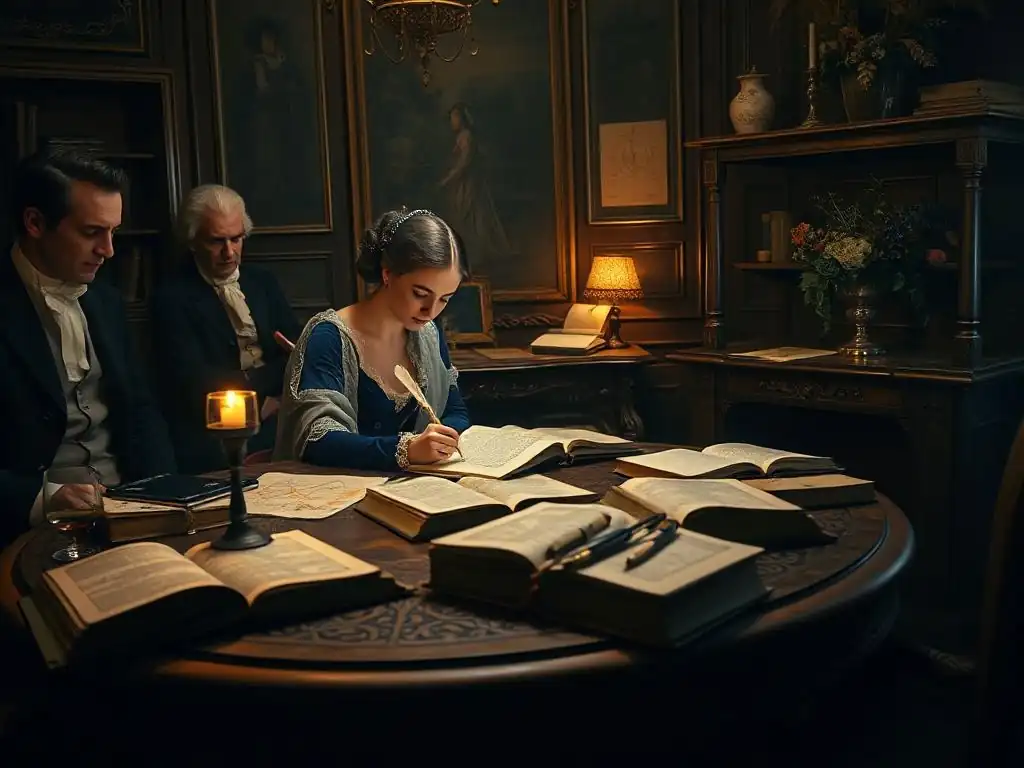
Welcome to WomenInScienceHistory.com, where we unearth the untold stories of brilliant women who shaped the world of science! Ever wondered who defied societal norms to conquer the complex world of numbers in a time when it was deemed a 'man's domain'? Dive into our latest feature, " Their Numbers Live On: The Enduring Legacy of 18th & 19th Century Women Mathematicians," and discover the groundbreaking contributions and formidable obstacles faced by these pioneering 18th-century female mathematicians.
Prepare to be amazed by their intellect and resilience – their legacy continues to inspire us today. What secrets did these mathematical minds unlock, and how did they pave the way for future generations? Read on to find out...
- Introduction: Recognizing the Contributions of Women in 18th & 19th Century Mathematics
- Pioneering Female Mathematicians of the 1700s
- Notable Women in Mathematics During the 1800s
- Overcoming Societal Obstacles: The Fight for Recognition
- The Enduring Legacy: Inspiring Future Generations
- Conclusion: Remembering the Trailblazers of Mathematical History
-
Frequently Asked Questions
- What were some of the major obstacles faced by 18th-century female mathematicians?
- Can you name a prominent 18th-century female mathematician and her key contribution?
- How did the social climate impact the recognition of women's mathematical achievements in the 18th century?
- What inspired women to pursue mathematics despite the challenges they faced?
- Why is it important to study the history of women in mathematics, particularly those from the 18th and 19th centuries?
- Final Reflection: Echoes of Equations Past
- Unleash Your Inner Pioneer: Carry the Torch Forward!
Introduction: Recognizing the Contributions of Women in 18th & 19th Century Mathematics
Highlighting Unsung Heroines of Mathematical History
The annals of mathematical history are replete with tales of groundbreaking discoveries and brilliant minds, yet for too long, the contributions of women in these fields have remained largely unsung. The 18th and 19th centuries, periods of immense scientific and intellectual upheaval, saw remarkable women quietly, and often against considerable odds, pursue their passion for numbers and logic. These pioneering individuals, often self-taught or benefiting from unconventional educational paths, laid foundational groundwork that influenced generations and shaped various branches of mathematics and science.
Recognizing these unsung heroines is not merely an act of historical correction but a vital step in understanding the full tapestry of scientific progress. Their stories reveal not only intellectual brilliance but also immense courage and perseverance in the face of societal restrictions. By shedding light on the lives and achievements of 18th Century female mathematicians and their 19th-century successors, we gain a richer, more inclusive perspective on the evolution of mathematical thought and the diverse individuals who contributed to its advancement.
The Challenges Faced by Female Mathematicians in the 18th and 19th Centuries
The path for any aspiring mathematician in the 18th and 19th centuries was arduous, but for women, it was fraught with additional, often insurmountable, societal and institutional barriers. Formal education, particularly at university level, was almost universally denied to women. Access to libraries, scientific instruments, and intellectual communities was severely limited, forcing many to rely on private tutors, family connections, or self-study in isolation.
Beyond educational exclusion, deeply entrenched gender biases permeated society, dictating that a woman's place was in the domestic sphere, not in intellectual pursuits. Publishing original research under one's own name was a significant hurdle, with many women forced to use male pseudonyms or rely on male colleagues to present their work. The very idea of a woman engaging in rigorous mathematical thought was often met with skepticism, ridicule, or outright hostility, making the achievements of these 18th Century female mathematicians and their later counterparts all the more extraordinary.
Pioneering Female Mathematicians of the 1700s
Maria Gaetana Agnesi: A Brilliant Mind in 18th Century Italy
Maria Gaetana Agnesi, born in Milan in 1718, stands as a towering figure among 18th Century female mathematicians. A child prodigy, she displayed extraordinary intellectual gifts from a young age, mastering multiple languages and engaging in philosophical and mathematical debates by her early teens. Her father, a mathematics professor at the University of Bologna, fostered her talents, providing her with access to tutors and intellectual discourse, a rare privilege for a woman of her time.
Agnesi's brilliance culminated in her appointment as professor of mathematics and natural philosophy at the University of Bologna in 1750 by Pope Benedict XIV, making her the first woman to hold such a position at a university. Although she never actively taught, due to her devout religious calling and a desire for reclusion, her appointment was a symbolic milestone, recognizing the intellectual capacity of a woman in a field dominated by men.
Agnesi's Contributions to Calculus and Analysis
Agnesi's most significant contribution to mathematics was her comprehensive textbook, Instituzioni analitiche ad uso della gioventù italiana (Analytical Institutions for the Use of Italian Youth), published in two volumes in 1748. This monumental work, nearly a thousand pages long, was a groundbreaking synthesis of calculus and analysis, presenting complex mathematical concepts in a clear, organized, and accessible manner for the first time. It covered differential and integral calculus, infinite series, and differential equations, drawing from the works of Newton, Leibniz, and Euler.
The Instituzioni analitiche was widely acclaimed and quickly translated into French and English, becoming a standard textbook throughout Europe for decades. It was praised for its didactic clarity and logical structure, making advanced mathematical concepts digestible for a wider audience. This work solidified Agnesi's reputation as one of the most influential 18th Century female mathematicians, demonstrating her profound understanding and pedagogical skill in a rapidly evolving field.
The "Witch of Agnesi": Unveiling the Curve
Among the many mathematical concepts discussed in Agnesi's Instituzioni analitiche was a specific cubic curve known as the "versiera." This curve, which had been studied by Fermat and Guido Grandi before her, was given its enduring, if somewhat misleading, name through a series of linguistic errors. Grandi had used the Latin term versoria (meaning "rope-turner"), which in Italian could be interpreted as versiera, a slang term for "witch." When Agnesi's work was translated into English by John Colson in 1801, he mistakenly translated versiera as "witch," leading to the curve's popular moniker, the "Witch of Agnesi."
Despite the unfortunate misnomer, the "Witch of Agnesi" remains a significant example of a parametric curve studied in calculus. It is defined by an equation that describes its characteristic shape, resembling a bell curve. Agnesi's detailed analysis of this curve, including its properties and applications, showcased her analytical prowess and her commitment to thoroughly exploring mathematical concepts. This curve, though famous for its peculiar name, serves as a testament to her meticulous approach to mathematical exposition.
Émilie du Châtelet: Translator and Interpreter of Newton
Gabrielle Émilie Le Tonnelier de Breteuil, Marquise du Châtelet, born in Paris in 1706, was an extraordinary French natural philosopher and mathematician, whose intellectual pursuits challenged the conventions of her time. Raised in an aristocratic family, she received an education far superior to most women of the 18th century, including lessons in Latin, Greek, German, and English, alongside mathematics and science. Her salon became a hub for leading Enlightenment thinkers, including Voltaire, with whom she had a long-standing intellectual and personal relationship.
Du Châtelet dedicated her life to the study of science and philosophy, demonstrating a profound understanding of complex scientific theories. Her intellectual rigor and unwavering commitment to rational inquiry made her a formidable figure in the male-dominated scientific circles of the 18th century, solidifying her place among the most influential 18th Century female mathematicians and scientists.
Du Châtelet's Translation of Newton's Principia Mathematica
Émilie du Châtelet's most enduring legacy is her translation of Isaac Newton's monumental Philosophiæ Naturalis Principia Mathematica from Latin into French. Published posthumously in 1759, this was no mere linguistic transfer; it was a profound intellectual undertaking. Du Châtelet not only translated Newton's complex mathematical and physical arguments but also provided extensive commentaries, derivations, and clarifications of her own. Her annotations, which often exceeded the original text in length, made Newton's work more accessible and comprehensible to a broader French-speaking audience.
Her translation, Principes mathématiques de la philosophie naturelle, included her own crucial insights and additions, such as a detailed explanation of Newton's concept of fluxions (calculus) and a derivation of the conservation of energy. This work remains the standard French translation of the Principia to this day, a testament to her scholarly precision and intellectual depth. It played a pivotal role in disseminating Newtonian physics throughout continental Europe and profoundly influenced the Enlightenment's scientific discourse.
Her Contributions to Physics and Mathematics
Beyond her celebrated translation, Du Châtelet made significant original contributions to physics and mathematics, particularly in the realm of energy and metaphysics. Her 1740 work, Institutions de Physique (Institutions of Physics), initially intended as an educational text for her son, became a sophisticated synthesis of Newtonian physics with the ideas of Leibniz. In it, she famously argued for the concept of vis viva (living force), proposing that kinetic energy is proportional to the square of velocity (mv²), rather than just velocity (mv), a concept that predated Einstein's E=mc² by over a century.
This argument led to a famous scientific debate with the Cartesian physicists of her time and demonstrated her sharp analytical mind and willingness to challenge established scientific dogma. Her work on energy conservation was a crucial step in the development of modern physics. Du Châtelet's rigorous approach to experimentation and her ability to integrate diverse scientific theories underscored her exceptional prowess as both a mathematician and a natural philosopher.
Notable Women in Mathematics During the 1800s
Mary Somerville: Popularizing Science and Mathematics
Mary Somerville, born in Jedburgh, Scotland, in 1780, was a remarkable self-taught polymath whose contributions as a science writer and mathematician significantly influenced 19th-century scientific understanding. Despite receiving little formal education as a child, her insatiable curiosity led her to secretly study algebra and geometry using her brother's textbooks. Her second marriage to her cousin, William Somerville, provided her with access to intellectual circles and encouraged her scientific pursuits, allowing her to become a leading figure among 19th Century female mathematicians.
Somerville's ability to grasp and articulate complex scientific concepts with clarity and precision earned her widespread admiration. She was elected an honorary member of the Royal Astronomical Society in 1835, alongside Caroline Herschel, marking the first time women were admitted to the society. Her accessible writings played a crucial role in popularizing advanced scientific ideas for a broad audience.
Somerville's Writings on Astronomy and Physical Geography
Somerville's first major scientific work, Mechanism of the Heavens, published in 1831, was a translation and simplification of Pierre-Simon Laplace's monumental Mécanique Céleste. Laplace's five-volume treatise was notoriously dense and difficult to comprehend, even for professional mathematicians. Somerville's abridged version, however, made the intricate workings of the solar system and celestial mechanics understandable to a wider, educated public. This work was highly praised for its accuracy and clarity, establishing her reputation.
She followed this with On the Connexion of the Physical Sciences (1834), a groundbreaking book that integrated various scientific disciplines, including astronomy, physics, chemistry, and geology, demonstrating their interconnectedness. This book became an instant bestseller and was translated into multiple languages, inspiring generations of scientists, including James Clerk Maxwell. Her later work, Physical Geography (1848), was a foundational text in the nascent field, further showcasing her breadth of knowledge and ability to synthesize vast amounts of scientific data.
Her Influence on Science Education in the 19th Century
Mary Somerville's impact extended far beyond her original scientific contributions; she was a powerful force in promoting science education, particularly for women, in the 19th century. Her popular scientific writings served as essential educational tools, demystifying complex theories and igniting a passion for science in countless readers who lacked access to formal instruction. John Stuart Mill, a prominent philosopher and advocate for women's rights, credited her work with inspiring his views on the equality of the sexes.
Her very existence as a respected, self-taught female scientist challenged prevailing notions about women's intellectual capabilities. She became a role model for aspiring female scholars, demonstrating that with perseverance and intellect, women could achieve eminence in scientific fields. Somerville's advocacy for women's suffrage and her consistent demonstration of intellectual prowess contributed significantly to the slow but steady progress in expanding educational opportunities for women throughout the 19th century.
Ada Lovelace: The First Computer Programmer?
Augusta Ada King, Countess of Lovelace, born in London in 1815, was the only legitimate child of the poet Lord Byron. Though her father left when she was an infant, her mother, Anne Isabella Milbanke, herself a mathematically inclined woman, ensured Ada received a rigorous education in mathematics and science. This early exposure to logic and numbers, combined with an imaginative mind, set her apart as a visionary among 19th Century female mathematicians and laid the groundwork for her extraordinary insights into the future of computing.
Lovelace's intellectual curiosity led her to a pivotal collaboration with the eccentric inventor Charles Babbage, often hailed as the "father of the computer." It was through this partnership that Lovelace articulated concepts that would not be fully realized for another century, earning her the posthumous recognition as arguably the world's first computer programmer.
Lovelace's Notes on Babbage's Analytical Engine
Ada Lovelace's most significant contribution came in 1843 when she translated an article by Italian military engineer Luigi Menabrea on Charles Babbage's Analytical Engine, a conceptual mechanical general-purpose computer. Crucially, Lovelace did not merely translate; she appended extensive "Notes" of her own, which were nearly three times the length of the original article. These notes went far beyond describing the machine's mechanical capabilities, delving into its potential applications.
In these "Notes," Lovelace articulated a profound understanding of the Analytical Engine's capabilities beyond mere number crunching. She envisioned it as a machine that could manipulate symbols according to rules, not just perform arithmetic operations. She wrote, "The Analytical Engine might act upon things other than number, were objects found whose mutual fundamental relations could be expressed by those of the abstract science of operations, and which were also susceptible of adaptations to the action of the operating notation and mechanism of the Engine." This foresight foreshadowed the modern concept of a general-purpose computer.
The Significance of Her Algorithmic Contributions
Within her "Notes," Ada Lovelace included a detailed step-by-step description for how the Analytical Engine could calculate Bernoulli numbers. This sequence of operations is widely considered the world's first computer program or algorithm, specifically designed for a machine. Her explanation outlined the logical steps, including loops and conditional branching, which are fundamental concepts in modern computer programming.
Lovelace's vision extended to the idea that such a machine could compose complex music, generate graphics, and be applied to any domain where logical relationships could be expressed mathematically. She foresaw the interdisciplinary nature of computing, recognizing its potential to bridge mathematics, science, and the arts. Her theoretical work, though not implemented in her lifetime, established her as a truly visionary figure in the history of computing and a pioneering 19th Century female mathematician.
Sofia Kovalevskaya: Breaking Barriers in Higher Mathematics
Sofia Vasilyevna Kovalevskaya, born in Moscow in 1850, was a brilliant Russian mathematician who overcame immense societal obstacles to achieve international recognition. Denied formal university education in Russia due to her gender, she pursued her studies abroad, eventually becoming the first woman in Europe to earn a doctorate in mathematics (1874) and the first woman to be appointed professor of mathematics at a full professorship in Northern Europe (Stockholm University, 1889). Her journey exemplifies the fierce determination required for 19th Century female mathematicians to break into the highest echelons of academia.
Kovalevskaya's intellectual prowess was recognized early, but it was her perseverance and the support of mentors like Karl Weierstrass that allowed her to flourish. Her groundbreaking research not only advanced the field of mathematics but also shattered long-standing barriers, inspiring future generations of women in science.
Kovalevskaya's Doctoral Dissertation and its Impact
After leaving Russia, Sofia Kovalevskaya studied privately under the renowned mathematician Karl Weierstrass at the University of Berlin, as women were not allowed to officially enroll. Despite this, Weierstrass recognized her exceptional talent and provided her with personal instruction and challenging problems. In 1874, she received her doctorate in absentia from the University of Göttingen, based on three dissertations, a remarkable achievement for a woman at that time.
One of her dissertations, "On the theory of partial differential equations," contained a theorem that would become known as the Cauchy-Kovalevskaya theorem. This theorem provides conditions for the existence and uniqueness of analytic solutions to certain partial differential equations. Its rigor and originality demonstrated Kovalevskaya's profound understanding of analysis and immediately established her as a mathematician of the highest caliber. This achievement was a pivotal moment, proving that women could excel at the most advanced levels of mathematical research.
Contributions to Partial Differential Equations and Rigid Body Motion
Sofia Kovalevskaya's mathematical legacy is primarily defined by her contributions to partial differential equations and mechanics. The Cauchy-Kovalevskaya theorem, which she proved in her doctoral work, remains a fundamental result in the theory of partial differential equations, widely taught and applied in various scientific fields. Her work provided a rigorous foundation for understanding the behavior of solutions to these complex equations, which describe phenomena ranging from fluid dynamics to electromagnetism.
Her most celebrated work, however, came later. In 1888, she won the prestigious Prix Bordin of the French Academy of Sciences for her paper "On the problem of the rotation of a rigid body about a fixed point." This work addressed a long-standing classical mechanics problem that had baffled mathematicians like Euler and Lagrange. Kovalevskaya discovered a new case of integrable motion for a rigid body, a highly complex problem involving non-linear differential equations. Her solution was hailed as a significant breakthrough, solidifying her reputation as one of the most brilliant mathematicians of her era, regardless of gender.
Overcoming Societal Obstacles: The Fight for Recognition
Gender Bias and Limited Educational Opportunities
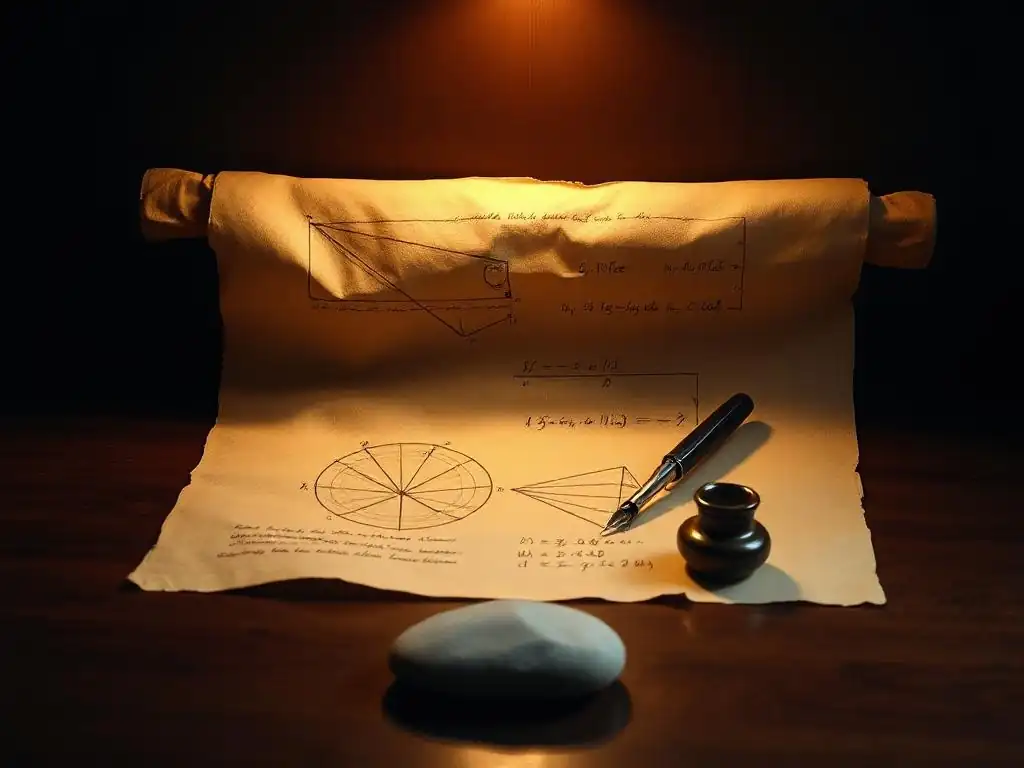
The stories of these 18th Century female mathematicians and their 19th-century counterparts are inextricably linked with the systemic gender bias that permeated their societies. Women were largely considered intellectually inferior or, at best, suited only for domestic and social roles. This prejudice manifested in widespread denial of access to formal education, particularly at universities. Institutions like the Sorbonne and Cambridge remained closed to women for centuries, forcing aspiring female scholars to seek unconventional paths, such as private tutoring, self-study, or the patronage of enlightened male relatives or mentors.
Even when women managed to acquire an education, their opportunities for professional recognition were severely limited. They could not hold academic positions, present papers at scientific societies under their own names, or publish without facing intense scrutiny or even ridicule. This pervasive discrimination meant that many brilliant minds either had their work overlooked, attributed to men, or were never given the chance to flourish in the first place, leaving countless potential contributions unmade.
The Importance of Mentorship and Support Networks
Given the formidable barriers faced by women in mathematics during these centuries, the role of mentorship and informal support networks became absolutely crucial. Many of the celebrated 18th Century female mathematicians and 19th-century pioneers benefited from the guidance and advocacy of male scholars who recognized their talent. For instance, Karl Weierstrass championed Sofia Kovalevskaya, providing her with private lessons and advocating for her doctorate and professorship. Similarly, Charles Babbage recognized Ada Lovelace's unique insights into his Analytical Engine and encouraged her to publish her "Notes."
Beyond individual mentors, informal intellectual salons and correspondence networks provided vital spaces for women to engage in scientific discourse. Émilie du Châtelet's salon was a prime example, where she debated physics and philosophy with leading thinkers. These private spheres offered a sanctuary from the public exclusion, allowing women to hone their intellectual skills, share ideas, and gain the confidence necessary to pursue their groundbreaking work.
The Impact of the French Revolution and Enlightenment on Women's Education
The intellectual ferment of the Enlightenment, with its emphasis on reason, individual rights, and progress, created a cautious opening for discussions about women's intellectual capabilities, even if practical changes were slow. Philosophers like Condorcet argued for equal educational opportunities for women, challenging traditional views. While these ideas did not immediately translate into universal access to universities, they did spark public debate and fostered a climate where some aristocratic or wealthy families might consider educating their daughters more rigorously.
The French Revolution, despite its violent upheavals, also briefly raised hopes for greater equality, including in education. While women's rights were ultimately curtailed in the post-Revolutionary period, the initial revolutionary ideals did inspire some to question existing social hierarchies and advocate for broader access to knowledge. These intellectual shifts, though not a direct cause of widespread change, provided a philosophical backdrop that made the achievements of individual 18th Century female mathematicians seem less anomalous and more a testament to the untapped potential of women.
The Enduring Legacy: Inspiring Future Generations
The Influence of 18th & 19th Century Female Mathematicians on Modern Mathematics
The foundational work of 18th Century female mathematicians and their 19th-century successors continues to resonate profoundly in modern mathematics and science. Maria Gaetana Agnesi's comprehensive calculus textbook was a pedagogical landmark, shaping how the subject was taught for decades. Émilie du Châtelet's deep understanding of Newtonian physics and her insights into kinetic energy were crucial steps in the development of classical mechanics.
Perhaps most strikingly, Ada Lovelace's theoretical work on the Analytical Engine, envisioning a machine capable of more than just arithmetic, laid conceptual groundwork for modern computer science. Her algorithm for Bernoulli numbers is considered the world's first computer program, showcasing a foresight that was centuries ahead of its time. Similarly, Sofia Kovalevskaya's contributions to partial differential equations and rigid body dynamics remain cornerstones of advanced mathematics and theoretical physics, influencing fields from fluid dynamics to astrophysics. These women demonstrated the breadth and depth of female intellectual capacity, proving that mathematical genius knows no gender.
Promoting STEM Education for Girls and Women Today
The struggles and triumphs of these historical figures offer invaluable lessons for promoting STEM education for girls and women today. Their stories highlight the enduring need to dismantle systemic barriers, challenge gender stereotypes, and provide equitable opportunities for all. Despite significant progress, women remain underrepresented in many STEM fields, particularly in advanced mathematics and computer science.
By actively celebrating the achievements of 18th Century female mathematicians and their equally brilliant 19th-century counterparts, we provide powerful role models for young girls considering careers in science and technology. Understanding the historical context of their struggles can empower current generations to overcome contemporary challenges, fostering an environment where talent is recognized and nurtured regardless of gender. Initiatives focused on mentorship, early exposure to STEM, and inclusive educational environments are crucial to ensuring that the next generation of mathematicians reflects the full diversity of human potential.
Celebrating the Achievements of Women in Mathematics Throughout History
The continued recognition and celebration of women's contributions to mathematics throughout history is not merely an academic exercise; it is an imperative for a complete and equitable understanding of scientific progress. Websites like WomenInScienceHistory.com play a vital role in bringing these often-overlooked narratives to the forefront, ensuring that the legacies of figures like Agnesi, du Châtelet, Somerville, Lovelace, and Kovalevskaya are not forgotten.
By highlighting their intellectual brilliance, their perseverance in the face of adversity, and the lasting impact of their work, we inspire future generations and correct historical omissions. Each biography, each rediscovered piece of research, adds another thread to the rich tapestry of scientific discovery, demonstrating that innovation and genius have always transcended gender. This ongoing celebration is essential for fostering a truly inclusive scientific community where every individual's contributions are valued and acknowledged.
Conclusion: Remembering the Trailblazers of Mathematical History
A Call to Recognize and Celebrate Women's Contributions to Science
The lives and achievements of 18th Century female mathematicians and their pioneering counterparts in the 19th century stand as powerful testaments to intellectual brilliance and unwavering dedication. Despite facing profound societal barriers, including limited educational opportunities and pervasive gender bias, women like Maria Gaetana Agnesi, Émilie du Châtelet, Mary Somerville, Ada Lovelace, and Sofia Kovalevskaya made indelible marks on the fields of calculus, physics, computing, and advanced analysis. Their work was not merely competent; it was groundbreaking, shaping the very trajectory of scientific thought and laying foundations for future discoveries.
It is imperative that we continue to actively recognize and celebrate these invaluable contributions. Integrating their stories into mainstream historical narratives enriches our understanding of scientific progress and provides a more accurate, inclusive account of human ingenuity. By doing so, we not only pay homage to these remarkable individuals but also dismantle persistent stereotypes about who can excel in mathematics and science.
The Importance of Continued Research and Documentation of Women's Scientific Achievements
While significant progress has been made in bringing the stories of these prominent 18th Century female mathematicians and 19th-century pioneers to light, countless other women throughout history undoubtedly made contributions that remain unacknowledged or undiscovered. The historical record, often written from a male-centric perspective, has a vast potential for further exploration. Continued research and meticulous documentation of women's scientific achievements are crucial.
This ongoing effort involves delving into archives, re-examining existing texts with a critical eye, and actively seeking out the narratives that have been marginalized or silenced. By committing to this continuous process, we ensure that the full scope of women's historical impact on mathematics and science is revealed, inspiring future generations to break new ground and contribute to a more equitable and comprehensive understanding of human intellectual endeavor. The numbers of these trailblazers truly live on, continuing to shape our world.
Frequently Asked Questions
What were some of the major obstacles faced by 18th-century female mathematicians?
Women faced significant barriers, including limited access to education and social expectations that discouraged them from pursuing scientific careers. They also often lacked institutional support and faced prejudice in male-dominated academic circles.
Can you name a prominent 18th-century female mathematician and her key contribution?
Maria Gaetana Agnesi is a notable example. She is known for her work on differential and integral calculus, specifically Instituzioni analitiche ad uso della gioventù italiana, an influential textbook.
The prevailing social climate often minimized or ignored the contributions of women. Even when they made significant discoveries, their work might be attributed to male colleagues or simply overlooked.
What inspired women to pursue mathematics despite the challenges they faced?
Many women were driven by a genuine passion for mathematics and a desire to contribute to scientific knowledge. Some also benefited from supportive families or mentors who recognized their talents.
Why is it important to study the history of women in mathematics, particularly those from the 18th and 19th centuries?
Studying their history corrects historical biases, inspires future generations, and demonstrates that mathematical talent is not gender-specific. It also highlights the importance of equal opportunities in STEM fields.
Final Reflection: Echoes of Equations Past
The stories of 18th and 19th-century women mathematicians, often obscured by the societal constraints of their time, are not just historical footnotes; they are vital threads in the tapestry of modern scientific progress. Their contributions, though sometimes overlooked, laid the groundwork for many of the mathematical principles we rely on today, proving that brilliance knows no gender and that perseverance can overcome even the most formidable obstacles.
The enduring influence of these women extends far beyond the realm of mathematics itself. Their struggles and triumphs serve as a powerful reminder of the importance of inclusivity and the untapped potential that lies dormant when talent is suppressed. Their lives underscore the critical need to champion diversity in STEM fields, ensuring that future generations of female mathematicians have the opportunity to flourish without facing the same systemic barriers. The most incomprehensible thing about the world is that it is comprehensible.
- Albert Einstein, a sentiment these women undoubtedly shared as they sought to unravel the universe's mathematical secrets.
As we reflect on the legacies of these remarkable women, let us not simply admire their achievements from afar. Instead, let us be inspired to actively cultivate a world where every individual, regardless of gender, has the opportunity to pursue their passions and contribute their unique talents to the advancement of knowledge. Consider how you can champion inclusivity and support aspiring mathematicians in your own community, ensuring that the echoes of their equations continue to resonate for generations to come.
Unleash Your Inner Pioneer: Carry the Torch Forward!
Thank you for diving into the incredible stories of these pioneering women mathematicians. You've seen how their contributions, often hidden, shaped our world. Now, it's your turn to ensure their legacy continues to inspire.
- Amplify their stories: Share this article with friends, family, and colleagues to help these remarkable women receive the recognition they deserve. Let's ensure their names are not forgotten.
- Explore the archives at WomenInScienceHistory.com to discover even more unsung heroes of science and mathematics.
- Challenge yourself to learn a new mathematical concept inspired by one of these women's work and share your discovery with the world!
Which woman's story resonated most with you, and what concrete step will you take to honor her legacy?