
Climate Warriors: How Female Scientists are Leading the Charge for a Sustainable Planet

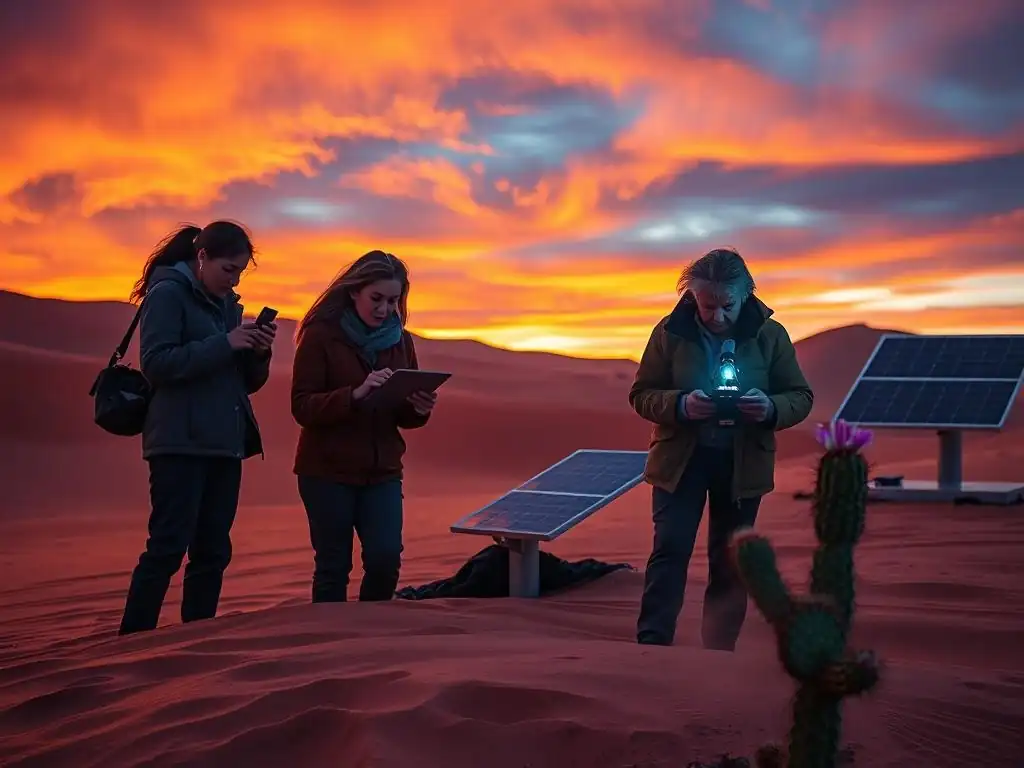
Welcome to WomenInScienceHistory.com!
Delve into the fascinating, and often untold, stories of women who shaped the scientific landscape. Today, we spotlight a critical contemporary issue: How female scientists are forging innovative climate solutions. Prepare to be inspired as we explore the groundbreaking research and unwavering dedication of these Climate Warriors, and discover how their work is leading the charge toward a sustainable planet. Ready to uncover the impact they're making?
- Introduction: The Rising Tide of Female Leadership in Climate Science
- The Pioneers: Trailblazing Women and Their Climate Research
- Female Scientists Climate Solutions: Innovative Approaches to Environmental Challenges
- Breaking Barriers: Overcoming Obstacles in Climate Science
- Inspiring the Next Generation: Female Role Models in Climate Science
- The Future is Female: The Continued Impact of Women in Climate Science
-
Frequently Asked Questions
- How does the "Women in Science History" website promote the achievements of female scientists in climate solutions?
- What types of challenges did female scientists face in male-dominated fields while working on climate solutions?
- Can you provide examples of groundbreaking work by female scientists that are contributing to climate solutions?
- How does the "Women in Science History" platform aim to inspire future generations of female scientists working on climate change?
- Why is it important to highlight the contributions of female scientists in the context of climate solutions?
- Final Reflection: Empowering Change Through Science
- Ignite Change: Champion a Greener Tomorrow!
Introduction: The Rising Tide of Female Leadership in Climate Science
Women in Science History: Spotlighting Climate Change Innovators
For centuries, the groundbreaking work of women in science often remained in the shadows, their contributions overlooked or attributed to male counterparts. This historical pattern is slowly but surely changing, and nowhere is this shift more evident than in the urgent field of climate science. As the global community grapples with the escalating crisis of climate change, a growing number of brilliant female scientists are stepping into leadership roles, bringing innovative perspectives and solutions to the forefront. This article aims to spotlight these contemporary climate warriors, celebrating their critical research and advocacy that is shaping our sustainable future.
The platform "Women in Science History" is dedicated to unearthing and celebrating these vital narratives. Today, we turn our attention to the present, showcasing how women are not just participating but leading the charge in developing robust and impactful climate solutions. Their work spans diverse disciplines, from atmospheric physics and oceanography to sustainable agriculture and policy advocacy, demonstrating the multifaceted nature of effective climate action. The collective efforts of these female scientists are proving indispensable in understanding, mitigating, and adapting to a rapidly changing planet.
Why Female Scientists are Crucial for Climate Solutions
The complexity of climate change demands a diversity of thought, experience, and approach. Female scientists often bring unique perspectives to problem-solving, characterized by an emphasis on collaboration, interdisciplinary thinking, and a deep understanding of community impacts. Research, such as a 2017 study published in Nature, has indicated that research teams with greater gender diversity tend to produce more novel and impactful findings, underscoring the value of varied viewpoints in scientific discovery. This inherent diversity in approach is particularly vital when tackling a challenge as interconnected and far-reaching as global warming.
Furthermore, the involvement of female scientists ensures a more holistic and equitable approach to developing climate solutions. Their insights frequently extend beyond purely technical fixes, incorporating social justice, gender equality, and local community needs into climate strategies. This comprehensive view helps to craft solutions that are not only scientifically sound but also socially just and economically viable, fostering greater public acceptance and long-term effectiveness. The unique contributions of female scientists are therefore crucial for building a sustainable future that benefits everyone, not just a select few.
The Pioneers: Trailblazing Women and Their Climate Research
Katharine Hayhoe: Communicating Climate Science and its Impacts
Katharine Hayhoe stands as a preeminent atmospheric scientist and an exceptionally effective climate communicator. As a professor at Texas Tech University and Chief Scientist for The Nature Conservancy, her work centers on understanding climate change impacts at regional scales and, crucially, translating complex scientific data into accessible, relatable information for diverse audiences. She is renowned for her ability to bridge the divide between scientific consensus and public understanding, engaging with faith communities, policymakers, and the general public on the local ramifications of a warming world.
Hayhoe's approach to climate communication emphasizes empathy and shared values over confrontational data presentation. She meticulously explains how phenomena like increased frequencies of heatwaves, prolonged droughts in the American Southwest, or intensified coastal storms are directly linked to climate change, often citing data from the Intergovernmental Panel on Climate Change (IPCC) reports. Her dedication to making complex "Female scientists climate solutions" understandable and actionable has made her one of the most influential voices in the climate discourse, empowering individuals and communities to embrace change through informed decision-making.
Vandana Shiva: Advocating for Biodiversity and Sustainable Agriculture
Vandana Shiva, an Indian scholar, environmental activist, and author, has been a powerful voice for biodiversity conservation and sustainable agriculture for decades. Her work is deeply rooted in the philosophy of "Earth Democracy," advocating for the rights of nature and the protection of traditional ecological knowledge. She founded Navdanya, a movement dedicated to biodiversity conservation and organic farming, which has established over 150 community seed banks across India, preserving indigenous seed varieties crucial for climate resilience.
Shiva's critique of industrial agriculture highlights its significant contribution to greenhouse gas emissions and environmental degradation. She champions traditional farming methods, local food systems, and seed freedom as vital "Female scientists climate solutions" for both environmental resilience and food security. Her advocacy underscores how sustainable practices, often marginalized in mainstream discourse, are essential for mitigating climate change while also ensuring the livelihoods of small farmers and the health of local ecosystems.
Joellen Russell: Investigating Ocean Circulation and Climate Change
Joellen Russell is a leading oceanographer and professor at the University of Arizona, whose research focuses on the critical role of the Southern Ocean in regulating Earth's climate. She is a prominent figure in the field, serving as co-chair of the Southern Ocean Observing System (SOOS) and contributing significantly to our understanding of ocean circulation patterns and their impact on global climate. Her work has been instrumental in revealing how the ocean acts as a vast carbon sink, absorbing a substantial portion of anthropogenic carbon dioxide.
Russell's research, often involving sophisticated climate modeling and observational studies, has shown that the Southern Ocean alone absorbs approximately 40% of the CO2 produced by human activities. Her investigations into ocean currents and their interaction with atmospheric processes provide crucial data for predicting future climate scenarios and developing robust "Female scientists climate solutions." By understanding the ocean's capacity to absorb heat and carbon, her work helps inform strategies for climate mitigation and adaptation, highlighting the interconnectedness of Earth's systems.
Female Scientists Climate Solutions: Innovative Approaches to Environmental Challenges
Sustainable Technologies and Renewable Energy Initiatives Led by Women
Female scientists are at the forefront of developing groundbreaking sustainable technologies and driving renewable energy initiatives crucial for decarbonizing our global economy. Their innovative research spans various fields, from enhancing solar cell efficiency to pioneering advanced battery storage solutions and novel carbon capture methods. For instance, women are leading research teams that are making significant strides in developing next-generation biofuels, creating more efficient wind turbine designs, and advancing smart grid technologies that optimize energy distribution and consumption.
The practical application and impact of these "Female scientists climate solutions" are rapidly accelerating the transition away from fossil fuels. These innovations are not merely theoretical; they are being implemented globally, contributing to the rapid growth of renewable energy sectors. The increasing presence of diverse leadership in these fields, including a rising number of female engineers and material scientists, is directly contributing to the accelerated deployment of clean energy systems worldwide, demonstrating tangible progress in reducing greenhouse gas emissions.
Advancing Climate-Resilient Agriculture through Female-Led Research
In the face of increasing climate volatility, female scientists are playing a pivotal role in advancing climate-resilient agriculture, ensuring food security for a growing global population. Their research focuses on developing drought-resistant crop varieties, implementing sustainable water management techniques, and promoting agroecological practices that enhance soil health and biodiversity. Examples include female researchers leading projects on precision agriculture, using data analytics to optimize resource use, and studying the impact of climate change on specific crop yields in vulnerable regions.
These "Female scientists climate solutions" are vital for adapting food systems to a changing climate. Beyond technological advancements, many female-led initiatives also prioritize empowering local communities and farmers, particularly women who form a significant portion of agricultural labor in many parts of the world. By integrating traditional knowledge with scientific innovation, these efforts foster agricultural practices that are both environmentally sustainable and socially equitable, strengthening resilience in regions particularly vulnerable to climate shifts, such as sub-Saharan Africa.
Female Scientists Driving Policy Changes for Climate Action
The scientific expertise of female scientists is increasingly being leveraged to drive effective climate policy at local, national, and international levels. They are serving as trusted advisors to governments, participating actively in influential international panels like the Intergovernmental Panel on Climate Change (IPCC), and advocating for evidence-based regulations that promote climate action. Their contributions ensure that policy decisions on emissions targets, conservation efforts, and adaptation strategies are grounded in the most current and accurate scientific understanding.
Examples of female scientists influencing policy range from urban planners developing climate-resilient cities to negotiators shaping global climate agreements. Their voices are crucial in ensuring that "Female scientists climate solutions" are not only technically sound but also politically viable, socially just, and implementable. The increasing presence of women in leadership roles within environmental agencies, non-governmental organizations, and legislative bodies is amplifying the call for robust climate action, translating scientific imperative into tangible policy outcomes.
Breaking Barriers: Overcoming Obstacles in Climate Science

The Gender Gap in STEM and its Impact on Climate Research
Despite significant progress, a persistent gender gap remains in STEM fields, particularly at senior academic and leadership levels, and this directly impacts climate research. Women hold less than 30% of research and development jobs globally, according to UNESCO data, indicating a significant underrepresentation. This gap often stems from systemic issues such as unconscious bias in hiring and promotion, unequal access to funding, and a lack of visible female role models. These barriers can limit career progression and diminish opportunities for women to lead critical climate initiatives.
The existence of this gender gap means that the full spectrum of intellectual talent and diverse perspectives is not being fully leveraged in the urgent quest for "Female scientists climate solutions." A lack of diverse voices can lead to less comprehensive research questions, potentially overlooked social or regional nuances of climate change impacts, and less inclusive policy interventions. Addressing this disparity is not just a matter of equity; it is an imperative for effective and holistic climate action.
Strategies for Supporting and Empowering Female Climate Scientists
To effectively address the gender gap in climate science, specific strategies must be implemented to support and empower female scientists. These include promoting equitable hiring practices, ensuring equal pay for equal work, and establishing family-friendly policies such as subsidized childcare, flexible work arrangements, and extended parental leave. It is also crucial to actively challenge gender stereotypes within academic and research environments and to foster truly inclusive work cultures where all voices are valued and heard.
Beyond institutional policies, there's a growing focus on increasing funding opportunities specifically for women-led research projects and providing dedicated platforms for their scientific voices to be amplified. Initiatives that offer grants, fellowships, and research sabbaticals tailored to support female scientists can significantly boost their career trajectories and research output. Empowering more "Female scientists climate solutions" requires a concerted and systemic effort to dismantle existing barriers and create pathways for success.
Mentorship and Collaboration: Building a Stronger Network of Women in Climate Science
Mentorship plays a critical role in guiding young female scientists through their academic and professional careers in climate science. Experienced female researchers can offer invaluable advice, practical support, and crucial networking opportunities, helping to navigate challenges and celebrate successes. Formal mentorship programs, as well as informal peer-to-peer support networks, are vital for building confidence and fostering a sense of belonging within the scientific community.
The power of collaboration among women in science cannot be overstated. By working together, female climate scientists can amplify their collective impact, share resources, and create a supportive community that counters feelings of isolation. Collaborative projects and organizations dedicated to connecting women in STEM fields strengthen their professional networks, leading to more robust research, innovative "Female scientists climate solutions," and a more resilient and inclusive scientific landscape.
Inspiring the Next Generation: Female Role Models in Climate Science
Educational Programs and Outreach Initiatives for Young Women
Inspiring the next generation of climate warriors begins with early exposure and encouragement. Educational programs and outreach initiatives specifically designed for young women are crucial for nurturing their interest in STEM fields, particularly climate science. These include interactive science camps, workshops, and school-based programs that demystify scientific careers and provide hands-on experiences with climate-related topics. For example, initiatives that teach coding skills or engineering principles can indirectly pave the way for future climate tech innovators.
Such programs aim to break down stereotypes and showcase the exciting possibilities of a career dedicated to environmental stewardship. By engaging young women with real-world climate challenges and the innovative "Female scientists climate solutions" being developed, these initiatives empower them to envision themselves as future leaders in research, policy, or sustainable technology, making a tangible difference to the planet.
Showcasing the Achievements of Female Climate Scientists
To inspire effectively, it is paramount to prominently feature the accomplishments of current female climate scientists. This involves ensuring their work receives widespread media coverage, inviting them to deliver public lectures, and bestowing awards that recognize their groundbreaking contributions. Platforms like "Women in Science History" play a vital role in consistently highlighting these narratives, ensuring that their discoveries and leadership are widely known and celebrated.
Visible role models are powerful motivators. When young women see successful female climate scientists, it instills confidence and ambition, demonstrating that a fulfilling and impactful career in climate research is not only attainable but also offers immense opportunities for global impact. By showcasing their achievements, we reinforce the idea that impactful "Female scientists climate solutions" are being crafted by brilliant women, inspiring a new wave of scientific talent.
Creating a More Inclusive and Equitable Future for Climate Research
The ultimate goal is to foster an environment where diversity—encompassing gender, ethnicity, socioeconomic background, and more—is inherently recognized as a fundamental strength in climate research. An inclusive scientific community is better equipped to understand the multifaceted nature of climate change and to develop solutions that are relevant and effective for all populations. This means actively working to dismantle systemic biases and create equitable access to opportunities for everyone.
A truly sustainable future depends on leveraging the talents, insights, and creativity of all individuals. By consciously building a more inclusive and equitable scientific community, we ensure that future "Female scientists climate solutions" are not only scientifically robust but also culturally sensitive and broadly applicable, developed by a diverse and representative group of experts committed to a healthier planet.
The Future is Female: The Continued Impact of Women in Climate Science
Emerging Fields and Opportunities for Female Scientists
The landscape of climate science is continuously evolving, presenting exciting new fields and opportunities where female scientists are poised to make significant contributions. Emerging areas such as advanced climate modeling powered by artificial intelligence, ethical considerations in geoengineering research, and interdisciplinary climate justice studies are increasingly attracting women with diverse skill sets. Furthermore, the convergence of social sciences with environmental science is opening up new frontiers for understanding human-environment interactions in a changing climate.
These expanding career paths and research frontiers offer unprecedented opportunities for female scientists to lead innovation and drive impactful change. As the demand for comprehensive "Female scientists climate solutions" grows, so too does the recognition of the indispensable role women play in pioneering these critical areas, encouraging more women to enter and excel in these vital fields.
The Importance of Diversity and Inclusion in Addressing Climate Change
The complexity and global scale of climate change underscore that diverse perspectives are not merely beneficial but absolutely essential. Research, including a 2018 study by McKinsey & Company, consistently shows that organizations with greater gender diversity are more likely to outperform their peers in innovation and problem-solving. This principle holds true for scientific research, where varied viewpoints lead to more robust scientific inquiry, more comprehensive analyses, and ultimately, more effective solutions.
A multitude of voices ensures that "Female scientists climate solutions" are not only technically sound but also culturally sensitive, economically viable, and socially just. This inclusivity leads to strategies that are more readily accepted and implemented across diverse communities and nations, making them far more effective in mitigating and adapting to the widespread impacts of climate change.
Female Scientists: Shaping a Sustainable Planet for All
From meticulously analyzing atmospheric data to advocating for policy changes and pioneering sustainable agricultural practices, female scientists are making immense contributions across every facet of climate action. Their work is characterized by rigorous scientific inquiry, innovative thinking, and a deep commitment to environmental stewardship and social equity. They are not just responding to a crisis; they are actively shaping a better, more sustainable future.
The collective efforts and groundbreaking discoveries of "Female scientists climate solutions" are indispensable in securing a healthy planet for current and future generations. Their continued leadership, collaboration, and dedication will be paramount in navigating the complex challenges of climate change, ensuring a sustainable and equitable world for all.
Frequently Asked Questions
How does the "Women in Science History" website promote the achievements of female scientists in climate solutions?
The website WomenInScienceHistory.com celebrates the contributions of female scientists through biographies and discussions of their groundbreaking work. It aims to inspire future generations by highlighting these often overlooked narratives.
What types of challenges did female scientists face in male-dominated fields while working on climate solutions?
Female scientists often faced gender bias, limited access to resources and funding, and a lack of recognition for their contributions within the scientific community.
Can you provide examples of groundbreaking work by female scientists that are contributing to climate solutions?
Many female scientists have contributed to climate solutions through research on renewable energy, climate modeling, and sustainable agriculture. These contributions are highlighted on the website.
How does the "Women in Science History" platform aim to inspire future generations of female scientists working on climate change?
By showcasing the stories of pioneering women, the platform provides role models and demonstrates the impact women can have in addressing climate change.
Why is it important to highlight the contributions of female scientists in the context of climate solutions?
Highlighting their contributions provides recognition for their work, challenges gender stereotypes in STEM, and encourages greater diversity in the field, which is crucial for innovative climate solutions.
Final Reflection: Empowering Change Through Science
The stories shared within this article highlight a powerful truth: female scientists are not just participants in the climate conversation, they are driving the innovation and solutions we desperately need. Their dedication, resilience, and groundbreaking research are reshaping our understanding of the climate crisis and paving the way for a more sustainable future. The urgency of this work cannot be overstated; the planet's health depends on continued support and amplification of these vital voices.
The impact of these women extends far beyond the laboratory. Their work inspires a new generation of scientists, particularly young women, to pursue careers in STEM and dedicate their talents to addressing the climate crisis. This ripple effect is crucial for fostering a diverse and inclusive scientific community capable of tackling the complex challenges ahead. As Dr. Jane Goodall so eloquently stated: You cannot get through a single day without having an impact on the world around you. What you do makes a difference, and you have to decide what kind of difference you want to make.
Now, consider your own role in this critical endeavor. What steps can you take to support female scientists and their groundbreaking work? How can you amplify their voices and advocate for policies that promote sustainability and environmental justice? The future of our planet rests on our collective action. Let us be inspired by these climate warriors and commit to creating a world where science, innovation, and equality pave the way for a thriving and sustainable future for all.
Ignite Change: Champion a Greener Tomorrow!
Thank you for exploring the inspiring stories of women leading the fight for climate solutions. Now, it's your turn to make a difference and join the movement for a sustainable planet.
Here's how you can contribute:
- Boldly amplify their voices: Share this article on your social media platforms to celebrate these climate champions and inspire others.
- Dive deeper: Uncover related initiatives by exploring the Environmental Protection Agency's (EPA) website or similar organization's websites dedicated to environmental sustainability.
- Start local: Identify environmental challenges in your community and volunteer with organizations working on solutions, such as tree planting.
What small step will you take today to contribute to a healthier, more sustainable world?