Essential Reading: Women in Chemistry – Downloadable Checklists
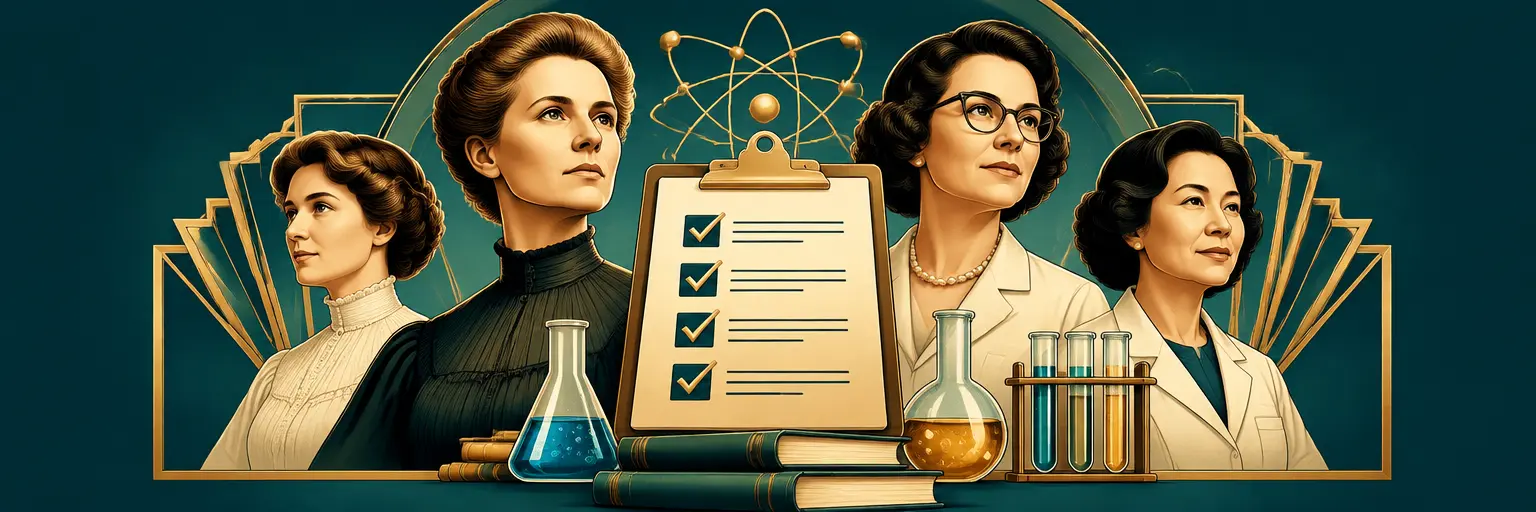
Unlock the hidden narratives of female pioneers who transformed the chemical sciences with our curated Downloadable Checklists. Designed for educators, students, and history enthusiasts, this subcategory offers structured, printable guides that map the lives, discoveries, and struggles of women from Marie Curie to Dorothy Hodgkin. Each checklist transforms dense historical data into actionable reading paths, making it effortless to study, teach, or simply explore—while boosting your SEO-friendly research with precise, keyword-rich summaries.
🔬 Curated Biographical Reading Lists
Dive into our meticulously compiled reading checklists that highlight seminal biographies, autobiographies, and scientific papers by and about women chemists. Expect titles like “A Life in Science” by Marie Curie and “The Quiet Revolution” documenting Gertrude B. Elion’s work. Each checklist categorizes resources by difficulty, era, and thematic focus—from organic synthesis to radiochemistry.
These checklists serve as a ready-made syllabus for personal study or classroom modules. We annotate each entry with key achievements and historical context, ensuring you grasp the scientific impact and the societal barriers overcome. Perfect for building a comprehensive library without endless searching.
🧪 Milestone Discovery Tracking Sheets
Our tracking sheets allow you to chronologically map breakthroughs by women in chemistry, such as Rosalind Franklin’s DNA crystallography or Stephanie Kwolek’s invention of Kevlar. Each printable grid pairs the discovery date with the scientist’s name, publication reference, and the technological ripple effects. This visual tool is invaluable for creating timelines for presentations or research papers.
Beyond simple dates, we include notes on the collaborative nature of these findings and the frequent erasure of female credit. Use these sheets to teach critical historiography—how to detect bias in primary sources—while celebrating the actual achievements. Ideal for advanced high school or undergraduate chemistry courses.
📚 Age-Appropriate Curriculum Guides
Tailored for different learning stages, these checklists break down women’s contributions into digestible segments for elementary, middle, and high school students. Each guide includes simplified summaries, hands-on experiment suggestions, and discussion prompts. For example, a unit on Alice Ball’s chaulmoogra oil treatment includes a safe soap-making activity.
Educators will appreciate the alignment with STEM standards and the inclusion of diverse voices—from African American chemist Alice Ball to British crystallographer Dorothy Hodgkin. The checklists are designed to foster curiosity and gender equity in science classrooms, with vocabulary lists and assessment rubrics embedded for easy integration into lesson plans.
🏆 Nobel and Award Winners Focus Pack
Focus exclusively on female chemistry laureates and major award recipients with a dedicated checklist series. This pack covers Marie Curie (1903, 1911), Irène Joliot-Curie (1935), Ada Yonath (2009), and Frances Arnold (2018), among others. Each entry provides a mini-biography, the exact research that earned the honor, and quotes from their acceptance speeches.
Use this pack to explore the underrepresentation of women in Nobel history—only about 3% of chemistry prizes have gone to women—and the systemic barriers. The checklists also include a comparative analysis of male vs. female laureate recognition over decades, making it a powerful resource for gender studies in science.
📖 Primary Source Annotation Templates
For those tackling original lab notebooks, patents, or letters, our annotation templates guide you through critical reading. Checklists prompt you to identify hypothesis, methodology, and contribution, while also flagging gendered language or institutional obstacles mentioned. This is particularly useful for deep-diving into rare documents, such as Dorothy Crowfoot Hodgkin’s insulin structure notes.
These templates turn passive reading into active scholarship. They include space for your own insights, cross-referencing with secondary sources, and citation formatting. Perfect for graduate students or independent historians aiming to produce publishable analysis on women in chemistry.
Frequently Asked Questions
Can I print these checklists for classroom use?
Yes, all downloadable checklists are licensed for single-classroom use. You can print unlimited copies for your students, and we also offer an editable PDF version for added flexibility. No distribution beyond your institution is permitted without a separate license.
Are these checklists suitable for homeschool settings?
Absolutely. The crisp organization and step-by-step structure make them ideal for independent study. Each checklist includes self-assessment questions and extension activities, so homeschooling parents can easily adapt them for mixed-age learners.
Do the checklists include modern women chemists too?
Yes, we balance historical figures with contemporary trailblazers like Frances Arnold and Carolyn Bertozzi. Every year we update the packs to include recent Nobel laureates and emerging research leaders, ensuring your reading list stays current.
What file formats are available for download?
We offer both PDF and DOCX formats. The PDF preserves layout perfection, while DOCX allows you to customize content—add your own notes, alter spacing, or merge sections. Both are instantly downloadable after purchase.
Can I request a custom checklist for a specific chemist or era?
Indeed, we accept custom requests via our contact form. Please allow 3–5 business days for a crafted checklist tailored to your topic, whether it’s a lesser-known 19th-century chemist or a specific subfield like electrochemistry. We’ll deliver a unique, SEO-friendly PDF.