
Decoding the Future: 21st Century Women Leading AI Breakthroughs

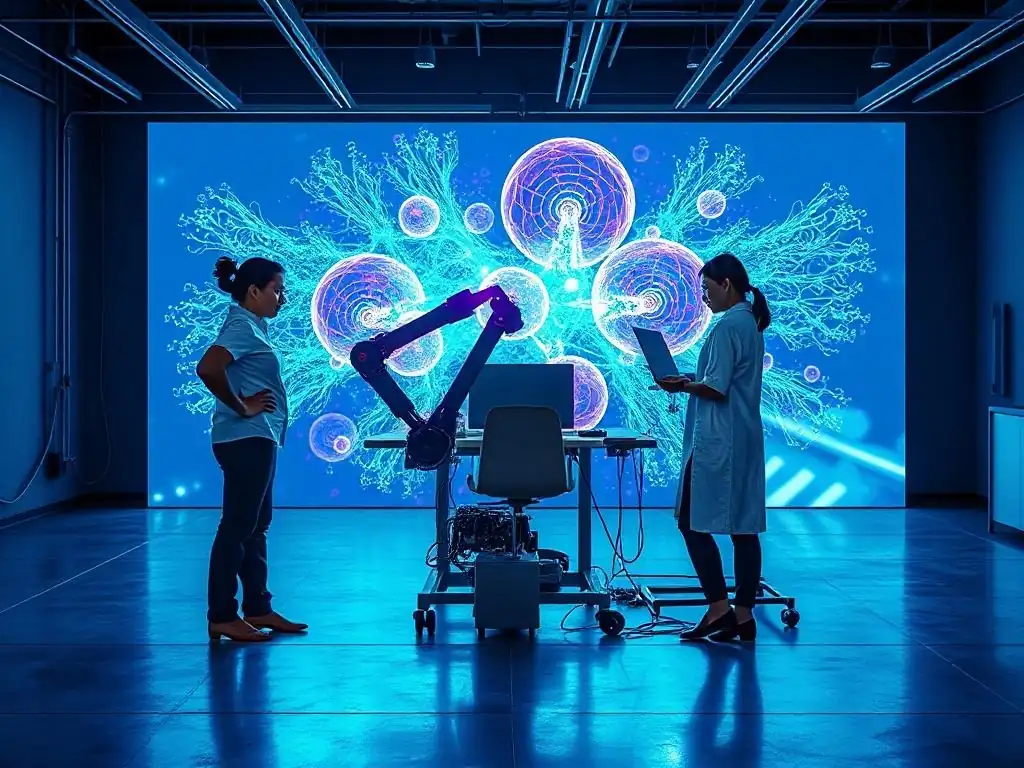
Welcome to WomenInScienceHistory.com, where we unearth the remarkable stories of female scientists who shaped our world. Ever wondered about the unsung heroines behind some of today's most significant advancements? Dive into our latest exploration and discover how Women in AI research breakthroughs are revolutionizing the 21st century, forging a path towards a future driven by their innovative minds. Prepare to be inspired by their ingenuity and unwavering dedication – the future of AI is being decoded, and these women are leading the charge.
- Introduction: Celebrating Women's Impact on AI Innovation
- The Rise of Women in AI: A Historical Perspective
- Groundbreaking Women AI Research Breakthroughs of the 21st Century
- Specific Examples of Women-Led AI Breakthroughs
- Key Areas Where Women are Driving AI Innovation
- The Challenges Faced by Women in AI and How to Overcome Them
- Inspiring Future Generations: Role Models in Women's AI Research
- The Future of AI: A More Inclusive and Diverse Landscape
- Conclusion: Women's Enduring Legacy in Artificial Intelligence
-
Frequently Asked Questions
- What are some examples of WomenInScienceHistory.com highlighting Women AI research breakthroughs in the 21st century?
- What kinds of challenges do women scientists face, as discussed on WomenInScienceHistory.com, while pursuing Women AI research breakthroughs?
- How does WomenInScienceHistory.com aim to inspire future generations of women pursuing careers in Women AI research breakthroughs?
- Why is it important to highlight the achievements of women in Women AI research breakthroughs, according to WomenInScienceHistory.com?
- Does WomenInScienceHistory.com only focus on historical figures, or does it also cover contemporary Women AI research breakthroughs?
- Final Reflection: Empowering the Algorithmic Dawn
- Ignite Your AI Passion: Join the Revolution!
Introduction: Celebrating Women's Impact on AI Innovation
Highlighting the Crucial Role of Women in 21st Century Artificial Intelligence
The 21st century has witnessed an unprecedented acceleration in the field of Artificial Intelligence, transforming industries, reshaping daily lives, and opening new frontiers of scientific inquiry. From sophisticated algorithms powering personalized recommendations to complex neural networks driving medical diagnostics, AI is at the forefront of technological innovation. Crucially, women have emerged not merely as participants but as pivotal figures, spearheading numerous Women AI research breakthroughs that are shaping this digital revolution. Their diverse perspectives and intellectual rigor are proving indispensable in advancing AI's capabilities and ensuring its ethical development.
These contributions span a vast spectrum of AI applications, including machine learning, natural language processing, computer vision, and robotics. Women are contributing to fundamental theoretical advancements, as well as leading the practical implementation of AI solutions in critical sectors like healthcare, finance, and environmental science. Their leadership is challenging conventional norms and demonstrating that a truly inclusive approach is vital for unlocking AI's full potential and driving meaningful progress.
Recognizing Female Pioneers in AI Research
While the historical narrative of computer science often overlooks female pioneers, the 21st century is actively rewriting this story, spotlighting the remarkable women who are making profound impacts in AI. These contemporary pioneers build upon a legacy of female innovation in computing, dating back to Ada Lovelace's foundational work on algorithms in the 19th century. Today's leading female researchers are not only pushing the boundaries of what AI can achieve but are also actively working to create more equitable and accessible pathways for future generations.
Their groundbreaking work is characterized by ingenuity, perseverance, and often, a deep commitment to addressing societal challenges through technology. From developing sophisticated AI models that interpret complex data to championing ethical frameworks that ensure fairness and accountability, these women are at the vanguard of Women AI research breakthroughs. Their influence extends beyond technical achievements, inspiring countless others to enter this dynamic and impactful field.
The Rise of Women in AI: A Historical Perspective
Breaking Barriers: Overcoming Gender Bias in Computer Science and AI
The journey of women in computer science, and subsequently in AI, has been marked by significant challenges, notably persistent gender bias and underrepresentation. Historically, the field saw a decline in female participation after the mid-1980s, often attributed to societal shifts and the masculinization of the "hacker" stereotype. Despite these hurdles, women have continued to break barriers, making their mark through sheer talent and determination. For instance, while women earned approximately 37% of computer science bachelor's degrees in 1984, this figure dropped to around 18% by 2010 before showing a slow recovery.
However, the 21st century has seen a renewed push for diversity, with more women entering and excelling in AI. Organizations and academic institutions are increasingly recognizing the imperative of addressing this imbalance, understanding that diverse teams lead to more robust and less biased AI systems. This ongoing effort to overcome systemic biases is crucial for fostering an environment where more Women AI research breakthroughs can flourish.
A Legacy of Female Innovation in Computing
The contemporary wave of Women AI research breakthroughs is not an isolated phenomenon but rather a continuation of a rich legacy of female innovation in computing. Long before the term "Artificial Intelligence" became commonplace, women were instrumental in laying the groundwork for modern computational science. Figures like Grace Hopper, who developed the first compiler for a computer programming language, and Margaret Hamilton, whose software engineering work was critical to the Apollo moon missions, demonstrated profound foresight and technical prowess.
Their contributions established paradigms in software development and complex system management that underpin today's AI architectures. This historical context illuminates how the current generation of female AI leaders stands on the shoulders of giants, carrying forward a tradition of pushing technological boundaries and solving complex problems with ingenuity and precision. The enduring impact of these early pioneers serves as a powerful reminder of women's integral role in the evolution of computing.
Groundbreaking Women AI Research Breakthroughs of the 21st Century
Spotlight on Key Female Researchers and Their Contributions
The 21st century has been a period of rapid advancement in AI, and at the heart of many of these innovations are brilliant female researchers. These women are not only developing cutting-edge algorithms and models but are also leading teams, establishing ethical frameworks, and shaping the future direction of the field. Their contributions often address complex, real-world problems, from enhancing medical diagnostics to improving climate models. The impact of these Women AI research breakthroughs resonates across academia, industry, and society at large.
Their work spans diverse domains, from deep learning and natural language processing to robotics and human-computer interaction. Many of these researchers have achieved significant milestones that have shifted paradigms within their respective subfields, influencing how AI is conceptualized, developed, and deployed globally. Their leadership is crucial for fostering a more inclusive and innovative AI ecosystem.
Addressing the Gender Gap in AI Research and Development
Despite the remarkable achievements of women in AI, a significant gender gap persists in AI research and development roles. A 2019 report by the World Economic Forum, for example, indicated that globally, only 22% of AI professionals were female. This disparity is even more pronounced in senior leadership and research positions. Addressing this gap is not merely a matter of equity but a strategic imperative for the future of AI. A lack of diverse perspectives can lead to biased algorithms and solutions that fail to serve the needs of a diverse global population.
Efforts to close this gap involve multi-faceted approaches, including promoting STEM education for girls from an early age, creating inclusive workplace cultures, and providing mentorship opportunities. By actively fostering an environment where women feel supported and empowered, the AI community can accelerate the pace of innovation and ensure that future Women AI research breakthroughs are even more impactful and representative of humanity's needs.
Specific Examples of Women-Led AI Breakthroughs
Dr. Fei-Fei Li - Advancements in Computer Vision and AI Education
Details of Dr. Li's work and its impact
Dr. Fei-Fei Li is a towering figure in the field of Artificial Intelligence, particularly renowned for her foundational work in computer vision. As the co-director of Stanford University's Human-Centered AI Institute and former director of the Stanford AI Lab, her most significant contribution is arguably her leadership in creating ImageNet. Launched in 2009, ImageNet is a vast visual database comprising millions of labeled images, meticulously organized into a hierarchical structure.
This dataset became an indispensable benchmark for training and evaluating deep learning models, directly catalyzing the "deep learning revolution" that transformed computer vision in the 2010s. For instance, the ImageNet Large Scale Visual Recognition Challenge (ILSVRC), which ran from 2010 to 2017, spurred rapid advancements in image recognition accuracy, with error rates dropping from 28.2% in 2010 to 2.28% in 2017, largely due to deep convolutional neural networks.
Dr. Li's work on ImageNet provided the essential fuel that allowed neural networks to "learn" from an unprecedented scale of data, leading to breakthroughs in areas like autonomous vehicles, medical imaging analysis, and facial recognition. Beyond her technical contributions, she is a passionate advocate for diversity in AI and co-founded AI4ALL, a non-profit organization dedicated to increasing diversity and inclusion in AI education.
Through AI4ALL, she has helped introduce hundreds of high school students, especially those from underrepresented groups, to the potential of AI, thus fostering the next generation of innovators and ensuring that Women AI research breakthroughs continue to shape the field.
Dr. Daphne Koller - Revolutionizing Biomedical AI and Education
Details of Dr. Koller's work and its impact
Dr. Daphne Koller is a distinguished computer scientist whose work has profoundly influenced both machine learning and its application to biomedical science. A MacArthur Fellowship recipient and co-founder of Coursera, she is recognized for her pioneering research in probabilistic graphical models, a sophisticated framework for representing and reasoning with uncertainty.
Her early work at Stanford University laid much of the theoretical groundwork for modern machine learning algorithms, enabling AI systems to make more informed decisions in complex, real-world scenarios. For example, her research on Bayesian networks and their applications has significantly improved the ability of AI to model intricate relationships in data, a critical capability for areas like medical diagnosis and drug discovery.
More recently, Dr. Koller has shifted her focus to applying AI to revolutionize drug discovery and precision medicine. As the founder and CEO of Insitro, a company leveraging machine learning and high-throughput biology to accelerate drug development, she is at the forefront of Women AI research breakthroughs in healthcare.
Insitro uses AI to identify novel drug targets, design more effective therapies, and predict patient responses, aiming to reduce the cost and time associated with bringing new medicines to market. This approach represents a paradigm shift, moving from traditional trial-and-error methods to data-driven, AI-powered drug development, with the potential to significantly impact global health.
Dr. Timnit Gebru - Pioneering Ethical AI and Algorithmic Auditing
Details of Dr. Gebru's work and its impact
Dr. Timnit Gebru is a leading voice and researcher in the critical domain of ethical AI, focusing on algorithmic bias and its societal implications. Her groundbreaking work has brought much-needed attention to the inherent biases present in AI systems, particularly those related to race and gender.
A significant contribution was her collaborative research, notably with Joy Buolamwini, on the Gender Shades project. This 2018 study rigorously demonstrated that commercial facial recognition systems exhibited significantly higher error rates for darker-skinned women compared to lighter-skinned men, with error rates reaching up to 34% for the former group while being less than 1% for the latter in some systems.
Dr. Gebru's research has sparked widespread public and academic discourse, influencing policy discussions and prompting tech companies to re-evaluate their AI development practices. She has consistently advocated for greater accountability, transparency, and diversity in the AI industry to mitigate harm.
As a co-founder of Black in AI, an organization dedicated to increasing the presence and inclusion of Black individuals in the field of artificial intelligence, she actively works to ensure that the development of AI is inclusive and equitable. Her courageous advocacy and meticulous research exemplify Women AI research breakthroughs that prioritize human well-being and justice over unchecked technological advancement.
Key Areas Where Women are Driving AI Innovation

Advancements in AI Ethics and Fairness Led by Women
The rapid proliferation of AI has underscored the critical need for ethical considerations and fairness in algorithmic design, an area where women are leading significant advancements. As AI systems become more integrated into critical societal functions—from loan applications to criminal justice—the potential for perpetuating or amplifying existing biases becomes a pressing concern.
Female researchers have been at the forefront of identifying these issues, developing methodologies to audit AI for bias, and advocating for responsible AI development. For instance, pioneering work by researchers like Dr. Joy Buolamwini, Dr. Kate Crawford, and Dr. Safiya Noble, alongside Dr. Timnit Gebru, has exposed how datasets and algorithms can encode societal prejudices, leading to discriminatory outcomes in areas like facial recognition and search engine results.
These Women AI research breakthroughs in ethics and fairness are not merely theoretical; they involve developing practical tools and frameworks. This includes creating fairness metrics, designing debiasing algorithms, and advocating for regulatory policies that ensure accountability. Their work has been instrumental in shifting the conversation in the AI community from purely performance-driven metrics to a more holistic evaluation that includes societal impact, privacy, and equity, pushing for AI that serves all segments of humanity justly.
Women Spearheading Innovations in AI for Healthcare
Women are making substantial strides in leveraging AI to revolutionize healthcare, addressing some of the most complex challenges in medicine. Their contributions span various subfields, including diagnostics, drug discovery, personalized treatment plans, and patient care optimization. For example, female researchers are developing AI models that can analyze medical images, such as mammograms and MRIs, with remarkable accuracy, often surpassing human capabilities in early disease detection. One notable area is in oncology, where AI algorithms are being trained on vast datasets to identify subtle patterns indicative of cancer, leading to earlier diagnoses and improved patient outcomes.
Beyond diagnostics, Women AI research breakthroughs in healthcare also encompass the use of AI for accelerating pharmaceutical research. This includes developing machine learning models to predict the efficacy and toxicity of new drug compounds, potentially reducing the time and cost associated with bringing life-saving medications to market. Furthermore, women are innovating in personalized medicine, using AI to tailor treatments based on an individual's genetic makeup, lifestyle, and disease profile, thereby enhancing treatment effectiveness and minimizing adverse effects.
Female Researchers Shaping the Future of AI in Climate Change Solutions
The climate crisis represents one of humanity's most urgent challenges, and women researchers are increasingly harnessing the power of AI to develop innovative solutions. Their work is contributing to a deeper understanding of climate patterns, optimizing resource management, and fostering sustainable practices. For instance, female-led teams are developing AI models that can more accurately predict extreme weather events, providing crucial early warnings that save lives and mitigate damage. These models analyze vast meteorological datasets, identifying complex correlations that traditional methods might miss.
Moreover, Women AI research breakthroughs are evident in efforts to optimize energy grids, predict energy demand, and integrate renewable energy sources more efficiently. Researchers are using AI to identify optimal locations for wind and solar farms, manage smart grids to reduce waste, and develop new materials with lower carbon footprints. Other applications include using AI-powered satellite imagery to monitor deforestation, track biodiversity loss, and assess the health of ecosystems. By applying cutting-edge AI techniques to environmental data, these women are playing a vital role in developing actionable insights and scalable solutions for a more sustainable future.
The Challenges Faced by Women in AI and How to Overcome Them
Addressing Underrepresentation and Bias in the AI Field
Despite the significant strides made by women in AI, persistent challenges related to underrepresentation and systemic bias continue to impede their full participation and recognition. Globally, women remain a minority in the AI workforce; a 2022 Boston Consulting Group report indicated that women comprise only 26% of AI professionals, and this figure drops significantly in leadership and senior research roles.
This underrepresentation is often compounded by unconscious biases in hiring, promotion, and project allocation, where women may face skepticism regarding their technical expertise or leadership capabilities. Such biases can create a "leaky pipeline" where talented women leave the field due to lack of support or opportunities for advancement.
Furthermore, the lack of diverse perspectives in AI development teams can lead to the creation of biased AI systems, as algorithms are often trained on data that reflects historical societal inequalities. Addressing this requires a multi-pronged approach: actively combating unconscious bias through training, implementing transparent and equitable hiring practices, and setting diversity targets. Creating an inclusive environment where women feel valued and respected is paramount to unleashing their full potential and fostering more impactful Women AI research breakthroughs.
Strategies for Supporting and Empowering Women in AI Careers
To overcome the challenges of underrepresentation and bias, concerted efforts are needed to support and empower women throughout their AI careers. One crucial strategy is robust mentorship and sponsorship programs, where experienced professionals guide and advocate for aspiring female AI researchers. Mentors can provide career advice, technical guidance, and emotional support, while sponsors actively promote their mentees for leadership roles and critical projects, opening doors that might otherwise remain closed. These relationships are vital for navigating complex career paths and building professional networks.
Another key strategy involves fostering inclusive workplace cultures that prioritize work-life balance and provide flexible work arrangements, which can disproportionately benefit women. Companies and academic institutions should also invest in initiatives that promote early exposure to STEM fields for girls, such as coding camps and robotics clubs, to cultivate interest in AI from a young age. By actively dismantling systemic barriers and creating supportive ecosystems, the AI community can ensure that more women enter, thrive, and lead in this transformative field, contributing to a richer array of Women AI research breakthroughs.
Inspiring Future Generations: Role Models in Women's AI Research
Showcasing Success Stories of Women in AI
Showcasing the success stories of women in AI is a powerful mechanism for inspiring future generations and dismantling stereotypes about who can excel in technology. When young girls and aspiring female researchers see accomplished women like Dr. Fei-Fei Li, Dr. Daphne Koller, and Dr. Timnit Gebru making profound Women AI research breakthroughs, it provides tangible proof of what is possible.
These narratives highlight not only their technical brilliance but also their resilience in overcoming challenges, their commitment to ethical innovation, and their leadership in shaping the field. For instance, Dr. Li's journey from China to leading a major AI institute demonstrates immense perseverance and vision.
Beyond individual achievements, highlighting these stories also broadens the perception of what an AI career entails. It moves beyond the stereotypical image of a lone coder to encompass roles in interdisciplinary research, ethical advocacy, educational leadership, and entrepreneurial ventures. By making these diverse success stories visible, the AI community can encourage a wider range of talented women to pursue careers in this dynamic field, enriching the landscape of future innovation.
Mentorship and Education Programs for Aspiring Female AI Researchers
To cultivate the next generation of female AI leaders, robust mentorship and education programs are indispensable. Initiatives like AI4ALL, co-founded by Dr. Fei-Fei Li, specifically target high school students from underrepresented groups, including young women, providing them with early exposure to AI concepts, ethical considerations, and potential career paths. These programs often combine hands-on learning with direct interaction with leading researchers, demystifying the field and building confidence. For example, AI4ALL's summer programs have reached hundreds of students, with a significant percentage being young women, fostering a foundational interest in AI.
Furthermore, university-level programs and professional organizations, such as Women in AI & Robotics or Black in AI, provide ongoing mentorship, networking opportunities, and skill-building workshops. These platforms create supportive communities where aspiring female AI researchers can find role models, collaborate on projects, and navigate career challenges. By investing in these structured educational and mentorship frameworks, the AI ecosystem actively nurtures talent, ensuring a continuous pipeline of women who will drive the next wave of Women AI research breakthroughs.
The Future of AI: A More Inclusive and Diverse Landscape
The Importance of Gender Diversity for Innovation in AI
The future of AI hinges significantly on fostering a more inclusive and diverse landscape, with gender diversity playing a pivotal role in driving innovation. Research consistently demonstrates that diverse teams are more innovative, productive, and less prone to groupthink. For instance, a 2019 study by McKinsey & Company, "Diversity Wins," indicated that companies in the top quartile for gender diversity on executive teams were 25% more likely to have above-average profitability than companies in the fourth quartile.
In AI, this translates directly to the development of more robust, equitable, and effective systems. When AI teams lack diverse perspectives, they risk creating algorithms that perpetuate existing societal biases, miss critical use cases, or fail to address the needs of a global, diverse user base.
Conversely, teams with significant gender diversity bring a wider range of experiences, problem-solving approaches, and ethical considerations to the table. This leads to more comprehensive data analysis, more nuanced model design, and more thoughtful deployment strategies, ultimately resulting in AI systems that are more fair, reliable, and universally beneficial. Embracing gender diversity is not just a moral imperative but a strategic advantage that will accelerate Women AI research breakthroughs and shape AI's positive impact on society.
Creating a More Equitable and Representative AI Workforce
Building a truly equitable and representative AI workforce requires systemic change across educational institutions, industry, and policy. This involves actively dismantling barriers that prevent women from entering and thriving in AI careers. Key initiatives include re-evaluating university curricula to be more inclusive and welcoming, implementing blind resume reviews and diverse hiring panels in companies to mitigate unconscious bias, and providing clear pathways for career progression and leadership roles for women. Furthermore, fostering a culture of psychological safety where women feel empowered to voice concerns, contribute ideas, and take risks without fear of retribution is crucial.
Beyond recruitment, retention strategies are equally important, focusing on equitable pay, flexible work arrangements, and accessible childcare support. Promoting women into leadership positions also serves as a powerful signal and creates more diverse decision-making bodies within the AI community. By consciously working towards a more equitable and representative AI workforce, society can ensure that the transformative power of AI is developed by, and benefits, all segments of humanity, continuously fueling Women AI research breakthroughs for decades to come.
Conclusion: Women's Enduring Legacy in Artificial Intelligence
Recognizing the Ongoing Contributions of Women to AI Advancement
The 21st century has unequivocally demonstrated the profound and enduring impact of women on Artificial Intelligence. From pioneering advancements in computer vision and ethical AI to revolutionizing healthcare and climate solutions, Women AI research breakthroughs are at the forefront of shaping this transformative technology.
Their contributions extend beyond technical innovation to include critical work in establishing ethical frameworks, promoting diversity, and advocating for responsible AI development. The narratives of Dr. Fei-Fei Li, Dr. Daphne Koller, Dr. Timnit Gebru, and countless other remarkable women underscore their intellectual prowess, resilience, and unwavering commitment to pushing the boundaries of what AI can achieve.
Their achievements are not just isolated successes but are integral to the global progress of AI, influencing academia, industry, and policy. By actively recognizing and celebrating these contributions, society gains a more complete and accurate understanding of AI's history and its future potential. These women are not merely participants; they are indispensable architects of the AI-powered world.
Encouraging Future Generations of Women to Pursue Careers in AI Research
The continued advancement of AI, particularly in addressing complex global challenges, critically depends on attracting and nurturing diverse talent, especially women. Encouraging future generations of women to pursue careers in AI research is paramount for fostering innovative, ethical, and inclusive technological development. This requires sustained efforts from educators, industry leaders, policymakers, and communities to inspire young girls and women, provide them with accessible educational pathways, and create supportive environments where they can thrive. Highlighting the exciting opportunities within AI—from solving medical mysteries to combating climate change—can ignite passion and curiosity.
By investing in mentorship programs, promoting STEM education from an early age, and showcasing visible role models, society can empower more women to enter and lead in this dynamic field. The future of AI will be brighter, more robust, and more beneficial for all if it is shaped by a diverse array of voices and perspectives. Empowering the next wave of female AI researchers will undoubtedly lead to even more significant Women AI research breakthroughs, ensuring that AI continues to serve humanity in the most equitable and impactful ways possible.
Frequently Asked Questions
What are some examples of WomenInScienceHistory.com highlighting Women AI research breakthroughs in the 21st century?
The site features biographies and articles showcasing women leading advancements in AI. It focuses on their groundbreaking work and contributions to the field.
What kinds of challenges do women scientists face, as discussed on WomenInScienceHistory.com, while pursuing Women AI research breakthroughs?
The platform discusses challenges such as gender bias, limited access to resources, and underrepresentation in leadership positions. These factors historically hindered women's progress.
How does WomenInScienceHistory.com aim to inspire future generations of women pursuing careers in Women AI research breakthroughs?
By showcasing the stories of pioneering female scientists and their impactful work, the site serves as a source of inspiration. It encourages young women to pursue their passions in STEM fields.
Why is it important to highlight the achievements of women in Women AI research breakthroughs, according to WomenInScienceHistory.com?
Highlighting their achievements addresses the historical underrepresentation of women in science. It ensures that their contributions are recognized and celebrated.
Does WomenInScienceHistory.com only focus on historical figures, or does it also cover contemporary Women AI research breakthroughs?
The site includes both historical figures and contemporary women making strides in AI. It aims to provide a comprehensive overview of women's contributions.
Final Reflection: Empowering the Algorithmic Dawn
The narratives explored throughout this article, highlighting the groundbreaking Women AI research breakthroughs of the 21st century, are not just historical accounts; they are a vital compass pointing towards a more equitable and innovative future. The impact of these women extends far beyond the algorithms they create; it shapes the very fabric of our technological landscape, demanding a re-evaluation of who gets to define the future and how.
This journey through the accomplishments of these pioneering women underscores the profound influence that diverse perspectives have on technological advancement. Witnessing their contributions, and recognizing the systemic barriers they often overcome, reinforces the urgent need for inclusive environments within STEM fields. You can't be what you can't see,
as Marian Wright Edelman so eloquently stated. Their visibility, their achievements, and their unwavering dedication serve as beacons of inspiration for generations to come, proving that innovation thrives where diverse voices are heard and valued.
As we stand on the precipice of an AI-driven world, let us not merely celebrate these achievements, but actively champion the cause of inclusivity and equity in AI research. Consider how you can contribute to fostering environments where women and individuals from all backgrounds are empowered to lead, innovate, and shape the future of technology. The algorithmic dawn awaits, and it is our collective responsibility to ensure it shines brightly for all.
Ignite Your AI Passion: Join the Revolution!
Thank you for delving into the stories of these incredible women and their groundbreaking work in AI. We hope you found inspiration and a renewed sense of possibility within this rapidly evolving field. Now, let's turn that inspiration into action!
- Dive Deeper: Embark on a practical AI project using a free online platform like Google Colab or Kaggle. Choose a dataset that excites you – anything from predicting weather patterns to analyzing book reviews – and start coding!
- Share the Spark: Introduce a young girl in your life to the world of AI. Gift her an introductory coding book or sign her up for a beginner-friendly AI workshop.
- Connect and Collaborate: Join an online community of women in AI, such as WiML (Women in Machine Learning), to share your experiences, learn from others, and find mentorship opportunities.
What small step will you take today to contribute to the future of AI?