
[Scientist's Name]: How [Childhood Interest] Sparked a Lifelong Passion for [Her Field]

Welcome to WomenInScienceHistory.com!
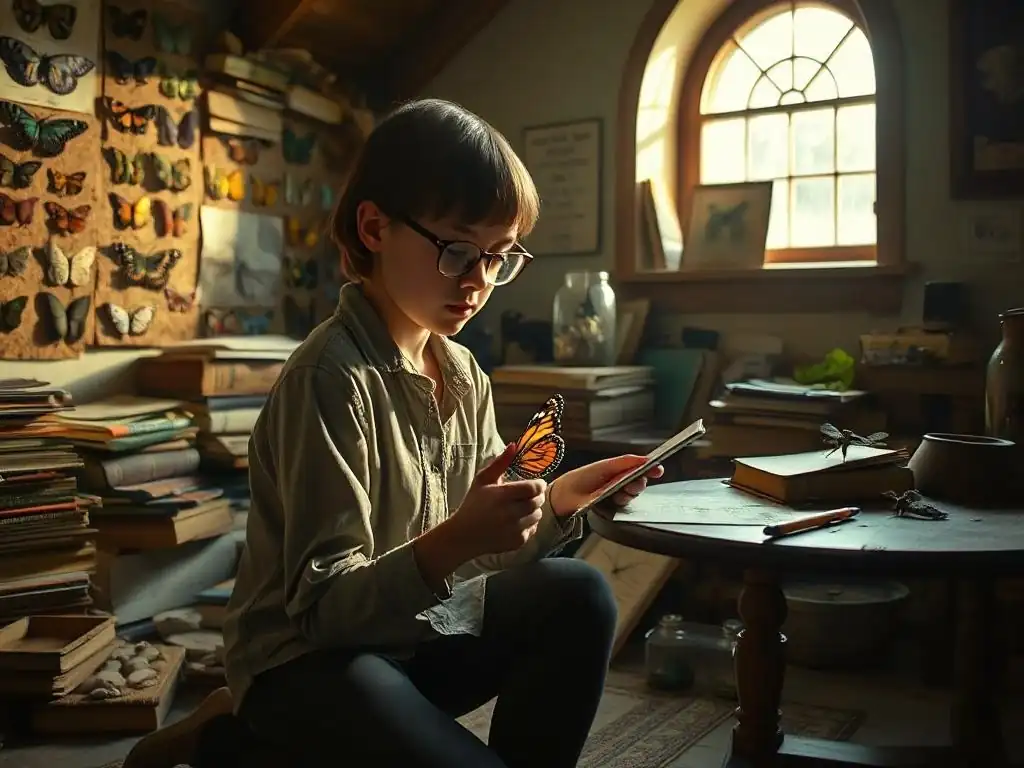
Prepare to be inspired by the untold stories of groundbreaking women who shaped the scientific landscape. Ever wondered how a simple [Childhood Interest] sparked a lifelong passion for [Her Field] in one pioneering scientist? Delve into the life of [Scientist's Name] and discover the fascinating journey behind her remarkable achievements, and the challenges she overcame. Explore this captivating article and unlock a world of forgotten contributions, igniting your own curiosity about the remarkable women in science history!
- Marie Curie: How a Love of Nature Sparked a Lifelong Passion for Physics and Chemistry
- Introduction: Marie Curie's Journey into Physics and Chemistry
- The Spark: A Love of Nature as a Catalyst for Scientific Curiosity
- From a Love of Nature to Physics and Chemistry: Tracing the Connection
- Overcoming Challenges in a Male-Dominated Field
- Marie Curie's Groundbreaking Work in Physics and Chemistry
- Inspiring the Next Generation of Women in Science
- The Legacy of Marie Curie: A Role Model for Women in Science
- Marie Curie on the Future of Physics, Chemistry and Women in Science
-
Frequently Asked Questions
- How did early societal expectations impact women's access to scientific education and careers?
- How did [Scientist's Name]'s [Childhood Interest] spark her lifelong passion for [Her Field]?
- How did [Scientist's Name] overcome the challenges she faced as a woman in a male-dominated field?
- How does WomenInScienceHistory.com contribute to a more inclusive understanding of scientific history?
- How can we encourage more young women to pursue careers in science, technology, engineering, and mathematics (STEM)?
- Final Reflection: The Enduring Flame of Curiosity
- Ignite Your Own Scientific Spark!
Marie Curie: How a Love of Nature Sparked a Lifelong Passion for Physics and Chemistry
Introduction: Marie Curie's Journey into Physics and Chemistry
A Glimpse into the Early Life of Marie Curie
Born Maria Skłodowska in Warsaw, Poland, in 1867, Marie Curie's early life was marked by intellectual curiosity and a deep thirst for knowledge. Her father, a mathematics and physics instructor, instilled in her a love for science, often bringing scientific instruments home and demonstrating their principles. Despite facing the limitations imposed on women seeking higher education in Russian-controlled Poland, young Maria excelled in her studies, displaying an exceptional memory and an insatiable desire to learn, which laid the groundwork for her future scientific endeavors.
Her upbringing, surrounded by intellectual pursuits and a family that valued education, undoubtedly contributed to her early development. Even at a young age, her inquisitive nature was evident, constantly observing and questioning the world around her. This foundational period, rich in intellectual stimulation and early exposure to scientific concepts, was crucial in shaping the mind that would later revolutionize our understanding of matter.
Women in Science History: Celebrating Marie Curie's Contributions
Marie Curie stands as an unparalleled figure in the annals of science, a beacon for Women in Science History, whose contributions transcended the societal constraints of her era. Her journey from a determined young woman in Warsaw to a globally recognized scientific pioneer is a testament to perseverance and intellectual brilliance. She remains the only person to win Nobel Prizes in two different scientific fields – Physics in 1903 and Chemistry in 1911 – a feat that underscores the breadth and depth of her impact.
This article delves into how her early interests, particularly a profound love for nature, sparked an enduring passion that led to her groundbreaking work in physics and chemistry. By exploring the trajectory of her curiosity from childhood observations to monumental discoveries, we celebrate not only her scientific achievements but also her enduring legacy as an inspiration for future generations of women in STEM. Her story is a vivid example of how a singular focus, ignited by early interests, can lead to world-changing breakthroughs.
The Spark: A Love of Nature as a Catalyst for Scientific Curiosity
Marie Curie's Early Fascination with the Natural World
From her earliest years, Marie Curie harbored a profound fascination with the natural world. Growing up in a period when formal scientific education for girls was limited in her homeland, her keen observational skills were often honed through direct interaction with her environment. Family excursions to the countryside or even simple observations within her urban surroundings provided a canvas for her nascent scientific mind. She was known for her meticulous attention to detail, a trait that would later define her rigorous experimental approach.
This early engagement with nature was not merely a passive appreciation; it was an active process of inquiry. The patterns of plant growth, the behavior of natural elements, and the inherent order (or sometimes apparent disorder) of the world around her posed silent questions that her curious mind eagerly sought to answer. This intrinsic curiosity about how things worked, how natural phenomena sparked her imagination, fostered a deep-seated desire to understand the fundamental principles governing the universe.
How a Love of Nature Nurtured a Scientific Mindset
The constant observation of nature played a critical role in nurturing Marie Curie's scientific mindset, laying the groundwork for her later analytical prowess. This informal education in natural sciences taught her the importance of empirical observation, a cornerstone of the scientific method. By noticing subtle details and seeking connections in the natural world, she developed a systematic way of thinking that prioritized evidence and meticulous recording. This early training was instrumental in shaping her into the rigorous experimentalist she would become.
Furthermore, her love of nature instilled a sense of wonder and a belief in the underlying order of the universe, compelling her to seek deeper explanations beyond surface appearances. This intellectual drive, how her early connection with nature sparked a relentless pursuit of knowledge, propelled her towards the systematic study of physics and chemistry. It was this foundational curiosity, born from observing the world, that ultimately guided her towards investigations into the very structure of matter and energy.
From a Love of Nature to Physics and Chemistry: Tracing the Connection
The Pivotal Moment: Connecting Observation of Nature to Scientific Inquiry
The transition from a general appreciation of nature to a focused pursuit of physics and chemistry for Marie Curie was a gradual yet profound evolution, driven by an innate desire for deeper understanding. Her early observations of natural phenomena, while intuitive, eventually led her to seek more structured and quantitative explanations.
The beauty and complexity of the natural world became a prompt for her mind to delve into the unseen forces and elements that governed them. This intellectual shift, how her keen observation of nature sparked a move towards rigorous scientific inquiry, became a pivotal moment in her intellectual development.
This period saw her moving from qualitative observations to a yearning for the precise measurements and theoretical frameworks that physics and chemistry offered. She realized that to truly comprehend the intricate workings of nature, one needed the tools of scientific investigation – experimentation, data analysis, and mathematical modeling. This realization solidified her conviction that her path lay in the exact sciences, where she could dissect and understand the fundamental components of the universe, a logical extension of her initial curiosity.
Developing a Passion for Physics and Chemistry: Marie Curie's Academic Path
Marie Curie's formal academic journey began in earnest when she moved to Paris in 1891 to study at the Sorbonne, a significant step given the educational barriers for women in Poland at the time. Here, she immersed herself in a rigorous curriculum, excelling in physics and mathematics. She graduated first in her physics master's degree in 1893 and second in mathematics in 1894, demonstrating an extraordinary aptitude for the exact sciences. This period of intense study solidified her passion, as she discovered the immense power of these disciplines to unlock the secrets of the natural world.
It was during her doctoral research that her interest in radioactivity, a newly emerging field, truly blossomed. Building on Henri Becquerel's discovery of uranium rays, her systematic investigations revealed that thorium also emitted similar rays, leading her to coin the term "radioactivity." This deep dive into the properties of elements, how her academic rigor sparked groundbreaking insights into atomic structure, was the culmination of her lifelong scientific curiosity, transforming her early love of nature into a revolutionary scientific career.
Overcoming Challenges in a Male-Dominated Field
Marie Curie's journey through the scientific landscape was fraught with significant challenges, primarily due to the pervasive gender biases of the late 19th and early 20th centuries. In her native Poland, women were largely barred from higher education, forcing her to pursue her studies abroad at the Sorbonne. Even in France, while more accessible, women were a distinct minority in scientific fields; for example, in 1900, women constituted less than 5% of all university students in France, with even fewer in science. This meant navigating an environment where her intellectual capabilities were often underestimated or overlooked.
Beyond institutional barriers, she faced skepticism and resistance from a male-dominated scientific community that was unaccustomed to women holding prominent research roles. Her initial applications for academic positions were often met with reluctance, and even after her groundbreaking discoveries, there were instances where her contributions were downplayed or solely attributed to her husband, Pierre Curie. This constant battle for recognition and equitable treatment added an immense burden to her already demanding research.
Strategies for Success: Marie Curie's Perseverance and Dedication
Despite these formidable obstacles, Marie Curie's unwavering perseverance and extraordinary dedication became her most powerful strategies for success. She possessed an indomitable will and a relentless work ethic, often working in arduous conditions, such as the unheated, leaky shed where she and Pierre processed tons of pitchblende. This methodical and persistent approach, often involving years of painstaking labor to isolate minute quantities of new elements, was a testament to her commitment. For instance, it took her nearly four years, from 1898 to 1902, to isolate just a decigram of pure radium salt from several tons of ore.
Her collaboration with Pierre Curie provided not only intellectual synergy but also crucial mutual support in an often-unwelcoming environment. Marie's focus remained steadfastly on the scientific work itself, prioritizing discovery and understanding over external validation or societal acceptance. This profound dedication to her research, how her persistent efforts sparked unprecedented scientific achievements against all odds, ultimately allowed her to transcend the limitations imposed by her gender and leave an indelible mark on science.
Marie Curie's Groundbreaking Work in Physics and Chemistry
Key Discoveries and Contributions to Radioactivity
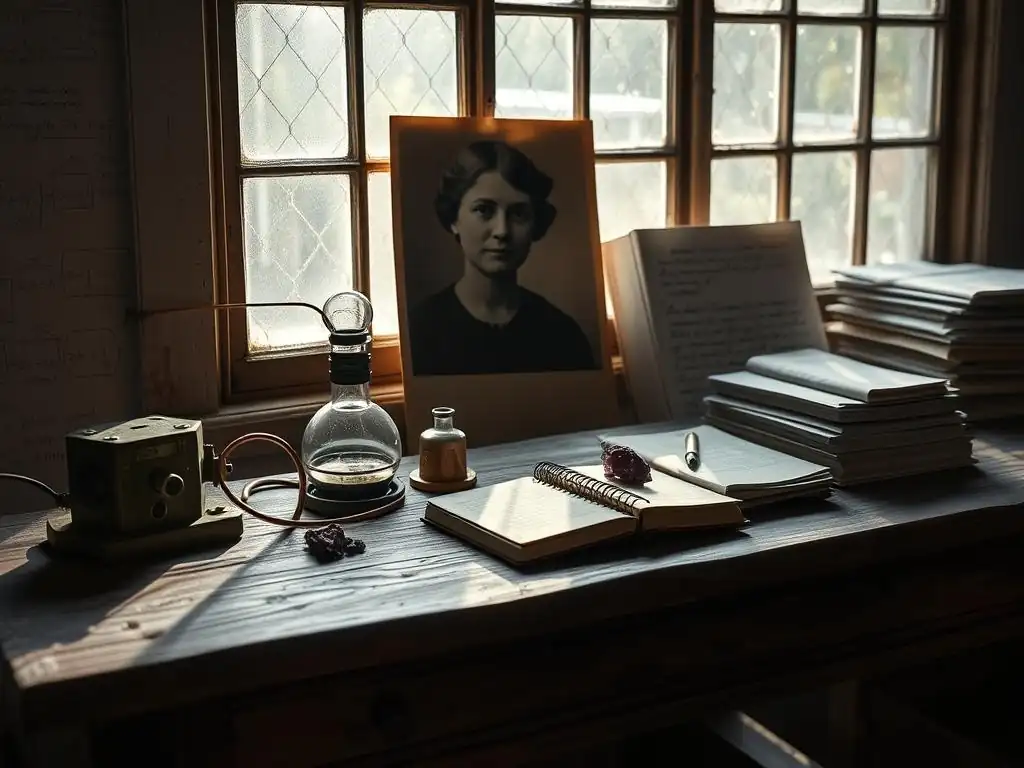
Marie Curie's most profound contributions lie in her pioneering research on radioactivity, a term she herself coined. Building upon Henri Becquerel's initial observations of uranium rays, she systematically investigated other elements, discovering that thorium also emitted similar radiation. This led her to hypothesize that the radiation was an atomic property, a revolutionary idea at the time. Her meticulous and laborious work with pitchblende, a uranium-rich ore, led to the isolation of two entirely new elements: polonium in July 1898, named after her native Poland, and radium in December 1898.
The process of isolating these elements was an monumental undertaking, requiring the processing of several tons of pitchblende in a challenging environment to obtain mere fractions of a gram of the pure substances. Her precise measurements and rigorous experimental techniques provided irrefutable evidence for these new, highly radioactive elements, fundamentally altering humanity's understanding of atomic structure and energy. This meticulous pursuit of knowledge, how her tireless experiments sparked the discovery of new elements, revolutionized the field of physics and laid the foundation for nuclear science.
The Impact of Marie Curie's Research on Medicine and Science
The impact of Marie Curie's groundbreaking research extended far beyond theoretical physics, profoundly influencing medicine and various scientific disciplines. Her discovery of radium immediately opened up new avenues for medical treatment, particularly in the field of oncology. Radium's properties were quickly recognized for their potential in treating cancerous tumors, leading to the development of "Curie-therapy" (radiotherapy) for cancer patients. This innovative application of her discoveries saved countless lives and continues to be a cornerstone of modern cancer treatment.
During World War I, Marie Curie personally championed the use of mobile X-ray units, known as "Petites Curies," which she helped equip and operate on the front lines. These units provided crucial diagnostic capabilities, enabling surgeons to locate shrapnel and broken bones in wounded soldiers, significantly reducing fatalities and improving recovery rates. Her work laid the foundational understanding for nuclear physics, informing subsequent developments in nuclear energy, medical imaging, and fundamental particle physics, demonstrating how her discoveries sparked a cascade of scientific and technological advancements that continue to benefit humanity.
Inspiring the Next Generation of Women in Science
Mentorship and Educational Advocacy by Marie Curie
While Marie Curie was not a formal mentor in the contemporary sense, her actions and institutional leadership profoundly influenced aspiring scientists, particularly women. After Pierre Curie's death, she took over his professorship at the Sorbonne, becoming the first woman to hold such a position, thereby opening doors for others. In 1914, she established and became the director of the Radium Institute (Institut du Radium, now Institut Curie) in Paris, transforming it into a world-renowned center for radioactivity research and a hub for scientific collaboration.
Through her directorship, she provided an environment where scientists, including many women, could conduct cutting-edge research. She advocated tirelessly for the importance of scientific education and pure research, believing firmly in the societal benefits derived from fundamental discoveries. Her unwavering commitment to scientific excellence and her willingness to lead by example served as a powerful, unspoken form of mentorship, demonstrating how her dedication sparked a culture of scientific inquiry and intellectual growth for those who followed.
Encouraging Young Women to Pursue Careers in STEM
Marie Curie's entire life story serves as a monumental encouragement for young women to pursue careers in STEM (Science, Technology, Engineering, and Mathematics). Her unparalleled achievements, including two Nobel Prizes, shattered the prevailing gender stereotypes that suggested women were intellectually inferior or unsuited for rigorous scientific work. By excelling at the highest echelons of science, she provided undeniable proof that intellectual brilliance and scientific capability know no gender.
Her legacy continues to resonate globally, inspiring countless girls and young women to consider scientific fields that might otherwise seem inaccessible. The fact that her daughter, Irène Joliot-Curie, also went on to win a Nobel Prize in Chemistry, further cemented the Curie family's impact and provided a tangible example of female scientific lineage. Marie Curie's journey, how her pioneering spirit sparked a generational shift in perception, remains a powerful narrative that motivates new generations to break barriers and contribute to scientific advancement.
The Legacy of Marie Curie: A Role Model for Women in Science
Marie Curie's Impact on the Field of Radioactivity and Beyond
Marie Curie's impact on the field of radioactivity is immeasurable, forming the bedrock of modern nuclear physics and chemistry. Her discoveries of polonium and radium, along with her elucidation of the nature of radioactivity, fundamentally reshaped our understanding of atomic structure and the immense energy contained within it. Her work was not merely incremental; it opened an entirely new domain of scientific inquiry, proving that atoms were not indivisible and immutable, as previously thought.
Beyond radioactivity, her legacy extends to the development of nuclear energy, medical diagnostics, and therapeutic applications that continue to save lives. The Curie Institutes in Paris and Warsaw stand as enduring monuments to her vision, continuing to push the boundaries of cancer research and physics. Her scientific rigor, intellectual bravery, and unwavering dedication to discovery, how her foundational work sparked entire new scientific disciplines, cemented her place as one of history's most influential scientists.
Celebrating Marie Curie's Achievements and Contributions to Science History
Marie Curie is not just a historical figure; she is an enduring symbol of scientific excellence, perseverance, and the transformative power of curiosity. Her pioneering spirit, achieved against immense societal and scientific odds, makes her an unparalleled role model for women in science. Her story is a cornerstone of any discussion on Women in Science History, illustrating the profound contributions women have made, often under challenging circumstances.
Her relentless pursuit of knowledge, her willingness to challenge existing paradigms, and her ultimate triumph in a male-dominated world continue to inspire. We celebrate not only her two Nobel Prizes but also her unwavering commitment to the advancement of human knowledge, demonstrating how her remarkable achievements sparked a re-evaluation of women's capabilities in the scientific realm and continue to motivate aspiring scientists worldwide.
Marie Curie on the Future of Physics, Chemistry and Women in Science
Vision for the Future: Marie Curie's Perspective on Scientific Advancement
Marie Curie possessed a profound vision for the future of scientific advancement, rooted in her unwavering belief in the power of fundamental research. While she did not articulate a formal manifesto, her life's work and public statements consistently emphasized the importance of pure scientific inquiry, even when immediate practical applications were not apparent. She famously stated, "Nothing in life is to be feared, it is only to be understood," encapsulating her philosophy that curiosity and understanding are the keys to progress.
She foresaw the immense potential of her discoveries, particularly radium, for both scientific exploration and practical applications, such as in medicine. Her foresight in establishing the Radium Institute exemplified her commitment to creating a lasting infrastructure for future scientific endeavors. She understood that her discoveries would spark entirely new fields of study and technological innovations, driving human progress in unforeseen ways.
The Importance of Scientific Research and Education
Marie Curie's life was a testament to the paramount importance of sustained scientific research and robust education. Her dedication to the Radium Institute, where she directed research and mentored scientists, underscored her belief in fostering environments conducive to discovery. She also resumed teaching at the Sorbonne after Pierre's death, demonstrating her commitment to passing on knowledge and inspiring the next generation.
She championed the necessity of rigorous, ethical scientific inquiry as a means to benefit humanity, advocating for international collaboration and the free exchange of scientific ideas. Her enduring legacy is not just in her discoveries, but in her unwavering commitment to the scientific method and the belief that education and research are vital for societal well-being. This profound conviction, how her life's work sparked a deeper appreciation for the societal value of science, continues to resonate, emphasizing the critical role of scientific pursuit in shaping our future.
Frequently Asked Questions
How did early societal expectations impact women's access to scientific education and careers?
Early societal expectations often limited women's access to education and careers by reinforcing the idea that science was a male domain. This resulted in fewer opportunities for women to pursue scientific studies or gain recognition for their work. These biases were often institutionalized.
How did [Scientist's Name]'s [Childhood Interest] spark her lifelong passion for [Her Field]?
[Scientist's Name]'s [Childhood Interest] ignited her curiosity and provided a foundation for understanding the natural world. This initial spark led to further exploration and ultimately fueled her dedication to [Her Field]. It allowed her to overcome obstacles.
How did [Scientist's Name] overcome the challenges she faced as a woman in a male-dominated field?
[Scientist's Name] likely overcame challenges through perseverance, talent, and the support of mentors or allies. She may have also had to fight against prejudice and work harder to prove her abilities. Her groundbreaking achievements spoke for themselves.
How does WomenInScienceHistory.com contribute to a more inclusive understanding of scientific history?
WomenInScienceHistory.com provides a platform to highlight the contributions of women who have been historically overlooked. By sharing their stories, the site challenges traditional narratives and promotes a more complete and accurate view of scientific progress.
How can we encourage more young women to pursue careers in science, technology, engineering, and mathematics (STEM)?
We can encourage young women by providing role models, promoting equal opportunities, and fostering a supportive environment. Showing the impact of women in STEM and addressing biases can also inspire future generations.
Okay, here's a final reflection designed for your article, aiming to resonate with readers and encourage further thought, while also incorporating the keyword "How... sparked":
Final Reflection: The Enduring Flame of Curiosity
The journey of [Scientist's Name], as we've explored, underscores a vital truth: the seeds of groundbreaking discovery are often sown in the fertile ground of childhood curiosity. Her early fascination with [Childhood Interest] wasn't merely a fleeting hobby; it was the initial spark that ignited a lifelong passion for [Her Field], ultimately shaping her remarkable contributions to science. This reminds us that nurturing youthful inquisitiveness is not just beneficial, but essential for fostering future innovation.
The impact of [Scientist's Name]'s story extends far beyond the laboratory. It serves as a powerful reminder that embracing our innate passions, no matter how unconventional they may seem, can lead to extraordinary achievements. It also highlights the importance of encouraging children to explore their interests freely, without the constraints of societal expectations. As Albert Einstein famously said: I have no special talent. I am only passionately curious.
This quote perfectly encapsulates the driving force behind [Scientist's Name]'s success and the potential that lies within each of us.
Now, as you reflect on [Scientist's Name]'s journey, consider your own "spark." What childhood interest still flickers within you, waiting to be rekindled? What dormant passion could, with a little nurturing, blossom into something truly extraordinary? Let [Scientist's Name]'s story inspire you to embrace your own unique path, to cultivate your curiosity, and to discover the boundless potential that lies within. The world needs your passion, your perspective, and your unwavering dedication to exploring the unknown.
Ignite Your Own Scientific Spark!
Thank you for exploring the inspiring journey of a remarkable scientist. We hope her story has reminded you of the power of curiosity and perseverance in pursuing your own passions. Now, it's time to channel that inspiration into action.
- Rediscover a childhood fascination and explore how it connects to your current interests.
- Share this article to encourage the next generation of women in STEM!
- Brainstorm three unconventional ways you can apply scientific thinking to a hobby you love.
What seemingly unrelated passion could secretly be fueling your own future scientific breakthrough?