
Petticoats and Petri Dishes: The Unconventional Labs of 19thCentury Women Scientists

Welcome to WomenInScienceHistory.com!
Delve into the untold stories of brilliant minds and groundbreaking discoveries. This month, we're exploring the fascinating world of 19th Century Women Science Labs. How did these pioneering women navigate a world that often excluded them from formal scientific settings? Prepare to be inspired as we uncover the ingenuity and resilience behind their remarkable contributions to Biology & Medicine, revealing the unconventional spaces where scientific history was made.
- Introduction: Unveiling the Hidden Labs of 19th-Century Women Scientists
- The Landscape of 19th-Century Science: A Man's World?
- Creating Spaces: The Unique Laboratories of Women Scientists
- Case Studies: Pioneering Women and Their 19th-Century Labs
- Key Equipment and Techniques in 19th-Century Women's Labs
- Contributions of Women Scientists in 19th-Century Science and Medicine
- The Legacy of 19th-Century Women's Science Labs
- Conclusion: Celebrating the Resilient Spirit of 19th-Century Women Scientists
-
Frequently Asked Questions
- What were some of the biggest obstacles 19th-century women faced when trying to access science labs?
- How did 19th-century women scientists circumvent the challenges of accessing traditional laboratories?
- What types of scientific research were 19th-century women scientists commonly involved in, given the limitations they faced?
- How did the establishment of women's colleges impact the opportunities for women in science during the 19th century?
- Why is it important to highlight the contributions of 19th-century women in science today?
- Final Reflection: Unearthing Hidden Brilliance
- Unearth Your Inner Scientist: Explore the Unseen World!
Challenging Conventions: Women's Pursuit of Scientific Knowledge in the 1800s
The 19th century was a transformative era for science, marked by groundbreaking discoveries in fields from electromagnetism to microbiology. However, this period of immense intellectual ferment largely unfolded within a societal framework that confined women to the domestic sphere, making their pursuit of scientific knowledge a radical and often defiant act. Despite pervasive patriarchal norms that deemed scientific inquiry unfeminine, a determined cohort of women pushed against these boundaries, driven by an insatiable curiosity and a profound commitment to understanding the natural world.
These pioneering women often faced ridicule and outright exclusion from formal educational institutions and professional scientific circles. Their intellectual ambition challenged deeply ingrained social structures, forcing them to forge unconventional paths to scientific learning. They were not merely observers; they were active participants, innovators, and thinkers who, against all odds, carved out spaces for serious scientific work, laying the groundwork for what would become known as 19th Century Women Science Labs.
The Rise of Women in Science Despite Societal Barriers
Despite the formidable societal and institutional barriers, the number of women engaging in scientific activities saw a slow, persistent rise throughout the 1800s. This wasn't a sudden revolution, but rather a testament to individual tenacity and the gradual chipping away at restrictive norms. Early in the century, women often engaged in "acceptable" sciences like botany or entomology, frequently from their homes, but as the century progressed, their ambitions broadened to include more rigorous and often controversial fields such as astronomy, physics, and medicine.
Access to education, though severely limited, began to slowly expand. While major universities largely remained closed, the establishment of women's colleges like Vassar College (1861) and Girton College, Cambridge (1869), offered unprecedented opportunities for higher education, including scientific training. These nascent institutions provided critical environments where some of the first formalized 19th Century Women Science Labs could begin to take shape, nurturing female intellects that would otherwise have been stifled.
The Landscape of 19th-Century Science: A Man's World?
Limited Access: Educational Opportunities for Women in Science
For much of the 19th century, formal scientific education was almost exclusively the domain of men. Prestigious universities and medical schools across Europe and North America either explicitly barred women from admission or simply did not consider them eligible. This exclusion meant that women were systematically denied access to the foundational knowledge, laboratory facilities, and mentorship networks that were crucial for a scientific career. For instance, even by 1870, very few institutions offered women a full university degree, and many that did still segregated them or offered "certificates" rather than full degrees.
The prevailing "separate spheres" ideology dictated that women's roles were confined to the domestic realm, making a career in science seem both unfeminine and unnecessary. If a woman pursued scientific knowledge, it was often through self-study, private tutors, or through the informal tutelage of a male relative. This lack of formal pathways meant that any significant scientific endeavor by a woman often had to emerge from an unconventional space, transforming a personal interest into a dedicated 19th Century Women Science Lab.
Overcoming Obstacles: Funding and Resources for Female Researchers
Beyond educational exclusion, 19th-century women scientists faced immense financial and resource-related hurdles. Women typically had little to no independent income or property rights, making it nearly impossible to fund their own research, purchase expensive scientific equipment, or subscribe to scholarly journals. Their financial dependence often meant that scientific pursuits could only be sustained through personal sacrifice, family support, or the rare patronage of an enlightened individual.
Unlike their male counterparts, who could secure university positions with dedicated laboratories, grants, and institutional backing, women were largely shut out of such opportunities. This forced them to be extraordinarily resourceful. They improvised their instruments, adapted everyday spaces, and relied on ingenuity to conduct experiments. The very nature of these challenges meant that the development of 19th Century Women Science Labs was often a triumph of personal will over systemic disadvantage, characterized by innovative solutions to resource scarcity.
Creating Spaces: The Unique Laboratories of Women Scientists
Home Labs: Transforming Domestic Spaces into Scientific Sanctuaries
Denied access to established university or institutional laboratories, many 19th-century women scientists ingeniously transformed their own homes into functional research spaces. Kitchens became chemical workshops, drawing-rooms housed botanical collections, and attics or garden sheds were converted into observatories or dissecting rooms. For instance, Mary Anning, an early 19th-century paleontologist, used her family's home in Lyme Regis to clean, categorize, and study the fossils she unearthed, effectively creating a dedicated paleontological 19th Century Women Science Lab within her domestic setting.
This resourcefulness extended to the equipment itself. Without institutional budgets, women often had to construct their own apparatus, modify existing tools, or rely on basic, affordable instruments. Their experiments were characterized by careful observation, meticulous record-keeping, and an unparalleled dedication to scientific rigor, even when conducted amidst the daily routines of home life. These improvised 19th Century Women Science Labs underscore the profound commitment these women held for their scientific endeavors.
While rare, some women managed to gain a foothold within male-dominated research institutions, albeit often in unofficial or subordinate capacities. They might serve as assistants, illustrators, "computers," or librarians, roles that provided proximity to scientific work and, crucially, access to equipment and data otherwise unobtainable. For example, the Harvard College Observatory, in the late 19th century, employed a group of women, including Williamina Fleming and Annie Jump Cannon, to meticulously analyze astronomical photographic plates. Though often underpaid and unrecognized as full scientists, their work constituted vital observational 19th Century Women Science Labs.
These institutional affiliations were a double-edged sword. While providing unparalleled access to resources, they often came with a distinct lack of recognition, lower wages, and perpetual challenges to their professional standing. Women in these roles frequently performed tedious but essential tasks, their intellectual contributions often overshadowed or attributed to male colleagues. Nevertheless, these pioneering women persevered, using their limited access to contribute significantly to scientific discovery and carve out their own spaces within the formal scientific establishment.
The Power of Networks: Scientific Societies and Female Collaboration
In an era where formal institutions largely excluded them, informal networks and collaborative relationships became vital lifelines for 19th-century women scientists. Correspondence networks allowed women to share findings, discuss theories, and offer mutual encouragement with like-minded individuals, both male and female, across geographical distances. These intellectual exchanges were crucial for validating their work and fostering a sense of belonging in an isolating landscape.
Furthermore, the latter half of the 19th century saw the gradual emergence of women's scientific societies or women's sections within existing societies. These groups provided critical forums for women to present their research, engage in intellectual debate, and gain recognition from their peers. Such gatherings, though often informal, functioned as essential collaborative spaces, allowing women to build collective knowledge and support each other's efforts in establishing and maintaining their unique 19th Century Women Science Labs.
Case Studies: Pioneering Women and Their 19th-Century Labs
Maria Mitchell's Observatory and Astronomy Research at Vassar
Maria Mitchell stands as a beacon of 19th-century female scientific achievement in America. Her journey into astronomy began not in a university lecture hall, but on the rooftop of her father's bank in Nantucket, Massachusetts. It was from this unconventional, yet highly effective, personal 19th Century Women Science Lab that she discovered "Miss Mitchell's Comet" in 1847, a feat that earned her international acclaim and a gold medal from the King of Denmark.
In 1865, Mitchell broke new ground by becoming the first female professor of astronomy at Vassar College, a pioneering women's institution. There, she was given charge of the Vassar College Observatory, transforming it into a vibrant, hands-on learning environment. This formal observatory, under her leadership, became one of the most significant 19th Century Women Science Labs dedicated to astronomical research and the training of future female scientists.
Mitchell's Contributions to Astronomy and Education
Mitchell's contributions extended far beyond her initial comet discovery. At Vassar, she meticulously observed sunspots, nebulae, and conducted precise calculations of planetary positions, contributing to the understanding of celestial mechanics. Her dedication to observational astronomy earned her a place as the first woman elected to the American Academy of Arts and Sciences in 1848 and, later, the American Association for the Advancement of Science.
Equally significant was her impact on education. Mitchell was a passionate advocate for experiential learning, famously taking her students on expeditions to observe solar eclipses and meteor showers. She believed in fostering critical thinking and scientific independence, actively encouraging her students to conduct their own observations and analyze data. Her Vassar laboratory was not just a place for research but a dynamic classroom that empowered a new generation of women in science.
Challenges in Establishing a Scientific Career as a Woman
Despite her undeniable brilliance and accolades, Mitchell faced persistent challenges due to her gender. Her initial comet discovery was met with skepticism by some, who questioned a woman's capacity for such precise scientific work. She had to continually prove her intellectual rigor in a field dominated by men.
Even at Vassar, an institution founded on progressive ideals, Mitchell had to advocate for equal pay. She discovered she was being paid less than male professors of comparable standing and successfully argued for salary parity, highlighting the systemic biases that permeated even relatively enlightened institutions. Her career exemplifies the dedication required to establish and maintain a professional scientific identity within the constraints of 19th Century Women Science Labs.
Hertha Ayrton's Physics Laboratory and Electrical Engineering Innovations
Phoebe Sarah Hertha Ayrton (1854-1923) was a formidable British engineer, mathematician, and physicist whose work in electrical engineering was groundbreaking. Despite her exceptional intellect, she faced significant barriers in formal education; while she attended Girton College, Cambridge, she was denied a degree due to her gender, a common injustice of the time. Undeterred, Ayrton pursued her scientific passions, often conducting experiments in her own home.
Ayrton's private residence in London effectively became her personal 19th Century Women Science Lab. Here, she meticulously set up apparatus, conducted intricate experiments, and developed theories that would challenge existing scientific understanding. This self-funded, domestic laboratory was the crucible for much of her pioneering research, particularly in the complex field of electrical physics.
Ayrton's Research on Electric Arcs and Ripples in Sand
Hertha Ayrton's most significant early work focused on the electric arc, a crucial component of early street lighting and industrial processes. Through rigorous experimentation in her home 19th Century Women Science Lab, she systematically investigated the "hissing" phenomenon in arc lamps, demonstrating that it was caused by oxygen coming into contact with the carbon electrode. Her detailed analysis led to significant improvements in the stability and efficiency of arc lighting, a vital technology of the era. Her findings were published in the prestigious journal The Electrician and presented before various scientific bodies.
Later in her career, Ayrton shifted her focus to the formation and movement of sand ripples and waves. Applying her deep understanding of fluid dynamics and physics, she explained how ripples form on sand and water surfaces under various conditions. This research led to her momentous achievement in 1904: becoming the first woman to read her own paper, "The Origin and Growth of New Forms of Electric Discharge," before the Royal Society, a rare privilege for any woman of the time.
Overcoming Gender Bias in the Field of Physics
Despite her undeniable scientific contributions and the practical applications of her work, Hertha Ayrton continually faced gender bias within the scientific establishment. Her application for full fellowship in the Royal Society was rejected in 1902, with the reasoning that married women could not be Fellows. This institutional sexism denied her the recognition and professional standing she deserved.
Ayrton, however, was not one to be silenced. She was a committed suffragette and used her platform to advocate fiercely for women's rights, both in science and in society at large. Her persistence in the face of such prejudice not only advanced the field of physics but also paved the way for future generations of women to pursue scientific careers with greater equity, inspiring the establishment of more formalized 19th Century Women Science Labs.
Florence Nightingale's Statistical Analysis and Public Health Reforms
Florence Nightingale (1820-1910), though primarily renowned as the founder of modern nursing, was also a pioneering statistician whose systematic application of data transformed public health. Her "laboratory" was not a traditional bench filled with chemicals or microscopes, but rather the meticulous collection, analysis, and visual presentation of data, effectively turning hospitals and battlefields into observational 19th Century Women Science Labs.
Nightingale's pivotal work began during the Crimean War (1853-1856), where she observed appalling conditions in military hospitals. She meticulously recorded and analyzed the causes of soldier mortality, discovering that a staggering majority of deaths — roughly 80% — were due to preventable diseases like typhus, cholera, and dysentery, rather than battlefield wounds. This data-driven insight was revolutionary in its time.
Nightingale's Use of Statistics to Improve Healthcare
To convey her findings compellingly to policymakers, Florence Nightingale developed innovative statistical graphics, most famously the "coxcomb" diagram (or polar area diagram). This visual representation clearly illustrated the seasonal causes of death among soldiers, demonstrating that poor sanitation and hygiene were far deadlier than enemy fire. Her powerful visual evidence transcended complex numerical tables, making the urgent need for reform undeniable.
Her statistical analysis led directly to dramatic improvements in military hospital conditions, including better ventilation, sanitation, and nutrition. Under her guidance, mortality rates plummeted from an estimated 42% to as low as 2% in some facilities within months. This concrete impact demonstrated the power of data-driven decision-making, establishing a new paradigm for public health derived from her rigorous, if unconventional, 19th Century Women Science Labs.
Establishing Evidence-Based Practices in Nursing and Hospital Administration
Beyond the Crimean War, Nightingale continued to champion the use of statistics in healthcare. She advocated for systematic data collection in hospitals across Britain, believing that robust data was essential for identifying problems and measuring the effectiveness of interventions. Her work laid crucial groundwork for what we now call evidence-based medicine and public health policy.
In 1860, she established the Nightingale Training School for Nurses at St. Thomas' Hospital in London, revolutionizing nursing education. The curriculum emphasized not only practical skills but also scientific principles, including meticulous observation and data recording. Nightingale's legacy solidified the importance of scientific inquiry and statistical analysis as fundamental components of healthcare, showcasing how her analytical approach defined a unique type of 19th Century Women Science Lab.
Key Equipment and Techniques in 19th-Century Women's Labs
Microscopes and Microscopic Techniques in Biological Research
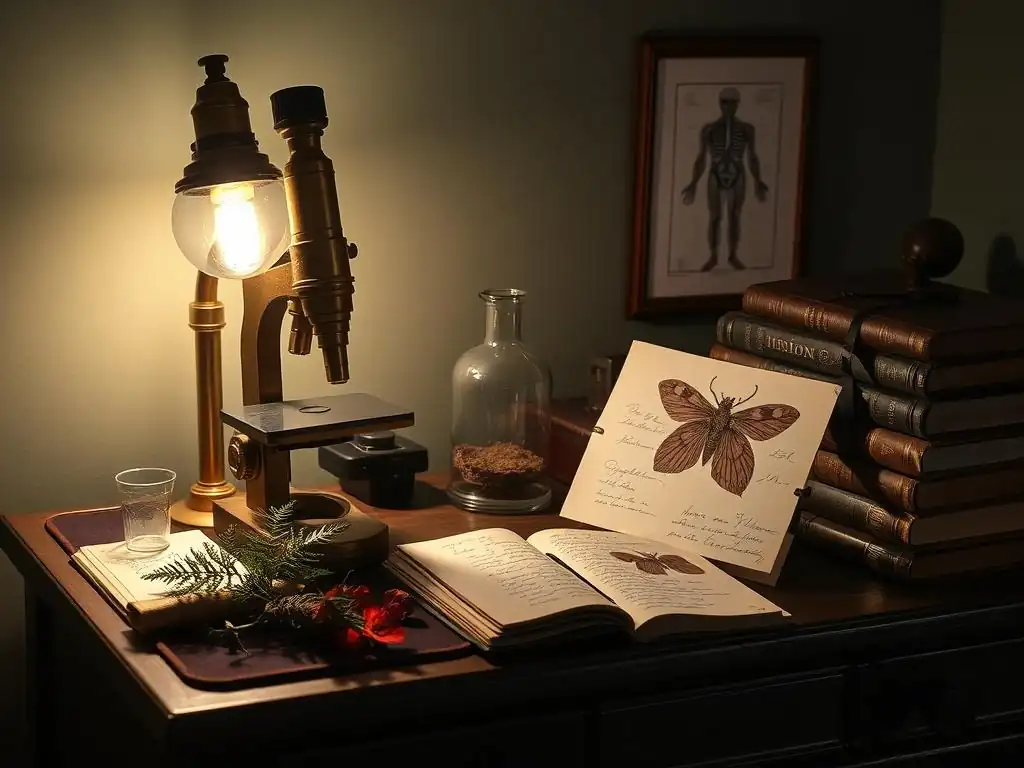
The 19th century witnessed significant advancements in microscope technology, making these instruments increasingly powerful and accessible. For women engaged in biological research, whether in botany, zoology, or the nascent field of microbiology, the microscope was an indispensable tool. Many acquired or were gifted microscopes, allowing them to delve into the unseen world.
These instruments enabled detailed observation of cells, tissues, microorganisms, and plant structures, leading to new insights into biological processes. From examining pond water for protozoa to meticulously dissecting and observing insect anatomy, microscopic techniques were central to many biological inquiries conducted in 19th Century Women Science Labs, often within the confines of a domestic setting.
Chemical Analysis and the Tools of the 19th Century Chemist
For women venturing into chemistry, the tools of the trade were often simpler but no less essential. A typical 19th Century Women Science Lab focused on chemistry might include basic glassware such as test tubes, beakers, and retorts for distillation, along with a spirit lamp or early Bunsen burner (invented in 1855) for heating. Precise balances were crucial for quantitative analysis.
Pioneers like Ellen Swallow Richards (who began her studies in the 1870s) conducted groundbreaking work in sanitary chemistry, analyzing water and food quality using these fundamental tools. Her meticulous chemical analyses, often conducted in her own improvised laboratory spaces, were vital for identifying environmental contaminants and advocating for public health reforms, demonstrating the practical application of 19th Century Women Science Labs in environmental science.
Botanical Studies: Herbaria and Plant Collection Methods
Botany was one of the most socially acceptable scientific pursuits for women in the 19th century, often viewed as a genteel hobby. However, for many, it was a rigorous scientific endeavor. The primary "equipment" for botanical studies included plant presses, magnifying glasses, and detailed sketchbooks. Fieldwork involved careful observation of plants in their natural habitats, often requiring extensive travel and physical exertion.
The construction of herbaria – meticulously collected, pressed, dried, and cataloged plant specimens – was a significant scientific contribution. These personal collections served as valuable repositories of botanical knowledge, allowing women to study plant morphology, classification, and distribution. These extensive, often self-made, collections were akin to living 19th Century Women Science Labs, contributing immensely to the understanding of flora.
Contributions of Women Scientists in 19th-Century Science and Medicine
Advancements in Astronomy and Celestial Mechanics by Women
The 19th century saw significant contributions by women to the field of astronomy. Maria Mitchell's discovery of a comet in 1847 not only brought her international recognition but also shattered prevailing notions about women's intellectual capabilities in rigorous scientific fields. Her later work at Vassar College, where she led an observatory and trained a new generation of female astronomers, demonstrated women's capacity for sustained, professional scientific research within dedicated 19th Century Women Science Labs.
Furthermore, the late 19th century witnessed the invaluable work of women "computers" at observatories like Harvard. These women, including Williamina Fleming and Annie Jump Cannon, meticulously analyzed photographic plates, cataloging thousands of stars, discovering variable stars, and classifying stellar spectra. Their precise, painstaking work, often carried out in dedicated rooms that functioned as large-scale data-analysis 19th Century Women Science Labs, laid the foundation for modern astrophysics.
Discoveries in Physics and Engineering
In the realm of physics and engineering, Hertha Ayrton stands out for her pioneering research on electric arcs. Her systematic investigations into the causes of instability in arc lamps led to practical solutions that significantly improved the efficiency and reliability of this crucial technology, which was central to the burgeoning electrical industry of the late 19th century. Her work was a testament to the fact that significant engineering innovations could emerge from the most unconventional of 19th Century Women Science Labs.
Beyond Ayrton, other women contributed to the understanding of physical phenomena, often through private experiments or by assisting male relatives. While less formally recognized, their efforts in areas like optics, heat, and magnetism, conducted in personal or ad-hoc 19th Century Women Science Labs, helped to incrementally advance the field, demonstrating a quiet but persistent female presence in a male-dominated discipline.
Contributions to Public Health and Statistical Analysis
Florence Nightingale's revolutionary application of statistical methods transformed the landscape of public health and medicine. Her meticulous data collection and visual presentation of mortality rates during the Crimean War provided irrefutable evidence of the need for sanitary reform, saving countless lives. She effectively demonstrated how quantitative analysis, conducted from what could be considered her analytical 19th Century Women Science Lab, could drive evidence-based policy changes.
Nightingale's influence extended globally, inspiring systematic data collection in hospitals and advocating for the integration of statistics into medical education and practice. Her work laid the groundwork for modern epidemiology and public health initiatives, fundamentally shifting healthcare from anecdotal practice to a science-driven discipline. Her legacy underscores how women, even without traditional laboratory settings, made profound scientific contributions through innovative methodologies.
The Legacy of 19th-Century Women's Science Labs
Inspiring Future Generations of Women in STEM
The stories of these pioneering 19th-century women scientists and their unconventional laboratories continue to resonate powerfully today. By highlighting their resilience, ingenuity, and intellectual prowess, we provide vital role models for young girls and women contemplating careers in science, technology, engineering, and mathematics (STEM). Their perseverance in the face of immense obstacles serves as a potent reminder that passion and dedication can overcome systemic barriers.
Moreover, by shedding light on these often-overlooked narratives, we dismantle historical biases that have traditionally minimized or erased women's contributions to scientific progress. Recognizing that women have always been active, innovative participants in scientific discovery, often creating their own 19th Century Women Science Labs from scratch, helps to cultivate a more inclusive and equitable vision for the future of STEM.
Recognizing the Unsung Heroines of Scientific History
It is imperative to acknowledge the often-unsung heroines of 19th-century science. Many of these women faced not only exclusion but also the risk of their discoveries being overlooked, attributed to male colleagues, or simply forgotten by history. Their work, whether conducted in a makeshift home lab or within the strictures of an institutional setting, represents significant intellectual and practical achievements.
A complete and accurate history of science demands that we fully integrate the contributions of these women. By celebrating their unique approaches to research, their creative problem-solving, and their unwavering commitment to scientific inquiry, we honor their legacy and ensure that the ingenuity and dedication that went into establishing and maintaining their 19th Century Women Science Labs are properly recognized and preserved.
The Ongoing Fight for Equality in Science
While significant progress has been made since the 19th century, the struggles faced by these early women scientists echo many of the contemporary challenges still encountered by women in STEM today. Issues such as gender bias, disparities in funding and promotion, and underrepresentation in leadership roles persist. The fight for full equality in scientific fields remains an ongoing endeavor.
The legacy of these pioneering women reminds us that challenging norms and advocating for inclusivity are continuous processes. By understanding the historical context of 19th Century Women Science Labs and the battles fought by their occupants, we are better equipped to champion current initiatives aimed at fostering a truly equitable scientific community where talent is recognized and nurtured, regardless of gender.
Conclusion: Celebrating the Resilient Spirit of 19th-Century Women Scientists
The Importance of Preserving Their Stories and Achievements
The narrative of 19th-century women scientists is one of extraordinary resilience, boundless ingenuity, and unwavering intellectual curiosity. Despite facing systemic exclusion from formal education, institutional resources, and professional recognition, these women carved out their own spaces for scientific inquiry, transforming domestic settings and limited opportunities into vital 19th Century Women Science Labs. Their individual triumphs represent a collective defiance against the restrictive norms of their era.
Platforms like WomenInScienceHistory.com play a crucial role in preserving and disseminating these invaluable stories. By meticulously documenting their lives, their groundbreaking work, and the unique challenges they overcame, we ensure that the contributions of these remarkable women are not lost to history. This preservation is essential not just for historical accuracy but for inspiring future generations.
A Call to Action: Supporting Women in Science Today
The pioneering spirit of 19th-century women scientists serves as a powerful call to action for today's society. Their struggles highlight the importance of dismantling barriers and actively creating inclusive environments where all individuals, regardless of gender, can pursue scientific careers to their fullest potential. We must continue to champion equitable access to education, funding, and leadership opportunities within STEM fields.
By learning from the past, we can collectively work towards a future where the scientific community truly reflects the diverse talent available. Supporting women in science today means recognizing their historical predecessors, celebrating their achievements, and committing to fostering an environment where innovation thrives through the contributions of everyone, building upon the foundational legacy of the extraordinary 19th Century Women Science Labs.
Frequently Asked Questions
What were some of the biggest obstacles 19th-century women faced when trying to access science labs?
Access to labs was severely limited due to gender discrimination. Many universities and institutions simply barred women entirely, and even when admitted, they often faced limited resources and support.
How did 19th-century women scientists circumvent the challenges of accessing traditional laboratories?
They often created home-based labs or found alternative research settings like observatories or museums. Building networks with supportive male colleagues was also crucial for access and mentorship.
What types of scientific research were 19th-century women scientists commonly involved in, given the limitations they faced?
Many excelled in fields like astronomy, botany, and natural history, which sometimes offered more opportunities for field work and independent study. They also contributed significantly to medical research and public health.
How did the establishment of women's colleges impact the opportunities for women in science during the 19th century?
Women's colleges provided crucial spaces for scientific education and research, fostering a supportive environment and training future generations of female scientists. They also offered some laboratories and equipment, albeit often limited.
Why is it important to highlight the contributions of 19th-century women in science today?
Recognizing their achievements helps to correct historical biases and provides role models for aspiring scientists, particularly women and girls. Their stories demonstrate resilience and inspire efforts to promote greater diversity and inclusion in STEM fields.
The stories unearthed in this exploration of 19th-century women scientists and their unconventional laboratories resonate profoundly today, reminding us that innovation often thrives in the face of adversity. The dedication and ingenuity displayed by these pioneering women, often working outside the established academic structures, serve as a powerful testament to the enduring human spirit of scientific inquiry. Their contributions, long overlooked, are finally beginning to receive the recognition they deserve, enriching our understanding of scientific history and inspiring future generations.
The impact of these women extends far beyond their individual discoveries. Their perseverance in the face of societal constraints fundamentally challenged gender roles and paved the way for greater inclusivity in STEM fields. Their legacy continues to shape the cultural landscape, reminding us that scientific talent is not limited by gender or circumstance. The important thing is never to stop questioning.
- Albert Einstein. This quote, while not directly from one of these women, perfectly encapsulates the spirit that drove them to overcome obstacles and pursue their scientific passions.
Let us carry forward the lessons learned from these remarkable women. Reflect on the biases that may still exist in our own fields and communities. Consider how you can actively support and encourage the next generation of scientists, regardless of their background. Embrace the spirit of innovation and resilience that defined these 19th-century pioneers, and strive to create a more equitable and inclusive future for all who seek to explore the wonders of the world through science.
Unearth Your Inner Scientist: Explore the Unseen World!
Thanks for diving into the captivating stories of these pioneering women! You’ve now glimpsed the incredible contributions hidden within history's lab coats and petticoats. Ready to carry their torch and make your own discoveries?
Here’s how you can get started:
- Reimagine your everyday surroundings as a living laboratory - Challenge yourself to observe something new each day and document it like a 19th-century scientist.
- Delve deeper into the lives of lesser-known women scientists. Research individuals from your local area or specific scientific fields that pique your interest.
- Share this article with a friend who needs a dose of inspiration! Spark a conversation about the barriers women still face in STEM and brainstorm solutions.
What small experiment can you design today to honor the legacy of these incredible women?