
Instruments and Insight: Women's Role in Pre18th Century Astronomical Observation

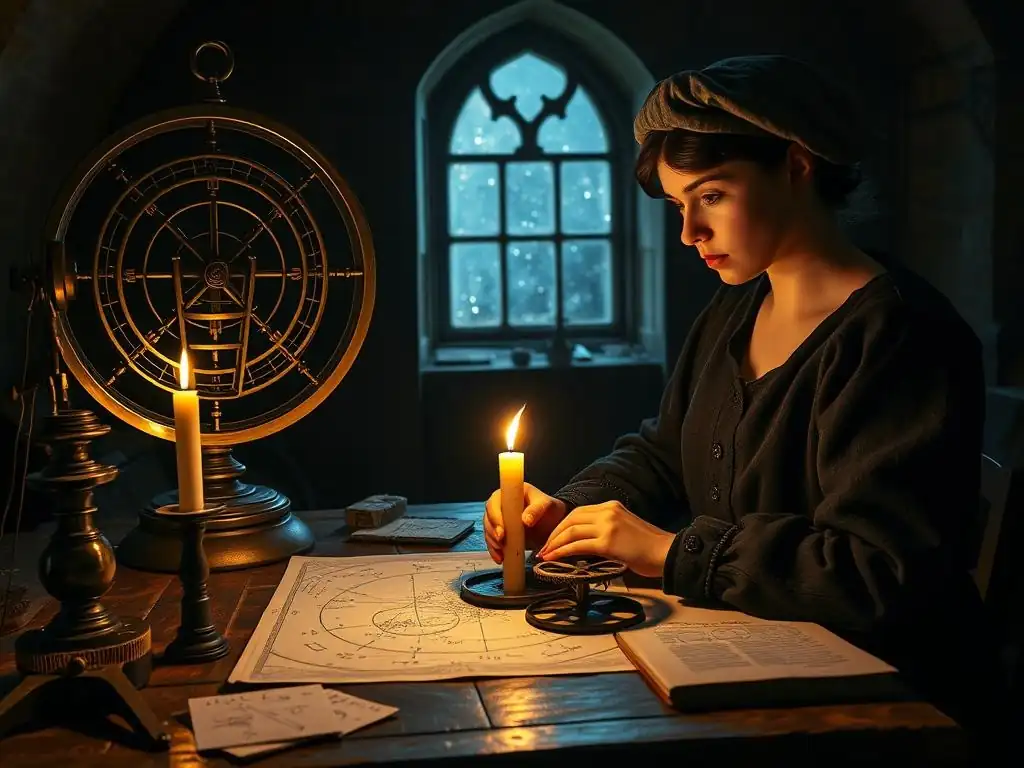
Welcome to WomenInScienceHistory.com!
Delve into the untold stories of remarkable women who shaped the scientific landscape. Did you know that even before the 18th century, women were actively contributing to astronomical understanding? Discover the instruments they used and the insights they gleaned in our exploration of Women’s early astronomy observations. Prepare to be amazed by their ingenuity and perseverance, and uncover the crucial, yet often overlooked, role they played in unraveling the mysteries of the cosmos. What groundbreaking discoveries were they a part of? Read on to find out!
- Introduction: Unveiling Women’s Contributions to Early Astronomy
- The Challenges Faced by Women in Early Astronomical Pursuits
- Women’s Roles in Pre-Telescopic Astronomy: Direct Visual Observation
- Women's Involvement in Early Astronomical Instrumentation
- Women as Recorders and Interpreters of Astronomical Data
- Case Studies: Specific Examples of Women's Astronomical Work
- Notable Women Astronomers Before the 18th Century: A Biographical Overview
- Reassessing Historical Narratives: Giving Credit Where It Is Due
- Conclusion: Celebrating the Enduring Impact of Women
-
Frequently Asked Questions
- What were some of the main obstacles women faced in making early astronomical observations?
- How did women contribute to astronomy before the 18th century, despite the challenges they faced?
- What types of astronomical instruments might a woman have used before the 18th century?
- Why is it important to highlight the contributions of women in early astronomy?
- How can "WomenInScienceHistory.com" help me learn more about women's early astronomy observations?
- Final Reflection: Illuminating the Past, Inspiring the Future
- Unveil Your Inner Astronomer!
Introduction: Unveiling Women’s Contributions to Early Astronomy
Recognizing Female Astronomers Before the 18th Century
For centuries, the narrative of scientific discovery has predominantly focused on male figures, often overlooking or minimizing the crucial contributions of women. In the realm of astronomy, a field deeply rooted in observation and meticulous calculation, the names that typically come to mind are those of men like Tycho Brahe, Johannes Kepler, and Isaac Newton. This oversight has created a skewed historical perspective, suggesting that women played little to no part in the foundational developments of this complex science before the 18th century.
However, a closer examination of historical records, often through informal channels and family archives, reveals a different picture. Women were indeed active participants in early astronomical pursuits, whether as highly skilled assistants, dedicated observers, or independent scholars. Their involvement, though frequently uncredited or overshadowed, was essential to the progress of astronomy, providing the necessary data, calculations, and even theoretical insights that advanced understanding of the cosmos.
Highlighting Women's Early Astronomy Observations
The nature of astronomical observation in the pre-18th century demanded immense patience, precision, and an unwavering commitment to detail. Before the widespread use of powerful telescopes, much of astronomy relied on naked-eye observations, requiring keen visual acuity and the ability to track celestial bodies over long periods. Women, often operating within domestic spheres or as part of family scientific enterprises, were actively engaged in these demanding observational practices.
These contributions, ranging from the systematic recording of planetary positions to the tracking of comets and the meticulous charting of stars, were foundational to the development of celestial mechanics and the refinement of astronomical tables. Understanding Women’s early astronomy observations is not merely an academic exercise; it is crucial for a complete and accurate historical picture, demonstrating that scientific inquiry and discovery were not exclusive to one gender.
The Challenges Faced by Women in Early Astronomical Pursuits
Societal Barriers and Limited Access to Education
During the pre-18th century, prevailing societal norms largely confined women to domestic roles, with their primary responsibilities centered around household management and child-rearing. This deeply ingrained social structure severely limited their access to formal education, particularly in subjects considered intellectual or scientific, such as astronomy. Universities and academies were exclusively male institutions, and even private tutoring in advanced sciences was rare for women outside of very specific, often affluent, family contexts.
Consequently, while some women gained knowledge through self-study or informal apprenticeships within their families, they faced immense obstacles in gaining public recognition or professional positions. These pervasive societal barriers directly impacted their ability to pursue independent research, publish their findings under their own names, and thus significantly hampered the widespread acknowledgement of Women’s early astronomy observations.
The nascent scientific institutions of the 17th and early 18th centuries, such as the Royal Society in London (founded 1660) and the French Académie des Sciences (founded 1666), were exclusively male bastions. Women were systematically excluded from membership, from presenting papers, and from publishing in official journals under their own names. This institutional exclusion meant that even when women performed groundbreaking scientific work, they often had to do so through male intermediaries.
Many women astronomers, therefore, functioned primarily as assistants to their fathers, husbands, or brothers. Their vital contributions – whether in observing, calculating, or copying manuscripts – were frequently subsumed under the male figure's name, or simply went unrecorded. This dynamic meant that despite their significant intellectual labor, much of the invaluable data derived from Women’s early astronomy observations lacked formal attribution, perpetuating their invisibility in historical accounts.
Women’s Roles in Pre-Telescopic Astronomy: Direct Visual Observation
The Importance of Naked-Eye Astronomy
Before the widespread adoption and refinement of the telescope in the early 17th century, astronomical study relied almost entirely on naked-eye observations. This era of pre-telescopic astronomy demanded extraordinary skill, patience, and meticulous record-keeping. Astronomers needed keen eyesight, the ability to track celestial bodies with precision, and a deep understanding of celestial mechanics to interpret what they saw. Instruments like quadrants and astrolabes aided in measuring positions, but the primary sensory input came directly from human vision.
This form of observation was continuous and often painstaking, requiring long hours under the night sky. Women, with their potential for meticulousness and often domestic-based lives that allowed for consistent nighttime vigilance, were well-suited for this type of work. Many of the earliest and most fundamental Women’s early astronomy observations would have been conducted through direct visual means, contributing vital data for the development of early star charts and planetary models.
Maria Cunitz: Her Contributions to Pre-Telescopic Stellar Observation
Maria Cunitz (1610-1664) was a remarkable Silesian astronomer, mathematician, and physician whose self-taught mastery of multiple languages and sciences propelled her into the forefront of astronomical calculation. Her most famous work, Urania Propitia (1650), was a monumental achievement: a simplification and correction of Johannes Kepler's complex Rudolphine Tables. Kepler's tables, published in 1627, were revolutionary but incredibly difficult to use due to their reliance on logarithms and intricate calculations.
Cunitz’s Urania Propitia made these astronomical calculations more accessible by eliminating logarithms and presenting a more straightforward method, based on her own rigorous mathematical derivation and extensive observational verification. While she primarily refined existing data, her ability to identify and correct errors in Kepler's complex calculations, all while demonstrating a profound understanding of celestial mechanics and stellar positions, was a testament to her observational and mathematical acumen. Her work significantly contributed to the practical application of Women’s early astronomy observations and calculations for a wider audience.
Women's Involvement in Early Astronomical Instrumentation
Assisting with the Construction and Maintenance of Astronomical Tools
The advancement of early astronomy was intrinsically linked to the development and refinement of its instruments. From the precise crafting of metallic quadrants and astrolabes to the grinding and polishing of glass lenses for nascent telescopes, the construction and maintenance of astronomical tools required skilled craftsmanship and a deep understanding of optics and mechanics. Workshops were often family affairs, where various members contributed to the intricate processes.
While historical records rarely credit women as primary instrument makers, their indirect involvement was undoubtedly crucial. They likely assisted in numerous ways: preparing materials, polishing components, assembling delicate mechanisms, or even maintaining the cleanliness and functionality of the observatory itself. This supportive yet vital role ensured the operational readiness of the tools necessary for conducting Women’s early astronomy observations and those of their male counterparts, enabling accurate data collection.
Using Quadrants and Astrolabes: Women's Practical Application
Quadrants and astrolabes were indispensable instruments in pre-telescopic and early telescopic astronomy, fundamental for measuring celestial altitudes, angles, and time. These tools were essential for navigation, timekeeping, and accurately charting the positions of stars, planets, and other celestial phenomena. Their proper use required not only technical understanding but also precision and a steady hand.
Many women, particularly those working alongside male astronomers in family observatories, would have been proficient in the practical application of these instruments. They would have used quadrants to measure the height of stars above the horizon and astrolabes to determine the time of day or night, or to track planetary movements. This hands-on experience in generating accurate positional data through the use of sophisticated instruments was a significant, though often unrecorded, aspect of Women’s early astronomy observations.
Maria Clara Eimmart: Expertise in Using and Refining Early Astronomical Instruments
Maria Clara Eimmart (1676–1707) was a notable German astronomer and engraver, born into a family deeply immersed in scientific pursuits. Her father, Georg Christoph Eimmart, was the director of the Nuremberg observatory. Maria Clara received extensive training from him, not only in astronomy but also in drawing and engraving, skills that proved invaluable to astronomical documentation.
Her contributions included creating highly detailed and precise engravings of the Moon, planets, and comets, based on observations made at the Nuremberg observatory. These illustrations were not merely artistic renditions; they were scientific records that required a profound understanding of the celestial objects themselves and the instruments—such as telescopes and micrometers—used to observe them. Her meticulous visual documentation based on her own and her father's direct observations visually captured and disseminated the results of Women’s early astronomy observations and the capabilities of the era's instruments.
Women as Recorders and Interpreters of Astronomical Data
Meticulous Observation Logs: Documenting Celestial Events
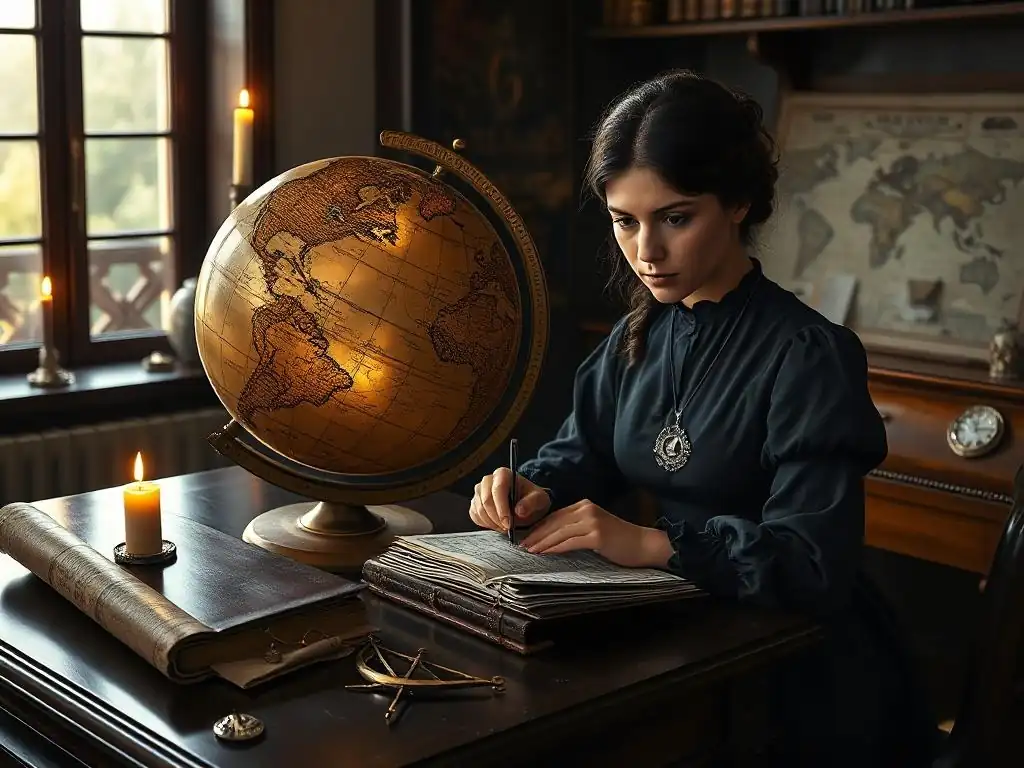
The bedrock of astronomical progress in the pre-18th century was the systematic and meticulous recording of celestial events. This involved endless nights of vigilance, carefully noting the precise times, positions, brightness, and movements of stars, planets, comets, and other phenomena. Maintaining these observation logs required extraordinary patience, unwavering attention to detail, and a disciplined approach to transcription, often under challenging conditions.
Women, frequently tasked with the detailed record-keeping and organizational aspects within their households and family businesses, were uniquely suited for this demanding work. Their contributions to these exhaustive observation logs were often the raw data upon which all subsequent astronomical analyses, calculations, and theoretical advancements were built. Without their diligent and accurate documentation, much of the foundational information derived from Women’s early astronomy observations would have been lost to history.
Calculating Ephemerides: Women's Mathematical Contributions
Ephemerides are astronomical tables that provide the computed positions of celestial bodies—such as planets, the Moon, and stars—at regular intervals over a specific period. Their calculation was a highly complex, labor-intensive, and time-consuming mathematical task, crucial for fields ranging from navigation and cartography to astrology and the prediction of future celestial events. This work required advanced mathematical aptitude, often involving intricate trigonometric and logarithmic calculations.
Women with a strong mathematical inclination, frequently tutored by their astronomer fathers or husbands, performed these intricate computations. While this intellectual labor was often performed behind the scenes, without public recognition, it was a significant and indispensable aspect of astronomical practice. Their ability to accurately calculate these predictive tables was a profound intellectual contribution, directly translating Women’s early astronomy observations into practical, usable data for wider scientific and societal applications.
Nicole-Reine Lepaute: Her Role in Recording and Analyzing Planetary Positions
Nicole-Reine Lepaute (1723-1788) stands as a towering figure among women astronomers for her extraordinary contributions to celestial mechanics and calculation. Her most famous collaboration was with Alexis Clairaut and Joseph Lalande in predicting the return of Halley's Comet. This task involved an immense and unprecedented computational challenge: calculating the comet's perihelion passage in 1759, factoring in the complex gravitational perturbations from Jupiter and Saturn over its entire orbital period.
Lepaute reportedly performed calculations for over six months, working almost continuously, often solving thousands of equations. Her meticulous precision was critical to the successful prediction, which was accurate to within one month. This feat showcased her exceptional mathematical prowess and analytical skills in interpreting and predicting Women’s early astronomy observations and their future movements. Her work set a new standard for computational astronomy and earned her international acclaim, though formal recognition was still limited.
Case Studies: Specific Examples of Women's Astronomical Work
Women's Role in Royal Observatories (17th Century)
The establishment of national observatories in the 17th century, such as the Paris Observatory (founded 1667) and the Greenwich Observatory (founded 1675), marked a new era of institutionalized astronomy. While these institutions were formally male-dominated, women were frequently present in informal, yet crucial, capacities. They often entered these spaces as wives, daughters, or sisters of the appointed astronomers, living and working within the observatory grounds.
A prominent example is the Cassini family at the Paris Observatory. Jean-Dominique Cassini and his successors, who directed the observatory for over a century, relied heavily on family assistance. While specific names are often absent from official records, it is highly probable that women within the Cassini household assisted with observations, meticulously recorded data, performed calculations, and prepared manuscripts for publication. Their hidden contributions were indispensable to the daily functioning and scientific output of these pioneering institutions, playing a vital, albeit uncredited, role in Women’s early astronomy observations.
Female Family Members Assisting Astronomers (France)
The practice of women assisting male relatives was particularly widespread in France, where astronomy often functioned as a family enterprise, with knowledge and skills passed down through generations. This informal apprenticeship system allowed women to gain significant expertise in observational techniques, instrument handling, and mathematical calculations, despite the lack of formal educational pathways.
A notable example is the Maraldi family, prominent astronomers at the Paris Observatory. While Jacques Cassini (Jean-Dominique's son) continued the family tradition, his wife and female relatives would have contributed to the extensive observational work, data recording, and computational tasks that were integral to the observatory's research. This familial support system provided a critical avenue for the continuity of astronomical work and offered opportunities for Women’s early astronomy observations, even if their individual efforts were rarely singled out for public recognition.
Notable Women Astronomers Before the 18th Century: A Biographical Overview
Maria Cunitz: Her Discoveries and Contributions
Maria Cunitz (1610-1664) was an extraordinary polymath whose astronomical work was groundbreaking for her time. Born in Silesia, she was self-taught in numerous subjects, including mathematics, astronomy, and several languages. Her seminal work, Urania Propitia (1650), was not merely a translation but a significant improvement and simplification of Johannes Kepler's complex Rudolphine Tables. Kepler's tables were notoriously difficult to use due to their reliance on logarithms and intricate calculations.
Cunitz corrected errors in Kepler's work and presented a more accessible version that eliminated the need for logarithms, making astronomical computations vastly easier for practical use. This monumental undertaking demonstrated her deep understanding of celestial mechanics and her exceptional mathematical prowess. Her ability to produce such a rigorous and widely applicable work under her own name was a remarkable achievement, cementing her place as a pioneer in the field of Women’s early astronomy observations and mathematical astronomy.
Maria Winkelmann: Overcoming Obstacles to Advance Astronomical Knowledge
Maria Winkelmann Kirch (1670–1720) was a prominent German astronomer who, despite her significant talents and discoveries, faced persistent institutional barriers. She received her astronomical training from Christoph Arnold and later from Gottfried Kirch, whom she married. She became a key assistant and collaborator to Gottfried Kirch at the Berlin Observatory, where she performed extensive observations and calculations.
Her most significant discovery was the comet of 1702, which she was the first to observe on April 21st. Although Gottfried Kirch initially claimed credit for the discovery, he later acknowledged her observation. Maria Winkelmann’s keen observational skills were undeniable. However, after her husband's death, despite being highly qualified, she was denied a position at the Berlin Academy of Sciences, primarily because of her gender. This tragic rejection highlights the systemic obstacles that prevented Women’s early astronomy observations from gaining the formal recognition they deserved within the scientific establishment.
Nicole-Reine Lepaute: A Pioneer in Celestial Mechanics
Nicole-Reine Lepaute (1723-1788) was a French astronomer and mathematician renowned for her unparalleled computational abilities. Her most celebrated work involved the meticulous calculation of the return of Halley's Comet in 1759. Collaborating with Alexis Clairaut and Joseph Lalande, Lepaute undertook the incredibly complex and arduous task of predicting the comet's perihelion passage, accounting for the gravitational perturbations of Jupiter and Saturn.
This monumental calculation required months of continuous, painstaking work, involving thousands of mathematical operations. Lepaute's precision was so remarkable that their prediction was accurate to within one month, a triumph of predictive astronomy. Beyond this singular achievement, she also calculated ephemerides for the Connaissance des Temps (a crucial astronomical almanac) and contributed to calculations for the transit of Venus in 1761. Her dedication to accuracy and her mastery of celestial mechanics established her as a leading figure in the interpretation and prediction of Women’s early astronomy observations.
Reassessing Historical Narratives: Giving Credit Where It Is Due
Correcting Misconceptions About Women's Involvement in Early Science
For too long, the historical narrative of early scientific discovery has been incomplete, largely omitting the vital contributions of women. This misconception, often perpetuated by societal biases, the informal nature of women's work, and the male-centric focus of historical record-keeping, has painted a picture of science as an exclusively male domain. The reality, however, is far more nuanced; women were active, intelligent participants, often working behind the scenes or within family units, whose intellectual labor was indispensable.
Correcting these misconceptions requires a deliberate effort to unearth and highlight the hidden histories of female scientists. It means recognizing that the absence of women from traditional historical accounts does not equate to their absence from the scientific process itself. By actively seeking out their stories and acknowledging their expertise, we can begin to construct a more accurate, inclusive, and representative history of science, one that reflects the full spectrum of human contribution to knowledge.
The Importance of Recognizing Women's Early Astronomy Observations
Recognizing and celebrating Women’s early astronomy observations is crucial for several compelling reasons. Firstly, it provides a more complete and truthful account of scientific history, demonstrating that curiosity, intelligence, and scientific capability were not limited by gender, even in periods of significant societal constraint. Acknowledging their work fills critical gaps in our understanding of how scientific knowledge evolved.
Secondly, and perhaps more importantly, these stories serve as powerful inspirations for current and future generations. By illuminating the achievements of pioneering women like Maria Cunitz, Maria Winkelmann, and Nicole-Reine Lepaute, we demonstrate that scientific excellence knows no gender. This historical validation can empower young women and girls to pursue careers in STEM fields, showing them a rich lineage of female achievement that has too often been obscured, fostering a sense of belonging and possibility within the scientific community.
Conclusion: Celebrating the Enduring Impact of Women
Inspiring Future Generations Through the Stories of Female Pioneers
The journey through the pre-18th century astronomical landscape reveals a compelling truth: women played a far more significant, albeit often unacknowledged, role than traditional histories suggest. Their contributions, whether through meticulous naked-eye observations, skilled use of instruments, rigorous calculations of ephemerides, or dedicated assistance within family observatories, were foundational to the advancement of astronomical knowledge. These stories are not mere historical footnotes; they are powerful examples of perseverance, intellectual prowess, and unwavering dedication to scientific inquiry in the face of formidable societal barriers.
By actively celebrating the achievements of these female pioneers, we provide invaluable role models for future generations. Showcasing the ingenuity and determination of women who defied expectations to contribute to science can inspire young women and girls to pursue their own passions in STEM fields, demonstrating that their potential is boundless. The legacy of Women’s early astronomy observations continues to resonate, laying groundwork for future discoveries and inspiring new constellations of talent.
Preserving and Promoting the History of Women in Science
The task of preserving and promoting the history of women in science is an ongoing and essential endeavor. It requires continuous research, diligent documentation, and widespread dissemination of information to ensure that the contributions of these remarkable individuals are never again lost to obscurity. By bringing their stories to light, we not only pay overdue homage to their intellectual labor but also enrich our collective understanding of scientific progress itself.
Illuminating the past, particularly the rich and complex history of Women’s early astronomy observations, helps to dismantle outdated stereotypes and fosters a more inclusive and equitable scientific community for the future. By recognizing that scientific discovery has always been a collaborative human endeavor, we can build a more diverse and vibrant scientific landscape, where talent is recognized irrespective of gender, and where every contribution is valued and celebrated.
Frequently Asked Questions
What were some of the main obstacles women faced in making early astronomical observations?
Women faced significant social and institutional barriers. These included a lack of formal education opportunities, exclusion from scientific societies, and societal expectations that limited their roles to domestic spheres, hindering their access to instruments and data.
How did women contribute to astronomy before the 18th century, despite the challenges they faced?
Women contributed through various means, including assisting male family members in their astronomical work, making independent observations from home, and maintaining astronomical records. Some even constructed their own observational tools.
What types of astronomical instruments might a woman have used before the 18th century?
Women may have used instruments like quadrants, astrolabes, and telescopes, often modified or adapted for personal use. The level of access depended on their social standing and relationship to male astronomers.
Why is it important to highlight the contributions of women in early astronomy?
Highlighting these contributions helps correct historical inaccuracies and provides a more complete understanding of scientific progress. It also inspires future generations by showcasing the impact women have made in science throughout history.
How can "WomenInScienceHistory.com" help me learn more about women's early astronomy observations?
The website offers biographies of female astronomers, articles detailing their groundbreaking work, and discussions about the challenges they overcame. This helps shed light on their often-overlooked contributions.
Final Reflection: Illuminating the Past, Inspiring the Future
The journey through the annals of pre-18th century astronomy reveals a powerful truth: women's contributions, though often obscured, were instrumental in shaping our understanding of the cosmos. This exploration underscores that scientific progress is not a singular narrative, but a tapestry woven with threads of diverse perspectives and unwavering dedication, regardless of societal constraints.
The enduring legacy of these women continues to resonate, challenging conventional historical narratives and inspiring a more inclusive view of scientific history. Their stories remind us that brilliance knows no gender, and that uncovering these hidden contributions is crucial for fostering a more equitable future in STEM. We cannot change the past, but we can change our perception of it, and in doing so, change the future.
- Rosalind Franklin. This sentiment perfectly encapsulates the importance of acknowledging and celebrating the often-overlooked contributions of women in early astronomy.
As we close this chapter, let us carry forward the torch of recognition and empowerment. Consider how you can actively seek out and amplify the voices of underrepresented individuals in your own fields. Let the dedication and ingenuity of these early female astronomers inspire you to challenge assumptions, break down barriers, and contribute to a future where scientific discovery is truly accessible to all.
Unveil Your Inner Astronomer!
Thank you for exploring the fascinating contributions of women in early astronomical observation. We hope you've gained a newfound appreciation for their ingenuity and dedication. Now, let's bring that inspiration to life!
Here are a few ways to continue your journey:
- Boldly research a lesser-known female astronomer from the pre-18th century and share your findings with a local history group.
- Explore the night sky using only your eyes and a journal, just as many early observers did. Record your observations and reflect on their experience.
- Share this article with three friends who might be inspired by these untold stories and encourage them to visit WomenInScienceHistory.com!
What small step will you take today to connect with the legacy of these pioneering women in astronomy?