
The Lens of Discovery: Women Pathologists Who Uncovered Disease's Hidden Secrets

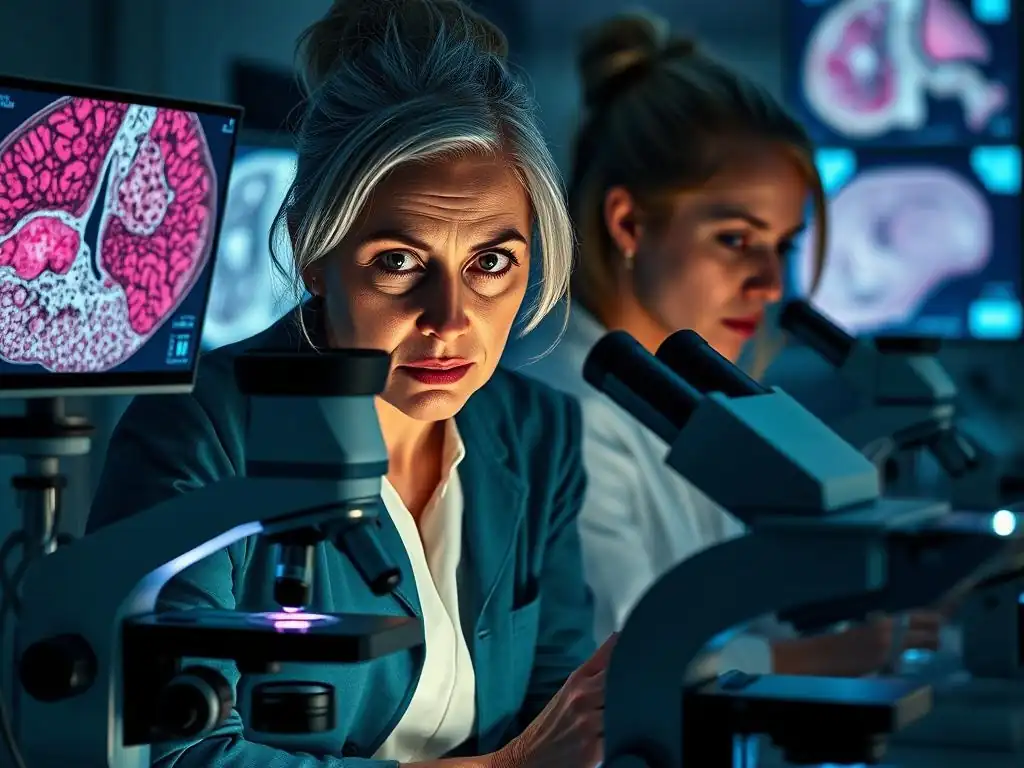
Welcome to WomenInScienceHistory.com!
Delve into the fascinating world of science and uncover the untold stories of remarkable women who shaped its landscape. Today, we turn our attention to the crucial field of pathology, exploring the groundbreaking contributions of women pathologists who, through their meticulous work and sharp intellect, unveiled disease's hidden secrets. What drove these women to peer into the microscopic world and challenge the prevailing scientific norms? Join us as we celebrate their legacy and discover how their discoveries continue to impact our understanding of health and disease.
- Introduction: Unveiling the Untold Stories of Women Pathologists
- Early Pioneers: Trailblazing Women in Pathology
- Key Discoveries by Women Pathologists: Decoding Disease Mechanisms
- Modern Era: Continuing the Legacy of Female Pathologists
- Challenges and Triumphs: Navigating a Male-Dominated Field
- The Future of Pathology: Inspiring the Next Generation of Women Scientists
- Conclusion: Honoring the Women Who Shaped Pathology and Advanced Medical Knowledge
-
Frequently Asked Questions
- What is the central theme of WomenInScienceHistory.com?
- Why is it important to recognize women pathologists in particular?
- What kind of content can I expect to find on WomenInScienceHistory.com?
- What is the significance of the title "The Lens of Discovery: Women Pathologists Who Uncovered Disease's Hidden Secrets"?
- How does WomenInScienceHistory.com aim to inspire future generations?
- Final Reflection: Illuminating the Unseen
- Ignite Your Inner Pioneer: Discover the Pathologist Within!
Introduction: Unveiling the Untold Stories of Women Pathologists
Celebrating Women in Medical Science: A Historical Perspective
Throughout history, countless women have made profound contributions to scientific advancement, yet their stories have often remained untold or overshadowed. In the realm of medical science, where breakthroughs directly impact human health and well-being, the pioneering work of women has been particularly vital, though frequently overlooked by traditional narratives. This article aims to illuminate the remarkable achievements of women pathologists, whose intellectual rigor and unwavering dedication have been instrumental in deciphering the complexities of disease.
From early diagnostic innovations to modern genetic insights, these women have navigated male-dominated fields, overcoming significant societal and institutional barriers to establish themselves as leaders and innovators. Their journeys provide not only a testament to their individual brilliance but also a crucial historical record of the persistent struggle for recognition and equity in scientific pursuits.
The Vital Role of Pathology in Understanding Disease
Pathology, often considered the "invisible specialty," is the bedrock of modern medicine. It is the scientific study of disease, focusing on its causes, development, and effects on the body's cells, tissues, and organs. Pathologists are, in essence, medical detectives, examining specimens under a microscope or analyzing bodily fluids to make diagnoses, guide treatments, and advance our fundamental understanding of how diseases manifest and progress.
The insights gleaned by pathologists are critical for accurate diagnosis, prognosis, and the development of new therapies. By meticulously analyzing microscopic changes and biochemical markers, women pathologists have been at the forefront of uncovering disease's hidden secrets, translating complex biological phenomena into actionable medical knowledge that saves lives and improves health outcomes worldwide.
Keywords: Women pathologists, disease mechanisms, medical history, diagnostic advancements
Early Pioneers: Trailblazing Women in Pathology
Dorothy Reed Mendenhall: Championing Hodgkin's Lymphoma Research in the Early 20th Century
Dorothy Reed Mendenhall (1874-1964) stands as a monumental figure in early 20th-century pathology, renowned for her groundbreaking work on Hodgkin's lymphoma. A graduate of Johns Hopkins Medical School in 1900, at a time when opportunities for women in medicine were scarce, Mendenhall embarked on a career in pathology under the tutelage of William Henry Welch, a titan in the field. Her meticulous research and keen observational skills quickly set her apart.
Her most significant contribution came in 1902, when she published a seminal paper detailing the unique cellular characteristics of Hodgkin's disease. Her precise descriptions and illustrations of large, multinucleated cells within affected lymph nodes provided a critical diagnostic marker for a previously ambiguous condition.
Identifying the Reed-Sternberg Cell: A Defining Characteristic of Hodgkin's Lymphoma
Mendenhall's detailed identification of the distinctive giant cells found in Hodgkin's disease revolutionized its diagnosis. These cells, later eponymously named Reed-Sternberg cells (after her and Carl Sternberg, who described similar cells independently), became the definitive histological hallmark for distinguishing Hodgkin's lymphoma from other forms of lymphadenopathy and lymphomas. Before her work, diagnosing Hodgkin's was often challenging and imprecise, leading to varied and often ineffective treatments.
The presence of Reed-Sternberg cells, typically large and often binucleated with prominent nucleoli, allowed pathologists to accurately identify the disease under the microscope. This precise pathological classification was essential for guiding clinical management, enabling more targeted therapeutic strategies, and significantly improving the prognosis for patients with this once-fatal cancer.
Overcoming Challenges: Limited Research Funding and Institutional Bias
Despite her pivotal scientific achievements, Dorothy Reed Mendenhall faced significant challenges common to women scientists of her era. Opportunities for sustained, independent research were often limited, and institutional biases frequently steered women away from long-term academic or research careers, particularly after marriage. Mendenhall herself transitioned from full-time research in pathology to a career focused on maternal and child health after marrying Charles Elwood Mendenhall in 1906.
This shift, while allowing her to make vital contributions to public health, exemplified the systemic pressures and lack of supportive infrastructure for married female researchers. Many brilliant women pathologists like Mendenhall found their research careers curtailed or diverted, highlighting the profound impact of gender inequality on scientific progress and the recognition of women pathologists who uncovered disease's hidden secrets.
Maud Slye: Revolutionizing Cancer Research Through Mouse Genetics
Maud Slye (1869-1954) dedicated over four decades to unraveling the genetic basis of cancer, primarily through painstaking work with laboratory mice. A graduate of the University of Chicago, Slye began her career as a zoologist but soon turned her attention to cancer research, driven by a profound curiosity about disease inheritance. Her approach was revolutionary for its time: she believed that by meticulously breeding and studying thousands of mice, she could uncover patterns of cancer susceptibility.
From 1910 until her death, Slye personally examined more than 150,000 mice, meticulously documenting the incidence and type of tumors in each animal. This unparalleled scale of pathological observation and record-keeping provided an unprecedented dataset for understanding cancer's origins.
Developing Inbred Mouse Strains to Study Cancer Heritability
Slye's most enduring contribution was her pioneering work in developing and utilizing highly inbred mouse strains. By consistently mating siblings over many generations, she created genetically uniform populations, allowing her to control for environmental variables and isolate genetic factors influencing cancer development. Her detailed pathological analyses of these mice provided compelling evidence that cancer was not merely an environmental affliction but had a strong hereditary component.
Her work demonstrated that certain genetic lineages were highly susceptible to specific types of cancer, while others were remarkably resistant. This systematic approach laid the foundational stone for modern cancer genetics and epigenetics, proving the power of controlled breeding in experimental pathology to reveal hidden secrets of disease mechanisms.
The Impact of Slye's Work on Understanding Genetic Predisposition to Cancer
Maud Slye's extensive research profoundly shifted the scientific understanding of cancer, moving it from a purely environmental or infectious disease paradigm to one that recognized genetic predisposition. Her findings, initially met with skepticism, gradually gained acceptance as her rigorous methodology and vast datasets became undeniable. She published over 100 papers detailing her observations, which showed that cancer could be inherited in a Mendelian fashion in mice.
This understanding of genetic susceptibility, largely pioneered by Slye's work as one of the earliest women pathologists, has been crucial for modern cancer research. It paved the way for identifying human oncogenes and tumor suppressor genes, leading to genetic screening for cancer risk and the development of targeted therapies. Her dedication to understanding the genetic underpinnings of disease truly helped uncover disease's hidden secrets.
Key Discoveries by Women Pathologists: Decoding Disease Mechanisms
Infectious Diseases: Women's Contributions to Understanding Tuberculosis
Tuberculosis (TB) has historically been one of humanity's most devastating infectious diseases, responsible for millions of deaths over centuries. Understanding its elusive pathogen, Mycobacterium tuberculosis, and the body's response to it was a monumental challenge for medical science. The accurate diagnosis and control of TB were critical public health imperatives in the early to mid-20th century.
It was in this vital arena that women pathologists and biochemists made indelible contributions, developing diagnostic tools that transformed the fight against the disease. Their work enabled widespread screening and identification of infected individuals, which was essential for containing outbreaks and initiating effective treatments.
Florence B. Seibert: Pioneering the Development of Purified Protein Derivative (PPD) for Tuberculosis Testing
Florence B. Seibert (1897-1991), a brilliant biochemist and a key figure in diagnostic pathology, revolutionized tuberculosis testing. After overcoming a childhood bout with polio, Seibert pursued a career in science, earning her Ph.D. in biochemistry from Yale University. Her most significant work took place at the Phipps Institute of the University of Pennsylvania, where she focused on isolating the active component of tuberculin, the substance used in the skin test for TB.
In the 1930s, Seibert successfully developed a method to isolate and purify the protein derivative from the tuberculosis bacillus, creating what became known as Purified Protein Derivative (PPD). This standardized form of tuberculin eliminated impurities that caused false reactions in earlier tests, providing a highly reliable and consistent diagnostic tool.
The Significance of Her Research on Tuberculosis Diagnosis and Control
The development of PPD by Florence Seibert was a monumental leap forward in public health. Prior to her work, tuberculin tests were inconsistent due to variable purity, leading to unreliable results. Seibert's purified product allowed for a uniform, accurate, and reproducible skin test for tuberculosis infection. This standardized test became the international standard for TB diagnosis for decades, adopted by the World Health Organization.
The widespread use of the PPD test facilitated mass screening programs, enabling early detection of TB infection, even in asymptomatic individuals. This early diagnosis was crucial for initiating timely treatment and implementing public health measures to prevent the spread of the disease. Seibert's contribution as one of the pioneering women pathologists profoundly impacted global health, helping to significantly reduce TB morbidity and mortality rates by revealing one of the disease's hidden secrets.
Cancer Pathology: Women Pathologists and the Fight Against Cervical Cancer
Cervical cancer, caused primarily by persistent human papillomavirus (HPV) infection, was once a leading cause of cancer-related deaths among women globally. The ability to detect precancerous changes or early-stage cancer was paramount to improving survival rates. This challenge spurred significant research in cytopathology, a field where women pathologists made transformative contributions.
Their meticulous work in analyzing cellular samples under the microscope became the cornerstone of effective screening programs, dramatically altering the natural history of cervical cancer and saving countless lives.
Ruth M. Graham: Developing Cytological Techniques for Early Cervical Cancer Detection
Ruth M. Graham (1917-2003) was a pivotal figure in the development and refinement of cytological techniques for early cervical cancer detection. As a cytopathologist at the Vincent Memorial Hospital (affiliated with Massachusetts General Hospital) in the mid-20th century, Graham worked closely with George Papanicolaou, the originator of the Pap test. Her expertise lay in meticulously identifying and classifying abnormal cellular changes indicative of precancerous lesions or early-stage cancer.
Graham developed and taught specific criteria for interpreting Pap smears, standardizing the diagnostic process and making it more reliable and accurate. She authored the influential textbook "The Cytologic Diagnosis of Cancer," which became a foundational text for cytotechnologists and pathologists worldwide, disseminating her precise diagnostic methodologies.
Advancements in Cervical Cancer Screening and Prevention Thanks to Women in Pathology
The refinement of the Pap test, significantly advanced by Ruth Graham and other dedicated women in pathology, led to one of the most successful cancer screening programs in medical history. By enabling the detection of cervical abnormalities long before they progressed to invasive cancer, the Pap test allowed for timely intervention and treatment. In countries with widespread screening programs, the incidence and mortality rates of cervical cancer plummeted by as much as 70% over several decades.
Pathologists, many of whom were women, became the vigilant guardians of women's health, examining millions of Pap smears annually, meticulously searching for the subtle cellular clues that revealed the disease's hidden secrets. Their tireless work in the laboratory transformed cervical cancer from a deadly disease into a largely preventable and treatable condition, underscoring the indispensable role of women pathologists in diagnostic advancements.
Modern Era: Continuing the Legacy of Female Pathologists
Elizabeth J. Robertson: Advancing Developmental Biology and Genetic Research
Elizabeth J. Robertson (born 1951) represents the vanguard of modern female pathologists and developmental biologists, whose work has profoundly influenced our understanding of genetic disease and embryonic development. Educated at the University of Oxford, she has held prestigious positions at institutions such as Columbia University and Memorial Sloan Kettering Cancer Center, where her research has focused on the intricate processes that govern early mammalian life.
Robertson's innovative approaches involve manipulating genes in embryonic stem cells to create mouse models of human diseases. This allows her to study the precise roles of specific genes in development and how their dysfunction can lead to congenital anomalies, infertility, or increased susceptibility to conditions like cancer later in life.
Her Innovative Approaches to Understanding Embryonic Development
Robertson's laboratory has been at the forefront of using gene targeting techniques to create "knockout" mice, where specific genes are inactivated, or "knock-in" mice, where genes are altered. By observing the developmental consequences of these genetic modifications, she has elucidated the functions of numerous genes critical for embryonic patterning, organ formation, and cell differentiation. Her work has revealed the complex interplay between genes and environment that shapes healthy development and predisposes to disease.
These detailed pathological investigations into embryonic abnormalities in mice provide invaluable insights into the pathogenesis of human developmental disorders. Her research exemplifies how modern women pathologists continue to uncover disease's hidden secrets at the molecular and cellular level, offering new avenues for therapeutic intervention.
Mentoring Future Generations of Women in Science
Beyond her scientific discoveries, Elizabeth Robertson has been a dedicated advocate and mentor for aspiring scientists, particularly women, in the fields of developmental biology and genetics. As a leader in the scientific community, including her tenure as President of the International Society for Stem Cell Research, she has actively promoted diversity and inclusion in research.
Her commitment to mentorship has ensured that new generations of women scientists receive the guidance and support needed to thrive in demanding research environments. By fostering a collaborative and supportive atmosphere, Robertson contributes to building a stronger, more inclusive scientific workforce, ensuring that the legacy of pioneering women pathologists continues to inspire and empower future leaders in medical science.
Anna Marie Skalka: Leading Research in Retroviruses and HIV
Anna Marie Skalka (born 1937) is a distinguished virologist and molecular biologist whose foundational research on retroviruses has had a profound impact on our understanding and treatment of HIV/AIDS. With a long and illustrious career at the Fox Chase Cancer Center, Skalka has dedicated her life to dissecting the molecular mechanisms by which retroviruses replicate and integrate their genetic material into host cells.
Her work has been crucial in unraveling the life cycle of these complex viruses, particularly focusing on the enzyme integrase, which is indispensable for retroviral infection. This enzyme facilitates the insertion of the viral DNA into the host genome, a critical step for viral persistence and replication.
Her Contributions to Understanding Retroviral Replication and Integration
Skalka's laboratory pioneered the biochemical characterization of retroviral integrase, detailing its structure and function. Her research group was among the first to purify and study the enzyme in vitro, providing critical insights into how it mediates the integration of viral DNA. This deep understanding of retroviral replication and integration, achieved through meticulous molecular pathology, was paramount for the development of targeted antiviral therapies.
The knowledge gleaned from her work directly contributed to the design of integrase inhibitors, a class of antiretroviral drugs that effectively block HIV replication. These drugs have transformed HIV/AIDS from a rapidly fatal disease into a manageable chronic condition for millions of people worldwide, showcasing the profound impact of women pathologists and their molecular insights into disease mechanisms.
The Impact of Technology on Women's Roles in Pathology
The modern era of pathology has been profoundly shaped by rapid technological advancements, from sophisticated molecular diagnostics to artificial intelligence-driven image analysis. These innovations have not only broadened the scope of pathological investigation but have also created new opportunities for women in the field. The rise of molecular pathology, genomics, and digital pathology has opened doors for female scientists to specialize in cutting-edge areas that are less traditionally male-dominated.
With the advent of whole-slide imaging and computational pathology, the physical demands of microscopy have lessened, and the emphasis has shifted towards analytical and computational skills, areas where women excel. This technological evolution has fostered a more inclusive environment, enabling more women pathologists to leverage advanced tools to continue uncovering disease's hidden secrets with unprecedented precision and efficiency.
Gender Inequality in Pathology: A Historical Analysis
Historically, women entering the medical and scientific professions faced formidable barriers, and pathology was no exception. For much of the 19th and 20th centuries, women were often denied admission to medical schools, relegated to lower-status positions, or paid less than their male counterparts. Even when they achieved recognition for their scientific contributions, they frequently encountered systemic bias, including difficulty securing research funding, promotions, and leadership roles.
In the early 20th century, women constituted a tiny fraction of medical faculty, and even fewer held prominent positions in specialized fields like pathology. Many brilliant women pathologists found their careers limited by institutional sexism, often being steered towards roles deemed more "suitable" for women, such as public health or clinical practice, rather than cutting-edge research or academic leadership.
Strategies for Success: Overcoming Obstacles and Achieving Recognition
Despite these pervasive challenges, women pathologists demonstrated remarkable resilience and ingenuity in carving out successful careers and achieving significant breakthroughs. Many focused on meticulous, often painstaking research, excelling in areas that required intense dedication and precision, which were sometimes overlooked by their male colleagues. They often formed informal networks, sharing knowledge and providing mutual support in environments that were not always welcoming.
Their strategies included unwavering persistence in publishing their findings in reputable journals, presenting their work at scientific conferences, and advocating for the importance of their discoveries. By consistently demonstrating intellectual prowess and scientific rigor, these women gradually dismantled prejudices and earned the respect and recognition they deserved, ensuring their contributions to uncovering disease's hidden secrets could not be ignored.
The Importance of Mentorship and Support Networks for Women Pathologists
The journey of women in pathology has been significantly aided by the emergence of formal and informal mentorship and support networks. Senior women in science, having navigated their own challenging paths, often took on the crucial role of mentoring junior female colleagues, guiding them through academic politics, grant applications, and career advancement. These mentorship relationships provided invaluable advice, encouragement, and advocacy.
Furthermore, professional organizations and women's groups within medical and scientific communities began to provide crucial platforms for networking, collaboration, and shared advocacy. These networks helped to amplify the voices of women pathologists, push for equitable policies, and foster a sense of community, significantly contributing to the progress towards a more inclusive and supportive environment in the field.
The Future of Pathology: Inspiring the Next Generation of Women Scientists
The Growing Demand for Pathologists: Opportunities for Women in Medical Science
The field of pathology is currently experiencing a significant demand for skilled professionals, driven by an aging global population, the increasing complexity of disease, and the advent of personalized medicine. As diagnostic tools become more sophisticated, from genomic sequencing to advanced imaging, the need for expert pathologists to interpret complex data and provide precise diagnoses continues to grow. This burgeoning demand presents substantial opportunities for women in medical science.
Encouragingly, the landscape of pathology is becoming increasingly diverse. Data from recent years indicates a significant increase in female representation within pathology residency programs. For instance, in the United States, women now comprise approximately 40-50% of pathology residents, a dramatic shift from earlier decades. This trend signals a promising future for women to lead and innovate in this critical medical specialty.
Empowering Women in STEM: Fostering a More Inclusive and Equitable Future
The broader movement to empower women in STEM (Science, Technology, Engineering, and Mathematics) fields is crucial for ensuring a vibrant and equitable future for pathology. Initiatives that promote early STEM education for girls, provide strong female role models, and implement supportive institutional policies are vital. By dismantling systemic barriers and fostering inclusive environments, we can ensure that talent is recognized and nurtured regardless of gender.
A diverse workforce brings varied perspectives and approaches to scientific inquiry, leading to more innovative research and ultimately, better healthcare outcomes for all. Continuing to support and celebrate women in pathology will not only inspire future generations but also ensure that the field continues to thrive and effectively address the complex challenges of disease.
The enduring legacy of women pathologists is a testament to their intellectual brilliance, unwavering dedication, and profound impact on medical science. From the early identification of key diagnostic markers like the Reed-Sternberg cell to the development of life-saving screening tools and the molecular dissection of viral replication, women have consistently been at the forefront of discovering disease's hidden secrets.
Their historical contributions have laid the groundwork for countless advancements, and their ongoing work continues to push the boundaries of medical knowledge. By highlighting these stories, we not only give these extraordinary women the recognition they deserve but also inspire young minds, particularly young women, to pursue careers in science and contribute their unique talents to the ongoing pursuit of understanding and conquering disease.
Conclusion: Honoring the Women Who Shaped Pathology and Advanced Medical Knowledge
Reflecting on the Groundbreaking Contributions of Women Pathologists
The journey of women in pathology is a compelling narrative of scientific excellence, perseverance, and profound impact. From Dorothy Reed Mendenhall's seminal work on Hodgkin's lymphoma to Maud Slye's pioneering genetic studies of cancer, and Florence B. Seibert's development of the standardized TB test, women pathologists have consistently delivered groundbreaking contributions that have reshaped medical understanding and practice. Their meticulous observations, innovative methodologies, and unwavering commitment to scientific rigor have been instrumental in deciphering complex disease mechanisms.
These women, and many others, often worked against the tide of societal expectations and institutional biases, yet their intellectual prowess and dedication shone through. Their contributions are not mere footnotes in medical history but foundational pillars upon which much of modern diagnostic and therapeutic medicine rests, allowing us to see disease's hidden secrets more clearly.
The Ongoing Pursuit of Knowledge: Inspiring Future Discoveries in Disease Research
The legacy of these pioneering women pathologists extends far beyond their individual discoveries; it lies in the inspiration they provide for future generations. As the field of pathology continues to evolve with advancements in genomics, proteomics, and artificial intelligence, the need for sharp, inquisitive minds remains paramount. The stories of women who bravely entered a challenging field and profoundly impacted human health serve as a powerful testament to the potential within every aspiring scientist.
By celebrating their achievements, we encourage more women to embrace the "lens of discovery" and contribute their unique perspectives and talents to the ongoing pursuit of knowledge. The work of uncovering disease's hidden secrets is a continuous endeavor, and the contributions of women pathologists will undoubtedly continue to shape the future of medicine, leading to further breakthroughs and improved health outcomes for humanity.
Frequently Asked Questions
What is the central theme of WomenInScienceHistory.com?
The site celebrates and highlights the contributions of women to various scientific fields throughout history, particularly focusing on their groundbreaking work and the challenges they faced.
Why is it important to recognize women pathologists in particular?
Recognizing them sheds light on the overlooked narratives of women in science and inspires future generations. They played a crucial role in uncovering disease's hidden secrets through pathology.
What kind of content can I expect to find on WomenInScienceHistory.com?
You can find biographies of pioneering female scientists, discussions on their scientific work, and analysis of the obstacles they overcame in male-dominated fields.
The title emphasizes the critical role of women pathologists in using their expertise to uncover the hidden causes and mechanisms of disease, revealing them through the "lens" of scientific discovery.
How does WomenInScienceHistory.com aim to inspire future generations?
By showcasing the achievements and perseverance of women in science, the platform aims to encourage young people, especially girls, to pursue careers in STEM and challenge gender stereotypes within these fields.
Final Reflection: Illuminating the Unseen
The journey through the lives and work of these pioneering women pathologists reveals a profound truth: the pursuit of knowledge, especially when challenging established norms, reshapes our understanding of the world. Their unwavering dedication to uncovering disease's hidden secrets not only advanced medical science but also paved the way for future generations of women in STEM, leaving an indelible mark on the landscape of healthcare.
The impact of these women extends far beyond the laboratory. Their stories serve as a powerful reminder that progress often comes from those who dare to question, to investigate, and to persist in the face of adversity. Their contributions, often overlooked, are now being recognized as essential to our understanding of disease and its treatment. The important thing is never to stop questioning.
- Albert Einstein, a sentiment that perfectly encapsulates the spirit of these remarkable women.
As we close this exploration, let us carry forward the torch of curiosity and determination that these women so bravely lit. Consider how you, in your own sphere of influence, can challenge assumptions, seek deeper understanding, and champion the voices that are often unheard. Embrace the lens of discovery, and let it guide you to uncover the hidden secrets that await your exploration.
Ignite Your Inner Pioneer: Discover the Pathologist Within!
Thank you for delving into the captivating stories of these remarkable women in pathology. You've now glimpsed the power of observation and dedication in unveiling the secrets of disease. Ready to embark on your own journey of discovery?
- Boldly explore online resources dedicated to medical breakthroughs and the unsung heroes of pathology. You might uncover a field you never knew existed!
- Consider shadowing a local medical professional, even for a day, to experience firsthand the fascinating world of medical diagnostics.
- Share this article with friends and family – spark a conversation and inspire others with these amazing stories of perseverance.
What hidden world will you uncover next? Let us know in the comments below!