
The Enduring Echo: Voices of Women in Space Inspiring Global Change and Ambition

Welcome to WomenInScienceHistory.com!
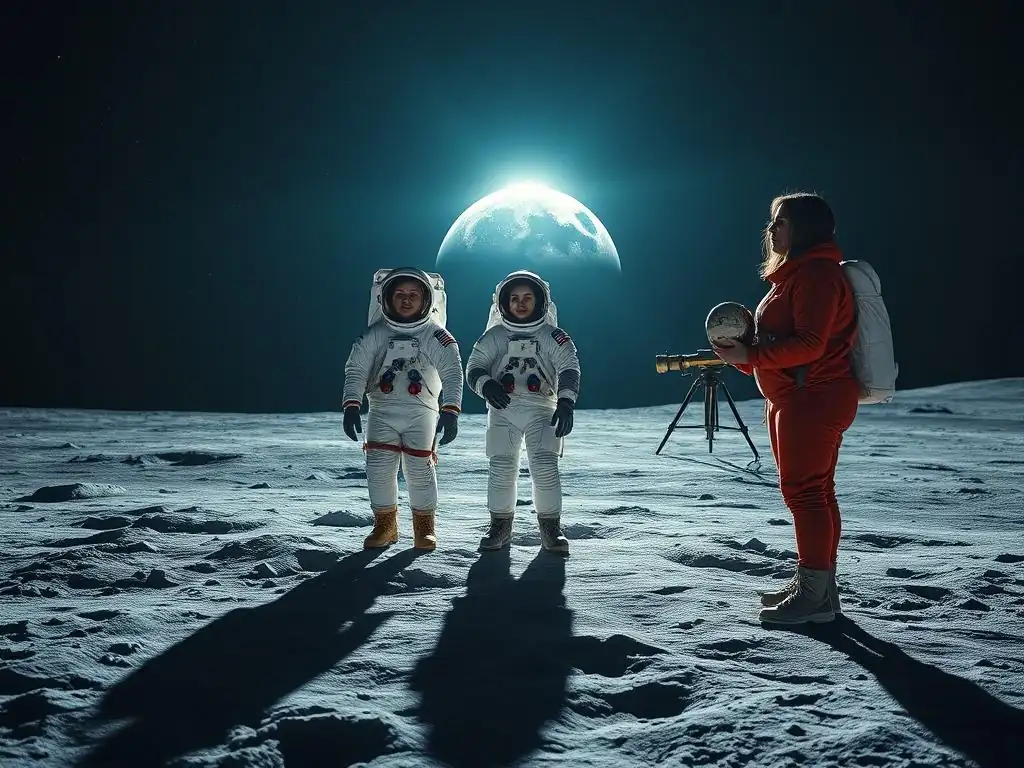
Prepare to be launched into a universe of untold stories. We delve into the remarkable contributions of women who dared to reach for the stars, often against incredible odds. This month, we spotlight Women in Space Biographies, exploring the lives and legacies of these inspiring pioneers. Discover their groundbreaking work, the barriers they shattered, and the enduring impact they've had on space exploration and beyond. Intrigued? Their journeys are more captivating than you can imagine. Dive in and discover how these women helped shape our understanding of the cosmos.
Early Female Contributions to Space Exploration
Before women officially donned spacesuits and ventured beyond Earth's atmosphere, their intellectual prowess and dedication were already foundational to early space efforts. In the mid-20th century, a group known as the "Mercury 13" underwent rigorous physical and psychological testing, mirroring the criteria for male astronauts in the Mercury program.
These 13 American women, including figures like Jerrie Cobb, demonstrated exceptional aptitude, with some even outperforming their male counterparts in certain tests, showcasing an undeniable readiness for spaceflight. Despite their proven capabilities and pioneering spirit, societal norms and institutional barriers of the era prevented them from joining NASA's official astronaut corps, a stark reminder of the challenges women faced in contributing to space exploration.
Parallel to these efforts, "human computers," predominantly women, played an indispensable role in the early days of spaceflight, performing complex calculations that were critical for trajectory analysis, rocket launches, and mission control. Figures like Katherine Johnson, Dorothy Vaughan, and Mary Jackson, though largely unsung for decades, provided the mathematical backbone for missions ranging from Project Mercury to the Apollo Moon landings. Their precision and dedication in the face of racial and gender discrimination underscore the often-overlooked yet vital contributions of women to the foundational principles of space science and engineering, long before the first woman officially flew into space.
The First Woman in Space: Valentina Tereshkova's Legacy
On June 16, 1963, the Soviet Union launched Valentina Tereshkova aboard Vostok 6, making her the first woman to journey into space. Her historic flight, which saw her orbit the Earth 48 times over nearly three days, was a monumental achievement not only for Soviet space prowess but for women worldwide.
Tereshkova, a textile factory worker and amateur parachutist, was selected from over 400 applicants, demonstrating exceptional resilience and skill during her intensive training. Her mission proved that women were just as capable as men of withstanding the rigors of space travel, shattering prevailing assumptions about physical and psychological limitations based on gender.
Tereshkova's flight, however, was followed by a nearly two-decade hiatus for women in space, illustrating the enduring barriers even after such a groundbreaking achievement. While her journey was a powerful propaganda statement for the Soviet Union, it also served as an enduring symbol of what women could achieve.
Her legacy continues to inspire, reminding us of the immense potential within every individual, regardless of gender, to push the boundaries of human exploration and scientific discovery. The story of Valentina Tereshkova is a cornerstone of any collection of women in space biographies, highlighting a singular moment of triumph against a backdrop of ongoing struggle for equality.
Overcoming Barriers: Challenges Faced by Women Astronauts
The path for women aspiring to become astronauts has historically been fraught with significant barriers, extending beyond the initial lack of opportunity. Early selection criteria often favored military test pilots, a profession almost exclusively male at the time, effectively excluding women from the primary pipeline. Even when opportunities began to emerge, women faced skepticism regarding their physical endurance and psychological resilience in the demanding space environment.
For instance, after Valentina Tereshkova's flight in 1963, it took 19 years for the second woman, Svetlana Savitskaya, also from the Soviet Union, to reach space in 1982, and another year for America's first woman, Sally Ride, in 1983. This prolonged gap underscores the systemic hurdles and biases that limited female participation.
Beyond institutional hurdles, women astronauts also contended with subtle and overt forms of discrimination, including questions about their ability to balance family life with a demanding career, or even the practical design of equipment not made for female anatomies. Early space suits and onboard facilities were often designed primarily for men, necessitating adaptations and highlighting a lack of foresight regarding gender diversity.
Despite these challenges, the perseverance of women like Eileen Collins, who became the first female Space Shuttle pilot in 1995 and then the first female commander in 1999, exemplifies the determination required to break through these barriers and establish their rightful place among the elite ranks of space explorers.
- Early Female Contributions to Space Exploration
- The First Woman in Space: Valentina Tereshkova's Legacy
- Overcoming Barriers: Challenges Faced by Women Astronauts
- What is the main focus of WomenInScienceHistory.com?
- Why is it important to highlight women in space biographies?
- What kind of challenges did women in space pioneers typically face?
- How does WomenInScienceHistory.com aim to inspire future generations?
- What specific fields of science are covered on WomenInScienceHistory.com, particularly related to space?
Inspiring Change: How Women in Space Shape Global Perspectives
Shattering Stereotypes: The Impact on STEM Education
The visibility of women in space has been instrumental in dismantling long-held gender stereotypes about capabilities in science, technology, engineering, and mathematics (STEM) fields. When young girls and boys see women like Mae Jemison, an engineer and physician, or Christina Koch, an electrical engineer who set a record for the longest single spaceflight by a woman, it sends a powerful message: STEM is for everyone.
This representation actively challenges the notion that these fields are inherently male domains, encouraging a broader range of talent to consider careers that contribute to scientific advancement and exploration. For example, studies have shown that exposure to female role models in STEM can significantly increase girls' interest and confidence in these subjects.
This impact extends beyond mere inspiration; it translates into tangible shifts in educational aspirations. School programs and outreach initiatives often leverage the stories of pioneering women in space to engage students, particularly girls, in hands-on science and engineering activities.
The legacy of astronauts like Sally Ride, who after her NASA career founded Sally Ride Science to promote STEM literacy and encourage girls in science, demonstrates a direct correlation between female astronaut visibility and educational advocacy. These efforts are crucial in fostering a more inclusive and diverse talent pipeline for future scientific and technological innovation, ensuring that the next generation of problem-solvers reflects the full spectrum of human potential.
Role Models for Future Generations: Encouraging Girls in Science
The presence of women in space provides concrete, relatable role models that are essential for encouraging girls to pursue scientific careers. When a young girl sees someone like Dr. Mae Jemison, the first African American woman in space, who is not only an astronaut but also a physician and engineer, it broadens her perception of what is possible.
These women in space biographies offer compelling narratives of ambition, perseverance, and intellectual curiosity that resonate deeply with aspiring scientists. The impact is not just about showing that women can do it, but demonstrating how they do it, providing tangible examples of educational paths, challenges overcome, and the joy of discovery.
Organizations and educational institutions frequently highlight the achievements of these women as a strategic tool to bridge the gender gap in STEM. For instance, NASA's "Women@NASA" initiative and various non-profit programs worldwide actively feature the stories of female astronauts, scientists, and engineers to mentor and inspire.
These initiatives often include direct engagement, such as virtual Q&A sessions or school visits, where astronauts share their experiences and encourage students to embrace science. The personal connection forged through these stories helps demystify complex scientific fields and makes the dream of a career in science or space exploration feel attainable for girls from diverse backgrounds.
Fostering Diversity and Inclusion in Space Programs
The push for diversity and inclusion in space programs is not merely about representation; it is a strategic imperative for optimizing mission success and fostering innovation. Diverse teams, encompassing a variety of genders, ethnicities, and backgrounds, bring a wider range of perspectives, problem-solving approaches, and creative solutions to complex challenges.
This cognitive diversity is particularly crucial in space exploration, where unforeseen obstacles and highly technical issues are the norm. For example, recent astronaut classes at NASA and ESA have shown a deliberate effort to select more diverse candidates, recognizing that a broader talent pool leads to more robust and adaptable teams.
Furthermore, fostering an inclusive environment within space agencies ensures that all individuals feel valued and empowered to contribute their best work. This includes addressing systemic biases in recruitment, training, and leadership opportunities. The increasing number of women in leadership roles within space programs, such as mission controllers, project managers, and even agency directors, signifies a positive shift towards greater equity. By actively promoting diversity, space programs not only reflect the global population they serve but also enhance their capacity for groundbreaking scientific discovery and technological advancement, pushing the boundaries of what humanity can achieve in space.
Women in Space Biographies: Highlighting Key Figures and Their Achievements
Sally Ride: America's First Woman in Space - A Biography
Dr. Sally Ride holds a pivotal place in women in space biographies as the first American woman to journey into space. Born in Los Angeles in 1951, Ride earned a Ph.D. in physics from Stanford University, a background that perfectly aligned with NASA's evolving needs for mission specialists with strong scientific credentials.
She was selected as part of NASA's 1978 astronaut class, notable for being the first class to include women, a significant departure from previous selections dominated by military test pilots. Her analytical mind and calm demeanor quickly distinguished her among her peers, preparing her for the historic mission ahead.
On June 18, 1983, Ride made history aboard the Space Shuttle Challenger on mission STS-7. During her six-day flight, she operated the shuttle's robotic arm (Canadarm) to deploy and retrieve satellites, demonstrating precision and expertise. Her mission was a landmark achievement, shattering gender barriers and inspiring a generation of young girls to pursue careers in science and engineering. After her second spaceflight in 1984 on STS-41G, Ride left NASA in 1987 to pursue a career in science education, notably co-founding Sally Ride Science, an organization dedicated to inspiring elementary and middle school students, particularly girls, to consider STEM fields.
Mae Jemison: Scientist, Doctor, and the First African American Woman in Space
Dr. Mae C. Jemison stands as a remarkable figure in women in space biographies, not only as the first African American woman to travel to space but also for her extraordinary multidisciplinary background. Born in Alabama in 1956, Jemison earned a Bachelor of Science degree in Chemical Engineering from Stanford University, and later, a Doctor of Medicine degree from Cornell University.
Before joining NASA, she served as a medical officer with the Peace Corps in Liberia and Sierra Leone, demonstrating a profound commitment to global health and service. Her diverse experiences as a physician, engineer, and volunteer set her apart and highlighted the broad range of skills applicable to space exploration.
Jemison was selected for NASA's astronaut corps in 1987, becoming one of the 15 candidates chosen from a pool of 2,000 applicants. On September 12, 1992, she launched into space aboard the Space Shuttle Endeavour on mission STS-47, a joint mission between the United States and Japan. During her eight-day flight, she conducted experiments on bone cell research and motion sickness, contributing valuable scientific data. Her journey symbolized a significant step forward for diversity in space, inspiring countless individuals across racial and gender lines to reach for the stars and pursue their scientific and personal ambitions.
Eileen Collins: First Female Shuttle Commander
Eileen Collins carved out a distinguished career in women in space biographies by becoming the first female Space Shuttle pilot and later, the first female Space Shuttle commander. Born in Elmira, New York, in 1956, Collins developed an early passion for aviation, which led her to join the U.S. Air Force. She became an accomplished military test pilot, accumulating over 6,700 hours in 30 different types of aircraft, a testament to her exceptional skill and dedication. Her extensive piloting experience provided an ideal foundation for a career as an astronaut.
Collins was selected as an astronaut in 1990. Her historic first flight as a pilot was on STS-63 in 1995, a mission that involved a rendezvous with the Russian space station Mir. She then piloted STS-84 in 1997, another Mir docking mission.
Her ascent to command came with STS-93 in 1999, where she led the mission to deploy the Chandra X-ray Observatory, a significant scientific instrument. Her final mission as commander was STS-114 in 2005, the "Return to Flight" mission after the Columbia disaster, a highly scrutinized and critical flight. Collins's career exemplifies the pinnacle of leadership and operational excellence in human spaceflight, demonstrating that women are not only capable of flying but also commanding complex and critical space missions.
Christina Koch: Record-Breaking Female Astronaut
Christina Koch has made a significant mark in recent women in space biographies through her groundbreaking long-duration mission on the International Space Station (ISS) and her participation in historic spacewalks. Born in Grand Rapids, Michigan, in 1979, Koch holds Bachelor of Science degrees in Electrical Engineering and Physics, and a Master of Science degree in Electrical Engineering from North Carolina State University. Her background includes extensive work in remote scientific field engineering, including deployments to Antarctica and Greenland, which prepared her for the isolation and technical demands of spaceflight.
Koch was selected as a NASA astronaut in 2013. She launched to the ISS on March 14, 2019, for Expedition 59/60/61, where she ultimately spent 328 consecutive days in space, setting a new record for the longest single spaceflight by a woman.
During her mission, she participated in six spacewalks, including the first all-female spacewalk on October 18, 2019, alongside fellow astronaut Jessica Meir. These achievements not only advanced scientific understanding of the human body's adaptation to long-duration spaceflight but also symbolized a significant step forward for gender equality in extravehicular activities, reinforcing the growing role of women in the most challenging aspects of space exploration.
Scientific Contributions of Women Astronauts: Beyond the Headlines
Research and Discoveries Made by Women in Space
Women astronauts have made substantial, often unsung, contributions to scientific research conducted in the microgravity environment of space. Onboard the International Space Station (ISS) and previous space vehicles, female astronauts have conducted a vast array of experiments spanning various disciplines, from human physiology to materials science and Earth observation.
For example, Dr. Peggy Whitson, an American biochemist and record-holder for cumulative time in space by a U.S. astronaut, has conducted extensive research on bone density loss in microgravity and the effects of radiation on the human body, vital for understanding long-duration space travel. Her work has directly informed countermeasures to preserve astronaut health on future missions to the Moon and Mars.
Beyond human health, women astronauts have also been instrumental in advancing our understanding of fundamental physics and biology. Dr. Kathleen Rubins, a microbiologist, was the first person to sequence DNA in space, a critical step towards diagnosing astronaut illnesses and identifying microbes on future deep-space missions without relying on Earth-based labs.
Similarly, astronauts like Sunita Williams have contributed to the testing of new water recycling systems and advanced resistive exercise devices, innovations crucial for sustainable living in space. These scientific endeavors, often conducted quietly away from public fanfare, represent a significant portion of the scientific output of space missions, directly attributed to the diligent work of women in space.
Innovations and Technological Advancements Led by Female Scientists in Space
The contributions of female scientists and engineers in space extend far beyond conducting experiments; they are actively involved in the design, development, and implementation of cutting-edge technologies that drive space exploration forward. From developing sophisticated software for mission control to engineering more efficient life support systems, women are at the forefront of technological innovation.
For instance, Dr. Ellen Ochoa, the first Hispanic woman in space, was an optical engineer who helped develop optical systems for space applications before becoming an astronaut. Her expertise contributed to the development of new ways to process images and data from space, enhancing our ability to understand Earth and other celestial bodies.
Furthermore, women have played crucial roles in the evolution of robotic systems and operational procedures in space. Tracy Caldwell Dyson, a chemist, has performed multiple spacewalks to maintain and upgrade the ISS, often working with complex robotics and intricate electrical systems. Her hands-on contributions ensure the continuous functioning of vital station components, directly enabling ongoing scientific research. These examples underscore that women in space are not merely passengers or experiment operators; they are integral to the technological backbone of space exploration, leading advancements that push the boundaries of what is possible in the cosmos.
The Importance of Diverse Perspectives in Space Research
The inclusion of diverse perspectives, particularly those of women, is not just an ethical consideration but a scientific imperative for robust and comprehensive space research. A homogeneous group tends to approach problems from similar angles, potentially overlooking critical aspects or innovative solutions. In contrast, teams with varied backgrounds, experiences, and thought processes are more likely to identify a wider range of research questions, develop more creative experimental designs, and interpret data with greater nuance.
This leads to more thorough scientific investigations and ultimately, more groundbreaking discoveries. For example, the inclusion of female physiologists and medical doctors in astronaut corps has led to more nuanced research into how space affects the female body, addressing gaps in knowledge that were historically overlooked.
Moreover, diverse teams are better equipped to tackle the multifaceted challenges of long-duration space missions and future planetary exploration. Considerations such as habitability design, psychological well-being, and even dietary needs in space can benefit immensely from a variety of cultural and gendered perspectives.
By integrating insights from women, who may approach problem-solving differently or identify previously unconsidered variables, space research can yield more comprehensive and universally applicable results. This commitment to diversity ensures that the future of space exploration is built on the broadest possible foundation of human intellect and ingenuity, making the scientific endeavors more effective and impactful for all of humanity.
The Future of Women in Space: Ambitions and Opportunities
Current Initiatives Promoting Female Participation in Space Exploration
Recognizing the historical underrepresentation of women in space, major space agencies and global organizations have launched significant initiatives to actively promote female participation in all facets of space exploration. NASA's "Artemis Generation" outreach specifically emphasizes inspiring the next diverse generation of explorers, explicitly stating the goal of landing the first woman and first person of color on the Moon.
Similarly, the European Space Agency (ESA) recently announced its largest astronaut class in over a decade, with a strong emphasis on increasing gender diversity, including the selection of the first parastronaut with a physical disability, demonstrating a commitment to broader inclusion. These programs are not just about recruitment but also involve robust STEM education pipelines aimed at girls from an early age.
Beyond formal astronaut selections, numerous non-profit organizations and academic institutions are working to create pathways for women in aerospace. Programs like "Girls in Aviation Day" or university scholarships specifically for women in aerospace engineering are designed to dismantle barriers and provide crucial support. Mentorship initiatives, networking events, and public awareness campaigns also play a vital role in showcasing successful women in space biographies and connecting aspiring female scientists and engineers with established professionals. These collective efforts are steadily transforming the landscape, ensuring that more women have the opportunity to contribute their talents to the future of space.
The Artemis Program: A New Era for Women in Lunar Missions
The Artemis Program represents a monumental shift in human space exploration, explicitly aiming to land the first woman and the first person of color on the Moon by the mid-2020s. This initiative by NASA, in collaboration with international partners, is designed not only to return humanity to the lunar surface but to establish a sustainable presence there, paving the way for future missions to Mars.
The selection of the Artemis Team, comprising a diverse group of astronauts, reflects a deliberate commitment to inclusivity, ensuring that the pioneering spirit of this new lunar era is shared by all. This program is particularly significant for women in space biographies, as it places women at the forefront of humanity's next giant leap.
The Artemis missions will involve complex operations, including the development of new lunar landers, habitats, and advanced exploration technologies. Women astronauts are expected to play critical roles in all aspects of these missions, from piloting spacecraft to conducting geological surveys and performing scientific research on the lunar surface.
The visibility of women walking on the Moon will serve as an unprecedented source of inspiration, demonstrating to a global audience that the highest echelons of space exploration are open to everyone, regardless of gender. This program is set to redefine the narrative of space exploration, embedding diversity and inclusion as core tenets of future human endeavors beyond Earth.
Inspiring Global Ambition: The Long-Term Impact of Women in Space Missions
The long-term impact of women in space missions extends far beyond individual achievements; it profoundly inspires global ambition across scientific, educational, and societal spheres. By consistently demonstrating exceptional competence and leadership in the most challenging of environments, women astronauts foster a collective belief in human potential, transcending national and gender boundaries. Their stories encourage cross-cultural collaboration in space, as international missions increasingly feature diverse crews working together towards common scientific goals. This shared pursuit of knowledge and exploration strengthens diplomatic ties and promotes a sense of global community.
Moreover, the visibility of women in space continues to fuel public interest in science and technology worldwide. Educational curricula often incorporate the achievements of female astronauts to make STEM subjects more engaging and relatable, particularly for young people.
This sustained inspiration is critical for nurturing the next generation of scientists, engineers, and innovators who will address humanity's grand challenges, both on Earth and in space. The enduring echo of voices from women in space missions serves as a powerful reminder that diversity is a catalyst for progress, propelling humanity forward with renewed ambition and a more inclusive vision for the future of exploration.
The Enduring Legacy: Celebrating the Voices of Women in Space
Preserving the History of Women in Space: Archives and Resources
Preserving the rich history of women in space is crucial for understanding the evolution of human spaceflight and for inspiring future generations. Numerous institutions worldwide are dedicated to archiving the personal stories, scientific contributions, and challenges faced by female astronauts and scientists. NASA's historical archives, for instance, contain extensive documentation, including oral histories, mission transcripts, and personal papers, offering invaluable insights into the lives and careers of astronauts like Sally Ride and Mae Jemison. These archives provide foundational material for comprehensive women in space biographies and academic research.
Beyond official government archives, universities, museums, and private foundations also play a vital role in documenting this history. The Smithsonian National Air and Space Museum, for example, features exhibits dedicated to women in aerospace, showcasing artifacts and narratives that highlight their groundbreaking achievements.
Organizations like the Challenger Center for Space Science Education, founded by the families of the Challenger crew, continue to tell the stories of all astronauts, including Judith Resnik and Christa McAuliffe, ensuring their legacies endure. These collective efforts ensure that the contributions of women to space exploration are not forgotten but are actively celebrated and accessible for historical study and public engagement.
Continuing the Conversation: Promoting Women in Science History
The conversation about women in science history, particularly regarding their pivotal role in space exploration, must be an ongoing endeavor. It is not enough to acknowledge past achievements; it is essential to continually promote these narratives to challenge existing biases and inspire sustained change. Platforms like WomenInScienceHistory.com serve as vital resources for sharing detailed women in space biographies, shedding light on often-overlooked stories, and demonstrating the profound impact of female contributions. By consistently highlighting these narratives, we ensure that the next generation grows up with a more complete and inclusive understanding of scientific progress.
Furthermore, fostering this conversation involves encouraging new research, publishing accessible articles, and creating educational content that celebrates women's roles. It means advocating for policies that promote gender equity in STEM fields and within space agencies, ensuring that future opportunities are genuinely open to all. By continuing to celebrate the voices of women in space, we not only honor their extraordinary achievements but also build a more equitable and scientifically robust future, where talent and ambition are the only prerequisites for reaching the stars.
Frequently Asked Questions
What is the main focus of WomenInScienceHistory.com?
The site primarily focuses on celebrating the contributions of women to various scientific fields throughout history, with a special emphasis on their groundbreaking work and the obstacles they overcame.
Why is it important to highlight women in space biographies?
Highlighting women in space biographies helps to correct historical imbalances and provides role models for future generations, inspiring them to pursue careers in STEM fields.
What kind of challenges did women in space pioneers typically face?
These pioneers often faced gender discrimination, limited access to educational and professional opportunities, and societal expectations that discouraged women from pursuing scientific careers.
How does WomenInScienceHistory.com aim to inspire future generations?
The website aims to inspire future generations by sharing the inspiring stories of female scientists, showcasing their achievements and demonstrating that women can excel in STEM.
While the site covers various scientific fields, regarding space, it features women in astronomy, astrophysics, aerospace engineering, and astronautics, highlighting their diverse contributions to space exploration.
Final Reflection: Reaching for the Stars, Grounding Global Change
The stories of women in space, as explored throughout this article, are not just historical accounts; they are powerful beacons of possibility illuminating the path for future generations. Their journeys, often fraught with challenges and triumphs, resonate deeply in a world grappling with issues of equality and representation, proving that the boundaries we perceive are often self-imposed and ready to be shattered.
The impact of these pioneering women extends far beyond the cosmos. Their courage and unwavering dedication have irrevocably shaped the cultural landscape, inspiring countless individuals to pursue their dreams, regardless of societal expectations. Shoot for the moon. Even if you miss, you'll land among the stars.
This sentiment, often attributed to Les Brown, perfectly encapsulates the spirit of these women and the ripple effect of their achievements on Earth.
As we reflect on the legacies of these extraordinary women, let us not simply admire their accomplishments from afar. Instead, let their stories ignite a fire within us, a commitment to challenging the status quo and fostering a world where every individual, regardless of gender, has the opportunity to reach for their own stars. Let us remember that their journey is not just about space exploration; it's about unlocking human potential and building a brighter future for all.
Ignite Your Inner Star: Shape Tomorrow’s Cosmos!
Thank you for exploring the powerful stories of women who dared to reach for the stars! Now, it's your turn to contribute to a future where the sky is no limit for anyone.
Here's how you can amplify their enduring echo:
- Boldly Champion STEM education for girls in your community – mentor, volunteer, or donate to organizations making a difference.
- Share this article to inspire future generations and broaden the conversation about women's contributions to space exploration.
- Dive deeper: Research current initiatives promoting diversity in space programs and find a project to support.
What small step can you take today to help ensure the next giant leap is a leap for all of humankind?