
Beyond Myth: Real Women Who Touched the World of Physics Before the 18th Century

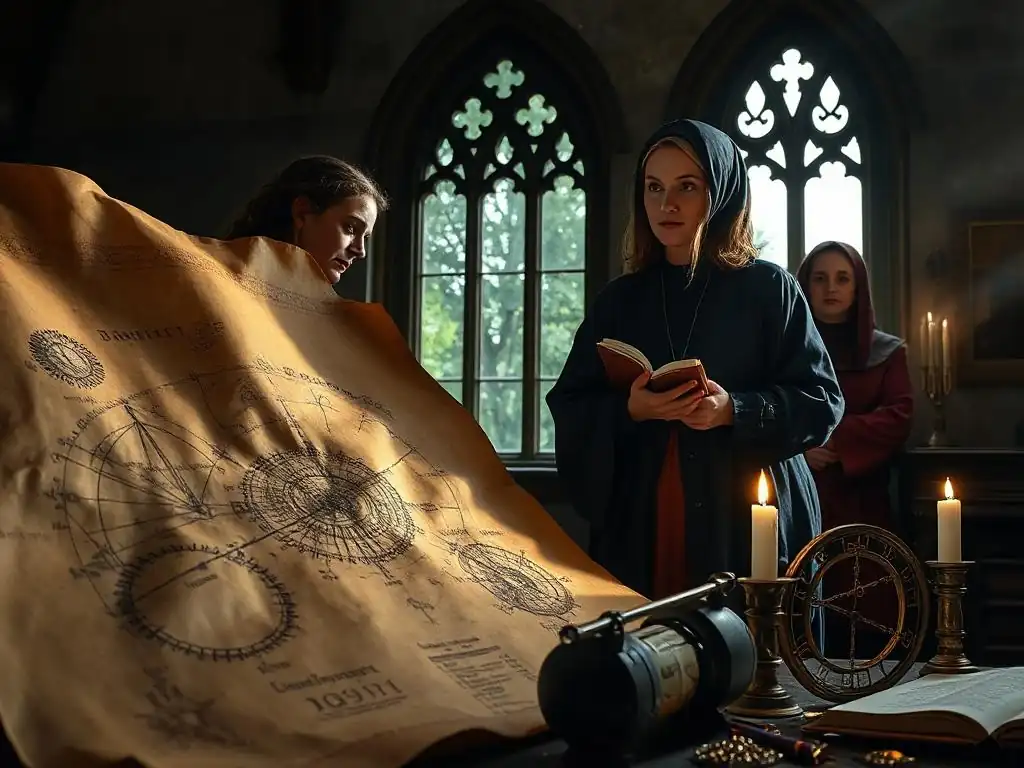
Welcome to WomenInScienceHistory.com, where we unearth the captivating stories of remarkable women who shaped the world of science. Did you know that women were making significant contributions to physics long before the 18th century? Prepare to be amazed as we delve into the lives and legacies of early female physics pioneers, challenging conventional narratives and revealing their often-overlooked impact. Discover their groundbreaking work and the obstacles they overcame in a field largely dominated by men – a story that will leave you wanting to know more!
- Introduction: Unveiling the Untold Stories of Early Female Physics Pioneers
- Hypatia of Alexandria: A Beacon of Knowledge in Ancient Astronomy and Mathematics
- Hildegard of Bingen: Medieval Visionary and Her Scientific and Medical Insights
- Trotula of Salerno: Pioneer in Medical Practice and Women's Health
- Herrad of Landsberg: Hortus Deliciarum and the Visualization of Scientific Concepts
- Maria Gaetana Agnesi: Mathematician and Philosopher
- Émilie du Châtelet: Translator and Commentator on Newton
- The Societal Barriers Faced by Early Female Contributors to Science
- Rediscovering and Reassessing the Role of Women in Early Science
- Conclusion: Celebrating the Enduring Legacy of Early Women in Science
-
Frequently Asked Questions
- What were some of the biggest obstacles faced by early female physics pioneers?
- Can you name a specific example of an early female figure who contributed to physics before the 18th century?
- Why is it important to highlight the contributions of "Early female physics pioneers"?
- What kind of scientific contributions did these early women likely make, considering the limitations they faced?
- How does "WomenInScienceHistory.com" plan to uncover more information about these elusive early female physics pioneers?
- Final Reflection: Illuminating Forgotten Paths
- Unveil Your Inner Pioneer: Join the Legacy of Women in Physics!
Introduction: Unveiling the Untold Stories of Early Female Physics Pioneers
Redefining Physics History: Recognizing Women's Contributions
For centuries, the narrative of physics history has predominantly centered on male figures, leaving the significant contributions of women largely unacknowledged. This article aims to challenge that traditional view by bringing to light the remarkable early female physics pioneers who, despite immense societal barriers, made groundbreaking strides in fields foundational to modern physics. Their work, often spanning mathematics, astronomy, and natural philosophy, laid essential groundwork for scientific understanding long before the discipline of physics was formally established.
By exploring the lives and achievements of these pioneering women, we can gain a more complete and accurate understanding of scientific development. Their intellectual curiosity and dedication to understanding the natural world demonstrate that scientific inquiry is not exclusive to any gender or era. These early female physics pioneers often operated in environments that demanded extraordinary ingenuity and perseverance.
Challenging the Narrative: Why Early Female Physicists Were Overlooked
The oversight of early female physicists in historical accounts is not accidental but a consequence of systemic biases and limited access to formal scientific institutions. Women were largely excluded from universities, academies, and professional scientific societies, which served as the primary venues for research dissemination and recognition. Their scientific endeavors were often conducted in private spheres, such as family estates or convents, making their work less visible and harder to document.
Furthermore, prevailing societal norms often discouraged women from intellectual pursuits, viewing them as unfeminine or even detrimental to their health. This cultural climate contributed to the underreporting or misattribution of their achievements, with credit sometimes given to male relatives or patrons. The fragmented nature of historical records and the lack of dedicated research into these hidden histories have compounded the challenge of rediscovering the contributions of these vital early female physics pioneers.
Hypatia of Alexandria: A Beacon of Knowledge in Ancient Astronomy and Mathematics
Hypatia's Life and Intellectual Environment in Alexandria
Hypatia, born around 350-370 AD, was an extraordinary Neoplatonist philosopher, astronomer, and mathematician who lived and taught in Alexandria, Egypt. At a time when the city was a vibrant intellectual hub, she rose to prominence as a leading scholar, instructing a diverse group of students from across the Roman Empire. Her father, Theon, himself a renowned mathematician and astronomer, fostered her prodigious talents, providing her with an unparalleled education.
Hypatia lectured on subjects ranging from philosophy to mathematics and astronomy, attracting a devoted following. Her public lectures and scholarly pursuits were a testament to the relatively open intellectual environment of Alexandria, particularly before the escalating religious tensions of the 5th century. She served as a symbol of independent thought and intellectual rigor in a world increasingly dominated by dogmatic beliefs.
Contributions to Mathematics, Astronomy, and Philosophical Thought
Hypatia's most significant contributions involved her work in editing and commenting on complex mathematical and astronomical texts. She collaborated with her father on a new edition of Euclid's Elements, a foundational work in geometry, making it more accessible for students. She also likely contributed to the revision of Ptolemy's Almagest, a comprehensive treatise on astronomy that presented the geocentric model of the universe.
Beyond her editorial work, Hypatia is credited with inventing or improving several scientific instruments, including the astrolabe, used for astronomical measurements, and a hydroscope, for measuring the specific gravity of liquids. While much of her original written work has been lost, her commentaries and teachings were crucial for preserving and transmitting ancient scientific knowledge. Her philosophical insights, deeply intertwined with her mathematical and astronomical understanding, provided a holistic framework for comprehending the cosmos.
Legacy and Influence: Hypatia as a Symbol of Female Intellectualism
Hypatia's tragic death in 415 AD, at the hands of a Christian mob, marked a dark turning point in the intellectual history of Alexandria. However, her legacy far outlived her, establishing her as an enduring symbol of female intellectualism and resistance against ignorance. Her story has inspired countless thinkers and artists through the centuries, serving as a powerful reminder of the vulnerability of knowledge in times of intolerance.
Her life stands as a testament to the fact that women were capable of achieving profound intellectual heights and making substantial contributions to scientific discourse even in antiquity. Though her direct contributions to "physics" as a distinct field might be debated by modern definitions, her work in applied mathematics, astronomy, and instrument design firmly places her among the earliest female physics pioneers who sought to understand and measure the physical world.
Hildegard of Bingen: Medieval Visionary and Her Scientific and Medical Insights
Hildegard's Cosmological Views and Natural Philosophy
Hildegard of Bingen (1098–1179 AD) was a remarkable German Benedictine abbess, writer, composer, philosopher, and polymath, whose influence extended far beyond the confines of her monastery. In an era when women's intellectual pursuits were largely confined to religious orders, Hildegard emerged as a formidable voice, advising popes, emperors, and kings. Her vast body of work included theological treatises, musical compositions, and significant writings on natural philosophy and medicine.
Her cosmological views, articulated in works like Scivias, presented a complex, integrated vision of the universe, where spiritual and physical elements were inextricably linked. She described the cosmos as a series of concentric spheres, influenced by divine forces and elemental interactions. This intricate model, while rooted in medieval Christian thought, demonstrated a profound engagement with the mechanics and order of the physical world, placing her among the early female physics pioneers in the realm of natural philosophy.
Exploring Hildegard's Understanding of Natural Phenomena and Medicine
Hildegard's two major scientific works, Physica (Natural History) and Causae et Curae (Causes and Cures), showcased her keen observational skills and systematic approach to the natural world. In Physica, she meticulously cataloged hundreds of plants, animals, and stones, describing their properties and uses. For instance, she detailed the medicinal properties of herbs like lavender and fennel, based on their observed effects, an early form of empirical botanical study.
Causae et Curae delved into human physiology, disease, and remedies, linking human health to the balance of cosmic and elemental forces. She discussed various ailments, their symptoms, and provided practical treatments, often involving herbal remedies, diet, and lifestyle adjustments. Her understanding of the "humors" and their connection to health, while not modern science, represented a systematic attempt to explain the physical body's workings within its natural environment.
Hildegard's Holistic Approach to Science and Medicine
Hildegard's scientific and medical insights were characterized by a holistic approach, viewing the human body and the cosmos as interconnected systems. She believed that imbalances in the natural world could manifest as illness in individuals, and that remedies should aim to restore harmony. This perspective, though distinct from modern reductionist science, encouraged a comprehensive observation of natural phenomena and their effects.
Her work stands out for its systematic categorization and description, a foundational step in any scientific endeavor. As an early female physics pioneer, Hildegard's contributions lay in her comprehensive natural philosophy, her empirical observations of natural properties, and her efforts to understand the underlying principles governing the physical world and its interaction with human health. Her legacy underscores the diverse ways women contributed to scientific thought in the medieval period.
Trotula of Salerno: Pioneer in Medical Practice and Women's Health
The School of Salerno: A Unique Environment for Female Scholars
The Schola Medica Salernitana, or School of Salerno, flourished in southern Italy from the 10th to the 13th centuries and was widely regarded as the foremost medical center in medieval Europe. Uniquely for its time, the School of Salerno was known for its progressive stance towards women, allowing them to both study and teach medicine. This rare intellectual environment provided an extraordinary opportunity for early female physics pioneers to engage directly with the practical applications of natural philosophy—medicine.
Within this open scholarly community, women like Trotula emerged as influential figures. While some modern scholars debate whether "Trotula" refers to a single individual or a collective of women writers, the name represents the very real presence and impact of female medical practitioners and scholars at Salerno. This school fostered a more empirical and less dogmatic approach to medicine, encouraging direct observation and practical experience.
Trotula's Contributions to Gynecology and Obstetrics
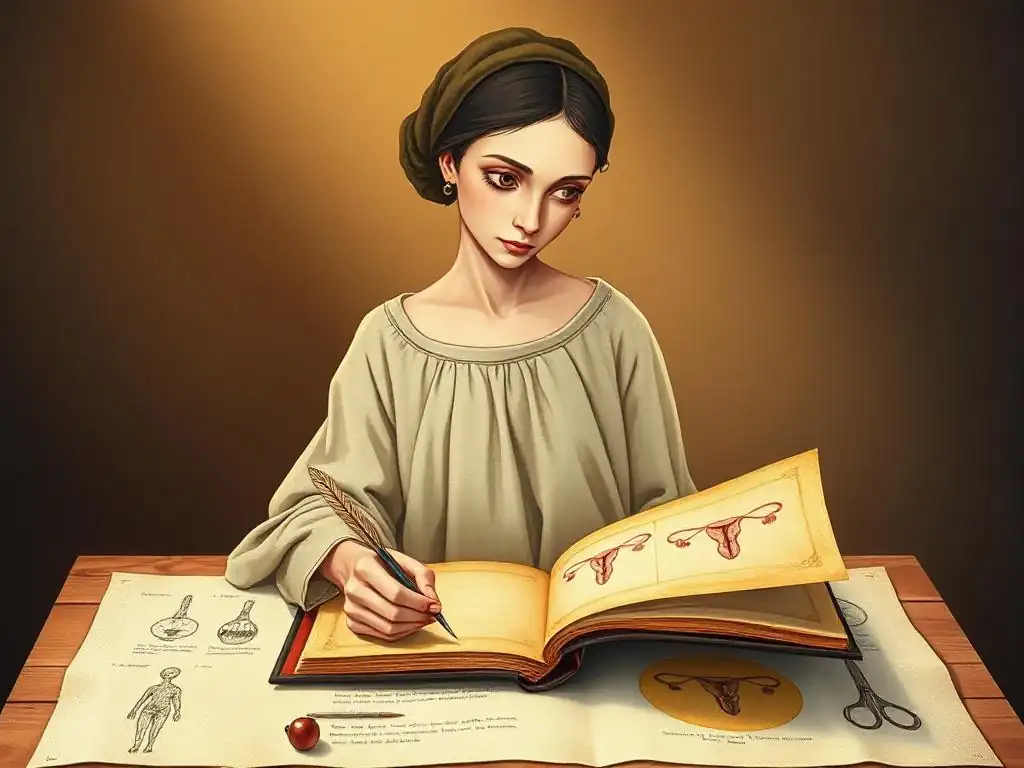
The name Trotula is primarily associated with a collection of three influential medical texts, collectively known as the Trotula. The most famous of these, De curis mulierum ("On Treatments for Women"), was revolutionary for its time. It provided detailed insights into women's health, covering topics ranging from menstruation, contraception, and childbirth to fertility issues and gynecological diseases. This focus on women's specific medical needs was groundbreaking, as women's bodies were often poorly understood or neglected in male-dominated medical texts.
The Trotula texts offered practical advice and remedies, discussing symptoms, diagnoses, and treatments for various conditions. For instance, it described methods for managing prolonged labor, treating perineal tears during childbirth, and cosmetic remedies. This practical, observational approach to the physical body and its processes was a significant contribution to both medical practice and the broader understanding of human biology, a core component of natural philosophy.
Legacy of Trotula: The Impact on Medical Practice and Scientific Thought
The Trotula texts gained immense popularity and were widely translated from Latin into vernacular languages, circulating throughout Europe for centuries. They became standard reference works for both male and female practitioners, deeply influencing medical education and practice, particularly in women's health. The detailed and systematic approach to women's anatomy and physiology found in these texts helped to demystify female health issues and provided a more scientific foundation for their treatment.
The work attributed to Trotula demonstrates a clear commitment to empirical observation and a systematic understanding of the human body, which is intrinsically linked to the physical sciences. As an early female physics pioneer in the realm of biological and physiological understanding, Trotula's legacy highlights how women contributed to the scientific advancements that underpin modern medicine, emphasizing the interconnectedness of various scientific disciplines in the medieval period.
Herrad of Landsberg: Hortus Deliciarum and the Visualization of Scientific Concepts
Herrad's Encyclopedia: A Comprehensive Overview of Knowledge
Herrad of Landsberg (c. 1130–1195 AD) was an Alsatian abbess of the Hohenbourg Abbey and the principal author of the Hortus Deliciarum (Garden of Delights), a remarkable illuminated encyclopedia compiled for the education of the nuns under her charge. This monumental work, completed around 1185, was an ambitious compendium of knowledge, encompassing theology, philosophy, literature, and a significant amount of natural philosophy and what we would now consider scientific concepts.
The Hortus Deliciarum was unique for its extensive and exquisite illustrations, which complemented the Latin text. These visuals were not merely decorative but served as crucial pedagogical tools, making complex ideas more accessible and memorable for the monastic community. The creation of such a comprehensive and visually rich educational resource by a woman in the 12th century is a testament to her intellectual prowess and her commitment to fostering learning.
Illustrating Scientific Ideas: Astronomy and Natural Philosophy in the Hortus Deliciarum
Within the pages of the Hortus Deliciarum, Herrad included numerous sections dedicated to scientific topics, particularly astronomy and natural philosophy. The manuscript featured detailed diagrams of the cosmos, depicting the geocentric model of the universe with its celestial spheres, planetary movements, and constellations. These illustrations served to visually explain the then-current understanding of the physical arrangement of the heavens and the mechanics of celestial bodies.
Beyond astronomy, the encyclopedia also delved into natural history, providing illustrations and descriptions of various plants, animals, and geological formations. These sections reflected a systematic attempt to categorize and understand the physical world through observation and textual compilation. The visual presentation of scientific concepts, such as the elements or the structure of the universe, was a significant contribution to scientific communication and education during the medieval period.
Herrad's Influence on Medieval Learning and Scientific Understanding
The Hortus Deliciarum served as an invaluable educational tool, providing a structured curriculum for the Hohenbourg nuns, a rare example of organized scientific and philosophical education for women in the Middle Ages. Through this work, Herrad ensured that her community had access to the accumulated knowledge of the time, including insights into the physical sciences. Sadly, the original manuscript was destroyed in a fire in 1870, but copies of many of its illustrations and texts survive.
Herrad of Landsberg stands as an important early female physics pioneer not through original theoretical breakthroughs, but through her crucial role as a compiler, illustrator, and disseminator of scientific knowledge. Her dedication to organizing and visually representing natural philosophy and astronomical concepts demonstrates how women contributed significantly to the understanding and transmission of scientific ideas, shaping medieval learning and laying groundwork for future scientific inquiry.
Maria Gaetana Agnesi: Mathematician and Philosopher
Agnesi's Intellectual Development and Early Works
Maria Gaetana Agnesi (1718–1799) was an extraordinary Italian mathematician, philosopher, and theologian, recognized for her profound intellect from a young age. Born into a wealthy and intellectually stimulating Milanese family, she was a child prodigy, mastering multiple languages by age 11, including Latin, Greek, Hebrew, French, Spanish, and German. Her father, a mathematics professor, fostered her talents by inviting leading intellectuals to their home, where Agnesi would engage in complex philosophical and scientific debates.
By the age of 20, she published Propositiones Philosophicae (Philosophical Propositions), a collection of 191 philosophical theses that she had defended in these public debates. This work showcased her extensive knowledge in various scientific disciplines, including logic, botany, cosmology, and mechanics, demonstrating her early grasp of principles foundational to physics and natural philosophy. Her exceptional abilities quickly earned her widespread recognition across Europe.
Contributions to Calculus and Analysis
Agnesi's most celebrated work is Instituzioni analitiche ad uso della gioventù italiana (Analytical Institutions for the Use of Italian Youth), published in 1748. This comprehensive two-volume treatise was a groundbreaking textbook on differential and integral calculus, as well as infinite series and differential equations. It was one of the first and most complete works to synthesize the analytical methods of Isaac Newton and Gottfried Wilhelm Leibniz, making advanced mathematics more accessible.
The Analytical Institutions was lauded for its clarity, precision, and systematic approach. It introduced the curve now famously known as the "Witch of Agnesi," a cubic curve that she analyzed in detail. The book was widely translated into French and English and became a standard textbook in many European universities for decades. Her monumental effort in clarifying and disseminating the mathematical tools essential for studying mechanics and other physical phenomena firmly established her as a crucial early female physics pioneer through her mathematical contributions.
Agnesi's Later Life and Legacy
In recognition of her intellectual achievements, Pope Benedict XIV appointed Maria Gaetana Agnesi as professor of mathematics and natural philosophy at the University of Bologna in 1750, making her one of the first women to hold such a prestigious academic position. However, Agnesi, known for her piety and humility, largely withdrew from public academic life after her father's death, dedicating her later years to theological study and charitable work, particularly caring for the sick and poor.
Despite her retirement from active scientific pursuit, Agnesi's legacy as a pioneering female mathematician and natural philosopher endures. Her Analytical Institutions played a pivotal role in the dissemination of calculus, which is the indispensable language of physics. By making these complex mathematical concepts understandable, she directly facilitated the study and advancement of physical sciences for generations of scholars, ensuring her place among the most influential early female physics pioneers.
Émilie du Châtelet: Translator and Commentator on Newton
Châtelet's Life and Intellectual Environment in France
Gabrielle Émilie Le Tonnelier de Breteuil, Marquise du Châtelet (1706–1749), was an extraordinary French natural philosopher, mathematician, and physicist, whose intellectual prowess left an indelible mark on the Enlightenment. Born into an aristocratic family, Châtelet received an exceptional education, far beyond what was typical for women of her era. She mastered Latin, Greek, English, German, and Italian, alongside intensive studies in mathematics and physics.
Her intellectual curiosity led her to transform her château at Cirey into a vibrant intellectual hub and scientific laboratory, where she collaborated extensively with the philosopher Voltaire. This environment allowed her to pursue her scientific interests rigorously, conducting experiments and engaging in profound philosophical and scientific debates with leading thinkers of her time. Her dedication to learning and her formidable intellect made her a prominent figure in French intellectual circles.
Translation and Commentary on Newton's Principia Mathematica
Émilie du Châtelet's most monumental achievement was her French translation and commentary of Isaac Newton's Philosophiae Naturalis Principia Mathematica (Mathematical Principles of Natural Philosophy). This seminal work, published posthumously in 1756, was not merely a linguistic translation but a profound intellectual endeavor. Newton's Principia was notoriously dense and complex, written in Latin, and required a deep understanding of advanced mathematics and physics.
Châtelet's version included her extensive commentary, known as the Exposition abrégée du système du monde (Abridged Exposition of the System of the World), which clarified, expanded upon, and critically engaged with Newton's theories. Her commentary integrated her own insights, particularly on the concept of kinetic energy (which she referred to as vis viva or living force, proportional to mv²). This work remains the standard French translation of Newton's Principia and is a testament to her unparalleled grasp of physics.
Châtelet's Contributions to Physics and Philosophy
Beyond her definitive translation of Newton, Châtelet made original contributions to physics and philosophy. In her Institutions de Physique (Lessons in Physics), written for her son, she presented a comprehensive overview of Leibnizian metaphysics and Newtonian physics, attempting to reconcile these two dominant philosophical and scientific systems. She was a strong advocate for Leibniz's concept of vis viva (living force, proportional to mv²) over Descartes's concept of momentum (proportional to mv), a crucial debate in early physics.
Her work demonstrated a profound understanding of energy conservation and the principles of mechanics. Châtelet's ability to synthesize, critique, and advance the complex theories of her time solidified her reputation as a true natural philosopher and a pioneering physicist. Her contributions were fundamental to the dissemination and understanding of Newtonian physics in continental Europe, making her one of the most significant early female physics pioneers whose work directly advanced the field.
The Societal Barriers Faced by Early Female Contributors to Science
Limited Access to Education and Scientific Resources
One of the most formidable barriers faced by early female physics pioneers and other women in science was the systemic lack of access to formal education and scientific resources. Universities and other institutions of higher learning were almost exclusively male domains, effectively barring women from structured scientific training, lectures, and academic networks. This meant that women who pursued scientific interests often relied on private tutors, family libraries, or self-study, limiting the scope and depth of their potential learning.
Furthermore, access to laboratories, scientific instruments, and experimental materials was severely restricted. Scientific societies, which served as vital platforms for sharing research and fostering collaboration, were generally closed to women, preventing them from engaging with peers, presenting their findings, or gaining professional recognition. Their participation in scientific endeavors was often informal, occurring within the confines of their homes or through male relatives who could provide some degree of access.
Gender Bias and the Suppression of Female Intellectualism
Beyond educational limitations, pervasive gender bias and societal norms actively suppressed female intellectualism. Women were largely relegated to domestic roles, and engaging in demanding intellectual pursuits was often viewed as unfeminine, unhealthy, or even morally questionable. This cultural climate fostered skepticism or outright dismissal of women's scientific capabilities and contributions, regardless of their actual achievements.
The work of early female physics pioneers was frequently undervalued, overlooked, or even plagiarized. Their discoveries might be attributed to male family members, or their publications might appear anonymously or under male pseudonyms to gain acceptance. This systemic bias meant that even when women made significant breakthroughs, they struggled immensely to gain recognition, publish under their own names, or secure official academic or scientific positions, perpetuating their historical invisibility.
Overcoming Obstacles: Women's Strategies for Participating in Science
Despite these profound obstacles, many early female physics pioneers found ingenious ways to participate in scientific inquiry. Some, like Émilie du Châtelet, leveraged their aristocratic status and wealth to create their own intellectual salons and private laboratories, fostering environments where they could pursue their studies and collaborate with leading thinkers. Others, such as Maria Gaetana Agnesi, benefited from supportive fathers who provided private education and opportunities for intellectual engagement.
Collaboration with male relatives, often husbands or fathers, was another common strategy, allowing women to contribute to scientific projects, conduct observations, or assist in experiments, even if their direct contributions were not fully acknowledged. Monastic orders, like the one Herrad of Landsberg belonged to, sometimes offered unique intellectual havens where women could engage in scholarly pursuits. These diverse strategies highlight the resilience and determination of these women to overcome the pervasive barriers and contribute to the advancement of science.
Rediscovering and Reassessing the Role of Women in Early Science
The Importance of Historical Research and Archival Studies
Rediscovering the hidden histories of early female physics pioneers and other women in science is an ongoing and crucial endeavor that relies heavily on meticulous historical research and archival studies. Many of these women's contributions were either poorly documented at the time, deliberately ignored, or attributed to male counterparts. This necessitates painstaking work in examining personal letters, diaries, household accounts, obscure scientific publications, and institutional records that might contain fragmented clues about their activities.
Modern scholarship, increasingly aided by digital humanities tools, is making it easier to identify, cross-reference, and connect these scattered pieces of information. By delving into previously overlooked sources and re-examining existing ones with a critical eye, historians are continually unearthing new evidence of women's scientific involvement. This dedicated research is essential to reconstruct a more accurate and comprehensive picture of scientific development throughout history.
Re-evaluating Existing Historical Accounts and Challenging Assumptions
The process of rediscovering women in early science also involves a critical re-evaluation of traditional historical accounts, which have often been written from a male-centric perspective. These narratives frequently exclude women, perpetuating the misconception that science was solely a male domain. Historians are now challenging these assumptions by asking different questions about who participated in scientific activities, where they conducted their work, and how their contributions were recognized (or not recognized).
This re-evaluation also requires broadening the definition of "scientific contribution" beyond just original theoretical breakthroughs. It encompasses the vital roles of translators, popularizers, patrons, educators, and instrument makers, many of whom were women. By acknowledging these diverse forms of engagement, we can appreciate the full scope of women's involvement in shaping scientific understanding and recognize more early female physics pioneers who made indirect yet crucial contributions.
Promoting Awareness and Recognition of Early Female Scientific Pioneers
Once these hidden histories are unearthed, promoting awareness and recognition of early female scientific pioneers becomes paramount. Platforms like WomenInScienceHistory.com play a vital role in disseminating this rediscovered knowledge to a wider audience, moving beyond academic circles and into the public consciousness. This involves publishing accessible articles, creating educational resources, and engaging in public outreach initiatives.
The goal is to ensure that the stories of women like Hypatia, Hildegard, Trotula, Herrad, Agnesi, and Châtelet become an integral part of the mainstream understanding of science history. By highlighting their achievements, challenges, and resilience, we not only correct historical inaccuracies but also provide powerful role models for future generations. This continuous effort to shed light on these remarkable women is essential for fostering a more inclusive and inspiring perception of science.
Conclusion: Celebrating the Enduring Legacy of Early Women in Science
Inspiring Future Generations of Female Scientists
The stories of early female physics pioneers are far more than mere historical footnotes; they are potent sources of inspiration for young women and girls contemplating careers in STEM fields today. By showcasing that women have always been integral to scientific inquiry, even when facing formidable obstacles, these narratives dismantle persistent stereotypes and demonstrate the enduring capacity of women for intellectual rigor and innovation.
Knowing about the achievements of Hypatia, Maria Gaetana Agnesi, Émilie du Châtelet, and others can empower aspiring female scientists, providing them with a lineage of brilliant women who defied expectations. These historical figures serve as powerful role models, encouraging persistence, resilience, and the pursuit of scientific curiosity in the face of contemporary challenges in STEM. Their legacies prove that gender is no barrier to scientific excellence.
Despite the significant progress made in recent decades, the quest to uncover the hidden histories of women in science is far from complete. Countless stories of early female physics pioneers, natural philosophers, and medical practitioners likely remain buried in archives, waiting to be rediscovered. Many women's contributions were informal, collaborative, or simply not recorded in the official histories of their time, making their rediscovery a continuous and challenging endeavor.
This ongoing research is crucial for building a truly comprehensive and equitable understanding of scientific development. Each new discovery enriches our collective knowledge and helps to rectify historical injustices, ensuring that the full spectrum of human ingenuity is acknowledged. The work of dedicated historians and researchers is vital to ensure that no significant female scientific figure remains forgotten.
A Call to Action: Supporting Research and Education on Women in Science History
To fully celebrate and integrate the enduring legacy of early women in science, it is imperative to support continued research and education in women's science history. This includes funding for archival studies, academic positions focused on gender and science, and the development of educational materials that incorporate these often-overlooked narratives. Public platforms, museums, and educational institutions all have a role to play in promoting this vital knowledge.
By actively supporting initiatives that highlight the contributions of early female physics pioneers and other women in science, we contribute to a more accurate, inclusive, and inspiring vision of science. This commitment ensures that future generations grow up with a complete understanding of scientific heritage, fostering a more equitable and innovative scientific community for all.
Frequently Asked Questions
What were some of the biggest obstacles faced by early female physics pioneers?
Early female physicists often faced social and institutional barriers, including a lack of access to formal education and exclusion from scientific societies. They also battled gender stereotypes that questioned their intellectual capabilities in STEM fields.
Can you name a specific example of an early female figure who contributed to physics before the 18th century?
While documented examples are scarce, some women contributed through mathematics, astronomy, and alchemy, fields closely linked to early physics. We aim to uncover more about these lesser-known figures through ongoing research.
Why is it important to highlight the contributions of "Early female physics pioneers"?
Highlighting their contributions addresses a historical lack of representation and challenges the myth that women were not involved in early physics. This recognition can inspire future generations of female scientists and engineers.
What kind of scientific contributions did these early women likely make, considering the limitations they faced?
Their contributions likely included observational work, calculations, and experimental assistance in fields like astronomy and natural philosophy. They may have also contributed through private tutoring and mentorship, passing on knowledge informally.
How does "WomenInScienceHistory.com" plan to uncover more information about these elusive early female physics pioneers?
The website plans to conduct in-depth archival research, analyze historical texts, and collaborate with historians to unearth overlooked narratives. We also encourage readers to share any information they have about potential candidates.
Final Reflection: Illuminating Forgotten Paths
The stories unveiled in this exploration of early female physics pioneers resonate profoundly today, reminding us that scientific progress has always been a tapestry woven with diverse threads. By acknowledging the contributions of these women, often obscured by historical biases, we enrich our understanding of physics itself and challenge the persistent myth of a male-dominated field.
The impact of these women, though often uncredited, ripples through the centuries, influencing not only the scientific landscape but also the broader cultural narrative surrounding women in STEM. Their dedication and ingenuity serve as a powerful reminder that brilliance knows no gender. The important thing is to never stop questioning.
- Albert Einstein. This quote, while not directly from one of these women, perfectly encapsulates the spirit of inquiry that drove them forward, even in the face of societal obstacles.
Now, as we close this chapter, I invite you to reflect on the power of recognition and the importance of challenging preconceived notions. Let the stories of these early female physics pioneers inspire you to seek out and celebrate the unsung heroes in your own fields, and to actively create a more inclusive and equitable future where all voices can contribute to the advancement of knowledge.
Unveil Your Inner Pioneer: Join the Legacy of Women in Physics!
Thank you for exploring the remarkable stories of these unsung heroines. You've glimpsed the dedication and brilliance of women who dared to challenge the scientific landscape. Now, it's your turn to build upon their foundation.
Here are a few ways you can continue their journey:
- Embrace your curiosity and delve deeper: Choose one female physicist from this article and research her life and work further. Uncover more about her challenges and achievements!
- Share this article to spread awareness and empower others: post this article on your social media with the hashtag #WomenInPhysics and inspire others by tagging three friends!
- Explore the Women in Science History website: Discover the untold stories of other female scientists who shaped our world.
What's one small experiment or observation you can make this week to connect with the world of physics around you? Share your ideas in the comments below!