
Susan Helms: CoHolder of Longest Spacewalk, Pioneer on the ISS

Welcome to WomenInScienceHistory.com!
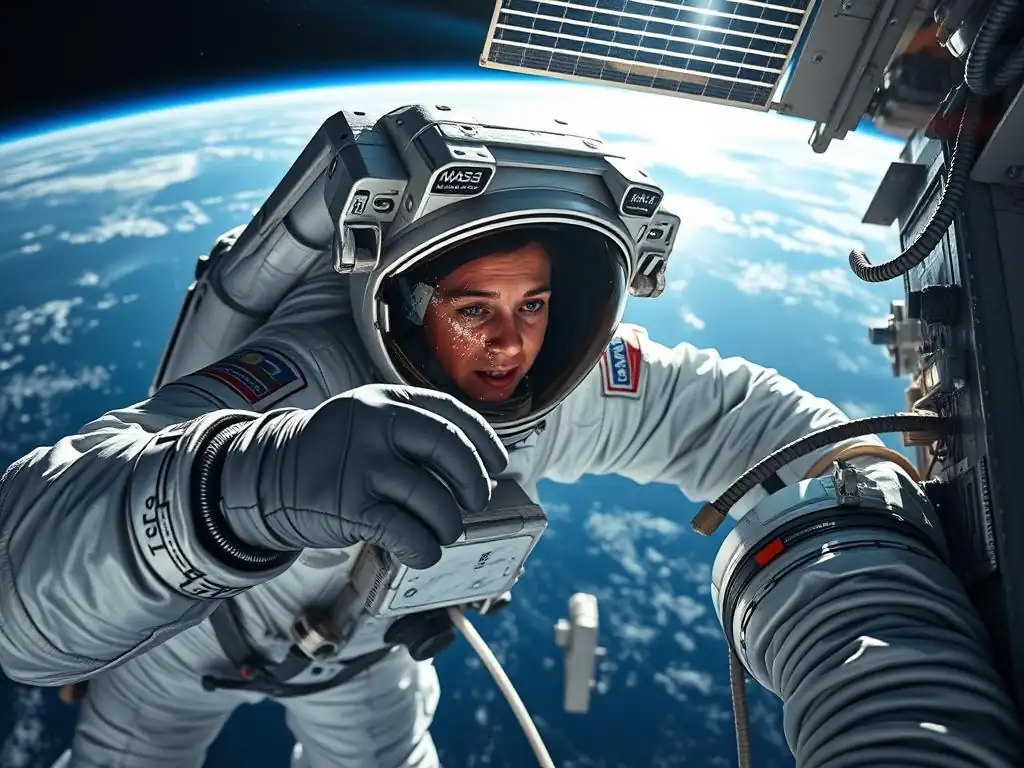
Prepare to be inspired by the extraordinary stories of women who defied expectations and shaped the scientific landscape. Today, we delve into the captivating journey of a true pioneer in space exploration. Ever wondered what it takes to endure the longest spacewalk in history?
Join us as we uncover the remarkable achievements of Susan Helms, a record-breaking astronaut and a pivotal figure in the development of the International Space Station. Her story is one of resilience, innovation, and unwavering dedication, and it's just the beginning of the fascinating narratives you'll find here. Read on to discover the incredible details of her groundbreaking work and the challenges she overcame!
- Introduction to Susan Helms: A Trailblazing Woman in Space Science
- Early Life and Education of Susan Helms: The Making of an Astronaut
- Susan Helms' Military Career: Foundation for Spaceflight
- Susan Helms' NASA Career: Journey to the International Space Station
- The Record-Breaking Spacewalk: Susan Helms and James Voss
- Susan Helms' Time on the International Space Station (ISS)
- Susan Helms' Post-NASA Career: Continuing to Inspire
- Susan Helms' Legacy: Inspiring Future Generations of Women in STEM
- Conclusion: Celebrating Susan Helms, A Space Exploration Pioneer
-
Frequently Asked Questions
- What is Susan Helms best known for?
- When did Susan Helms hold the record for the longest spacewalk?
- Besides the spacewalk record, what other significant contributions did Susan Helms make?
- What challenges did Susan Helms likely face as a woman in a male-dominated field like space exploration?
- Why is it important to highlight the accomplishments of women like Susan Helms in science history?
- Final Reflection: The Enduring Legacy of Exploration
- Embrace Your Inner Pioneer: Launch Your Next Adventure!
Introduction to Susan Helms: A Trailblazing Woman in Space Science
Highlighting Susan Helms' Contributions to Space Exploration
Susan Jane Helms stands as a monumental figure in the annals of space exploration, distinguished not only by her remarkable career as a NASA astronaut but also by her pivotal role in the early development of the International Space Station (ISS). Her journey into space began with her selection as an astronaut in 1990, leading to a prolific career that included five Space Shuttle missions and an extended stay aboard the nascent ISS. Helms' contributions are multifaceted, encompassing her expertise as a mission specialist, her role in critical spacewalks, and her dedication to the scientific objectives of human spaceflight.
Beyond the sheer number of missions, Helms' impact is most profoundly felt through her involvement in the construction and activation of the ISS. She was a key member of Expedition 2, one of the earliest long-duration crews to inhabit the orbital outpost, playing a crucial part in bringing the station to operational readiness. Her work during this period, including the installation of vital components and the execution of scientific experiments, laid foundational groundwork for future international cooperation in space and cemented the ISS's role as a permanent human presence beyond Earth.
Why Susan Helms' Story Matters for Women in Science History
Susan Helms' narrative is a compelling testament to perseverance, intellect, and courage, making her an essential figure in the broader story of women in science history. In a field historically dominated by men, Helms broke barriers and set precedents, demonstrating unequivocally that women are not only capable but indispensable in the rigorous and demanding world of aerospace. Her achievements serve as powerful counter-narratives to outdated stereotypes, showcasing female leadership and technical prowess at the highest echelons of scientific endeavor.
Her trailblazing path inspires countless young women and girls to consider careers in STEM (Science, Technology, Engineering, and Mathematics). By achieving feats like her record-setting spacewalk, Helms provides a tangible example of what is possible when talent meets opportunity, irrespective of gender. Her legacy underscores the importance of diversity in scientific pursuits, proving that a wider range of perspectives and experiences enriches discovery and accelerates progress for all of humanity.
Early Life and Education of Susan Helms: The Making of an Astronaut
Susan Helms' Academic Background and Preparation for Space
Born in Charlotte, North Carolina, on February 26, 1958, Susan Helms developed an early aptitude for technical subjects, a trait that would ultimately lead her to the frontiers of space. She embarked on a rigorous academic path, which began with her pursuit of a Bachelor of Science degree in Aeronautical Engineering from the United States Air Force Academy. Graduating in 1980, she distinguished herself academically, laying a solid theoretical foundation for her future endeavors in aviation and space.
Helms continued her advanced studies at Stanford University, where she earned a Master of Science degree in Aeronautics and Astronautics in 1985. This graduate-level education provided her with specialized knowledge in orbital mechanics, spacecraft design, and propulsion systems, crucial areas of expertise for an aspiring astronaut. Her academic journey reflects a systematic and dedicated preparation, equipping her with the intricate technical understanding required to navigate the complexities of spaceflight and contribute meaningfully to advanced aerospace projects.
Influences and Early Interests Shaping Her Career Path
Susan Helms' early life was significantly influenced by her father, who was a U.S. Air Force pilot. This exposure to aviation from a young age likely cultivated her interest in flight and engineering, providing a direct connection to the world of aerospace. Growing up in a military family meant frequent relocations, which may have fostered adaptability and resilience—qualities essential for a career that demands constant learning and adjustment to new environments.
Her innate curiosity and strong mathematical abilities were evident throughout her schooling. These foundational interests, combined with the inspiration drawn from early space missions and the burgeoning space program, solidified her aspirations to contribute to this exciting field. The rigorous training and discipline instilled by her Air Force Academy experience further honed her focus, preparing her not just academically, but also mentally and physically, for the extraordinary challenges of becoming an astronaut.
Susan Helms' Military Career: Foundation for Spaceflight
Susan Helms' Service in the United States Air Force
Susan Helms' distinguished military career in the United States Air Force provided the essential foundation for her eventual transition to NASA. After graduating from the Air Force Academy, she entered active duty, serving as a flight test engineer and a member of the faculty at the Air Force Test Pilot School at Edwards Air Force Base in California. Her work involved testing a variety of aircraft, including the F-15 and F-16, pushing the boundaries of aviation technology and performance.
This period of service was critical in developing her practical engineering skills, her understanding of complex mechanical systems, and her ability to perform under pressure in high-stakes environments. Her experience as a flight test engineer honed her analytical abilities and her capacity for meticulous planning and execution, all of which are indispensable traits for an astronaut. The Air Force's emphasis on precision, teamwork, and problem-solving provided an ideal training ground for the demands of spaceflight.
Key Skills and Experiences Gained in the Military
The skills Susan Helms acquired during her military service were directly transferable and highly beneficial to her astronaut career. As a flight test engineer, she gained hands-on experience with advanced avionics, propulsion systems, and flight dynamics. She was responsible for evaluating aircraft performance, identifying potential issues, and contributing to design improvements, which required a deep understanding of engineering principles and a keen eye for detail.
Furthermore, her role as an instructor at the Test Pilot School developed her communication and leadership abilities. She was tasked with teaching complex technical concepts to aspiring test pilots, refining her capacity to articulate intricate information clearly and effectively. This blend of practical engineering expertise, critical analytical skills, and leadership experience forged a remarkably well-rounded individual, perfectly poised to tackle the challenges of space exploration and become a pivotal figure in the early days of the International Space Station.
Susan Helms' NASA Career: Journey to the International Space Station
Selection and Training as a NASA Astronaut
Susan Helms' journey to becoming a NASA astronaut began in January 1990, when she was selected as part of the 13th group of astronauts. This highly competitive selection process recognized her exceptional academic background, her extensive experience as a flight test engineer, and her demonstrated leadership capabilities within the Air Force. Her class, which included a diverse array of military pilots, scientists, and engineers, underwent an intensive year-long training and evaluation period at the Johnson Space Center in Houston, Texas.
During her astronaut candidate training, Helms immersed herself in a rigorous curriculum that covered a vast array of subjects, including orbital mechanics, shuttle systems, emergency procedures, and spacewalk techniques. She also participated in survival training, water egress drills, and extensive simulations to prepare for every conceivable scenario in space. This comprehensive preparation ensured that she was not only technically proficient but also physically and psychologically ready for the unique demands of spaceflight.
Susan Helms' First Space Shuttle Mission: STS-54
Susan Helms' inaugural space mission was STS-54 aboard the Space Shuttle Endeavour, which launched on January 13, 1993. As a mission specialist, her primary role on this six-day flight was to assist in the deployment of the Tracking and Data Relay Satellite-6 (TDRS-6), a critical communications satellite vital for NASA's space operations. The successful deployment of TDRS-6 further enhanced the agency's ability to communicate with orbiting spacecraft, including future space stations.
Beyond the satellite deployment, STS-54 also conducted a spacewalk, though Helms did not participate in this particular EVA. However, being part of a mission that involved a spacewalk provided her with invaluable insight into the complexities and procedures involved in extravehicular activity, knowledge that would prove crucial for her own future record-setting spacewalk. This initial mission marked the beginning of her distinguished career in space, laying the groundwork for her subsequent, more extended voyages to the International Space Station.
The Record-Breaking Spacewalk: Susan Helms and James Voss
Details of the Longest Spacewalk: STS-102 Mission
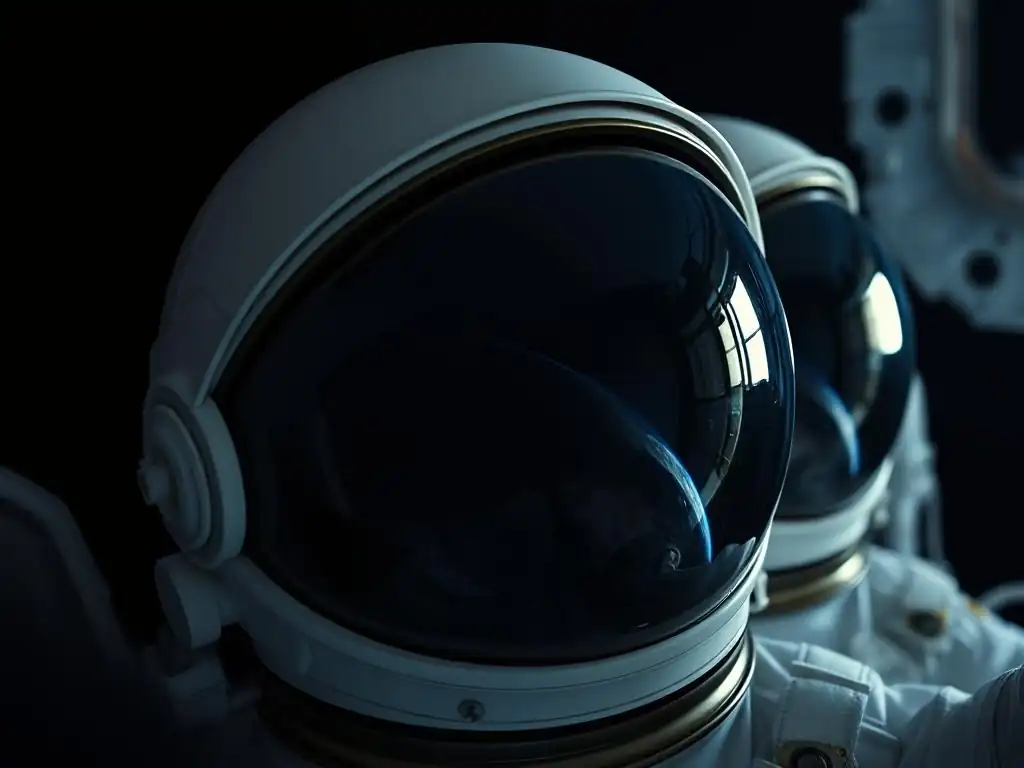
On March 11, 2001, during the STS-102 mission, Susan Helms and her Expedition 2 crewmate James S. Voss etched their names into space history by conducting the longest spacewalk ever performed. This extraordinary extravehicular activity (EVA) lasted an astonishing 8 hours and 56 minutes, surpassing all previous records and demonstrating the incredible endurance and technical precision required for complex orbital operations. The spacewalk was performed from the Space Shuttle Discovery's payload bay, with both astronauts working diligently in the vacuum of space.
The primary objective of this marathon spacewalk was to prepare the International Space Station for the arrival of the Leonardo Multi-Purpose Logistics Module. This involved installing a Pressurized Mating Adapter-3 (PMA-3) onto the Unity module, a critical step for future module connections. The duration of the spacewalk was extended due to a series of unforeseen challenges and the need to complete additional, unscheduled tasks, showcasing the adaptability and problem-solving skills of Helms and Voss. This Susan Helms longest spacewalk remains a benchmark for human endurance and operational efficiency in orbit.
The Purpose and Challenges of the Historic Spacewalk
The purpose of the record-breaking spacewalk performed by Susan Helms and James Voss was multifaceted, primarily focused on enhancing the International Space Station's capabilities. Their main task was to install PMA-3, which provides a docking port for future modules and visiting spacecraft. This involved intricate maneuvering and securing of a substantial piece of hardware in the zero-gravity environment, demanding precise coordination and strength.
Challenges during the EVA included managing the thermal conditions of their spacesuits, which can be difficult to regulate over such an extended period, and the physical exertion required for continuous work. The sheer duration of the spacewalk pushed the limits of human endurance, testing the astronauts' stamina, concentration, and ability to remain focused on complex tasks for nearly nine hours. The successful completion of their mission, despite these hurdles, was a testament to their rigorous training and exceptional teamwork, making this Susan Helms longest spacewalk a legendary feat.
Technical Aspects of the STS-102 Spacewalk
From a technical standpoint, the STS-102 spacewalk was a marvel of engineering and human performance. Susan Helms and James Voss utilized the sophisticated Extravehicular Mobility Units (EMUs), commonly known as spacesuits, which are self-contained life support systems designed to protect astronauts from the harsh vacuum and extreme temperatures of space. These suits provide oxygen, remove carbon dioxide, regulate temperature, and offer protection from micrometeoroids.
During their extensive EVA, the astronauts used a variety of specialized tools, including power wrenches and tethers, to manipulate and secure the PMA-3. They relied on their extensive training in orbital mechanics and robotics to precisely position themselves and the module. The crew inside the ISS and the mission control team on Earth provided crucial support, monitoring their vital signs, suit systems, and progress, ensuring safety and efficiency throughout the monumental 8-hour, 56-minute Susan Helms longest spacewalk.
Susan Helms' Time on the International Space Station (ISS)
Susan Helms' Role and Responsibilities Aboard the ISS
Beyond her historic spacewalk, Susan Helms played a crucial and extended role as a flight engineer during Expedition 2 aboard the International Space Station. Launching on March 8, 2001, aboard STS-102, Helms spent 163 days as part of the second resident crew of the ISS, living and working in orbit until her return on STS-105 in August 2001. Her responsibilities were extensive and vital to the early operational phase of the orbiting laboratory.
As a flight engineer, Helms was responsible for the maintenance and operation of the station's complex systems, including life support, power generation, and environmental control. She played a key role in the ongoing assembly of the ISS, participating in the activation of new modules and the integration of components. Her daily routine involved meticulous checks, troubleshooting, and preparing the station for the arrival of subsequent modules and visiting spacecraft, ensuring the continuous functionality and expansion of humanity's permanent outpost in space.
Scientific Experiments and Contributions during Her ISS Mission
During her long-duration stay on the International Space Station, Susan Helms actively participated in a wide array of scientific experiments, contributing significantly to various fields of research. The early expeditions to the ISS were critical for establishing the station as a viable platform for sustained scientific inquiry, and Helms was at the forefront of these efforts. Her work spanned biological, physical, and Earth sciences, leveraging the unique microgravity environment.
She conducted experiments focused on human physiology in space, studying the effects of long-duration spaceflight on the human body, including bone density loss and muscle atrophy. These investigations are crucial for planning future long-duration missions to destinations like Mars. Additionally, Helms contributed to material science research, observing how various substances behave without the influence of gravity, and participated in Earth observation studies, capturing imagery and data to monitor environmental changes from orbit. Her diligent execution of these experiments helped to expand humanity's understanding of both space and our home planet.
Susan Helms' Post-NASA Career: Continuing to Inspire
Susan Helms' Continued Involvement in Aerospace and STEM Education
After a distinguished career as an astronaut, Susan Helms transitioned from NASA in 2002, returning to active duty with the U.S. Air Force. She continued to serve with distinction, rising through the ranks and holding significant leadership positions.
Her post-NASA career included roles such as Commander of the 45th Space Wing at Patrick Air Force Base, where she was responsible for all space launch operations from the East Coast, including those for NASA, military, and commercial entities. She later achieved the rank of Lieutenant General, becoming the first female commander of the 14th Air Force and commander of the Joint Functional Component Command for Space, overseeing all U.S. military space operations.
Even after retiring from the Air Force as a Lieutenant General in 2014, Helms has remained a vocal advocate for aerospace and STEM education. She frequently participates in public speaking engagements, sharing her experiences in space and encouraging young people, particularly girls, to pursue careers in science and engineering. Her continued involvement underscores her commitment to inspiring the next generation of innovators and explorers, leveraging her unique perspective as a seasoned astronaut and military leader.
Awards and Recognition for Her Contributions to Space Exploration
Throughout her illustrious career, Susan Helms has received numerous awards and accolades, recognizing her exceptional contributions to space exploration, military service, and scientific advancement. Her decorations include the Defense Superior Service Medal, the Legion of Merit, the Distinguished Flying Cross, and the Meritorious Service Medal, among others, reflecting her dedicated service in the United States Air Force.
For her achievements in space, Helms was awarded the NASA Distinguished Service Medal, the NASA Outstanding Leadership Medal, and the NASA Space Flight Medal five times, one for each of her missions. Her induction into the U.S. Astronaut Hall of Fame in 2022 further cemented her legacy as a space pioneer. These recognitions highlight not only her individual accomplishments, such as co-holding the record for the Susan Helms longest spacewalk, but also her broader impact on the fields of aerospace and STEM, inspiring countless individuals to reach for the stars.
Susan Helms' Legacy: Inspiring Future Generations of Women in STEM
The Impact of Susan Helms' Achievements on Women in Aerospace
Susan Helms' achievements have had a profound and lasting impact on the landscape for women in aerospace. Her journey from an Air Force Academy graduate to a highly decorated astronaut and then a pioneering military general provides a powerful narrative of breaking through traditional barriers. By excelling in highly technical and often male-dominated environments, Helms demonstrated that gender is no impediment to reaching the highest levels of achievement in fields like engineering, spaceflight, and military leadership.
Her record-setting spacewalk, specifically the Susan Helms longest spacewalk at 8 hours and 56 minutes, became a tangible symbol of female capability and endurance in the most extreme conditions. This feat, alongside her extensive work on the International Space Station, showcased women not just as participants, but as essential contributors to complex, high-stakes missions. Her career has served as a beacon, encouraging aerospace organizations to recognize and foster female talent, leading to a more inclusive and diverse workforce in the industry.
How Susan Helms' Story Can Encourage Young Women to Pursue STEM Careers
The story of Susan Helms is a compelling source of inspiration for young women considering careers in STEM. Her path illustrates that a strong foundation in mathematics and science, coupled with perseverance and a willingness to embrace challenges, can lead to extraordinary accomplishments. By highlighting her academic rigor at Stanford, her hands-on experience as a flight test engineer, and her ultimate success as an astronaut, her narrative demystifies the journey into STEM fields.
Helms' example encourages young women to look beyond perceived limitations and to envision themselves in roles that might traditionally be seen as unconventional for their gender. Her career demonstrates the excitement and profound impact that can be achieved through science and technology, whether it's designing aircraft, conducting cutting-edge research in space, or leading critical national defense initiatives. By sharing her experiences, Susan Helms continues to empower the next generation to pursue their scientific curiosities and contribute their unique talents to the future of innovation and exploration.
Conclusion: Celebrating Susan Helms, A Space Exploration Pioneer
Frequently Asked Questions
What is Susan Helms best known for?
Susan Helms is best known for being a co-holder of the record for the longest spacewalk, which lasted nearly nine hours.
When did Susan Helms hold the record for the longest spacewalk?
Helms co-held the record for the longest spacewalk in 2001, during her mission to the International Space Station (ISS). The record has since been broken.
Besides the spacewalk record, what other significant contributions did Susan Helms make?
Beyond the spacewalk, Helms was a pioneer on the ISS, playing a key role in its early construction and operational phases, and a retired US Air Force Lieutenant General.
What challenges did Susan Helms likely face as a woman in a male-dominated field like space exploration?
Helms likely faced challenges related to gender bias and limited opportunities that were common for women in science and engineering during her time, as well as balancing family life with a demanding career.
Why is it important to highlight the accomplishments of women like Susan Helms in science history?
It's crucial to highlight women like Helms to inspire future generations, correct historical imbalances, and demonstrate the valuable contributions women make to STEM fields.
Final Reflection: The Enduring Legacy of Exploration
The story of Susan Helms and her record-breaking spacewalk is more than just a historical footnote; it's a powerful reminder of the unyielding human spirit of exploration that continues to drive us beyond the confines of our planet. In a world increasingly focused on immediate gratification, Helms' dedication and perseverance serve as a beacon, illuminating the path for future generations of scientists, engineers, and dreamers.
Helms' impact extends far beyond the record books. Her pioneering work on the International Space Station helped lay the foundation for sustained human presence in space, influencing the cultural landscape by normalizing the idea of space travel and inspiring countless young people to pursue careers in STEM fields. The sheer audacity of venturing into the unknown, coupled with the meticulous preparation and unwavering focus required, is a testament to the power of human potential. The sky is not the limit when there are footprints on the moon.
This quote, often attributed to Paul Brandt, perfectly encapsulates the spirit of exploration that Susan Helms embodies.
As we reflect on Susan Helms' remarkable achievements, let us not only celebrate her individual accomplishments but also consider the broader implications of her work. What new frontiers await us? What challenges must we overcome to reach them? And how can we, in our own lives, embody the same spirit of courage, dedication, and unwavering belief in the power of human potential that propelled Susan Helms to the stars? Let us all strive to reach for our own stars, pushing the boundaries of what is possible and leaving our own indelible mark on the world.
Embrace Your Inner Pioneer: Launch Your Next Adventure!
Thank you for joining us on this journey through Susan Helms' extraordinary life and contributions to space exploration. We hope her story has inspired you to dream big and pursue your own passions fearlessly. Now, it's time to take that inspiration and turn it into action!
Here are a few ways you can honor Susan Helms' legacy and fuel your own pioneering spirit:
- Dare to challenge the status quo: Identify an area in your life where you feel limited and commit to breaking through those barriers, just like Susan did.
- Delve deeper into the world of STEM: Explore online courses, documentaries, or books about women in science and technology to broaden your knowledge and appreciation.
- Share Susan's story with others: Spark inspiration in your own network by sharing this article or recommending our website, WomenInScienceHistory.com, to friends, family, and colleagues.
What small step will you take today to honor Susan Helms' legacy and begin your own adventure?