
Silenced No More: Reclaiming the Lost Stories of Female Aerospace Pioneers

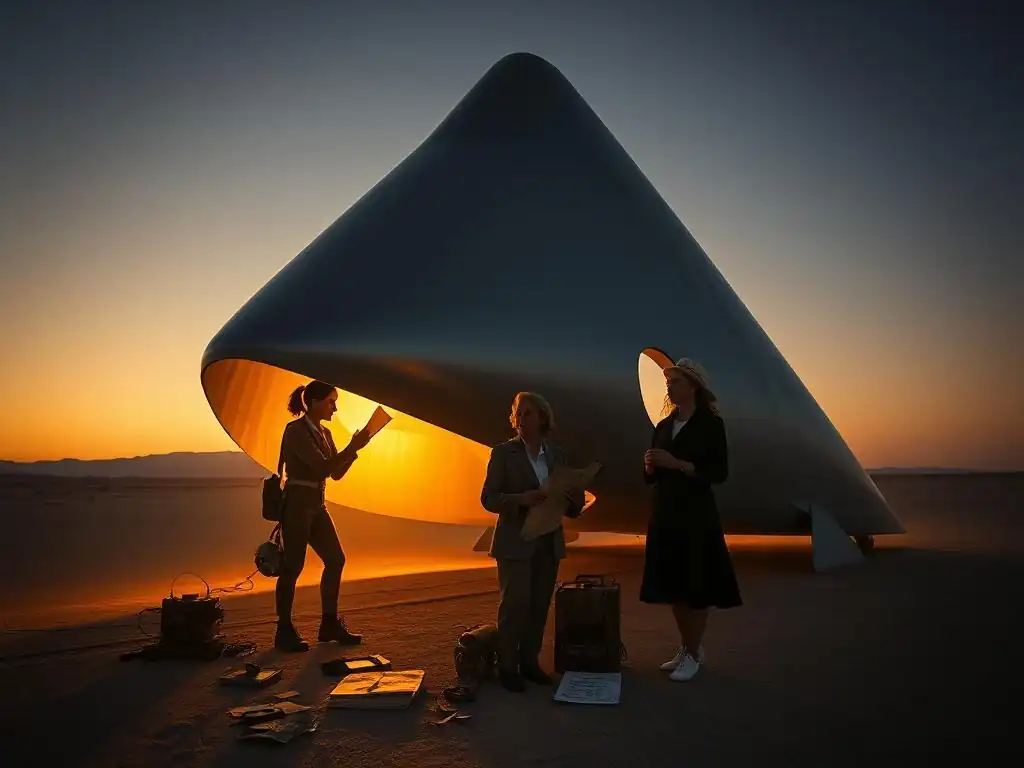
Welcome to WomenInScienceHistory.com!
Delve into the extraordinary, yet often untold, stories of women who dared to reach for the stars. We're thrilled to bring you compelling narratives of scientific brilliance and unwavering determination, beginning with a spotlight on Female Aerospace Pioneers biographies. Prepare to be inspired as we unveil the challenges and triumphs of these groundbreaking women, reclaiming their rightful place in the annals of space exploration. What secrets do these unsung heroes hold, and how did they overcome the obstacles in their path? Read on to discover the silenced no more voices that shaped our understanding of the cosmos.
- Introduction: Unveiling the Forgotten Contributions of Women in Aerospace Engineering
- Trailblazing Women in Aerospace: Biographies of Pioneers
- Overcoming Obstacles: The Struggles and Triumphs of Female Aerospace Engineers
- Landmark Achievements: The Groundbreaking Work of Women in Aerospace
- Inspiring Future Generations: The Legacy of Female Aerospace Pioneers
- Reclaiming the Narrative: Ensuring Female Aerospace Pioneers Receive Due Recognition
- Conclusion: Honoring the Enduring Legacy of Female Aerospace Pioneers
-
Frequently Asked Questions
- What types of biographies can I find on WomenInScienceHistory.com regarding aerospace?
- Why is it important to document the stories of female aerospace pioneers?
- What kinds of challenges did these female aerospace pioneers face?
- How does WomenInScienceHistory.com aim to inspire future generations?
- Where can I find more information about female aerospace pioneers biographies beyond this website?
- Final Reflection: Echoes in the Sky
- Ignite Your Inner Pioneer: Champion Unsung Heroes!
Introduction: Unveiling the Forgotten Contributions of Women in Aerospace Engineering
Why We Need to Remember Female Aerospace Pioneers
For too long, the narrative of scientific and engineering progress has been incomplete, often sidelining or entirely omitting the groundbreaking contributions of women. Remembering female aerospace pioneers is not merely an act of historical correction; it is essential for painting a full, accurate picture of the ingenuity and perseverance that propelled humanity into the skies and beyond. Their biographies reveal not just individual brilliance, but also the systemic barriers they overcame, offering invaluable lessons for contemporary society.
These forgotten stories are powerful catalysts for inspiration, particularly for younger generations. By shining a light on these remarkable female aerospace pioneers, we provide tangible role models who demonstrate that innovation knows no gender. Their resilience in the face of skepticism, exclusion, and societal expectations serves as a testament to their unwavering dedication, making their biographies crucial educational tools for anyone interested in space exploration and aviation history.
The Challenges Faced by Women in Early Aerospace Programs
Entering the fields of aviation and space engineering in the early to mid-20th century presented formidable obstacles for women. Systemic discrimination was rampant, often manifesting as a lack of access to specialized education, training opportunities, and professional networks that were readily available to their male counterparts. Many women were relegated to supportive, often uncredited, roles despite possessing the technical expertise to lead complex projects.
Beyond institutional barriers, women in early aerospace programs confronted pervasive societal norms that deemed engineering and scientific pursuits as inherently masculine. This often resulted in skepticism regarding their capabilities, professional isolation, and limited opportunities for career advancement. The uphill battle these female aerospace pioneers faced underscores the immense personal and professional courage required to carve out a place for themselves in such a challenging environment.
Trailblazing Women in Aerospace: Biographies of Pioneers
Early Pioneers: Bessie Coleman and Her Impact on Aviation
Bessie Coleman, an extraordinary figure among early female aerospace pioneers, defied immense racial and gender barriers to achieve her dream of flight. Born in 1892, she was denied admission to flight schools in the United States due to her race and gender. Undeterred, Coleman taught herself French and traveled to France, where she earned her international pilot's license in 1921, becoming the first African American woman and the first Native American to do so.
Upon her return, "Queen Bess" became a sensation, performing daring aerial maneuvers in barnstorming shows across the country. While not an aerospace engineer in the traditional sense, her pioneering spirit in aviation broke ground for countless others, demonstrating that the sky was not exclusively for men. Her courageous pursuit of flight and her determination to inspire others to overcome adversity make her biography a cornerstone of female aerospace pioneers.
Mary Sherman Morgan: A Pioneer in Rocket Science and Propulsion
Mary Sherman Morgan stands as a testament to the uncredited brilliance of many female aerospace pioneers. As a chemical engineer, she played a pivotal, yet largely unrecognized, role in the early American space program. In 1957, working for North American Aviation's Rocketdyne Division, Morgan developed Hydyne, the revolutionary liquid propellant that powered the Jupiter-C rocket. This rocket successfully launched America's first satellite, Explorer 1, into orbit in 1958.
Her work on Hydyne was crucial, solving a critical propulsion challenge that had plagued earlier rocket designs. Despite the highly classified nature of her projects and the pervasive gender bias of the Cold War era, Morgan's technical acumen and problem-solving skills were indispensable to the United States' entry into the space race. Her remarkable contribution underscores the vital importance of recognizing the full scope of female aerospace pioneers biographies.
Elsie MacGill: Canada's "Queen of the Hurricanes"
Elsie MacGill holds the distinction of being the world's first female aircraft designer, a remarkable feat that firmly places her among prominent female aerospace pioneers. After earning her master's degree in aeronautical engineering from the University of Michigan in 1929, she joined Canadian Car and Foundry (Can Car) in 1938. During World War II, MacGill was responsible for redesigning the Hawker Hurricane fighter aircraft for cold-weather operations, adapting it for Canadian combat conditions.
Her innovations, including improved ski-landing gear and de-icing systems, significantly enhanced the Hurricane's performance in harsh environments. MacGill oversaw the production of over 1,400 Hurricane aircraft at the Can Car plant, earning her the affectionate nickname "Queen of the Hurricanes" from her colleagues. Her leadership and technical brilliance in a high-stakes wartime industry exemplify the extraordinary impact of female aerospace pioneers on aviation history.
Overcoming Obstacles: The Struggles and Triumphs of Female Aerospace Engineers
Gender Bias in the Aerospace Industry: A Historical Perspective
Historically, the aerospace industry, like many STEM fields, was deeply entrenched in gender bias, presenting significant hurdles for female aerospace pioneers. From the nascent stages of aviation through the mid-20th century, women were often perceived as less capable or suited for technical roles, leading to systemic exclusion from advanced training, leadership positions, and even basic recognition for their work. This bias manifested in subtle and overt forms, from dismissive attitudes to outright discriminatory hiring practices.
This pervasive sexism meant that even when women were employed, their contributions were frequently undervalued or attributed to male colleagues. The "glass ceiling" was a very real barrier, limiting career progression and preventing many talented female aerospace engineers from reaching their full potential. Understanding this historical context is crucial to appreciating the extraordinary resilience and determination encapsulated in female aerospace pioneers biographies.
Fighting for Recognition: How Women Made Their Mark
Despite the formidable gender bias, female aerospace pioneers found ingenious ways to make their mark and demand recognition. Many excelled in their work to such an undeniable degree that their brilliance could not be ignored, often by taking on the most challenging calculations or solving seemingly intractable problems. Others pursued advanced education relentlessly, often as the sole woman in their classes, to acquire the credentials needed to enter the field.
Their strategies also included forming informal networks of support, sharing knowledge, and advocating for each other in male-dominated environments. Through sheer perseverance, exceptional performance, and a quiet determination, these women proved their indispensable value, forcing a gradual, albeit slow, shift in perception. Their steadfast commitment to their craft ultimately ensured that their contributions, though often belatedly, became part of the celebrated female aerospace pioneers biographies.
The Importance of Mentorship and Support Networks
For female aerospace pioneers navigating a predominantly male industry, mentorship and robust support networks were absolutely critical. Experienced women, often few in number, provided invaluable guidance, shared coping strategies for dealing with bias, and offered professional advice that male mentors might not have understood. Crucially, some supportive male colleagues also recognized their talent and advocated for their inclusion and advancement.
Formal and informal support networks, such as early professional societies or even small groups of women within a single organization, played a vital role in fostering a sense of community. These networks provided emotional support, opportunities for collaboration, and platforms for sharing experiences and best practices. The solidarity found within these groups was instrumental in empowering female aerospace pioneers to persist and thrive in challenging professional landscapes.
Landmark Achievements: The Groundbreaking Work of Women in Aerospace
The Mercury 13 Project: Unofficial Astronaut Training Program
The "Mercury 13" project stands as a poignant example of both the immense capability and the profound injustices faced by female aerospace pioneers. In the early 1960s, a privately funded program put 13 highly skilled female pilots through the same rigorous physical and psychological tests as the male Mercury astronauts. Women like Jerrie Cobb, one of the leading figures, not only passed these demanding evaluations but often outperformed their male counterparts in certain areas.
Despite their qualifications and demonstrable readiness for spaceflight, the program was abruptly canceled in 1962, not due to any deficiency in the women's abilities, but due to political and social pressures. This decision denied these remarkable female aerospace pioneers the opportunity to become America's first women in space, highlighting a significant lost chapter in the early history of human space exploration and underscoring the era's deep-seated gender bias.
Katherine Johnson's Calculations for NASA's Space Missions
Katherine Johnson's mathematical brilliance was absolutely indispensable to the success of America's early manned space missions, solidifying her place among the most celebrated female aerospace pioneers. As a human computer at NACA (later NASA's Langley Research Center), her precise calculations of orbital mechanics, trajectories, and launch windows were critical. She famously verified the electronic computer's calculations for John Glenn's historic 1962 orbital flight, a task Glenn specifically requested, stating, "If she says they're good, then I'm ready to go."
Johnson's work was foundational to numerous other missions, including Alan Shepard's 1961 suborbital flight and the Apollo 11 moon landing in 1969. Her ability to navigate complex equations and her unwavering accuracy ensured the safety and success of these pioneering space endeavors. Her biography is a powerful testament to how analytical genius, regardless of gender, directly propelled humanity's reach into the cosmos.
Margaret Hamilton's Leadership in Developing Apollo Flight Software
Margaret Hamilton, a pivotal figure among female aerospace pioneers, led the team that developed the onboard flight software for the Apollo program. Her groundbreaking work at MIT's Instrumentation Laboratory in the 1960s was instrumental in ensuring the success of the Apollo missions, particularly the Lunar Module's safe landing on the Moon in 1969. Hamilton coined the term "software engineering" to describe her team's systematic approach to creating reliable code.
Her team pioneered concepts like asynchronous computing and priority displays, which proved critical during the Apollo 11 landing when the computer became overloaded. The software's robust error detection and recovery capabilities prevented an abort, allowing Neil Armstrong to manually land the Lunar Module. Hamilton's visionary leadership and the unparalleled reliability of her software were paramount to one of humanity's greatest achievements, making her biography an essential part of female aerospace pioneers.
Inspiring Future Generations: The Legacy of Female Aerospace Pioneers
The Role of Role Models in STEM Education
The visibility of accomplished role models is paramount in encouraging young people, especially girls, to envision themselves in STEM fields. By highlighting the biographies of female aerospace pioneers, we provide tangible examples of women who excelled in challenging technical domains. These stories dismantle outdated stereotypes about who can be an engineer or a scientist, demonstrating that intellect, curiosity, and determination are universal qualities, not gender-specific.
These historical figures offer more than just inspiration; they provide a narrative framework for understanding the resilience and ingenuity required to innovate. When young women learn about Katherine Johnson's calculations or Margaret Hamilton's software, they see that their own potential is limitless. Such exposure is crucial for sparking interest and fostering confidence in pursuing careers in aerospace engineering and other STEM disciplines, making female aerospace pioneers biographies a vital educational resource.
Encouraging Young Women to Pursue Careers in Aerospace Engineering
Encouraging young women to pursue careers in aerospace engineering requires a multifaceted approach that builds upon the legacy of female aerospace pioneers. This involves promoting STEM education from an early age, ensuring that curricula are inclusive and highlight diverse contributions, and fostering learning environments that celebrate curiosity and problem-solving without gender bias. Showcasing the exciting and impactful work done by women in the field today is equally important.
Connecting classroom learning to real-world applications, such as designing next-generation aircraft or developing technologies for Mars missions, can ignite passion. Furthermore, organizing mentorship programs, workshops, and visits to aerospace facilities allows young women to interact directly with contemporary female aerospace engineers. By illuminating the vibrant and evolving opportunities, we can inspire a new generation to follow in the footsteps of past female aerospace pioneers.
Resources and Organizations Supporting Women in Aerospace
A growing number of resources and organizations are dedicated to supporting women in aerospace, building upon the groundwork laid by early female aerospace pioneers. Professional societies, such as the Society of Women Engineers, offer networking opportunities, career development resources, and advocacy for gender equity within the industry. Many organizations provide scholarships and grants specifically for women pursuing aerospace engineering degrees, helping to alleviate financial barriers.
These support networks are vital for fostering a sense of community and combating potential isolation in a still male-dominated field. They offer mentorship programs, leadership training, and platforms for celebrating the achievements of contemporary female aerospace engineers. By providing these crucial resources, these organizations ensure that the legacy of female aerospace pioneers continues to thrive, empowering women to excel and lead in the ever-evolving aerospace sector.
Reclaiming the Narrative: Ensuring Female Aerospace Pioneers Receive Due Recognition
The Importance of Documenting and Sharing Their Stories
The systematic documentation and widespread sharing of female aerospace pioneers biographies are paramount to correcting historical omissions and ensuring their rightful place in the annals of science. For too long, the contributions of women have been overlooked, minimized, or entirely absent from textbooks and public discourse. Actively researching and publishing their stories ensures that their intellectual property and groundbreaking work are properly credited and celebrated.
This critical effort not only honors the individuals but also enriches our collective understanding of scientific progress. By presenting a more complete and accurate historical narrative, we challenge existing biases and demonstrate that innovation is often the result of diverse perspectives and collaborative efforts, regardless of gender. Documenting these stories is a continuous process that strengthens the foundation for future generations of female aerospace pioneers.
Highlighting the Contributions of Women in Aerospace History
Highlighting the contributions of women in aerospace history requires deliberate and sustained efforts across various platforms. This includes integrating their stories into educational curricula from primary school through university, ensuring that the next generation grows up with a comprehensive understanding of scientific heritage. Public exhibitions, documentaries, digital archives, and online platforms dedicated to women in science are crucial for making these narratives accessible to a broad audience.
Moreover, naming facilities, awards, and scholarships after these remarkable female aerospace pioneers provides lasting recognition and serves as a constant reminder of their impact. By actively celebrating their achievements, we reinforce the message that women have always been, and continue to be, essential drivers of innovation in aviation and space exploration. This ongoing recognition helps to solidify their place in the collective memory of human achievement.
Celebrating the Achievements of Female Aerospace Engineers Today
Celebrating the achievements of contemporary female aerospace engineers is a crucial extension of honoring past female aerospace pioneers. Their ongoing contributions to cutting-edge research, design, and mission operations demonstrate the continued vital role of women in the field. Highlighting their successes through industry awards, media features, and professional recognition helps to inspire current and future generations, reinforcing the value of diversity in STEM.
This celebration also serves as a powerful message that the landscape of aerospace engineering is evolving towards greater inclusivity. By showcasing the leadership, ingenuity, and problem-solving skills of today's female engineers, we build upon the foundation laid by their predecessors. This continuous cycle of recognition not only validates their hard work but also creates a more welcoming and equitable environment for all women aspiring to careers in aerospace.
Conclusion: Honoring the Enduring Legacy of Female Aerospace Pioneers
The Future of Women in Aerospace Engineering
The future of women in aerospace engineering is poised for continued growth and innovation, building directly upon the enduring legacy of female aerospace pioneers. As the industry expands into new frontiers like commercial spaceflight, sustainable aviation, and advanced AI applications, women are increasingly taking on leadership roles and driving transformative research. Opportunities for women to shape the next era of aerospace are more diverse and accessible than ever before.
However, the journey towards full equity is ongoing. Continued advocacy, policy changes, and cultural shifts are necessary to dismantle remaining barriers and ensure that women have equal access to every opportunity. The trajectory for women in aerospace is upward, promising a future where their contributions are not just recognized, but are central to the industry's progress, fulfilling the aspirations of those trailblazing female aerospace pioneers.
Continuing the Fight for Equality and Inclusion
The stories of female aerospace pioneers are not merely historical footnotes; they are powerful narratives that underscore the ongoing fight for equality and inclusion in all scientific fields. While significant strides have been made since the days when women were largely excluded, challenges such as unconscious bias, gender pay gaps, and insufficient representation in senior leadership still persist. The lessons learned from these pioneering women provide a roadmap for continued progress.
Honoring the enduring legacy of female aerospace pioneers means actively working to create a truly equitable and inclusive environment where talent and merit are the sole determinants of success. It involves fostering a culture that celebrates diversity, provides robust support systems, and actively dismantles any remaining barriers. By doing so, we ensure that the next generation of aerospace engineers, regardless of gender, can reach for the stars without limitations, building upon the remarkable groundwork laid by those who came before.
Frequently Asked Questions
What types of biographies can I find on WomenInScienceHistory.com regarding aerospace?
The site features biographies of female aerospace pioneers, highlighting their contributions to fields like engineering, mathematics, and flight. These stories often reveal the obstacles they overcame.
Why is it important to document the stories of female aerospace pioneers?
It's crucial because their contributions were often overlooked or attributed to male colleagues. Documenting their achievements provides historical accuracy and inspiration.
What kinds of challenges did these female aerospace pioneers face?
They often faced gender discrimination, limited access to education and opportunities, and were underrepresented in leadership roles. This made their accomplishments even more remarkable.
How does WomenInScienceHistory.com aim to inspire future generations?
By showcasing the groundbreaking work and perseverance of these women, the platform hopes to encourage young girls and women to pursue careers in STEM fields, particularly aerospace.
Where can I find more information about female aerospace pioneers biographies beyond this website?
While WomenInScienceHistory.com is a great resource, you can also explore university archives, historical societies, and specialized aerospace museums for additional information.
Final Reflection: Echoes in the Sky
The stories of these female aerospace pioneers resonate far beyond the history books. Their struggles and triumphs, once relegated to the margins, now serve as a powerful reminder that innovation knows no gender. Their legacies are not just historical footnotes; they are blueprints for a more inclusive and equitable future in STEM fields and beyond, proving that the sky is truly the limit for everyone.
The impact of these forgotten narratives is profound, shaping our understanding of history and inspiring future generations. It's a humbling experience to uncover these stories, realizing the immense talent and resilience that was suppressed for so long. You have to see it to be it,
as Marian Wright Edelman so eloquently stated. By amplifying these voices, we not only honor their contributions but also pave the way for a future where every aspiring scientist and engineer, regardless of gender, can see themselves reflected in the pioneers who came before.
As we close this chapter, let us carry forward the spirit of these remarkable women. Let us actively seek out and celebrate the untold stories of those who have been silenced or overlooked. Let us challenge the biases that continue to limit potential and build a world where every voice is heard, and every dream can take flight. The legacy of these female aerospace pioneers is a call to action – a reminder that the future of innovation depends on our commitment to inclusivity and equity.
Ignite Your Inner Pioneer: Champion Unsung Heroes!
Thank you for delving into the inspiring stories of these remarkable women! Now, let's ensure their legacies endure and inspire future generations. Ready to take action and amplify their voices?
- Unearth and share: Discover and share one additional story of a female aerospace pioneer that wasn't mentioned, using the hashtag #WomenInScienceHistory.
- Engage with the Community: Join our community forum on WomenInScienceHistory.com to discuss their impact and suggest future topics.
- Inspire the Next Generation: Share this article with a young person who might be inspired by these pioneers.
What untold story will you help bring to light today?