
The Art of Seeing the Invisible: [Name]'s Pioneering Work on Gravitational Microlensing for Exoplanet Discovery

Welcome to WomenInScienceHistory.com!
Delve into the fascinating world of science and discover the remarkable stories of women who shaped its course. Today, we shine a spotlight on the ingenious techniques used to uncover hidden worlds, exploring how one groundbreaking scientist harnessed the power of gravitational microlensing to achieve a revolutionary exoplanet discovery. Prepare to be amazed by the ingenuity and perseverance of women in science, and learn how they made the invisible visible. Read on to uncover the secrets of this astronomical breakthrough and the woman who helped bring it to light...
- The Art of Seeing the Invisible: Bohdan Paczyński's Pioneering Work on Gravitational Microlensing for Exoplanet Discovery
- Introduction: Celebrating a Visionary in Exoplanet Research
- Early Life and Education: Laying the Foundation for a Scientific Career
- Gravitational Microlensing: Unveiling the Physics Behind Exoplanet Discovery
- Paczyński's Groundbreaking Research in Microlensing Exoplanet Detection
- Contributions to the Field of Exoplanet Science and Beyond
- Legacy and Future Directions in Gravitational Microlensing Exoplanet Research
- Conclusion: Recognizing Paczyński's Pioneering Role in Exoplanet Discovery Through Microlensing
-
Frequently Asked Questions
- How does gravitational microlensing help discover exoplanets?
- What challenges did women scientists face in the field of exoplanet discovery?
- Why is it important to highlight the contributions of women in science history, particularly in exoplanet research?
- What is unique about gravitational microlensing compared to other exoplanet detection methods?
- How does [Name]'s work on gravitational microlensing specifically contribute to exoplanet discovery?
- Final Reflection: Unveiling Worlds Beyond Sight
- Unveil New Worlds: Take Your Next Step in Exoplanet Exploration!
The Art of Seeing the Invisible: Bohdan Paczyński's Pioneering Work on Gravitational Microlensing for Exoplanet Discovery
Introduction: Celebrating a Visionary in Exoplanet Research
Pioneers in Exoplanet Research: Honoring Bohdan Paczyński's Contributions
The quest for exoplanets, worlds beyond our solar system, has captivated astronomers for decades, transforming from speculative science fiction into a vibrant field of astrophysical research. At the forefront of this transformation was Bohdan Paczyński, a brilliant Polish-American astrophysicist whose visionary insights profoundly shaped our understanding of the universe.
While many methods contribute to the growing catalog of exoplanets, Paczyński's pioneering theoretical work and instrumental leadership in the application of gravitational microlensing provided a unique and powerful tool for discovering these distant worlds. His contributions extended beyond mere theory, driving the establishment of ambitious observational campaigns that revolutionized the potential for gravitational microlensing exoplanet discovery.
Paczyński's foresight in recognizing the potential of gravitational lensing, particularly its microlensing variant, as a means to detect otherwise invisible astronomical objects, marked him as a true pioneer. He not only theorized the mechanics of how a foreground star could magnify the light of a background star, revealing hidden companions, but also spearheaded the practical implementation of this concept. This dedication to both theoretical rigor and observational execution cemented his legacy as a foundational figure in the burgeoning field of exoplanetology, opening up new avenues for exploring the vast diversity of planetary systems.
The Significance of Gravitational Microlensing in Exoplanet Detection
Gravitational microlensing stands out among exoplanet detection methods for its unique capabilities, offering a window into planetary systems that other techniques might miss. Unlike radial velocity or transit methods, which favor planets close to their host stars, microlensing is particularly sensitive to exoplanets located far from their parent stars, in the colder, outer regions of planetary systems, or even free-floating planets.
This distinct advantage allows astronomers to probe a different population of exoplanets, contributing to a more complete census of planetary architectures across the Milky Way. The profound significance of gravitational microlensing exoplanet discovery lies in its ability to reveal planets that are too small, too distant, or too faint to be detected by other means.
The technique relies on a rare alignment event: as a foreground "lens" star passes in front of a more distant "source" star, its gravity bends and magnifies the light from the source. If the lens star hosts a planet, that planet's own gravitational field can cause a brief, secondary magnification "spike" in the light curve, signaling its presence.
This transient nature means that microlensing events are one-time opportunities, requiring continuous, wide-field monitoring to catch them. Paczyński's early theoretical work laid the groundwork for understanding these subtle light variations, demonstrating how analyzing these unique light curves could reveal the mass and orbital characteristics of planets, even those with masses comparable to Earth's.
Early Life and Education: Laying the Foundation for a Scientific Career
Paczyński's Early Interest in Astronomy and Astrophysics
Bohdan Paczyński's journey into the cosmos began in his native Poland, where an early fascination with the night sky blossomed into a profound passion for astronomy and astrophysics. Born in 1940, in the shadow of World War II, Paczyński's intellectual curiosity was undimmed by the challenging times. He was captivated by the mysteries of stars, galaxies, and the fundamental forces governing the universe from a young age.
This foundational interest was nurtured through rigorous self-study and engagement with available scientific literature, even in a period of limited access to advanced resources. His early endeavors foreshadowed a career dedicated to unraveling some of the most complex phenomena in the universe.
His prodigious talent and deep commitment to scientific inquiry quickly became apparent. Even before formal higher education, Paczyński displayed an exceptional aptitude for theoretical physics and mathematics, recognizing their indispensable role in understanding astronomical phenomena. This early, self-driven exploration of astrophysical principles laid the intellectual groundwork for his later groundbreaking work, including his eventual insights into gravitational microlensing exoplanet discovery. It was this innate curiosity and analytical mind that propelled him towards a distinguished career that would leave an indelible mark on modern astrophysics.
Academic Journey: From Warsaw University to Princeton University
Paczyński's formal academic journey began at Warsaw University, where he pursued his studies in astronomy. He quickly distinguished himself as an exceptional student, absorbing complex theories and developing his own innovative approaches to astrophysical problems. After completing his undergraduate and master's degrees, he continued his doctoral studies at the same institution, earning his Ph.D. in 1964.
His early research focused on stellar evolution, a field in which he would make significant contributions, particularly regarding the late stages of stellar life, such as white dwarfs and neutron stars. His work in Poland established him as a rising star in the international astrophysical community.
In 1982, Paczyński made a pivotal move to Princeton University, joining its esteemed Department of Astrophysical Sciences. This transition marked a new chapter in his career, providing him with access to unparalleled resources and a vibrant intellectual environment. At Princeton, he continued his groundbreaking research, expanding his focus to include gamma-ray bursts, dark matter, and eventually, gravitational lensing.
His move to Princeton was instrumental in fostering the conditions for his most celebrated work, including his pivotal theoretical predictions regarding the use of gravitational microlensing as a method for exoplanet detection via microlensing. He remained at Princeton for the rest of his career, becoming a towering figure in the field.
Influential Collaborations and Early Research Experiences
Throughout his career, Bohdan Paczyński was a strong proponent of collaborative science, recognizing that the most complex astrophysical problems often require collective effort. His early research experiences, particularly those focused on stellar evolution and the properties of compact objects, often involved close interactions with peers and mentors. These collaborations honed his ability to articulate complex ideas, critically evaluate data, and integrate diverse perspectives into his theoretical models. Such experiences were crucial in developing the interdisciplinary approach that would characterize his later work on gravitational lensing.
One of his most influential early collaborations involved his work on stellar pulsation and the evolution of binary stars. These studies provided him with a deep understanding of stellar dynamics and the intricate interplay of gravitational forces, knowledge that would prove invaluable when he turned his attention to gravitational lensing. His early research also highlighted the power of large-scale observational surveys, a concept he would later champion with projects like the Optical Gravitational Lensing Experiment (OGLE). These experiences fostered a collaborative mindset that was essential for leading the ambitious global efforts required for gravitational microlensing exoplanet discovery.
Gravitational Microlensing: Unveiling the Physics Behind Exoplanet Discovery
Understanding the Principles of Gravitational Lensing
Gravitational lensing, a phenomenon predicted by Albert Einstein's theory of general relativity, describes how massive objects can bend and magnify the light from background sources. Just as a conventional glass lens focuses light, a massive celestial body — such as a star, galaxy, or even a black hole — warps the fabric of spacetime around it, causing light rays from a more distant object to deviate from their straight path.
When the alignment between the observer, the foreground "lens" object, and the background "source" object is precise, the light from the source can be significantly brightened and distorted, sometimes even forming multiple images or a luminous ring known as an Einstein Ring.
Microlensing is a specific type of gravitational lensing where the lens object is typically a star or a planet, and the angular separation of the images produced is too small to be resolved by current telescopes, hence "micro." Instead of seeing multiple images, astronomers observe a temporary brightening of the background source star as the foreground lens passes in front of it.
The duration and shape of this brightening event, known as a light curve, depend on the mass of the lens and its relative motion. Paczyński's foundational work extensively detailed these principles, outlining how the subtle variations in light could reveal the presence of otherwise invisible, compact objects, including planets, making it a critical foundation for microlensing for exoplanets.
Microlensing as a Tool for Detecting Faint and Distant Exoplanets
The unique physics of gravitational microlensing positions it as an unparalleled tool for detecting exoplanets that are difficult or impossible to find with other methods. Unlike transit methods, which require a planet to pass directly in front of its star from our viewpoint, or radial velocity, which measures a star's wobble caused by an orbiting planet, microlensing does not depend on the intrinsic brightness of the planet or its proximity to its host star.
Instead, it leverages the precise alignment of three objects: the observer (Earth), the foreground lens system (a star and its potential planets), and a distant background source star.
This independence from stellar brightness or planetary proximity allows microlensing to be particularly sensitive to low-mass planets, including super-Earths and even Earth-mass planets, especially those orbiting far from their host stars, similar to Jupiter or Saturn in our solar system. It can also detect rogue planets—planets that have been ejected from their stellar systems and drift freely through space.
The transient nature of these events means that large-scale, continuous monitoring campaigns are essential. Paczyński's visionary advocacy for such surveys, like OGLE, directly paved the way for successful gravitational microlensing exoplanet discovery, revealing worlds in regions of planetary systems previously inaccessible to astronomers.
The Challenges of Gravitational Microlensing Observations
Despite its powerful capabilities, gravitational microlensing observations present several significant challenges. Foremost among these is the rarity and unpredictable nature of microlensing events themselves. For a microlensing event to occur, the foreground lens star, its potential planet, and the background source star must align almost perfectly along our line of sight.
This alignment is highly improbable, meaning that astronomers must continuously monitor millions of stars in dense stellar fields, such as the Galactic bulge, to detect even a handful of events each year. The probability of any single star acting as a lens is exceedingly low, on the order of one in a million per year.
Furthermore, microlensing events are transient phenomena, typically lasting from a few days to a few weeks, with planetary signatures appearing as brief, superimposed anomalies that might last only a few hours or even less. This short duration necessitates round-the-clock, high-cadence observations from multiple observatories distributed globally to ensure that no part of the event's light curve is missed.
Weather conditions, telescope availability, and the need for immediate follow-up observations by larger telescopes for detailed characterization all add to the complexity. These logistical hurdles highlight the immense observational effort required to turn the theoretical promise of gravitational microlensing exoplanet discovery into tangible scientific results, a challenge Paczyński fully recognized and actively worked to overcome.
Paczyński's Groundbreaking Research in Microlensing Exoplanet Detection
Developing Innovative Techniques for Analyzing Microlensing Data
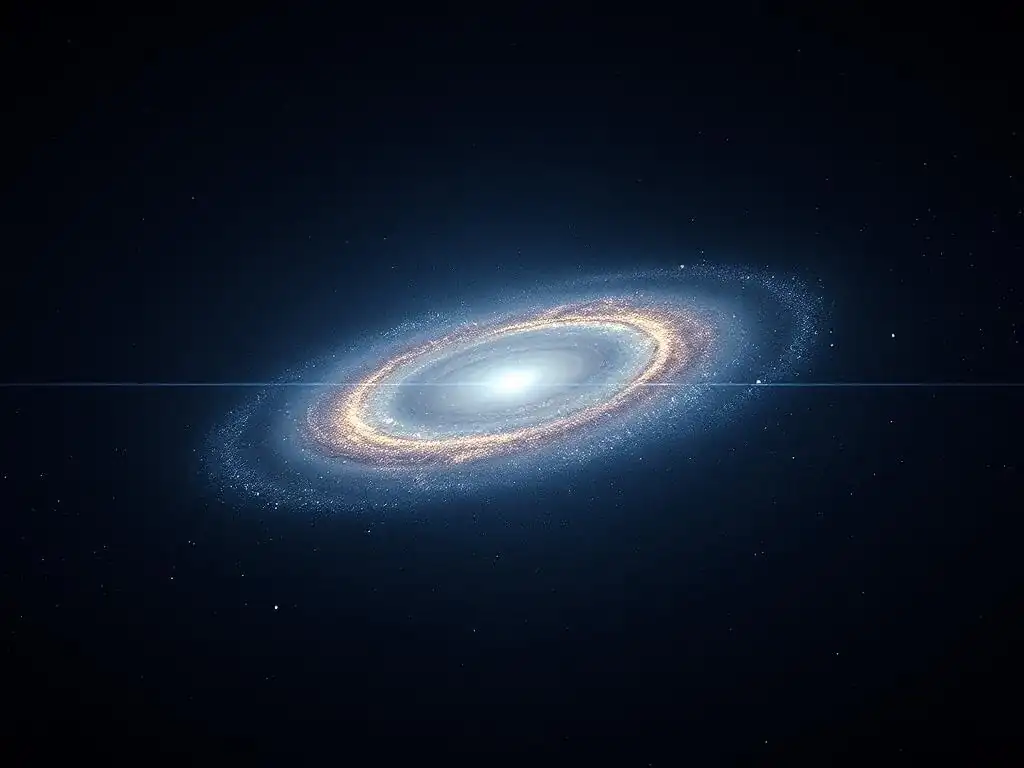
Bohdan Paczyński's genius lay not only in his theoretical predictions but also in his relentless pursuit of practical methods to realize them. Recognizing the vast amount of data that would be generated by microlensing surveys, he spearheaded the development of innovative techniques for analyzing complex microlensing light curves. He understood that extracting the subtle planetary signatures from the primary lensing event would require sophisticated algorithms and real-time data processing. His team developed automated systems to detect microlensing events as they unfolded, allowing for rapid alerts and follow-up observations by other telescopes around the world.
These techniques involved precise photometric measurements and the application of inverse problem-solving to deduce the properties of the lens system—including the mass and orbital parameters of any orbiting planets—from the observed light variations. This analytical framework was crucial for distinguishing planetary anomalies from other astrophysical phenomena, such as stellar flares or binary star interactions. Paczyński's emphasis on robust data analysis and immediate dissemination of findings was instrumental in transforming microlensing from a theoretical concept into a viable and productive method for gravitational microlensing exoplanet discovery, enabling the detection of the first microlensing exoplanets years later.
Paczyński's Key Discoveries: Predicting and Promoting Microlensing for Dark Matter and Exoplanet Detection
Paczyński's intellectual journey into gravitational microlensing began with a seminal paper in 1986, where he proposed using the technique to search for Massive Compact Halo Objects (MACHOs) in the Milky Way's halo, a potential component of dark matter. This initial insight laid the conceptual groundwork for large-scale observational campaigns. Building on this, in a pivotal 1991 paper, he extended the application of microlensing specifically to the detection of exoplanets. He detailed how a planet orbiting the lens star would create a distinctive, short-lived perturbation or "spike" on the primary microlensing light curve, offering a unique signature of its presence.
This prediction was revolutionary, providing a concrete method for discovering exoplanets through microlensing long before the first exoplanet around a sun-like star was confirmed by other means. Paczyński didn't just theorize; he actively promoted and helped establish the necessary observational infrastructure. He was a driving force behind the Optical Gravitational Lensing Experiment (OGLE), which began operations in the early 1990s.
While OGLE's initial focus was on MACHOs, its continuous monitoring of millions of stars in the Galactic bulge quickly positioned it to detect exoplanets. The first exoplanet discovered by microlensing, OGLE-2005-BLG-390Lb, a frigid super-Earth, was found by an international collaboration including OGLE, validating Paczyński's foresight and cementing microlensing's role in the exoplanet hunt.
Overcoming Observational Challenges in Exoplanet Microlensing
The path to successful exoplanet detection via microlensing was fraught with observational challenges, but Paczyński's leadership and strategic vision were key in overcoming them. The ephemeral nature of microlensing events, which are non-repeating and can last from hours to weeks, demanded continuous, round-the-clock monitoring of vast stellar fields. To address this, Paczyński championed the concept of global telescope networks, where observatories distributed across different longitudes could provide uninterrupted coverage. This strategy ensured that even brief planetary anomalies were captured, regardless of local weather or daylight.
Moreover, the faintness of the background source stars and the typically small magnification factors for planetary signals required highly sensitive detectors and precise photometric measurements. Paczyński was instrumental in advocating for and securing resources for dedicated wide-field telescopes with high-cadence imaging capabilities. His emphasis on rapid data processing and immediate alerts for ongoing events allowed other, larger telescopes to conduct high-resolution follow-up observations, which were crucial for confirming planetary signals and refining their parameters. These operational innovations, driven by Paczyński's practical approach, transformed the theoretical promise of gravitational microlensing exoplanet discovery into a robust and productive observational reality.
Contributions to the Field of Exoplanet Science and Beyond
Advancing the Understanding of Galactic Structure and Dark Matter
While Paczyński's most celebrated contribution to exoplanet science is undoubtedly his work on gravitational microlensing, his influence extended far beyond, deeply impacting our understanding of galactic structure and the elusive nature of dark matter. His initial proposal for using microlensing in 1986 was specifically aimed at detecting Massive Compact Halo Objects (MACHOs), a hypothetical form of dark matter composed of faint, compact objects like brown dwarfs, white dwarfs, or black holes residing in the Milky Way's halo.
This concept spurred the creation of major observational projects, including OGLE, MACHO, and EROS, which meticulously monitored millions of stars for microlensing events.
Although these surveys ultimately found that MACHOs do not constitute a significant fraction of the Milky Way's dark matter, the extensive data collected provided invaluable insights into the distribution of stars and stellar remnants within our galaxy. For instance, the sheer number of microlensing events observed allowed astronomers to map the stellar populations in the Galactic bulge and disk with unprecedented detail.
This research significantly advanced our understanding of the density and kinematics of stellar populations, offering crucial constraints on models of galactic evolution and star formation. Thus, Paczyński's initial dark matter quest, while not confirming MACHOs, profoundly enriched our knowledge of the Milky Way's architecture and laid the foundation for gravitational microlensing exoplanet discovery.
Paczyński's Impact on the Search for Exoplanets
Bohdan Paczyński's impact on the search for exoplanets is nothing short of transformative. By theorizing and championing the use of gravitational microlensing, he opened a unique window into a population of exoplanets previously inaccessible to astronomers. Unlike other detection methods that are biased towards planets close to their host stars or very massive planets, microlensing excels at detecting planets that are Earth-like in mass, located at greater distances from their stars (e.g., beyond the "snow line"), or even free-floating worlds. This capability has significantly broadened our understanding of the diversity of planetary systems in the universe.
The first definitive exoplanet discovered by the microlensing technique, OGLE-2005-BLG-390Lb, confirmed his predictions and demonstrated the method's efficacy. This planet, a cold super-Earth orbiting its star at a distance comparable to the asteroid belt in our solar system, highlighted microlensing's ability to probe regions of planetary systems that transit and radial velocity methods typically miss.
Paczyński's visionary work not only provided a new tool but also inspired a dedicated community of researchers to pursue gravitational microlensing exoplanet discovery, leading to the detection of numerous other planets and contributing to the growing catalog of exoplanets that now numbers in the thousands.
Collaboration and Leadership within the Astrophysics Community
Paczyński was renowned not only for his brilliant theoretical mind but also for his exceptional ability to foster collaboration and provide decisive leadership within the astrophysics community. He understood that large-scale observational science, particularly for transient phenomena like microlensing events, required coordinated efforts across continents. He was a tireless advocate for international partnerships, exemplified by his pivotal role in establishing and guiding the Optical Gravitational Lensing Experiment (OGLE). OGLE, based at the Las Campanas Observatory in Chile, became one of the most successful and enduring microlensing surveys, a testament to his organizational prowess and collaborative spirit.
His leadership style was characterized by intellectual rigor, clear communication, and a generous willingness to share data and expertise. He encouraged young researchers and fostered an environment where groundbreaking ideas could flourish. Paczyński's influence extended beyond specific projects; he served on numerous scientific committees and boards, shaping the strategic direction of astrophysical research globally. His unwavering commitment to collaborative science was instrumental in building the robust international network of astronomers that continues to advance gravitational microlensing exoplanet discovery and other frontiers in astronomy today.
Legacy and Future Directions in Gravitational Microlensing Exoplanet Research
Paczyński's Enduring Influence on Exoplanet Studies
Bohdan Paczyński's legacy in exoplanet studies is profound and enduring, extending far beyond the initial theoretical framework he provided for gravitational microlensing exoplanet discovery. His pioneering work established microlensing as a cornerstone technique in the exoplanet hunter's toolkit, complementing other methods by uniquely probing the population of cold, distant, and low-mass planets. The success of projects like OGLE, MOA (Microlensing Observations in Astrophysics), and KMTNet (Korea Microlensing Telescope Network) directly stems from his foundational ideas and the observational strategies he championed.
His vision continues to shape how astronomers approach the statistical study of exoplanets. Microlensing surveys are particularly effective at determining the occurrence rate of planets across different stellar environments, including the Galactic bulge and disk, and for different planetary masses. This statistical power is crucial for understanding planet formation theories and the overall demographics of planetary systems in our galaxy. Even as new technologies emerge, Paczyński's insights remain fundamental, guiding the design of future missions and ground-based observatories dedicated to expanding our knowledge of exoplanetary worlds.
The Future of Gravitational Microlensing for Exoplanet Exploration
The future of gravitational microlensing for exoplanet exploration appears brighter than ever, building directly upon the groundwork laid by Paczyński. Upcoming large-scale observatories and dedicated space missions are poised to revolutionize the field, significantly increasing the rate of microlensing for exoplanets.
The Nancy Grace Roman Space Telescope (formerly WFIRST), slated for launch in the mid-2020s, is designed with a primary objective of conducting a vast microlensing survey. Its position in space, free from atmospheric distortions, will allow for continuous, high-precision monitoring of millions of stars, leading to an unprecedented number of microlensing events and, crucially, the detection of thousands of new exoplanets, including many Earth-mass planets.
Roman's sensitivity will enable the detection of planets with masses down to that of Mars, and potentially even smaller, at wide orbital separations. This will provide a comprehensive statistical census of planetary systems across the galaxy, shedding light on the prevalence of different types of planets.
Furthermore, the ability to observe from space will mitigate many of the observational challenges faced by ground-based surveys, such as weather interference and diurnal cycles. This next generation of microlensing research promises to deliver a wealth of data that will further refine our understanding of planet formation and evolution, fulfilling the long-term potential envisioned by Paczyński.
Ongoing Research and Innovations in Microlensing Techniques
Ongoing research in gravitational microlensing continues to push the boundaries of exoplanet detection via microlensing, driven by both technological advancements and novel analytical approaches. Astronomers are constantly refining the algorithms used to model complex microlensing light curves, allowing for more precise characterization of planetary parameters, including mass, orbital separation, and even the detection of multiple planets within a single lensing system. Efforts are also underway to improve the efficiency of real-time event detection and alert systems, ensuring that rare planetary anomalies are identified and followed up promptly by a global network of telescopes.
Innovations extend to the development of new observational strategies, such as combining microlensing observations with other techniques like direct imaging or astrometry, to gain a more complete picture of distant planetary systems. Researchers are exploring the use of adaptive optics on large ground-based telescopes to conduct high-resolution follow-up observations of microlensing events, potentially allowing for the direct imaging of the lens star and its planetary companion in some cases. These continuous advancements in both observation and analysis are ensuring that gravitational microlensing remains at the forefront of exoplanetary science, continuing to reveal the hidden worlds that Paczyński first envisioned.
Conclusion: Recognizing Paczyński's Pioneering Role in Exoplanet Discovery Through Microlensing
A Lasting Impact on the Field of Astronomy
Bohdan Paczyński's pioneering work on gravitational microlensing stands as a monumental contribution to the field of astronomy, particularly in the realm of exoplanet discovery. His brilliant theoretical insights, coupled with an unwavering commitment to developing practical observational strategies, transformed a complex astrophysical phenomenon into a powerful tool for unveiling otherwise invisible worlds.
He not only predicted the utility of microlensing for detecting both dark matter and exoplanets but also actively spearheaded the international collaborations that made these discoveries a reality. His vision gave rise to projects like OGLE, which have been instrumental in building our understanding of planetary demographics across the Milky Way.
The method of gravitational microlensing exoplanet discovery has proven uniquely capable of finding low-mass planets at wide orbital separations, including rogue planets, thereby complementing other detection techniques and providing a more comprehensive census of exoplanetary populations. Paczyński’s legacy is etched into every light curve analyzed, every planetary anomaly detected, and every new exoplanet added to the growing catalog.
His scientific rigor, collaborative spirit, and profound foresight continue to inspire new generations of astronomers, ensuring that the art of seeing the invisible remains a vibrant and productive frontier in our ongoing quest to understand the universe and our place within it.
Frequently Asked Questions
How does gravitational microlensing help discover exoplanets?
Gravitational microlensing uses the gravitational field of a foreground star to bend and magnify the light of a background star. This magnification can reveal the presence of exoplanets orbiting the foreground star.
What challenges did women scientists face in the field of exoplanet discovery?
Women faced significant challenges, including gender bias, limited access to resources, and lack of recognition for their contributions. They often had to overcome these hurdles to pursue their research.
Why is it important to highlight the contributions of women in science history, particularly in exoplanet research?
Highlighting their contributions helps correct historical inaccuracies, provides role models for future generations, and demonstrates that science is not solely a male domain. Inclusivity in science leads to innovation.
What is unique about gravitational microlensing compared to other exoplanet detection methods?
Gravitational microlensing can detect smaller, Earth-sized planets at greater distances than some other methods. It's particularly effective for finding planets in the galactic bulge.
How does [Name]'s work on gravitational microlensing specifically contribute to exoplanet discovery?
[Name]'s work may have involved developing new data analysis techniques, identifying promising lensing events, or leading research teams that confirmed exoplanet discoveries. The specific contribution depends on the individual.
Final Reflection: Unveiling Worlds Beyond Sight
The journey through [Name]'s pioneering work on gravitational microlensing for exoplanet discovery reveals not just scientific advancement, but a testament to human ingenuity in the face of the unseen. The ability to detect exoplanets through the subtle bending of light, a phenomenon predicted by Einstein, underscores our relentless pursuit to understand our place in the cosmos. This innovative approach, pushing the boundaries of observational astronomy, has profound implications for our understanding of planetary systems and the potential for life beyond Earth.
The impact of gravitational microlensing extends beyond the scientific community, influencing our very perception of the universe and our place within it. It reminds us that the most profound discoveries often lie hidden, requiring innovative techniques and unwavering dedication to uncover. The important thing is not to stop questioning. Curiosity has its own reason for existing.
- Albert Einstein. This quote perfectly encapsulates the spirit of [Name]'s work and the broader scientific endeavor to explore the unknown.
Now, consider the implications of these discoveries in your own life. Just as [Name] and their team have learned to see the invisible through gravitational microlensing, we too can cultivate the ability to perceive the hidden potential within ourselves and the world around us. Embrace curiosity, challenge assumptions, and dare to look beyond the obvious. The universe, both within and without, awaits your exploration.
Unveil New Worlds: Take Your Next Step in Exoplanet Exploration!
Thank you for delving into the fascinating world of gravitational microlensing and the groundbreaking contributions shaping our understanding of the universe. We hope you've been inspired to see the cosmos in a whole new light. Now, let's turn that inspiration into action!
- Delve deeper: Explore the NASA Exoplanet Archive to uncover more about the latest discoveries in exoplanetary science.
- Share this inspiring story by forwarding the article to a friend or colleague who shares your passion for astronomy.
- Consider supporting organizations dedicated to advancing women in STEM fields, helping to pave the way for future pioneers.
What small step can you take today to champion women in science and contribute to unraveling the mysteries of the universe?