
Mentorship in Motion: How Leading 21st Century Women Physicists Inspire Future Generations


Welcome to WomenInScienceHistory.com!
Discover the untold stories of brilliance and resilience. Did you know that the power of mentorship is reshaping the landscape of physics? This month, we delve into the fascinating world of women physicists and explore how their dedicated mentorship inspire future generations of scientists. Uncover the strategies, challenges, and triumphs in our latest article, and join us in celebrating the women who are not only pushing the boundaries of scientific knowledge, but also paving the way for a more inclusive and innovative future. Read on to learn more!
- Introduction: The Power of Mentorship for Women in Physics
- Trailblazing Women Physicists of the 21st Century: Role Models and Mentors
- The Impact of Mentorship on Aspiring Women Physicists
- Effective Mentorship Strategies for Women in Physics
- The Future of Women in Physics: Cultivating a Mentorship-Rich Environment
- Showcasing Success Stories: Women Physicists Inspired by Mentors
- Resources for Aspiring Women Physicists Seeking Mentorship
- Conclusion: The Enduring Legacy of Women Physicists and the Importance of Mentorship
-
Frequently Asked Questions
- How does WomenInScienceHistory.com contribute to inspiring future generations of women physicists?
- What specific challenges did women physicists historically face in male-dominated arenas?
- How can mentorship from leading 21st-century women physicists impact aspiring scientists?
- What kind of groundbreaking work is WomenInScienceHistory.com focused on highlighting?
- Why is it important to shed light on the often-overlooked narratives of women in science?
- Final Reflection: Inspiring the Next Generation of Women Physicists
- Ignite Your Inner Physicist: Step into the Legacy!
Introduction: The Power of Mentorship for Women in Physics
Celebrating Women in Science History: A New Era of Physics
The 21st century has ushered in a remarkable era for women in science, particularly in the demanding field of physics. While historical narratives often overlooked their profound contributions, platforms like WomenInScienceHistory.com are dedicated to rectifying this oversight, celebrating the pioneering spirit and groundbreaking achievements of women throughout scientific history.
This renewed focus on historical figures paves the way for appreciating the contemporary impact of leading women physicists, whose work is not only advancing human understanding but also actively shaping the next generation of scientific minds. Their presence in high-profile research, academic leadership, and public discourse marks a significant shift from previous centuries, showcasing a vibrant and evolving landscape for women in STEM.
This new era is characterized by an increasing, albeit still insufficient, representation of women in physics departments globally. For instance, while women earned approximately 22% of physics Ph.D.s in the U.S. in 2021, a notable increase from just 5% in the 1970s, their journey to leadership and recognition is often still fraught with unique challenges.
The visibility of eminent women physicists and their active engagement in mentorship are crucial in demonstrating that a successful career in this rigorous field is not only possible but also deeply rewarding. These contemporary trailblazers serve as living proof that intellectual curiosity and scientific rigor transcend gender, powerfully inspiring future generations to pursue their passions in physics.
Why Mentorship Matters for Future Generations of Women Physicists
Mentorship stands as a cornerstone for fostering success and retention within any challenging professional domain, and its importance for aspiring women physicists cannot be overstated. Navigating a field historically dominated by men often involves confronting implicit biases, overcoming feelings of isolation, and developing resilience against systemic barriers.
A strong mentor provides not only technical guidance and career advice but also crucial psychological support, helping young women physicists build confidence and navigate the intricate academic and research landscapes. This personalized guidance can significantly impact a student's decision to persist in physics, transforming abstract challenges into manageable steps towards a fulfilling career.
Moreover, effective mentorship for women in physics goes beyond mere advice; it creates a vital lineage of knowledge and experience. Mentors can share insights into securing grants, publishing research, balancing work and life, and even negotiating positions—practical skills often learned through experience rather than formal education.
By connecting mentees with broader professional networks, mentors open doors to collaborations and opportunities that might otherwise remain inaccessible. This direct, often informal, transfer of wisdom is instrumental in equipping the next wave of women physicists with the tools they need to thrive, ensuring that the cycle of innovation and inspiration continues for future generations.
Trailblazing Women Physicists of the 21st Century: Role Models and Mentors
Dr. Lisa Randall - Exploring Theoretical Physics and Mentoring Young Scientists
Dr. Lisa Randall, a prominent theoretical physicist at Harvard University, has redefined our understanding of the universe with her groundbreaking work on extra dimensions and dark matter. Her "Randall-Sundrum model," proposed in 1999, revolutionized thinking about particle physics and cosmology, suggesting that our universe might be just one of many "branes" existing within a higher-dimensional space.
Her intellectual prowess and ability to tackle complex, abstract concepts have made her one of the most recognizable and influential figures in modern physics, inspiring countless students globally. Beyond her research, Dr. Randall has authored several popular science books, including "Warped Passages" and "Knocking on Heaven's Door," which demystify cutting-edge physics for a wider audience, further solidifying her role as an educational beacon.
While Dr. Randall is known for her intense research focus, her influence on young scientists, particularly women, often comes through her very presence and achievements within a highly competitive field. She frequently speaks at conferences and universities, sharing her insights and experiences, which serves as a powerful form of indirect mentorship. Her example demonstrates that women can not only participate but also lead in the most abstract and challenging areas of theoretical physics.
Furthermore, within academic settings, she has supervised numerous doctoral students and postdoctoral researchers, guiding their early careers and contributing to the pipeline of future theoretical physicists. Her sustained excellence at the forefront of the field provides a tangible goal for aspiring women physicists, showing them what is possible.
Dr. S. James Gates Jr. - Advocating for STEM Education and Mentorship for Minorities
Dr. S. James Gates Jr., a renowned theoretical physicist specializing in supersymmetry, supergravity, and string theory, has made significant contributions to our understanding of the fundamental forces and particles of the universe. While a male physicist, his profound commitment to diversifying STEM fields, particularly through his advocacy for and mentorship of underrepresented groups, including women and minorities, makes him an indispensable figure in the broader conversation about women physicists mentorship inspire future.
Dr. Gates has served on numerous national boards and committees dedicated to advancing science education and promoting inclusivity, including the U.S. President's Council of Advisors on Science and Technology. His work extends beyond the blackboard, actively shaping policy and creating opportunities for a more diverse scientific community.
Dr. Gates's philosophy centers on the belief that scientific progress is enhanced by diverse perspectives. He has been a vocal proponent of early STEM engagement for students from all backgrounds and has directly mentored a significant number of minority and women students throughout his career. His approachable demeanor and dedication to fostering talent have made him a sought-after mentor, known for providing both rigorous academic guidance and crucial encouragement.
For example, he has often emphasized the importance of storytelling in science education, making complex concepts accessible and engaging for broader audiences, which indirectly inspires students from diverse backgrounds to pursue physics. His efforts have demonstrably contributed to creating a more welcoming and equitable environment where aspiring women physicists can find the support they need to thrive and contribute to scientific discovery.
Dr. Dame Jocelyn Bell Burnell - Inspiring Astronomers Through Public Engagement and Support
Dr. Dame Jocelyn Bell Burnell is an astrophysicist whose groundbreaking discovery of pulsars in 1967, as a postgraduate student at Cambridge, fundamentally changed our understanding of stellar evolution. Despite being controversially overlooked for the Nobel Prize awarded to her male supervisors, her scientific legacy remains undeniable and has been recognized with numerous prestigious awards, including the Special Breakthrough Prize in Fundamental Physics in 2018.
She famously used the entire £2.3 million prize money to establish the Bell Burnell Graduate Scholarship Fund, administered by the Institute of Physics, specifically to support graduate students from underrepresented groups in physics—a monumental act of direct mentorship and support.
Beyond her financial contribution, Dr. Bell Burnell has become a powerful and articulate advocate for women in science, frequently sharing her personal story and insights at public lectures and academic forums worldwide. Her candid discussions about the challenges she faced, coupled with her unwavering passion for astronomy, resonate deeply with young scientists.
She exemplifies resilience and dedication, demonstrating how one can overcome adversity to make profound scientific contributions. Her active public engagement and her direct financial support for diverse students powerfully embody the spirit of women physicists mentorship inspire future, ensuring that her legacy extends far beyond her scientific discoveries to shape the very fabric of the physics community.
The Impact of Mentorship on Aspiring Women Physicists
Aspiring women physicists often encounter a unique set of challenges within the academic and professional landscape, ranging from subtle biases and stereotype threat to feelings of imposter syndrome and a lack of visible role models. Mentors play a critical role in helping mentees recognize, understand, and effectively navigate these systemic and personal obstacles.
For instance, a mentor might share strategies for confidently asserting oneself in male-dominated seminar discussions or provide reassurance when a mentee doubts her capabilities despite clear evidence of success. They can offer practical advice on how to respond to microaggressions or how to find allies within their institution, thereby reducing the isolating effects of being a minority in the field.
Furthermore, mentors can provide a much-needed perspective on the long-term career trajectory, offering insights into common pitfalls and alternative pathways. They can help mentees develop a robust network of support, emphasizing that setbacks are a normal part of the research process and that resilience is key.
By sharing their own experiences of overcoming challenges, mentors normalize difficulties and empower mentees to persevere. This guidance is invaluable in retaining talented women physicists in the field, as studies have shown that students with mentors are significantly more likely to complete their degrees and pursue careers in STEM, often by as much as 30-50% compared to their unmentored peers.
Building Confidence and Skills: The Role of Mentorship in Career Advancement
Mentorship is instrumental in fostering both the technical expertise and the crucial soft skills necessary for career advancement in physics. A mentor can guide a mentee through complex research methodologies, help refine experimental designs, or provide critical feedback on scientific writing and presentation skills. This hands-on, personalized instruction often fills gaps left by formal coursework, accelerating a mentee's development as an independent researcher. For example, a senior physicist might help a junior colleague prepare a compelling grant proposal, leading to crucial funding for their research and a significant boost to their academic profile.
Beyond technical acumen, mentors also cultivate confidence, a vital attribute for success in a competitive field. They encourage mentees to take on challenging projects, present their work at conferences, and apply for prestigious fellowships, even when the mentee might initially hesitate. By providing positive reinforcement and constructive criticism, mentors empower women physicists to believe in their own abilities and to project that confidence professionally. This mentorship not only enhances individual career trajectories but also strengthens the overall scientific community by ensuring that promising talent is nurtured and propelled forward, thereby inspiring future generations of scientists.
Creating a Supportive Community: Fostering Collaboration and Networking
One of the most profound impacts of mentorship is its ability to foster a sense of belonging and create a supportive community within physics. Physics can sometimes feel competitive and isolating, particularly for individuals from underrepresented groups. Mentors often serve as gateways to broader professional networks, introducing mentees to colleagues, collaborators, and other influential figures in the field.
This networking is crucial for securing postdoctoral positions, faculty roles, and research opportunities, as many positions are filled through personal connections and recommendations. For instance, a mentor might recommend a mentee for a prestigious summer research program or introduce them to a leading researcher whose work aligns with their interests, opening doors to future collaborations.
Furthermore, mentors often facilitate peer-to-peer mentorship relationships, connecting their mentees with other students or early-career professionals who are navigating similar paths. These informal networks provide a safe space for sharing experiences, exchanging advice, and offering mutual support. This sense of community not only reduces feelings of isolation but also creates a collaborative environment where ideas can flourish and challenges can be collectively addressed. By building these supportive ecosystems, women physicists mentorship inspire future generations to not only survive but thrive, fostering a culture where collaboration and mutual support are as valued as individual achievement.
Effective Mentorship Strategies for Women in Physics
Establishing Clear Goals and Expectations in Mentoring Relationships
Successful mentorship relationships, particularly for women in physics, hinge on the establishment of clear, mutually agreed-upon goals and expectations from the outset. This initial alignment ensures that both mentor and mentee understand the purpose and scope of their interactions, preventing misunderstandings and maximizing productivity. For example, a mentee might articulate a goal of securing a specific postdoctoral fellowship within two years, while the mentor commits to providing guidance on proposal writing, networking, and interview preparation. These explicit objectives provide a roadmap for their engagement, allowing for focused discussions and measurable progress.
Regular check-ins to review these goals and adjust expectations as circumstances evolve are equally crucial. This dynamic approach ensures the relationship remains relevant and beneficial throughout its duration. Mentors should encourage mentees to take ownership of their development, articulating their needs and actively seeking feedback. By fostering an environment of transparency and accountability, mentors empower women physicists to proactively shape their own career paths, making the mentorship relationship a powerful catalyst for professional growth and future success.
Providing Constructive Feedback and Guidance: Nurturing Growth
The essence of effective mentorship lies in the ability to provide constructive feedback and insightful guidance that nurtures a mentee's growth. This involves more than just pointing out flaws; it requires a balanced approach that highlights strengths, identifies areas for improvement, and offers actionable strategies for development.
For example, when reviewing a research paper, a mentor might praise the clarity of the introduction while suggesting specific ways to strengthen the methodology section, perhaps by recommending additional statistical analysis or a more rigorous experimental design. The feedback should be timely, specific, and delivered in a supportive manner, focusing on the work rather than the individual.
Moreover, effective guidance extends beyond technical skills to encompass career advice, professional etiquette, and navigating workplace dynamics. Mentors can share their own experiences with challenging situations, offering valuable lessons learned. They can help mentees develop crucial soft skills, such as effective communication, presentation skills, and conflict resolution, which are vital for leadership roles. By consistently offering thoughtful feedback and direction, mentors empower women physicists to refine their abilities, build resilience, and confidently pursue their ambitions, thereby inspiring future generations to emulate their growth and success.
Encouraging Innovation and Creativity: Empowering Future Leaders in Physics
A truly impactful mentor in physics does more than transmit knowledge; they actively encourage innovation and creativity, empowering their mentees to become independent thinkers and future leaders. This involves fostering an environment where curiosity is celebrated, unconventional ideas are explored, and intellectual risks are encouraged. For example, a mentor might challenge a mentee to think beyond existing paradigms, encouraging them to propose novel experiments or theoretical models, even if they seem ambitious. They provide the intellectual space and resources for mentees to pursue their own research interests, rather than simply replicating established work.
This encouragement of innovation is particularly vital for women physicists, who may sometimes feel pressured to conform to established norms in a male-dominated field. Mentors can validate their unique perspectives and help them develop the confidence to pursue groundbreaking research. By championing creativity and critical thinking, mentors not only enhance the mentee's individual scientific contributions but also contribute to the broader advancement of physics. This proactive approach to nurturing independent thought ensures that the next wave of women physicists is equipped not just to follow but to lead, innovate, and inspire future generations with their original contributions.
The Future of Women in Physics: Cultivating a Mentorship-Rich Environment
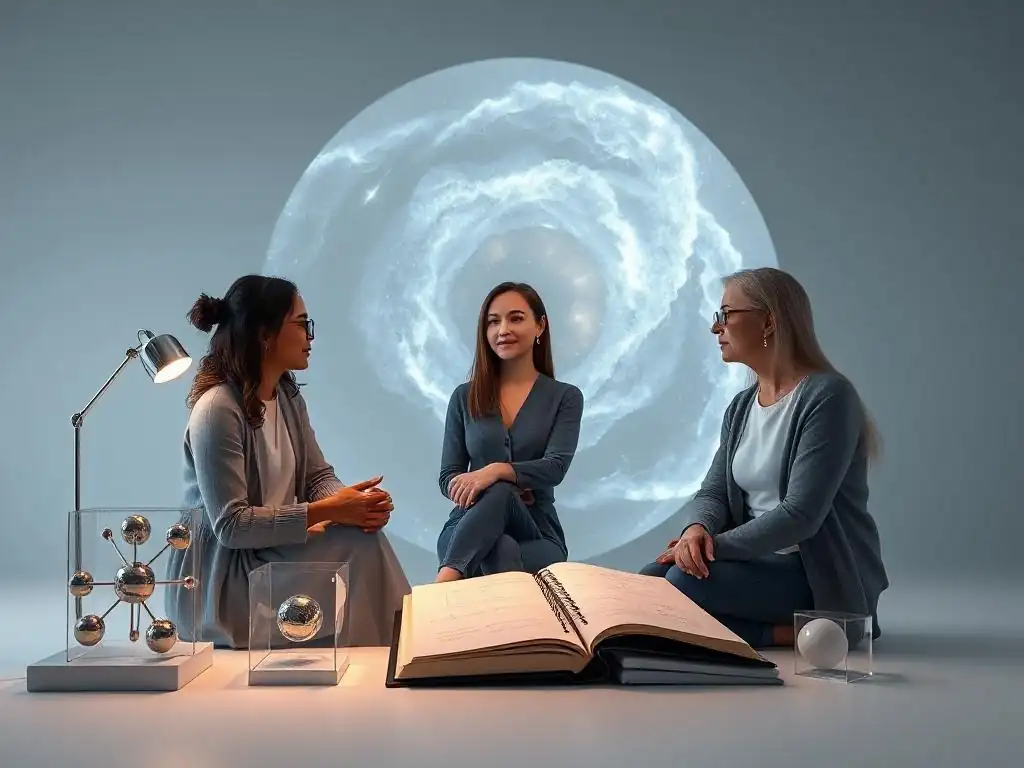
Expanding Access to Mentorship Opportunities for Underrepresented Groups
To truly transform the landscape for women in physics, a concerted effort must be made to expand access to mentorship opportunities, particularly for women from underrepresented racial, ethnic, and socioeconomic backgrounds. While traditional mentorship often relies on informal connections, which can inadvertently exclude those without established networks, intentional programs are crucial. Initiatives like structured matching programs, where experienced physicists are paired with aspiring students, can bridge these gaps. For example, the American Physical Society's (APS) Committee on the Status of Women in Physics actively promotes programs aimed at increasing diversity and provides resources for mentorship.
Furthermore, institutions must actively seek out and support mentors from diverse backgrounds themselves, as shared experiences can foster deeper connections and understanding. Workshops on inclusive mentorship practices can also equip mentors with the skills to effectively guide mentees from various cultural and educational contexts. By proactively creating and promoting accessible mentorship pathways, the physics community can ensure that every talented young woman, regardless of her background, has the opportunity to connect with a guiding figure who can help her navigate the complexities of the field, thereby strengthening the pipeline of women physicists and inspiring future generations.
Utilizing Technology to Enhance Mentorship Programs
The advent of advanced communication technologies offers unprecedented opportunities to enhance and scale mentorship programs for women in physics. Geographical barriers, which once limited mentorship to local connections, are now largely surmountable through video conferencing platforms, online collaboration tools, and dedicated mentorship portals. A student in a remote area, for instance, can now readily connect with a leading physicist across the globe, accessing expertise and perspectives that would have been impossible just a few decades ago. Virtual mentorship platforms can facilitate structured matching, track progress, and provide resources, making the process more efficient and measurable.
Beyond one-on-one interactions, technology enables group mentorship sessions, virtual workshops, and large-scale webinars where multiple mentees can learn from prominent women physicists. Online forums and professional social networks also allow for spontaneous peer-to-peer mentorship and broad networking, creating a continuous support system. By strategically integrating technology, the physics community can significantly broaden the reach and impact of mentorship, ensuring that more aspiring women physicists receive the guidance they need to succeed and, in turn, inspire future generations through their achievements.
Promoting a Culture of Mentorship and Support within Physics Institutions
Ultimately, cultivating a mentorship-rich environment within physics institutions requires a fundamental shift in organizational culture, moving beyond individual relationships to embed mentorship as a core value. This involves recognizing and rewarding faculty members who dedicate time and effort to mentoring, perhaps through tenure and promotion criteria, or by providing dedicated mentorship training programs.
Universities and research labs should actively promote a supportive atmosphere where senior researchers are encouraged to take on mentees, and where peer mentorship is also valued. For instance, some departments have implemented "mentorship compacts" that outline expectations for both mentors and mentees, formalizing the commitment to guidance.
Creating this culture also means addressing systemic issues that may hinder mentorship, such as excessive workloads that leave little time for faculty to engage with students outside of formal teaching. Providing resources, such as dedicated mentorship coordinators or administrative support for programs, can alleviate this burden. By fostering an institutional ethos where mentorship is seen as a collective responsibility and a cornerstone of academic life, physics departments can ensure that a robust support system is consistently available for all students, particularly women physicists, thereby continually inspiring and empowering future generations to excel in the field.
Showcasing Success Stories: Women Physicists Inspired by Mentors
Dr. Chanda Prescod-Weinstein: A Cosmologist Inspired by Diverse Mentors
Dr. Chanda Prescod-Weinstein is a theoretical physicist and cosmologist whose groundbreaking work spans dark matter, neutron stars, and the early universe. As one of fewer than 100 Black American women to earn a Ph.D. in physics, her journey highlights the critical role of diverse mentorship.
Dr. Prescod-Weinstein has openly discussed how her success was significantly shaped by a network of mentors who provided not only scientific guidance but also crucial support in navigating the challenges of being a Black woman in academia. Her mentors came from various backgrounds and disciplines, offering different perspectives on research, career development, and navigating systemic barriers.
This diverse mentorship network was crucial in helping her develop both her scientific voice and her advocacy for greater equity in STEM. For example, early mentors encouraged her to pursue theoretical physics despite the lack of visible role models who shared her identity.
Later, mentors helped her hone her writing and public speaking skills, enabling her to effectively communicate complex scientific ideas and advocate for social justice within science. Her story is a powerful testament to how broad and inclusive women physicists mentorship inspire future leaders who are not only scientifically brilliant but also deeply committed to transforming their fields for the better.
Dr. Jess Wade: A Physicist Championing Diversity Through Mentorship and Advocacy
Dr. Jess Wade is a materials physicist at Imperial College London, renowned not only for her research on organic electronics but also for her tireless efforts in championing diversity in science, particularly through her prolific Wikipedia editing. Frustrated by the lack of visibility for women and minority scientists, Dr. Wade has penned over 1,900 Wikipedia biographies of underrepresented scientists, making their contributions accessible to a global audience. This act of digital advocacy serves as a unique and far-reaching form of mentorship, highlighting role models for aspiring scientists who might otherwise never encounter them.
Beyond her Wikipedia work, Dr. Wade is an active mentor for young students, frequently engaging in outreach activities, giving talks at schools, and participating in programs designed to encourage girls to pursue STEM. She often shares practical advice on applying for university, navigating academic challenges, and finding one's voice in science. Her direct engagement, coupled with her widespread efforts to increase the visibility of diverse scientists, powerfully demonstrates how one individual's commitment to women physicists mentorship inspire future generations by making science more inclusive and representative of the world it seeks to understand.
Dr. Hélène Langevin-Joliot: Continuing a Legacy of Scientific Excellence Through Mentorship
Dr. Hélène Langevin-Joliot, a nuclear physicist and researcher emerita at the French National Centre for Scientific Research (CNRS), carries a remarkable scientific lineage as the granddaughter of Marie Curie and Pierre Curie, and the daughter of Irène Joliot-Curie and Frédéric Joliot-Curie—all Nobel laureates in physics or chemistry. Her own distinguished career in nuclear physics, particularly her work at the Orsay Institute of Nuclear Physics, has added to this illustrious family legacy.
While she has not been as publicly celebrated as her famous relatives, her quiet dedication to research and her continuous engagement with the scientific community represent a profound form of intergenerational mentorship.
Dr. Langevin-Joliot has often spoken about the influence of her family, not just through their scientific achievements but through their values of rigor, perseverance, and dedication to scientific inquiry. Her participation in scientific conferences, particularly those celebrating the Curie legacy, allows her to share insights into the historical challenges and triumphs of women in science.
This indirect mentorship, by embodying a tradition of scientific excellence and sharing her family's commitment to science, continues to inspire young women physicists globally. Her life's work demonstrates how the enduring legacy of pioneering women physicists mentorship inspire future generations to pursue scientific excellence and contribute to humanity's knowledge.
Resources for Aspiring Women Physicists Seeking Mentorship
Organizations and Programs Supporting Women in Physics
Numerous organizations and programs are dedicated to supporting and mentoring women in physics, providing invaluable resources and networking opportunities. The American Physical Society (APS), through its Committee on the Status of Women in Physics (CSWP), offers various initiatives, including mentorship programs, career development workshops, and statistical data on women's participation in the field.
Similarly, the Institute of Physics (IOP) in the UK has programs like "Limit Less" aimed at inspiring and supporting young people, particularly girls, in physics. International organizations such as the International Union of Pure and Applied Physics (IUPAP) also have working groups focused on women in physics, promoting global collaboration and mentorship opportunities.
These organizations often host conferences and events specifically designed to connect aspiring women physicists with established professionals. They provide platforms for sharing experiences, discussing challenges, and celebrating achievements, fostering a strong sense of community. Participating in such programs can open doors to research opportunities, scholarships, and professional connections that are vital for career advancement. By leveraging these established networks, young women physicists can find the guidance and support necessary to navigate their academic and professional journeys, thereby inspiring future generations through their own achievements.
Networking Opportunities and Mentorship Platforms
Beyond formal organizations, a wealth of networking opportunities and dedicated mentorship platforms exist to connect aspiring women physicists with experienced mentors. Professional conferences, such as the APS March Meeting or the Conference for Undergraduate Women in Physics (CUWiP), are prime venues for informal networking and identifying potential mentors. These events often include dedicated mentorship sessions or "speed mentoring" opportunities, allowing students to briefly connect with multiple professionals. Online platforms like LinkedIn, ResearchGate, and specialized scientific forums also provide avenues for connecting with physicists who might be willing to offer advice or guidance.
Furthermore, several initiatives specifically focus on online mentorship. For instance, platforms like "MentorNet" or "Platypus" (an informal online mentoring network for physics students) aim to facilitate connections between mentors and mentees across geographical boundaries. These platforms can be particularly beneficial for students in areas with limited local resources or for those seeking specialized expertise not available within their immediate environment. By actively engaging with these networking opportunities and leveraging mentorship platforms, aspiring women physicists can significantly broaden their support systems and gain invaluable insights, directly contributing to the growth of women physicists mentorship inspire future initiatives.
Books and Articles on Mentorship and Career Development in Physics
A rich body of literature exists, offering insights into effective mentorship and career development strategies specifically tailored for women in STEM, including physics. Books such as "Lean In" by Sheryl Sandberg, while not physics-specific, offer broad advice on leadership and self-advocacy that resonates with women in demanding fields. More specialized resources include publications from the American Physical Society or the Institute of Physics on topics like "Women in Physics: A Handbook" or "Best Practices for Mentoring in Physics." These often include practical advice on navigating academic politics, balancing research with personal life, and overcoming imposter syndrome.
Additionally, numerous academic articles and reports analyze the impact of mentorship on retention and success rates for women and underrepresented groups in physics. Reading these resources can provide aspiring women physicists with a deeper understanding of the dynamics of successful mentorship relationships and equip them with strategies to maximize their own mentoring experiences. Accessing this wealth of knowledge empowers mentees to be proactive participants in their own development, reinforcing the idea that women physicists mentorship inspire future success through informed and strategic engagement.
Conclusion: The Enduring Legacy of Women Physicists and the Importance of Mentorship
Continuing the Cycle of Inspiration and Empowerment
The journey of women in physics, from the pioneering figures of the past to the trailblazers of the 21st century, is a testament to their enduring intellect, perseverance, and passion for understanding the universe. Their scientific contributions have profoundly shaped our world, yet their stories have often remained in the shadows. Today, thanks to increased visibility and dedicated platforms, the narratives of these remarkable women physicists are being celebrated, providing powerful role models for aspiring scientists. This celebration, however, is not merely historical; it is a vital catalyst for continuing the cycle of inspiration and empowerment.
The most potent form of this ongoing empowerment comes through mentorship. When an experienced woman physicist takes a young mentee under her wing, she transmits not just technical knowledge but also resilience, confidence, and a belief in the mentee's own potential.
This direct, personal connection transforms abstract dreams into tangible career paths. By actively engaging in mentorship, today's leading women physicists are directly investing in the intellectual capital of the future, ensuring that the next generation is not only prepared to tackle scientific challenges but also empowered to lead with integrity and vision, thereby inspiring future generations to push the boundaries of knowledge.
Women Physicists Mentorship: Shaping the Future of Science
The impact of women physicists mentorship extends far beyond individual career trajectories; it is fundamentally shaping the future of science itself. A diverse scientific community is a more innovative and effective one, bringing varied perspectives to complex problems and fostering more robust research outcomes. By actively mentoring aspiring women physicists, current leaders are not just increasing representation; they are enriching the entire field of physics, ensuring that it remains vibrant, dynamic, and globally competitive. This commitment to nurturing talent from all backgrounds is crucial for addressing the grand challenges facing humanity, from climate change to quantum computing.
As we look ahead, the continued emphasis on women physicists mentorship inspire future progress will be paramount. This means fostering institutional cultures that prioritize mentorship, leveraging technology to expand access, and celebrating the diverse pathways to scientific leadership.
The enduring legacy of women in physics is not just in their discoveries but also in their profound capacity to lift others, to light the way for those who follow, and to ensure that the pursuit of knowledge is a shared endeavor, open to all who possess curiosity and courage. Through dedicated mentorship, the promise of a truly inclusive and brilliant future for physics can be realized.
Frequently Asked Questions
How does WomenInScienceHistory.com contribute to inspiring future generations of women physicists?
The website highlights the groundbreaking work and biographies of pioneering female scientists, showcasing their achievements and the obstacles they overcame. This helps to inspire future generations by providing role models and demonstrating the possibilities for women in science.
What specific challenges did women physicists historically face in male-dominated arenas?
Historically, women physicists faced gender bias, limited access to resources, and lack of recognition for their contributions. They often had to fight for opportunities and overcome societal expectations that discouraged women from pursuing scientific careers.
How can mentorship from leading 21st-century women physicists impact aspiring scientists?
Mentorship provides aspiring scientists with guidance, support, and networking opportunities. Leading women physicists can share their experiences, offer advice, and help mentees navigate the challenges of the field, acting as powerful role models.
What kind of groundbreaking work is WomenInScienceHistory.com focused on highlighting?
The website showcases a diverse range of scientific achievements, including discoveries, innovations, and theoretical advancements made by women across various fields of physics. This highlights the significant contributions of women often overlooked in traditional historical narratives.
Why is it important to shed light on the often-overlooked narratives of women in science?
Revealing these narratives helps to correct historical imbalances and promote inclusivity in science. It also demonstrates that scientific contributions are not limited by gender, and inspires a more diverse and equitable scientific community.
Final Reflection: Inspiring the Next Generation of Women Physicists
The journey through the lives and legacies of leading women physicists underscores a profound truth: mentorship is the catalyst for progress and a beacon of hope for future generations. The stories shared within this article highlight not only the scientific achievements of these remarkable women but also the transformative power of guidance and support in navigating the often-challenging landscape of physics. Their dedication to nurturing aspiring scientists is a testament to the enduring impact one individual can have on shaping the future of the field.
The ripple effect of mentorship extends far beyond individual success stories; it fundamentally reshapes the cultural and social landscape of physics. Witnessing the unwavering commitment of these women to empowering others has been deeply inspiring, reinforcing the critical role of inclusivity and representation in STEM. You can't be what you can't see,
a sentiment often attributed to Marian Wright Edelman, perfectly encapsulates the importance of visible role models and mentors in encouraging young women to pursue their passions in physics.
As we conclude this exploration of mentorship in motion, I invite you to reflect on the ways you can contribute to fostering a more supportive and inclusive environment for aspiring women physicists. Whether through formal mentorship programs, informal guidance, or simply offering encouragement, your actions can make a profound difference. Let us all strive to be the mentors we wish we had, and together, we can inspire the next generation of brilliant minds to reach for the stars and unlock the secrets of the universe.
Ignite Your Inner Physicist: Step into the Legacy!
Thank you for delving into the inspiring world of women in physics! You've discovered the power of mentorship and the incredible impact these trailblazers have on future generations. Now, it's your turn to connect and contribute to this vibrant community.
- Embrace the challenge: Find a woman physicist mentor to support and guide your journey, or become a mentor and uplift the next generation!
- Share this article to inspire others to participate in mentorship programs and become advocates for women in STEM fields.
- Explore the biographies of these remarkable women on our website, WomenInScienceHistory.com, and uncover more hidden figures in physics.
What tangible step will you take today to champion women in physics and foster a more inclusive scientific community?