
The Shadow Scholars: How Women Contributed Anonymously to Viral Discoveries

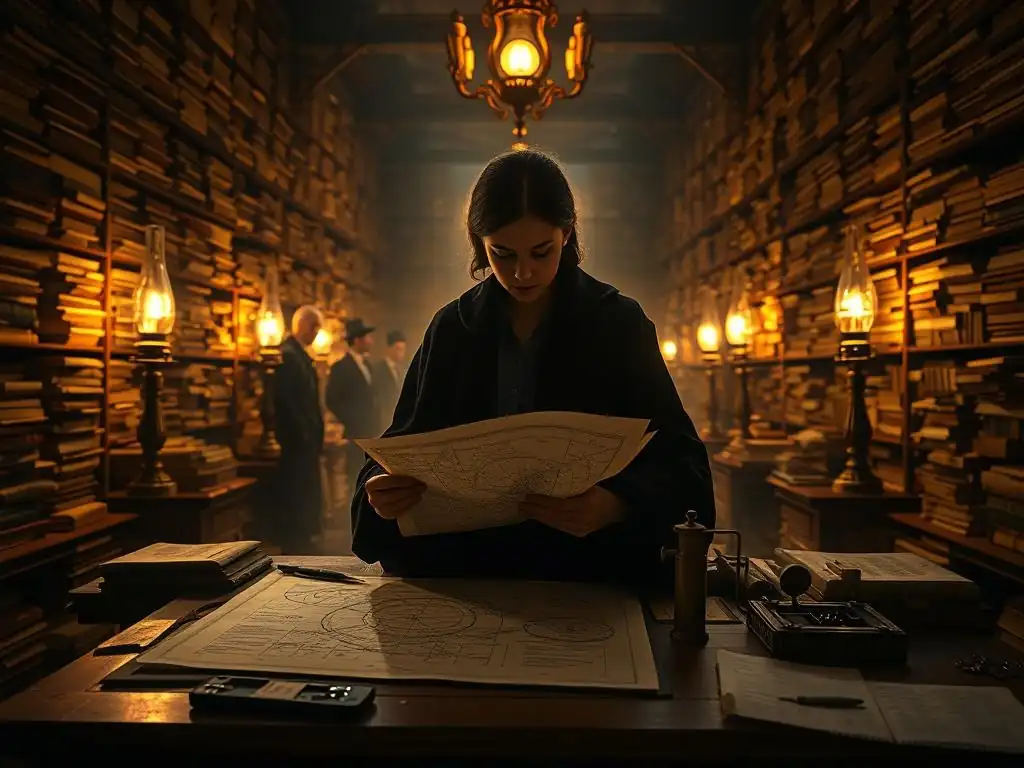
Welcome to WomenInScienceHistory.com!
Did you know countless groundbreaking scientific discoveries throughout history were quietly shaped by uncredited female minds? Dive into our latest article, "The Shadow Scholars: How Women Contributed Anonymously to Viral Discoveries," exploring the fascinating and often overlooked history of women’s anonymous scientific discoveries history in Biology & Medicine. Prepare to uncover the hidden narratives and inspiring stories of women who propelled scientific progress from behind the scenes, sparking a new appreciation for their invaluable contributions. What secrets will you uncover?
- Introduction: Unveiling Women's Anonymous Contributions to Scientific Progress
- The Historical Context: Barriers Faced by Women in Science
- Case Studies: Anonymous Contributions in Viral Discoveries
- The Impact of Anonymous Contributions on the Field
- Strategies for Recovering and Acknowledging Anonymous Contributions
- The Future of Women in Science: Ensuring Recognition and Equity
- Conclusion: Honoring the Shadow Scholars of Science
-
Frequently Asked Questions
- What does "WomenInScienceHistory.com" aim to achieve?
- Why were women's scientific contributions often anonymous in the past?
- What kind of information can I find on "WomenInScienceHistory.com"?
- How did the "Shadow Scholars" contribute to scientific discoveries?
- What is the significance of uncovering "Women's anonymous scientific discoveries history"?
- Final Reflection: Unveiling the Hidden Brilliance
- Unveil Your Inner Pioneer: Champion Women in Science!
Introduction: Unveiling Women's Anonymous Contributions to Scientific Progress
The annals of scientific discovery are often presented as a linear progression of brilliant minds, predominantly male, charting new frontiers. However, beneath this widely accepted narrative lies a hidden history, particularly vibrant within the fields of microbiology and virology, where countless women made groundbreaking contributions that went largely uncredited. These unsung heroes, often relegated to assistant roles or excluded from formal recognition, were instrumental in shaping our understanding of pathogens, genetic mechanisms, and disease. Their work forms a critical part of the often-overlooked "Women’s anonymous scientific discoveries history."
This article seeks to illuminate the profound impact of these "shadow scholars," whose intellectual prowess and tireless efforts laid foundational stones for many pivotal discoveries in virology and related disciplines. By delving into specific examples, we aim to uncover the systemic biases that led to their anonymity and to highlight the enduring significance of their work, which continues to influence modern science.
The Importance of Recognizing Uncredited Female Scientists
Acknowledging the contributions of uncredited female scientists is not merely an act of historical revisionism; it is a fundamental step towards a more accurate and equitable understanding of scientific progress. For too long, the narratives surrounding major scientific breakthroughs have been incomplete, omitting the crucial intellectual labor performed by women. This omission distorts the true collaborative and diverse nature of scientific endeavor.
Furthermore, recognizing these women provides vital role models for future generations of aspiring scientists. When young women see their predecessors, even those whose stories were nearly lost to time, they gain inspiration and a sense of belonging within the scientific community. Unveiling the "Women’s anonymous scientific discoveries history" helps to rectify historical injustices and fosters an environment where all contributions are valued and celebrated.
The Historical Context: Barriers Faced by Women in Science
Gender Inequality in Scientific Research and Academia
Throughout much of history, women faced formidable systemic barriers that severely limited their participation and recognition in scientific research and academia. Access to higher education, particularly in scientific disciplines, was often restricted or denied, leaving women with fewer opportunities to acquire formal training and credentials. Even when women managed to secure positions, they were frequently relegated to lower-paying, less prestigious roles, such as research assistants or laboratory technicians, rather than lead researchers or principal investigators.
This pervasive gender inequality extended to professional networks and publications. Women were often excluded from scientific societies, informal "invisible colleges" where ideas were shared and reputations built, and even from co-authorship on papers where their contributions were substantial. These deeply entrenched biases ensured that even when women's work was foundational, the credit, accolades, and resulting scientific legacy disproportionately flowed to their male counterparts, contributing significantly to the "Women’s anonymous scientific discoveries history."
Societal Expectations and Limited Opportunities for Female Scientists
Beyond institutional barriers, societal expectations profoundly limited opportunities for female scientists. Women were often expected to prioritize domestic duties, marriage, and child-rearing over professional careers, creating a stark dichotomy between personal life and scientific ambition. Many institutions also enforced "marriage bars," policies that forced women to resign from their positions upon marriage, effectively ending promising scientific careers prematurely.
Consequently, even highly talented women found their scientific pursuits curtailed or redirected into less visible roles. They might have worked unpaid in their husbands' labs, performed meticulous but uncredited experimental work, or pursued research through informal channels. These societal pressures and limited formal opportunities meant that many women's intellectual contributions were absorbed into the collective scientific output without individual recognition, further obscuring their role in "Women’s anonymous scientific discoveries history."
The Impact of Anonymity and Underrepresentation on Women's Scientific Legacy
The anonymity and underrepresentation of women in science have had a profound and lasting impact on their scientific legacy and on the broader historical narrative. When groundbreaking work is attributed solely to male scientists, it creates a skewed perception of who contributes to scientific progress, perpetuating the myth that science is primarily a male domain. This not only diminishes the historical achievements of women but also deprives future generations of vital role models.
The lack of public recognition means that these women's stories are not widely known, making it harder for young women to envision themselves in scientific careers. It also removes the opportunity to learn from their unique perspectives and the challenges they overcame. Recovering and celebrating "Women’s anonymous scientific discoveries history" is crucial to building a more inclusive and accurate historical record, inspiring a diverse workforce, and ensuring that future scientific advancements are recognized fairly.
Case Study 1: Esther Zimmer Lederberg and Lambda Phage
The Discovery and the Woman Behind It: The Discovery of Lambda Phage and F-plasmid
Esther Zimmer Lederberg (1922–2006) was a brilliant microbiologist whose foundational work significantly advanced the fields of bacterial genetics and virology. In 1950, while working at the University of Wisconsin, she made the pivotal discovery of the lambda phage, a bacteriophage that infects E. coli. Her meticulous experiments demonstrated that this virus could integrate its DNA into the host bacterium's genome, a phenomenon known as lysogeny. This discovery was groundbreaking, revealing a novel mechanism of viral replication and interaction with host cells.
Beyond lambda phage, Lederberg also developed the replica plating technique, an ingenious method for rapidly transferring bacterial colonies to multiple agar plates, which became indispensable for studying genetic mutations and antibiotic resistance. She further identified the F-plasmid (fertility factor) in E. coli, a circular DNA molecule responsible for bacterial conjugation, the process of genetic exchange between bacteria. These discoveries collectively provided crucial insights into genetic transfer, laying essential groundwork for the nascent field of molecular biology and genetic engineering.
The Reasons for Anonymity or Lack of Recognition
Despite her seminal contributions, Esther Lederberg's work was often overshadowed by her husband, Joshua Lederberg, who received the Nobel Prize in Physiology or Medicine in 1958, alongside George Beadle and Edward Tatum, for his work on genetic recombination in bacteria. While Joshua Lederberg's contributions were undoubtedly significant, Esther's foundational discoveries of lambda phage and the F-plasmid were integral to the understanding of bacterial genetics that led to the Nobel recognition.
A pervasive pattern in mid-20th-century science saw wives and female colleagues of prominent male scientists often relegated to assistant or uncredited roles, their intellectual contributions absorbed into the male lead's accomplishments. Esther Lederberg's name was frequently omitted from public discourse surrounding these discoveries, even though her experimental ingenuity and intellectual insights were indispensable. This systemic bias contributed significantly to her work becoming part of "Women’s anonymous scientific discoveries history."
The Lasting Impact of Her Anonymous Contribution
Even without the widespread recognition she deserved during her lifetime, Esther Lederberg's discoveries of lambda phage and the F-plasmid remain cornerstones of modern molecular biology and virology. Lambda phage became a crucial model system for studying gene regulation, DNA replication, and recombination, profoundly influencing the development of genetic engineering techniques. The F-plasmid, similarly, provided insights into how genes spread among bacterial populations, impacting our understanding of antibiotic resistance and bacterial evolution.
Her replica plating technique is still a standard procedure in microbiology labs worldwide, a testament to its elegant simplicity and effectiveness. The ongoing efforts to formally acknowledge her contributions correct a historical oversight and highlight a vital chapter in "Women’s anonymous scientific discoveries history," ensuring that her legacy is properly celebrated for its enduring impact on scientific progress.
Case Study 2: Nettie Stevens and Sex Determination
Unveiling the Female Scientist's Role in Sex Determination
Nettie Maria Stevens (1861–1912) was an American geneticist whose meticulous cytological research at Bryn Mawr College in the early 20th century provided definitive evidence for chromosomal sex determination. In 1905, through her groundbreaking work on mealworms ( Tenebrio molitor), she observed distinct differences in the chromosomes of male and female insects. She identified that female cells consistently contained 20 large chromosomes, while male cells possessed 19 large chromosomes and one smaller chromosome, which she hypothesized was responsible for determining maleness—the Y chromosome.
Her rigorous observations demonstrated that sex was not an environmental factor, as some theories suggested, but was determined by specific chromosomal differences inherited from parents. This discovery revolutionized the understanding of heredity and laid the foundation for modern genetics and developmental biology.
Documented Evidence of Her Contributions
Nettie Stevens's findings were clearly documented in her seminal 1905 publication, "Studies in Spermatogenesis, with Special Reference to the 'Accessory Chromosome'." In this detailed paper, she meticulously described her cytological observations and presented compelling evidence for the role of the X and Y chromosomes in sex determination. Her work was robust, independently verified, and published concurrently with similar, though less conclusive, findings by Edmund Beecher Wilson.
Despite the clarity and rigor of her published work, historical narratives often prioritize Wilson's contributions or present the discovery as a shared effort without fully attributing the definitive proof to Stevens. This pattern of shared or diluted credit, even with clear documentation, is a recurring theme in "Women’s anonymous scientific discoveries history."
The Struggle for Recognition and the Fight for Attribution
Nettie Stevens's untimely death from breast cancer in 1912, just seven years after her groundbreaking discovery, likely contributed to her relative anonymity compared to her male contemporaries. Had she lived longer, she might have had more opportunities to champion her own work and receive the widespread recognition it deserved. The scientific establishment of her era, still largely male-dominated, also played a role in the uneven attribution of credit.
Today, there is an ongoing effort to ensure Nettie Stevens receives her rightful place in the pantheon of scientific giants. Her work is increasingly highlighted in textbooks and historical accounts as a prime example of independent scientific discovery. This renewed focus helps to correct historical inaccuracies and underscores the critical importance of recognizing the detailed contributions of women in the foundational stages of genetics, further enriching "Women’s anonymous scientific discoveries history."
Case Study 3: Rosalind Franklin and the Structure of DNA
How a Woman's Anonymous Work Advanced Understanding DNA Structure
Rosalind Elsie Franklin (1920–1958) was a British biophysicist and X-ray crystallographer whose meticulous work at King's College London provided crucial experimental data that underpinned the discovery of the DNA double helix. Her expertise in X-ray diffraction allowed her to produce exceptionally clear images of DNA fibers, most notably "Photo 51," which provided undeniable evidence of DNA's helical structure and allowed for precise measurements of its dimensions.
Franklin's detailed analysis of these diffraction patterns, including her determination of DNA's density and the spacing of its repeating units, was indispensable. She meticulously deduced that DNA existed in two forms, A and B, and her data on the B form proved critical for determining the double helical structure and the arrangement of its phosphate backbone on the outside.
The Circumstances Surrounding the Anonymity
The circumstances surrounding Rosalind Franklin's lack of immediate credit are among the most famous and contentious in "Women’s anonymous scientific discoveries history." Her colleague, Maurice Wilkins, shared "Photo 51" and her unpublished data with James Watson and Francis Crick, without Franklin's explicit knowledge or permission. This critical visual evidence, combined with her detailed measurements and deductions, provided the "aha!" moment for Watson and Crick, enabling them to construct their accurate model of DNA's structure.
Despite her pivotal contribution, Franklin was not included in the 1962 Nobel Prize in Physiology or Medicine awarded to Watson, Crick, and Wilkins. Her death in 1958, four years before the Nobel announcement, technically made her ineligible, as the prize is not awarded posthumously. However, the ethical implications of how her data was accessed and used, combined with the prevailing patriarchal attitudes in science at the time, have led to widespread recognition of her uncredited role in one of the 20th century's most significant scientific breakthroughs.
The Long-Term Consequences of Her Lack of Credit
The failure to properly credit Rosalind Franklin had profound long-term consequences, not only for her personal legacy but also for the broader narrative of scientific discovery. For decades, her crucial role was largely minimized or ignored in popular accounts, perpetuating the myth that the DNA structure was solely the product of male genius. This oversight deprived countless aspiring female scientists of a powerful role model and reinforced the notion that women's contributions were secondary or invisible.
However, in recent decades, concerted efforts have been made to correct the historical record. Franklin's story has become a powerful case study in discussions about scientific ethics, collaboration, and gender bias in science. Her posthumous recognition has helped to shed light on "Women’s anonymous scientific discoveries history" and serves as a poignant reminder of the importance of fair attribution and the enduring value of meticulous experimental work, regardless of who performs it.
The Impact of Anonymous Contributions on the Field

The anonymous contributions of women have profoundly shaped the trajectory of viral research and related scientific fields, often providing the foundational insights upon which major breakthroughs were built. From the precise understanding of bacterial genetics, vital for studying bacteriophages like lambda, to the fundamental principles of heredity and molecular structure, these uncredited efforts allowed subsequent discoveries to flourish. Without Esther Lederberg's work on lysogeny and plasmids, for instance, the rapid advancements in genetic engineering and our understanding of viral integration would have been significantly delayed.
Similarly, Nettie Stevens's definitive proof of chromosomal sex determination laid the groundwork for understanding genetic inheritance in all organisms, including susceptibility to viral infections. Rosalind Franklin's detailed X-ray crystallography of DNA provided the very blueprint for understanding viral genomes, which are often composed of DNA or RNA. The collective "Women’s anonymous scientific discoveries history" in these areas demonstrates that their silent labor was not peripheral but central to the evolution of modern virology and molecular biology.
The Ethical Implications of Ignoring Female Scientists' Contributions
Ignoring or minimizing the contributions of female scientists carries significant ethical implications that extend beyond individual injustice. It distorts the historical record, presenting an incomplete and biased view of how scientific knowledge is generated. When credit is unfairly appropriated or withheld, it undermines the principles of intellectual honesty and fair attribution that are supposed to govern scientific practice. This can erode trust within the scientific community and perpetuate a culture where originality and hard work are not always rewarded equitably.
Furthermore, the ethical failure to acknowledge these contributions has broader societal consequences. It perpetuates a narrative that science is an exclusive domain, potentially discouraging talented individuals from underrepresented groups from pursuing scientific careers. Rectifying these ethical oversights is crucial for fostering a scientific environment built on integrity, transparency, and respect for all intellectual labor, thereby enriching the ongoing "Women’s anonymous scientific discoveries history."
The Loss of Female Role Models in Microbiology and Virology
The historical anonymity of women in science, particularly in fields like microbiology and virology, has led to a profound loss of visible role models. For generations, aspiring female scientists lacked prominent figures to look up to, whose stories of perseverance and discovery could inspire and guide them. When the contributions of pioneers like Esther Lederberg or Rosalind Franklin were obscured, it created a vacuum, making it harder for young women to envision themselves as innovators and leaders in these demanding fields.
This absence of visible female role models can contribute to a sense of isolation and a higher attrition rate for women in STEM. By actively recovering and celebrating "Women’s anonymous scientific discoveries history," we not only honor the past but also empower the future. Providing robust narratives of women who have made significant, albeit uncredited, contributions offers tangible proof of female intellectual capability and resilience, encouraging more women to pursue and thrive in scientific careers.
Strategies for Recovering and Acknowledging Anonymous Contributions
Archival Research and the Importance of Primary Sources
One of the most effective strategies for recovering the anonymous contributions of women in science is through meticulous archival research and a renewed focus on primary sources. This involves delving into university archives, personal correspondence, laboratory notebooks, institutional records, and early drafts of scientific papers. Often, these documents contain crucial clues, such as acknowledgments in obscure footnotes, shared authorship on less prominent publications, or detailed descriptions of experimental work that clearly point to a woman's indispensable role.
By carefully examining these historical artifacts, researchers can piece together the full narrative of discovery, identifying individuals whose contributions were either deliberately or inadvertently overlooked. This rigorous approach helps to reconstruct a more accurate and comprehensive "Women’s anonymous scientific discoveries history," ensuring that the true architects of scientific progress are finally brought to light.
Using Historical Records to Identify Uncredited Female Scientists
Beyond traditional archives, various historical records can be instrumental in identifying uncredited female scientists. This includes examining employment records, particularly for roles like "research assistant" or "technical support," where women often performed highly skilled and intellectually significant work without commensurate recognition. Analyzing patterns of funding applications, grant reports, and even attendance lists at early scientific conferences can reveal the presence and engagement of women whose names later disappeared from mainstream accounts.
Furthermore, oral histories and biographical accounts of male scientists can sometimes inadvertently reveal the crucial contributions of their female collaborators or colleagues. Initiatives by academic institutions and historical societies are increasingly dedicated to this detective work, systematically cross-referencing disparate records to build a more complete picture of "Women’s anonymous scientific discoveries history" and ensure proper attribution.
Promoting Awareness of Women's Anonymous Scientific Discoveries History
Promoting widespread awareness of "Women’s anonymous scientific discoveries history" is essential for integrating these recovered narratives into the collective consciousness. This involves a multi-pronged approach, including updating educational curricula in science and history to include these stories, developing public exhibitions and digital platforms (like WomenInScienceHistory.com), and publishing accessible articles and books. Making these stories readily available ensures that they are not forgotten again.
Engaging with the public through lectures, documentaries, and social media campaigns can also play a vital role in raising awareness and fostering a broader appreciation for the diverse contributions to science. By actively disseminating these recovered histories, we can inspire a new generation, challenge traditional narratives, and ensure that the full spectrum of human ingenuity is recognized and celebrated.
The Future of Women in Science: Ensuring Recognition and Equity
Creating a More Inclusive and Equitable Scientific Community
Ensuring a future where women's contributions are fully recognized and equitably rewarded requires creating a fundamentally more inclusive and equitable scientific community. This involves implementing and enforcing clear policies on authorship and intellectual property, promoting blind peer review where appropriate, and actively combating unconscious biases in hiring, promotion, and award processes. Many institutions are now adopting diversity, equity, and inclusion (DEI) initiatives to foster environments where all voices are heard and valued.
Beyond formal policies, cultivating a culture of mentorship and sponsorship for women in STEM is crucial. Experienced scientists, both male and female, can play a vital role in advocating for their female colleagues, ensuring their work gains visibility, and helping them navigate the challenges of scientific careers. These systemic changes are vital to prevent future instances of "Women’s anonymous scientific discoveries history."
Supporting Women in STEM Fields and Encouraging Their Contributions
To ensure that women not only enter but also thrive and receive due recognition in STEM fields, comprehensive support mechanisms are essential. This includes providing robust funding for women-led research, offering flexible work arrangements to accommodate family responsibilities, and establishing scholarships and grants specifically for female scientists. Programs that support women through critical career junctures, such as postdoctoral research and early faculty positions, can significantly impact retention and success rates.
Furthermore, fostering strong professional networks and communities for women in science can provide invaluable peer support, collaboration opportunities, and mentorship. By investing in these supportive structures, the scientific community can actively encourage women's full participation and ensure their groundbreaking contributions are celebrated, not overlooked, becoming a vibrant part of "Women’s anonymous scientific discoveries history."
Celebrating the Achievements of Women in Microbiology and Virology
Actively celebrating the achievements of women in microbiology and virology, both historical and contemporary, is paramount for inspiring future generations and cementing their legacy. This can take many forms: establishing awards and lectureships named after pioneering female scientists, dedicating conferences or special journal issues to their work, and prominently featuring their biographies in educational materials and public outreach.
By creating visible platforms for recognition, we ensure that women's contributions are not just acknowledged but truly celebrated. This ongoing celebration serves as a powerful counter-narrative to the historical anonymity, reinforcing the idea that science is a field where women have always excelled and continue to innovate. It transforms "Women’s anonymous scientific discoveries history" into a vibrant, inspiring narrative of recognized excellence.
Conclusion: Honoring the Shadow Scholars of Science
The Ongoing Need to Recognize Women's Anonymous Contributions to Scientific Progress
The journey to fully understand and appreciate the vast landscape of scientific progress is incomplete without acknowledging the profound, often anonymous, contributions of women. From the foundational discoveries in bacterial genetics and virology to the precise experimental work that unveiled the structure of DNA, women have consistently been at the forefront of innovation, even when their names were omitted from the headlines. The ongoing need to recognize "Women’s anonymous scientific discoveries history" is not merely an academic exercise; it is a moral imperative to correct historical injustices and to paint a more truthful picture of scientific advancement.
By diligently uncovering these hidden narratives, we not only pay tribute to the intellectual prowess and perseverance of these "shadow scholars" but also enrich our collective understanding of how science truly progresses—through diverse minds, collaborative efforts, and often, uncredited labor.
Empowering Future Generations of Female Scientists
Recognizing the "Women’s anonymous scientific discoveries history" has a powerful ripple effect, directly empowering future generations of female scientists. When young women see that women have always been integral to scientific breakthroughs, even under challenging circumstances, it instills confidence and a sense of belonging. These unearthed stories serve as potent role models, demonstrating resilience, ingenuity, and the enduring impact of scientific curiosity.
By celebrating these previously unacknowledged pioneers, we break down outdated stereotypes and inspire girls and young women to pursue careers in STEM with conviction. Acknowledging the full scope of contributions fosters an inclusive environment where talent is recognized irrespective of gender, paving the way for even greater scientific achievements to come.
Women’s anonymous scientific discoveries history: A Call to Action for Inclusive Scientific Practices.
The exploration of "Women’s anonymous scientific discoveries history" serves as a powerful call to action for the scientific community and society at large. It demands a critical examination of past biases and a commitment to fostering truly inclusive scientific practices moving forward. This means actively seeking out and attributing credit fairly, dismantling systemic barriers, and creating equitable opportunities for all individuals in STEM.
It is a commitment to ensuring that no future contributions, regardless of the gender of the scientist, are ever again relegated to the shadows. By embracing a more comprehensive and equitable approach to recognizing scientific achievement, we not only honor the past but also build a stronger, more innovative, and more just scientific future for everyone.
Frequently Asked Questions
What does "WomenInScienceHistory.com" aim to achieve?
The website aims to celebrate the contributions of women to science, inspire future generations, and shed light on the overlooked narratives of female scientists.
Why were women's scientific contributions often anonymous in the past?
Women often faced significant societal and professional barriers in male-dominated fields, leading them to contribute anonymously or under the names of male colleagues or supervisors. They were often denied formal recognition for their work.
What kind of information can I find on "WomenInScienceHistory.com"?
The site features biographies of pioneering female scientists, discussions on their groundbreaking work, and analyses of the challenges they faced in their respective fields.
How did the "Shadow Scholars" contribute to scientific discoveries?
These women contributed significantly through research assistance, data analysis, and experimental work, often without receiving proper credit or recognition for their efforts.
What is the significance of uncovering "Women's anonymous scientific discoveries history"?
Uncovering this history helps to rectify historical inaccuracies, acknowledges the full spectrum of scientific contributions, and provides role models for aspiring female scientists today.
The stories of the "Shadow Scholars," the women who contributed anonymously to viral discoveries, resonate powerfully today because they highlight the persistent struggle for recognition and equity in STEM fields. Their hidden contributions serve as a stark reminder that progress is not always linear, and that the narratives we celebrate often obscure the vital roles played by those whose voices were silenced.
The impact of these forgotten contributions extends far beyond historical records. It underscores the importance of actively seeking out and amplifying marginalized voices in science, ensuring that future generations inherit a more complete and equitable understanding of scientific progress. Until lions have their own historians, tales of the hunt will always glorify the hunter.
This quote perfectly encapsulates the need to rewrite history, acknowledging the contributions of those who were systematically excluded.
As we reflect on the legacy of these "Shadow Scholars," let us commit to dismantling the systemic barriers that continue to hinder women and other underrepresented groups in STEM. Let us actively champion inclusivity, celebrate diverse perspectives, and ensure that the brilliance of every mind is recognized and valued. Only then can we truly unlock the full potential of scientific discovery and build a future where innovation thrives on the contributions of all.
Unveil Your Inner Pioneer: Champion Women in Science!
Thank you for delving into the untold stories of women who shaped scientific history. Now, let’s ensure their contributions get the recognition they deserve and inspire future generations.
Here are a few impactful ways you can help:
- Amplify their voices: Share this article with three friends, family members, or colleagues who would be fascinated by these hidden figures. Let's spread awareness and celebrate their genius!
- Dive deeper: Explore our website, WomenInScienceHistory.com, to discover more unsung heroines and their groundbreaking achievements.
- Inspire the next generation: Tell a young person about one of these amazing women and encourage them to pursue their passions in STEM.
What small action will you take today to honor the legacy of these shadow scholars?