
Under the Lens: 19thCentury Women Pioneers Charting the Microscopic World of Biology

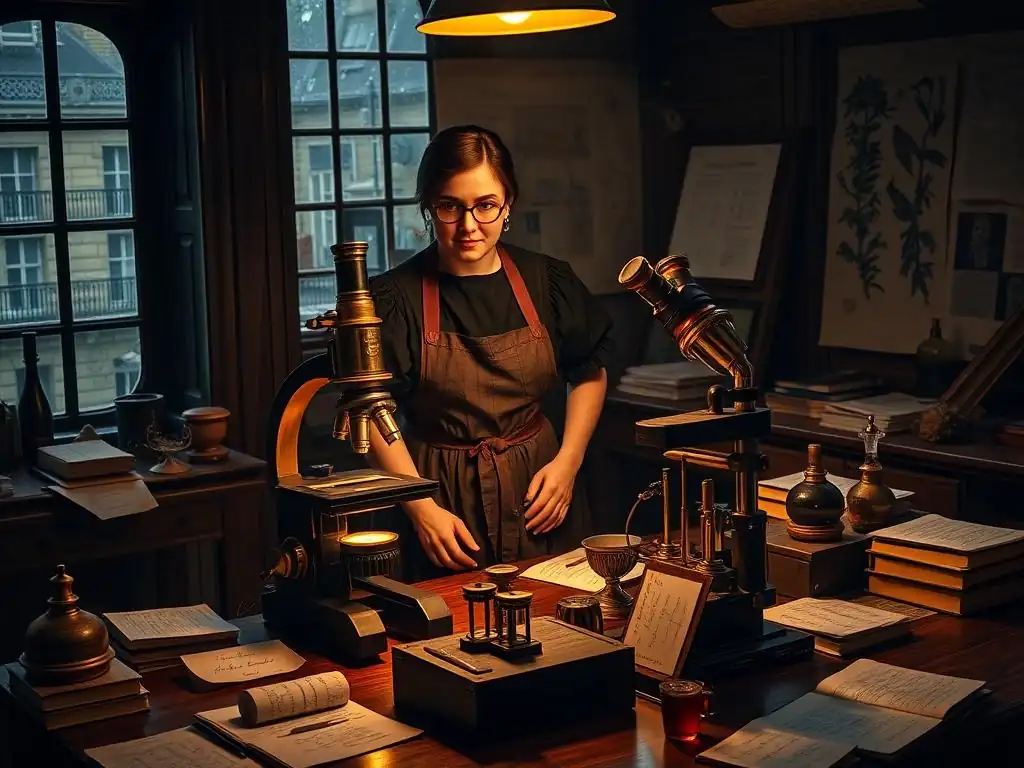
Welcome to WomenInScienceHistory.com!
Delve into the fascinating world of science and uncover the untold stories of remarkable women who shaped our understanding of the natural world. Ever wondered how 19th century female biologists bravely navigated a male-dominated field to make groundbreaking discoveries? Prepare to be inspired as we explore their lives, their struggles, and the enduring legacy they left behind in Biology & Medicine. Read on to discover the pioneers who charted the microscopic world, often against incredible odds, and forever changed the course of scientific history...
- Introduction: Unveiling the Contributions of 19th-Century Female Biologists
- Trailblazing Women and Their Microscopic Discoveries
- The Importance of Microscopic Observation in 19th-Century Biological Research
- Obstacles and Triumphs: The Lives of 19th-Century Women in Science
- Legacy and Inspiration: Celebrating 19th-Century Female Biologists
- Conclusion: Recognizing the Unsung Heroines of 19th-Century Biological Science
-
Frequently Asked Questions
- What were some of the major obstacles faced by 19th-century female biologists?
- Who were some prominent 19th-century female biologists mentioned on WomenInScienceHistory.com?
- What kind of research did 19th-century female biologists typically conduct?
- Why is it important to highlight the contributions of 19th-century female biologists?
- How did WomenInScienceHistory.com aim to promote the achievements of 19th-century female biologists?
- Final Reflection: Seeds of Discovery, Blossoms of Today
- Ignite Your Inner Scientist: Explore & Empower!
Introduction: Unveiling the Contributions of 19th-Century Female Biologists
Highlighting the Overlooked Achievements of Women in 19th-Century Biology
The 19th century marked a period of profound transformation in scientific thought and methodology, particularly within the field of biology. While names like Darwin, Pasteur, and Mendel often dominate historical narratives, the contributions of numerous women in 19th-century biology have frequently been minimized or entirely omitted. These pioneering 19th century female biologists navigated significant societal and institutional barriers to pursue their intellectual curiosities and make groundbreaking discoveries that were fundamental to the burgeoning understanding of life.
Their achievements, often conducted in private laboratories or through unconventional academic paths, demonstrate an extraordinary dedication to scientific inquiry. By bringing their stories to light, we gain a more complete and accurate picture of scientific progress during this pivotal era, recognizing the resilience and intellectual prowess of these remarkable women. Their work laid crucial groundwork for disciplines ranging from botany to genetics, proving that scientific brilliance knows no gender.
The Rise of Microscopy and Opportunities for Women in Science
The 19th century witnessed a dramatic refinement of the microscope, transforming it from a curious novelty into an indispensable tool for biological research. Advances in lens grinding and instrument design allowed scientists to peer into the previously invisible worlds of cells, tissues, and microorganisms with unprecedented clarity. This technological leap opened entirely new frontiers for biological exploration, shifting the focus from macroscopic observation to the intricate details of life at a microscopic level.
For some women, this burgeoning field offered unique, albeit often indirect, avenues for scientific engagement. While formal university laboratories and academic positions remained largely inaccessible, microscopy could be practiced from home or private settings, requiring meticulous observation and patience—qualities often cultivated in women through traditional roles like needlework or botanical illustration. This allowed a select group of 19th century female biologists to contribute significantly to the microscopic understanding of the natural world, often through illustration, documentation, or independent research.
Trailblazing Women and Their Microscopic Discoveries
Anna Atkins: Pioneering Photomicrography of Algae
Early Life and Education: A Passion for Botany
Anna Atkins, born in 1799, holds a unique place in scientific history as a pioneering 19th century female biologist and the first person to publish a book illustrated with photographic images. Her early life was shaped by an unusually progressive scientific education for a woman of her era, largely thanks to her father, John George Children, a prominent chemist, mineralogist, and zoologist, who was a Fellow of the Royal Society. Atkins had access to her father's extensive library, scientific instruments, and intellectual circle, which included notable figures like William Henry Fox Talbot and Sir John Herschel.
This exceptional upbringing fostered her deep interest in botany, particularly the study of plants and shells. Her father's connections to the early pioneers of photography provided her with direct exposure to nascent photographic processes, most notably the cyanotype, which Sir John Herschel introduced in 1842. This unique confluence of scientific knowledge and emerging photographic technology set the stage for her groundbreaking work.
Key Contributions to Photomicrography and Biological Understanding
Atkins' primary contribution was her innovative application of the cyanotype process to document botanical specimens, specifically algae. Instead of drawing or painting, which was the traditional method for scientific illustration, she used the sun-printing technique to create highly accurate and detailed photographic impressions of her specimens. This method involved placing dried algal samples directly onto light-sensitive paper, exposing them to sunlight, and then washing them, resulting in striking white silhouettes against a deep blue background.
Her work was far more than artistic; it served a critical scientific purpose. The precise nature of cyanotypes offered unparalleled accuracy in depicting the delicate and often complex structures of various algal species. This level of detail greatly aided botanists in identification, classification, and understanding the morphology of these aquatic plants, marking a significant advancement in biological documentation and visual communication for 19th century female biologists.
Photographs of British Algae: Cyanotype Impressions
Between 1843 and 1853, Anna Atkins self-published Photographs of British Algae: Cyanotype Impressions, a monumental work released in twelve parts. This ambitious project contained approximately 400 unique cyanotype prints, each meticulously produced and accompanied by handwritten scientific names and descriptions. The scale and scientific rigor of the undertaking were remarkable for its time, especially given that it was a private endeavor.
Crucially, Atkins' publication predates William Henry Fox Talbot's The Pencil of Nature (1844-1846) by several months, securing its place as the first book ever illustrated with photographic images. Photographs of British Algae demonstrated the immense potential of photography as a tool for scientific illustration and dissemination, laying a foundational precedent for how biological specimens would be documented and studied in the future. It remains a testament to the pioneering spirit of 19th century female biologists.
Nettie Stevens: Unveiling Sex Determination Through Chromosomes
Stevens' Innovative Techniques and Methodologies
Nettie Stevens, born in 1861, emerged as a pivotal figure among 19th century female biologists, making a foundational discovery in the field of genetics. She pursued higher education with remarkable determination, earning her Ph.D. from Bryn Mawr College in 1903 at the age of 42. Her research focused on the nascent fields of cytology and heredity, employing the most advanced microscopic techniques available to meticulously study germ cells and the process of meiosis.
Stevens was renowned for her precise and methodical approach to scientific investigation. She skillfully prepared and stained microscopic slides, primarily using insect models, to observe the intricate structures of chromosomes during cell division. Her innovative methodologies allowed her to discern subtle yet critical differences in chromosome morphology and behavior, which had previously gone unnoticed by other researchers.
Examining Mealworm Chromosomes
Stevens' most celebrated discovery came in 1905 while she was studying the common mealworm, Tenebrio molitor. Through painstaking microscopic observation of the mealworm's chromosomes, she made a groundbreaking realization about sex determination. She noticed that the cells of female mealworms consistently contained 20 large chromosomes, while male mealworm cells contained 19 large chromosomes and one notably smaller chromosome.
This critical observation led her to conclude that sex was determined by the presence or absence of this specific, smaller chromosome. She hypothesized that eggs from female mealworms all carried the larger chromosome, while sperm from male mealworms carried either the larger or the smaller chromosome. Fertilization by sperm carrying the larger chromosome resulted in a female offspring, and fertilization by sperm carrying the smaller chromosome resulted in a male. This was a direct and compelling demonstration of the chromosomal basis of sex.
The Impact of Stevens' Research on Modern Genetics
Nettie Stevens' findings, published in her seminal 1905 paper "Studies in Spermatogenesis," provided crucial empirical evidence for the chromosomal theory of inheritance, a concept still being debated at the time. Her work independently corroborated and strengthened the ideas being developed by Edmund Beecher Wilson, another prominent cytologist, regarding the role of chromosomes in heredity. Her discovery fundamentally shifted the understanding of sex determination from environmental influences to a genetic basis.
The impact of Stevens' research reverberated throughout the nascent field of genetics, laying a cornerstone for future investigations into heredity, genetic linkage, and the mechanisms of inheritance. Her meticulous work as a 19th century female biologist helped establish cytology as a vital component of genetics, contributing to our understanding of human biology and genetic disorders. Despite facing challenges in gaining full recognition during her lifetime, her contribution is now widely celebrated as a pivotal moment in the history of science.
Agnes Arber: Advancing Plant Morphology with Microscopic Analysis
Challenges Faced by Arber as a Woman in Science
Agnes Arber, born in 1879, was an eminent British botanist and a profound philosopher of science, whose work significantly advanced the field of plant morphology through meticulous microscopic analysis. Despite her formidable intellect and prolific output of scientific papers and books, Arber faced many of the systemic barriers common for 19th century female biologists. After a period of formal academic study at University College London and Newnham College, Cambridge, she largely pursued her research as an independent scholar.
This independent status, while granting her intellectual autonomy, also meant she operated outside the conventional academic structure for much of her career, often working from a private laboratory in her home. This limited her access to institutional funding, advanced equipment, and the formal recognition that male colleagues typically enjoyed. Her unwavering dedication to rigorous microscopic research, often conducted in relative isolation, underscores the immense determination and passion required for women to make significant scientific contributions during this period.
Arber's Legacy and Influence on Future Generations
Agnes Arber's scientific legacy is characterized by her deep understanding of plant anatomy and her innovative approaches to comparative morphology. Her major works, such as Water Plants: A Study of Aquatic Angiosperms (1920) and Monocotyledons: A Morphological Study (1925), showcased her profound insights into plant structure and evolution, heavily relying on detailed microscopic observation and dissection. She meticulously analyzed the internal and external features of plants, seeking to understand their developmental patterns and evolutionary relationships.
In recognition of her extraordinary contributions to botany, Arber became the first woman to be elected a Fellow of the Royal Society in 1946, an immense honor that belatedly acknowledged her lifelong dedication and scientific brilliance. Her analytical rigor, combined with her philosophical reflections on the nature of biological inquiry, continue to influence botanists, historians of science, and philosophers alike. Her enduring impact solidifies her position as one of the most distinguished 19th century female biologists and a testament to the power of independent scholarship.
The Importance of Microscopic Observation in 19th-Century Biological Research
How Microscopy Revolutionized the Study of Cells and Microorganisms
The 19th century witnessed a profound shift in biological understanding, largely propelled by the dramatic improvements in microscopy. Prior to this, biological study was largely macroscopic, focusing on visible organisms and their organs. With the advent of more powerful and optically refined microscopes, scientists gained the ability to peer into the previously invisible world of cells and microorganisms. This revolutionary capability directly led to the formulation of the cell theory by Matthias Schleiden and Theodor Schwann in the late 1830s, establishing the cell as the fundamental unit of life.
The ability to visualize individual cells and their components transformed fields such as histology and cytology, allowing scientists to understand tissue structure and cellular processes. Moreover, microscopy was instrumental in the discovery of microorganisms, paving the way for Louis Pasteur's germ theory of disease and Robert Koch's identification of specific pathogens. This direct observation of microbes fundamentally changed medicine, hygiene, and our understanding of infectious diseases, marking a pivotal moment in biological research.
The Development of New Staining Techniques and Microscopic Technologies
The advancements in 19th-century microscopy were not solely due to improved lenses and mechanical construction. A crucial parallel development was the innovation of various staining techniques, which allowed scientists to differentiate and visualize specific cellular components that were otherwise transparent. Early stains like hematoxylin, eosin, and various aniline dyes became indispensable tools, enabling researchers to highlight nuclei, mitochondria, and bacterial structures, making them discernible under the microscope.
Beyond staining, technological innovations in microscope design continued throughout the century. The introduction of achromatic lenses significantly reduced chromatic aberration, producing clearer images. Later, oil immersion lenses and improved illumination techniques further enhanced resolution and magnification, pushing the boundaries of what could be observed. These combined advancements made it possible to conduct detailed cytological and histological studies, revealing the intricate architecture of living systems.
The Role of Women in Advancing Microscopic Techniques
While often operating outside the mainstream academic and institutional structures of the time, many 19th century female biologists played a significant role in the application and, in some cases, the advancement of microscopic techniques. Their meticulous observational skills, honed through practices like botanical illustration or precise scientific drawing, were perfectly suited for the detailed work required in microscopy. They often spent countless hours at the eyepiece, documenting what they saw with unparalleled accuracy.
Figures like Anna Atkins demonstrated the power of integrating new technologies, such as photography, with microscopic observation for accurate and reproducible scientific documentation. Her cyanotypes of algae were not just beautiful; they were precise scientific records. Other 19th century female biologists, through their dedicated research and careful methodologies, implicitly pushed the boundaries of microscopic understanding, contributing to the growing body of knowledge derived from the world under the lens.
Obstacles and Triumphs: The Lives of 19th-Century Women in Science

Societal Expectations and Limited Access to Education
The 19th century was characterized by rigid societal expectations that largely confined women to the domestic sphere, emphasizing roles as wives and mothers. Intellectual pursuits, particularly in fields like science, were often deemed unfeminine, too demanding, or even detrimental to women's health. This pervasive cultural attitude severely limited formal educational opportunities for women. Universities, if they admitted women at all, often did so on a restricted basis, denying them degrees or access to the same resources as men until much later in the century.
Consequently, many aspiring 19th century female biologists had to be self-taught or rely on private tutors, family connections, or informal study groups. For instance, Anna Atkins benefited from her father's scientific connections and library, an advantage not available to most. Even when women's colleges began to emerge, they often faced an uphill battle for recognition and funding, making the path to becoming a recognized scientist an arduous one for these pioneering women.
For those women who managed to overcome educational barriers and pursue scientific careers, the male-dominated scientific institutions presented another formidable set of challenges. Women were largely excluded from prestigious scientific societies, academies, and professional networks, which were crucial for career advancement, collaboration, and recognition. Their research, even when groundbreaking, often struggled to gain acceptance or be published under their own names, sometimes being attributed to male collaborators or mentors.
Nettie Stevens, despite her pivotal discovery in sex determination, faced an uphill battle for full recognition and was an associate professor when she died prematurely, a position that often lacked the full autonomy and prestige of a full professorship. Agnes Arber's choice to work as an independent scholar for much of her career, outside of formal university settings, highlights the difficulty of securing and maintaining permanent academic positions for 19th century female biologists, regardless of their scientific merit.
Building Networks and Supporting Fellow Female Scientists
Despite the formidable obstacles, many 19th century female biologists demonstrated remarkable resilience and ingenuity in building informal networks of support. They often corresponded with one another, shared research findings, and offered encouragement in the face of widespread skepticism. The establishment of women's colleges, such as Bryn Mawr where Nettie Stevens earned her Ph.D., provided crucial intellectual communities and opportunities for collaboration among female scholars.
These networks were vital for sharing knowledge, developing new research methodologies, and advocating for greater inclusion of women in scientific fields. They provided a sense of solidarity and purpose, enabling these pioneering women to persist in their scientific endeavors. By forging these connections, 19th century female biologists laid essential groundwork for future generations, demonstrating the power of collective strength in challenging deeply entrenched systemic barriers.
Legacy and Inspiration: Celebrating 19th-Century Female Biologists
The Enduring Impact of Their Discoveries on Modern Biology
The groundbreaking work of 19th century female biologists, though often overlooked in traditional historical accounts, continues to have a profound and enduring impact on modern biology. Their meticulous observations and innovative approaches were foundational to the establishment of entire sub-disciplines and our current understanding of life. From Anna Atkins' pioneering use of photomicrography for accurate botanical documentation to Nettie Stevens' fundamental discovery of chromosomal sex determination, their contributions were indispensable.
The principles and data uncovered by these pioneering women remain cornerstones of contemporary biological research. For instance, the chromosomal basis of inheritance, elucidated by Stevens, is central to fields like genetic engineering, medical diagnostics, and evolutionary biology today. Their work underscored the importance of detailed microscopic analysis and paved the way for advanced cellular and molecular studies, proving that their scientific vision transcended the limitations of their time.
Inspiring Future Generations of Women in STEM Fields
The stories of these 19th century female biologists serve as incredibly powerful sources of inspiration for future generations of women in STEM fields. Their perseverance, intellectual curiosity, and remarkable scientific achievements in the face of immense societal and institutional barriers demonstrate that scientific brilliance knows no gender. By highlighting their often-unsung contributions, we provide tangible role models who defied conventions and made significant impacts.
Learning about these pioneering women encourages young women today to pursue their passions in science, technology, engineering, and mathematics, knowing that a rich and compelling history of female scientific achievement exists. These narratives empower them, showing that their contributions are not only valued but are also part of a proud lineage of women who have shaped our understanding of the world.
Resources for Further Exploration of Women's Contributions to 19th-Century Biology
For those eager to delve deeper into the lives and works of these and other remarkable 19th century female biologists, a wealth of resources exists. Numerous academic texts, historical archives, and specialized collections are dedicated to uncovering and preserving the stories of women in science. These resources offer detailed biographies, analyses of their scientific contributions, and insights into the societal contexts in which they worked.
Readers are encouraged to explore university libraries, historical societies, and digital databases that focus on women's history and the history of science. Such explorations can uncover even more unsung heroines, revealing the breadth and depth of contributions made by women to 19th-century biology and other scientific disciplines. Each discovery adds another layer to our understanding of scientific progress and the diverse minds that shaped it.
Conclusion: Recognizing the Unsung Heroines of 19th-Century Biological Science
The Importance of Acknowledging the Contributions of 19th-Century Women in Biology
The journey "under the lens" into the microscopic world charted by 19th century female biologists reveals a rich tapestry of ingenuity, perseverance, and groundbreaking discoveries. From Anna Atkins' pioneering photographic documentation of algae to Nettie Stevens' fundamental insights into chromosomal sex determination and Agnes Arber's profound morphological studies of plants, these women made indispensable contributions to the advancement of biological science. Their work was crucial during a transformative era, laying foundational knowledge for disciplines that continue to evolve today.
Acknowledging their roles is not merely about historical accuracy; it is about rectifying a long-standing oversight that has distorted the narrative of scientific progress. By recognizing these remarkable 19th century female biologists, we provide a more inclusive and truthful account of scientific history, ensuring that future generations understand the full scope of human intellect and dedication that has shaped our understanding of the natural world.
Continuing the Fight for Gender Equality in Science
The struggles faced by 19th century female biologists—limited access to education, exclusion from institutions, and difficulty in gaining recognition—underscore the systemic biases that existed and, in some forms, persist within scientific fields. While significant progress has been made, challenges such as unconscious bias, gender pay gaps, and underrepresentation in leadership roles continue to affect women in STEM today.
By celebrating the resilience and brilliance of these pioneering 19th century female biologists, we not only honor their past achievements but also empower current and future generations. Their stories serve as a powerful reminder that the fight for true gender equality in science is an ongoing endeavor. It is through continued advocacy and recognition that we can ensure all aspiring scientists, regardless of gender, have the opportunity to contribute fully to the endless pursuit of knowledge.
Frequently Asked Questions
What were some of the major obstacles faced by 19th-century female biologists?
Women faced systemic discrimination in accessing education and research opportunities. They were often excluded from scientific societies and lacked recognition for their contributions.
Who were some prominent 19th-century female biologists mentioned on WomenInScienceHistory.com?
The site features biographies of pioneering figures like Nettie Stevens, known for her work on sex determination. Others include women who made significant contributions to microscopy and cellular biology.
What kind of research did 19th-century female biologists typically conduct?
Many focused on areas like cellular structure, embryology, and taxonomy. Their work often involved meticulous microscopic observation and detailed documentation.
Why is it important to highlight the contributions of 19th-century female biologists?
Highlighting their contributions helps correct the historical record and acknowledges their significant impact on science. It also inspires future generations by showcasing role models in STEM.
How did WomenInScienceHistory.com aim to promote the achievements of 19th-century female biologists?
The website provides detailed biographies, discussions of their groundbreaking work, and highlights the challenges they faced. It aims to make their stories accessible and celebrate their legacies.
Final Reflection: Seeds of Discovery, Blossoms of Today
The remarkable stories of these 19th-century female biologists, once relegated to the shadows of scientific history, resonate powerfully today. Their unwavering dedication and groundbreaking contributions, often achieved despite immense societal obstacles, laid the very foundation upon which modern biological research stands. Understanding their struggles and triumphs not only enriches our appreciation for the past but also illuminates the ongoing fight for equity and inclusion in STEM fields.
This journey through the microscopic world, guided by the pioneering spirit of these women, has profoundly shaped our understanding of scientific progress. It underscores the vital importance of recognizing and celebrating the diverse voices that contribute to knowledge, reminding us that innovation flourishes when all perspectives are valued. The important thing is not to stop questioning. Curiosity has its own reason for existing.
- Albert Einstein. This quote perfectly encapsulates the spirit of these women, who refused to let societal constraints stifle their intellectual curiosity.
As we close this chapter, let us carry forward the torch of these 19th-century female biologists. Let their resilience inspire us to challenge existing norms, to champion inclusivity, and to cultivate a world where every individual, regardless of gender or background, has the opportunity to explore the wonders of science and contribute to the betterment of humanity. Consider how you can actively support and encourage the next generation of female scientists, ensuring that their voices are amplified and their contributions are celebrated.
Ignite Your Inner Scientist: Explore & Empower!
Thank you for joining us on this journey into the lives of these remarkable 19th-century women in biology. Their dedication and groundbreaking work continue to inspire. Now, it's your turn to contribute to the legacy of scientific discovery!
- Delve deeper into the world of microscopy! Research and practice using a microscope, even a simple one, to observe the hidden wonders around you.
- Share this article with friends and family to amplify the stories of these forgotten heroines.
- Consider donating to organizations that support women in STEM fields, helping to pave the way for future generations of scientists.
What microscopic marvel will you uncover today?