
Shattering Stereotypes: A Young Woman's Blueprint for Thriving in Space Fields

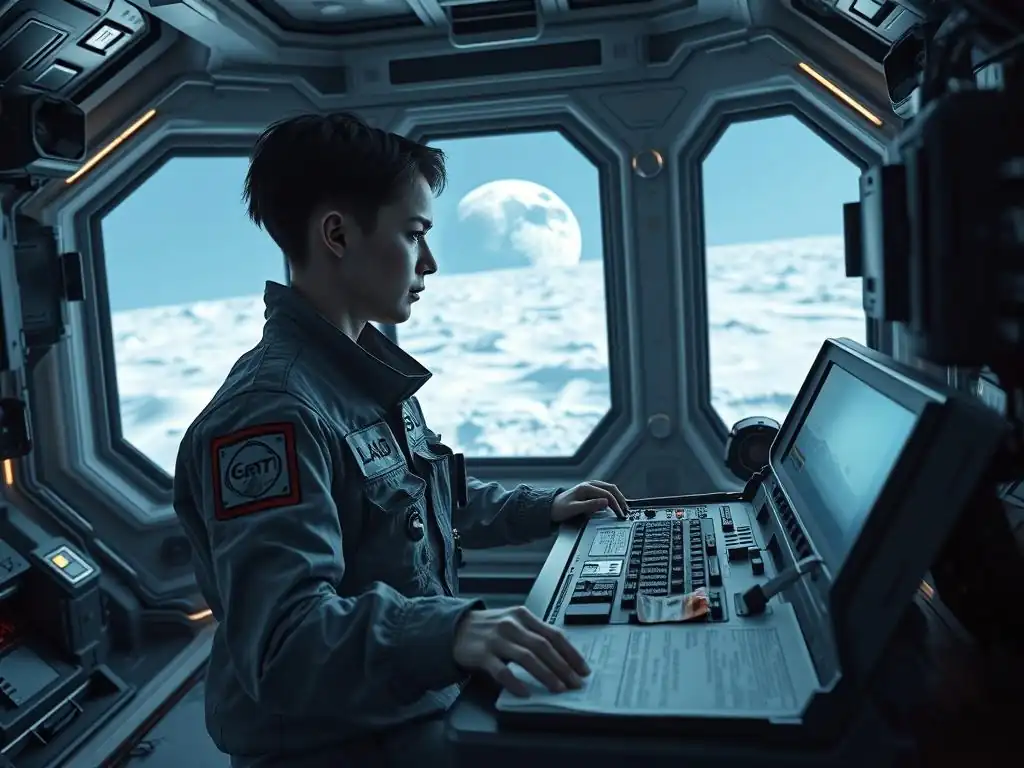
Welcome to WomenInScienceHistory.com, where we unearth the untold stories of remarkable women who shaped the world of science. Are you ready to explore the universe of opportunities awaiting you in STEM? In our latest article, "Shattering Stereotypes: A Young Woman's Blueprint for Thriving in Space Fields," we delve into practical advice and inspirational narratives for those dreaming of women in space careers. Discover how to navigate challenges, access crucial resources, and pave your way to the stars. Intrigued? Keep reading to ignite your own journey into the cosmos!
- Introduction: Inspiring Future Generations of Women in Space Careers
- Understanding the Landscape: Challenges and Opportunities for Women in Space Science
- Building Your Foundation: Education and Skill Development for Space Careers
- Launching Your Career: Strategies for Success in Space Careers
- Monetization Opportunities: Leveraging Your Expertise and Network
- Inspiring Stories: Women Who Have Shaped the Space Industry
- Conclusion: Empowering the Next Generation of Women in Space.
-
Frequently Asked Questions
- How does WomenInScienceHistory.com contribute to promoting women in space careers?
- What kind of information can I find on WomenInScienceHistory.com about women in space careers?
- What challenges did women historically face in pursuing careers in space?
- What are some examples of "groundbreaking work" by women in space fields highlighted on the website?
- How can WomenInScienceHistory.com inspire young women to pursue careers in space?
- Final Reflection: Reaching for the Stars, Together
- Ignite Your Cosmic Journey!
Introduction: Inspiring Future Generations of Women in Space Careers
The cosmos has always beckoned humanity, a vast frontier of discovery and innovation. While the early days of space exploration were largely dominated by men, the landscape is rapidly transforming. Today, the field of space science offers unparalleled opportunities for women, challenging historical norms and fostering a new era of inclusivity.
This article serves as a comprehensive blueprint for young women aspiring to build impactful careers in space, navigating the unique challenges and leveraging the burgeoning opportunities within the industry. It aims to inspire and equip the next generation of pioneers, ensuring that more women contribute their brilliance to the advancement of space exploration and truly thrive in diverse women in space careers.
Understanding the Landscape: Challenges and Opportunities for Women in Space Science
Overcoming Gender Bias in STEM: A Historical Perspective
Historically, women in science, technology, engineering, and mathematics (STEM) fields, including space, have faced significant systemic barriers and gender bias. In the early 20th century, brilliant female minds, often relegated to roles like "computers" at institutions such as the Harvard College Observatory, performed groundbreaking calculations that underpinned astronomical discoveries but rarely received due credit or leadership positions. For instance, the work of Henrietta Swan Leavitt in discovering the period-luminosity relationship for Cepheid variables, crucial for measuring cosmic distances, was initially overshadowed, despite its profound impact on astronomy.
Even as late as the 1960s, despite the rigorous testing of the "Mercury 13" women who met NASA's astronaut criteria, the agency's initial astronaut corps remained exclusively male, a stark illustration of the prevailing biases that limited women in space careers. These historical patterns of exclusion, from educational access to professional recognition, created a challenging environment, requiring immense perseverance from those who dared to break through.
The Evolving Role of Women in Aerospace: Breaking Barriers
The narrative for women in aerospace has significantly evolved, marked by pivotal moments that shattered historical barriers. Valentina Tereshkova's historic flight in 1963 as the first woman in space, followed two decades later by Sally Ride becoming the first American woman in space in 1983, served as powerful demonstrations of female capability and determination. These trailblazers not only achieved personal milestones but also opened doors for countless others, proving that the vacuum of space was no longer an exclusive domain.
In recent decades, the presence of women in various facets of the aerospace industry has steadily grown. While challenges persist, there's a clear upward trend. For example, NASA's astronaut class of 2013 was famously composed of 50% women, a historic first that signaled a conscious shift towards greater equity. Similarly, academic institutions report a rising percentage of women pursuing STEM degrees, with the American Society for Engineering Education noting an increase in female engineering graduates from approximately 15% in 2000 to over 22% by 2020, directly feeding the pipeline for diverse women in space careers.
The Demand for Diversity in Space Exploration
The complex and multifaceted challenges of space exploration inherently demand a diverse range of perspectives and skills. Research consistently demonstrates that diverse teams, encompassing a variety of genders, ethnicities, and backgrounds, outperform homogeneous ones in terms of problem-solving, innovation, and overall creativity.
For instance, a 2018 study by the Boston Consulting Group found that companies with above-average diversity scores on their management teams reported innovation revenue that was 19 percentage points higher than that of companies with below-average diversity scores. In a field as cutting-edge as space science, this enhanced cognitive diversity is not just beneficial; it's essential for groundbreaking discoveries and mission success.
Recognizing this, leading space agencies and private aerospace companies are actively prioritizing and investing in diversity initiatives. Organizations like NASA, the European Space Agency (ESA), SpaceX, and Blue Origin are implementing targeted recruitment programs to attract and retain talent from underrepresented groups, including a strong focus on women in space careers. This commitment to diversity creates a fertile ground for young women, offering not just opportunities to contribute but also environments where their unique insights and approaches are genuinely valued and sought after, driving the future of human exploration.
Building Your Foundation: Education and Skill Development for Space Careers
Choosing the Right Educational Path: STEM Degrees for Space Exploration
Embarking on a career in the space industry necessitates a strong academic foundation, primarily rooted in STEM disciplines. While aerospace engineering is a direct pathway, the interdisciplinary nature of space exploration means that degrees in physics, astronomy, computer science, geology, biology, and mathematics are equally valuable. For example, a degree in astrophysics could lead to research on exoplanets, while a background in geology might lead to a career in planetary science, analyzing Martian rock formations or preparing for lunar missions.
Many successful women in space careers have diverse educational backgrounds that reflect the varied needs of the industry. Dr. Mae Jemison, the first African American woman in space, holds degrees in chemical engineering and medicine, demonstrating how a broad STEM foundation can be leveraged. Similarly, Dr. Ellen Ochoa, the first Hispanic woman in space and former Director of Johnson Space Center, earned her Ph.D. in electrical engineering. Aspiring professionals should consider their specific interests within the vast space domain and align their educational choices accordingly, whether it's rocket propulsion, satellite communication, astrobiology, or robotics.
Acquiring Essential Skills: Technical Proficiency and Soft Skills
Beyond formal education, a blend of technical proficiency and crucial soft skills is paramount for success in space careers. On the technical front, mastering programming languages like Python and MATLAB, gaining expertise in data analysis, proficiency with Computer-Aided Design (CAD) software, and familiarity with robotics or specialized instrumentation are increasingly vital. Practical experience gained through laboratory work, personal projects, and technical competitions can significantly enhance these skills, making candidates highly competitive.
Equally important are the soft skills that facilitate effective collaboration and problem-solving in high-stakes environments. Critical thinking, adaptability, resilience, and exceptional communication are indispensable. For instance, clear and concise communication is crucial for mission control specialists, while adaptability is vital for engineers troubleshooting unexpected issues during a launch sequence. Teamwork and leadership abilities are also highly valued, as space missions are inherently collaborative endeavors, requiring diverse teams to work seamlessly towards common goals. Cultivating these skills will distinguish aspiring women in space careers in a competitive landscape.
The Power of Mentorship: Finding Guidance and Support
Mentorship plays an invaluable role in navigating the complexities of any demanding career path, and the space industry is no exception. A mentor, particularly one who has successfully forged a path in a STEM field, can offer unparalleled guidance, share practical insights, and provide crucial support in overcoming challenges. They can help identify specific opportunities, refine career goals, and offer advice on navigating potential biases, making the journey into women in space careers smoother and more informed.
To find suitable mentors, young women should actively engage with professional organizations such as the Society of Women Engineers (SWE), Women in Aerospace (WIA), or the American Institute of Aeronautics and Astronautics (AIAA). University alumni networks and departmental mentorship programs are also excellent resources. Attending industry events and networking sessions provides opportunities to connect with established professionals who might be willing to offer guidance. Many accomplished women within NASA, major aerospace companies, and academic institutions are eager to give back and support the next generation, often participating in formal or informal mentorship arrangements.
Launching Your Career: Strategies for Success in Space Careers

Networking and Building Connections: Attending Conferences and Events
Building a robust professional network is a critical strategy for launching and advancing a career in the space industry. Networking provides invaluable insights into emerging opportunities, helps identify potential mentors, and can lead directly to job prospects. Attending industry conferences and events is a highly effective way to forge these connections. Key events include the AIAA SciTech Forum, the Space Symposium, the International Astronautical Congress (IAC), and the Women in Aerospace Annual Awards Dinner, each offering unique opportunities to meet professionals, learn about cutting-edge research, and understand industry trends.
When attending these events, it's beneficial to prepare a concise "elevator pitch" about your interests and aspirations. Engaging in active listening during conversations and following up with thoughtful emails or LinkedIn messages can solidify new connections. These interactions often lead to unexpected opportunities, such as referrals to open positions, invitations to collaborative projects, or even the identification of a mentor who can significantly impact your journey into women in space careers. A strong network can provide a competitive edge in a specialized field.
Internships and Research Opportunities: Gaining Practical Experience
Practical experience gained through internships and research opportunities is indispensable for aspiring space professionals. Internships provide hands-on exposure to real-world projects, allowing individuals to apply theoretical knowledge and understand the operational culture of space organizations. Leading opportunities exist at NASA centers (e.g., Jet Propulsion Laboratory, Kennedy Space Center, Johnson Space Center), major aerospace contractors (e.g., Boeing, Lockheed Martin, Northrop Grumman), and innovative private space companies (e.g., SpaceX, Blue Origin, Rocket Lab). Many of these internships offer stipends and provide invaluable networking chances.
Similarly, participating in university research projects or working as a research assistant can significantly enhance a resume. These experiences develop specialized skills, contribute to scientific advancement, and can lead to publications or presentations, demonstrating a commitment to the field. For example, a research assistantship focused on developing new propulsion systems or analyzing satellite data can directly translate into highly sought-after skills for women in space careers. Such practical experience not only makes candidates more competitive but also helps them identify their specific areas of interest within the vast space domain.
Crafting a Compelling Resume and Cover Letter: Showcasing Your Strengths
A well-crafted resume and cover letter are your initial gateway to securing interviews and showcasing your potential in the space industry. Your resume should be tailored to each specific job application, highlighting relevant skills, projects, and experiences that align with the job description. Focus on quantifiable achievements rather than just duties; for instance, instead of "developed software," state "developed Python-based software that reduced data processing time by 20%." Use strong action verbs and clearly list technical proficiencies, certifications, and any relevant publications or presentations.
The cover letter provides an opportunity to tell a brief, compelling story that complements your resume. Personalize each letter, addressing it to the hiring manager if possible, and express genuine interest in the specific role and company. Connect your unique skills, experiences, and passion to the company's mission and the job requirements, demonstrating how you can contribute to their success. Highlight any unique perspectives or experiences that might be particularly valuable, especially for women in space careers, where diverse viewpoints are increasingly sought after. A strong cover letter conveys enthusiasm and professionalism, making a memorable first impression.
Monetization Opportunities: Leveraging Your Expertise and Network
Affiliate Marketing: Recommending Essential Tools and Resources
For experts in women in space careers, leveraging their specialized knowledge through affiliate marketing presents a unique monetization opportunity. This involves recommending essential tools, software, books, or educational resources that are genuinely valuable to others aspiring to or working in the space industry. By partnering with companies that offer these products (e.g., specific engineering software vendors, publishers of astrophysics textbooks, or suppliers of specialized equipment), individuals can earn a commission on sales made through their unique referral links.
This approach not only provides a passive income stream but also enhances credibility, as recommendations come from a trusted source with real-world experience. For example, a propulsion engineer could curate a list of recommended CAD programs or fluid dynamics textbooks, while an astrobiologist might suggest specific laboratory equipment or field guides for planetary geology. By sharing their authentic insights and preferred resources, professionals in women in space careers can support the community while generating additional revenue.
Targeting Specific Niches within Space Careers
Deep expertise in a highly specialized niche within the space industry can unlock significant monetization avenues, often through consulting, specialized training, or expert advisory roles. As the space sector rapidly expands, demand for hyper-specific knowledge in areas like satellite constellation management, space debris mitigation, lunar resource utilization, or astrobiological research is growing exponentially. Companies, startups, and even government agencies often seek external consultants for complex problems that require cutting-edge expertise.
For instance, a specialist in space law could consult for new space startups navigating complex international regulations, or an expert in advanced materials for spacecraft could advise on next-generation propulsion systems. These niche-focused services command premium rates due to the scarcity of such specialized knowledge. Professionals in women in space careers who cultivate deep expertise in these emerging or highly technical areas can position themselves as invaluable assets, offering their insights on a project-by-project basis or through retainer agreements.
Selling Educational Resources: Creating Online Courses and Ebooks
Another powerful way for professionals in women in space careers to monetize their expertise is by packaging their knowledge into educational resources, such as online courses, e-books, or specialized training modules. The global demand for accessible, high-quality STEM education, particularly in cutting-edge fields like space science, is substantial. Platforms like Coursera, Udemy, and Teachable allow experts to create and market their own courses, reaching a broad audience of students, aspiring professionals, and curious enthusiasts.
An experienced aerospace engineer could develop an online course on "Fundamentals of Rocket Propulsion," or a planetary scientist could author an e-book titled "A Beginner's Guide to Martian Geology." These digital products offer scalability and a relatively passive income once created. By sharing their practical insights and structured knowledge, women in space careers professionals can not only generate revenue but also significantly contribute to inspiring and educating the next generation of space explorers, democratizing access to specialized learning.
Inspiring Stories: Women Who Have Shaped the Space Industry
Dr. Ellen Ochoa: The First Hispanic Woman in Space
Dr. Ellen Ochoa stands as an inspiring figure in the history of women in space careers. Born in Los Angeles, California, she earned her Ph.D. in Electrical Engineering from Stanford University. Her distinguished career at NASA began in 1988, and she made history in 1993 aboard the Space Shuttle Discovery, becoming the first Hispanic woman in space. During her four space flights, Dr. Ochoa logged over 978 hours in orbit, contributing to crucial research on the Earth's ozone layer and conducting various scientific experiments.
Beyond her remarkable astronaut career, Dr. Ochoa continued to break barriers in leadership. In 2013, she was appointed the Director of the Johnson Space Center in Houston, Texas, becoming the first Hispanic person and second woman to hold this prestigious position. As director, she oversaw a workforce of over 10,000 employees and managed a budget of approximately $5 billion, playing a pivotal role in the future of human spaceflight. Her journey exemplifies the profound impact women in space careers can have, from active exploration to strategic leadership.
Mae Jemison: The First African American Woman in Space
Dr. Mae Jemison, a physician, engineer, and trailblazing astronaut, is a testament to the power of diverse talents in women in space careers. Hailing from Decatur, Alabama, she earned a B.S. in Chemical Engineering from Stanford University and an M.D. from Cornell University Medical College. Prior to her NASA career, she served as a Peace Corps medical officer in Sierra Leone and Liberia, demonstrating her commitment to global health and humanitarian efforts.
In 1987, Dr. Jemison was selected by NASA, and in 1992, she made history aboard the Space Shuttle Endeavour, becoming the first African American woman to travel to space. Her mission focused on life sciences experiments, including research on motion sickness and bone cell research. Post-NASA, Dr. Jemison founded The Jemison Group, Inc., and the Dorothy Jemison Foundation for Excellence, focusing on science literacy and sustainable development. Her work continues to inspire countless young people, particularly girls and minorities, to pursue STEM fields and envision themselves in groundbreaking women in space careers.
Reshma Shetty: Synthetic Biologist
Reshma Shetty represents a different, yet equally vital, facet of women in space careers through the burgeoning field of synthetic biology. As a co-founder of Ginkgo Bioworks, a Boston-based company at the forefront of designing custom microbes, she has significantly impacted how biotechnology contributes to various industries, including those with potential applications in space exploration. She earned her Ph.D. in Biological Engineering from MIT, where her pioneering work laid the groundwork for the company's innovative approach.
Ginkgo Bioworks, founded in 2008, focuses on "programming" cells like computers, designing biological solutions for challenges ranging from industrial enzymes to sustainable agriculture and pharmaceuticals. This field holds immense promise for future space missions, particularly in developing closed-loop life support systems, in-situ resource utilization on other planets, and advanced biological manufacturing in space. Under her leadership, Ginkgo Bioworks has grown into a publicly traded company with a valuation of billions of dollars, showcasing how diverse scientific backgrounds and entrepreneurial spirit contribute to the broader ecosystem of women in space careers, pushing the boundaries of what's possible beyond Earth.
Conclusion: Empowering the Next Generation of Women in Space.
The journey for women in space careers has been one of perseverance, innovation, and triumph over historical barriers. From the groundbreaking work of early computational scientists to the trailblazing flights of astronauts and the entrepreneurial ventures of synthetic biologists, women have consistently demonstrated their indispensable contributions to space exploration. The landscape is more welcoming and diverse than ever before, with a growing recognition that varied perspectives are crucial for solving the complex challenges of the cosmos.
For young women aspiring to join this exciting field, the blueprint is clear: build a strong STEM foundation, cultivate both technical and soft skills, seek out invaluable mentorship, and strategically network within the industry. The stories of Dr. Ellen Ochoa, Dr. Mae Jemison, and Reshma Shetty serve as powerful reminders that excellence knows no gender and that the future of space belongs to all who dare to dream and innovate. By embracing these opportunities, the next generation of women will undoubtedly continue to shatter stereotypes and lead humanity to new frontiers among the stars.
Frequently Asked Questions
How does WomenInScienceHistory.com contribute to promoting women in space careers?
The website WomenInScienceHistory.com highlights the historical contributions of women in STEM fields, which includes space-related disciplines, inspiring future generations and showcasing pathways to success. It also addresses the challenges faced by women in these fields.
What kind of information can I find on WomenInScienceHistory.com about women in space careers?
You can find biographies of pioneering female scientists who have contributed to space exploration, discussions about their groundbreaking work, and stories about the obstacles they overcame in a male-dominated industry.
What challenges did women historically face in pursuing careers in space?
Women often faced gender bias, limited educational opportunities, and a lack of recognition for their contributions. They were often excluded from key roles and leadership positions.
What are some examples of "groundbreaking work" by women in space fields highlighted on the website?
The website showcases contributions ranging from mathematical calculations for orbital mechanics to designing life support systems and conducting research on the effects of space on the human body.
How can WomenInScienceHistory.com inspire young women to pursue careers in space?
By showcasing the achievements and resilience of women who have broken barriers in space, the website provides role models and demonstrates that careers in space are attainable for women.
Final Reflection: Reaching for the Stars, Together
The journey we've explored in this article, highlighting a young woman's path in space fields, underscores a critical truth: representation matters, and breaking down stereotypes opens doors to innovation and progress. The challenges and triumphs shared are not isolated incidents; they reflect a broader need for inclusivity and encouragement within STEM, particularly for women pursuing careers in space. This isn't just about filling quotas; it's about harnessing the full potential of human ingenuity.
This narrative resonates deeply because it speaks to the ongoing struggle for equity and the power of individual determination. Seeing oneself reflected in leadership and innovation is paramount for inspiring future generations. The impact of role models cannot be overstated. You can't be what you can't see,
as Marian Wright Edelman so eloquently stated. This sentiment highlights the urgent need to amplify the voices and achievements of women in space careers, paving the way for a more diverse and vibrant future.
As we conclude, consider the ripple effect of this story. How can you, in your own sphere of influence, champion inclusivity and support aspiring women in STEM? Reflect on the biases you might unconsciously hold and actively work to dismantle them. The future of space exploration, and indeed the future of innovation itself, depends on our collective commitment to creating a world where everyone has the opportunity to reach for the stars, regardless of gender.
Ignite Your Cosmic Journey!
Thank you for exploring the inspiring story of women conquering the cosmos. Now, it's your turn to take flight and make your own mark in the STEM universe. Here are a few stellar steps to get you started:
- Boldly chart your course: Identify one specific skill or area of space exploration that genuinely excites you and dedicate 30 minutes each week to learning more about it.
- Connect with your constellation: Join an online community of women in STEM or reach out to a mentor in the space field for guidance and support.
- Share this article to inspire a generation to explore opportunities in STEM fields.
What small step will you take today to begin your own journey into the vast possibilities of space?