
Not Just Astronauts: Unveiling Diverse Space Science Roles for Young Women

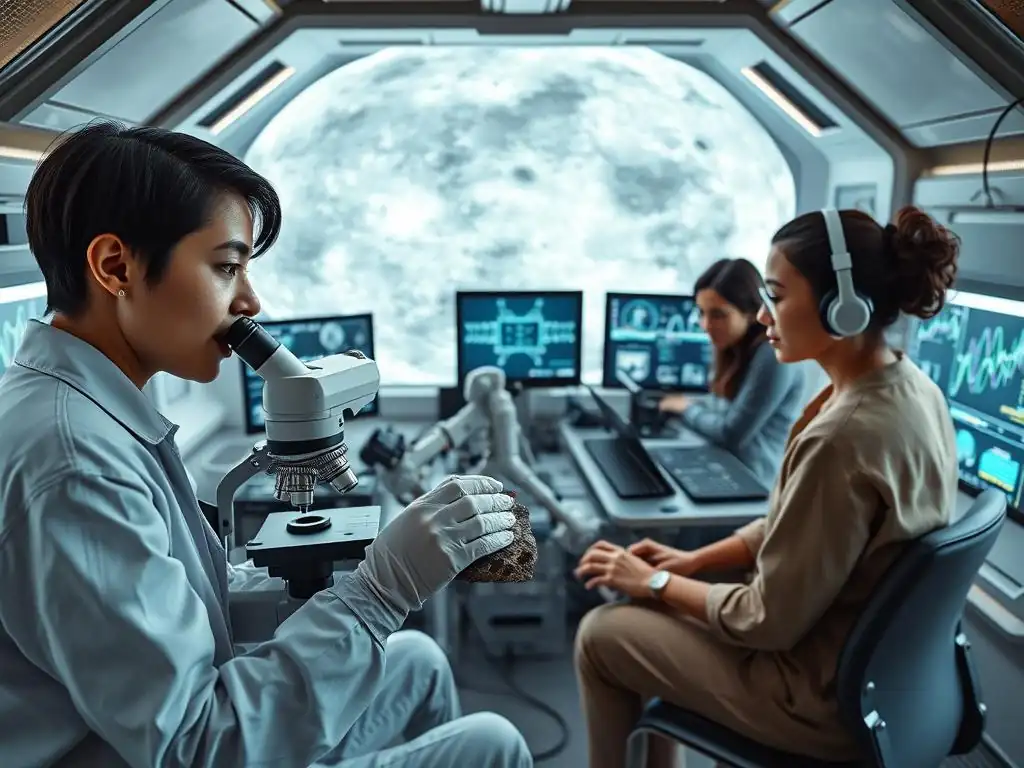
Welcome to WomenInScienceHistory.com, a tribute to the brilliant minds that shaped the scientific landscape. This is more than just history; it's a source of inspiration. Ever wondered about the diverse roles women played in pushing the boundaries of space exploration? Our feature article, "Not Just Astronauts: Unveiling Diverse Space Science Roles for Young Women," dives into the fascinating world of women in space science, revealing the often-unseen contributions beyond the astronaut's helmet. Prepare to be amazed by the untold stories waiting to be discovered! What innovations and challenges did these pioneers face? Read on to find out!
- Exploring Women's Roles in Space Science: Beyond Astronauts
-
Top Space Science Careers for Young Women (That Aren't Just Astronauts)
- 1. Aerospace Engineer: Designing the Future of Space Travel
- 2. Astrophysicist: Unraveling the Mysteries of the Universe
- 3. Planetary Scientist: Exploring the Solar System and Beyond
- 4. Space Medicine Researcher: Protecting Astronauts' Health
- 5. Space Policy Analyst: Shaping the Future of Space Exploration
- Breaking Down Barriers for Women in Space Science Careers
- Inspiring Future Generations: Showcasing Successful Women in Space Science History
- Conclusion: The Future of Women in Space Science is Bright
-
Frequently Asked Questions
- What are some examples of non-astronaut careers in space science highlighted by WomenInScienceHistory.com?
- Why is it important to highlight the contributions of women in space science history?
- What kind of challenges did women in space science historically face?
- How does WomenInScienceHistory.com aim to inspire young women to pursue careers in space science?
- What specific resources does WomenInScienceHistory.com offer for those interested in "women in space science"?
- Final Reflection: Embracing the Cosmic Frontier
- Ignite Your Cosmic Journey!
Exploring Women's Roles in Space Science: Beyond Astronauts
Why Space Science Needs More Women: Addressing the Gender Gap
The realm of space science, while a frontier of innovation and discovery, has historically grappled with a significant gender disparity. Despite notable advancements, women remain underrepresented in many specialized areas of this field. For instance, while the number of women pursuing STEM degrees has grown, data from organizations like the National Science Foundation indicates that women still constitute less than one-third of the workforce in physical sciences and engineering sectors crucial to space exploration. This gap isn't just a matter of equity; it represents a missed opportunity for groundbreaking insights and diverse problem-solving approaches.
Bringing more women into space science careers is paramount for fostering richer perspectives and driving innovation. Diverse teams, including those with a strong presence of women, have been shown to be more creative and effective in solving complex problems. By addressing the gender gap, the space science community can tap into a wider pool of talent, ensuring that the future of humanity's off-world endeavors is shaped by the broadest possible range of intellects and experiences. This inclusivity is vital for tackling the multifaceted challenges of space exploration, from engineering new propulsion systems to understanding the intricacies of exoplanets.
Challenging Stereotypes: Diverse Career Paths for Women in Space Exploration
A common misconception is that a career in space science primarily means becoming an astronaut. While astronauts are indeed the visible faces of space exploration, the vast majority of contributions to space science come from a diverse array of professionals working behind the scenes. This narrow perception often discourages young women who may not envision themselves as space travelers but possess a deep passion for the cosmos. The reality is that the field of space science encompasses an expansive spectrum of roles, many of which are vital yet less publicized.
For example, pioneers like Nancy Grace Roman, an astronomer and a key figure at NASA, earned the moniker "Mother of Hubble" for her pivotal role in planning the Hubble Space Telescope. Her work was not about flying to space but about meticulously designing the instruments that would unveil the universe's secrets.
Similarly, Katherine Johnson, a mathematician, performed the critical calculations for Project Mercury and the Apollo 11 moon landing, demonstrating that a deep understanding of mathematics and physics can propel humanity to the stars without leaving Earth. These examples highlight that women in space science contribute through various intellectual and technical pathways, far beyond direct spaceflight.
Top Space Science Careers for Young Women (That Aren't Just Astronauts)
1. Aerospace Engineer: Designing the Future of Space Travel
The Role of Aerospace Engineers in Space Missions
Aerospace engineers are the architects of space. They are responsible for the design, development, testing, and production of spacecraft, satellites, rockets, and other systems essential for space missions. Their work is incredibly diverse, ranging from designing the structural integrity of a lunar lander for the Artemis missions to developing advanced propulsion systems that can reduce travel times to Mars. They might specialize in aerodynamics, propulsion, structural mechanics, guidance and control systems, or thermal management, ensuring that every component can withstand the extreme conditions of space.
For instance, an aerospace engineer might work on developing the next generation of reusable rockets, optimizing fuel efficiency and thrust, or designing the life support systems within an orbital habitat. Their expertise is crucial at every stage of a mission, from initial concept sketches and computer simulations to the rigorous testing of prototypes in specialized facilities. Without their meticulous work, complex missions like deploying the James Webb Space Telescope or sending probes to distant planets would simply not be possible.
Educational Paths and Required Skills
To embark on a career as an aerospace engineer, a bachelor's degree in aerospace engineering, mechanical engineering, or a closely related field is typically the foundational requirement. Many advanced positions, particularly in research and development or leadership roles, often necessitate a master's or Ph.D. Key skills include a strong grasp of mathematics, physics, and computer-aided design (CAD) software. Proficiency in programming languages like Python or MATLAB is increasingly valuable for modeling and simulation.
Beyond technical acumen, successful aerospace engineers need strong problem-solving abilities, meticulous attention to detail, and excellent communication skills to collaborate effectively with multidisciplinary teams. They must be adept at analytical thinking to diagnose complex issues and devise innovative solutions under strict constraints. Practical experience, often gained through internships with space agencies or private aerospace companies, is also highly beneficial for aspiring women in space science.
Monetization Opportunity
The financial prospects for aerospace engineers are generally robust, reflecting the specialized and critical nature of their work. Entry-level positions for aerospace engineers in the United States can offer salaries ranging from approximately $70,000 to $90,000 annually. With several years of experience, a mid-career aerospace engineer might expect to earn between $90,000 and $120,000.
Senior-level engineers, particularly those in leadership, project management, or highly specialized research roles, can command salaries exceeding $150,000 per year. These figures can vary based on factors such as employer (government agencies like NASA, private aerospace companies like SpaceX or Boeing, or defense contractors), geographic location, and specific industry demand.
2. Astrophysicist: Unraveling the Mysteries of the Universe
What Astrophysicists Do
Astrophysicists are explorers of the cosmos, using the laws of physics to understand the universe and its celestial inhabitants. They study everything from the birth and death of stars, the formation and evolution of galaxies, to the enigmatic properties of black holes, dark matter, and dark energy. Their work primarily involves analyzing vast amounts of data collected from powerful telescopes, both ground-based and space-based, such as the Hubble Space Telescope or the Atacama Large Millimeter/submillimeter Array (ALMA). They develop theoretical models and simulations to explain observed phenomena and predict new ones.
A typical day for an astrophysicist might involve writing code to process astronomical data, collaborating with international teams on research papers, or designing experiments for future observatories. For example, an astrophysicist might spend months analyzing light curves from distant exoplanets to determine their atmospheric composition, or modeling the gravitational interactions within a galaxy cluster to infer the distribution of invisible dark matter. Their contributions are fundamental to humanity's understanding of the universe's origins, its current state, and its ultimate fate.
Required Education and Skills
A career as an astrophysicist almost always requires a Ph.D. in Physics or Astrophysics. The educational journey typically involves a rigorous undergraduate degree in physics, followed by several years of graduate study and research. Strong mathematical aptitude is indispensable, as is proficiency in computational methods and data analysis. Many astrophysicists are adept at programming languages such as Python, R, or C++, which are used for data processing, simulation, and model building.
Beyond academic qualifications, critical thinking, problem-solving skills, and intellectual curiosity are paramount. Astrophysicists must be able to formulate hypotheses, design experiments (often observational rather than laboratory-based), and interpret complex data sets. Excellent written and oral communication skills are also vital for presenting research findings at conferences and publishing in peer-reviewed journals, enabling them to share their discoveries with the global scientific community.
Monetization Opportunity
The salary for an astrophysicist can vary significantly depending on the sector of employment (academia, government, or private industry) and experience level. Postdoctoral researchers, typically the first step after a Ph.D., might earn between $55,000 and $75,000 annually.
University professors or researchers at government institutions like NASA's Goddard Space Flight Center might earn $80,000 to $150,000, with senior faculty and research scientists potentially exceeding this. Increasingly, astrophysicists are also finding lucrative roles in data science and quantitative analysis in the private sector, leveraging their advanced analytical skills, where salaries can range from $90,000 to $180,000 or more, particularly in tech or finance.
3. Planetary Scientist: Exploring the Solar System and Beyond
The Work of Planetary Scientists
Planetary scientists are dedicated to understanding the formation, composition, and evolution of planets, moons, asteroids, comets, and other celestial bodies within our solar system and beyond. They delve into the geology, atmospheres, climates, and potential for life on these distant worlds. Their work is often intertwined with robotic space missions; they analyze data transmitted from rovers on Mars, orbiters around Jupiter's moons, or probes exploring the rings of Saturn. They might study ancient Martian riverbeds to understand its past climate, or investigate the subsurface oceans of Europa for signs of habitability.
These scientists use a variety of tools, from remote sensing techniques to laboratory analysis of meteorites. They interpret images, spectroscopic data, and gravitational field measurements to construct detailed models of planetary interiors and surfaces. For example, a planetary scientist might be part of the team planning the next mission to Venus, determining the optimal instruments to study its extreme atmosphere, or analyzing seismic data from the Moon to understand its deep structure. Their research directly informs future exploration strategies and expands our knowledge of planetary diversity.
Educational Requirements and Necessary Skills
A career as a planetary scientist typically requires a Ph.D. in planetary science, geology, geophysics, astronomy, or a related Earth science discipline. An undergraduate degree in one of these fields provides the necessary foundation. Strong skills in data analysis, geographic information systems (GIS), and computational modeling are crucial. Fieldwork, though not always in space, is often part of the training, as terrestrial analogs help in understanding extraterrestrial processes.
Planetary scientists must possess a deep understanding of geological processes, atmospheric dynamics, and celestial mechanics. They need excellent observational skills to interpret complex data sets and the ability to synthesize information from multiple scientific disciplines. Collaborative spirit and strong communication skills are also vital, as they often work in large, interdisciplinary teams on major space missions. Their expertise helps guide humanity's search for life beyond Earth and understand the unique characteristics of our own planet.
Monetization Opportunity
Similar to astrophysicists, the earning potential for planetary scientists depends heavily on their employer and experience. Entry-level positions, such as post-doctoral research associates, typically offer salaries in the range of $55,000 to $75,000 annually. For established researchers at universities, government agencies like NASA's Jet Propulsion Laboratory (JPL), or research institutes, salaries can range from $80,000 to $140,000. Senior scientists and those in leadership roles on major missions can earn upwards of $150,000. Opportunities in the private sector, particularly with companies involved in space resources or space tourism, are also emerging, offering competitive compensation for those with specialized expertise.
4. Space Medicine Researcher: Protecting Astronauts' Health
Understanding the Challenges of Space Travel on the Human Body
Space travel, particularly long-duration missions, imposes unique and significant physiological and psychological challenges on the human body. Microgravity, for example, leads to bone density loss at a rate far exceeding that experienced on Earth, and muscle atrophy, necessitating rigorous exercise regimens. Astronauts are also exposed to elevated levels of cosmic radiation, which can increase cancer risk and potentially affect the central nervous system. Furthermore, the confined environment, isolation, and separation from Earth can lead to psychological stress and impact crew cohesion.
These challenges are not merely theoretical; they are real concerns that directly impact mission safety and success. For instance, data from long-duration missions on the International Space Station (ISS) have provided invaluable insights into these effects, showing that even with countermeasures, astronauts experience measurable changes in their cardiovascular systems, vision, and immune responses. Understanding and mitigating these risks is paramount for future missions, such as a crewed journey to Mars, which could last for several years.
The Role of Space Medicine Researchers
Space medicine researchers are at the forefront of protecting astronaut health, ensuring human resilience in the extreme environment of space. They design and conduct experiments on Earth (using analogues like bed rest studies or parabolic flights) and in space (on the ISS) to understand the mechanisms of space-induced physiological changes. Their work involves developing innovative countermeasures, such as advanced exercise equipment, nutritional supplements, or pharmaceutical interventions, to prevent or alleviate negative health effects. They also contribute to designing medical systems and protocols for future spacecraft and habitats, ensuring astronauts have the necessary medical support far from Earth.
For example, a space medicine researcher might investigate the efficacy of a new drug to prevent radiation damage, or analyze genetic markers to predict individual susceptibility to microgravity-induced vision changes. They also play a critical role in developing psychological support programs and crew selection criteria to ensure mental well-being during prolonged missions. Their interdisciplinary efforts are essential for safeguarding the health and performance of the women and men who venture into the cosmos, enabling humanity to push the boundaries of space exploration.
Educational Paths and Required Skills
A career in space medicine research typically requires an advanced degree, such as an MD (Medical Doctor), a Ph.D. in fields like biomedical engineering, physiology, neuroscience, or public health, or a combination of both. Many professionals in this field have backgrounds in clinical medicine, research, or both. Key skills include a strong foundation in human anatomy and physiology, research methodology, data analysis, and an understanding of the space environment. Experience in clinical practice or laboratory research is highly beneficial.
Additionally, space medicine researchers need excellent problem-solving skills to address novel health challenges, adaptability to work in rapidly evolving fields, and strong communication abilities to collaborate with engineers, physicists, and astronauts. They must be able to translate complex scientific findings into practical applications for space missions. Their expertise is vital for ensuring the long-term health and safety of women in space science who embark on pioneering journeys.
Monetization Opportunity
The salary for a space medicine researcher can vary widely depending on their educational background (MD vs. Ph.D.), experience, and employer (government agencies like NASA, academic institutions, or private aerospace companies). A Ph.D.-level researcher might earn between $80,000 and $150,000 annually. Medical doctors specializing in aerospace medicine who work as researchers or practitioners can command significantly higher salaries, often ranging from $150,000 to over $300,000, particularly if they hold clinical positions or leadership roles. Opportunities also exist in the private sector with companies developing commercial spaceflight or space tourism, which are increasingly investing in human health research.
5. Space Policy Analyst: Shaping the Future of Space Exploration
The Importance of Space Policy
Space policy forms the critical framework that governs all activities in outer space, from scientific research and commercial endeavors to national security and international cooperation. It defines who can do what in space, how resources are managed, and how potential conflicts are resolved. Without clear and effective policies, the burgeoning space economy and ambitious exploration goals would face significant legal, ethical, and operational hurdles. For instance, international agreements like the Outer Space Treaty of 1967 set fundamental principles for the peaceful use of space, while more recent initiatives like the Artemis Accords aim to establish norms for lunar exploration.
These policies impact funding allocations for scientific missions, determine the scope of international collaborations (like the International Space Station partnership), and address emerging issues such as space debris management or the responsible utilization of lunar resources. The decisions made in space policy today will profoundly shape the accessibility and sustainability of space for future generations, including the opportunities available for women in space science roles.
The Role of Space Policy Analysts
Space policy analysts are the intellectual architects of space governance. They research, analyze, and provide expert advice on complex issues related to space law, international relations, national security, and the commercialization of space. They work for government agencies, think tanks, international organizations, or private companies, translating scientific and technical advancements into actionable policy recommendations. Their work often involves drafting policy papers, testifying before legislative bodies, or participating in international negotiations.
For example, a space policy analyst might assess the implications of new satellite mega-constellations on orbital traffic and collision risk, or develop recommendations for ethical guidelines concerning planetary protection and the search for extraterrestrial life. They bridge the gap between scientific discovery and political decision-making, ensuring that space activities are conducted responsibly, sustainably, and in alignment with national and international objectives. Their insights are crucial for navigating the evolving landscape of space exploration and establishing a stable environment for women in space science to thrive.
Educational Requirements and Necessary Skills
A career as a space policy analyst typically requires a master's or Ph.D. in fields such as international relations, public policy, law, political science, or science and technology policy. An undergraduate degree in a STEM field combined with a policy-focused graduate degree can be particularly advantageous, offering a strong blend of technical understanding and policy expertise. Key skills include exceptional research and analytical abilities, clear and concise writing, and persuasive oral communication.
Analysts must be adept at synthesizing complex information from various sources—scientific papers, legal documents, and political discourse—and presenting it in an accessible manner for decision-makers. A strong understanding of geopolitical dynamics, international law, and the technological aspects of space is also crucial. Networking and the ability to build consensus among diverse stakeholders are also invaluable for those shaping the future of space policy.
Monetization Opportunity
Salaries for space policy analysts can vary significantly based on their employer, experience level, and geographic location. Entry-level positions at government agencies or think tanks might offer salaries ranging from $60,000 to $80,000 annually. Mid-career professionals with several years of experience could expect to earn between $80,000 and $120,000. Senior policy analysts, particularly those in leadership roles, consulting, or working for private aerospace companies, can command salaries exceeding $120,000, with some highly experienced individuals earning upwards of $150,000. The growing commercial space sector is also opening new opportunities for policy experts.
Breaking Down Barriers for Women in Space Science Careers

Overcoming Gender Bias: Resources and Support Networks for Women in STEM
Despite progress, women in space science and broader STEM fields can still encounter gender bias, ranging from subtle microaggressions to more overt discrimination in hiring, promotion, and recognition. Historical precedents, where women's contributions were often overlooked or attributed to male colleagues, underscore the ongoing need for vigilance. For example, the "Mathematicians" at NASA's Langley Research Center, predominantly African American women like Katherine Johnson, Dorothy Vaughan, and Mary Jackson, faced both racial and gender discrimination, yet their calculations were indispensable to the space race.
Fortunately, a robust ecosystem of resources and support networks is dedicated to empowering women in STEM. Organizations such as the Society of Women Engineers (SWE), Women in Aerospace (WIA), and the American Association of University Women (AAUW) offer professional development, networking opportunities, and advocacy. These groups provide platforms for women to share experiences, gain mentorship, and collectively address systemic biases, fostering a more inclusive environment where the talents of all women in space science are recognized and valued.
Mentorship Programs: Connecting Young Women with Experienced Professionals in Space Science
Mentorship plays a pivotal role in navigating the complexities of any career path, and it is particularly impactful for young women entering the specialized field of space science. Having an experienced professional to offer guidance, share insights, and provide encouragement can be instrumental in overcoming challenges, building confidence, and identifying career opportunities. Mentors can help demystify career trajectories, advise on educational choices, and provide crucial networking connections that might otherwise be difficult to forge.
Many organizations and institutions actively facilitate mentorship programs to support the next generation of women in space science. For instance, NASA offers various mentorship opportunities through its internship programs and employee resource groups. Professional societies like Women in Aerospace often run structured mentorship initiatives, pairing aspiring students and early-career professionals with seasoned experts. These programs not only transfer knowledge but also build a supportive community, ensuring that young women feel connected and empowered as they pursue their passion for space exploration.
Scholarships and Grants: Funding Opportunities for Women Pursuing Space Science Education
Financial barriers can be a significant obstacle for many students pursuing higher education, particularly in demanding fields like space science that often require advanced degrees. Recognizing this, numerous scholarships and grants have been established specifically to support women in STEM, helping to alleviate tuition costs, research expenses, and living allowances. These funding opportunities are crucial for ensuring that talent and passion, rather than financial constraints, dictate who can pursue a career in space science.
Examples of such opportunities include the Zonta International Amelia Earhart Fellowship, which provides substantial grants to women pursuing Ph.D./doctoral degrees in aerospace-related sciences and engineering. The National Science Foundation (NSF) offers various graduate research fellowships that are highly competitive and open to women in relevant scientific disciplines. Additionally, many universities and private foundations offer specific scholarships designed to encourage and support women in space science and other STEM fields, making advanced education more accessible and fostering a diverse pipeline of future leaders.
Inspiring Future Generations: Showcasing Successful Women in Space Science History
Highlighting the Accomplishments of Female Pioneers in Space Science
The history of space science is rich with the contributions of pioneering women, many of whom broke significant barriers to make their mark. Beyond the well-known astronauts, countless women have excelled in critical scientific and engineering roles. For example, Vera Rubin, an American astronomer, provided compelling evidence for the existence of dark matter through her meticulous observations of galaxy rotation rates in the 1970s, fundamentally changing our understanding of the universe's composition. Her persistence in a male-dominated field, despite facing initial skepticism, paved the way for subsequent research.
Another remarkable figure is Jocelyn Bell Burnell, an astrophysicist who, as a graduate student in 1967, co-discovered pulsars—rapidly rotating neutron stars that emit beams of radiation. Although the Nobel Prize was awarded to her supervisor, her groundbreaking observation was pivotal to the discovery. These stories, along with those of Katherine Johnson, Nancy Grace Roman, and many others, are not just historical anecdotes; they are powerful testaments to the resilience, intellect, and indelible impact of women in space science, inspiring young women today to pursue their own scientific ambitions.
Encouraging Young Women to Pursue Their Passion for Space Exploration
The narrative of women in space science is one of relentless pursuit, innovation, and unwavering passion. By spotlighting the achievements of those who paved the way, we can effectively encourage young women to envision themselves as integral parts of humanity's future in space. It is crucial to move beyond single, iconic figures and illuminate the vast array of roles and contributions, from designing mission software to analyzing cosmic dust. This broader perspective helps young women understand that their unique skills and interests can find a vital place within the space community.
Programs that engage girls in STEM from an early age, coupled with accessible role models and hands-on experiences, are essential. When young women see themselves reflected in the stories of successful female scientists and engineers, they are more likely to believe in their own potential and overcome societal pressures or self-doubt. The future of space exploration demands the brightest minds and most diverse perspectives, making it imperative to nurture every spark of curiosity and passion for the cosmos in young women, ensuring they see a clear path to becoming integral women in space science.
Conclusion: The Future of Women in Space Science is Bright
Seizing Opportunities and Making a Difference
The landscape of space science is expanding at an unprecedented rate, opening a vast array of opportunities for passionate and talented individuals. For young women, the field is no longer limited to a few highly visible roles but encompasses a rich tapestry of careers, from designing the next generation of spacecraft as an aerospace engineer to unraveling cosmic mysteries as an astrophysicist. The growing recognition of the value of diversity, coupled with targeted support initiatives, is actively breaking down historical barriers, making the path for women in space science clearer and more accessible than ever before.
The contributions of women are not just a welcome addition; they are an essential component for the continued advancement and innovation in space exploration. By pursuing their interests in these diverse fields, young women can seize the opportunity to contribute to humanity's most ambitious endeavors—exploring the unknown, protecting our planet, and pushing the boundaries of what is possible. The future of space science is bright, and it is increasingly being shaped by the intellect, creativity, and determination of women making a profound and lasting difference.
Frequently Asked Questions
What are some examples of non-astronaut careers in space science highlighted by WomenInScienceHistory.com?
The website focuses on a range of roles beyond astronauts, such as space engineers, astrophysicists, and mission control specialists. It emphasizes the diverse opportunities available in the field.
Why is it important to highlight the contributions of women in space science history?
It's crucial to recognize these women because their stories are often overlooked in traditional historical narratives. This helps to inspire future generations and promote diversity in STEM.
What kind of challenges did women in space science historically face?
Women often encountered gender discrimination and faced barriers to accessing education and career advancement. They had to overcome societal expectations and biases in male-dominated fields.
How does WomenInScienceHistory.com aim to inspire young women to pursue careers in space science?
The site showcases biographies of pioneering female scientists and their groundbreaking work. It provides role models and demonstrates the impact women can have in space exploration.
What specific resources does WomenInScienceHistory.com offer for those interested in "women in space science"?
The website features detailed biographies, articles on specific scientific contributions, and discussions of the challenges and triumphs of women in this field. It also provides links to external resources.
Final Reflection: Embracing the Cosmic Frontier
The journey through the diverse landscape of space science careers, as illuminated in this article, reveals that the possibilities for young women extend far beyond the astronaut's seat. The narrative shifts from a singular, often unattainable, dream to a constellation of roles, each contributing uniquely to our understanding and exploration of the cosmos. This expanded perspective is not just aspirational; it's essential for fostering a truly inclusive and innovative space science community.
The impact of broadening the definition of "who belongs in space science" resonates deeply within the cultural narrative. Seeing diverse faces and skillsets represented in this field is crucial for inspiring the next generation of female scientists and engineers. It dismantles stereotypes and empowers young women to envision themselves as active participants in shaping humanity's future among the stars. You can't be what you can't see,
as Marian Wright Edelman so eloquently stated. This rings especially true in fields like space science, where visibility and representation are paramount for fostering inclusivity.
Now, as you reflect on the stories and opportunities presented here, consider your own potential to contribute to the cosmic frontier. Whether through coding, engineering, research, or communication, your unique talents and perspectives are invaluable. Embrace the challenge, explore the possibilities, and become a part of the vibrant tapestry of women shaping the future of space science. The universe awaits your contribution.
Ignite Your Cosmic Journey!
Thank you for exploring the exciting universe of space science careers! We hope you’ve discovered new paths and possibilities that resonate with your passion for discovery. Now, it's time to take the next leap!
Here's how to continue your adventure:
- Boldly reach out to a woman in space science whose work inspires you and ask for an informational interview.
- Dive deeper by exploring the websites of leading space agencies and organizations to uncover internship and mentorship opportunities.
- Share this article with three friends who might be interested – let's build a community of future space pioneers!
What's one small step you can take today to launch your space science dreams?