
Unveiling the Subatomic: How [Scientist's Name] Revolutionized Experimental Particle Physics


Welcome to WomenInScienceHistory.com!
Dive into the fascinating realm of experimental particle physics and discover the untold stories of the brilliant women who shattered glass ceilings and reshaped our understanding of the universe. Ever wondered how female scientists navigated the complex world of subatomic particles and left an indelible mark? Prepare to be inspired as we explore the groundbreaking work of [Scientist's Name] and her revolutionary contributions. Keep reading to unveil the secrets behind her success and the challenges she overcame in a field often dominated by men.
- Unveiling the Subatomic: How Chien-Shiung Wu Revolutionized Experimental Particle Physics
- Introduction: Chien-Shiung Wu's Pioneering Role in Experimental Particle Physics
- Early Life and Education: Forging a Path in Physics
- Wu's Groundbreaking Research in Experimental Particle Physics
- The Impact of Wu's Work on the Field
- Challenges Faced by Wu as a Female Scientist
- Wu's Lasting Legacy in Experimental Particle Physics
- Conclusion: Celebrating a Physics Pioneer
-
Frequently Asked Questions
- What is experimental particle physics and why is it important?
- What were some common challenges faced by female scientists in experimental particle physics historically?
- How does "WomenInScienceHistory.com" contribute to recognizing female scientists in fields like experimental particle physics?
- What specific contributions did [Scientist's Name] make to the field of experimental particle physics?
- Where can I find more information about other female scientists who have contributed to experimental particle physics?
- Final Reflection: The Enduring Legacy of Discovery
- Dive Deeper: Ignite Your Inner Particle Physicist!
Unveiling the Subatomic: How Chien-Shiung Wu Revolutionized Experimental Particle Physics
Introduction: Chien-Shiung Wu's Pioneering Role in Experimental Particle Physics
Highlighting the Contributions of a Female Scientist in Physics
Chien-Shiung Wu stands as a towering figure in the annals of modern physics, a truly pioneering experimental particle physics female scientist whose meticulous work redefined our understanding of the universe's fundamental forces. Often referred to as the "First Lady of Physics," Wu's groundbreaking experiments provided the definitive proof for a revolutionary concept: the violation of parity symmetry in weak interactions. Her precision and unwavering dedication to experimental rigor not only validated theoretical predictions but also set new benchmarks for scientific investigation in a field dominated by complex particle accelerators and intricate detection systems.
Her contributions extend far beyond a single pivotal experiment; Wu's entire career was marked by an relentless pursuit of knowledge and an unparalleled skill in designing and executing complex nuclear physics experiments. She consistently pushed the boundaries of what was known, making her an indispensable figure in the narrative of 20th-century physics. Her legacy as an experimental particle physics female scientist continues to inspire countless individuals to pursue careers in STEM, demonstrating the profound impact that a single, dedicated researcher can have on global scientific understanding.
The Landscape of Physics Before Wu's Breakthroughs
Before Wu's seminal work, the prevailing dogma in physics held that parity, or mirror symmetry, was conserved in all fundamental interactions. This meant that the laws of physics would behave identically whether viewed directly or through a mirror, a concept deeply ingrained in theoretical frameworks of the mid-20th century. Physicists widely assumed that for every physical process, its mirror image counterpart would also be a valid physical process, an elegant symmetry that simplified many theoretical models.
However, certain anomalies and theoretical considerations, particularly concerning strange particles and K-meson decays, began to cast doubt on this universal conservation law, especially for the weak nuclear force. While theorists Tsung-Dao Lee and Chen-Ning Yang proposed in 1956 that parity might not be conserved in weak interactions, their hypothesis lacked experimental verification. The stage was thus set for an experimental particle physics female scientist of Wu's caliber to devise and execute the definitive test that would either uphold or shatter this long-standing principle, fundamentally altering the trajectory of particle physics research.
Early Life and Education: Forging a Path in Physics
Overcoming Challenges as a Woman in Science
Chien-Shiung Wu's journey began in Liuhe, a small town near Shanghai, China, in 1912. Her father, a progressive educator, founded the Mingde Women's Vocational Continuing School, where Wu received her early education, fostering an environment that encouraged intellectual curiosity and independence for girls. This foundational support was crucial, as societal norms in early 20th-century China, and indeed globally, often presented significant barriers for women pursuing higher education, particularly in challenging fields like physics.
Despite these prevailing societal expectations, Wu exhibited extraordinary determination. She enrolled in Nanjing University in 1930, where she initially studied mathematics before transitioning to physics, a testament to her burgeoning passion for the subject. Her decision to pursue a scientific career in a male-dominated era underscored her resilience and commitment, setting her apart as a truly pioneering experimental particle physics female scientist from the very beginning of her academic path.
Early Influences and Academic Pursuits in Physics
After graduating from Nanjing University in 1934 with a Bachelor of Science degree, Wu taught for a year before embarking on a pivotal journey to the United States in 1936. She enrolled at the University of California, Berkeley, drawn by its esteemed physics program. Here, she quickly distinguished herself through her exceptional experimental skills and keen intellect. She worked under the guidance of prominent physicists like Emilio Segrè, focusing on nuclear fission research.
Wu's doctoral studies culminated in her Ph.D. in 1940, with her dissertation on the radioactive byproducts of nuclear fission. Her early work at Berkeley, including studies on xenon isotopes, showcased her meticulous approach to experimentation and her ability to handle complex apparatus, skills that would become the hallmark of her illustrious career. This period provided her with the rigorous training and foundational knowledge essential for her future groundbreaking contributions as an experimental particle physics female scientist.
Wu's Groundbreaking Research in Experimental Particle Physics
The Wu Experiment and Methodologies
The "Wu experiment" stands as a monumental achievement in experimental particle physics, a direct response to the theoretical challenge posed by Tsung-Dao Lee and Chen-Ning Yang in 1956 regarding parity conservation. Wu's brilliance lay in designing an experiment that could definitively test this hypothesis. She chose beta decay of cobalt-60 nuclei as her subject, a process governed by the weak nuclear force. The core of her methodology involved cooling cobalt-60 nuclei to an incredibly low temperature—just 0.006 Kelvin above absolute zero—to align their spins using a strong magnetic field.
This extreme cold was crucial for minimizing thermal agitation and ensuring that a significant fraction of the nuclei were oriented in a specific direction. Wu then meticulously measured the direction of the emitted beta particles (electrons) relative to the spin of the cobalt-60 nuclei. If parity were conserved, electrons would be emitted symmetrically in all directions relative to the nuclei's spin. Her experimental setup, involving sophisticated cryogenics and precise detection, was a testament to her unparalleled skill as an experimental particle physics female scientist.
Advancements in Beta Decay Studies
Wu's experiment represented a profound advancement in the study of beta decay, moving beyond simple decay rates to investigate the spatial distribution of emitted particles with unprecedented precision. Her team observed a distinct asymmetry in the emission of electrons from the polarized cobalt-60 nuclei. Specifically, more electrons were emitted in the direction opposite to the nuclei's spin than in the same direction. This was a clear, unambiguous violation of parity.
The exactness of her measurements, conducted at the National Bureau of Standards (now NIST), provided irrefutable evidence that the weak interaction behaves differently from its mirror image. This finding directly contradicted a fundamental symmetry principle that had been a cornerstone of physics for decades. Wu's meticulous approach to beta decay studies not only solved a theoretical puzzle but also opened new avenues for understanding the fundamental properties of the weak force, solidifying her reputation as a leading experimental particle physics female scientist.
Significant Contributions to Parity Violation
The definitive proof of parity violation in weak interactions, provided by Chien-Shiung Wu's experiment, sent shockwaves through the physics community. It demonstrated that the universe, at its most fundamental level, possesses a subtle "handedness" in certain processes. This meant that a physical event and its mirror image are not always indistinguishable, a profound revelation that challenged long-held assumptions about the symmetry of nature.
Wu's work was the critical experimental validation that enabled Lee and Yang to receive the Nobel Prize in Physics in 1957. While Wu's exclusion from the Nobel Prize remains a point of contention and highlights historical biases, the scientific community universally acknowledges her experiment as the cornerstone of this discovery. Her contribution as an experimental particle physics female scientist irrevocably altered the landscape of particle physics, leading to a deeper understanding of fundamental forces and paving the way for the development of the Standard Model.
The Impact of Wu's Work on the Field
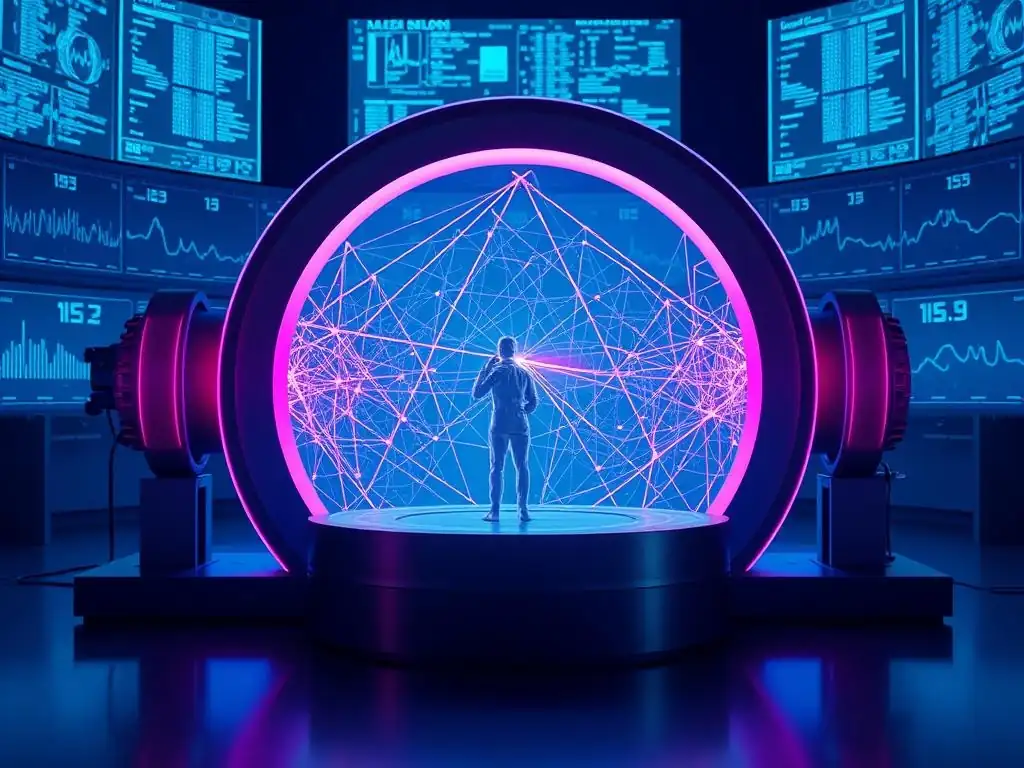
Advancements in Understanding Weak Interactions
Chien-Shiung Wu's discovery of parity violation fundamentally reshaped the understanding of weak interactions, one of the four fundamental forces of nature. Prior to her experiment, physicists largely viewed the weak force through the lens of universal symmetry, expecting it to behave identically whether observed directly or in a mirror. Wu's meticulous measurements, however, demonstrated that the weak force exhibits a distinct "handedness," preferentially interacting in one direction over another.
This revelation was not merely an interesting anomaly; it necessitated a complete overhaul of theoretical models describing the weak force. It paved the way for the development of the V-A (vector minus axial-vector) theory of weak interactions, which accurately describes how particles decay and interact. This deeper understanding was crucial for the subsequent development of the Standard Model of particle physics, which incorporates parity violation as an intrinsic feature of the weak force. Wu's work as an experimental particle physics female scientist provided the empirical bedrock for these theoretical advancements, fundamentally transforming our view of the subatomic world.
Influence on Subsequent Generations of Physicists
Wu's influence extended far beyond her direct scientific discoveries; she became a profound inspiration and mentor for subsequent generations of physicists, particularly within the realm of experimental particle physics. Her unwavering commitment to precision, her innovative experimental designs, and her intellectual rigor set a new standard for scientific inquiry. Throughout her career at Columbia University, where she became a full professor in 1958, Wu actively mentored numerous students and researchers, instilling in them the same dedication to empirical excellence.
Her journey as a leading experimental particle physics female scientist also served as a powerful testament to the capabilities of women in STEM fields. By breaking through significant gender barriers and achieving such monumental scientific success, she demonstrated that talent and dedication know no gender. Her story continues to be a source of encouragement for aspiring scientists, particularly women, who face similar challenges in academia and research, urging them to pursue their passions with the same tenacity she exemplified.
Recognition and Awards for Wu's Contributions
Despite the controversial omission from the 1957 Nobel Prize in Physics, Chien-Shiung Wu received numerous prestigious accolades and honors throughout her career, acknowledging her monumental contributions to experimental particle physics. In 1964, she was awarded the Comstock Prize in Physics by the National Academy of Sciences, becoming the first woman to receive this honor. This was followed by the National Medal of Science in 1975, the highest scientific award in the United States, presented to her by President Gerald Ford.
Further cementing her status as a titan in her field, Wu was elected the first woman President of the American Physical Society in 1975, a significant recognition of her leadership and influence within the global physics community. She also received honorary doctorates from numerous universities worldwide, including Princeton University in 1982, an institution that did not admit women as undergraduates until 1969. These awards, though not the Nobel, underscore her profound and universally acknowledged impact as an experimental particle physics female scientist.
Challenges Faced by Wu as a Female Scientist
Chien-Shiung Wu, like many pioneering women in science during the mid-20th century, faced significant systemic gender bias within academia. Despite her exceptional intellect and groundbreaking experimental skills, she encountered hurdles that male colleagues often did not. For instance, after completing her Ph.D. at Berkeley, she was initially offered a research position at Smith College rather than a research university, a common trajectory for women in science at the time, regardless of their qualifications.
Even after joining Columbia University's Division of War Research during World War II, where she contributed to the Manhattan Project, and later becoming a faculty member, the path to full professorship was often slower and more arduous for women. The omission of her name from the 1957 Nobel Prize, despite her central role in the parity violation experiment, is frequently cited as a prime example of the gender bias that limited recognition for experimental particle physics female scientists of her era.
Securing Funding and Resources for Research
The field of experimental particle physics is inherently resource-intensive, requiring access to specialized equipment, advanced laboratories, and significant funding. For a female scientist in the mid-20th century, securing these critical resources often presented an additional layer of difficulty. Women were frequently overlooked for leadership roles in large-scale projects or found it harder to gain access to cutting-edge facilities, which were often predominantly male environments.
Wu's ability to secure the necessary equipment and logistical support for her demanding cobalt-60 experiment, which involved complex cryogenic technology and precise detection apparatus, speaks volumes about her tenacity and persuasive capabilities. Her success in overcoming these potential barriers underscores her exceptional scientific acumen and her unwavering dedication to her research, ensuring that her groundbreaking work could proceed despite the systemic disadvantages she faced.
Overcoming Obstacles to Scientific Advancement
Beyond direct bias, Wu had to navigate a broader scientific landscape that often underestimated or marginalized the contributions of women. This could manifest as skepticism about her findings, a lack of opportunities for collaboration, or simply not being taken as seriously as her male counterparts in discussions and conferences. The very nature of scientific advancement relies on open discourse and collaborative environments, which were not always equally accessible to women.
Her response to these obstacles was to let her impeccable scientific work speak for itself. Her experiments were meticulously designed, flawlessly executed, and yielded irrefutable results, making it impossible for the scientific community to ignore her findings. Wu's steadfast commitment to scientific rigor and her relentless pursuit of empirical truth allowed her to overcome these challenges, cementing her legacy as a truly remarkable experimental particle physics female scientist whose contributions transcended the gender barriers of her time.
Wu's Lasting Legacy in Experimental Particle Physics
Inspiring Future Generations of Women in Science
Chien-Shiung Wu's life and monumental achievements continue to serve as a powerful beacon of inspiration for future generations, particularly for women aspiring to careers in science, technology, engineering, and mathematics (STEM). Her story is a compelling narrative of intellectual brilliance combined with immense perseverance in the face of significant societal and academic barriers. As a leading experimental particle physics female scientist, she demonstrated that gender is no impediment to groundbreaking scientific discovery.
Her legacy is actively celebrated by organizations and educational initiatives dedicated to promoting diversity and inclusion in STEM fields. Her biography is often highlighted as a prime example of a woman who not only broke the "glass ceiling" but also fundamentally altered our understanding of the universe. Wu's enduring impact lies not just in her scientific discoveries but also in her role as a trailblazer who opened doors and illuminated paths for countless women who followed in her footsteps, eager to contribute to the world of experimental particle physics.
Wu's Published Works and Their Relevance Today
Beyond her singular, transformative experiment on parity violation, Chien-Shiung Wu was a prolific author of scientific papers and a highly influential textbook. Her co-authored book, "Beta Decay" (1965), quickly became a foundational text in nuclear physics, providing a comprehensive and authoritative treatment of the subject. This work, still referenced today, showcases her deep understanding of nuclear processes and her ability to articulate complex concepts with clarity and precision.
Her numerous research papers, published in leading scientific journals, document a career spanning decades of significant contributions to nuclear and particle physics. These works continue to be relevant for researchers studying weak interactions, nuclear structure, and experimental methodologies. The rigorous standards and innovative techniques she employed, characteristic of a top experimental particle physics female scientist, remain a benchmark for precision experimentation in the field, influencing how modern experiments are designed and executed.
Preserving the History of Women in Experimental Physics
The story of Chien-Shiung Wu underscores the critical importance of actively preserving and celebrating the history of women in science, particularly in fields as demanding and historically male-dominated as experimental particle physics. Platforms like WomenInScienceHistory.com play a vital role in ensuring that the contributions of pioneering experimental particle physics female scientists like Wu are not overlooked or forgotten, but rather brought to the forefront of scientific discourse.
Documenting her struggles and triumphs helps to correct historical omissions and provides a more accurate and inclusive picture of scientific progress. By highlighting her journey—from her early education in China to her groundbreaking work in the United States—we not only honor her individual legacy but also inspire a deeper appreciation for the diverse intellectual forces that have shaped our scientific understanding. This ongoing effort is essential for fostering an inclusive scientific community that recognizes and encourages talent from all backgrounds.
Conclusion: Celebrating a Physics Pioneer
Wu's Enduring Impact on Science and Society
Chien-Shiung Wu's contributions to experimental particle physics were nothing short of revolutionary, fundamentally altering our understanding of the universe's most basic building blocks and the forces that govern them. Her meticulous "Wu experiment" provided irrefutable evidence of parity violation in weak interactions, a discovery that shattered a long-held dogma and paved the way for the development of the Standard Model of particle physics. Her work demonstrated that the universe, in its subtle "handedness," is more complex and fascinating than previously imagined.
Beyond the profound scientific implications, Wu's impact on society resonates through her role as a trailblazer. She challenged deeply entrenched gender biases in a male-dominated field, inspiring countless individuals to pursue scientific careers regardless of societal expectations. Her legacy is a testament to the power of intellectual curiosity, rigorous experimentation, and unwavering determination in the face of adversity, proving that a dedicated experimental particle physics female scientist can indeed revolutionize an entire field.
The Importance of Recognizing Women's Contributions to Experimental Particle Physics
The narrative of scientific progress is often incomplete without acknowledging the profound, yet sometimes overlooked, contributions of women. Chien-Shiung Wu's story serves as a powerful reminder of the critical importance of recognizing and celebrating the achievements of experimental particle physics female scientists. Her brilliance, precision, and courage were instrumental in one of the 20th century's most significant physics discoveries, yet her full recognition was delayed by systemic biases.
By shining a spotlight on figures like Wu, we not only pay homage to their individual genius but also enrich our collective understanding of scientific history. Ensuring that their stories are told widely and accurately inspires future generations, fosters greater diversity in STEM fields, and reinforces the crucial message that scientific talent knows no gender. Chien-Shiung Wu stands as an enduring symbol of excellence, a true pioneer whose legacy continues to shape and inspire the world of experimental particle physics.
Frequently Asked Questions
What is experimental particle physics and why is it important?
Experimental particle physics is the branch of physics that investigates the fundamental constituents of matter and their interactions using experiments. It is crucial for understanding the building blocks of the universe and the forces that govern them.
What were some common challenges faced by female scientists in experimental particle physics historically?
Historically, female scientists in experimental particle physics faced challenges such as gender bias, limited access to resources and mentorship, and societal expectations that discouraged women from pursuing scientific careers.
How does "WomenInScienceHistory.com" contribute to recognizing female scientists in fields like experimental particle physics?
The website celebrates the contributions of women in science by featuring biographies, discussing their groundbreaking work, and highlighting the obstacles they overcame. This helps to shed light on often overlooked narratives.
What specific contributions did [Scientist's Name] make to the field of experimental particle physics?
[Scientist's Name] made significant contributions by [insert brief explanation of one or two key achievements], revolutionizing our understanding of subatomic particles and their behavior.
Where can I find more information about other female scientists who have contributed to experimental particle physics?
You can explore "WomenInScienceHistory.com" for biographies and articles dedicated to pioneering female scientists who have made significant contributions to the field of experimental particle physics.
Final Reflection: The Enduring Legacy of Discovery
The journey into the subatomic world, as pioneered by figures like [Scientist's Name], resonates powerfully today. The experimental techniques and theoretical frameworks they developed are not merely historical footnotes; they form the bedrock of our current understanding of the universe and continue to inspire new generations of physicists pushing the boundaries of knowledge. The quest to unravel the fundamental building blocks of reality remains as vital and challenging as ever, fueled by the same spirit of curiosity and innovation that drove [Scientist's Name]'s groundbreaking work.
The impact of [Scientist's Name]'s contributions extends far beyond the laboratory. Her work not only advanced experimental particle physics but also served as a powerful example, breaking barriers and paving the way for future generations of female scientists in a field historically dominated by men. Her dedication and perseverance underscore the importance of diverse perspectives in scientific inquiry. Science knows no country, because knowledge belongs to humanity, and is the torch which illuminates the world.
- Louis Pasteur. This quote perfectly encapsulates the spirit of scientific exploration and the universal value of the discoveries made by individuals like [Scientist's Name].
Now, as you reflect on the incredible journey into the subatomic world and the profound impact of [Scientist's Name]'s work, consider how you can embrace a similar spirit of curiosity and innovation in your own life. Whether you are a scientist, a student, or simply someone fascinated by the wonders of the universe, let [Scientist's Name]'s legacy inspire you to ask questions, challenge assumptions, and pursue your own path of discovery. The universe is vast and full of mysteries waiting to be unveiled – what will you contribute to the ongoing story of scientific exploration?
Dive Deeper: Ignite Your Inner Particle Physicist!
Thank you for exploring the groundbreaking contributions of a pioneering scientist to particle physics. We hope you've gained a new appreciation for her remarkable journey and impact on our understanding of the subatomic world. Ready to take the next step?
- Embark on Your Own Scientific Expedition: Research a lesser-known female scientist who made a significant contribution to physics or another STEM field, and share your findings on social media, tagging us @WomenInScienceHistory.
- Explore interactive simulations of particle collisions and learn more about the Standard Model.
- Discuss the challenges and triumphs of women in physics with a friend or family member, sparking curiosity about the world around us.
What unexpected discovery will you make in your scientific exploration?