
Navigating Academia: Key Organizations Assisting Women Scientists in University Settings

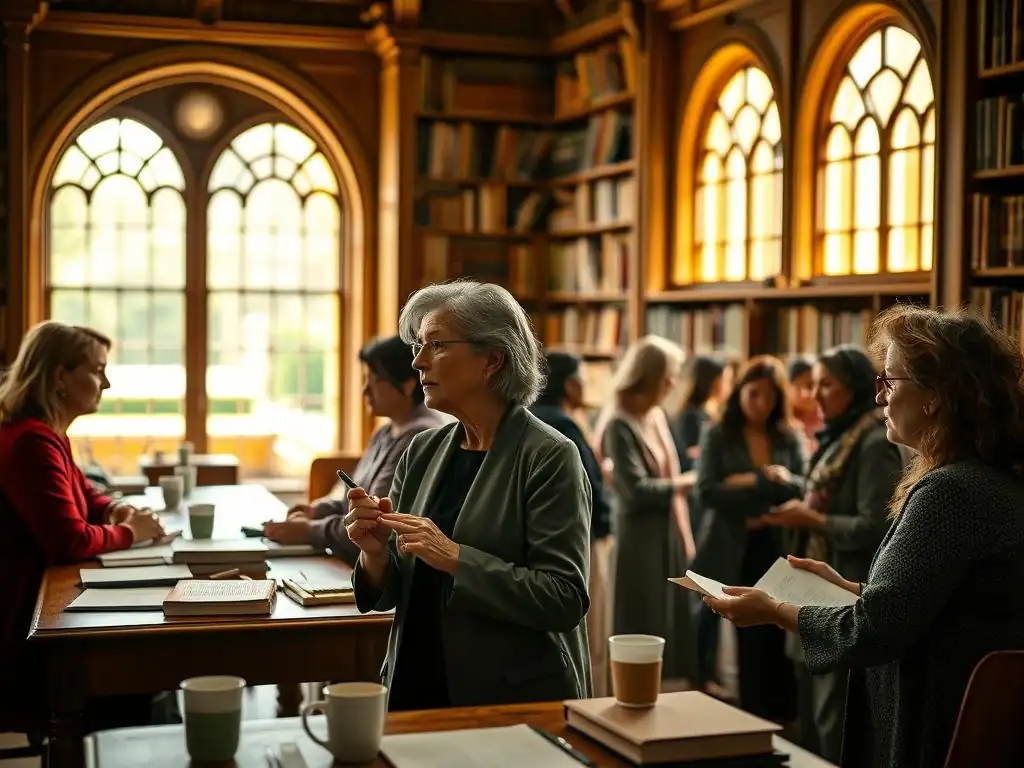
Welcome to WomenInScienceHistory.com, where we illuminate the remarkable legacies of women who shaped the scientific world. Ever wondered about the support networks helping today's female scientists thrive in academia? Dive into " Navigating Academia: Key Organizations Assisting Women Scientists in University Settings," a crucial exploration of the resources empowering the next generation. Discover how these vital organizations are breaking down barriers and fostering a more inclusive scientific landscape. Read on to uncover the essential support systems making a real difference.
- Introduction: The Importance of Support for Women in University Science
- Understanding the Challenges Faced by Women Scientists in Universities
- Key Organizations Supporting Women Scientists in University Settings: A Comprehensive Overview
- How These Organizations Support Women Scientists: Practical Benefits
- Case Studies: Success Stories of Women Scientists Supported by University Organizations
- Maximizing the Benefits: How Women Scientists Can Engage with Support Organizations
- Conclusion: Empowering Women Scientists Through Organizational Support
-
Frequently Asked Questions
- What types of organizations are discussed on WomenInScienceHistory.com that support women scientists in university settings?
- What are some of the biggest challenges that women scientists in university settings face, according to WomenInScienceHistory.com?
- How does WomenInScienceHistory.com aim to inspire future generations of women scientists?
- What kind of information does WomenInScienceHistory.com provide about the groundbreaking work of women scientists?
- Where can I find resources and support as a woman scientist in a university setting, according to WomenInScienceHistory.com?
- Final Reflection: Empowering Women in Scientific Pursuits
- Empower Your Journey: Connect, Thrive, & Lead!
Introduction: The Importance of Support for Women in University Science
Addressing the Underrepresentation of Women in STEM Fields in Academia
The persistent underrepresentation of women in Science, Technology, Engineering, and Mathematics (STEM) fields, particularly within university settings, remains a critical challenge. While strides have been made in increasing female enrollment at undergraduate levels, the "leaky pipeline" phenomenon often sees women depart at higher rates as they progress through graduate studies, postdoctoral positions, and especially into senior faculty roles.
For instance, data from various academic institutions consistently show that women hold significantly fewer tenured and full professorships in fields like engineering, computer science, and physics, often remaining below 20-25% in these areas, despite comprising a larger percentage of doctoral recipients in some sciences.
This imbalance not only deprives academia of diverse perspectives and innovative thinking but also perpetuates a cycle of underrepresentation, making it harder for aspiring women scientists to envision themselves in leadership positions. The absence of diverse voices in research and teaching can limit the scope of inquiry and the development of solutions relevant to a broader population. Addressing this systemic issue requires intentional and multifaceted efforts to support, retain, and advance women scientists throughout their academic journeys.
Why University Support Organizations for Women Scientists Matter
In the complex landscape of university academia, individual efforts alone are often insufficient to overcome systemic barriers. This is where dedicated university support organizations for women scientists become indispensable. These groups provide a crucial collective voice, offering a safe space for shared experiences, a network for professional growth, and a platform for advocacy. They serve as vital hubs for resources, mentorship, and opportunities that are specifically tailored to the unique challenges faced by female researchers and academics.
The impact of these organizations extends far beyond individual empowerment; they contribute to a cultural shift within institutions. By providing structured mentorship programs, leadership training, and opportunities for collaboration, they help women scientists not only survive but thrive in competitive academic environments. Such robust support for women scientists in universities is fundamental to fostering an inclusive culture that values equity, diversity, and the full potential of all scientific talent.
Understanding the Challenges Faced by Women Scientists in Universities
Gender Bias and Discrimination in Academic Science
Women scientists in universities frequently encounter various forms of gender bias and discrimination that can impede their career progression. This includes implicit biases in hiring, promotion, and grant review processes, where female candidates' qualifications may be subconsciously undervalued compared to their male counterparts. Studies have shown that women faculty are often evaluated more critically in student surveys and peer reviews, and their contributions to collaborative projects might be disproportionately attributed to male colleagues, a phenomenon sometimes referred to as "credit bias."
Beyond subtle biases, overt discrimination, though less common, still occurs, manifesting as unequal access to lab space, equipment, or research funding, or being excluded from informal networking opportunities essential for career advancement. This pervasive environment of bias contributes significantly to the "leaky pipeline," where talented women leave academia due to a sense of marginalization or unfair treatment, impacting the overall diversity and innovation within scientific research.
The Impact of Family Responsibilities on Women's Scientific Careers
The demanding nature of academic science careers, coupled with societal expectations regarding family responsibilities, poses a significant hurdle for many women scientists. The critical early career stages, such as postdoctoral research and securing tenure-track positions, often coincide with prime childbearing and rearing years. This can lead to intense pressure to balance rigorous research demands, teaching loads, and service commitments with childcare and other family obligations, which disproportionately fall on women.
Many universities lack adequate parental leave policies, affordable on-campus childcare, or flexible work arrangements, forcing women to make difficult choices between career progression and family life. The "tenure clock" typically runs without significant pause for parental leave, putting female faculty at a disadvantage compared to their male peers who may not face similar interruptions. This structural inflexibility often results in slower career advancement, reduced research output during critical periods, or even women opting out of academia altogether.
Lack of Mentorship and Networking Opportunities for Female Researchers
Effective mentorship and robust professional networks are critical for success in academic science, yet women scientists often face challenges in accessing these vital resources. With fewer women in senior faculty positions, particularly in certain STEM disciplines, junior female researchers may find it difficult to identify mentors who share similar lived experiences and can offer tailored advice on navigating gender-specific challenges. Informal networks, which are often crucial for identifying opportunities and collaborations, can also be male-dominated, inadvertently excluding women from valuable discussions and connections.
This deficit in mentorship and networking can lead to feelings of isolation and a lack of strategic guidance on career pathways, grant applications, or departmental politics. Without strong advocates and connections, women may miss out on collaborative research projects, speaking engagements, or opportunities for leadership roles, thereby hindering their professional development and limiting their visibility within the scientific community.
Key Organizations Supporting Women Scientists in University Settings: A Comprehensive Overview
Professional Scientific Societies and Women's Initiatives
The Association for Women in Science (AWIS): AWIS Mentoring Programs and Advocacy Initiatives
The Association for Women in Science (AWIS) stands as a leading multidisciplinary organization dedicated to achieving equity and full participation of women in all fields of science and engineering. Established in 1971, AWIS has been at the forefront of advocating for systemic change and providing career development resources for women scientists across various career stages. Its mission encompasses not only supporting individual women but also transforming institutional cultures to foster a more inclusive scientific environment.
AWIS provides tangible support through its robust AWIS Mentoring Programs, which connect women at different career levels, offering invaluable guidance, career advice, and networking opportunities. These programs are designed to address the specific challenges women face in STEM, from navigating academic politics to achieving work-life integration. Furthermore, AWIS engages in significant advocacy initiatives, influencing policy at national and institutional levels to promote equitable practices in hiring, promotion, and funding, thereby strengthening the overall support for women scientists in universities.
The Society of Women Engineers (SWE): SWE Scholarships and Collegiate Sections
The Society of Women Engineers (SWE) is a global organization that champions the empowerment of women to achieve their full potential as engineers and leaders. Founded in 1950, SWE has grown to be a powerful voice for women in engineering, aiming to expand the image of the engineering profession as a positive force for improving the quality of life. Its comprehensive approach includes professional development, outreach, and a strong network of support for women at all stages of their engineering careers.
SWE's commitment to fostering the next generation of female engineers is evident in its extensive SWE Scholarships program, which awards over $1 million annually to women pursuing undergraduate and graduate engineering degrees. Equally impactful are its numerous collegiate sections established within universities worldwide. These sections provide vital peer support, professional development workshops, and opportunities for community engagement and STEM outreach, creating a strong local network for women scientists in university settings.
IEEE Women in Engineering (WIE): IEEE WIE Conferences and STEM Outreach Programs
IEEE Women in Engineering (WIE) is one of the largest international professional organizations dedicated to promoting women engineers and scientists and inspiring girls around the world to follow their academic interests in engineering and science. As part of the Institute of Electrical and Electronics Engineers (IEEE), WIE leverages a vast global network to support its mission of facilitating the recruitment and retention of women in technical disciplines.
WIE offers significant support through its global IEEE WIE Conferences, such as the IEEE WIE International Leadership Conference, which provide unique platforms for leadership training, career development, and networking with prominent figures in various fields. Additionally, IEEE WIE actively engages in numerous STEM Outreach Programs, organizing events and initiatives that inspire young girls and women to pursue careers in engineering and technology, thereby fostering a pipeline of future women scientists in university research and academia.
University-Based Organizations for Women in Science
Women in Science and Engineering (WISE) Programs: University of Michigan's ADVANCE Program
Women in Science and Engineering (WISE) programs are university-specific initiatives designed to enhance the representation, retention, and advancement of women in STEM fields directly within their respective institutions. These programs often provide tailored support, resources, and community building activities that address the unique challenges faced by women faculty and students at that particular university. Their localized approach allows for greater responsiveness to institutional culture and specific departmental needs.
A prominent example of a successful WISE initiative is the University of Michigan's ADVANCE Program, which was significantly supported by the National Science Foundation. This program has been instrumental in increasing the representation and success of women faculty in STEM by implementing systemic changes, offering leadership development workshops, fostering a more inclusive climate, and addressing implicit biases in academic processes. The University of Michigan's ADVANCE program stands as a testament to how dedicated university support for women scientists can drive measurable progress.
Graduate Women in Science (GWIS): GWIS Fellowships and Research Awards
Graduate Women in Science (GWIS) is a national organization with a strong network of local chapters, primarily focused on supporting women in graduate studies and early career stages across all scientific disciplines. GWIS aims to connect women in science, foster research excellence, and promote professional development through mentorship, networking, and recognition. Its grassroots structure allows for community-specific support while maintaining a national presence.
GWIS provides critical tangible support through its national GWIS Fellowships and Research Awards. These competitive awards, such as the Nell Mondy Fellowship, offer financial assistance to women pursuing scientific research, helping to offset educational costs or fund specific research projects. Such financial support and recognition are invaluable for promising female scientists, enabling them to focus on their studies and research without undue financial burden, thereby promoting the advancement of women scientists in universities.
Faculty Women's Associations: University of California's Faculty Associations
Faculty Women's Associations are typically grassroots organizations established within universities, serving as collective voices for women faculty across all disciplines, including STEM. These associations advocate for equitable pay, fair promotion processes, improved work-life balance policies, and greater representation of women in leadership roles. They often serve as vital internal watchdogs, identifying systemic issues and pushing for institutional reforms.
The various Faculty Women's Associations across the University of California (UC) system provide an excellent example of their impact. Historically, these associations have played a crucial role in advocating for significant policy changes, such as improved parental leave benefits, clearer tenure clock extension policies for family reasons, and more transparent hiring practices. Their sustained advocacy has led to a more supportive and equitable environment for women scientists within the UC system, demonstrating the power of collective university support for female researchers.
National Organizations Promoting Women in STEM
The National Science Foundation (NSF): NSF ADVANCE Program
The National Science Foundation (NSF) is a major federal agency in the United States that supports fundamental research and education in all non-medical fields of science and engineering. Recognizing the critical importance of a diverse scientific workforce, the NSF has made significant investments in initiatives aimed at broadening participation in STEM, particularly for underrepresented groups, including women. Its commitment extends to fostering equitable academic environments.
A flagship initiative in this regard is the NSF ADVANCE Program, which stands for "Increasing the Participation and Advancement of Women in Academic Science and Engineering Careers." This program provides substantial grants to universities and academic institutions to develop innovative, systemic approaches to increase the representation and advancement of women faculty in STEM. ADVANCE grants focus on tackling institutional barriers, fostering cultural change, and implementing best practices in recruitment, retention, and promotion, thereby directly enhancing university support for women scientists.
The National Institutes of Health (NIH): NIH Office of Research on Women's Health (ORWH)
The National Institutes of Health (NIH) is the primary federal agency conducting and supporting medical research in the United States. While its core mission is biomedical research, the NIH also plays a crucial role in promoting the careers of women in science, recognizing that a diverse research workforce is essential for addressing complex health challenges. The agency acknowledges the historical underrepresentation of women in leadership and research roles within biomedical science.
Central to the NIH's efforts to support women scientists is the NIH Office of Research on Women's Health (ORWH). Established in 1990, ORWH serves as the lead office for women's health research at the NIH, ensuring that women's health issues are addressed in research and that women are included in clinical trials. Beyond its primary focus on research on women, ORWH also engages in initiatives that promote the careers of women in science and research, addressing gender equity in the biomedical workforce through various programs and policy recommendations.
The American Association for the Advancement of Science (AAAS): AAAS SEA Change Initiative
The American Association for the Advancement of Science (AAAS) is the world's largest general scientific society and publisher of the prominent journal Science. With a broad mission to advance science for the benefit of all people, AAAS has long been a proponent of diversity, equity, and inclusion within the scientific enterprise. Recognizing that systemic barriers hinder the progress of women and other underrepresented groups, AAAS actively develops programs to address these challenges.
A significant initiative in this area is the AAAS SEA Change program (STEM Equity Achievement Change). This program is designed to help institutions of higher education transform their cultures to be more equitable and inclusive for women and underrepresented minorities in STEM fields. SEA Change provides a comprehensive framework, resources, and a rigorous self-assessment process for universities committed to achieving systemic change in their policies, practices, and climate, thereby fostering a more supportive environment for women scientists in universities.
How These Organizations Support Women Scientists: Practical Benefits
Mentorship Programs and Networking Opportunities
One of the most profound practical benefits offered by these organizations is the provision of robust mentorship programs. These initiatives formally connect junior women scientists, from graduate students to early-career faculty, with experienced senior academics who can provide invaluable career guidance, research advice, and insights into navigating the complexities of academic life. Mentors offer personalized support, help set career goals, and provide emotional encouragement, which is crucial for retention in demanding STEM fields.
Complementing mentorship, these organizations also create abundant networking opportunities. Through conferences, workshops, and informal gatherings, women scientists can connect with peers, collaborators, and potential employers. These networks foster a sense of community, reduce isolation, and open doors to new research partnerships, funding opportunities, and career advancements that might otherwise be inaccessible. This collective support for women scientists in universities is vital for professional growth.
Leadership Development and Career Advancement Workshops
To address the underrepresentation of women in senior academic and leadership roles, many support organizations offer specialized leadership development and career advancement workshops. These programs are designed to equip women scientists with the essential skills needed to thrive in competitive academic environments. Topics often include grant writing strategies, effective scientific communication, negotiation tactics, and strategies for navigating the tenure and promotion processes.
These workshops also focus on developing leadership competencies, such as strategic planning, team management, and conflict resolution, preparing women to take on departmental, collegiate, or university-wide leadership positions. By providing targeted training, these initiatives directly contribute to increasing the number of women scientists who are not only successful researchers but also influential leaders shaping the future of academia.
Funding and Grant Opportunities for Women Researchers
Financial support is a critical component for any scientific career, and many organizations dedicated to women in science provide direct or indirect access to funding and grant opportunities. Some organizations, like GWIS, offer competitive scholarships, fellowships, or small research grants specifically for women researchers, alleviating financial barriers to pursuing advanced degrees or conducting innovative research. These awards can be crucial for women at early career stages who are building their research portfolios.
Beyond direct financial aid, these groups also serve as invaluable resources for identifying external funding opportunities from national agencies or foundations. They often host workshops on grant proposal writing, provide peer review of applications, and share insider tips on successful funding strategies. This comprehensive support significantly enhances the ability of women scientists to secure the resources necessary to advance their research and careers.
Advocacy and Policy Initiatives to Address Gender Bias
A core function of many organizations supporting women scientists in universities is their active engagement in advocacy and policy initiatives. These groups work tirelessly to identify and challenge systemic gender biases and discriminatory practices within academic institutions and funding agencies. They champion policy changes that promote equity, such as advocating for more flexible work arrangements, standardized and transparent parental leave policies, fair pay, and unbiased hiring and promotion processes.
Their advocacy often involves collecting data on gender disparities, publishing reports, and engaging directly with university administrations and national policymakers. By raising awareness about the impact of gender bias and proposing evidence-based solutions, these organizations play a critical role in fostering a more inclusive and equitable academic environment where all women scientists can achieve their full potential without facing unnecessary systemic barriers.
Case Studies: Success Stories of Women Scientists Supported by University Organizations
A Woman Scientist's Journey with University WISE Program
Dr. Anya Sharma, a promising young astrophysicist, began her Ph.D. program feeling isolated as one of only two women in her cohort. She initially struggled to find mentorship and navigate the unspoken rules of academic research. Discovering her university's Women in Science and Engineering (WISE) program proved to be a turning point. The WISE program connected her with a senior female faculty mentor in a related field who provided invaluable guidance on her research direction and publishing strategies.
Through WISE, Dr. Sharma also participated in a peer mentoring circle, where she found a supportive community and shared experiences with other female graduate students. The program's workshops on grant writing and presentation skills directly contributed to her successfully securing a competitive predoctoral fellowship, enabling her to dedicate more time to her dissertation. This comprehensive university support for women scientists not only helped her complete her Ph.D. but also built her confidence and network, propelling her into a successful postdoctoral position.
How AWIS Mentorship Helped a Female Researcher
Dr. Lena Petrova, a mid-career chemical engineer, faced a significant challenge in her research when a major project lost funding, threatening her tenure track. Feeling discouraged and unsure of her next steps, she sought advice through the Association for Women in Science (AWIS) mentoring program. She was paired with Dr. Sarah Chen, a distinguished professor of materials science at another institution, who had navigated similar career hurdles.
Dr. Chen provided strategic insights, advising Dr. Petrova to pivot her research focus slightly to align with emerging funding priorities and connecting her with new collaborators. The mentorship helped Dr. Petrova reframe her setback as an opportunity, leading to a successful grant application in a new area and a breakthrough publication. The support for women scientists provided by AWIS mentorship proved instrumental in Dr. Petrova not only salvaging her project but also advancing her career and securing tenure.
Faculty Association Advocacy Leading to Policy Changes
At a large public university, female faculty members, particularly those in STEM, consistently faced difficulties balancing family responsibilities with the demanding tenure clock. There was no clear, standardized policy for extending the tenure clock for childbirth or adoption, leading to inconsistent departmental practices and undue stress. Recognizing this systemic issue, the university's Faculty Women's Association (FWA) took the lead in advocating for change.
The FWA conducted an internal survey, collecting compelling data on the impact of this policy gap on women's careers. They then presented their findings and proposed a clear, flexible tenure clock extension policy to the university administration. Through persistent advocacy, numerous meetings, and collaboration with other faculty groups, the FWA successfully lobbied for the implementation of a new, university-wide policy. This change significantly improved the working conditions for current and future women scientists, demonstrating the power of collective university support for female researchers in driving institutional change.
Maximizing the Benefits: How Women Scientists Can Engage with Support Organizations
Identifying Relevant Organizations and Programs
For women scientists seeking to leverage the benefits of support organizations, the first crucial step is to identify groups that align with their specific needs, career stage, and scientific discipline. This involves researching both university-based programs, such as local WISE chapters or Faculty Women's Associations, and national or international professional societies like AWIS, SWE, or IEEE WIE. Online directories, university diversity offices, and departmental resources can be excellent starting points for this exploration.
It is important to consider the unique offerings of each organization, whether it's focused on mentorship, funding opportunities, leadership development, or advocacy. Tailoring the search to one's individual career goals—be it securing a fellowship, finding a mentor, or advocating for policy change—will ensure that the chosen organizations provide the most relevant and impactful support for women scientists in universities.
Actively Participating in Networking Events and Workshops
Simply becoming a member of an organization is often not enough to fully reap its benefits; active participation is key. Women scientists should make a concerted effort to attend networking events, workshops, conferences, and seminars hosted by these groups. These gatherings provide invaluable opportunities to connect with peers, senior academics, and potential collaborators, fostering a sense of community and opening doors to new opportunities.
Beyond attendance, engaging actively by asking questions, participating in discussions, and volunteering for committees or leadership roles within the organization can significantly deepen one's professional network and enhance leadership skills. Such proactive involvement not only enriches the individual's experience but also strengthens the collective support for women scientists within the academic ecosystem.
Seeking Mentorship and Guidance from Experienced Professionals
Mentorship is a cornerstone of career development in academia, and support organizations often provide structured pathways to connect with experienced professionals. Women scientists should proactively seek out mentorship opportunities, whether through formal programs offered by organizations like AWIS or by identifying potential mentors through networking events. A well-chosen mentor can offer invaluable advice on career progression, research strategies, work-life integration, and navigating institutional politics.
When engaging with a mentor, it's beneficial to clearly communicate one's goals and expectations for the relationship, fostering a productive and mutually beneficial exchange. Being open to feedback and advice, even when challenging, is essential for maximizing the guidance received and leveraging the mentor's experience to overcome obstacles and accelerate career advancement.
Contributing to the Organization's Mission and Goals
Beyond receiving support, women scientists can significantly enhance their professional development by contributing back to the organizations that empower them. This can take many forms, such as volunteering to mentor junior colleagues, serving on committees, organizing events, or sharing expertise in workshops. Contributing to the organization's mission reinforces the community and provides valuable leadership and organizational experience.
Such active contribution not only benefits the organization and its members but also enhances the individual's visibility within the scientific community, expands their network, and provides a platform to advocate for issues they care about. By becoming an active part of the solution, women scientists can amplify their impact and further strengthen the collective support for women scientists in university settings.
Conclusion: Empowering Women Scientists Through Organizational Support
The Future of Support for Women in Science in University Settings
The landscape of support for women in science within university settings has evolved significantly, yet the need for dedicated organizations remains as critical as ever. Looking ahead, these organizations will continue to adapt to new challenges, such as the implications of emerging technologies on career paths or the evolving nature of academic research. They will play an increasingly vital role in ensuring that policies and practices within universities are agile enough to support a diverse workforce, addressing issues like artificial intelligence bias or the impact of remote work on career progression.
Ultimately, the future success of women scientists in academia hinges on the sustained efforts of these support networks. They will continue to be the vanguard for change, pushing for greater equity and inclusivity, ensuring that the academic environment is not just welcoming but actively empowering for all women in STEM.
The Importance of Continued Advocacy and Collaboration
Achieving full gender equity in academic science requires more than individual effort; it demands continued, robust advocacy and seamless collaboration among various stakeholders. Organizations supporting women scientists are indispensable in this regard, as they provide a unified voice to lobby for systemic changes in university policies, funding practices, and institutional cultures. Their collective power can drive reforms that individual faculty members might struggle to achieve on their own.
Furthermore, collaboration among different organizations—university-based groups, national professional societies, and federal agencies—is paramount. By pooling resources, sharing best practices, and coordinating advocacy efforts, they can amplify their impact and create a more cohesive and effective support ecosystem. This collaborative approach is essential for dismantling persistent barriers and fostering an environment where women scientists can truly thrive and contribute their full potential.
Resources for Further Exploration of Women in Science Organizations
For those seeking to delve deeper into the resources and networks available, exploring the websites of organizations mentioned, such as the Association for Women in Science (AWIS), the Society of Women Engineers (SWE), IEEE Women in Engineering (WIE), and the American Association for the Advancement of Science (AAAS) SEA Change initiative, offers a wealth of information. Additionally, university diversity and inclusion offices, as well as specific STEM departments, often provide details on local Women in Science and Engineering (WISE) programs or Faculty Women's Associations.
The National Science Foundation (NSF) and National Institutes of Health (NIH) websites also feature information on their initiatives related to women in STEM. The collective strength of these diverse organizations provides a robust framework of support for women scientists in universities, paving the way for a more equitable and innovative future in science.
Frequently Asked Questions
What types of organizations are discussed on WomenInScienceHistory.com that support women scientists in university settings?
The website highlights organizations that provide mentorship, funding opportunities, and networking platforms specifically designed to assist women in navigating academic careers.
What are some of the biggest challenges that women scientists in university settings face, according to WomenInScienceHistory.com?
The site often discusses challenges like gender bias, lack of representation in leadership roles, and difficulty balancing work and family life.
How does WomenInScienceHistory.com aim to inspire future generations of women scientists?
By showcasing the achievements and resilience of pioneering female scientists, the website aims to break down stereotypes and encourage young women to pursue careers in STEM.
What kind of information does WomenInScienceHistory.com provide about the groundbreaking work of women scientists?
The site offers biographies and discussions that delve into the specific contributions made by women in various scientific fields, emphasizing the impact of their research and discoveries.
Where can I find resources and support as a woman scientist in a university setting, according to WomenInScienceHistory.com?
The website provides information on university organizations, professional societies, and funding agencies that offer support and resources specifically for women in science.
Final Reflection: Empowering Women in Scientific Pursuits
The exploration of organizations supporting women scientists in university settings underscores a vital truth: systemic change requires dedicated networks and resources. While academia strives for equality, the persistent underrepresentation of women in STEM fields highlights the ongoing need for proactive support. These organizations are not merely supplementary; they are essential pillars upholding the aspirations and achievements of women navigating the often-challenging landscape of scientific research and education.
This journey through the landscape of support organizations has illuminated the profound impact they have on shaping the cultural and social dynamics within universities. Witnessing the dedication and resilience of these women, both those leading and those benefiting from these initiatives, reinforces the importance of fostering inclusive environments where talent can flourish, regardless of gender. Science is not a boy's game, it's not a girl's game. It's everyone's game.
- Barbara McClintock, Nobel Laureate in Physiology or Medicine. This quote serves as a constant reminder of the potential that is unlocked when barriers are removed and opportunities are equally accessible.
As we conclude this exploration, let us not simply acknowledge the existence of these organizations, but actively champion their cause. Consider how you can contribute to fostering a more equitable and supportive environment for women in science, whether through mentorship, advocacy, or simply amplifying their voices. The future of scientific discovery depends on the full participation of all, and by supporting women scientists, we invest in a brighter, more innovative tomorrow for everyone.
Empower Your Journey: Connect, Thrive, & Lead!
Thank you for exploring the landscape of support for women scientists in academia. Now that you’re equipped with insights into these invaluable organizations, it's time to take the next step in your journey!
- Connect with one organization that aligns with your career goals. Research their programs, attend a webinar, or reach out to a member – take that first step today!
- Share this article with a female colleague or mentor who might benefit from these resources. Let's build a stronger network together.
- Brainstorm one concrete action you can take within your own department or university to better support women in STEM, and commit to initiating it within the next month.
What immediate action will you take to champion women in science at your university?