
Mathematical Physics in the New Millennium: Women Unifying Cosmic Theories

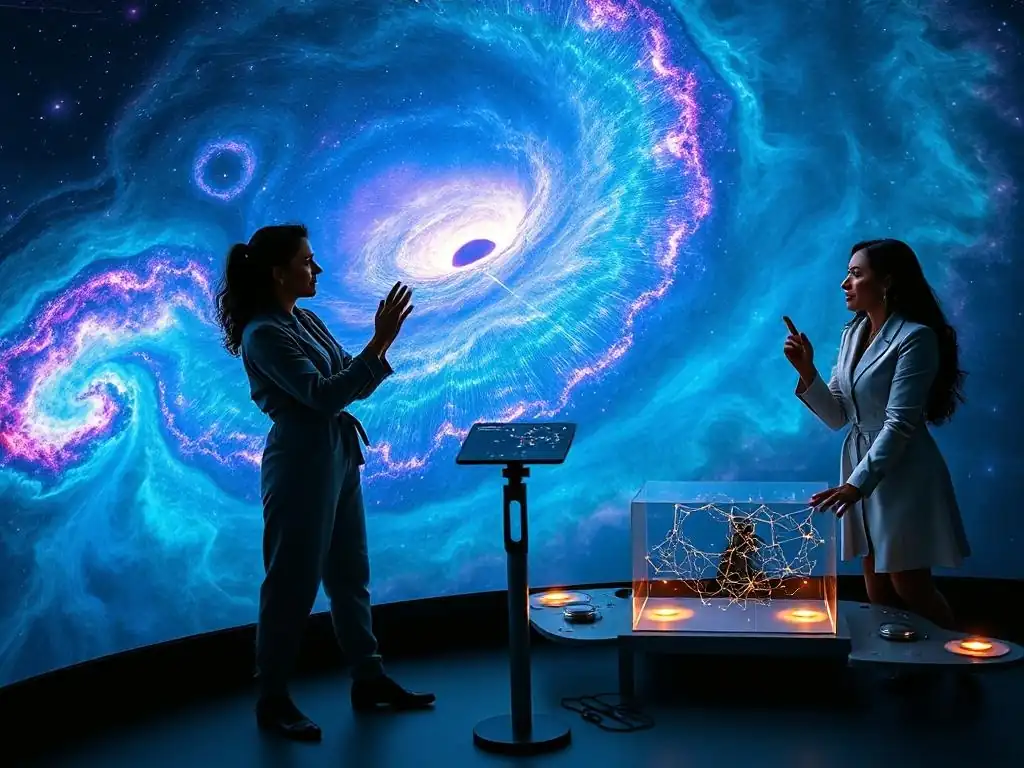
Welcome to WomenInScienceHistory.com!
Delve into the remarkable stories of women who defied expectations and shaped the scientific landscape. Here, we illuminate their often-overlooked contributions, fostering inspiration and understanding. Today, we begin with a fascinating exploration of Women's Contributions to Physics, specifically examining how female mathematicians are spearheading innovative approaches to theoretical physics. Prepare to discover how their groundbreaking work is revolutionizing our understanding of the cosmos, and what challenges they had to overcome to achieve this! Intrigued to learn more? Keep reading to uncover the remarkable breakthroughs of these often-unsung heroes.
- Introduction: Women's Contributions to Physics in the 21st Century
- Pioneering Women in Mathematical Physics: Shaping Modern Cosmology
- Key Areas of Research: Women's Impact on Contemporary Physics
- Overcoming Challenges: The Journey of Women in Mathematical Physics
- The Future of Mathematical Physics: A More Diverse and Inclusive Landscape
- Conclusion: Celebrating Women’s Contributions to Physics in the New Millennium
-
Frequently Asked Questions
- What specific fields within physics have women made significant contributions to?
- What were some common challenges faced by women pursuing careers in physics historically?
- How does WomenInScienceHistory.com aim to highlight the contributions of women in physics?
- Can you provide an example of a groundbreaking contribution by a woman to mathematical physics?
- Why is it important to recognize and celebrate women's contributions to physics?
- Final Reflection: Illuminating the Cosmic Tapestry
- Unveil the Universe: Your Journey Starts Now!
Introduction: Women's Contributions to Physics in the 21st Century
The Rising Influence of Women in Mathematical Physics
The 21st century has witnessed a transformative shift in the landscape of mathematical physics, with women increasingly taking on prominent roles and making groundbreaking discoveries. Historically underrepresented in theoretical sciences, female physicists are now at the forefront of research, pushing the boundaries of human understanding in fields ranging from quantum gravity to cosmology.
This growing presence is not merely a matter of numbers; it reflects a profound impact on the methodologies, perspectives, and ultimately, the breakthroughs achieved in the most abstract and fundamental areas of physics. The increasing visibility of women’s contributions to physics serves as a powerful testament to their intellectual prowess and dedication.
This era marks a period where the unique insights and collaborative spirit of women are recognized as essential for tackling the universe's most complex puzzles. Academic institutions and research collaborations are slowly but surely becoming more inclusive, providing platforms for these brilliant minds to flourish. The narrative of women in mathematical physics is evolving from one of struggle against systemic barriers to one of significant influence and celebrated achievement, inspiring a new generation of aspiring female scientists to pursue their passions in the theoretical sciences.
Bridging the Gap: From Abstract Theory to Cosmic Understanding
Mathematical physics acts as the crucial bridge between abstract theoretical concepts and the observable cosmos, providing the rigorous framework necessary to describe the universe's behavior. In the new millennium, women are excelling in this demanding discipline, translating complex equations into profound insights about reality. Their work is instrumental in developing models that predict phenomena like gravitational waves, explain the nature of black holes, or illuminate the universe's earliest moments. These contributions are not confined to theoretical elegance; they have tangible implications for astrophysics, observational cosmology, and even quantum technologies.
The ability to conceptualize, formalize, and then test these intricate theories is a hallmark of the leading female mathematical physicists today. They are crafting the very language through which we comprehend the universe, making the invisible visible and the incomprehensible graspable. This profound work underscores the essential role of women’s contributions to physics, demonstrating their capacity to unify diverse cosmic theories and advance our collective understanding of existence.
Pioneering Women in Mathematical Physics: Shaping Modern Cosmology
Eva Silverstein: Contributions to String Theory and F-theory
Eva Silverstein stands as a preeminent figure in string theory and cosmology, recognized for her profound contributions to understanding the early universe through the lens of fundamental physics. Her work has significantly advanced our comprehension of cosmic inflation, a pivotal theory explaining the universe's rapid expansion immediately after the Big Bang.
Silverstein's research delves into how string theory can provide concrete models for inflation, offering a framework that reconciles quantum mechanics with general relativity at extreme energy scales. Her pioneering efforts have broadened the scope of string phenomenology, bridging abstract theoretical constructs with observable cosmological phenomena, thereby deepening our appreciation for women's contributions to physics.
Through her rigorous mathematical formulations, Silverstein has explored various aspects of string compactifications and their cosmological implications. Her insights have been crucial in developing models where the dynamics of extra spatial dimensions, as predicted by string theory, directly influence the inflationary epoch. This innovative approach has led to new perspectives on the origin of cosmic structures and the distribution of matter in the universe, highlighting the critical role of theoretical breakthroughs in shaping our understanding of cosmic evolution.
Key Publications and Theoretical Frameworks Developed
Eva Silverstein's prolific career is marked by numerous influential publications that have shaped the direction of contemporary string theory and cosmology. Among her most notable contributions is the development of the "tachyon inflation" model, a compelling scenario for cosmic inflation derived directly from string theory dynamics.
This model proposes that the decay of a hypothetical "tachyon" field, inherent in certain string theory configurations, could drive the inflationary expansion, naturally leading to observable cosmic microwave background anisotropies. Her work has provided a concrete, calculable framework that aligns with observational data, demonstrating the power of string theory to address real cosmological puzzles.
Furthermore, Silverstein has made significant strides in understanding the landscape of string vacua, the vast multitude of possible universes predicted by string theory. Her research explores how different compactifications of extra dimensions give rise to diverse physical laws, and how to navigate this complex landscape to find models consistent with our universe. Her theoretical frameworks often involve intricate mathematical tools from geometry and topology, pushing the boundaries of how string theory can be applied to describe the fundamental forces and particles we observe. These efforts underscore the intellectual rigor and depth of women’s contributions to physics.
Impact on Understanding String Dualities and Geometry
Eva Silverstein's work extends beyond specific inflationary models to encompass a broader understanding of string dualities and the geometric underpinnings of string theory. Her research has illuminated how different formulations of string theory, seemingly disparate, are in fact mathematically equivalent, revealing deeper symmetries within the theory. This exploration of dualities has provided powerful tools for solving problems that are intractable in one formulation but simpler in another, leading to new insights into the non-perturbative aspects of string theory and quantum gravity. Her ability to connect abstract mathematical structures with physical phenomena has been a hallmark of her research.
Her contributions have also advanced our understanding of the interplay between geometry and physics in string theory. By studying how the shape and topology of extra dimensions influence the observed properties of particles and forces, Silverstein has helped to refine the mathematical machinery used to construct realistic string theory models. This deep engagement with geometric principles, often involving complex algebraic geometry and differential topology, has been essential for building more complete and consistent pictures of the universe from a string-theoretic perspective. Her leadership in these areas continues to inspire and define new frontiers for women’s contributions to physics.
Francesca Vidotto: Exploring Loop Quantum Gravity and Quantum Cosmology
Francesca Vidotto is a leading voice in the field of loop quantum gravity (LQG) and quantum cosmology, areas that seek to unify general relativity with quantum mechanics. Her work offers a compelling alternative to string theory in the quest for a quantum theory of gravity, focusing on the quantization of spacetime itself rather than introducing extra dimensions or fundamental strings.
Vidotto's innovative approach involves representing spacetime as a network of quantum loops, or "spin networks," which fundamentally changes our understanding of the universe's fabric at the Planck scale. Her research has been instrumental in developing rigorous mathematical frameworks that describe a granular, discrete spacetime, providing a fresh perspective on the very nature of reality.
Vidotto's contributions are particularly significant in addressing the singularity problem, a major challenge in classical general relativity where spacetime breaks down at points like the Big Bang or inside black holes. Through the principles of LQG, she has explored scenarios where these singularities are resolved into "quantum bounces," suggesting that the universe did not begin from an infinitely dense point but rather emerged from a preceding contracting phase. This work exemplifies the profound impact of women’s contributions to physics in re-imagining the fundamental laws of the cosmos.
Innovative Approaches to Quantizing Gravity
Francesca Vidotto has championed innovative methods for applying loop quantum gravity principles to cosmological models. Her research has moved beyond the purely theoretical aspects of LQG to develop concrete, calculable predictions for the early universe.
She has been a key figure in developing "loop quantum cosmology," which applies the non-perturbative quantization techniques of LQG to the simpler, highly symmetric cosmological models. This approach has led to the prediction of the "quantum bounce," where the Big Bang singularity is replaced by a smooth transition from a contracting phase to an expanding one, avoiding the infinite densities predicted by classical general relativity.
Her work also involves the development of "quantum spacetime" concepts, where the continuous manifold of classical spacetime is replaced by discrete, interconnected quantum excitations. This fundamental shift in perspective has profound implications for understanding phenomena at extremely small scales, such as the quantum nature of black holes and the information paradox. Vidotto's mathematical rigor and conceptual clarity in these complex areas highlight her significant role among women’s contributions to physics, opening new avenues for theoretical and observational research.
Implications for the Early Universe and Black Hole Physics
Francesca Vidotto's research has far-reaching implications for our understanding of the early universe and the enigmatic nature of black holes. Her models of the quantum bounce provide a compelling narrative for the universe's origin, suggesting a cyclic or oscillating universe where the Big Bang is not an absolute beginning but a pivotal event in an ongoing cosmic cycle. This theoretical framework offers testable predictions for future cosmological observations, potentially revolutionizing our understanding of cosmic history and the initial conditions of the universe.
In the realm of black hole physics, Vidotto's work on quantum black holes within the LQG framework offers novel solutions to long-standing problems like the information paradox. By proposing that black holes have a discrete, quantum structure at their core, her theories suggest mechanisms by which information might escape or be preserved, challenging the classical notion of information loss. Her mathematical insights into the quantum geometry of spacetime at the event horizon and beyond are reshaping our understanding of these extreme cosmic objects, showcasing the depth and breadth of women’s contributions to physics.
Alessandra Buonanno: Unveiling Gravitational Wave Physics
Alessandra Buonanno is a luminary in the field of gravitational wave physics, whose work has been absolutely pivotal to the success of gravitational wave astronomy. Her expertise lies in developing highly accurate theoretical models of gravitational waveforms, particularly those produced by the mergers of black holes and neutron stars.
These sophisticated mathematical models are indispensable for detecting and interpreting the faint ripples in spacetime that travel across the cosmos, enabling scientists to extract crucial astrophysical information from the signals observed by detectors like LIGO and Virgo. Buonanno's leadership in this field has been recognized globally, culminating in her numerous accolades, and solidifying her place among the most impactful women’s contributions to physics.
Her research combines analytical post-Newtonian approximations with numerical relativity simulations, creating "effective-one-body" (EOB) models that precisely describe the inspiral, merger, and ringdown phases of compact binary coalescences. This theoretical precision is what allows scientists to match observed gravitational wave signals to specific astrophysical events, thereby unlocking unprecedented insights into the extreme universe. Buonanno's dedication to bridging theoretical physics with observational astronomy has been transformative for the field.
Mathematical Models and Simulations of Black Hole Mergers
Alessandra Buonanno's groundbreaking work in developing mathematical models and simulations of black hole mergers has been foundational to the field of gravitational wave astronomy. Her team's "effective-one-body" (EOB) formalism, which she co-developed, provides a remarkably accurate and computationally efficient description of the gravitational waves emitted during the complex dance of two inspiraling and merging black holes.
This framework combines analytical approximations valid at large separations with numerical relativity results for the strong-field merger phase, creating a complete waveform template. These templates are essential for the detection algorithms used by gravitational wave observatories, acting as the "fingerprints" against which incoming data is compared.
The precision of these EOB models, which have been refined over decades, is astounding, often matching full numerical relativity simulations to within a fraction of a percent for certain parameters. This level of accuracy is critical because gravitational wave signals are incredibly weak, and only by having highly precise theoretical predictions can scientists confidently identify and characterize them amidst detector noise. Buonanno's leadership in this area has not only enabled the first detection of gravitational waves but continues to drive the discovery of new binary systems, showcasing the profound impact of women’s contributions to physics.
Contributions to Understanding Gravitational Wave Signals
Alessandra Buonanno's contributions extend significantly to our understanding and interpretation of gravitational wave signals. Her mathematical models allow astrophysicists to infer the properties of the cosmic sources, such as the masses and spins of the merging black holes or neutron stars, their distances, and their orientations.
For instance, the analysis of GW150914, the first gravitational wave signal ever detected, heavily relied on the waveform templates developed by her group, revealing that the signal originated from the merger of two massive black holes, approximately 29 and 36 times the mass of our Sun. This discovery ushered in a new era of astronomy.
Beyond detection, Buonanno's work helps to test Einstein's theory of general relativity in extreme gravitational regimes, where no other observational tools can reach. By comparing the observed waveforms with theoretical predictions, scientists can search for subtle deviations that might indicate new physics beyond general relativity. Her ongoing research also focuses on developing models for neutron star mergers, which are crucial for understanding the origin of heavy elements in the universe and the properties of matter at extreme densities. These comprehensive efforts underscore the indispensable nature of women’s contributions to physics in unraveling the universe's most violent events.
Key Areas of Research: Women's Impact on Contemporary Physics
String Theory and Superstring Theory: Advancements by Female Physicists
String theory and superstring theory represent some of the most ambitious endeavors in modern physics, aiming to unify all fundamental forces and particles into a single, coherent framework. In the 21st century, female physicists have emerged as powerful forces in this highly theoretical domain, pushing the boundaries of what we understand about the universe's fundamental constituents. Their work spans from developing new mathematical formalisms to exploring the phenomenological implications of these theories, bridging the gap between abstract concepts and potential observable realities. These efforts are crucial for advancing our understanding of quantum gravity and the nature of spacetime itself.
The intellectual rigor required for string theory research is immense, demanding a deep command of advanced mathematics and theoretical concepts. Women in this field are not only mastering these complexities but are also introducing innovative perspectives that are leading to new insights. Their collaborative spirit and meticulous attention to detail are helping to refine existing models and forge entirely new pathways in the quest for a "theory of everything," solidifying their place as pivotal contributors to physics.
Contributions to String Phenomenology and Model Building
Female physicists are making substantial contributions to string phenomenology, the branch of string theory that seeks to connect theoretical models with the observed universe. This involves constructing realistic string theory models that can reproduce the Standard Model of particle physics, account for dark matter and dark energy, and explain cosmic inflation.
Researchers like Dr. Lara Anderson from Virginia Tech, for example, have made significant strides in building complex string compactification models, often employing geometric techniques like F-theory and M-theory, to derive particle physics spectra that resemble our universe. Her work exemplifies the intricate process of mapping high-dimensional string theories onto the four dimensions we perceive, identifying how fundamental constants and particle masses might emerge from these underlying structures.
These efforts often involve navigating the vast "landscape" of possible string vacua, a space of potentially 10^500 or more consistent string theory solutions. Women are at the forefront of developing computational and analytical tools to explore this landscape, seeking out viable models that could describe our universe. This meticulous work is essential for testing the predictive power of string theory and for guiding future experimental searches for new particles or phenomena, showcasing the intellectual depth of women's contributions to physics.
Exploring the Landscape of String Vacua
The concept of the "landscape of string vacua" poses one of the most profound challenges and opportunities in string theory, referring to the enormous number of possible consistent solutions to string theory equations. Female physicists are actively engaged in exploring this landscape, seeking to understand its structure and to identify regions that might correspond to our universe.
Their work often involves advanced techniques from algebraic geometry, topology, and number theory to classify and analyze different compactifications of the extra spatial dimensions predicted by string theory. This research is crucial for determining how fundamental physical laws, such as the strengths of forces and the masses of particles, might arise from these underlying geometric configurations.
For instance, researchers are investigating how the geometry of Calabi-Yau manifolds, which are often used for compactifying extra dimensions, can lead to different effective field theories in four dimensions. This involves sophisticated calculations of fluxes, brane configurations, and moduli stabilization. The insights gained from these explorations are not only advancing our theoretical understanding but are also informing discussions about the anthropic principle and the uniqueness of our universe. The dedication of women to unraveling the mysteries of this vast landscape underscores their critical role in pushing the boundaries of theoretical physics and enriching women’s contributions to physics.
Quantum Field Theory: Female Perspectives on Fundamental Interactions
Quantum Field Theory (QFT) provides the bedrock for our understanding of fundamental particles and their interactions, forming the basis for the Standard Model of particle physics. Women in the 21st century are making profound and innovative contributions to QFT, pushing its boundaries and applying its principles to new frontiers. Their work extends from the abstract mathematical foundations of QFT to its applications in condensed matter physics, quantum information, and even quantum gravity. These contributions are enhancing our understanding of how particles emerge from quantum fields and how fundamental forces mediate interactions at the most microscopic levels.
The complexity of QFT demands exceptional analytical skills and a deep conceptual understanding, qualities that female physicists are demonstrating in spades. Their research is not only refining established theories but also developing new theoretical tools and insights that are crucial for addressing unsolved problems in particle physics and beyond. The growing prominence of women in this foundational area signifies a powerful advancement in women’s contributions to physics.
Innovative Approaches to Conformal Field Theory
Conformal Field Theory (CFT) is a special class of quantum field theories that exhibit conformal symmetry, meaning they are invariant under scaling and angle-preserving transformations. CFTs are fundamental in various areas of physics, from statistical mechanics and condensed matter physics to string theory and quantum gravity (e.g., the AdS/CFT correspondence). Female physicists are making innovative contributions to CFT, developing new mathematical techniques and exploring novel applications. Their work includes constructing new CFTs, analyzing their properties, and understanding their role in describing critical phenomena and quantum entanglement.
For example, researchers are exploring the role of CFTs in the context of holographic duality, which proposes a profound connection between a gravitational theory in higher dimensions and a non-gravitational CFT in lower dimensions. This duality offers a powerful tool for studying quantum gravity and black holes using the more tractable framework of CFT. Women are at the forefront of developing the mathematical machinery and conceptual understanding necessary to fully exploit these connections, thereby enriching the landscape of women’s contributions to physics.
Contributions to Understanding Quantum Entanglement
Quantum entanglement, a phenomenon where two or more particles become linked in such a way that they share the same fate regardless of distance, is a cornerstone of quantum mechanics and the basis for quantum information science. Female physicists are making significant contributions to understanding the nature, properties, and applications of quantum entanglement within the framework of QFT. Their research delves into how entanglement arises from quantum fields, how it propagates, and its implications for the structure of spacetime and the limitations of information transfer.
This work includes investigating the role of entanglement in various physical systems, from strongly correlated materials to the early universe. Researchers are developing new measures of entanglement entropy in QFT, which provides insights into the degrees of freedom and the structure of quantum states. These theoretical advancements are crucial for the development of quantum computing and quantum communication technologies, and for a deeper understanding of the fundamental nature of reality itself. The pioneering efforts of women in this complex area are further cementing women’s contributions to physics.
General Relativity and Cosmology: Women's Insights into the Universe's Evolution
General Relativity and Cosmology are foundational pillars of modern physics, describing the large-scale structure and evolution of the universe. In the 21st century, women are providing groundbreaking insights into these fields, from developing new mathematical models of gravity to analyzing cosmic data that sheds light on the universe's past and future.
Their work is essential for addressing some of the most profound mysteries of the cosmos, such as the nature of dark energy, the very early universe, and the ultimate fate of the universe. These contributions underscore the intellectual leadership and diverse perspectives that women bring to the most challenging questions in physics.
The precision and scale of modern cosmological observations demand sophisticated theoretical frameworks, and female physicists are at the forefront of developing these. They are not only refining existing models but also proposing entirely new paradigms that challenge conventional wisdom, leading to a richer and more complete understanding of cosmic evolution. The profound impact of women’s contributions to physics in this area is reshaping our cosmic narrative.
Mathematical Models of Modified Gravity
The standard cosmological model, which includes dark energy and dark matter, faces certain conceptual challenges, prompting physicists to explore alternative theories of gravity. Female researchers are actively developing and testing mathematical models of modified gravity, which propose alterations to Einstein's General Relativity to explain phenomena like cosmic acceleration without resorting to dark energy, or to account for galactic rotation curves without dark matter. These models often introduce new fields or modify the geometric properties of spacetime, requiring sophisticated mathematical formalisms to ensure consistency with existing observations.
For example, some women are investigating f(R) gravity, where the standard Einstein-Hilbert action is modified by a more general function of the Ricci scalar, or scalar-tensor theories, which introduce a new scalar field coupled to gravity. Their work involves deriving the field equations for these modified theories, studying their cosmological implications, and confronting them with observational data from supernovae, cosmic microwave background, and large-scale structure surveys. These efforts are crucial for pushing the boundaries of our understanding of gravity and its role in cosmic evolution, showcasing the innovative spirit of women’s contributions to physics.
Investigating the Cosmic Microwave Background and Inflationary Epoch
The Cosmic Microwave Background (CMB) radiation, the afterglow of the Big Bang, provides a snapshot of the universe when it was only about 380,000 years old. Female physicists are making critical contributions to analyzing CMB data and developing theoretical models for the inflationary epoch, the period of exponential expansion immediately after the Big Bang. Their work involves complex statistical analysis of CMB anisotropies (tiny temperature fluctuations) to extract information about the universe's initial conditions, its geometry, and the properties of dark matter and dark energy.
Researchers are developing and refining inflationary models that predict specific patterns in the CMB, such as the spectrum of primordial gravitational waves. They use sophisticated computational techniques to simulate the evolution of these primordial fluctuations and compare them with observational data from missions like Planck and WMAP. This rigorous process helps to constrain cosmological parameters and to test the validity of different inflationary scenarios. The meticulous and insightful work of women in this field is fundamental to reconstructing the universe's earliest history and understanding its large-scale structure, truly embodying women’s contributions to physics.
Overcoming Challenges: The Journey of Women in Mathematical Physics

Addressing Gender Bias and Promoting Inclusivity in STEM
Despite the significant strides made, women in mathematical physics continue to face systemic challenges, including implicit and explicit gender bias. These biases can manifest in various ways, from subtle microaggressions in academic settings to unequal opportunities in hiring, promotion, and recognition. Studies have shown that women are often underestimated in their technical abilities, receive less mentorship, and face a higher burden of proof to demonstrate their competence compared to their male counterparts. Addressing these deeply ingrained biases requires ongoing, concerted efforts within STEM institutions, including unconscious bias training, transparent evaluation processes, and proactive measures to ensure equitable representation.
Promoting true inclusivity means creating environments where all individuals, regardless of gender, feel valued, respected, and empowered to contribute their best work. This involves fostering a culture of psychological safety, challenging stereotypes, and actively dismantling barriers that hinder the progress of women. By consciously working to mitigate bias and champion diversity, the scientific community can unlock the full potential of its talent pool, ensuring that groundbreaking discoveries are not limited by outdated prejudices. This commitment to inclusivity is essential for maximizing women's contributions to physics.
Mentorship and Support Networks for Female Physicists
Mentorship and robust support networks are absolutely crucial for the retention and advancement of women in mathematical physics. Navigating a historically male-dominated field can be isolating, and strong mentorship provides guidance, advocacy, and a sense of belonging. Experienced female and male physicists who actively mentor junior women can offer invaluable advice on career progression, research strategies, work-life balance, and navigating professional challenges. These relationships help to build confidence, foster skill development, and provide critical emotional support, which can be particularly important in highly competitive and demanding fields.
Beyond individual mentorship, formal and informal support networks play a vital role. Organizations such as the American Physical Society's Committee on the Status of Women in Physics (CSWP) or international initiatives provide platforms for networking, collaboration, and shared experiences. These networks create communities where female physicists can connect, exchange ideas, find collaborators, and collectively address common challenges. Such solidarity and mutual encouragement are indispensable for building a sustainable pipeline of talented women in physics and ensuring their continued contributions to physics.
Celebrating Successes and Raising Awareness of Women's Achievements
To truly inspire future generations and shift perceptions, it is imperative to actively celebrate the successes and raise awareness of the profound achievements of women in mathematical physics. Too often, the contributions of female scientists have been overlooked or relegated to footnotes in history, leading to a distorted view of scientific progress. By prominently featuring the groundbreaking work of contemporary female physicists, like those discussed in this article, we provide visible role models for young women considering careers in STEM. Highlighting their discoveries, awards, and leadership roles helps to dismantle stereotypes about who can excel in theoretical physics.
This celebration can take many forms: public lectures, media features, awards, and dedicated platforms like WomenInScienceHistory.com. By consciously amplifying their voices and stories, we not only give these pioneering women the recognition they deserve but also demonstrate to society that scientific brilliance knows no gender. This active promotion of women’s contributions to physics is fundamental to fostering a more equitable and inspiring future for the field, ensuring that their legacy of innovation is widely known and celebrated.
The Future of Mathematical Physics: A More Diverse and Inclusive Landscape
Inspiring the Next Generation of Female Scientists
The future of mathematical physics hinges significantly on our ability to inspire and nurture the next generation of female scientists. This process begins long before university, with early exposure to STEM subjects in engaging and accessible ways, challenging gender stereotypes from a young age. Providing visible role models, showcasing the exciting careers available in theoretical physics, and demonstrating the real-world impact of their work are crucial. Initiatives that connect young girls with female physicists, through mentoring programs, workshops, and science camps, can ignite passion and provide practical guidance.
Furthermore, educational institutions must foster inclusive learning environments where girls feel encouraged to ask questions, take risks, and pursue challenging subjects without fear of judgment. Highlighting the groundbreaking women’s contributions to physics in curricula and public discourse reinforces the message that science is a field for everyone. By proactively cultivating talent and passion in young women, we ensure a vibrant and diverse pool of future mathematical physicists poised to tackle the universe's most complex problems.
The Importance of Diversity in Solving Complex Scientific Problems
Diversity, in all its forms, is not merely an ethical imperative but a powerful catalyst for scientific innovation, particularly in complex fields like mathematical physics. A diverse group of researchers brings a wider range of perspectives, problem-solving approaches, and cultural insights to the table. When individuals from varied backgrounds collaborate, they are more likely to challenge assumptions, identify novel solutions, and spot overlooked nuances that might be missed by a more homogenous group. In a field striving to unravel the fundamental laws of the universe, this multiplicity of viewpoints is invaluable.
The intricate and often abstract nature of mathematical physics problems benefits immensely from such varied intellectual frameworks. For instance, different cultural or educational backgrounds might lead to unique ways of conceptualizing spacetime, quantum fields, or cosmological models. By embracing diversity, the scientific community can accelerate discovery, foster more robust theories, and ultimately achieve a more comprehensive and accurate understanding of the cosmos. This recognition of the power of diverse minds underscores the vital importance of women’s contributions to physics.
Continuing to Highlight Women's Contributions to Physics and Cosmology
To sustain the momentum towards a more equitable and innovative future in mathematical physics, it is essential to continuously highlight and celebrate women's contributions to physics and cosmology. This ongoing recognition serves multiple crucial purposes. Firstly, it combats the historical erasure of female scientists, ensuring that their groundbreaking work is properly acknowledged and integrated into the scientific narrative. Secondly, it provides a constant source of inspiration for aspiring female physicists, showing them that success in these challenging fields is not only possible but actively being achieved by women worldwide.
Platforms, publications, and educational programs must consistently feature the achievements of women, from historical figures to contemporary pioneers. This sustained visibility helps to normalize the presence of women in theoretical physics, breaking down lingering stereotypes and fostering a more welcoming and inclusive environment. By diligently documenting and promoting the immense impact of women’s contributions to physics, we build a legacy that empowers future generations and enriches the scientific endeavor as a whole.
Conclusion: Celebrating Women’s Contributions to Physics in the New Millennium
The Unifying Power of Mathematical Physics in Understanding the Cosmos
Mathematical physics stands as an unparalleled tool for understanding the cosmos, providing the rigorous language and frameworks necessary to describe everything from the subatomic realm to the vast expanse of the universe. In the new millennium, women have increasingly demonstrated their profound mastery and innovative application of this discipline, pushing the boundaries of human knowledge.
Their work in areas like string theory, loop quantum gravity, and gravitational wave physics showcases the unifying power of mathematical physics—its ability to connect disparate phenomena, reconcile seemingly contradictory theories, and ultimately reveal a more coherent picture of reality. The precision and elegance of their theoretical models are not just intellectual exercises; they are the blueprints for interpreting cosmic signals and uncovering the universe's deepest secrets.
This collective endeavor by women is enriching our understanding of the universe's evolution, its fundamental constituents, and the very nature of spacetime. From modeling the echoes of black hole mergers to theorizing about the quantum origins of the Big Bang, women are at the forefront of translating abstract mathematical concepts into concrete insights about the cosmos. Their unwavering dedication and intellectual prowess underscore the indispensable role of women’s contributions to physics in unraveling the universe’s grand design.
A Legacy of Innovation and Discovery by Women in Science
The 21st century marks a pivotal era where women’s contributions to physics are not just being acknowledged but are actively shaping the direction of theoretical science. The pioneering work of individuals like Eva Silverstein, Francesca Vidotto, and Alessandra Buonanno, among countless others, is building a powerful legacy of innovation and discovery. They are not merely participating in the field; they are leading it, developing new theories, refining existing models, and providing the crucial mathematical underpinnings for observational breakthroughs. Their perseverance in a demanding field, coupled with their intellectual brilliance, exemplifies the transformative power of diversity in scientific pursuit.
This burgeoning legacy inspires future generations, demonstrating that the pursuit of fundamental scientific understanding is a universal human endeavor, enriched immensely by diverse perspectives. As we continue to delve deeper into the mysteries of the cosmos, the ingenuity and insights of women in mathematical physics will undoubtedly remain at the forefront of discovery, ensuring that their profound impact on our understanding of the universe continues to grow. The celebration of women’s contributions to physics in the new millennium is a testament to their enduring impact and a promise for an even more brilliant future.
Frequently Asked Questions
What specific fields within physics have women made significant contributions to?
Women have made significant contributions to diverse fields, including mathematical physics, astrophysics, and nuclear physics. Their work has advanced our understanding of the universe and fundamental particles.
What were some common challenges faced by women pursuing careers in physics historically?
Historically, women faced gender bias, limited access to resources and education, and lack of recognition for their accomplishments in male-dominated scientific fields. These obstacles often hindered their career advancement.
How does WomenInScienceHistory.com aim to highlight the contributions of women in physics?
The website aims to highlight women's contributions through biographies of pioneering female scientists, discussions of their groundbreaking work, and stories of the challenges they overcame.
Can you provide an example of a groundbreaking contribution by a woman to mathematical physics?
Many women have made invaluable contributions, including Emmy Noether, whose work on Noether's Theorem revolutionized theoretical physics, establishing a fundamental link between symmetry and conservation laws.
Why is it important to recognize and celebrate women's contributions to physics?
Recognizing women's contributions is crucial to promote diversity and inclusion in STEM fields, inspire future generations of female scientists, and correct historical inaccuracies that have often marginalized their achievements.
Final Reflection: Illuminating the Cosmic Tapestry
The journey through the landscape of mathematical physics, particularly highlighting women's groundbreaking contributions, reveals a profound shift in our understanding of the universe. The narratives shared throughout this article underscore not only the intellectual prowess of these physicists but also the critical role diversity plays in pushing the boundaries of scientific knowledge. Their work, often unseen and undervalued, is now rightfully gaining recognition, demonstrating the power of inclusivity in unraveling the cosmos' deepest mysteries.
The impact of these women extends far beyond equations and theorems; it resonates within the cultural and social fabric, inspiring future generations to pursue their passions fearlessly. Their stories serve as a powerful reminder that brilliance knows no gender, and that a more equitable scientific community leads to more innovative and comprehensive discoveries. The important thing is to never stop questioning.
- Albert Einstein. This quote, while not specifically about women in physics, perfectly encapsulates the spirit of inquiry and relentless pursuit of knowledge that these pioneering women embody, challenging existing paradigms and forging new paths.
As we conclude this exploration, let us carry forward the lessons learned. Consider how you can actively champion inclusivity and equity in your own spheres of influence. Let the stories of these remarkable women in mathematical physics inspire you to challenge assumptions, support underrepresented voices, and contribute to a future where brilliance is celebrated regardless of gender. The universe awaits our collective understanding, and it is through diverse perspectives that we will truly illuminate its cosmic tapestry.
Unveil the Universe: Your Journey Starts Now!
Thank you for exploring the groundbreaking contributions of women in mathematical physics! You've seen how these brilliant minds are shaping our understanding of the cosmos. Ready to take the next step?
- Delve deeper: Explore the published papers of at least one featured scientist and unravel the mathematics behind their cosmic theories.
- Share their stories: Spread the word by discussing these women's achievements with friends and colleagues.
- Be the future: Research educational opportunities in mathematical physics to empower the next generation of female scientists.
What fascinating corner of the cosmos will you explore first?