
For Educators: Leveraging Online Archives to Teach Women in Science History

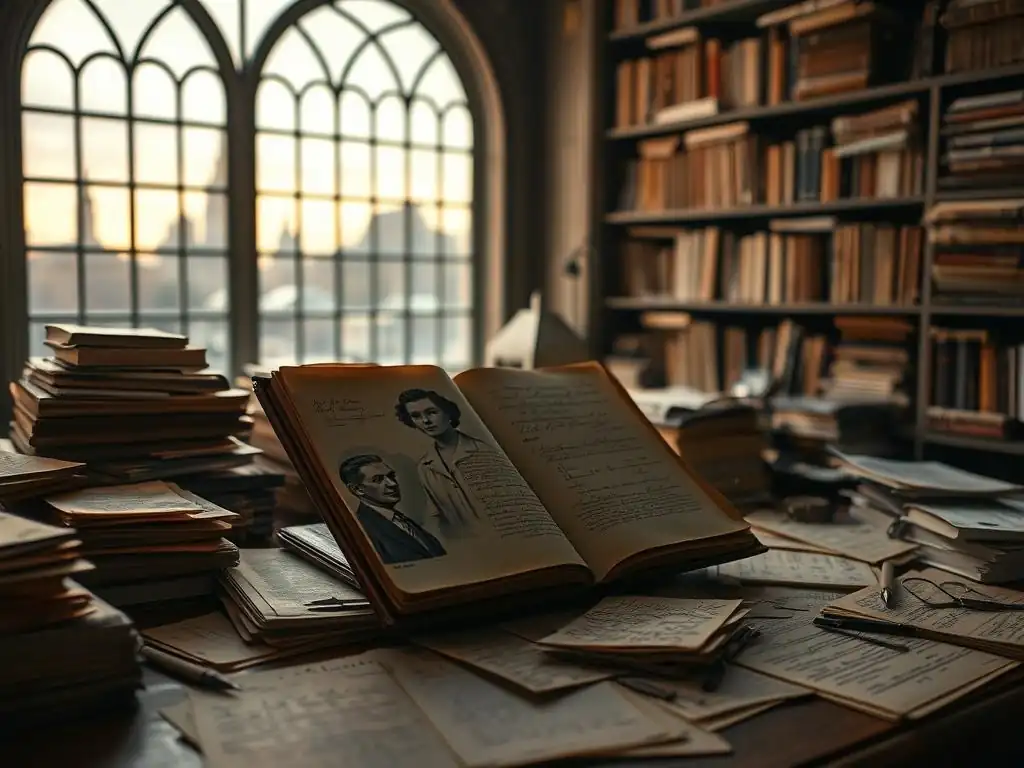
Welcome to WomenInScienceHistory.com!
Dive into the fascinating and often untold stories of women who shaped the scientific landscape. This site is dedicated to illuminating their contributions and the obstacles they overcame. Are you an educator seeking to bring these vital narratives into your classroom? This month, we explore a treasure trove of resources, focusing on how to effectively leverage online women in science archives to enrich your teaching and inspire the next generation of female scientists. Prepare to discover powerful tools and engaging strategies to make history come alive!
- Introduction: Unveiling Hidden Figures Through Women in Science Archives
- Why Use Online Archives for Teaching Women's Contributions to Science?
- Key Online Archives for Women in Science Education
- Practical Strategies for Integrating Women in Science Archives into Your Curriculum
- Examples of Successful Lesson Plans
- Addressing Challenges and Promoting Equitable Representation
- Conclusion: Empowering the Next Generation
-
Frequently Asked Questions
- How can WomenInScienceHistory.com's archives be used in the classroom?
- What kind of challenges did women in science typically face, according to the archives?
- What types of scientific fields are represented in the Women in science archives?
- How do the Women in science archives aim to inspire future generations?
- Why is it important to use online archives like WomenInScienceHistory.com when teaching about women in science?
- Final Reflection: Illuminating Legacies, Inspiring Futures
- Uncover Untold Stories: Empower the Next Generation of Female Scientists!
Online archives have revolutionized the way educators can access and present historical information, particularly when it comes to illuminating the often-overlooked contributions of women in science. These digital repositories serve as invaluable "Women in science archives," offering a direct window into the lives, work, and challenges of pioneering female scientists across various disciplines and eras. By bringing primary source materials directly to the classroom, these resources empower educators to move beyond traditional textbook narratives and engage students with the authentic voices and groundbreaking discoveries of women who shaped scientific progress.
The strategic integration of these digital "Women in science archives" allows for a richer, more nuanced understanding of scientific history. It provides an opportunity to explore not only the scientific achievements themselves but also the societal contexts, gender biases, and personal struggles that these remarkable women navigated. This approach ensures that the curriculum is not only comprehensive but also inspiring, fostering a deeper appreciation for the diverse intellectual heritage of science and encouraging future generations to pursue scientific careers without perceived barriers.
Why Use Online Archives for Teaching Women's Contributions to Science?
Accessibility and Breadth of Women in Science History Resources
Online "Women in science archives" dramatically enhance accessibility, breaking down geographical and institutional barriers that once limited access to rare historical documents. Previously, educators and students might have needed to travel to specific university libraries or national archives to view original papers, letters, or lab notebooks.
Now, a vast array of digitized collections, often comprising thousands of pages of material, is available at the click of a button, allowing for immediate exploration from any classroom or home. This broad digital reach ensures that even schools with limited budgets or remote locations can provide their students with direct engagement with authentic historical materials.
Furthermore, the sheer breadth of content available within these digital "Women in science history resources" is unparalleled. From personal correspondence detailing scientific breakthroughs and collaborations to institutional records revealing the struggles for recognition and professional advancement, these archives offer a multifaceted view of women's roles in science.
For instance, a search within a major digital archive might reveal not just a published paper by a female scientist, but also her grant applications, rejection letters, and even photographs, providing a holistic perspective on her journey and the scientific ecosystem she operated within. This comprehensive access enriches educational content far beyond what a standard textbook can convey.
Engaging Students with Primary Source Materials
Direct engagement with primary source materials from "Women in science archives" significantly increases student engagement by transforming abstract historical facts into tangible, human stories. Instead of simply reading about Marie Curie's discovery of radium, students can examine digitized excerpts from her lab notebooks, observe her meticulous handwriting, or read letters exchanged with her colleagues.
This immediate connection to the original documents makes the historical narrative feel more real and personal, fostering a sense of discovery and intellectual curiosity that passive learning often fails to achieve. Such an approach encourages students to act as historians themselves, interpreting evidence and drawing their own conclusions.
Moreover, working with authentic documents from "Women in science archives" stimulates deeper critical thinking skills. Students are challenged to analyze the language, context, and potential biases within the sources, rather than simply memorizing pre-digested information. For example, by comparing different accounts of a scientific discovery—such as a formal publication versus a personal diary entry—students can learn to evaluate perspectives, understand the complexities of scientific credit, and appreciate the human element behind scientific progress. This active process of inquiry develops essential analytical abilities applicable across all academic disciplines.
Promoting Critical Thinking and Historical Analysis
Utilizing "Women in science archives" as a pedagogical tool intrinsically promotes sophisticated critical thinking and historical analysis among students. When confronted with original documents, students must learn to question the source's provenance, its purpose, and the audience it was intended for, rather than accepting information at face value.
For instance, analyzing a letter written by a female physicist in the 1930s might lead students to consider the prevailing social norms of the era, the limitations placed on women in academia, and how these factors influenced the communication and reception of her scientific ideas. This nuanced approach moves beyond simple recall to deeper interpretative skills.
Furthermore, engaging with diverse materials within "Women in science archives" encourages students to identify patterns, discrepancies, and continuity over time, thereby strengthening their historical analysis capabilities. Students can compare the challenges faced by Ada Lovelace in the 19th century with those encountered by Grace Hopper in the 20th century, identifying both progress and persistent obstacles for women in computing. This comparative analysis fosters an understanding of long-term historical trends and the evolution of gender roles within scientific fields, empowering students to construct their own informed historical arguments based on primary evidence.
Key Online Archives for Women in Science Education
Biography-Focused Women in Science Archives
The Marie Curie Collection at the Bibliothèque Nationale de France: Radioactivity Pioneer
The Bibliothèque Nationale de France (BnF) hosts a significant portion of the digitized archives related to Marie Skłodowska Curie, providing unparalleled access to the life and work of the two-time Nobel laureate. This extensive collection within the broader "Women in science archives" offers educators and students a direct link to her groundbreaking research in radioactivity.
It includes digitized versions of her personal notebooks, laboratory registers detailing her experiments with pitchblende and other radioactive materials, and even her early doctoral thesis, which laid the foundation for her revolutionary discoveries of polonium and radium. These documents often show her meticulous observations and the challenging conditions under which she worked, providing a tangible sense of her scientific rigor and perseverance.
Educators can leverage these materials to illustrate the scientific process, the importance of careful documentation, and the interdisciplinary nature of early 20th-century physics and chemistry. For example, a lesson might involve analyzing entries from her 1897-1904 laboratory notebooks, which are still slightly radioactive and require careful handling in their physical form, but are safely accessible online.
Students can trace her methodical isolation of new elements, observe her quantitative data, and gain insights into the intellectual journey that led to her Nobel Prizes in Physics (1903) and Chemistry (1911), making her the only person to win Nobel Prizes in two different scientific fields.
The Rosalind Franklin Papers at Churchill Archives Centre: DNA Discoveries
The Churchill Archives Centre at Cambridge University holds the significant collection of Rosalind Franklin's papers, offering critical insights into her pivotal contributions to the understanding of DNA and RNA. These "Women in science archives" are invaluable for exploring the intricacies of scientific discovery and the often-complex dynamics of collaboration and recognition.
The digitized collection includes her scientific notebooks, correspondence with colleagues, photographs of her X-ray diffraction images (most notably Photo 51), and drafts of her research papers, all of which shed light on her meticulous experimental work and analytical prowess that was crucial for elucidating the helical structure of DNA.
Educators can use these documents to discuss the nature of scientific evidence, the role of X-ray crystallography, and the ethical considerations surrounding scientific credit. For instance, students can examine her detailed notes on DNA structure and compare them with the published work of Watson and Crick, fostering a discussion about the attribution of scientific discoveries. This archive also provides context for the challenges faced by women in science during the mid-20th century, as Franklin’s contributions were often underappreciated or overshadowed during her lifetime, making her papers a powerful tool for exploring issues of gender equity in science history.
Discipline-Specific Women in Science History Archives
The Schlesinger Library on the History of Women in America: Medical and Scientific Collections
The Schlesinger Library, part of the Radcliffe Institute for Advanced Study at Harvard University, is an unparalleled resource for the history of women in America, with extensive collections specifically dedicated to women in medicine and science. These "Women in science history archives" feature the personal papers, organizational records, and oral histories of countless pioneering women who made significant contributions to public health, nursing, medical research, and various scientific fields from the 19th century through the present day.
For example, the collection includes the papers of Alice Hamilton, a trailblazing physician and the first woman appointed to the faculty of Harvard University, who specialized in industrial toxicology. Her archives contain correspondence, reports, and research notes that illuminate her groundbreaking work in occupational health.
Educators can utilize these resources to explore the intersection of social history, public health, and scientific advancement, showcasing how women navigated and often transformed male-dominated professions. The library’s extensive oral history collection also offers unique audio and video recordings of women scientists recounting their experiences, providing vivid personal narratives that bring history to life. These primary sources allow students to delve into the challenges faced by women entering medical schools, the struggles for professional recognition, and their impact on public health policy and scientific understanding.
The American Astronomical Society's Archives: Women in Astronomy
The American Astronomical Society (AAS) maintains valuable archives that document the history of astronomy in the United States, including significant materials pertaining to women's contributions to the field. These "Women in science archives" provide a rich source for understanding the roles of female astronomers, from the early "computers" at Harvard Observatory to contemporary astrophysicists.
The collection often includes meeting minutes, membership records, scientific correspondence, and biographical sketches that highlight the achievements and challenges faced by women like Annie Jump Cannon, who classified hundreds of thousands of stars, or Cecilia Payne-Gaposchkin, who established that stars are primarily composed of hydrogen and helium.
These archives allow educators to trace the gradual integration of women into the astronomical community and their fight for equal opportunities. For instance, students can research the early struggles of women to be recognized as professional astronomers rather than just assistants, or the efforts to establish women's professional networks within the AAS itself. By examining these historical documents, students can gain insight into the evolution of scientific institutions and the persistent efforts required to achieve gender equity in a field that has historically been dominated by men.
The Society of Women Engineers' Archives: Pioneering Female Engineers
The Society of Women Engineers (SWE) maintains a comprehensive archive that chronicles the history of women in engineering in the United States and globally. This specialized collection within the broader "Women in science archives" is invaluable for understanding the unique challenges and triumphs of female engineers from the mid-20th century onwards.
The archive includes organizational records, publications, oral histories, photographs, and personal papers of prominent women engineers, illustrating their career trajectories, contributions to various engineering disciplines, and their efforts to support and mentor future generations of women in STEM. Materials might include early SWE newsletters detailing advocacy efforts for equal pay or the stories of women who worked on groundbreaking projects like the Apollo missions.
Educators can use the SWE archives to teach about the development of engineering as a profession, the societal barriers women faced in entering and succeeding in technical fields, and the impact of collective action in promoting diversity. For example, students could analyze interview transcripts or historical reports detailing the experiences of the first female graduates from engineering programs, or the strategies used by SWE to encourage young girls to pursue engineering careers. This archive provides a compelling narrative of perseverance, innovation, and the ongoing struggle for equitable representation in a critical scientific and technological field.
General Science History Archives with Significant Women's Collections
The Niels Bohr Archive: Letters and Documents from Female Physicists
The Niels Bohr Archive in Copenhagen, while primarily focused on the life and work of Niels Bohr, contains an invaluable collection of correspondence and documents that illuminate the contributions of numerous female physicists who interacted with Bohr and his institute. These broader "Women in science archives" include letters from prominent figures such as Lise Meitner, the physicist who co-discovered nuclear fission; Marietta Blau, a pioneer in photographic nuclear emulsions; and Margrethe Bohr, Niels Bohr's wife, who played a significant role in managing the institute and supporting its scientists.
These exchanges often discuss complex scientific theories, research methodologies, and the personal and professional challenges faced by these women in the male-dominated world of early 20th-century physics.
Educators can use these letters to demonstrate the collaborative nature of scientific discovery, the intellectual networks that underpinned major breakthroughs, and the often-unseen roles played by women in these networks. For instance, analyzing the correspondence between Lise Meitner and Otto Hahn regarding their fission experiments provides a powerful case study in scientific partnership and the complex issue of credit. These documents offer a unique glimpse into the intellectual ferment of the golden age of physics and the integral, though sometimes obscured, contributions of women.
The National Archives and Records Administration: Science and Technology Collections
The National Archives and Records Administration (NARA) holds a vast collection of U.S. government records that contain significant, though sometimes dispersed, "Women in science archives." These records document the contributions of women to various scientific and technological endeavors supported or conducted by federal agencies throughout American history.
This includes materials related to women's roles in wartime scientific research (e.g., the Manhattan Project, where women like Leona Woods Marshall Libby were instrumental), space exploration (e.g., the "human computers" at NASA, such as Katherine Johnson and Dorothy Vaughan), public health initiatives, and agricultural science. While not always explicitly categorized as "women's history," careful searching can uncover rich veins of information, including personnel files, project reports, scientific publications, and official correspondence.
Educators can guide students in navigating these extensive collections to uncover hidden narratives of women in science within a broader historical context. For example, students could research the records of the Women's Army Corps (WAC) to find documents about women serving as scientists or technicians during World War II, or explore NASA records to understand the pivotal calculations performed by African American women that enabled space missions. This approach encourages students to engage in deep archival research, piece together historical narratives from disparate sources, and recognize the systemic challenges and achievements of women in federally funded scientific enterprises.
Practical Strategies for Integrating Women in Science Archives into Your Curriculum
Developing Research Projects
One highly effective strategy for leveraging "Women in science archives" is to assign student-led research projects. Instead of providing pre-packaged information, educators can task students with exploring specific digital collections to uncover primary source evidence related to a particular female scientist, a scientific discovery, or a historical period. For example, students could be assigned to research the life and work of a lesser-known botanist from the 19th century using university herbarium archives or digitized botanical journals. This approach fosters independence and allows students to develop their own research questions based on the available archival materials.
To guide these projects, educators can provide clear rubrics that emphasize the use of primary sources, critical analysis, and the construction of a coherent historical argument. Students could be required to identify at least three distinct primary documents from the "Women in science archives" and explain how these documents contribute to their understanding of the scientist's life or work. This type of project not only deepens content knowledge but also hones essential research skills, including source evaluation, synthesis of information, and academic writing.
Creating Interactive Learning Activities
"Women in science archives" can be transformed into dynamic, interactive learning experiences that go beyond traditional lectures. One engaging activity involves a "document detective" exercise, where students are given excerpts from digitized primary sources (e.g., a lab notebook entry, a letter, a patent application) and tasked with piecing together a narrative or solving a historical mystery. For instance, students might analyze a series of correspondence between a female scientist and her male colleagues to infer power dynamics or intellectual disagreements. This hands-on approach encourages active participation and critical interpretation of historical evidence.
Another effective interactive strategy is to organize virtual "exhibits" or "museum walks" using curated selections from "Women in science archives." Students can be divided into groups, each responsible for researching a specific scientist or scientific theme using archival materials, and then presenting their findings as if they were curating a museum display. This can involve creating digital posters with key documents, writing explanatory captions, and even recording short audio descriptions. This activity promotes collaboration, public speaking skills, and a deeper understanding of how historical narratives are constructed from archival evidence.
Analyzing Primary Source Documents
A fundamental strategy for utilizing "Women in science archives" is to directly teach students how to analyze primary source documents. This involves guiding them through a systematic process of observation, contextualization, and interpretation. For example, when presenting a digitized letter from a female physicist like Lise Meitner, educators can prompt students to consider questions such as: Who wrote this letter and to whom? When was it written? What is the main topic? What does it reveal about the scientific ideas, social conditions, or personal experiences of the author? What challenges or opportunities does it suggest the author faced?
Furthermore, educators can introduce specific analytical frameworks, such as the "SOAPSTone" method (Speaker, Occasion, Audience, Purpose, Subject, Tone) or the "LOCUS" method (Look, Origin, Context, Understanding, Significance), to help students systematically break down and understand complex historical documents. By engaging in this structured analysis of documents from "Women in science archives," students develop not only historical literacy but also transferable skills in critical reading, evidence-based reasoning, and understanding multiple perspectives.
Supplementing Textbook Narratives
"Women in science archives" serve as an invaluable tool for supplementing and enriching standard textbook narratives, which often provide only a superficial or incomplete account of women's contributions to science. Textbooks might mention Marie Curie, but they rarely delve into the nuances of her laboratory work or the societal attitudes she encountered. By introducing primary sources, educators can add depth, complexity, and authenticity to these accounts. For example, after reading a textbook summary of the discovery of DNA, students can be presented with Rosalind Franklin's Photo 51 and her accompanying notes from the Churchill Archives Centre.
This direct engagement with original materials allows students to witness the scientific process firsthand and understand the human stories behind the discoveries. It also provides an opportunity to challenge prevailing narratives and explore the often-overlooked details that shaped scientific history. By weaving in documents from "Women in science archives," educators can transform a static textbook lesson into a dynamic exploration of scientific inquiry, highlighting the diverse individuals and often arduous journeys involved in scientific advancement.
Examples of Successful Lesson Plans
Case Study 1: Marie Curie and the Study of Radioactivity
A successful lesson plan focusing on Marie Curie and radioactivity, utilizing the Bibliothèque Nationale de France's "Women in science archives," could begin with a general introduction to radioactivity and Curie's background. Students would then be divided into small groups, each assigned a specific set of digitized primary documents from the BnF's collection. For instance, one group might analyze excerpts from her early laboratory notebooks, focusing on her systematic approach to isolating polonium and radium.
Another group could examine her correspondence with her husband, Pierre Curie, or other scientists, discussing the collaborative nature of their work and the initial reception of their findings. A third group might focus on her doctoral thesis or early publications, identifying her key arguments and experimental methods.
The activity culminates in a class discussion where each group presents their findings, linking the primary source evidence to Curie's scientific discoveries and the challenges she faced, including the physical dangers of working with radioactive materials and the skepticism she sometimes encountered as a female scientist. This hands-on engagement with authentic "Women in science archives" helps students understand not only the scientific principles of radioactivity but also the dedication, intellectual rigor, and perseverance that defined Curie's career, making her story far more vivid and memorable than a simple biographical recitation.
Case Study 2: Exploring Challenges Faced by Women in Science in the 20th Century
A compelling lesson plan exploring the challenges faced by women in science during the 20th century can effectively utilize a combination of "Women in science archives" from various institutions, such as the Schlesinger Library and the Society of Women Engineers' archives. Students could be presented with a curated selection of primary documents, such as letters from female scientists recounting their struggles to gain admission to graduate programs, articles from professional journals discussing gender bias in hiring or promotion, or oral history transcripts detailing experiences of discrimination or lack of recognition.
For example, a document might be a 1950s university memo denying a woman a lab space due to her gender, or a personal letter from a female engineer expressing frustration over unequal pay compared to male colleagues.
The lesson would involve a "jigsaw" activity where groups of students become "experts" on specific types of challenges (e.g., access to education, professional recognition, work-life balance, discrimination). Each group would analyze their assigned documents from the "Women in science archives" to identify common themes, specific instances, and the impact of these challenges. The groups would then share their findings, allowing the class to construct a comprehensive picture of the systemic barriers women encountered. This approach fosters empathy, critical analysis of historical injustice, and an understanding of the long fight for equitable representation in STEM fields.
Addressing Challenges and Promoting Equitable Representation
Overcoming Lack of Visibility
A significant challenge in teaching women's contributions to science has historically been their lack of visibility in traditional narratives and textbooks. "Women in science archives" directly address this issue by providing concrete, undeniable evidence of their scientific endeavors and achievements.
By bringing digitized letters, lab notebooks, research papers, and photographs of women scientists to the forefront, educators can actively counteract historical omissions and ensure that these figures receive the recognition they deserve. For instance, instead of briefly mentioning Lise Meitner's role in nuclear fission, educators can present her detailed correspondence with Otto Hahn from the Niels Bohr Archive, clearly demonstrating her intellectual leadership and crucial insights, thereby restoring her rightful place in the history of physics.
Moreover, these archives offer a powerful counter-narrative to the pervasive myth of the solitary male genius in science. They reveal networks of collaboration, mentorship, and often unseen labor performed by women that underpinned major discoveries. By focusing on these primary sources, educators can show that science is a collective human enterprise, and that women have always been an integral, though frequently unacknowledged, part of it. This direct engagement with "Women in science archives" not only educates students about individual women but also fundamentally alters their understanding of how scientific progress occurs and who contributes to it.
Highlighting Diversity
Promoting equitable representation in science education extends beyond simply including more women; it requires highlighting the diverse experiences of women from various racial, ethnic, and socioeconomic backgrounds. "Women in science archives" are crucial tools in this endeavor, as they often contain materials that shed light on the intersectional challenges faced by women of color, Indigenous women, or women from marginalized communities who pursued scientific careers.
For example, the National Archives and Records Administration (NARA) holds documents related to African American women who worked as mathematicians and engineers at NASA, such as Katherine Johnson, Dorothy Vaughan, and Mary Jackson, whose stories highlight both their intellectual brilliance and the systemic racial and gender discrimination they overcame.
Educators should actively seek out and integrate materials from "Women in science archives" that represent this rich tapestry of experiences. This might involve exploring collections that document the contributions of women in non-Western scientific traditions, or those who worked in less conventional scientific roles. By showcasing this diversity, educators can ensure that all students see themselves reflected in the history of science, fostering a more inclusive and inspiring vision of who can be a scientist, and acknowledging the multifaceted ways in which women have contributed to scientific knowledge globally.
Fostering an Inclusive Curriculum
The ultimate goal of leveraging "Women in science archives" is to foster an inclusive curriculum where the contributions of women are not treated as an add-on but are seamlessly integrated into the core narrative of science history. This means moving beyond a "women's history month" approach and embedding women's stories and achievements throughout the year, within every relevant scientific discipline.
For example, when teaching genetics, educators can introduce Rosalind Franklin's X-ray diffraction images from the Churchill Archives Centre alongside discussions of Watson and Crick, ensuring her foundational role is recognized from the outset. Similarly, when discussing environmental science, the work of Rachel Carson can be explored through her personal papers and correspondence, showing her scientific rigor and advocacy.
An inclusive curriculum, informed by "Women in science archives," challenges students to think critically about historical biases and the social construction of knowledge. It teaches them that history is not a fixed narrative but an ongoing interpretation of evidence, and that marginalized voices deserve to be heard. By consistently incorporating these rich archival resources, educators can cultivate a learning environment that celebrates diversity, promotes equity, and inspires all students to pursue their scientific curiosities, knowing that their contributions, like those of the women who came before them, are invaluable.
Conclusion: Empowering the Next Generation
Online "Women in science archives" represent an unprecedented opportunity for educators to transform the teaching of science history. By providing direct access to primary source materials, these digital repositories empower students to engage critically with the lives, work, and challenges of pioneering female scientists. This direct engagement fosters a deeper understanding of scientific discovery, promotes essential critical thinking skills, and ensures that the often-overlooked contributions of women are finally brought into the spotlight.
By integrating these rich archival resources, educators can move beyond simplistic narratives, offering a nuanced and authentic portrayal of women's integral role in shaping scientific progress. This comprehensive approach not only enriches the curriculum but also plays a vital role in inspiring the next generation of scientists, demonstrating that curiosity, perseverance, and intellectual rigor know no gender. Empowering students with these historical insights cultivates a more inclusive and equitable vision for the future of science.
Frequently Asked Questions
How can WomenInScienceHistory.com's archives be used in the classroom?
The website offers biographies of female scientists, primary source materials, and lesson plan ideas that educators can integrate into their curriculum to teach about women's contributions to science.
What kind of challenges did women in science typically face, according to the archives?
The archives highlight the systemic biases and gender discrimination that many women faced, including limited access to education, research opportunities, and recognition for their work.
What types of scientific fields are represented in the Women in science archives?
The archives cover a wide range of disciplines, including physics, chemistry, biology, mathematics, and more, showcasing the diverse contributions of women across scientific fields.
How do the Women in science archives aim to inspire future generations?
By showcasing the achievements and resilience of female scientists, the archives aim to inspire young women to pursue careers in STEM fields and challenge existing gender stereotypes.
Why is it important to use online archives like WomenInScienceHistory.com when teaching about women in science?
Online archives provide easy access to a wealth of information and primary sources, allowing students to engage with the history of women in science in a more interactive and engaging way.
Final Reflection: Illuminating Legacies, Inspiring Futures
The exploration of women in science archives reveals not just historical records, but a vibrant tapestry of resilience, innovation, and often overlooked contributions that resonate profoundly in today's world. These archives serve as powerful reminders that the scientific landscape we inhabit is built upon the shoulders of countless women whose stories deserve to be told, celebrated, and learned from. By bringing these narratives to light, we enrich our understanding of science itself and challenge the persistent biases that have historically marginalized women in STEM fields.
The enduring impact of these women scientists, and the importance of preserving their legacies, is undeniable. Connecting with these archives allows us to not only learn about the past, but also to actively shape a more inclusive and equitable future for science. The most effective way to do it, is to do it.
- Amelia Earhart. This quote, while not directly from a scientist, embodies the spirit of action and perseverance that characterizes so many women who defied expectations and forged their own paths in science. Their stories, now accessible through online archives, offer invaluable lessons and inspiration for generations to come.
As educators, and as individuals committed to a more just and equitable world, we have a responsibility to engage with these resources and share the stories they hold. Let us use these archives to empower our students, challenge preconceived notions, and cultivate a deeper appreciation for the diverse voices that have shaped the scientific world. Embrace the opportunity to explore these rich collections, and consider how you can integrate these narratives into your own teaching and learning, ensuring that the legacies of these remarkable women continue to inspire and inform the future of science.
Uncover Untold Stories: Empower the Next Generation of Female Scientists!
Thank you for exploring the vital role women have played in science history. You've gained valuable insights into how online archives can enrich your teaching and inspire your students. Now, let's bring these stories to life!
- Transform your curriculum: Incorporate at least one lesson featuring a woman scientist from the WomenInScienceHistory.com archives this semester.
- Encourage student research: Challenge students to find a hidden figure in STEM using online resources and present their findings.
- Ignite discussions: Start a classroom conversation about the barriers women faced in science and how we can build a more inclusive future.
Which woman scientist's story will you share first to spark curiosity and empower your students?