
Beyond Marie Curie: Using Archives to Discover Diverse Women Scientists

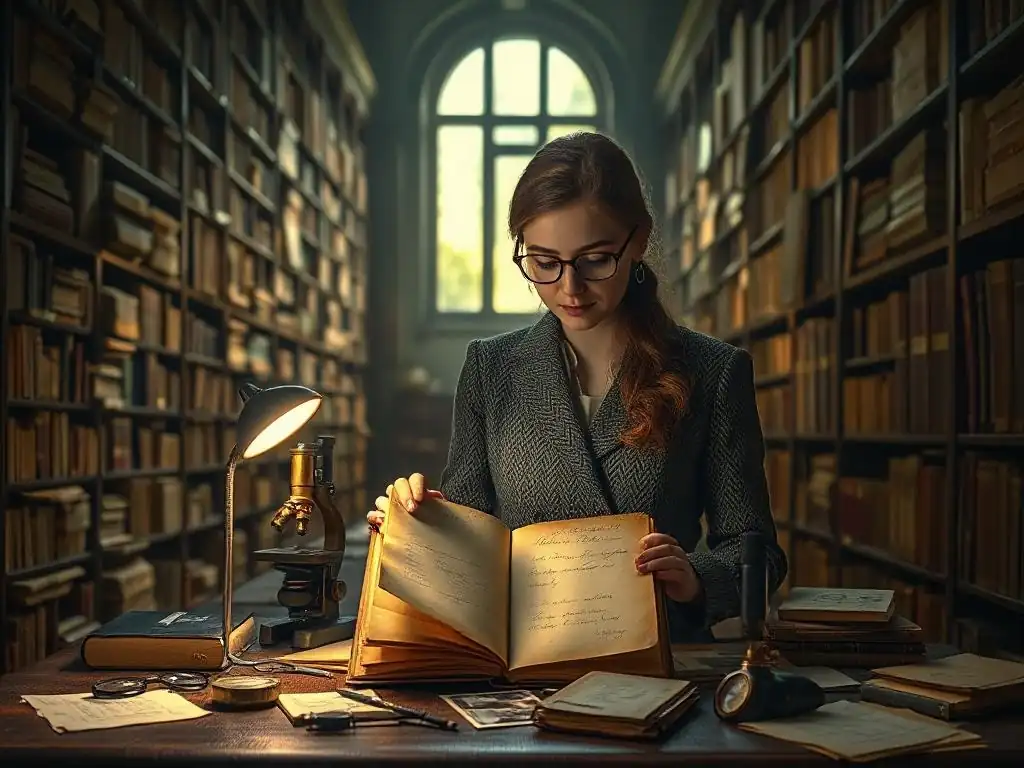
Welcome to WomenInScienceHistory.com!
Dive into the untold stories of brilliant minds. This website celebrates the remarkable contributions of women to science throughout history. But how do we uncover these hidden narratives? In "Beyond Marie Curie: Using Archives to Discover Diverse Women Scientists," we explore innovative women scientists archive research methods that are opening up a whole new world of understanding. Curious to learn more? Let's begin the exploration!
- Introduction: Unearthing Hidden Stories of Women in Science History
- Navigating Online Archives for Women Scientists: A Research Guide
- Women Scientists Archive Research Methods: A Step-by-Step Approach
- Analyzing Archival Documents: Interpreting Evidence of Women's Scientific Work
- Overcoming Challenges in Women Scientists Archive Research
- Case Studies: Examples of Discovering Diverse Women Scientists Through Archives
- Preserving and Promoting Women in Science History: The Role of Digital Archives
- Conclusion: Empowering Future Generations Through Archival Discoveries
-
Frequently Asked Questions
- How does the "Women in Science History" website contribute to understanding women's roles in science?
- What is the primary goal of the "WomenInScienceHistory.com" platform?
- What types of resources does the website offer for those interested in researching women scientists?
- Why is archival research important for uncovering the stories of women scientists?
- How does "WomenInScienceHistory.com" address the historical underrepresentation of women in scientific fields?
- Final Reflection: Unearthing Untold Legacies
- Unearth Untold Stories: Become a Women in Science History Detective!
The Importance of Archival Research for Women in Science Studies
Archival research stands as a cornerstone for anyone seeking to illuminate the often-obscured contributions of women throughout the history of science. While celebrated figures like Marie Curie rightly hold their place in public consciousness, countless other brilliant women scientists have had their work overlooked, marginalized, or even attributed to male colleagues.
Without delving into primary sources such as personal correspondence, laboratory notebooks, institutional records, and unpublished manuscripts, these vital narratives would remain lost to time. These documents offer a unique window into their daily lives, the challenges they faced in male-dominated fields, their innovative methodologies, and the profound impact of their discoveries.
The meticulous examination of these historical records is crucial for reconstructing an accurate and comprehensive understanding of scientific progress. It allows researchers to move beyond secondary accounts, which may perpetuate existing biases or simplify complex historical contexts.
For instance, early 20th-century university records might detail a woman's enrollment in a science program, while her later professional contributions are only discoverable through the meticulous review of departmental meeting minutes or research grant applications. This deep dive into original materials is the only way to truly appreciate the breadth and depth of women's involvement in scientific endeavors across diverse disciplines and eras, from botany to astrophysics.
Moving Beyond Famous Figures: Expanding the Narrative of Women's Contributions
While figures like Marie Curie, with her two Nobel Prizes, are undeniably inspiring and deserve their recognition, focusing solely on a handful of prominent women inadvertently perpetuates a narrow view of women's historical impact on science. The vast majority of women who contributed significantly to scientific knowledge did so without widespread acclaim, often working in subordinate roles, as uncredited assistants, or in fields not traditionally recognized as "science." Expanding the narrative requires a concerted effort to identify and celebrate these less-known individuals.
This expansion is not just about adding names to a list; it's about understanding the systemic barriers, the collaborative networks, and the unique pathways through which women engaged with scientific inquiry. For example, many women found avenues for scientific work through women's colleges, philanthropic organizations, or as illustrators and data gatherers for male scientists, roles that were often essential but rarely acknowledged. Employing robust women scientists archive research methods allows scholars to uncover these nuanced stories, revealing how women navigated societal expectations and institutional constraints to advance knowledge, thereby enriching our collective scientific heritage beyond the well-trodden paths.
Key Women in Science History Archives and Databases
The digital age has revolutionized access to historical documents, making it significantly easier to conduct women scientists archive research methods from virtually anywhere. Prominent institutions have digitized vast portions of their collections, offering invaluable resources. The Smithsonian Institution Archives, for example, provides access to records relating to numerous female naturalists, astronomers, and museum professionals, with collections detailing their field expeditions, scientific correspondence, and publications. Similarly, the Library of Congress offers extensive digital collections, including personal papers and organizational records that shed light on women's roles in various scientific fields, from early computing to medical research.
University archives are another rich source, often holding the personal papers of faculty, alumni, and research staff. Harvard University's Schlesinger Library, for instance, is a premier repository for women's history in America, with significant holdings pertaining to women in science, medicine, and technology.
The archives of institutions like MIT, Stanford, and the University of California system also contain specialized collections that document the careers of pioneering women in engineering, computer science, and physics. Researchers should also explore subject-specific databases, such as the Biodiversity Heritage Library for natural scientists or the American Institute of Physics' International Catalog of Sources for History of Physics and Allied Sciences, which often include materials by or about women.
Effective Search Strategies for Discovering Lesser-Known Women Scientists
Discovering lesser-known women scientists in online archives requires more than just typing a name into a search bar; it demands creative and strategic women scientists archive research methods. One effective approach is to search for institutional records rather than just individual names. Many women worked within large research teams or institutions where their individual contributions might not have been highlighted but are documented within departmental records, project reports, or grant applications. For example, searching for "Massachusetts Institute of Technology Physics Department records" from a specific era might reveal the names and work of uncredited female researchers or technical assistants.
Another crucial strategy involves using broader subject terms or keywords related to specific scientific disciplines, rather than focusing solely on known individuals. Terms like "women chemists," "female astronomers," "laboratory assistants," or "scientific illustrators" can yield surprising results, leading to discovery of individuals whose contributions were significant but not widely publicized. Cross-referencing names found in one archive with biographical dictionaries, obituaries, or professional society memberships can also uncover additional archival collections or provide clues for further investigation, allowing researchers to piece together a more complete picture of a woman's scientific career.
The Schlesinger Library at Radcliffe: A Rich Repository for Women's History
The Arthur and Elizabeth Schlesinger Library on the History of Women in America, part of the Radcliffe Institute for Advanced Study at Harvard University, stands as an unparalleled resource for anyone undertaking women scientists archive research methods. Established in 1943, its mission is to document the lives of American women, making it an essential destination for exploring the scientific contributions of women. The library holds over 100,000 volumes, more than 3,000 manuscript collections, and extensive oral histories, many of which directly pertain to women in scientific fields.
Among its notable collections are the papers of prominent female scientists, such as Dr. Alice Hamilton, a pioneer in industrial medicine, whose extensive correspondence and research notes provide invaluable insights into early public health efforts and environmental toxicology. The library also houses the records of organizations that supported women in science, like the American Association of University Women, offering perspectives on advocacy and educational opportunities.
Furthermore, the Schlesinger Library's collections include the personal narratives of women who broke barriers in fields ranging from astronomy to computer science, detailing not only their scientific achievements but also the social and professional landscapes they navigated.
Women Scientists Archive Research Methods: A Step-by-Step Approach
Defining Your Research Question: Focusing on Specific Areas of Inquiry
Before embarking on any archival journey, defining a clear and focused research question is paramount for effective women scientists archive research methods. A well-defined question acts as a compass, guiding your search and helping you identify relevant materials amidst vast collections. Instead of a broad inquiry like "What did women do in science? ", consider more specific questions such as "How did women contribute to atomic research during World War II at Los Alamos?" or "What role did female botanists play in the classification of flora in the American West during the late 19th century?"
Specificity in your research question allows you to narrow down potential archives, identify appropriate keywords, and recognize pertinent documents more efficiently. For example, if your question concerns early female astronomers, you would prioritize searching university observatories' archives, astronomical societies' records, and personal papers of prominent male astronomers with whom women might have collaborated or been employed. This focused approach ensures that your time in the archives, whether physical or digital, is spent productively, leading to more meaningful discoveries and a cohesive narrative.
Utilizing Keywords and Boolean Operators for Targeted Searches
Effective use of keywords and Boolean operators is a fundamental component of successful women scientists archive research methods, particularly when navigating digital databases. Instead of single terms, combine keywords to refine your search. For instance, using phrases like "female physician" AND "public health" or "woman chemist" AND "industrial laboratory" can significantly narrow down results and pinpoint relevant documents. Employing Boolean operators such as AND, OR, and NOT allows for complex queries. For example, (astronomer OR "observatory assistant") AND (woman OR female) would capture a broader range of individuals in the field.
Furthermore, consider variations in terminology that might have been used historically. A "computer" in the mid-20th century often referred to a human, typically a woman, performing mathematical calculations. Therefore, searching for "human computer" or "calculator" could yield valuable results related to women in early computing. Truncation symbols (like * or ?) can also be useful, allowing searches for biolog* to include "biology," "biologist," or "biological." Mastering these techniques is crucial for unearthing hidden gems that might otherwise remain buried within extensive digital collections.
Combining Name Searches with Subject Terms Like "Laboratory" or "Research Grant"
A sophisticated approach within women scientists archive research methods involves combining known names with broader subject terms to uncover connections and contextualize individual contributions. Even if you have a specific name in mind, searching for that name alongside terms like "laboratory", "research grant", "experimentation", or "scientific instrument" can reveal documents that detail their practical work, funding, or collaborations. For example, searching for "Lise Meitner AND laboratory" could bring up records of her work at the Kaiser Wilhelm Institute for Chemistry, offering insights into her specific experimental setup or interactions with colleagues.
This method is particularly effective for women whose contributions might have been downplayed or absorbed into larger projects. By searching for a woman's name in conjunction with the names of male colleagues or institutions they were associated with, you can often find mentions or even direct evidence of their work that might not be obvious from a standalone name search. Additionally, terms like "correspondence", "notebooks", or "diaries" combined with a name can lead to personal papers that offer rich biographical and scientific details, providing a more intimate understanding of their scientific journey and the challenges they faced.
Analyzing Archival Documents: Interpreting Evidence of Women's Scientific Work
Deciphering Scientific Notebooks and Correspondence
Once relevant archival documents are located, the next critical step in women scientists archive research methods is their meticulous analysis. Scientific notebooks, often filled with handwritten notes, raw data, sketches, and experimental protocols, offer direct insight into a scientist's thought process and daily work. Deciphering these can be challenging due to varying handwriting styles, specialized scientific jargon, and abbreviations.
Researchers must pay close attention to dates, experimental conditions, and observations, looking for patterns, anomalies, and insights that might not have made it into published papers. For example, a notebook might reveal failed experiments that led to a breakthrough, or detailed observations that were later simplified for publication.
Correspondence, on the other hand, provides a window into intellectual exchanges, collaborations, and the social context of scientific work. Letters between women scientists and their peers, mentors, or family members can reveal personal struggles, professional frustrations, funding challenges, and the excitement of discovery.
For instance, letters from Rosalind Franklin to colleagues might detail her experimental challenges with X-ray diffraction of DNA, offering a more nuanced understanding of her contributions than official reports. Analyzing both the content and the tone of these letters can illuminate the networks of support, the intellectual debates, and the institutional barriers that shaped women's scientific careers.
Interpreting archival findings effectively requires placing them within their broader historical and social frameworks. No scientific discovery or career exists in a vacuum; it is shaped by the prevailing societal norms, technological capabilities, political climate, and institutional structures of its time. For women scientists, this contextualization is particularly vital, as they often operated within environments marked by gender bias, limited opportunities, and the expectation of domestic roles. Understanding the specific challenges they faced – such as exclusion from professional societies, denial of promotions, or lack of access to resources – is crucial for accurately assessing their achievements.
For example, when analyzing the work of a female astronomer in the early 20th century, it's important to consider the limited career paths available to women in academia at that time, often relegated to "computers" or assistants rather than independent researchers. Understanding the "marriage bar" that prevented many women from continuing their careers after marriage, or the lack of childcare support, provides crucial context for why many talented women might have left the field or worked in less visible capacities.
This deep contextualization, a key aspect of advanced women scientists archive research methods, allows historians to move beyond mere biographical facts to truly understand the significance and impact of women's scientific contributions against formidable odds.
Identifying Mentorship and Collaboration Networks
A critical aspect of analyzing archival documents, especially for understanding women's scientific careers, involves identifying mentorship and collaboration networks. Due to systemic barriers, women often relied on informal networks, supportive male mentors, or collaborations with other women to advance their research. Correspondence, acknowledgments in publications, and institutional meeting minutes can offer clues to these vital relationships. For instance, a letter from a male professor to a female student might reveal not only academic guidance but also advocacy for her career.
Examining co-authored papers, shared laboratory notes, or joint grant applications can illuminate formal collaborations. However, many collaborations involving women were informal or uncredited. Therefore, researchers employing robust women scientists archive research methods must look for indirect evidence: mentions in personal diaries, shared addresses, or references in the acknowledgments of published works that might hint at uncredited assistance or intellectual exchange. Identifying these networks is essential for understanding how women navigated and often thrived within scientific communities, leveraging support systems to overcome institutional hurdles and make significant contributions.
Overcoming Challenges in Women Scientists Archive Research

Addressing Gaps in Archival Records: Silences and Omissions
A significant challenge in women scientists archive research methods is confronting the pervasive gaps and silences in historical records concerning women. For centuries, the contributions of women were often deemed less significant, leading to their work being poorly documented, misattributed, or simply not preserved. This means that direct evidence of a woman's scientific work might be scarce or entirely absent in traditional archives.
Researchers must therefore adopt creative strategies to infer contributions from indirect evidence. For example, if a woman worked as an uncredited assistant, her presence might only be noted in a male colleague's laboratory budget, travel logs, or acknowledgments in published papers.
Furthermore, women often had less access to formal institutions or positions that generated extensive records. Many worked from home laboratories, as independent researchers, or in roles considered "support staff," such as scientific illustrators or data tabulators, whose contributions were vital but rarely archived under their own names. This necessitates looking beyond conventional academic records to sources like personal diaries, family papers, or community records, which might contain anecdotal evidence or brief mentions of their scientific pursuits. Recognizing these inherent omissions is the first step toward developing innovative approaches to uncover these hidden histories.
Recognizing Bias in Historical Documentation
Another formidable challenge in women scientists archive research methods is recognizing and actively working to counteract bias embedded within historical documentation. Archival records are not neutral reflections of the past; they are products of their time, often created by individuals or institutions holding prevailing societal biases.
This means that women's contributions might be described using diminishing language, their achievements downplayed, or their work attributed to male colleagues. For example, a female researcher might be consistently referred to as an "assistant" even if she was the primary investigator, or her ideas might be presented as having originated from a male superior.
Researchers must critically analyze the language used in documents, questioning who created the record, for what purpose, and for what audience. It's crucial to look beyond the literal text to understand the underlying power dynamics and societal expectations. For instance, a letter praising a woman's "diligence" rather than her "intellectual prowess" might reflect gendered stereotypes. By acknowledging and actively analyzing these biases, historians can deconstruct misleading narratives and reconstruct a more accurate and equitable account of women's roles in science, challenging the historical erasure that has long plagued the field.
Utilizing Oral Histories and Biographical Databases to Supplement Archival Data
Given the inherent gaps and biases in traditional archival records, effective women scientists archive research methods often involve supplementing primary document research with oral histories and biographical databases. Oral histories, which are recorded interviews with individuals about their life experiences, can provide invaluable first-person accounts that might not exist in written form. For women scientists, these interviews can illuminate details about their educational experiences, career challenges, mentorship relationships, and the daily realities of working in a male-dominated field. For instance, an oral history might reveal how a woman navigated discriminatory hiring practices or balanced family responsibilities with demanding research.
Biographical databases and collective biographies also serve as crucial supplementary resources. Websites like Wikipedia, specialized biographical dictionaries (e.g., Notable American Women), and professional organization directories often compile information from various sources, sometimes referencing archival collections that might otherwise be overlooked. While these are secondary sources, they can provide leads to primary documents or contextual information that helps fill in the blanks left by incomplete archival records. Combining these diverse sources allows researchers to construct a richer, more comprehensive narrative of women's scientific lives and contributions.
Case Studies: Examples of Discovering Diverse Women Scientists Through Archives
Uncovering the Contributions of Nettie Stevens to Chromosomal Sex Determination
The story of Nettie Stevens (1861-1912) provides a compelling case study for the power of women scientists archive research methods in recognizing overlooked contributions. Stevens was an American geneticist who, through meticulous observation of mealworms, independently discovered that sex is determined by specific chromosomes (the X and Y chromosomes) in 1905. Her work, published in Carnegie Institution of Washington publications, demonstrated that females have two large chromosomes (XX) and males have one large and one small chromosome (XY).
Simultaneously, and also in 1905, Edmund Beecher Wilson published similar findings. However, for many years, Wilson often received primary credit for this discovery, overshadowing Stevens's equally rigorous and independent research.
Archival research into the Carnegie Institution records, her personal correspondence, and the scientific publications of the era allows historians to reconstruct the timeline and significance of her work. These documents confirm her independent discovery and illustrate the detailed cytological analysis she performed. For instance, her original drawings and laboratory notes, if preserved, would vividly demonstrate her careful observations. By bringing her story to light through these historical documents, we challenge the tendency to attribute scientific breakthroughs solely to male figures and highlight the critical role of women in foundational genetic discoveries.
Highlighting the Work of Alice Ball in Developing a Treatment for Leprosy
Alice Ball (1892-1916) offers another powerful example of a woman scientist whose groundbreaking work was nearly lost to history until archival efforts brought it to light. As a young African American chemist at the University of Hawaii, Ball developed the "Ball Method" in 1915, the first effective injectable treatment for leprosy derived from chaulmoogra oil. Prior to her innovation, the oil's components were difficult to administer and caused severe side effects.
Ball's method involved isolating the active esters of the fatty acids in the oil, making it water-soluble and injectable, thus transforming leprosy treatment globally. Tragically, she died at age 24, and her work was subsequently published and claimed by the university president, Arthur Dean, who initially called it "Dean's Method."
It was through later historical investigations, relying on university records, scientific journals, and biographical research, that Ball's true contribution was restored. Researchers delved into university reports, chemical society meeting minutes, and even local newspaper archives from the early 20th century to piece together the evidence of her original work. These women scientists archive research methods confirmed that Ball was indeed the one who developed the purification technique. Her story underscores the dual challenge faced by women of color in science: not only gender bias but also racial discrimination, making the recovery of their histories even more critical.
Recovering the Story of Katherine Johnson's Contributions to NASA
Katherine Johnson (1918-2020), one of NASA's pioneering African American "human computers," exemplifies how archival research can recover and celebrate vital contributions. Johnson's extraordinary mathematical skills were crucial for the success of early U.S. spaceflights, including Project Mercury and the Apollo missions. She performed trajectory analysis for Alan Shepard's 1961 mission, the first American in space, and famously verified the electronic computer's calculations for John Glenn's orbital flight in 1962. Despite her critical role, her work, and that of many other female mathematicians, was largely unacknowledged for decades.
The recovery of Johnson's story, amplified by the book and film "Hidden Figures," relied heavily on NASA's extensive archives, including mission reports, internal memos, and oral histories. Researchers sifted through official documents that detailed computational tasks, often attributed generically to "the computing pool," and cross-referenced them with interview transcripts and personal recollections to identify Johnson's specific contributions.
For instance, documents detailing the precise calculations for orbital mechanics, when linked with Johnson's biographical data, confirmed her direct involvement. These women scientists archive research methods not only highlighted her individual genius but also brought broader attention to the collective impact of the "human computers" who were foundational to the early space program.
Preserving and Promoting Women in Science History: The Role of Digital Archives
The Importance of Digitization and Accessibility
The ongoing digitization of archival collections is profoundly transforming women scientists archive research methods, making the discovery and study of women's contributions more accessible than ever before. Historically, researchers had to travel to specific physical archives, a barrier that limited who could access these vital primary sources.
Digitization projects, undertaken by major libraries, universities, and historical societies worldwide, are breaking down these geographical and financial barriers. This means a scholar in India can now access the digitized papers of an American botanist held in California, or a student in South Africa can explore the laboratory notes of a British physicist.
This enhanced accessibility democratizes research, allowing a broader range of individuals, from academic historians to citizen researchers, to engage with and contribute to the history of women in science. Furthermore, digital platforms often employ advanced search functionalities, optical character recognition (OCR) on scanned documents, and metadata tagging, which make finding specific information within vast collections significantly easier. For instance, a search for "female physicist" across multiple digitized archives can yield results that would have required years of physical travel and manual searching just a few decades ago, thereby accelerating the pace of discovery and scholarship.
Engaging with Online Communities and Scholarly Networks
Beyond merely accessing documents, digital archives and the internet have fostered vibrant online communities and scholarly networks that are crucial for advancing women scientists archive research methods and promoting their findings. Researchers can now connect with peers globally through academic forums, social media platforms, and specialized mailing lists dedicated to the history of science or women's studies. These networks facilitate the sharing of research tips, archival leads, and preliminary findings, often leading to collaborative projects and a more comprehensive understanding of complex historical figures.
Many online platforms also host digital exhibitions, virtual conferences, and public engagement initiatives that bring the stories of women scientists to a wider audience. For example, projects like the "Contributions of 20th Century Women in Physics" website (CWP) or the "Science History Institute" digital collections not only provide access to primary materials but also curate narratives and educational resources.
Engaging with these online communities allows researchers to disseminate their discoveries, receive feedback, and contribute to a collective effort to ensure that the legacies of women in science are not only preserved but also celebrated and integrated into mainstream historical narratives.
Supporting Archival Institutions Through Donations and Volunteer Work
The continued success of women scientists archive research methods and the expansion of digital access to their stories depend heavily on the sustained support of archival institutions. These institutions, whether large national libraries or small university special collections, often operate with limited funding, making the extensive work of preservation, cataloging, and digitization a constant challenge. Financial donations, no matter the size, directly contribute to the resources needed to acquire new collections, maintain digital infrastructure, and employ skilled archivists who make these materials discoverable.
Beyond financial contributions, volunteer work can play a significant role. Many archives welcome volunteers to assist with transcription projects, which convert handwritten documents into searchable digital text, or to help with processing new collections. Contributing time and expertise directly aids in making more materials accessible for research.
Advocating for public funding for archives and libraries, and raising awareness about the importance of preserving women's historical records, are also crucial. By actively supporting these institutions, individuals can ensure that future generations will continue to have the resources needed to uncover and celebrate the rich and diverse history of women in science.
Conclusion: Empowering Future Generations Through Archival Discoveries
Celebrating the Legacy of Women Scientists
The systematic application of women scientists archive research methods is not merely an academic exercise; it is an act of historical reclamation and celebration. By meticulously delving into primary sources, researchers are able to rescue countless women scientists from historical obscurity, bringing their groundbreaking work, intellectual prowess, and sheer determination to light. This process moves beyond merely acknowledging their existence to fully appreciating the depth and breadth of their contributions across every scientific discipline, often achieved despite formidable societal and institutional barriers.
Celebrating the legacy of these diverse women scientists enriches our understanding of scientific progress itself, revealing that innovation has always been a multifaceted endeavor, not solely the domain of a few prominent male figures. From the unsung "human computers" who propelled early space missions to the botanists who meticulously documented global flora, each rediscovered story adds another vital thread to the tapestry of scientific history. This ongoing work ensures that their achievements are not only remembered but also integrated into mainstream narratives, providing a more accurate and inclusive account of how scientific knowledge has advanced.
Inspiring Future Research and Scholarship
The discoveries made through rigorous women scientists archive research methods serve as a powerful catalyst for inspiring future research and scholarship. Each unearthed story opens new avenues for inquiry, prompting historians, sociologists, and scientists themselves to ask deeper questions about gender, power, and knowledge production in scientific fields. For instance, learning about a collaborative network of female astronomers in the early 20th century might spark new research into the role of women's colleges in fostering scientific communities or the impact of informal mentorship on career trajectories.
Furthermore, the availability of increasingly digitized archives encourages a new generation of scholars to engage with primary sources, fostering critical thinking and analytical skills. These resources empower students and researchers to challenge existing narratives, identify biases, and contribute original research that continues to expand our collective knowledge. The momentum generated by these discoveries creates a virtuous cycle, where each new piece of information inspires further investigation, ensuring that the history of women in science remains a dynamic and expanding field of study.
The journey to fully uncover the hidden histories of women in science is an ongoing quest, requiring sustained effort and innovative women scientists archive research methods. Despite significant progress in recent decades, countless stories of brilliant women scientists remain to be discovered, documented, and shared. Many women's contributions are still buried in uncatalogued collections, obscured by patriarchal record-keeping practices, or simply waiting for the right researcher to ask the right questions.
This ongoing quest is vital not only for historical accuracy but also for its profound contemporary relevance. By shining a light on the challenges and triumphs of women in science throughout history, we provide powerful role models for current and future generations of girls and women contemplating scientific careers. Understanding the systemic barriers they faced and overcame can also inform current efforts to promote diversity, equity, and inclusion in STEM fields. The commitment to meticulous archival research, therefore, is an investment in a more complete understanding of our past and a more equitable and inspiring future for science.
Frequently Asked Questions
How does the "Women in Science History" website contribute to understanding women's roles in science?
The website celebrates the contributions of women in science throughout history by featuring biographies and discussions of their work. It also highlights the challenges they faced in male-dominated fields.
What is the primary goal of the "WomenInScienceHistory.com" platform?
The platform aims to inspire future generations by showcasing the often overlooked narratives of women in science. It seeks to shed light on their pioneering work and contributions.
What types of resources does the website offer for those interested in researching women scientists?
The site features biographies of pioneering female scientists, along with discussions of their groundbreaking work. It implicitly encourages the use of women scientists archive research methods.
Why is archival research important for uncovering the stories of women scientists?
Archival research is crucial because it can reveal primary source documents and personal accounts that might not be widely known. This helps to provide a more complete and accurate picture of their lives and work.
How does "WomenInScienceHistory.com" address the historical underrepresentation of women in scientific fields?
The website actively works to counteract the underrepresentation by highlighting the achievements and struggles of women. This helps to correct historical imbalances and promote a more inclusive understanding of scientific history.
Final Reflection: Unearthing Untold Legacies
The journey through archives, as we've explored, is more than just historical research; it's an act of reclaiming narratives and amplifying voices that have been historically marginalized. The stories of women scientists, often obscured or overlooked, offer invaluable lessons and inspiration for future generations. By actively engaging with archival materials, we can challenge existing biases and create a more inclusive and accurate understanding of scientific progress.
The impact of uncovering these stories extends far beyond academic circles. It's about fostering a sense of belonging and empowerment for young women considering careers in STEM, demonstrating that they are part of a rich and diverse legacy. Until lions have their own historians, tales of the hunt will always glorify the hunter.
This African proverb underscores the urgency and importance of actively seeking out and sharing the perspectives of those whose contributions have been systematically undervalued.
Now, consider the power you hold to shape the future. What stories will you seek out? What voices will you amplify? Let this exploration of women scientists in archives inspire you to become an active participant in rewriting history, ensuring that the contributions of all are recognized and celebrated. Embrace the challenge of uncovering hidden narratives, and let your research contribute to a more equitable and inspiring scientific landscape for all.
Unearth Untold Stories: Become a Women in Science History Detective!
Thank you for joining us on this journey to celebrate the often-overlooked contributions of women in science. Now that you're equipped with the tools to explore archives, it's time to put your knowledge into action!
Here's how you can further contribute to uncovering and sharing these vital narratives:
- Start Your Own Local History Search: Visit your local university or historical society archives. You might be surprised by the hidden stories waiting to be discovered!
- Reach out to Women In Science History (WomenInScienceHistory.com) with any interesting women you have found in Science History! We would love to collaborate!
- Share this article with your friends or start a discussion in a relevant online forum. You never know who else might have a story to contribute!
What hidden female scientist will you uncover first?