
The Unfinished Revolution: From First Admissions to Full Equality in Science Academia

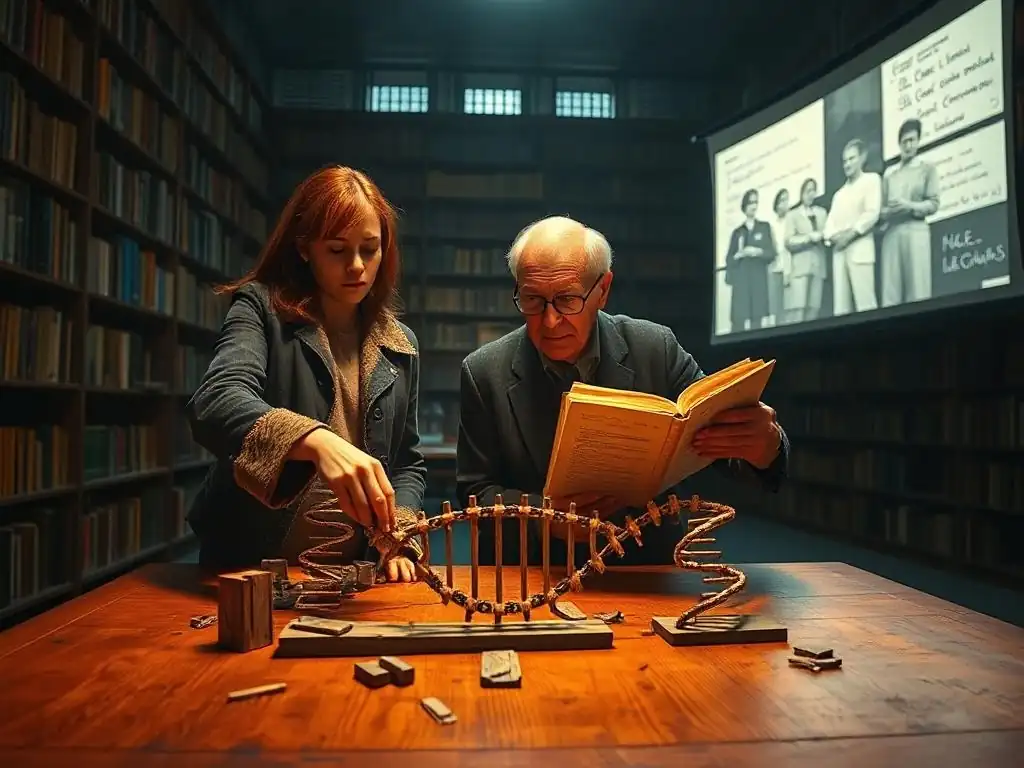
Welcome to WomenInScienceHistory.com!
Delve into the often-untold stories of brilliant minds who shattered glass ceilings and reshaped our understanding of the world. This site celebrates the groundbreaking contributions of women in science throughout history. Ever wondered about the hurdles these pioneers faced in academia?
Our feature article, " The Unfinished Revolution: From First Admissions to Full Equality in Science Academia," explores the persistent Women’s science academic equality challenges, revealing the ongoing struggle for true equity in scientific fields. Discover the historical context and the path ahead—read on to uncover the complex realities that these remarkable women navigated, and continue to navigate, in their pursuit of scientific excellence.
- Introduction: The Long Road to Women's Science Academic Equality
- Historical Barriers to Women's Access to Science Academia
- The First Cracks: Early Admissions and Groundbreaking Female Scientists
- Progress and Persistent Challenges: Mid-20th Century and Beyond
- Modern Challenges to Women’s Science Academic Equality
- Initiatives and Strategies for Achieving Full Gender Equality in Science
- The Future of Women in Science Academia: A Vision of Full Equality
- Conclusion: The Ongoing Pursuit of Equitable Science Academia
-
Frequently Asked Questions
- How did the early female scientists gain access to academic institutions?
- What were some of the main challenges faced by women pursuing scientific careers in the past?
- How did the groundbreaking work of female scientists contribute to their recognition and acceptance?
- What specific obstacles do women in science continue to face in achieving full academic equality today?
- What is the role of platforms like WomenInScienceHistory.com in promoting women's science academic equality?
- Final Reflection: Embracing the Unfinished Revolution
- Empower Change: Ignite Your Impact in STEM!
Introduction: The Long Road to Women's Science Academic Equality
Acknowledging Pioneering Women in Science Academia
The history of science is rich with the contributions of countless individuals, yet for a significant period, the narratives of women scientists were largely overlooked or actively suppressed. From the earliest days of formal academic institutions, women faced immense hurdles, often denied basic admission or relegated to informal, uncredited roles.
Despite these formidable obstacles, pioneering women like Maria Sibylla Merian, who made groundbreaking entomological observations in the late 17th century, or Caroline Herschel, a pivotal astronomer who discovered several comets in the late 18th and early 19th centuries, carved out spaces for themselves, laying foundational stones for others to follow. Their persistence in the face of widespread societal and institutional resistance highlights the profound women’s science academic equality challenges that defined their eras.
These early trailblazers, often working outside the traditional academic establishment, demonstrated intellectual rigor and an unwavering commitment to scientific discovery. Their stories are crucial not only for recognizing their individual brilliance but also for understanding the pervasive systemic barriers they encountered. Their very existence challenged prevailing notions about women's intellectual capabilities and their place in the scientific world, setting the stage for future generations to demand formal inclusion and recognition within the hallowed halls of academia.
Defining "Full Equality" in the Context of Science Academia
Achieving "full equality" in science academia extends far beyond mere admission to programs or institutions. It encompasses a multifaceted state where women not only have equal access to educational opportunities but also experience equitable treatment in all aspects of their academic careers.
This includes fair hiring practices, unbiased promotion opportunities, equitable access to research funding, and recognition for their intellectual contributions in publications and awards, free from the subtle and overt biases that have historically plagued the field. It also means fostering environments where women are equally represented in leadership roles, from department chairs to university presidents, influencing policy and shaping the future of scientific inquiry.
True equality addresses the systemic women’s science academic equality challenges that persist, such as the "leaky pipeline" phenomenon, where women progressively drop out of STEM fields at higher rates than men, particularly at postdoctoral and faculty levels. It implies an academic culture that actively works to dismantle implicit biases, acknowledges and supports diverse career paths, and provides comprehensive support for work-life balance, ensuring that family responsibilities do not disproportionately penalize women's career progression.
Ultimately, full equality means a scientific community where gender is irrelevant to one's potential, opportunities, or recognition, allowing every individual to contribute their best work without hindrance.
Historical Barriers to Women's Access to Science Academia
Societal Expectations and Gender Roles Limiting Women's Scientific Pursuits
For centuries, deeply entrenched societal expectations and rigid gender roles significantly curtailed women's access to and participation in scientific pursuits. Women were primarily confined to the domestic sphere, their roles narrowly defined as wives, mothers, and homemakers. Intellectual endeavors, particularly in rigorous fields like science and mathematics, were often deemed unsuitable or even detrimental to women's perceived delicate constitutions and their primary responsibilities.
This pervasive ideology suggested that women lacked the necessary intellectual capacity for complex scientific thought or that engaging in such activities would somehow diminish their femininity or reproductive health. Such beliefs created formidable women’s science academic equality challenges that were woven into the fabric of society.
These societal norms translated into limited educational opportunities for girls and women, with scientific subjects often excluded from their curricula, even in private academies. The emphasis was typically on accomplishments considered appropriate for future wives and mothers, such as music, art, and needlework. The prevailing medical and philosophical theories of the time often reinforced these biases, with prominent figures asserting that women's brains were smaller or less capable of abstract reasoning. This cultural environment created an invisible, yet powerful, barrier that discouraged women from even considering a career in science, let alone pursuing formal academic training.
Formal Exclusion: Denying Women Admission to Science Programs
Beyond societal pressures, formal exclusion from academic institutions served as a direct and insurmountable barrier for women aspiring to scientific careers. Throughout the 18th and much of the 19th centuries, most universities and colleges were exclusively male domains, their charters often explicitly or implicitly prohibiting the admission of women.
Even as some institutions began to cautiously open their doors to women in the late 19th century, access to science programs, particularly those requiring laboratory work or advanced mathematical understanding, remained severely restricted. For instance, while some universities might admit women to arts faculties, their science departments, especially those in engineering or medicine, were often among the last to desegregate.
This formal denial of admission meant that even exceptionally gifted women had no pathways to acquire the necessary theoretical knowledge, practical skills, or academic credentials required for a scientific career. They were barred from lectures, laboratories, and libraries, effectively preventing them from engaging with the scientific discourse of their time or conducting original research within established frameworks. This direct institutional discrimination was a monumental women’s science academic equality challenge, forcing many brilliant minds to pursue science independently, often in isolation, or to work as uncredited assistants to male relatives, their contributions frequently absorbed into the works of others.
The "Separate But Equal" Myth: Women's Colleges and Limited Scientific Resources
In response to the widespread exclusion from co-educational institutions, the late 19th and early 20th centuries saw the rise of women's colleges, such as Vassar, Wellesley, Smith, and Bryn Mawr. While these institutions were pivotal in providing women with higher education opportunities, they often operated under the "separate but equal" myth, particularly concerning scientific resources.
Though they offered science curricula, the scope and scale of their scientific departments, laboratories, and research funding typically lagged far behind those of established male-dominated research universities. For example, while a women's college might have a chemistry department, it often lacked the advanced instrumentation or extensive research grants available at a large university like Harvard or Yale.
This disparity in resources meant that even women who excelled in science at these colleges faced limitations when pursuing advanced degrees or research careers. The "equal" part of the equation was often a facade; while they received a solid foundational education, the pathways to cutting-edge research or prestigious academic positions remained more difficult to navigate.
The scientific equipment might be older, the faculty fewer, and the opportunities for large-scale collaborative research less abundant. This created a subtle yet significant women’s science academic equality challenge, as it meant women, even with a college degree, might start their scientific careers at a disadvantage compared to their male counterparts who had access to more robust and well-funded programs.
The First Cracks: Early Admissions and Groundbreaking Female Scientists
Case Studies: Johns Hopkins University and its Initial Acceptance of Women in Science
One significant turning point in the formal admission of women to higher education, including science, was the case of Johns Hopkins University. Established in 1876 as a pioneering research university, it initially admitted only men. However, a persistent campaign led by a group of prominent Baltimore women, starting in the late 1880s, put pressure on the university to open its medical school to women.
This movement culminated in 1893 with the "Women's Fund," which stipulated that if women raised a substantial endowment—initially $500,000, roughly equivalent to over $17 million today—the medical school must admit women on the same terms as men. This condition was met, and the Johns Hopkins School of Medicine began admitting women in 1893, becoming one of the first top-tier medical schools in the U.S. to do so.
While the initial acceptance was specifically for the medical school, this precedent gradually influenced other departments within Johns Hopkins and other universities. The success of these early female medical students, who demonstrated equal intellectual capability and often excelled academically, helped to dismantle the argument that women were intellectually unsuited for rigorous scientific and medical training. This move, driven by both philanthropic pressure and a growing recognition of women's intellectual contributions, marked a crucial crack in the wall of formal exclusion, though it certainly did not eliminate all women’s science academic equality challenges overnight.
Overcoming Resistance: Marie Curie's Journey and Achievements
Marie Curie stands as an unparalleled example of a woman who not only broke through the scientific establishment but also achieved unparalleled success despite immense resistance. Born in Poland, Maria Skłodowska faced educational barriers in her homeland due to her gender, prompting her move to Paris to study at the Sorbonne. There, she excelled, earning degrees in physics and mathematical sciences.
Her subsequent work with her husband, Pierre Curie, led to the discovery of polonium and radium, laying the groundwork for nuclear physics and cancer treatment. She became the first woman to win a Nobel Prize (Physics, 1903) and the first person and only woman to win the Nobel Prize twice (Chemistry, 1911), and the only person to win the Nobel Prize in two different scientific fields.
Despite her groundbreaking achievements and international recognition, Curie still faced considerable women’s science academic equality challenges. She was initially denied full membership in the French Academy of Sciences by a single vote in 1911, a decision widely attributed to sexism and xenophobia. Her path to becoming a professor at the Sorbonne was also fraught with challenges, as she essentially took over her deceased husband's position. Curie's story is a testament to extraordinary scientific genius but also a stark reminder that even the most brilliant women faced ingrained biases and systemic barriers, even at the pinnacle of their careers.
The Impact of World War I and II on Women's Opportunities in Science Academia
The two World Wars, though devastating, inadvertently created significant, albeit temporary, opportunities for women in science and academia. As millions of men were conscripted for military service, women were called upon to fill critical roles in industries and research institutions previously closed to them. During World War I, women engaged in chemical research for explosives, medical research for battlefield injuries, and technical roles in munitions factories. While much of this was practical rather than purely academic, it demonstrated women's capabilities in scientific and technical fields on a large scale.
World War II had an even more profound impact, particularly in fields like physics, engineering, and computing. Women became essential to the war effort, working as mathematicians (human computers), engineers, and scientists in projects like the Manhattan Project. For instance, women like Leona Woods Marshall Libby were key physicists on the Manhattan Project. This period saw an unprecedented number of women enrolling in science and engineering programs to meet wartime demands.
However, these gains were largely fleeting. After the wars, as men returned, societal pressures often pushed women back into traditional domestic roles, and many lost their wartime scientific positions. While the wars provided a glimpse of women's potential in science, the post-war retrenchment highlighted the persistent women’s science academic equality challenges and the fragility of these newly opened doors.
Progress and Persistent Challenges: Mid-20th Century and Beyond
Increased Representation, but Unequal Opportunities in Science Research
Following the mid-20th century, particularly from the 1960s onwards, there was a noticeable increase in the number of women pursuing higher education and entering scientific fields. Legislation like Title IX in the United States, enacted in 1972, played a significant role in expanding educational access for women, including in STEM disciplines.
By the late 20th century, women's enrollment in undergraduate science programs had risen substantially, and they began to constitute a larger percentage of doctoral recipients in many scientific fields. For example, while women comprised a small fraction of STEM PhDs in the 1950s, by the early 2000s, they earned approximately 40-50% of PhDs in fields like biological sciences, though still lagging significantly in areas like computer science and engineering.
Despite this increased representation, the opportunities for women in science research often remained unequal, creating persistent women’s science academic equality challenges. While more women were entering the pipeline, they faced a "leaky pipeline" phenomenon, with fewer progressing to tenured faculty positions, particularly at research-intensive institutions.
Studies in the late 20th and early 21st centuries consistently showed that women were less likely to be principal investigators on large research grants, less likely to hold endowed chairs, and less likely to lead major research centers, even when their qualifications were comparable to their male counterparts. This indicated that while access improved, the playing field for high-level research careers was still far from level.
The "Glass Ceiling" in Science Academia: Barriers to Promotion and Leadership
Even as more women entered academic science, a pervasive "glass ceiling" limited their upward mobility, particularly into senior faculty and leadership positions. While women might constitute a significant portion of assistant professors, their representation dwindled dramatically at the associate and full professor ranks, and even more so in roles like department chairs, deans, and university presidents.
For instance, a 2018 report found that women made up roughly 47% of assistant professors in STEM fields in the US but only about 28% of full professors. This disparity, often termed the "vertical segregation" of academic careers, points to systemic barriers that prevent women from achieving their full potential.
These barriers often include a combination of factors: implicit bias in evaluation and promotion committees, a lack of mentorship and sponsorship opportunities, and the disproportionate impact of family responsibilities on women's career trajectories. Women might be passed over for leadership roles or prestigious committee assignments, limiting their visibility and influence. The cumulative effect of these subtle and overt biases creates a persistent women’s science academic equality challenge, where women hit an invisible barrier that prevents them from reaching the highest echelons of academic power and influence, regardless of their qualifications or achievements.
Gender Bias in Funding, Publications, and Recognition for Women Scientists
Beyond promotion, women scientists have historically faced, and continue to face, significant gender bias in critical areas such as research funding, publication opportunities, and professional recognition. Studies have repeatedly shown that grant applications from women principal investigators, even with similar scientific merit, may receive lower scores or be less likely to be funded compared to those from men.
For example, a 2017 analysis of NIH grants indicated that female principal investigators received smaller grants on average than their male counterparts, particularly in certain fields. This disparity in funding significantly impacts a scientist's ability to conduct large-scale research, hire staff, and maintain a competitive lab.
Similarly, women's contributions to scientific literature have often been undervalued. Research suggests that women are less likely to be first or last authors on papers in prestigious journals, and their work may be cited less frequently, even when accounting for career stage and productivity.
The "Matilda effect," a phenomenon where the achievements of female scientists are attributed to their male colleagues, continues to manifest in various forms, from media portrayals to major awards. This systemic undervaluation in funding, publication, and recognition represents a profound women’s science academic equality challenge, undermining women's careers and diminishing their visibility within the scientific community.
Modern Challenges to Women’s Science Academic Equality
The Persistence of Implicit Bias in Evaluations and Hiring Decisions
Despite increased awareness and diversity initiatives, implicit bias remains a pervasive and insidious women’s science academic equality challenge in academic science. These unconscious biases, often rooted in societal stereotypes about gender roles and capabilities, can subtly influence decisions in hiring, promotion, and evaluation processes.
For example, studies have shown that when presented with identical CVs, one attributed to a male name and one to a female name, faculty members (both male and female) tend to rate the "male" applicant as more competent and hirable, and offer a higher starting salary. This subtle preference for male candidates can lead to women being overlooked for positions or offered less favorable terms from the outset.
Implicit bias also manifests in recommendation letters, where letters for women often use more communal language (e.g., "supportive," "collaborative") while letters for men use more agentic language (e.g., "leader," "brilliant," "innovative"). This difference can subtly disadvantage women in competitive academic settings where "brilliance" is often prioritized. Furthermore, in peer review for grants and publications, unconscious biases can lead to women's work being scrutinized more harshly or their expertise being underestimated. Addressing this deeply ingrained challenge requires not only awareness training but also systemic changes to evaluation processes, such as blind reviews and standardized rubrics, to minimize subjective judgment.
Work-Life Balance and the "Motherhood Penalty" in Academic Science
The demanding nature of academic science, particularly the "publish or perish" culture and the intense tenure-track period, intersects critically with work-life balance issues, creating a significant women’s science academic equality challenge, often termed the "motherhood penalty." Women in academia, particularly those in STEM fields, disproportionately bear the burden of childcare and domestic responsibilities. This can lead to a slowdown in research productivity, fewer publications, and less time for networking and career advancement during crucial early and mid-career stages, precisely when male colleagues might be accelerating.
Studies have shown that mothers in academia are less likely to be tenured or promoted to full professor compared to fathers or childless women and men, even when accounting for publication rates. The implicit expectation of continuous, uninterrupted productivity within the academic system often penalizes those who take parental leave or adjust their work schedules for family care.
While some institutions have implemented policies like tenure-clock extensions, the cultural expectation of being "always on" and the lack of comprehensive, affordable childcare remain major hurdles. This penalty not only pushes talented women out of the academic pipeline but also limits the diversity of perspectives in scientific leadership.
Addressing Sexual Harassment and Discrimination in Science Academia
Sexual harassment and discrimination represent a severe and often overlooked women’s science academic equality challenge that directly impacts women's retention and advancement in scientific fields. Numerous reports and studies have revealed that women in STEM, particularly those in graduate programs and early career stages, experience disproportionately high rates of sexual harassment compared to women in other academic fields or men in STEM.
A 2018 report by the National Academies of Sciences, Engineering, and Medicine found that over 50% of women faculty and staff in academia experienced sexual harassment. This harassment can range from sexist remarks and microaggressions to unwanted sexual advances and assault.
The consequences of such experiences are profound, leading to decreased job satisfaction, mental health issues, career disruption, and even women leaving their academic positions or scientific careers altogether. The hierarchical nature of academia, with its power imbalances between professors and students/postdocs, can create environments where harassment is difficult to report and perpetrators often face minimal consequences.
Addressing this challenge requires robust institutional policies, transparent reporting mechanisms, effective enforcement, and a fundamental shift in academic culture to one that actively promotes respect, accountability, and safety for all individuals. Without tackling this pervasive issue, efforts to achieve gender equality in science academia will remain incomplete.
Initiatives and Strategies for Achieving Full Gender Equality in Science
Promoting STEM Education and Mentorship Programs for Young Girls
A crucial strategy for achieving full gender equality in science begins at the earliest stages of education by actively promoting STEM education and providing robust mentorship programs for young girls. Research indicates that girls often lose interest in STEM subjects around middle school, influenced by societal stereotypes, a lack of visible female role models, and sometimes, less encouragement from teachers or parents in these fields.
Initiatives like "Girls Who Code," "EngineerGirl," and local science clubs specifically designed for girls aim to counter these trends by making STEM engaging, accessible, and relatable. These programs provide hands-on experiences, demonstrate practical applications of science, and build confidence in problem-solving skills from a young age.
Beyond early exposure, comprehensive mentorship programs are vital. Connecting aspiring young female scientists with established women in STEM fields provides invaluable guidance, inspiration, and practical advice for navigating academic and career paths. Mentors can demystify the scientific process, share personal experiences of overcoming women’s science academic equality challenges, and offer crucial networking opportunities. Such programs not only foster a sense of belonging and community but also equip the next generation with the resilience and knowledge needed to pursue scientific careers confidently, thereby broadening the pipeline of female talent entering academia.
Implementing Gender-Neutral Evaluation Criteria in Academia
To dismantle the implicit biases that hinder women's advancement, implementing gender-neutral evaluation criteria is a critical strategy within academia. This involves systematically reviewing and reforming processes for hiring, promotion, tenure, and grant allocation to minimize subjective judgment and focus purely on merit. One effective approach is "blind" or "double-blind" review processes for publications and grant applications, where the gender (and often the identity) of the applicant or author is concealed from reviewers. This helps to reduce unconscious bias that might favor male applicants or evaluate women's work more critically.
Furthermore, standardizing interview questions, establishing clear and objective rubrics for performance evaluations, and training search and promotion committees on implicit bias are essential steps. For example, instead of relying on subjective impressions, committees can be trained to assess candidates based on predefined criteria and evidence, ensuring that women's contributions are judged on the same objective scale as men's. By making evaluation processes more transparent, structured, and accountable, institutions can create a more equitable environment where talent and achievement, rather than gender, are the sole determinants of success, directly addressing a core women’s science academic equality challenge.
Fostering Inclusive and Supportive Academic Environments for Women
Beyond formal policies, fostering truly inclusive and supportive academic environments is paramount for the retention and success of women in science. This involves cultivating a culture where women feel valued, respected, and empowered to contribute fully without fear of discrimination or harassment. Practical steps include establishing clear codes of conduct with zero tolerance for harassment and discrimination, coupled with accessible and trustworthy reporting mechanisms that protect complainants from retaliation. Regular, mandatory training on diversity, equity, and inclusion for all faculty, staff, and students can help raise awareness and change behaviors.
Moreover, promoting active allyship among male colleagues and leadership is crucial, encouraging them to speak out against sexism, mentor female colleagues, and advocate for equitable policies. Creating opportunities for women to network and build community, such as women-in-STEM faculty groups or dedicated mentorship circles, can provide essential peer support and professional development.
Addressing the "motherhood penalty" through flexible work arrangements, accessible childcare resources, and supportive parental leave policies also contributes significantly to a more inclusive environment. By prioritizing a culture of respect and support, academic institutions can actively dismantle the systemic women’s science academic equality challenges that have historically marginalized women in science.
The Future of Women in Science Academia: A Vision of Full Equality
The Potential Impact of Increased Diversity on Scientific Innovation
The full integration and equitable participation of women in science academia promise to unlock a profound surge in scientific innovation. When diverse perspectives, experiences, and problem-solving approaches are brought to the table, the range of questions asked, the methodologies employed, and the interpretations of data expand significantly. Historically, a largely homogenous scientific community may have overlooked certain research avenues or biases in study design. For example, the lack of women in medical research, particularly in drug trials, has led to medications with different efficacies or side effects in women, highlighting a critical gap that diverse teams can address.
Increased gender diversity has been empirically linked to improved research outcomes, higher citation rates, and a broader range of scientific breakthroughs. Teams with greater gender diversity tend to be more collaborative, challenge assumptions more effectively, and produce more novel and impactful research. By fully integrating women's talents, science gains not just more hands or minds, but fundamentally different insights that can lead to more robust, universally applicable, and creative solutions to complex global challenges. Overcoming the persistent women’s science academic equality challenges is not merely an issue of fairness, but a strategic imperative for the future of scientific discovery.
The Importance of Continued Advocacy and Systemic Change
Achieving full gender equality in science academia is not a destination that will be reached through passive progress; it requires persistent, proactive advocacy and systemic change. While significant strides have been made since the days of formal exclusion, the subtle and overt women’s science academic equality challenges that remain embedded in institutional structures and cultural norms necessitate ongoing vigilance. Advocacy groups, professional organizations, and individual champions must continue to push for policy reforms, such as equitable parental leave, transparent promotion criteria, and robust anti-harassment measures.
Systemic change goes beyond individual initiatives and calls for a fundamental re-evaluation of how academic institutions operate. This includes re-thinking traditional tenure models that often disadvantage women, investing in comprehensive diversity and inclusion training for all faculty and staff, and establishing clear accountability mechanisms for achieving gender equity goals. Universities and funding bodies must commit to collecting and analyzing data on gender disparities to identify problem areas and measure the impact of interventions. Without this sustained commitment to both advocacy and deep-seated systemic reform, the unfinished revolution towards full equality will continue to face significant hurdles.
Celebrating Successes and Learning from Past Challenges
As we look towards a future of full equality for women in science academia, it is vital to both celebrate the successes achieved and diligently learn from the women’s science academic equality challenges of the past. The journey from exclusion to increased representation, marked by the perseverance of countless pioneering women, is a testament to the power of human intellect and resilience.
Acknowledging the groundbreaking achievements of women like Rosalind Franklin, whose critical work on DNA structure was initially under-recognized, or Chien-Shiung Wu, whose experimental verification of parity violation fundamentally altered physics, reminds us of the immense talent that was historically suppressed.
Celebrating these successes inspires future generations and demonstrates the tangible benefits of breaking down barriers. Simultaneously, understanding the historical and modern obstacles—from formal exclusion and implicit bias to the motherhood penalty and sexual harassment—provides crucial insights into the mechanisms of inequality. This understanding informs the development of more effective strategies and policies. By consciously reflecting on how past challenges were confronted, and recognizing that many battles are ongoing, the scientific community can build a more robust, equitable, and ultimately more innovative future where every talent is nurtured and every contribution is valued.
Conclusion: The Ongoing Pursuit of Equitable Science Academia
Reflecting on the Progress Made and the Work Remaining
The journey from the era of formal exclusion to the current landscape of increased, though still unequal, representation for women in science academia has been a long and arduous one. We have moved from a time when women were explicitly denied admission to a point where they constitute a significant portion of undergraduate and graduate students in many scientific disciplines.
Pioneering women broke down seemingly impenetrable barriers, and movements for gender equality have brought about crucial policy changes, such as Title IX. These are significant achievements that underscore the power of persistent advocacy and the undeniable talent of women scientists.
However, the "revolution" remains unfinished. Persistent women’s science academic equality challenges continue to manifest in subtle yet powerful ways: the "glass ceiling" in promotions and leadership, implicit biases in evaluations, the disproportionate impact of work-life balance issues, and the pervasive problem of sexual harassment. While the front door to academia is now largely open, the pathways within often remain fraught with obstacles that disproportionately affect women, preventing true equality of opportunity and outcome. The work remaining is less about opening doors and more about dismantling the invisible structures that still impede full participation and recognition.
Empowering Future Generations of Women Scientists
Empowering future generations of women scientists requires a multi-pronged approach that builds on past progress while actively addressing contemporary women’s science academic equality challenges. It means fostering environments where young girls are encouraged to pursue their curiosity in STEM from an early age, providing robust mentorship and sponsorship opportunities, and ensuring that academic institutions are truly inclusive and equitable. This involves not just policy changes but also a fundamental shift in culture, where diversity is celebrated, biases are actively challenged, and accountability for equitable practices is paramount.
By creating a scientific community where talent is the sole currency, unburdened by gender bias or systemic discrimination, we not only fulfill a moral imperative but also enrich the very fabric of scientific discovery. The unique perspectives and innovative approaches that women bring are essential for tackling the complex global challenges of our time. The ongoing pursuit of equitable science academia is an investment in a more robust, creative, and impactful future for science itself, ensuring that the contributions of all brilliant minds, regardless of gender, are fully realized and celebrated.
Frequently Asked Questions
How did the early female scientists gain access to academic institutions?
Early female scientists often gained access through informal channels, such as personal connections with male professors or by attending lectures unofficially, as formal admissions were rare.
What were some of the main challenges faced by women pursuing scientific careers in the past?
Women faced significant challenges, including limited educational opportunities, discrimination in hiring and promotion, and social expectations that prioritized domestic roles.
How did the groundbreaking work of female scientists contribute to their recognition and acceptance?
While challenges persisted, significant discoveries and publications by women helped gradually challenge existing biases and demonstrated their intellectual capacity, leading to slow but steady recognition.
What specific obstacles do women in science continue to face in achieving full academic equality today?
Even today, women face obstacles like gender bias in grant funding, lack of mentorship and networking opportunities, and the "motherhood penalty" affecting career progression.
What is the role of platforms like WomenInScienceHistory.com in promoting women's science academic equality?
These platforms play a vital role in raising awareness about the historical and ongoing contributions of women in science, inspiring future generations, and advocating for greater equity and inclusion in academia.
Final Reflection: Embracing the Unfinished Revolution
The journey through the history of women in science academia, as we've explored, reveals a narrative far from complete. The fight for true equality in science is not a relic of the past, but a vibrant and ongoing movement. The challenges women face today, while perhaps more subtle than outright exclusion, are no less impactful, shaping career trajectories and limiting the potential of brilliant minds. Understanding this persistent struggle is crucial for fostering a truly inclusive and innovative scientific community.
This exploration has underscored the profound and often unseen barriers that continue to shape the landscape of science. It's a reminder that progress, while undeniable, is fragile and requires constant vigilance. The subtle biases, the lack of representation in leadership, and the persistent gender pay gap all contribute to a system that still disadvantages women. Equality is not a concept. It's not something we should be striving for. It's a necessity. Equality is like gravity, we need it to stand on this earth as men and women.
- Joss Whedon. This quote encapsulates the fundamental need for equality, not as an aspiration, but as a foundational element for a just and thriving society, particularly within the demanding and impactful realm of science.
As we conclude this exploration of the unfinished revolution, I urge you to reflect on your own role in shaping the future of science. How can you actively challenge biases, advocate for equitable policies, and create a more inclusive environment for women in science? The responsibility for achieving full equality rests not just on institutions, but on each of us. Let us all commit to continuing this vital work, ensuring that the scientific community truly reflects the diversity and brilliance of all its members.
Empower Change: Ignite Your Impact in STEM!
Thank you for diving into the inspiring journey of women in science! We hope this exploration has sparked a renewed appreciation for the trailblazers who paved the way and a desire to continue their vital work. Now, let's turn that inspiration into action.
Here's how you can champion equality in STEM:
- Commit to mentoring a young woman pursuing a career in science. Share your experience and guide her journey.
- Actively promote inclusive hiring practices within your organization or network. Advocate for diverse candidate pools and unbiased evaluation processes.
- Surprise everyone by starting a book club focused on biographies of overlooked female scientists from different backgrounds and share your insights online.
What concrete step will you take today to ensure the revolution for equality in science continues to thrive?