
From Theory to Touchdown: [Mission Designer's Name]'s Crucial Role in Landing Probes on Distant Moons

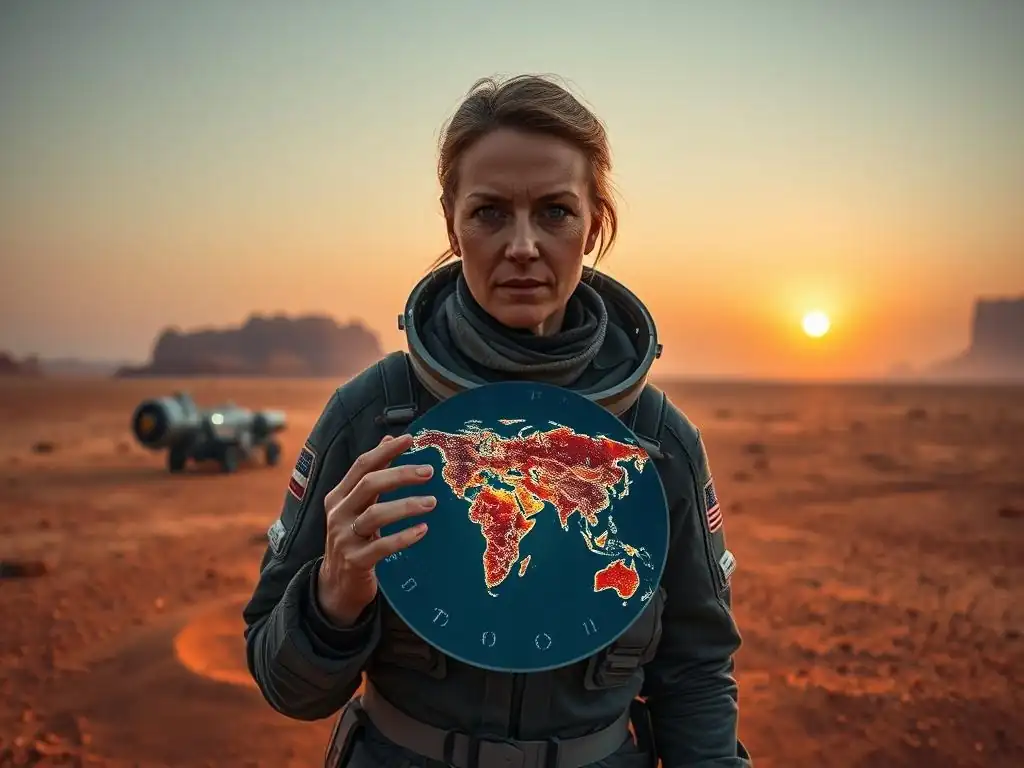
Welcome to WomenInScienceHistory.com, where we unearth the incredible stories of women who shaped the world of science! Ever wondered who meticulously calculated the trajectories that allowed us to explore distant moons? This month, we delve into Space exploration female scientist biographies, focusing on the pivotal role of [Mission Designer's Name] in ensuring successful lunar and planetary landings. Prepare to be inspired by her groundbreaking work and the obstacles she overcame, leaving you questioning why her contributions have remained largely untold until now.
- From Theory to Touchdown: Margaret Hamilton's Crucial Role in Landing Probes on Distant Moons
- Introduction: Celebrating Women in Planetary Science and Space Exploration
- Early Life and Education: The Seeds of a Space Scientist
- Breaking Barriers: Navigating a Male-Dominated Field
- The Crucial Role of a Mission Designer in Space Exploration
- Margaret Hamilton's Groundbreaking Work on Apollo 11
- Contributions to Landing Probe Technology: Innovation and Precision
- Legacy and Impact: Inspiring Future Generations of Space Exploration Female Scientist Biographies
- The Importance of Recognizing Women in Space Science History
- Conclusion: A Touchdown for Women in Planetary Science
-
Frequently Asked Questions
- What kind of information can I find on WomenInScienceHistory.com regarding space exploration female scientist biographies?
- Besides biographies, what else does the site offer about women in science?
- How does the site inspire future generations with its content?
- Why is it important to highlight the stories of women in science history?
- How did [Mission Designer's Name]'s work contribute to landing probes on distant moons?
- Final Reflection: Charting Courses Beyond the Stars
- Ignite Your Own Mission: Championing Women in Space!
From Theory to Touchdown: Margaret Hamilton's Crucial Role in Landing Probes on Distant Moons
Introduction: Celebrating Women in Planetary Science and Space Exploration
Highlighting the Unsung Heroines of Space Missions
The annals of space exploration are filled with tales of daring astronauts, brilliant engineers, and groundbreaking scientific discoveries. However, the narratives often overlook the significant contributions of women who have shaped our understanding of the cosmos and enabled humanity's reach beyond Earth. Women have consistently played pivotal, though often unsung, roles in space missions, from theoretical physics to the intricate design of spacecraft systems, pushing the boundaries of what was once thought impossible.
Recognizing these remarkable individuals is crucial for a complete and accurate historical record. Their stories not only illuminate the intellectual prowess and perseverance required for scientific advancement but also highlight the societal barriers many faced in male-dominated fields. By bringing these contributions to the forefront, we can inspire future generations and ensure that the full spectrum of human ingenuity in space science is celebrated.
Margaret Hamilton: A Pioneer in Lunar and Planetary Probe Landings
Among the most influential figures in the history of space exploration, particularly concerning the successful landing of probes, stands Margaret Hamilton. As a visionary computer scientist, her work was absolutely critical to the Apollo program, directly contributing to the precision and safety of lunar landings. Her pioneering efforts in software engineering laid the foundation for future autonomous spacecraft, making her a towering figure in Space exploration female scientist biographies.
Hamilton's indelible mark on space history goes beyond just the Apollo 11 mission; her methodologies and innovations in software design transformed the nascent field and continue to influence how complex systems are developed for spaceflight today. This article delves into her extraordinary journey, from her early academic pursuits to her groundbreaking work that ensured humanity's historic touchdown on the Moon.
Early Life and Education: The Seeds of a Space Scientist
Margaret Hamilton's Early Interest in Mathematics and Abstract Thinking
Born Margaret Heafield in Paoli, Indiana, in 1936, Margaret Hamilton displayed an early and profound aptitude for mathematics and abstract thinking. Her upbringing fostered an environment where intellectual curiosity was encouraged, allowing her to develop a keen analytical mind from a young age. This foundational interest in logical structures and problem-solving would prove to be invaluable as she embarked on a career that would revolutionize how humans interact with machines in the most demanding environments imaginable.
Her natural inclination towards patterns, systems, and the elegant solutions found within mathematical frameworks set her apart. While the field of computer science was still in its infancy during her formative years, her inherent ability to conceptualize complex processes and break them down into manageable, logical steps made her uniquely suited for the challenges of developing software for groundbreaking space missions.
Academic Journey: Building a Foundation for Software Engineering
Margaret Hamilton pursued her passion for numbers and logic through formal education, earning a Bachelor of Arts degree in mathematics from Earlham College in 1958. During her academic tenure, she also studied philosophy, a discipline that further honed her logical reasoning and critical thinking skills, which are essential for tackling complex scientific problems. This period of intense study provided her with a robust theoretical framework that would underpin her future practical applications.
Following her graduation, Hamilton briefly taught high school mathematics and French, further solidifying her ability to structure complex information and communicate it effectively. Her path then led her to the Massachusetts Institute of Technology (MIT), where she initially intended to pursue graduate studies in mathematics. While at MIT, she began working on projects that involved meteorology and ultimately, SAGE (Semi-Automatic Ground Environment) air defense systems, which exposed her to the burgeoning field of computer programming and set her on a trajectory toward becoming a central figure in Space exploration female scientist biographies.
Challenges Faced by Female Scientists in the Space Industry
In the 1960s, when Margaret Hamilton began her career, the space industry, like most scientific and engineering fields, was overwhelmingly male-dominated. Women in technical roles often faced significant systemic barriers, including skepticism about their capabilities, limited opportunities for advancement, and a lack of recognition for their intellectual contributions. It was common for female scientists and engineers to be relegated to supportive or clerical roles, despite possessing the same, if not superior, technical acumen as their male counterparts.
The prevailing societal norms often meant that women entering these fields had to work harder to prove their worth, navigate subtle and overt biases, and contend with environments that were not designed to accommodate or empower them. This challenging landscape made the achievements of women like Margaret Hamilton all the more extraordinary, as they not only excelled in their demanding roles but also had to contend with the additional burden of challenging entrenched gender biases within the scientific community.
Overcoming Obstacles and Paving the Way for Future Generations of Women in Science
Margaret Hamilton's success in the Apollo program was a testament to her exceptional talent, tenacity, and unwavering commitment to her work. She did not merely perform her duties; she redefined the very discipline of software development, pioneering the term "software engineering" to legitimize it as a rigorous engineering discipline. By demonstrating unparalleled competence and leadership, she dismantled preconceptions about women's roles in highly technical and critical fields.
Her relentless pursuit of excellence and her ability to deliver robust, life-critical software in a high-stakes environment effectively paved the way for subsequent generations of women in science and engineering. Her legacy serves as a powerful example within Space exploration female scientist biographies, showing that with determination and intellectual prowess, women can not only break into previously exclusive fields but also lead the way in groundbreaking innovation, inspiring countless others to follow in their footsteps.
The Crucial Role of a Mission Designer in Space Exploration
Understanding the Complexities of Mission Design for Lunar and Planetary Probes
Mission design in space exploration is an intricate, multidisciplinary endeavor that involves orchestrating countless variables to ensure the successful journey and operation of spacecraft. For lunar and planetary probes, this complexity is amplified by the vast distances, extreme environments, and the absence of real-time human intervention. A mission designer must account for every phase, from launch and orbital insertion to trajectory corrections, communication links, and, most critically, the precise sequence for a soft landing on an alien surface.
Every parameter, from fuel consumption and navigation accuracy to timing and contingency plans, must be meticulously calculated and programmed. The software that controls these probes acts as the "brain" of the spacecraft, executing commands, interpreting sensor data, and making critical decisions in milliseconds. The margin for error is virtually nonexistent, making the design of this software a monumental task requiring foresight and an obsessive attention to detail.
From Conceptualization to Implementation: Margaret Hamilton's Unique Approach
Margaret Hamilton's role transcended traditional programming; she was a true mission designer, conceptualizing and implementing the very architecture of the software that would guide the Apollo lunar modules. Recognizing the unprecedented complexity and critical nature of the Apollo Guidance Computer (AGC) software, she advocated for a systematic, engineering-based approach to software development long before it was widely accepted. She understood that software was not just a collection of instructions but a critical component, as vital as the hardware itself.
Her unique approach involved designing software with an emphasis on reliability, error detection, and recovery, anticipating potential failures and building in safeguards. This foresight allowed the AGC to prioritize critical tasks and recover from unforeseen issues during flight, a revolutionary concept at the time. Her contributions were not just about writing code, but about defining the principles and processes that would ensure the successful execution of complex space missions, solidifying her place among the most innovative figures in Space exploration female scientist biographies.
Margaret Hamilton's Groundbreaking Work on Apollo 11
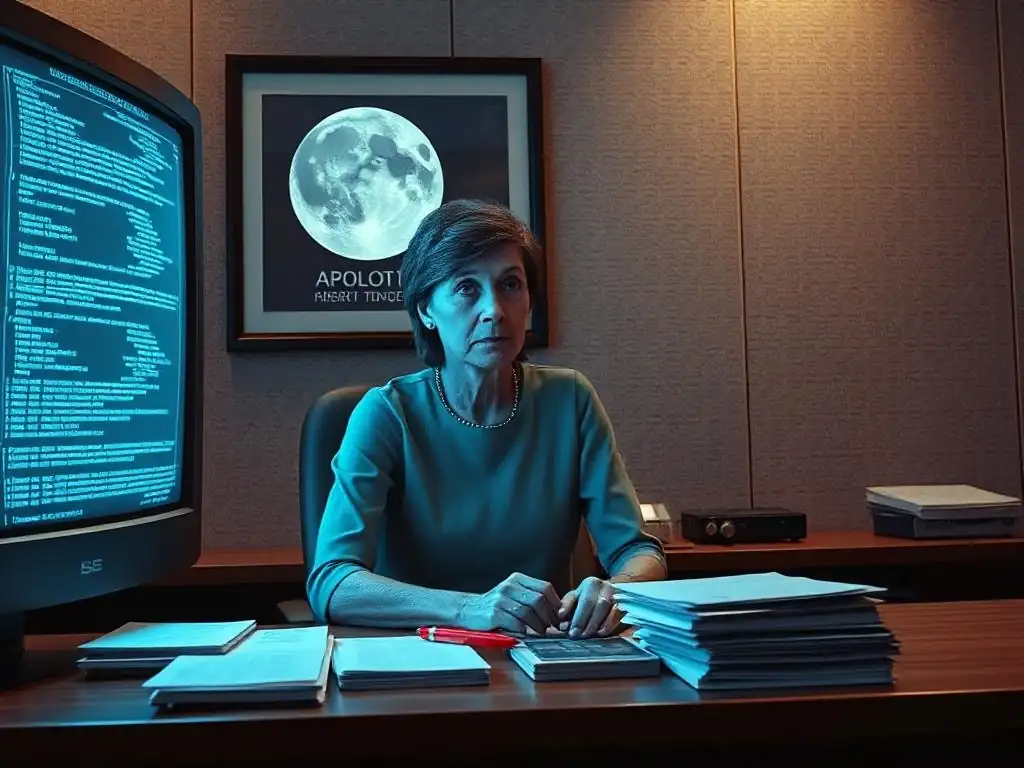
Designing the Landing Trajectory for the Moon
Margaret Hamilton's team at MIT's Instrumentation Laboratory was responsible for developing the on-board flight software for the Apollo command and lunar modules. This software was the brain of the Apollo Guidance Computer (AGC), and it was absolutely essential for the successful navigation, guidance, and control of the spacecraft, especially during the critical lunar landing phase. Her team's code provided the algorithms and logic that calculated the complex landing trajectory, ensuring the lunar module descended precisely to its target on the Moon's surface.
The software had to account for real-time changes in velocity, altitude, and orientation, integrating data from various sensors to provide accurate guidance to the astronauts. It was a monumental task, involving hundreds of thousands of lines of code, meticulously written and tested. The precision required for such a maneuver, where even a slight miscalculation could result in catastrophe, underscores the immense responsibility and expertise vested in Hamilton and her team.
Overcoming Technical Challenges in Apollo 11's Landing Sequence
The true test of Margaret Hamilton's groundbreaking work came during the Apollo 11 lunar landing on July 20, 1969. As the Lunar Module "Eagle" descended towards the Moon, mission control and the astronauts were suddenly confronted with a series of "1202" and "1201" alarms from the AGC. These alarms indicated an executive overflow, meaning the computer was overwhelmed with tasks. The situation was dire, threatening an abort of the historic landing.
However, due to Hamilton's foresight and her team's robust software design, the AGC was programmed to handle such overloads. The system was designed with asynchronous processing capabilities and error recovery routines, allowing it to prioritize critical tasks over less important ones, such as radar data processing during the final descent.
The computer, recognizing the overload, essentially ignored the non-essential tasks and focused on landing the module. This ingenious design, implemented by Hamilton and her team, enabled the AGC to continue functioning, allowing Neil Armstrong and Buzz Aldrin to safely land the Eagle, a pivotal moment in Space exploration female scientist biographies and human history.
Contributions to Landing Probe Technology: Innovation and Precision
Advancements in Guidance and Control Systems for Lunar Landers
Margaret Hamilton's contributions to the Apollo program extended far beyond the immediate success of the lunar landings; they laid foundational principles for future guidance and control systems in space exploration. Her team's development of highly reliable, fault-tolerant software for the Apollo Guidance Computer (AGC) revolutionized how complex, real-time systems were conceived and implemented. The concepts of asynchronous processing, error detection, and recovery, which were crucial during the Apollo 11 landing, became benchmarks for aerospace software.
These advancements ensured that lunar landers could operate with unprecedented precision and robustness in the unforgiving vacuum of space. The ability of the AGC to prioritize tasks and recover from system overloads meant that missions could proceed even when unexpected hardware or data issues arose. This level of software sophistication was critical for controlling delicate descent trajectories, precisely firing thrusters, and ensuring the stability of the lander upon touchdown.
Optimizing Software Design for Successful Surface Operations on Distant Moons
The principles pioneered by Margaret Hamilton's team for the Apollo missions had a profound and lasting impact on the optimization of software design for all subsequent space probes, including those destined for distant moons and planets. The emphasis on defensive programming and system integrity, which she championed, became standard practice. This approach ensured that software could reliably manage complex sequences, adapt to changing environmental conditions, and perform autonomous operations far from human intervention.
For probes exploring distant moons like Europa or Titan, where communication delays make real-time human control impossible, the ability of on-board software to make autonomous decisions and recover from anomalies is paramount. Hamilton's work on creating robust, error-resistant systems directly contributed to the capabilities of modern planetary landers and rovers, enabling successful surface operations and scientific data collection in environments previously thought unreachable. Her influence is a cornerstone in the evolution of Space exploration female scientist biographies.
Legacy and Impact: Inspiring Future Generations of Space Exploration Female Scientist Biographies
Mentoring Young Women in STEM Fields
While Margaret Hamilton's direct involvement in formal mentoring programs might not be as widely publicized as her Apollo work, her very existence and extraordinary achievements serve as an unparalleled source of inspiration for young women considering careers in STEM fields. Her story demonstrates that women are not only capable of excelling in highly technical and critical roles but can also lead groundbreaking innovations that change the course of history. Her pioneering work in software engineering, a field she helped define, showcases the immense potential for impact that women can have in science and technology.
The narrative of her unwavering dedication, intellectual brilliance, and resilience in a male-dominated industry powerfully communicates that barriers can be broken and that talent knows no gender. As more Space exploration female scientist biographies come to light, Hamilton's story stands as a beacon, encouraging girls and young women to pursue their curiosities in mathematics, computer science, and space exploration, knowing that their contributions can be truly transformative.
Margaret Hamilton's Influence on the Future of Planetary Science
Margaret Hamilton's influence on the future of planetary science is profound and enduring. The software engineering principles she established and championed—such as rigorous testing, modular design, error handling, and the concept of "software as an engineering discipline"—are fundamental to modern space mission development. These principles are indispensable for designing the complex software that controls everything from sophisticated orbital maneuvers to the autonomous navigation of rovers on Mars or future probes to distant moons.
Her emphasis on building fault-tolerant systems directly underpins the reliability of today's deep-space missions, where a single software glitch could jeopardize years of effort and billions of dollars. The legacy of her work ensures that future planetary science missions can continue to push the boundaries of exploration, relying on robust and intelligent on-board systems to gather invaluable data and make new discoveries about our solar system and beyond.
The Importance of Recognizing Women in Space Science History
Amplifying the Voices of Female Scientists in Space Exploration
Amplifying the voices of female scientists in space exploration is not merely an act of historical correction; it is a vital endeavor that enriches our collective understanding of scientific progress and innovation. For too long, the narratives of space history have predominantly focused on male figures, inadvertently marginalizing the significant contributions of women. By actively seeking out and highlighting the stories of pioneers like Margaret Hamilton, we gain a more complete and accurate picture of the collaborative efforts that have driven humanity's reach into the cosmos.
Recognizing these Space exploration female scientist biographies provides crucial role models for aspiring young scientists, demonstrating that diverse perspectives are essential for tackling complex challenges. It validates the experiences of women who have worked tirelessly behind the scenes and ensures that their intellectual legacies are properly acknowledged and celebrated, inspiring a new generation to pursue their dreams in STEM fields.
Fostering Diversity and Inclusion in the Space Industry
The recognition of women in space science history plays a critical role in fostering greater diversity and inclusion within the contemporary space industry. By showcasing the achievements of figures like Margaret Hamilton, we challenge lingering stereotypes and demonstrate the immense value that diverse talent brings to scientific and engineering endeavors. A truly inclusive environment, one that values and incorporates varied perspectives, is proven to lead to more innovative solutions and more robust outcomes.
Promoting diversity in the space industry is not just about fairness; it's about maximizing human potential. When all individuals, regardless of gender or background, feel empowered to contribute their unique skills and insights, the entire field benefits. Celebrating the historical achievements of women in space exploration helps to dismantle existing barriers, encourages a broader talent pool to enter the field, and ultimately strengthens the future of space science for everyone.
Conclusion: A Touchdown for Women in Planetary Science
Margaret Hamilton's Enduring Contribution to Space Exploration
Margaret Hamilton's role in the Apollo program was nothing short of monumental, a true touchdown for both humanity and the nascent field of software engineering. Her pioneering work on the Apollo Guidance Computer's flight software was the bedrock of the lunar landings, demonstrating an unparalleled foresight in designing systems that could gracefully handle unprecedented challenges. Her innovations in fault-tolerant computing and system architecture were not just crucial for Apollo 11's success but established fundamental principles that continue to guide space missions today.
Her contribution solidified software as a critical engineering discipline, proving its indispensable role in the safety and success of complex space endeavors. Margaret Hamilton's legacy is a testament to her genius, her unwavering dedication, and her transformative impact on how we explore the universe.
Celebrating the Achievements of Female Scientists in Space Programs
Margaret Hamilton stands as a shining example among the many brilliant female scientists who have contributed to space programs throughout history. Her story underscores the profound importance of celebrating the achievements of all women in science, particularly within the demanding and inspiring realm of space exploration. By spotlighting these Space exploration female scientist biographies, we not only honor their individual brilliance but also inspire future generations to pursue their passions in STEM.
The collective contributions of women in planetary science and astronomy have broadened our understanding of the cosmos and propelled humanity's reach further than ever before. Continuing to amplify these stories ensures that the full tapestry of scientific endeavor is recognized, fostering a more inclusive and innovative future for space exploration where talent and dedication are the only prerequisites for success.
Frequently Asked Questions
What kind of information can I find on WomenInScienceHistory.com regarding space exploration female scientist biographies?
You can find detailed biographies of female scientists who have contributed to space exploration. These profiles often highlight their specific roles, such as mission design, and the challenges they overcame.
Besides biographies, what else does the site offer about women in science?
The site includes discussions on the groundbreaking work of these women and explores the obstacles they faced in male-dominated scientific fields. It aims to provide a comprehensive view of their contributions.
How does the site inspire future generations with its content?
By showcasing the achievements and resilience of pioneering women in science, the platform hopes to motivate and encourage young women to pursue careers in STEM fields.
Why is it important to highlight the stories of women in science history?
Many contributions of women in science have been overlooked or minimized historically. Highlighting their stories ensures they receive the recognition they deserve and provides a more complete scientific narrative.
How did [Mission Designer's Name]'s work contribute to landing probes on distant moons?
[Mission Designer's Name]'s contributions, as detailed in the article, were crucial to the mission design process. This included trajectory calculations and ensuring the probes landed safely and accurately on the target moons.
Final Reflection: Charting Courses Beyond the Stars
The journey from theoretical calculations to the tangible success of a probe touching down on a distant moon highlights the profound impact of mission design. This intricate process, often unseen by the public, is the very foundation upon which our ambitious space exploration endeavors are built. It's a testament to the power of human ingenuity and the unwavering dedication of individuals like [Mission Designer's Name], whose contributions are reshaping our understanding of the cosmos.
The influence of figures like [Mission Designer's Name] extends far beyond the technical realm. Their work inspires a new generation, particularly young women, to pursue careers in STEM fields and to dream of reaching for the stars. It demonstrates that the frontiers of science are open to all, regardless of gender, and that groundbreaking discoveries are within reach for those who dare to explore. The important thing is to never stop questioning.
- Albert Einstein. This quote encapsulates the spirit of exploration and the relentless pursuit of knowledge that drives these pioneers.
As we celebrate the achievements of space exploration female scientist biographies, let us also reflect on the importance of supporting and encouraging future generations of scientists and engineers. Consider how you can contribute to fostering a more inclusive and equitable environment in STEM, ensuring that everyone has the opportunity to contribute their unique talents to the grand adventure of unraveling the universe's mysteries. Let's all strive to be a part of this extraordinary journey, pushing the boundaries of what's possible and inspiring others to do the same.
Ignite Your Own Mission: Championing Women in Space!
Thank you for exploring the inspiring journey of a visionary mission designer and the groundbreaking work shaping space exploration. You've seen how essential mission planners are and the significant impact they have in turning ambitious plans into reality.
Now, ignite your passion and contribute to empowering the next generation of female scientists and engineers:
- Nominate an inspiring woman in science, whether from the past or present, to be featured on WomenInScienceHistory.com. Share her untold story and help inspire others.
- Browse our website to discover incredible stories of women breaking barriers in STEM. You might find your next role model!
- Share this article with three friends or colleagues who are passionate about science, technology, or supporting women in STEM.
What steps will you take today to help shape the future of women in science?