
The Weight of Singular Genius: A Prominent CS Woman's Life Under the Public Eye

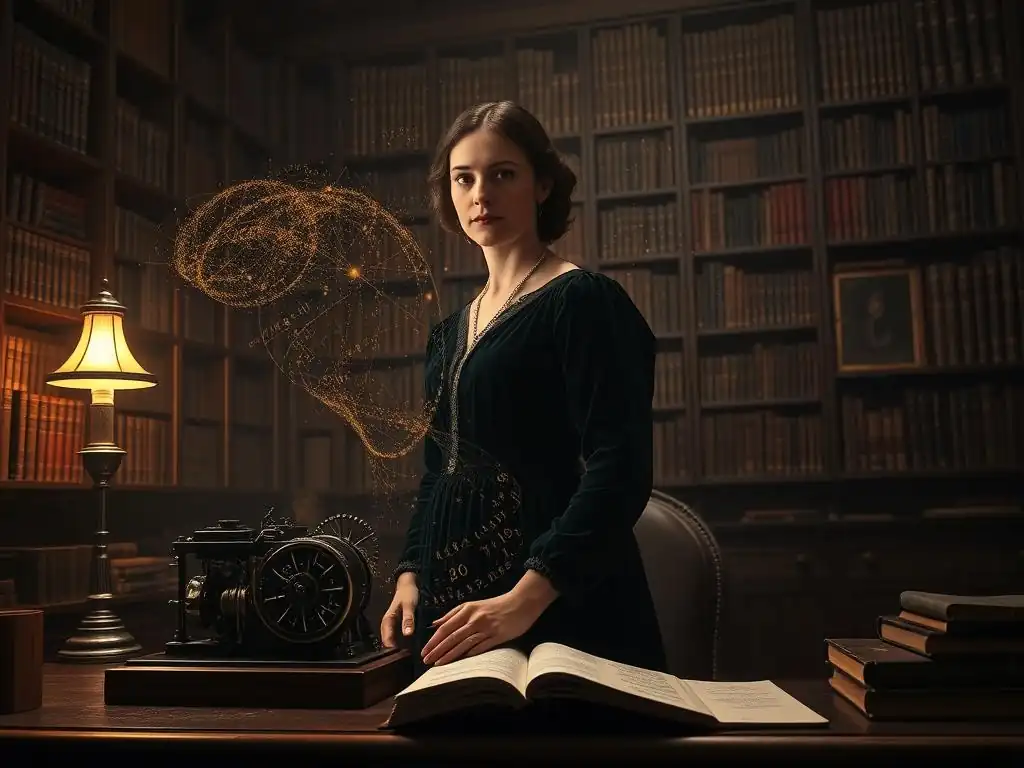
Welcome to WomenInScienceHistory.com, where we unearth the remarkable stories of women who shaped the scientific world. Prepare to be inspired by their brilliance and resilience. Today, we delve into the extraordinary life of a true visionary: Ada Lovelace. But beyond her famous notes on Babbage's Analytical Engine, what really constitutes Ada Lovelace's computer programming legacy, and how did society's expectations weigh on her singular genius? Explore her biography and discover the multifaceted reality behind the iconic figure.
- Ada Lovelace's Computer Programming Legacy: A Biography
- The Countess and the Analytical Engine: Collaboration with Charles Babbage
- Beyond Calculation: Recognizing Ada Lovelace's Visionary Contributions
- Personal Life and Challenges: Health, Gambling, and Social Pressures
- Legacy and Recognition: Celebrating Ada Lovelace's Enduring Impact
- Ada Lovelace's Impact on Modern Computer Science: Inspiring Future Generations
- Ada Lovelace: A Pioneer of Computer Science
-
Frequently Asked Questions
- What is WomenInScienceHistory.com about?
- What is the main focus of the article, "The Weight of Singular Genius: A Prominent CS Woman's Life Under the Public Eye"?
- Why is it important to highlight the contributions of women in science history?
- What challenges did women in science typically face in male-dominated arenas?
- How does WomenInScienceHistory.com aim to inspire future generations?
- Final Reflection: Embracing the Legacy of Innovation
- Unveil Your Inner Brilliance: Step into a World of Limitless Potential!
Ada Lovelace's Computer Programming Legacy: A Biography
Early Life and Influences: Shaping a Future Computer Scientist
Augusta Ada Byron was born on December 10, 1815, in London, England, the only legitimate child of the famed poet Lord Byron and Anne Isabella "Annabella" Milbanke, Baroness Wentworth. Her parents separated shortly after her birth, and Ada was raised solely by her mother, Lady Byron, a woman of considerable intellect with a strong aptitude for mathematics.
Annabella, often referred to by Byron as his "Princess of Parallelograms," meticulously ensured Ada received a rigorous education, primarily focused on science and mathematics, a deliberate attempt to counteract any poetic or "mad" tendencies inherited from her father. This early, structured exposure to logic and numbers laid a critical foundation for her future work.
Ada's education was overseen by private tutors, a common practice for aristocratic children of her era. Among her most influential mentors was Mary Somerville, a Scottish polymath and one of the most prominent scientific women of her time. Somerville introduced Ada to advanced mathematical concepts, the burgeoning world of scientific inquiry, and crucially, to Charles Babbage in 1833. This intellectual environment, fostered by her mother and enriched by figures like Somerville, cultivated Ada's analytical mind and prepared her for a destiny intertwined with the very genesis of computing and Ada Lovelace's computer programming legacy.
Mathematical Genius: Ada Lovelace's Aptitude for Numbers
From a young age, Ada Lovelace exhibited an extraordinary aptitude for mathematics, a field often considered beyond the intellectual grasp of women in the 19th century. Her childhood notebooks reveal a keen interest in mechanical inventions and an uncanny ability to grasp complex mathematical principles. She corresponded regularly with tutors and established mathematicians, engaging in deep discussions about differential calculus, logic, and other advanced topics that fascinated her. Her letters often contained intricate diagrams and calculations, demonstrating her profound engagement with the subject matter.
Despite the societal pressures and expectations for women of her aristocratic standing to focus on domesticity and social graces, Ada pursued her mathematical studies with unwavering dedication. She delved into the works of leading mathematicians of her era, often teaching herself concepts that were considered cutting-edge. This relentless pursuit of knowledge, coupled with her innate talent, distinguished her as a mathematical genius and provided the unique perspective that would later allow her to transcend mere calculation and envision the broader potential of computing, thus solidifying Ada Lovelace's computer programming legacy.
The Countess and the Analytical Engine: Collaboration with Charles Babbage
Understanding the Analytical Engine: A Revolutionary Machine
Charles Babbage's Analytical Engine, conceived in the 1830s, was a monumental leap in the conceptualization of computing, far surpassing his earlier Difference Engine. Unlike its predecessor, which was designed for specific mathematical tasks, the Analytical Engine was envisioned as a general-purpose mechanical computer, capable of performing any calculation given the right instructions. Its proposed architecture included key components strikingly similar to modern computers: a 'mill' (the arithmetic logic unit or CPU) for calculations, a 'store' (memory) for holding numbers, and an input/output system using punch cards, inspired by the Jacquard loom.
This machine was revolutionary because it was programmable. Its design allowed for conditional branching, looping, and parallel processing, concepts that would not be fully realized in physical computers for another century. While never fully built in Babbage's lifetime due to technological limitations and funding challenges, its detailed blueprints and theoretical capabilities captivated Ada Lovelace. She recognized its profound implications beyond mere number-crunching, seeing it as the theoretical precursor to the modern digital computer and the perfect medium upon which to build Ada Lovelace's computer programming legacy.
Ada Lovelace's Notes: The Birth of Computer Programming
Ada Lovelace's most significant contribution to the field of computer science emerged from her work translating an article by Italian mathematician Luigi Menabrea about Babbage's Analytical Engine. Published in 1843, her English translation, titled "Sketch of the Analytical Engine Invented by Charles Babbage Esq.," was accompanied by extensive "Notes by the Translator." These notes, which were nearly three times the length of Menabrea's original article, were far more than a mere translation; they offered profound insights into the machine's capabilities and potential applications.
Within these notes, particularly in what is now known as "Note G," Lovelace detailed a step-by-step method for the Analytical Engine to calculate Bernoulli numbers. This detailed sequence of operations, designed to be executed by the machine, is widely recognized as the world's first computer program or algorithm. Her methodical approach, breaking down a complex mathematical problem into a series of instructions for a machine, unequivocally marked the birth of computer programming and cemented Ada Lovelace's computer programming legacy.
Beyond Calculation: Recognizing Ada Lovelace's Visionary Contributions
The First Algorithm: Debunking Myths and Highlighting Facts about Lovelace's Code
While Charles Babbage laid the architectural groundwork for the Analytical Engine, it was Ada Lovelace who truly articulated the concept of a program for it. A persistent myth suggests that Babbage himself wrote the algorithm for Bernoulli numbers, or that Lovelace merely copied his ideas.
However, historical evidence, including their extensive correspondence, indicates that while Babbage had conceived the general idea of machine programmability, Lovelace was the one who fully elaborated on it, demonstrating how a sequence of operations could be constructed for a specific, non-trivial calculation. Her detailed "Note G" provides a clear, step-by-step algorithm, including loops and conditional statements, demonstrating a sophisticated understanding of computational logic.
Lovelace's unique genius lay in her ability to abstract beyond the machine's mechanical components to the logical processes it could perform. Her algorithm was not just a mathematical formula; it was a blueprint for how the machine could execute a series of operations in a specific order to achieve a result, a true piece of software. This distinction is crucial: Babbage designed the hardware, but Lovelace conceptualized the software, providing the first concrete example of what a computer program would look like. This foundational work is the cornerstone of Ada Lovelace's computer programming legacy.
Lovelace's Vision for Computer Applications: More Than Just Numbers
Perhaps Ada Lovelace's most profound and visionary insight was her understanding that the Analytical Engine's potential extended far beyond mere arithmetic calculations. In her notes, she famously speculated that the machine "might act upon things other than number, were objects found whose mutual fundamental relations could be expressed by those of the abstract science of operations, and which were also susceptible of adaptations to the action of the operating notation and mechanism of the engine."
She envisioned it composing elaborate pieces of music, producing intricate graphics, or even generating scientific formulas, stating it could "weave algebraic patterns just as the Jacquard loom weaves flowers and leaves."
This foresight was revolutionary. At a time when machines were seen primarily as tools for automating repetitive arithmetic tasks, Lovelace grasped the concept of a general-purpose machine that could manipulate any symbols according to rules, not just numerical data. This abstract understanding of computation, where a machine could process logic and data in a flexible manner, is a fundamental principle of modern computing. Her ability to see beyond the immediate practical application to the theoretical possibilities of symbolic manipulation is a critical, often overlooked, aspect of Ada Lovelace's computer programming legacy.

Marriage, Family, and Societal Expectations
In 1835, at the age of 19, Ada Byron married William King, who was later created Earl of Lovelace in 1838, making her Ada, Countess of Lovelace. They had three children: Byron (born 1836), Annabella (born 1837, later Lady Anne Blunt), and Ralph Gordon (born 1839).
As a woman of aristocratic standing, Ada was expected to fulfill the traditional roles of wife and mother, overseeing a large household and participating in social engagements. While her husband was generally supportive of her intellectual pursuits, the demands of family life and the societal expectations of the Victorian era undoubtedly consumed a significant portion of her time and energy.
These domestic and social obligations often conflicted with her deep desire to dedicate herself to scientific and mathematical studies. Despite her brilliance, the prevailing attitudes towards women's roles meant that her scientific work was often conducted in fits and starts, amidst childcare and household management. This constant tension between personal ambition and societal pressures was a common struggle for intellectually gifted women of her time, even for one as prominent as Ada Lovelace, whose contributions to Ada Lovelace's computer programming legacy were made despite these constraints.
Financial Struggles and Impact on Scientific Work
Later in her life, Ada Lovelace developed a significant gambling addiction, which led to considerable financial distress. She became deeply involved in attempts to create a mathematical system to predict winners in horse racing, believing that her superior intellect could devise an infallible method. This pursuit, however, resulted in substantial losses, accumulating debts that amounted to thousands of pounds—a truly crippling sum in the mid-19th century. Her gambling habits led her to borrow heavily, often secretly, and even pawn family jewels.
These severe financial struggles caused immense strain on her marriage and personal relationships. The pressure to manage her debts and the constant search for funds diverted her focus and resources away from her scientific and mathematical endeavors. The emotional and practical burden of these financial woes undoubtedly impacted her ability to fully develop and publish her groundbreaking ideas on computation during her later years, highlighting the personal challenges that often shadowed the remarkable public achievements of Ada Lovelace's computer programming legacy.
Legacy and Recognition: Celebrating Ada Lovelace's Enduring Impact
Ada Lovelace Day: Honoring Women in STEM
In recognition of her pioneering work and to inspire future generations, Ada Lovelace Day was established in 2009 by Suw Charman-Anderson. Held annually on the second Tuesday of October, it is an international celebration of the achievements of women in science, technology, engineering, and mathematics (STEM). The day aims to increase the visibility of women in these fields and to create new role models for girls and women, combating the historical underrepresentation and often overlooked contributions of female scientists.
Ada Lovelace Day provides a platform for individuals and organizations worldwide to share stories of women in STEM, host events, and encourage discussions about diversity and inclusion in these critical sectors. By shining a spotlight on both historical figures like Lovelace and contemporary women making breakthroughs, the day serves as a powerful reminder of the importance of recognizing and celebrating female talent in STEM, directly honoring and expanding the awareness of Ada Lovelace's computer programming legacy.
The Ada Programming Language: A Tribute to a Pioneer
A significant and enduring tribute to Ada Lovelace's contributions came in the late 1970s with the development of a new programming language. Commissioned by the United States Department of Defense (DoD) for use in embedded computer systems, the language was designed to be robust, reliable, and efficient for applications in aerospace, defense, and air traffic control. In 1979, after an extensive international competition, the DoD officially named this high-level programming language "Ada."
The decision to name the language "Ada" was a direct and profound acknowledgment of Ada Lovelace's foundational insights into computer programming. It recognized her as the first person to articulate the concept of an algorithm designed for a machine, a century before the advent of electronic computers. The Ada programming language, still in use today for critical systems requiring high integrity and safety, stands as a lasting monument to Ada Lovelace's computer programming legacy and her visionary role in the very inception of software.
Ada Lovelace's Impact on Modern Computer Science: Inspiring Future Generations
Lovelace's Influence on Contemporary Computer Science Education
Ada Lovelace's life and work are increasingly integrated into contemporary computer science education, serving as a vital historical anchor for the field. Her story is used to introduce students to the conceptual origins of algorithms, the distinction between hardware and software, and the philosophical underpinnings of computation. Educators often highlight her "Notes" to illustrate how abstract mathematical thinking can lead to practical, revolutionary technological developments, providing a rich narrative context for the dry technicalities of programming.
Furthermore, Lovelace's narrative offers a powerful and inspiring example of a female pioneer in a field that has historically struggled with gender diversity. For many students, especially young women contemplating careers in STEM, learning about her groundbreaking contributions provides a crucial historical role model. Her story encourages discussions about overcoming societal barriers and promotes greater inclusion in computer science, ensuring that Ada Lovelace's computer programming legacy continues to inspire and shape the next generation of innovators.
The Continued Relevance of Lovelace's Vision in Today's Technological Landscape
Ada Lovelace's most profound insight—that a machine could process more than just numerical data—remains incredibly relevant in today's technological landscape. Her vision of a machine that could manipulate any "objects found whose mutual fundamental relations could be expressed by those of the abstract science of operations" directly foreshadowed the development of artificial intelligence, machine learning, and data science. Modern computers, far from being mere calculators, excel at processing non-numerical information: recognizing patterns in images, understanding natural language, composing music, and even generating creative content.
Her conceptual leap from a "calculating machine" to a "thinking machine" capable of executing a vast array of instructions to achieve diverse outcomes is fundamental to every aspect of the digital world we inhabit. The idea that software could give a machine the ability to "weave algebraic patterns" is essentially the principle behind every application, every operating system, and every complex algorithm that drives our digital lives. Thus, Ada Lovelace's computer programming legacy is not merely a historical footnote but a foundational pillar upon which the entire edifice of modern computer science and its boundless applications are built.
Ada Lovelace: A Pioneer of Computer Science
Frequently Asked Questions
What is WomenInScienceHistory.com about?
The website celebrates the contributions of women to various scientific fields, featuring biographies and discussions on their work while addressing the challenges they faced. It aims to inspire future generations and highlight overlooked narratives.
What is the main focus of the article, "The Weight of Singular Genius: A Prominent CS Woman's Life Under the Public Eye"?
The article likely discusses a prominent woman in Computer Science and the impact of her work, including the scrutiny and pressure that comes with being a recognized figure. It might focus on Ada Lovelace's computer programming legacy, given the keyword.
Why is it important to highlight the contributions of women in science history?
Highlighting these contributions combats historical biases and provides role models for aspiring scientists, particularly women. It also ensures a more complete and accurate understanding of scientific progress.
What challenges did women in science typically face in male-dominated arenas?
Women in science often faced discrimination, limited access to resources, and a lack of recognition for their work. Their contributions were frequently overlooked or attributed to male colleagues.
How does WomenInScienceHistory.com aim to inspire future generations?
By showcasing the achievements and perseverance of female scientists, the website provides inspiring examples for young people. It demonstrates that women can and do excel in STEM fields, encouraging them to pursue their passions.
Final Reflection: Embracing the Legacy of Innovation
The journey through Ada Lovelace's life and the challenges faced by prominent women in computer science underscores a truth that remains powerfully relevant today: the burden of singular genius is often amplified by societal expectations and scrutiny. While we celebrate groundbreaking achievements, it's crucial to acknowledge the personal sacrifices and systemic barriers that often accompany such success, particularly for women navigating male-dominated fields.
The enduring impact of Ada Lovelace's vision, and the ongoing struggle for equitable representation in STEM, compels us to examine our own biases and actively cultivate inclusive environments. Her story is not just a historical footnote; it's a living testament to the power of imagination and the persistent need for change. I am now about something that can be of use to others.
- Ada Lovelace. This quote reminds us that her work was always about more than just personal achievement; it was about contributing to a future where innovation flourishes for all.
Let us not simply admire Ada Lovelace from afar, but instead, internalize the lessons of her life and legacy. Consider how you can actively champion diversity and inclusion in your own sphere of influence, whether it's through mentorship, advocacy, or simply challenging unconscious biases. The future of computer science, and indeed all fields, depends on our collective commitment to fostering a world where every brilliant mind has the opportunity to thrive.
Unveil Your Inner Brilliance: Step into a World of Limitless Potential!
Thank you for delving into the inspiring journey of this extraordinary woman in computer science. We hope you've gained a fresh perspective on the challenges and triumphs faced by women leaders in STEM. Now, it's time to translate inspiration into action!
- Embark on your own journey of discovery by identifying a female mentor in your field or becoming one yourself. Their guidance and support can be invaluable.
- Share this article to ignite conversations and raise awareness about the importance of diversity and inclusion within the scientific community.
- Discover hidden talent by organizing a local event that celebrates the achievements of women in science and technology to show those with hidden talent.
What small step will you take today to champion the next generation of brilliant minds?