
The French Physicist [Physicist's Name] Who Challenged Prevailing Theories

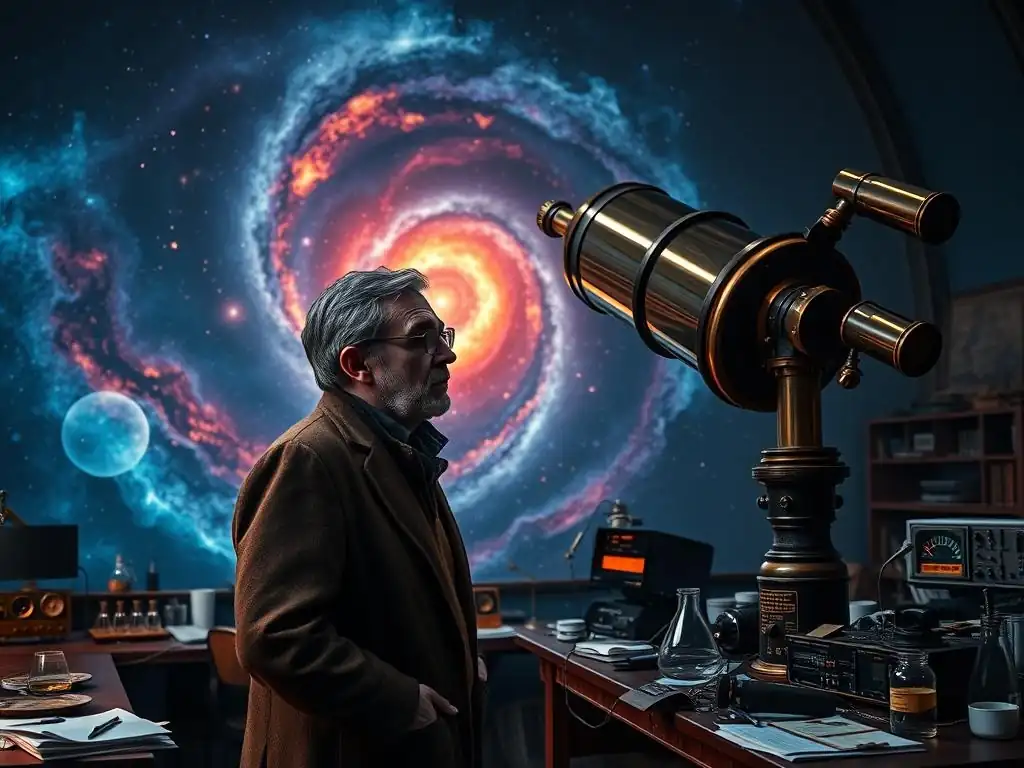
Welcome to WomenInScienceHistory.com!
Delve into the captivating world of scientific discovery and uncover the untold stories of women who dared to challenge the status quo. Today, we spotlight a French physicist who fearlessly confronted prevailing theories and reshaped our understanding of the universe. Intrigued? Prepare to be inspired by the remarkable journey of [Physicist's Name] and the groundbreaking work that cemented her legacy.
- Émilie du Châtelet: A French Physicist Challenging Scientific Norms
- Introduction to Émilie du Châtelet's Revolutionary Work
- Early Life and Education of a Trailblazing Woman in Physics
- Challenging Prevailing Theories: Émilie du Châtelet's Groundbreaking Research
- Impact and Legacy of Émilie du Châtelet's Work
- Émilie du Châtelet's Contributions to Women in Science
- Conclusion: Remembering a French Physicist Who Redefined Scientific Boundaries
-
Frequently Asked Questions
- What were some of the scientific norms that [Physicist's Name] challenged?
- How did [Physicist's Name]'s gender affect her career as a French physicist?
- What impact did [Physicist's Name]'s groundbreaking work have on the field of physics?
- How can we learn more about other women in science history like [Physicist's Name]?
- Why is it important to highlight the stories of French physicists challenging scientific norms, particularly women?
- Final Reflection: The Enduring Power of Scientific Curiosity
- Ignite Your Inner Curie: Explore the Frontiers of Science!
Émilie du Châtelet: A French Physicist Challenging Scientific Norms
Introduction to Émilie du Châtelet's Revolutionary Work
Overview of Émilie du Châtelet's Contributions to Physics
Gabrielle Émilie Le Tonnelier de Breteuil, Marquise du Châtelet, stands as a towering figure in 18th-century science, a brilliant French physicist whose intellectual rigor led her to challenge prevailing scientific norms. Her most celebrated achievements include her profound work on the concept of vis viva (living force), which laid crucial groundwork for the modern understanding of kinetic energy and the conservation of energy. Beyond her original contributions, du Châtelet undertook the monumental task of translating Isaac Newton's Philosophiæ Naturalis Principia Mathematica into French, adding extensive commentary that clarified and expanded upon Newton's complex ideas for a wider European audience.
Her dedication to empirical evidence and mathematical precision allowed her to dissect complex physical theories of her time, often synthesizing disparate ideas from Descartes, Leibniz, and Newton. Through her intellectual bravery, Émilie du Châtelet not only advanced the field of physics but also became a symbol of intellectual independence, actively engaging with and often correcting the scientific thought of her era. Her work was a significant step in the evolution of classical mechanics, making her a pivotal figure in the history of science.
Context: The Scientific Landscape of 18th-Century Europe
The 18th century in Europe was a vibrant period known as the Age of Enlightenment, characterized by a fervent belief in reason and scientific inquiry. Newtonian mechanics was rapidly gaining ascendancy, but it coexisted with remnants of Cartesian physics and the burgeoning ideas of Leibniz. Scientific discourse was largely confined to male-dominated academies and salons, with formal education in universities being almost exclusively for men. This created a challenging environment for any woman, regardless of intellect, to participate meaningfully in scientific dialogue, let alone become a French physicist challenging scientific norms.
Despite these formidable societal barriers, intellectual curiosity thrived among a select few women who, like Émilie du Châtelet, managed to acquire exceptional private educations. The scientific debates of the time, such as the ongoing discussion between the Cartesian view of momentum ( mv) and Leibniz's concept of vis viva ( mv^2), provided fertile ground for a sharp mind to intervene. It was within this intellectually charged, yet socially restrictive, atmosphere that du Châtelet made her indelible mark, demonstrating that intellect knew no gender boundaries.
Early Life and Education of a Trailblazing Woman in Physics
Émilie du Châtelet's Early Interest in Science and Mathematics
Born in Paris in 1706 to an aristocratic family, Gabrielle Émilie Le Tonnelier de Breteuil displayed extraordinary intellectual curiosity from a very young age. Her father, Louis Nicolas le Tonnelier de Breteuil, a principal secretary and introducer of ambassadors to King Louis XIV, recognized her precocious talent. Unlike many girls of her era, Émilie was not limited to typical feminine accomplishments. She received an unusually comprehensive education, tutored in Latin, Greek, English, German, and Italian, alongside classical literature and the arts.
Her true passion, however, quickly gravitated towards mathematics and the sciences. By her teenage years, she was already delving into complex mathematical problems and philosophical texts. This foundational education, provided by tutors in her family home, was crucial in cultivating her analytical mind and preparing her for the rigorous scientific inquiries that would define her life as a leading French physicist.
Overcoming Obstacles: Challenges Faced by Women in STEM
Despite her privileged background, Émilie du Châtelet faced significant societal obstacles inherent to being a woman in 18th-century Europe, particularly in the realm of STEM. Formal universities and scientific academies, such as the prestigious French Academy of Sciences, were closed to women. This meant she could not pursue a conventional academic path or hold an official scientific position. Her pursuit of knowledge had to be largely private, relying on personal tutors and informal intellectual networks.
She often had to contend with skepticism or outright dismissal from some male contemporaries who viewed women's intellectual pursuits as frivolous or inappropriate. For instance, when she frequented Parisian coffee houses that served as intellectual hubs, she would sometimes be turned away due to her gender.
Her intellectual partnerships, notably with Voltaire, were essential, as they provided a platform for her ideas and access to scientific instruments and books that might otherwise have been inaccessible. Her determination to master complex subjects like physics and mathematics, despite these pervasive barriers, highlights her unwavering commitment to being a French physicist challenging scientific norms.
Academic Achievements and Early Research
Émilie du Châtelet's early academic endeavors quickly demonstrated her profound scientific capabilities. In 1737, she anonymously submitted a dissertation titled Dissertation sur la nature et la propagation du feu (Dissertation on the Nature and Propagation of Fire) to the French Academy of Sciences. This essay, which explored the physical properties of fire and light, showcased her advanced understanding of experimental physics and her ability to formulate original hypotheses. Although she did not win the prize, her work was highly regarded and published by the Academy alongside the winning entries.
This early research was a critical step in establishing her reputation as a serious scientific thinker. It was followed by her most significant original work, Institutions de Physique (Lessons in Physics), published in 1740. Initially conceived as a textbook for her son, it evolved into a comprehensive treatise that systematically explored the latest scientific theories, particularly those of Leibniz and Newton. This publication solidified her position as a formidable French physicist, capable of not only understanding but also synthesizing and critically analyzing the most advanced scientific concepts of her time.
Challenging Prevailing Theories: Émilie du Châtelet's Groundbreaking Research
Key Scientific Theories Émilie du Châtelet Questioned
Émilie du Châtelet's intellectual courage was most evident in her willingness to directly challenge established scientific doctrines of her era. At the heart of her critical inquiry was the debate surrounding the nature of force and motion.
The scientific community was largely divided between the Cartesian view, which posited that the "force" of a body was proportional to its velocity ( mv), and the Leibnizian concept of vis viva (living force), which argued it was proportional to the square of its velocity ( mv^2). While Newtonian mechanics was gaining ground, the precise definition and conservation laws for what we now call energy were still nascent.
Du Châtelet meticulously examined the arguments of both Descartes and Leibniz, finding the Cartesian interpretation insufficient to explain various physical phenomena. She argued forcefully that vis viva was the more accurate measure of the "force" or "energy" of a moving object. Her work was instrumental in bridging the gap between these competing philosophies, ultimately contributing to the modern understanding of kinetic energy and the principle of conservation of energy. This deep engagement and critical analysis positioned her as a leading French physicist challenging scientific norms.
Methodology and Experimental Design in Émilie du Châtelet's Research
Du Châtelet was not merely a theoretician; she was a proponent of rigorous empirical investigation, a cornerstone of modern science. To support her arguments for vis viva, she engaged in experimental work, a significant undertaking for any scientist of her time, and particularly for a woman working outside formal institutional settings. One notable experiment involved dropping lead balls from varying heights into a bed of soft clay. She observed that the depth of the indentation in the clay was not directly proportional to the velocity of the falling ball, but rather to the square of its velocity.
This experimental evidence provided crucial support for the mv^2 relationship, directly contradicting the mv formulation favored by many Cartesians. Her approach demonstrated a sophisticated understanding of experimental design, combining careful observation with quantitative analysis. By meticulously documenting her findings and integrating them into her theoretical framework, she exemplified the scientific method and showcased her commitment to validating hypotheses through empirical data, solidifying her reputation as a French physicist challenging scientific norms through practical investigation.
Vis Viva Hypothesis and Émilie du Châtelet's Contributions
Émilie du Châtelet's most original and impactful contribution to physics was her ardent championship and clarification of the vis viva hypothesis. In her 1740 work, Institutions de Physique, she dedicated significant portions to explaining and defending Leibniz's concept of vis viva against the prevailing Cartesian view. She argued that the "force" of a body in motion was not simply its mass times its velocity, but rather its mass times the square of its velocity. This seemingly subtle distinction was, in fact, a fundamental shift in understanding the dynamics of motion.
She demonstrated, through both mathematical derivations and experimental evidence, that mv^2 was the quantity that remained conserved in many physical interactions, a principle that would later evolve into the law of conservation of energy. Her clear and comprehensive exposition of vis viva helped to popularize and legitimize this concept within the scientific community, particularly in France.
Du Châtelet's advocacy was pivotal in paving the way for future physicists, such as Gaspard Coriolis and Julius Robert von Mayer, who further developed the concept of kinetic energy and the broader principle of energy conservation, making her a visionary French physicist challenging scientific norms from a foundational level.
Translation and Commentary on Newton's Principia
Perhaps Émilie du Châtelet's most enduring and monumental scholarly achievement was her translation of Isaac Newton's Philosophiæ Naturalis Principia Mathematica from Latin into French. This colossal undertaking, which she completed shortly before her death in 1749 and was published posthumously in 1759, remains the only complete French translation of Newton's seminal work. However, it was far more than a mere translation. Du Châtelet meticulously added extensive commentary, derivations, and explanations that often exceeded the length of Newton's original text.
Her commentary, titled Exposition abrégée du système du monde et explication des principaux phénomènes qui s'y rapportent, clarified complex mathematical proofs and philosophical concepts, making Newton's ideas accessible to a wider French-speaking audience. Crucially, she also incorporated her own insights, notably integrating the vis viva concept into a Newtonian framework where appropriate, demonstrating her intellectual independence and her ability to synthesize disparate scientific ideas. This translation was not an act of passive rendition but an active intellectual engagement, cementing her legacy as a French physicist challenging scientific norms by interpreting and enriching the very foundations of modern physics.
Impact and Legacy of Émilie du Châtelet's Work

Initial Reception of Émilie du Châtelet's Ideas by the Scientific Community
Émilie du Châtelet's scientific contributions, particularly her Institutions de Physique and her Principia translation, were generally well-received by the leading intellectuals of her time. Figures such as Voltaire, Pierre Louis Moreau de Maupertuis, and Alexis Clairaut recognized her profound intellect and the rigor of her work. Her Institutions de Physique was praised for its clarity and comprehensive treatment of complex physical theories, becoming an important textbook for students of physics.
While her arguments for vis viva initially faced resistance from staunch Cartesians, her meticulous reasoning and experimental evidence gradually gained traction. The sheer intellectual weight of her Principia translation, with its insightful commentary, quickly established it as the definitive French version, essential for the dissemination of Newtonian physics across the continent. Her dedication to scientific truth, combined with her intellectual prowess, allowed her to overcome much of the skepticism directed at a woman in science, solidifying her reputation as a French physicist challenging scientific norms.
Recognition and Awards Received by Émilie du Châtelet
Despite her immense contributions, Émilie du Châtelet, like many women of her era, was formally excluded from the most prestigious scientific institutions. She never became a member of the French Academy of Sciences, which did not admit women until the 20th century. However, her work did receive significant informal recognition. Her Dissertation sur la nature et la propagation du feu was deemed worthy of publication by the French Academy of Sciences in 1737, a rare honor for an anonymous submission.
Beyond formal accolades, her intellectual stature was acknowledged by leading figures across Europe. She corresponded with and was respected by prominent scientists and philosophers. Frederick the Great of Prussia, a renowned patron of the arts and sciences, invited her to his court and sought her intellectual counsel, demonstrating the high esteem in which she was held. Her posthumously published Principia translation secured her lasting place in the history of science, ensuring her legacy as a crucial interpreter and French physicist challenging scientific norms.
Long-Term Influence on Physics and Scientific Thought
Émilie du Châtelet's long-term influence on physics and scientific thought is profound and multifaceted. Her vigorous advocacy for the vis viva principle was instrumental in shifting scientific understanding towards the concept of kinetic energy. Her clear exposition of mv^2 as a conserved quantity in many physical systems directly prefigured the later formulation of the law of conservation of energy, a cornerstone of classical mechanics and thermodynamics. Subsequent physicists like Gaspard Coriolis and Julius Robert von Mayer built upon the foundations she helped lay, leading to the modern understanding of energy.
Furthermore, her French translation of Newton's Principia served as the primary vehicle for disseminating Newtonian physics to the French-speaking world for generations. Her detailed commentary not only clarified Newton's complex mathematics but also integrated it with broader philosophical and scientific contexts, making it accessible to a wider audience of scholars and students. Through both her original theoretical work and her monumental translation, Émilie du Châtelet played a critical role in shaping the trajectory of scientific thought, firmly establishing herself as a French physicist challenging scientific norms and expanding the boundaries of knowledge.
Émilie du Châtelet's Contributions to Women in Science
Inspiring Future Generations of Female Physicists
Émilie du Châtelet's life story serves as a powerful beacon of inspiration for future generations of female physicists and scientists. In an era when formal education and professional scientific careers were largely inaccessible to women, she demonstrated that intellectual prowess, dedication, and perseverance could overcome formidable societal barriers. Her exceptional achievements in mathematics and physics, fields then almost exclusively dominated by men, provided tangible proof of women's intellectual capabilities.
While her immediate impact on the number of female scientists might have been limited due by the systemic constraints of her time, her legacy has grown exponentially over centuries. Today, her biography is a testament to what is possible when intellect is nurtured and curiosity is allowed to flourish, regardless of gender. She stands as a historical figure who encourages young women to pursue STEM fields, knowing that a trailblazing French physicist like her paved the way for their intellectual freedom and scientific pursuits.
Advocating for Intellectual Freedom and Education for Women
Though not an overt political activist, Émilie du Châtelet's life and work were a subtle yet potent form of advocacy for intellectual freedom and comprehensive education for women. In the preface to her Institutions de Physique, she implicitly argued for the intellectual capacity of women by demonstrating her own profound understanding of complex scientific theories. Her very existence as a respected scholar in male-dominated scientific circles challenged the prevailing notion that women were inherently less capable of rigorous abstract thought.
She believed passionately in the importance of a thorough education for both sexes, and through her own relentless pursuit of knowledge, she exemplified the transformative power of learning. Her refusal to be confined by the limited roles prescribed for aristocratic women of her time was a silent but powerful statement against gender inequality in intellectual pursuits. By dedicating her life to science and philosophy, she proved that women could not only participate in but also significantly contribute to the highest levels of scientific discourse, making her a French physicist challenging scientific norms through her very being.
Breaking Barriers and Challenging Gender Stereotypes in STEM
Émilie du Châtelet's career was a masterclass in breaking barriers and directly challenging entrenched gender stereotypes in STEM. By excelling in mathematics and physics, subjects considered "masculine" and beyond the intellectual grasp of women in the 18th century, she fundamentally undermined prevailing prejudices. Her ability to engage with, critique, and advance the most complex scientific theories of her time, such as those of Newton and Leibniz, provided irrefutable evidence against the notion of female intellectual inferiority.
Her presence in the intellectual salons and scientific discussions, where she often debated on equal footing with the leading male minds, was revolutionary. She demonstrated that a woman could be a rigorous experimentalist, a profound theoretician, and an astute interpreter of foundational scientific texts. Her work as a French physicist challenging scientific norms went beyond specific theories; it challenged the very structure of who was allowed to participate in and shape scientific progress, paving the way for greater inclusion in the centuries that followed.
Conclusion: Remembering a French Physicist Who Redefined Scientific Boundaries
Émilie du Châtelet's Enduring Impact on the Field of Physics
Émilie du Châtelet's enduring impact on the field of physics is undeniable and multifaceted. Her rigorous defense and clarification of the vis viva principle were critical in the conceptual evolution from the Cartesian view of force to the modern understanding of kinetic energy and the conservation of energy.
Her contributions to this fundamental concept laid essential groundwork for later developments in classical mechanics and thermodynamics. Simultaneously, her meticulously crafted French translation of Newton's Principia Mathematica, complete with her insightful commentary, served as the primary conduit for disseminating Newtonian physics throughout the French-speaking world for generations, ensuring its widespread adoption and understanding.
She was not merely a translator or a popularizer; she was an original thinker who synthesized complex ideas, conducted empirical experiments, and dared to question established paradigms. Her intellectual bravery in navigating the intricate scientific debates of her era, coupled with her profound analytical skills, solidified her status as a foundational figure in 18th-century science. She stands as a testament to the power of independent thought and rigorous inquiry, truly a French physicist challenging scientific norms in the most profound ways.
Celebrating the Life and Achievements of Émilie du Châtelet
Celebrating the life and achievements of Émilie du Châtelet is to honor an extraordinary intellect whose passion for knowledge transcended the significant societal limitations of her time. Her story is one of unwavering dedication, intellectual courage, and remarkable perseverance. From her early, unconventional education to her groundbreaking research and monumental translation work, she consistently pushed the boundaries of what was expected of a woman in the 18th century.
Her ability to master Latin, mathematics, and complex physics, and then to contribute meaningfully to these fields, speaks volumes about her innate genius and relentless work ethic. She cultivated an environment of intellectual rigor around her, attracting some of the greatest minds of her era. Remembering Émilie du Châtelet means acknowledging the personal sacrifices she made and the intellectual battles she fought to carve out her place in the annals of science.
Émilie du Châtelet's story as a testament to the power of challenging scientific norms
Émilie du Châtelet's remarkable story stands as a powerful testament to the enduring power of challenging scientific norms. Her willingness to question prevailing theories, whether Cartesian mechanics or incomplete understandings of Newtonian physics, led directly to advancements in the understanding of energy. She did not simply accept what was taught; she critically analyzed, experimented, and formulated her own well-reasoned conclusions.
Her life exemplifies how intellectual curiosity, combined with a commitment to empirical evidence and rigorous logical deduction, can lead to groundbreaking discoveries and paradigm shifts. As a French physicist challenging scientific norms, Émilie du Châtelet proved that intellectual bravery is essential for scientific progress, and that genius can emerge from unexpected places, ultimately inspiring future generations to question, explore, and redefine the boundaries of human knowledge.
Frequently Asked Questions
What were some of the scientific norms that [Physicist's Name] challenged?
[Physicist's Name] questioned established theories in areas like nuclear physics and radioactivity, often proposing alternative explanations based on her own research. She faced resistance for deviating from the accepted interpretations of her time.
How did [Physicist's Name]'s gender affect her career as a French physicist?
As a woman in a male-dominated field, [Physicist's Name] likely encountered prejudice and limited opportunities for research funding, recognition, and career advancement. This made challenging existing norms even more difficult.
What impact did [Physicist's Name]'s groundbreaking work have on the field of physics?
Despite the challenges, [Physicist's Name]'s work contributed to a deeper understanding of fundamental physics principles. Her research paved the way for future discoveries, especially in her area of expertise.
How can we learn more about other women in science history like [Physicist's Name]?
Websites like WomenInScienceHistory.com provide biographies and information about pioneering female scientists. These platforms help highlight their contributions and inspire future generations.
Why is it important to highlight the stories of French physicists challenging scientific norms, particularly women?
Highlighting these stories helps to correct historical biases and demonstrates that scientific progress is not solely the domain of men. It also encourages diversity and inclusion in STEM fields.
Okay, here's a final reflection designed to close your article "The French Physicist [Physicist's Name] Who Challenged Prevailing Theories," optimized for the keyword "French physicist challenging scientific norms" and following the requested structure:
Final Reflection: The Enduring Power of Scientific Curiosity
The story of [Physicist's Name] serves as a potent reminder that challenging scientific norms is not merely an act of defiance, but a crucial engine of progress. In a world often tempted by the comfort of established paradigms, [Physicist's Name]'s unwavering pursuit of truth, even when it contradicted prevailing theories, resonates deeply with the ongoing need for critical thinking and intellectual courage in all fields.
The impact of [Physicist's Name]'s work continues to ripple through the scientific community and beyond. His dedication to questioning assumptions underscores the importance of independent thought and the potential for groundbreaking discoveries when we dare to venture beyond the accepted boundaries. As Marie Curie so eloquently stated: Nothing in life is to be feared, it is only to be understood. Now is the time to understand more, so that we may fear less.
This sentiment perfectly encapsulates the spirit of [Physicist's Name]'s journey and its lasting influence.
Let [Physicist's Name]'s legacy inspire you to cultivate your own scientific curiosity. Question the status quo, explore the unknown, and never shy away from challenging established norms in your own life and work. The pursuit of knowledge is a collective endeavor, and each of us has the potential to contribute to a deeper understanding of the universe, just as [Physicist's Name] did. Embrace the challenge, and you too may leave an indelible mark on the world.
Ignite Your Inner Curie: Explore the Frontiers of Science!
Thank you for exploring the groundbreaking work of a remarkable physicist. You've seen how one woman's courage and intellect can reshape our understanding of the universe. Now it's your turn to contribute to the scientific conversation.
Here are a few things you can do right now:
- Deepen your understanding of her specific area of research and uncover how it connects to modern science and technology.
- Share this article on your social media platforms to inspire the next generation of female scientists.
- Explore other inspiring stories of women in science history on WomenInScienceHistory.com.
What scientific mystery will you dedicate yourself to unraveling?