
ReaderApproved: The Most Impactful Books on Women Shaping 20th Century Physics

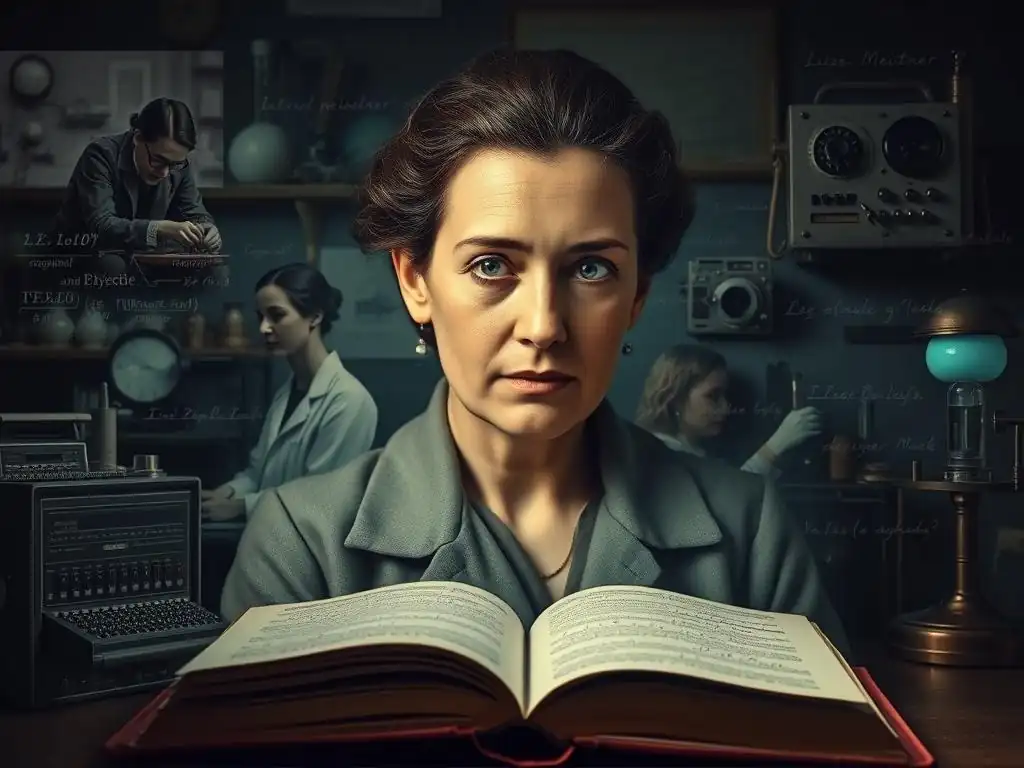
Welcome to WomenInScienceHistory.com!
Delve into the captivating world of unsung heroines and groundbreaking discoveries. This site is dedicated to illuminating the remarkable contributions of women throughout scientific history. Are you eager to uncover the narratives that shaped our understanding of the universe? Then, prepare to be inspired as we explore the essential reads on Women in Physics Books of the 20th Century, a journey that unveils the pivotal roles these brilliant minds played in a male-dominated field. Discover ReaderApproved selections that will challenge your perceptions and ignite your passion for science.
- Understanding the Unsung Heroes: Women in 20th Century Physics Literature
-
Top Picks: Essential Women Physics Books of the 20th Century
- Lise Meitner: A Life in Physics - A Must-Read Biography
- "Something Incredibly Wonderful Happens": Frank Close's Exploration of Women in Physics
- Maria Goeppert Mayer: Solving the Puzzle of the Atomic Nucleus - Biography of a Nobel Laureate
- "Obsessive Genius: The Inner World of Marie Curie" – A Timeless Classic on Women in Science
- Beyond Biographies: Exploring Academic Works on Women in Physics
- Finding More Women Physics Books: Resources and Further Reading
- The Lasting Legacy: Inspiring Future Generations of Women Physicists
-
Frequently Asked Questions
- What criteria were used to select the books featured as "most impactful" regarding women shaping 20th-century physics?
- Why focus specifically on the 20th century when discussing women in physics?
- Are these books primarily biographies, or do they cover other aspects of women's contributions to physics?
- What kind of challenges did women physicists face in the 20th century, and how do these books address them?
- Who is the target audience for these books about women in 20th-century physics?
- Final Reflection: Illuminating the Unseen Contributions
- Ignite Your Inner Physicist: Step into the World of Visionary Women!
Understanding the Unsung Heroes: Women in 20th Century Physics Literature
Why Read About Women in 20th Century Physics?
The history of science, particularly physics, has often been told through a predominantly male lens, leaving out the significant contributions of countless women. Reading women physics books 20th century helps to correct this historical oversight, revealing the intellectual prowess, groundbreaking discoveries, and sheer perseverance of female scientists who navigated often hostile academic and societal environments. These narratives not only enrich our understanding of scientific progress but also highlight the systemic biases that limited opportunities for women for decades.
Moreover, delving into these essential women physics books 20th century provides invaluable insights into the challenges faced by pioneering women in a male-dominated field. For example, despite their undeniable contributions, women represented only a tiny fraction of physics faculty positions in major universities for much of the 20th century, often less than 5% in senior roles, and faced significant barriers like anti-nepotism rules and lack of recognition.
These books offer a vital educational resource, showcasing how these women persevered and made indelible marks on fields ranging from nuclear physics to quantum mechanics, inspiring current and future generations to pursue scientific endeavors without limitations.
Top Picks: Essential Women Physics Books of the 20th Century
Lise Meitner: A Life in Physics - A Must-Read Biography
- Overview: This compelling biography delves into the life and scientific contributions of Lise Meitner, the Austrian-Swedish physicist who, alongside Otto Hahn, co-discovered nuclear fission. The book meticulously chronicles her journey from early education in Vienna to her pivotal role in one of the 20th century's most profound scientific breakthroughs, often highlighting the personal and professional struggles she faced.
- Key Themes and Insights: The book powerfully explores Meitner's intellectual brilliance and her meticulous experimental work, particularly her collaboration with Hahn that led to the understanding of nuclear fission in 1938. It also illuminates the profound ethical dilemmas she grappled with concerning the atomic bomb, and the injustice of her being overlooked for the Nobel Prize in Chemistry, which was solely awarded to Hahn in 1944. The narrative underscores the pervasive sexism and anti-Semitism she encountered, especially during her forced exile from Nazi Germany.
- Why This Book Matters: As one of the foundational women physics books 20th century, this biography is crucial for understanding a monumental scientific discovery and the often-unacknowledged contributions of women. It serves as a stark reminder of the historical biases in scientific recognition and offers a deeply human portrait of a physicist who dedicated her life to discovery, making it an indispensable read for anyone interested in the history of nuclear physics and the role of women within it.
"Something Incredibly Wonderful Happens": Frank Close's Exploration of Women in Physics
- Overview: While Frank Close's "Something Incredibly Wonderful Happens" primarily offers a panoramic history of particle physics throughout the 20th century, it provides invaluable context for understanding the scientific landscape in which women physicists operated. The book traces the evolution of our understanding of the universe's fundamental building blocks, from the electron to the Higgs boson, subtly embedding the narratives of key figures, some of whom were women, within this grand tapestry.
- Key Themes and Insights: This work illuminates the collaborative and competitive nature of 20th-century physics, showcasing the theoretical breakthroughs and experimental innovations that defined the era. Although not exclusively a women physics book 20th century, it serves as a vital backdrop, illustrating the intellectual hurdles and institutional frameworks that women physicists, such as those involved in early quantum mechanics or later particle accelerator research, had to navigate. It allows readers to appreciate the magnitude of their contributions within the broader scientific context.
- Why This Book Matters: By providing a comprehensive overview of 20th-century particle physics, this book helps readers contextualize the specific achievements of women in the field. It allows for a deeper appreciation of the scientific environment and the challenges of a rapidly evolving discipline, making the individual stories of women physicists even more poignant when viewed against the backdrop of this vast scientific enterprise. It is an excellent companion to more focused biographies, offering a broader understanding of the field these extraordinary women helped shape.
Maria Goeppert Mayer: Solving the Puzzle of the Atomic Nucleus - Biography of a Nobel Laureate
- Overview: This biography chronicles the remarkable life and career of Maria Goeppert Mayer, the theoretical physicist who won the Nobel Prize in Physics in 1963 for her groundbreaking work on the nuclear shell model. The book details her intellectual journey, the systemic obstacles she overcame, and her ultimate triumph in unraveling one of the universe's most fundamental puzzles.
- Key Themes and Insights: The narrative highlights Goeppert Mayer's early struggles with unpaid and unofficial academic positions, often due to strict anti-nepotism rules that prevented wives from holding faculty roles at the same institutions as their husbands. Despite these limitations, she pursued her research with unwavering dedication, eventually developing the nuclear shell model, which explained the "magic numbers" of nucleons that make atomic nuclei exceptionally stable. Her collaborative spirit and persistence against institutional barriers are central themes.
- Why This Book Matters: As a seminal women physics book 20th century, this biography is a powerful testament to perseverance and intellectual brilliance. Goeppert Mayer was only the third woman to win the Nobel Prize in Physics, and her story underscores the importance of recognizing talent regardless of gender, even when societal structures present significant hindrances. It offers an inspiring account of how foundational scientific contributions can emerge from extraordinary dedication in the face of adversity.
"Obsessive Genius: The Inner World of Marie Curie" – A Timeless Classic on Women in Science
- Overview: Barbara Goldsmith's "Obsessive Genius" offers an intimate and meticulously researched portrayal of Marie Curie, one of history's most iconic scientists. The book delves into Curie's relentless pursuit of scientific knowledge, her revolutionary discoveries in radioactivity, and the profound personal sacrifices she made for her work, presenting a nuanced view of her complex inner world.
- Key Themes and Insights: The biography vividly depicts Curie's unwavering dedication to experimentation and her groundbreaking isolation of radium and polonium, which fundamentally changed our understanding of matter and energy. It explores the immense pressures she faced as a woman in a male-dominated scientific community, her pioneering spirit, and the physical toll her work with radioactive materials took on her health. The narrative also touches upon her intense focus and the personal tragedies that shaped her life.
- Why This Book Matters: While much of Marie Curie's foundational work occurred at the turn of the 20th century, her legacy profoundly influenced 20th-century physics and inspired countless women to enter scientific fields. This book, therefore, serves as an essential precursor to understanding the landscape for women physics books 20th century, offering a powerful narrative of a woman who broke through enormous barriers to achieve unparalleled scientific success. It remains a timeless source of inspiration and a critical examination of the life of a true scientific luminary.
Beyond Biographies: Exploring Academic Works on Women in Physics

"Women, Physics, and Sexual Harassment" – Analyzing Systemic Issues
- Overview: This academic work delves into the pervasive and often insidious issue of sexual harassment within the field of physics, examining its historical roots and its impact on the careers and experiences of women scientists throughout the 20th century and beyond. It moves beyond individual biographies to analyze the systemic and cultural factors that contributed to hostile environments for women in physics.
- Key Themes and Insights: The book likely explores various forms of harassment, from overt discrimination and unwelcome advances to subtle microaggressions and exclusionary practices that created barriers to advancement and retention for women. It would probably detail how these issues contributed to the "leaky pipeline" phenomenon, where a significant number of women leave physics at various career stages despite their talent and dedication. This work sheds light on the institutional failures and cultural norms that allowed such behaviors to persist.
- Why This Book Matters: This type of women physics book 20th century is crucial because it provides a critical, often uncomfortable, yet necessary examination of the challenges faced by women beyond just scientific recognition. It highlights the deeper societal and cultural battles that women in physics had to fight, offering a comprehensive understanding of why achieving true gender equity in the field remains an ongoing struggle. It serves as a vital resource for understanding the non-scientific obstacles that significantly impacted the careers of 20th-century women physicists.
Finding More Women Physics Books: Resources and Further Reading
Online Databases and Archives
For those seeking to explore more women physics books 20th century and related academic materials, online databases and digital archives are invaluable resources. Major academic search engines like Google Scholar, JSTOR, and specialized scientific databases often index a vast array of books, journal articles, and dissertations on the history of science and women in STEM. Utilizing keywords such as "history of women in physics," "female physicists 20th century," "gender and science studies," or specific names of women physicists can yield a wealth of information.
Furthermore, digital archives maintained by scientific societies and historical institutions offer unique insights. For instance, the American Institute of Physics (AIP) Emilio Segrè Visual Archives and the Niels Bohr Library & Archives often contain digitized collections of letters, oral histories, and photographs related to women in physics. Many university libraries are also actively digitizing their special collections, making previously inaccessible materials available to a global audience, broadening the scope of available women physics books 20th century and related scholarly works.
University Libraries and Research Institutions
Beyond the digital realm, physical university libraries and research institutions remain indispensable for in-depth research into women physics books 20th century. Libraries with strong science, history of science, or women's studies departments often house specialized collections, rare books, and extensive archives of primary sources that may not be available online. Consulting with subject librarians who specialize in these areas can provide expert guidance and uncover niche resources.
Research institutions, particularly those with a rich history in physics such as national laboratories (e.g., Los Alamos National Laboratory, Oak Ridge National Laboratory) or international centers (e.g., CERN), often maintain their own archives. These repositories may hold personal papers, correspondence, and unpublished manuscripts of pioneering physicists, including women. Exploring these physical collections offers a unique opportunity to engage directly with the historical record, providing a deeper understanding of the lives and contributions of women who shaped 20th-century physics.
The Lasting Legacy: Inspiring Future Generations of Women Physicists
The stories contained within these impactful women physics books 20th century are far more than historical accounts; they are powerful narratives of resilience, intellectual brilliance, and unwavering dedication. They reveal the profound contributions of women to a field that often marginalized them, from uncovering the secrets of the atom to charting the course of particle physics. By highlighting the triumphs and tribulations of figures like Lise Meitner, Maria Goeppert Mayer, and Marie Curie, these books not only correct historical omissions but also provide crucial role models.
These narratives inspire future generations, demonstrating that despite systemic barriers, groundbreaking scientific achievements are possible. They serve as a critical reminder that diversity in science is not just about fairness, but about fostering a richer, more innovative scientific community. The continued exploration of women physics books 20th century ensures that the legacies of these pioneering women endure, encouraging young women today to pursue their passions in STEM, knowing that their contributions are vital and their stories deserve to be told and celebrated.
Conclusion:
The journey through the most impactful women physics books 20th century reveals a tapestry of extraordinary scientific achievement woven by remarkable women against a backdrop of significant societal and professional challenges. These books are essential for anyone seeking to understand the true history of physics, offering narratives that are both educational and deeply inspiring.
By engaging with these vital accounts, we not only honor the unsung heroes of the past but also pave the way for a more inclusive and equitable future in science, ensuring that the contributions of women physicists continue to be recognized and celebrated for generations to come.
Frequently Asked Questions
What criteria were used to select the books featured as "most impactful" regarding women shaping 20th-century physics?
The books were selected based on their ability to highlight contributions of women physicists, their historical significance, and their impact on understanding the challenges faced by women in the field.
Why focus specifically on the 20th century when discussing women in physics?
The 20th century saw significant advancements in physics and a gradual increase in women's participation, though still facing considerable barriers. This era offers a unique lens to examine both progress and persistent inequalities in the field.
Are these books primarily biographies, or do they cover other aspects of women's contributions to physics?
The books cover a range of approaches, including biographies, historical analyses, and collections of essays. They aim to provide a comprehensive picture of women's impact, not just individual stories.
What kind of challenges did women physicists face in the 20th century, and how do these books address them?
Challenges included gender bias, limited access to education and research opportunities, and lack of recognition. The books explore these obstacles, often through personal narratives and detailed historical accounts.
Who is the target audience for these books about women in 20th-century physics?
The target audience includes students, researchers, historians of science, and anyone interested in learning about the contributions of women to physics and the challenges they overcame to make their mark.
Final Reflection: Illuminating the Unseen Contributions
The journey through the pages of these impactful books has revealed a profound truth: the contributions of women to 20th-century physics were not merely footnotes, but integral chapters often overlooked. These narratives serve as a powerful reminder that history, particularly scientific history, is incomplete without acknowledging the brilliance and perseverance of these groundbreaking women. Their stories, now more accessible than ever, challenge us to re-evaluate our understanding of scientific progress and the forces that shape it.
The enduring influence of these women, and the books that celebrate them, continues to reshape the cultural and social landscape. Reading these accounts, one cannot help but feel a deep sense of responsibility to ensure their legacies are not only remembered but actively championed. Their struggles and triumphs resonate deeply, reminding us of the ongoing fight for equity and recognition in STEM fields. The important thing is not to stop questioning. Curiosity has its own reason for existing.
- Albert Einstein, a sentiment that perfectly encapsulates the spirit of inquiry these women embodied, often against significant odds.
As we close this chapter, let us not simply admire these women from afar. Let us instead be inspired by their unwavering dedication, their intellectual curiosity, and their resilience in the face of adversity. Consider how you can actively contribute to creating a more inclusive and equitable future for women in science. Read their biographies, share their stories, and advocate for their recognition. The legacy of these pioneering physicists lives on, and it is our collective responsibility to ensure their light continues to illuminate the path for generations to come.
Ignite Your Inner Physicist: Step into the World of Visionary Women!
Thank you for exploring the remarkable journeys of these pioneering women in physics. Their stories offer invaluable lessons in resilience, innovation, and the power of unwavering passion. Now, it's time to translate that inspiration into action.
- Dive Deeper: Begin by reading at least one biography from the list. Let their experience fuel your own journey of discovery.
- Share the Wisdom: Recommend this article to a friend, family member, or teacher. Let us continue celebrating the contribution of Women in Science.
- Uncover More Stories: Explore other fascinating figures on WomenInScienceHistory.com, and unveil hidden tales of scientific brilliance.
What's one small action you can take today to champion the legacy of women in science?