
Beyond Botany: Women's Entry into "Hard" Sciences Like Physics and Chemistry

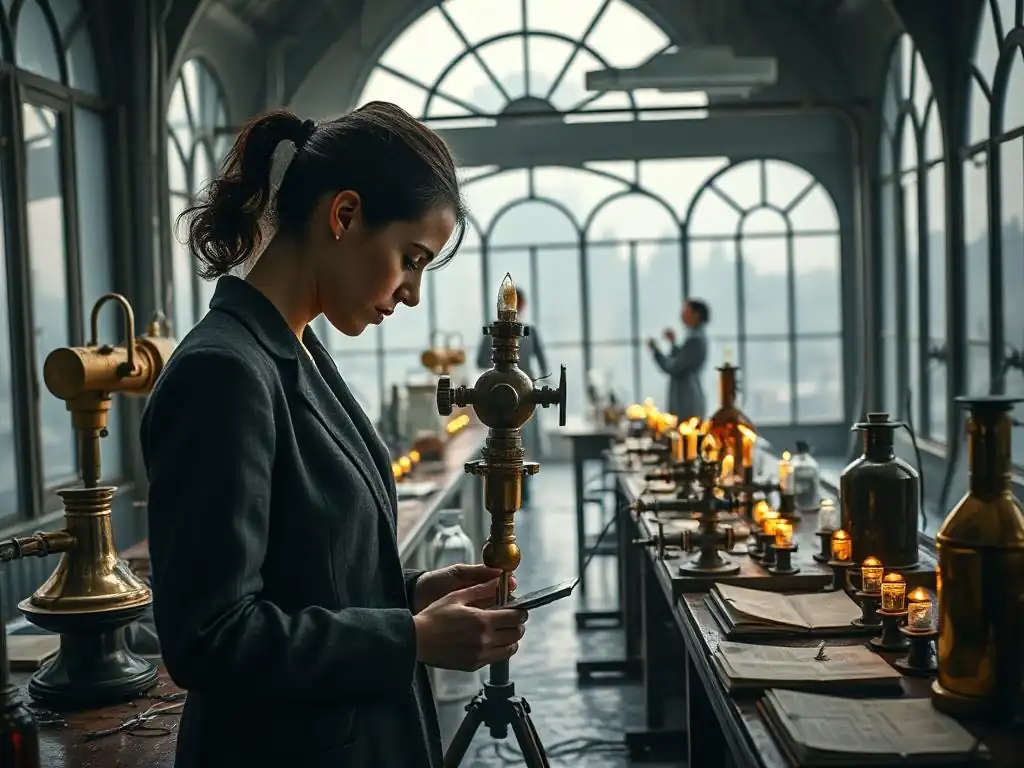
Welcome to WomenInScienceHistory.com!
Dive into the captivating, often untold, stories of women who dared to break barriers in science. This week, we explore the remarkable journey of women moving beyond traditionally accepted fields like botany and making groundbreaking strides in the "hard" sciences. Discover the historical context and the challenges they faced as they forged careers in physics and chemistry, and unravel the rich tapestry of women's contributions to scientific progress. Ready to uncover the inspiring narratives? Let's begin...
- Beyond Botany: Women's Entry into Physics and Chemistry - A Historical Perspective
- The Early Barriers: Gender Roles and Scientific Disciplines
- Breaking the Mold: Pioneering Women in Physics and Chemistry
- Evolution of Academic Opportunities for Women in Physics and Chemistry
- Key Figures: Biographies of Influential Women in Physics and Chemistry
- Impact on Scientific Advancement: Women’s Contributions to Physics and Chemistry
- The Ongoing Challenges and Future Opportunities for Women in STEM
- Conclusion: Celebrating the Historical Trajectory of Women in Physics and Chemistry
-
Frequently Asked Questions
- What were some of the major obstacles women faced when entering fields like physics and chemistry?
- Why is it important to highlight the history of women in physics and chemistry?
- Besides direct scientific contributions, how did women influence physics and chemistry history?
- Did women primarily focus on botany and natural sciences, or did they make substantial contributions to physics and chemistry as well?
- How can resources like WomenInScienceHistory.com help promote women's careers in STEM today?
- Final Reflection: Illuminating Pathways in Science
- Ignite Your Inner Scientist: Start Exploring Today!
Beyond Botany: Women's Entry into Physics and Chemistry - A Historical Perspective
Introduction: Women in Science History and the Shift Beyond Traditional Fields
Women in Science History celebrates the remarkable and often overlooked contributions of women across various scientific disciplines throughout the ages. While the narratives of pioneering female scientists in fields like botany or natural history are increasingly recognized, the journey of women into the more traditionally "hard" sciences, such as physics and chemistry, presents a distinct and challenging chapter. This shift represents a pivotal moment in the evolution of women’s science careers, as it challenged deeply ingrained societal norms and academic barriers.
This article delves into the historical trajectory of women breaking free from conventional scientific roles to make profound impacts in physics and chemistry. It explores the formidable obstacles they faced, the ingenious ways they circumvented limitations, and the groundbreaking discoveries that forever changed our understanding of the universe and its fundamental components. Understanding these stories is crucial for appreciating the full scope of women’s physics chemistry history careers and inspiring future generations.
The Early Barriers: Gender Roles and Scientific Disciplines
The Societal Expectations Limiting Women’s Science Careers
For centuries, prevailing societal norms rigidly confined women to domestic roles, largely excluding them from public intellectual pursuits and professional careers. Education for women, if it existed beyond basic literacy, was often geared towards domesticity, moral instruction, or ornamental accomplishments, rather than rigorous academic or scientific training. This deeply entrenched cultural framework meant that any aspiration for a woman to pursue a scientific career, especially in demanding fields like physics or chemistry, was met with significant resistance and often outright prohibition.
The belief that women lacked the intellectual capacity, emotional stability, or physical robustness for complex scientific inquiry was widespread, limiting their access to laboratories, university lectures, and professional networks. These societal expectations profoundly shaped the limited opportunities available for women’s science careers, forcing many to work in obscurity, if at all, or to contribute through informal channels. The very idea of women’s physics chemistry history careers was, for a long time, an anomaly.
Botany as a "Suitable" Science for Women: A Historical Overview
In contrast to physics and chemistry, botany emerged as one of the few scientific fields considered "suitable" for women during the 18th and 19th centuries. Its association with nature, gardening, and domestic applications made it seem less threatening to traditional gender roles. Women were encouraged to collect specimens, illustrate plants, and contribute to botanical classifications, often from their homes or private estates. This involvement was often framed as a genteel hobby or a way to educate children, rather than a serious professional pursuit.
While botany provided an accessible entry point into scientific observation and study for many women, it also inadvertently reinforced the notion that women's intellectual contributions were best suited for less rigorous, more aesthetically pleasing, or "soft" sciences. This perception created a significant hurdle for women aspiring to engage with the complex theoretical frameworks and experimental rigor inherent in physics and chemistry, thereby limiting the scope of recognized women’s physics chemistry history careers.
Breaking the Mold: Pioneering Women in Physics and Chemistry
Early Female Physicists: Overcoming Obstacles and Making Discoveries
The path for early female physicists was fraught with immense challenges, ranging from outright exclusion from universities and laboratories to a lack of recognition for their work. Despite these formidable barriers, a determined few managed to carve out spaces for themselves, often working as unpaid assistants, private researchers, or in women's colleges where opportunities slowly began to emerge in the late 19th century. These pioneers often had to prove their capabilities far beyond their male counterparts to gain even a modicum of acceptance.
One such figure was Laura Bassi, who, in the 18th century, became one of the first women to earn a university professorship in Europe, lecturing on physics at the University of Bologna. Although her public lectures were initially limited, her appointment was a monumental step. Later, figures like Mary Somerville in the 19th century, though largely self-taught, made significant contributions to mathematical physics and astronomy, translating Laplace's Mécanique Céleste and popularizing complex scientific ideas. These women’s relentless pursuit of knowledge laid foundational groundwork for future women’s physics chemistry history careers.
Trailblazing Women Chemists: Challenging Conventions and Advancing Knowledge
Similarly, women entering the field of chemistry faced a hostile environment, often denied access to the necessary laboratory equipment and professional networks. The prevailing view was that chemistry involved dangerous substances and was too messy or physically demanding for women. Yet, numerous women persevered, demonstrating exceptional skill and making vital contributions that advanced chemical knowledge. Their work often went uncredited or was attributed to male collaborators.
Ellen Swallow Richards, for example, was the first woman admitted to MIT in 1873, where she pioneered the field of sanitary chemistry and environmental science. She conducted groundbreaking research on water quality and nutrition, effectively creating the discipline of home economics, which, while sometimes disparaged, was a scientific field grounded in chemical principles. Another key figure was Ida Noddack, a German chemist who, in the 1930s, first proposed the idea of nuclear fission, a concept later developed by others. Their tenacity and innovative spirit were crucial in shaping the early landscape of women’s physics chemistry history careers.
Evolution of Academic Opportunities for Women in Physics and Chemistry
The Slow Opening of University Doors: Access to Higher Education in Science
The late 19th and early 20th centuries marked a gradual, albeit often grudging, opening of university doors to women, which was critical for the advancement of women’s science careers. Institutions like Girton College and Newnham College at Cambridge University in the UK, established in the 1860s and 1870s respectively, began providing higher education for women, though full degrees and equal recognition often lagged for decades. In the United States, Vassar, Smith, and Wellesley Colleges, founded in the mid-to-late 19th century, were among the first to offer rigorous science curricula to women.
By the turn of the 20th century, a growing number of co-educational universities also began admitting women to their science programs, including physics and chemistry. However, this access was often accompanied by limitations, such as separate classes, restricted laboratory access, or unspoken biases. Despite these hurdles, gaining formal education was a monumental step, enabling women to acquire the foundational knowledge and research skills necessary to pursue more advanced women’s physics chemistry history careers.
The Fight for Recognition: Women's Struggle for Academic Positions in Physics and Chemistry
Even with increased access to higher education, securing professional academic positions in physics and chemistry remained an arduous battle for women throughout much of the 20th century. Many highly qualified female scientists were relegated to lower-paying research assistant roles, teaching positions in women's colleges, or temporary lectureships, rarely achieving the coveted tenure-track professorships or departmental leadership roles held predominantly by men. Their salaries were often lower, and opportunities for promotion were scarce.
Women were frequently excluded from informal networks, scientific societies, and editorial boards, which were crucial for career advancement and recognition. The struggle for equal pay, fair promotion, and the acknowledgment of their intellectual contributions was a pervasive theme in the lives of many female scientists. This systemic bias meant that despite their brilliance and dedication, many women’s physics chemistry history careers were marked by a persistent fight for the recognition they deserved.
Key Figures: Biographies of Influential Women in Physics and Chemistry

Marie Curie: Radioactivity Research and Scientific Impact
Marie Skłodowska Curie stands as an unparalleled figure in the history of women in science, profoundly impacting both physics and chemistry. Born in Poland in 1867, she moved to Paris to study at the Sorbonne, where she eventually conducted groundbreaking research on radioactivity. Working initially with her husband, Pierre Curie, she isolated two new elements, polonium and radium, a monumental achievement that revolutionized the understanding of matter and energy.
Her tireless dedication and intellectual brilliance led her to become the first woman to win a Nobel Prize (Physics, 1903, shared with Pierre Curie and Henri Becquerel) and the first person, and only woman, to win Nobel Prizes in two different scientific fields (Chemistry, 1911, for her work on radium and polonium). Marie Curie's extraordinary career not only advanced fundamental science but also shattered gender barriers, making her an enduring symbol of excellence in women’s physics chemistry history careers.
Lise Meitner: Nuclear Fission and Overlooked Recognition
Lise Meitner, an Austrian-Swedish physicist, made critical contributions to the understanding of nuclear physics, most notably her theoretical explanation of nuclear fission. Born in 1878, she pursued her studies in physics in Berlin, where she collaborated for decades with chemist Otto Hahn. Together, they conducted pioneering research on radioactivity and nuclear reactions. In 1938, after fleeing Nazi Germany, Meitner corresponded with Hahn, who had performed experiments suggesting that uranium atoms split when bombarded with neutrons.
Meitner, along with her nephew Otto Frisch, correctly interpreted these results as nuclear fission, calculating the enormous energy released and coining the term. Despite her pivotal role in the discovery, the 1944 Nobel Prize in Chemistry for nuclear fission was awarded solely to Otto Hahn, a significant oversight that highlights the persistent issue of women's contributions being overlooked in science. Her story remains a poignant example in the narrative of women’s physics chemistry history careers.
Dorothy Hodgkin: X-ray Crystallography and Biomolecule Structures
Dorothy Hodgkin, a British chemist born in 1910, was a trailblazer in the field of X-ray crystallography, a technique used to determine the three-dimensional structures of molecules. Her meticulous and groundbreaking work provided crucial insights into the structures of complex biological molecules, revolutionizing biochemistry and medicine. She dedicated years to meticulously analyzing diffraction patterns to reveal the atomic arrangements of vital compounds.
Hodgkin's most significant achievements include determining the structures of penicillin in 1945, vitamin B12 in 1956 (a feat that took almost a decade), and insulin in 1969. For her work on vitamin B12, she was awarded the Nobel Prize in Chemistry in 1964, becoming the third woman to win the chemistry prize. Her precision and persistence not only advanced scientific understanding but also inspired countless aspiring women in science, leaving a lasting legacy on women’s physics chemistry history careers.
Rosalind Franklin: DNA Structure and Scientific Contributions
Rosalind Franklin, a British biophysicist and X-ray crystallographer born in 1920, made absolutely critical contributions to the understanding of the molecular structures of DNA, RNA, viruses, coal, and graphite. Her meticulous experimental work and precise X-ray diffraction images of DNA, particularly "Photo 51," were instrumental in the discovery of the DNA double helix structure. She worked at King's College London, where her research provided the most compelling evidence for DNA's helical nature and its dimensions.
Despite her pivotal data being shared with James Watson and Francis Crick without her explicit knowledge or consent, leading to their Nobel Prize in 1962, Franklin's scientific rigor and analytical prowess were undeniable. Her contributions were not fully recognized until after her untimely death in 1958. Her story is a powerful reminder of the challenges women faced in gaining due credit for their work, and her legacy continues to be debated and celebrated in discussions of women’s physics chemistry history careers.
Impact on Scientific Advancement: Women’s Contributions to Physics and Chemistry
Shifting Perspectives: How Women Changed Research in Physics
The entry of women into physics, though initially in small numbers, gradually began to influence the research landscape. Beyond specific discoveries, their presence challenged the prevailing homogenous scientific culture, subtly introducing new perspectives and collaborative approaches. As more women gained academic positions and research autonomy, they brought diverse backgrounds and often different problem-solving methodologies to the field.
For instance, the emphasis on meticulous experimental detail and careful data analysis, exemplified by figures like Lise Meitner and Irène Joliot-Curie (daughter of Marie Curie, also a Nobel laureate in Chemistry), became hallmarks of rigorous scientific inquiry. Their persistence in validating theoretical concepts through precise measurement and observation helped reinforce the empirical foundations of physics. This steady integration of women enriched the intellectual fabric of physics, contributing to a more robust and inclusive scientific community, thereby shaping the broader trajectory of women’s physics chemistry history careers.
Innovation in Chemistry: The Unique Contributions of Women Scientists
Women chemists have consistently demonstrated an exceptional capacity for innovation, often pioneering new sub-disciplines or developing novel techniques. From the early work in sanitary chemistry by Ellen Swallow Richards to Dorothy Hodgkin’s foundational contributions to structural biology through crystallography, women have driven significant advancements. Their unique insights and dedication to solving complex problems have led to breakthroughs in diverse areas, including materials science, environmental chemistry, and pharmaceutical development.
The persistent pursuit of knowledge by women chemists, despite systemic barriers, often forced them to be exceptionally resourceful and innovative in their research. Their contributions have not only expanded the scope of chemical knowledge but also opened up entirely new avenues of research and application. These substantial contributions are integral to understanding the full narrative of women’s physics chemistry history careers and their profound impact on scientific progress.
The Ongoing Challenges and Future Opportunities for Women in STEM
Persistent Gender Gaps in Physics and Chemistry Today
Despite the significant progress made over the past century, persistent gender gaps continue to challenge women in physics and chemistry today. While women now constitute a larger percentage of undergraduate students in these fields than in previous eras, their representation significantly decreases at higher academic levels, particularly in tenure-track positions and full professorships. For instance, in many Western countries, women still make up less than 20% of full professors in physics departments.
Challenges such as unconscious bias in hiring and promotion, disproportionate burdens of teaching and service, and a lack of visible female role models at senior levels contribute to this attrition. The "leaky pipeline" phenomenon, where women leave STEM fields at various career stages, remains a concern. Addressing these systemic issues is crucial to ensuring that the full potential of women’s physics chemistry history careers can be realized without unnecessary obstacles.
Encouraging the Next Generation: Fostering Women's STEM Careers
To foster the next generation of women in physics and chemistry, concerted efforts are needed to dismantle remaining barriers and create truly equitable environments. This includes promoting STEM education for girls from an early age, providing robust mentorship programs, and actively challenging gender stereotypes within academic and professional settings. Initiatives that highlight the achievements of historical female scientists, like those featured on WomenInScienceHistory.com, play a vital role in inspiring young women.
Furthermore, implementing policies that support work-life balance, address unconscious bias in hiring and promotion, and foster inclusive research cultures are essential. By actively encouraging and supporting women’s science careers, particularly in fields like physics and chemistry, society can benefit from a more diverse pool of talent and accelerate scientific discovery and innovation. The future of women’s physics chemistry history careers depends on these ongoing efforts.
Conclusion: Celebrating the Historical Trajectory of Women in Physics and Chemistry
Acknowledging the Pioneers: Inspiring Future Generations of Women Scientists
The journey of women into the "hard" sciences of physics and chemistry is a testament to their unwavering intellect, resilience, and passion for discovery. From battling societal expectations that confined them to domestic roles to challenging the very structures of academia, pioneering women carved out their rightful place in these demanding fields. Their stories, often overlooked or diminished, are crucial narratives in the broader tapestry of scientific history.
By acknowledging the immense contributions of figures like Marie Curie, Lise Meitner, Dorothy Hodgkin, and Rosalind Franklin, we not only correct historical omissions but also provide powerful role models for aspiring young scientists. Celebrating these women’s physics chemistry history careers is not merely an act of remembrance; it is an active inspiration, demonstrating that perseverance against adversity can lead to groundbreaking achievements and fundamentally shape the course of human knowledge. The legacy of these pioneers continues to illuminate the path for future generations of women in science.
Frequently Asked Questions
What were some of the major obstacles women faced when entering fields like physics and chemistry?
Women faced significant obstacles including limited educational opportunities, social biases against women in STEM, and exclusion from professional networks dominated by men.
Why is it important to highlight the history of women in physics and chemistry?
Highlighting their history corrects historical omissions, provides role models for aspiring female scientists, and demonstrates the diverse perspectives that women bring to scientific inquiry.
Besides direct scientific contributions, how did women influence physics and chemistry history?
Women influenced the field through teaching and mentorship, advocating for women's access to education, and challenging discriminatory practices within scientific institutions.
Did women primarily focus on botany and natural sciences, or did they make substantial contributions to physics and chemistry as well?
While botany was a common entry point, women made significant contributions to physics and chemistry, often facing greater resistance in these "hard" sciences.
How can resources like WomenInScienceHistory.com help promote women's careers in STEM today?
The website provides inspiration and role models, showcases diverse career paths within STEM, and raises awareness about the historical barriers women have overcome.
Final Reflection: Illuminating Pathways in Science
The journey of women into the realms of physics and chemistry, as explored in this article, isn't just a historical account; it's a powerful testament to the enduring human spirit's quest for knowledge and equality. The struggles and triumphs of these pioneering women resonate deeply today, reminding us that the pursuit of scientific understanding should be accessible to all, regardless of gender.
The impact of these women extends far beyond their individual achievements. They reshaped the scientific landscape, challenging preconceived notions and paving the way for future generations. Their legacy is a constant reminder that diverse perspectives enrich scientific inquiry and lead to more comprehensive and innovative solutions. Science is not a boy's game, it's not a girl's game. It's everyone's game. It's about where we are and where we're going.
- Nichelle Nichols
As we reflect on the history of women in physics and chemistry, let us not only celebrate their accomplishments but also commit to fostering an environment where every aspiring scientist, regardless of gender, feels empowered to pursue their passions. Consider the barriers that still exist, both subtle and overt, and ask yourself: what can you do to dismantle them and create a truly equitable and inclusive scientific community? The future of science depends on it.
Ignite Your Inner Scientist: Start Exploring Today!
Thank you for diving into the inspiring stories of women who dared to break barriers in physics and chemistry! We hope you found their journeys as captivating as we do. Now, it's your turn to contribute to the ongoing legacy of women in science.
Here’s how you can take action:
- Dive deeper: Rediscover the groundbreaking work of a specific female physicist or chemist discussed in the article and share one fascinating fact about her on social media with the hashtag #WomenInScienceHistory.
- Explore our archives on WomenInScienceHistory.com for more inspiring stories of women shaping scientific fields, from mathematics to engineering.
- Share this article with a friend, student, or colleague who you think would appreciate these amazing narratives.
What specific field of science sparks your curiosity the most, and how will you start exploring it today?