
The Double Burden: Motherhood and Scientific Pursuit for Women (Early 1900s)

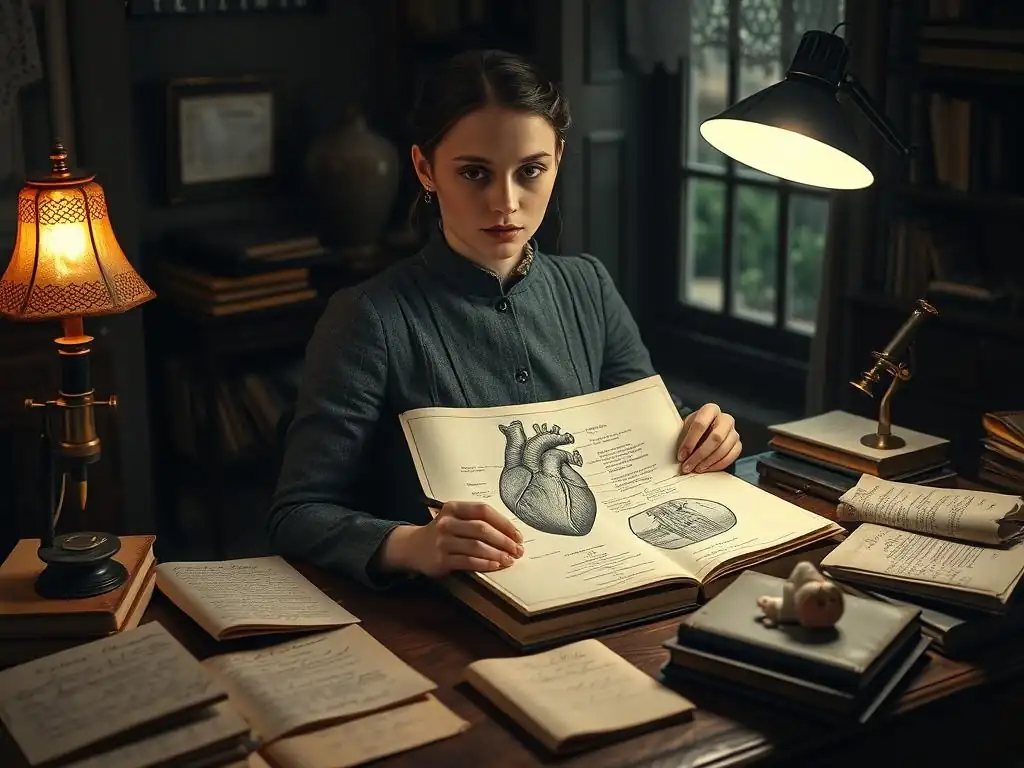
Welcome to WomenInScienceHistory.com, where we unearth the remarkable stories of women who shaped the scientific landscape. Dive into our Biology & Medicine section and prepare to be captivated by " The Double Burden: Motherhood and Scientific Pursuit for Women (Early 1900s)." Explore the untold challenges and triumphs of these pioneering scientists as they navigated the complexities of family life alongside their groundbreaking work. What sacrifices did they make, and how did they redefine what was possible? Discover their inspiring journeys and the lasting impact they had on the world.
- Introduction: Navigating Motherhood and Science in the Early 20th Century
- The Balancing Act: Science and Motherhood in the Early 1900s
- Scientific Contributions Amidst Domestic Responsibilities
- The Cost of the Double Burden: Personal and Professional Sacrifices
- Institutional Barriers and Gender Bias in Early 20th Century Science
- The Rise of Female Scientific Communities: Finding Support and Collaboration
- Legacy and Inspiration: Paving the Way for Future Generations
- Further Research: Exploring the Intersection of Women's Science and Motherhood in the Early 20th Century
-
Frequently Asked Questions
- What were some of the primary obstacles faced by women in science during the early 1900s, particularly concerning motherhood?
- How did societal expectations regarding motherhood impact women’s scientific careers in the early 1900s?
- Did the "double burden" of motherhood and scientific pursuit affect the types of research women engaged in during the early 1900s?
- Are there examples of successful female scientists from the early 1900s who managed to balance motherhood and their careers?
- What steps can be taken today to better support women in science who are also mothers?
- Final Reflection: Enduring Echoes of the Double Burden
- Embrace Legacy: Inspire Future Generations of Women in Science!
The Societal Context: Expectations for Women in the Early 1900s
The early 1900s presented a rigid societal framework for women, heavily emphasizing their roles within the domestic sphere. The prevailing "cult of domesticity" dictated that a woman's primary purpose was to be a wife, mother, and homemaker, responsible for managing the household and raising children. Education for women, if pursued, was often seen as a means to become a better wife and mother, rather than a pathway to professional autonomy. This pervasive ideology limited opportunities for women outside the home and created significant social pressure to conform to traditional gender roles.
Furthermore, legal and social barriers actively discouraged women from professional careers, particularly after marriage. Many institutions enforced "marriage bars," policies that required women to resign from their positions upon marrying, effectively ending their careers. Public opinion often viewed professional work as detrimental to a woman's health and reproductive capacity, or as a neglect of her familial duties. This environment made the pursuit of any demanding career, let alone science, an extraordinary challenge for women, especially those contemplating or experiencing motherhood.
The Allure of Science: Opportunities and Challenges for Aspiring Female Scientists
Despite the formidable societal constraints, the field of science offered a unique intellectual draw for some women in the early 20th century. For those with access to higher education, often through burgeoning women's colleges, scientific disciplines like botany, astronomy, and chemistry provided avenues for rigorous intellectual engagement and discovery. While opportunities in leading research universities were scarce, some women found roles as laboratory assistants, research associates, or educators in women's institutions, allowing them to contribute to scientific knowledge.
However, the path for aspiring female scientists was fraught with challenges. They faced systemic discrimination in admissions to advanced degree programs, limited access to funding for research, and significant hurdles in securing faculty positions or leadership roles. The scientific establishment was overwhelmingly male, and women were often relegated to supportive, often uncredited, roles. The profound difficulty of balancing these professional ambitions with the societal expectation of marriage and family made the journey of women’s science motherhood early 1900s an arduous one, requiring immense dedication and sacrifice.
The Balancing Act: Science and Motherhood in the Early 1900s
The Idealized Mother vs. The Dedicated Scientist: Conflicting Roles
The early 1900s presented a stark dichotomy between the idealized image of a mother and the burgeoning identity of a professional scientist. Society celebrated the mother as the nurturing caregiver, whose entire existence revolved around the well-being of her children and home. This vision of motherhood was often portrayed as a full-time, emotionally encompassing role, leaving little room for external pursuits. Consequently, a woman who dedicated herself to a demanding scientific career was frequently perceived as neglecting her domestic responsibilities or, worse, as being unwomanly.
This created an immense internal and external conflict for women pursuing both paths. They were often forced to contend with societal disapproval, professional skepticism, and personal guilt. Their commitment to science was questioned if they had children, and their dedication as mothers was scrutinized if they spent time in laboratories or on fieldwork. This inherent clash of roles made the integration of women’s science motherhood early 1900s a deeply personal and often isolating struggle, forcing women to navigate a landscape where their two most significant identities were seen as mutually exclusive.
Limited Support Systems: Lack of Childcare and Institutional Bias
A major practical hurdle for women engaged in science and motherhood in the early 1900s was the almost complete absence of formal support systems for working parents. Institutional childcare was virtually nonexistent, and employers, including universities and research facilities, offered no provisions for parental leave or flexible working arrangements. For most families, childcare relied on extended family networks or, for the affluent, the employment of domestic staff such as nannies or housekeepers.
This lack of institutional support was compounded by pervasive biases within scientific organizations. Women who married or became mothers often faced direct discrimination, including the aforementioned "marriage bars" that mandated their resignation. Even if they managed to retain their positions, the expectation was that their domestic responsibilities would take precedence, leading to fewer opportunities for promotion, research funding, or recognition. The systemic disregard for the unique needs of women’s science motherhood early 1900s meant that the burden of balancing these roles fell almost entirely on the individual woman.
Scientific Contributions Amidst Domestic Responsibilities
Case Studies: Marie Curie's Pursuit of Radioactivity Research While Raising a Family
Marie Curie stands as a towering example of a woman who successfully combined groundbreaking scientific research with motherhood in the early 1900s. Following the birth of her first daughter, Irène, in 1897, and her second, Ève, in 1904, Curie continued her relentless pursuit of knowledge in radioactivity. Her pioneering work, initially with her husband Pierre, led to the discovery of polonium and radium, culminating in two Nobel Prizes – one in Physics (1903) and another in Chemistry (1911). Her continued research, particularly after Pierre's tragic death in 1906, occurred while she was a widowed mother raising two young girls.
Curie's ability to manage this "double burden" was a testament to her extraordinary discipline, intellectual drive, and a degree of domestic support. While she benefited from having some domestic help, her primary strategy involved an unwavering commitment to her laboratory work, often conducting experiments in a shed near her home. Her daughters later recalled her intense focus and dedication, yet also her presence and care as a mother. Curie's life vividly illustrates the immense personal commitment required for women’s science motherhood early 1900s, proving that monumental scientific achievements were possible even under the most challenging domestic circumstances.
Overcoming Obstacles: Strategies Employed by Women Scientists and Mothers
Faced with overwhelming societal and institutional barriers, women scientists and mothers in the early 1900s developed diverse strategies to continue their work. For those with financial means, employing domestic staff was a common solution, delegating household chores and childcare to free up time for research. Other women relied heavily on support from extended family, such as grandmothers or aunts, who might provide childcare or help with household management. Some women chose to work from home laboratories or pursued research that could be conducted with greater flexibility, such as botanical studies or scientific writing.
Another significant strategy involved collaboration, particularly with spouses. While often unequal, these partnerships sometimes allowed women to contribute to scientific endeavors while managing domestic responsibilities. For example, some women worked alongside their husbands in university labs or private research, even if their contributions were often uncredited. A few women also delayed marriage or motherhood, or chose not to marry at all, to dedicate themselves fully to their scientific careers, recognizing the immense challenges of combining women’s science motherhood early 1900s. These adaptations underscore the ingenuity and determination required to persist in science.
Impact on Research: How Motherhood Shaped Scientific Inquiry
The experience of motherhood, while a significant personal challenge, sometimes subtly influenced the scientific inquiry of women in the early 1900s. For some, it might have directed their research interests towards fields directly related to family and welfare, such as nutrition, public health, child development, or home economics. For instance, pioneering women in these fields often brought a practical, lived perspective to their scientific questions, aiming to improve conditions for families and communities. Ellen Swallow Richards, a chemist and founder of the home economics movement, exemplifies how scientific principles could be applied to domestic life.
However, the primary impact of motherhood on scientific research was often less about shaping the direction of inquiry and more about limiting the scope and pace of it. The demands of childcare and household management often meant less time for sustained laboratory work, fieldwork, or attending conferences.
This could lead to slower career progression, fewer publications, and potentially, the inability to pursue highly demanding or time-intensive research projects. The "double burden" meant that while some women made significant contributions, many brilliant minds might have been prevented from reaching their full scientific potential due to the practical realities of women’s science motherhood early 1900s.
The Cost of the Double Burden: Personal and Professional Sacrifices
Career Limitations: Impact on Advancement and Recognition
The intersection of science and motherhood in the early 1900s frequently imposed severe limitations on women's professional advancement and recognition. Even for those who managed to secure scientific positions, the demands of family life often meant a slower pace of research and fewer publications compared to their male counterparts, who typically had wives managing their domestic lives. This disparity directly impacted their ability to climb the academic ladder, secure tenure, or gain promotions. Many women found themselves trapped in lower-tier positions, such as instructors or research assistants, regardless of their intellectual capabilities.
Furthermore, opportunities for professional recognition, such as invitations to prestigious conferences, membership in scientific societies, or nominations for awards, were often withheld from women, particularly those with family responsibilities. The pervasive belief that women's primary allegiance lay with their families meant their scientific dedication was frequently underestimated. This systemic bias meant that despite their significant contributions, many pioneering women scientists and mothers remained largely invisible or uncredited in the scientific establishment, a stark consequence of the challenges inherent in women’s science motherhood early 1900s.
Mental and Physical Strain: The Toll of Balancing Demands
The constant juggle of demanding scientific work and intensive domestic responsibilities exacted a heavy toll on the mental and physical well-being of women scientists and mothers in the early 1900s. The relentless pressure to excel in both spheres, often without adequate support or recognition, led to chronic stress, exhaustion, and burnout. Many women reported feelings of guilt – either for not spending enough time with their children or for not dedicating enough hours to their scientific pursuits. This internal conflict was a significant source of emotional strain.
Physically, the demands of managing a household, raising children, and maintaining a scientific career, often in environments that offered little flexibility or accommodation, could lead to severe fatigue and health issues. Long hours in the laboratory, coupled with domestic chores and childcare, left little room for rest or personal care. This hidden cost of the "double burden" profoundly impacted the quality of life for these pioneering women, making their ability to sustain careers in women’s science motherhood early 1900s a testament to extraordinary resilience.
Institutional Barriers and Gender Bias in Early 20th Century Science

Discrimination in Academia: Limited Access to Resources and Positions
Academic institutions in the early 20th century were bastions of gender discrimination, severely limiting women's access to scientific careers, particularly for those who were married or mothers. Women were frequently denied admission to advanced graduate programs, excluded from vital research teams, and systematically overlooked for faculty positions in co-educational universities. Even when admitted, they often faced informal barriers, such as being excluded from male-dominated scientific networks and social gatherings where crucial professional connections were forged.
Perhaps the most explicit barrier was the widespread implementation of "marriage bars" in employment policies. These policies mandated that women resign from their jobs upon marriage, and certainly upon childbirth, effectively ending their professional careers. This meant that even if a woman surmounted the initial hurdles to enter science, her career could be abruptly terminated the moment she chose to marry or become a mother. Such institutionalized discrimination underscored the deep-seated bias against women’s science motherhood early 1900s, making sustained careers nearly impossible for many.
The "Masculine" Image of Science: Challenging Gender Stereotypes
The scientific realm in the early 1900s was largely perceived through a "masculine" lens, deeply entrenched with stereotypes that posed significant challenges for women, especially mothers, seeking to enter or advance within it. Science was often associated with traits deemed inherently male: rationality, objectivity, emotional detachment, and a singular focus on intellectual pursuits. These qualities were seen as antithetical to the prevailing notions of femininity, which emphasized emotionality, nurturing, and domesticity.
Consequently, women, particularly those embracing motherhood, were often not taken seriously as scientists. Their intellectual capabilities were questioned, and their dedication to science was doubted, with the assumption that their primary allegiance would always be to their families. This pervasive stereotype created a hostile environment where women's contributions were undervalued, and their presence in laboratories and research institutions was often viewed as an anomaly or an intrusion. Challenging this "masculine" image of science was a constant, exhausting battle for women engaged in women’s science motherhood early 1900s.
The Rise of Female Scientific Communities: Finding Support and Collaboration
Women's Colleges and Scientific Societies: Creating Spaces for Women in STEM
In an era largely hostile to women in science, women's colleges emerged as vital havens, providing critical educational and professional opportunities. Institutions like Vassar, Wellesley, Bryn Mawr, and Mount Holyoke offered rigorous scientific curricula, fostered research, and, crucially, employed female faculty who served as role models and mentors. These colleges provided an environment where women could pursue scientific studies without the overt discrimination found in co-educational universities, thereby nurturing a generation of female scientists.
Beyond academia, the formation of women-only scientific societies or dedicated sections within existing professional organizations provided invaluable support. Groups like the American Association of University Women (AAUW) and various women's medical or engineering associations created spaces for networking, sharing research, and advocating for women's rights in STEM. These communities were essential for women navigating the challenges of women’s science motherhood early 1900s, offering solidarity and a platform to collectively address the systemic barriers they faced.
Mentorship and Networking: Building a Community of Female Scientists
Within these burgeoning female scientific communities, mentorship and networking played a crucial role in sustaining women's careers. Older, established female professors and researchers often took younger women under their wing, offering guidance on navigating academic politics, securing research opportunities, and balancing personal and professional lives. This mentorship was invaluable in a field where formal support for women was scarce.
Informal networks and friendships among female scientists also provided a vital lifeline. These connections allowed women to share strategies for managing domestic responsibilities alongside scientific work, offer emotional support, and collaborate on projects. Whether through study groups, professional meetings, or personal correspondence, these communities fostered a sense of belonging and mutual encouragement. This collective strength was instrumental in helping women scientists, particularly those managing the demands of women’s science motherhood early 1900s, persevere against overwhelming odds and build a foundation for future generations.
Legacy and Inspiration: Paving the Way for Future Generations
The Enduring Impact of Early 1900s Women Scientists and Mothers
The pioneering women scientists and mothers of the early 1900s left an indelible legacy, not only through their specific scientific discoveries but also through their sheer perseverance. Despite facing immense personal sacrifice and systemic discrimination, their contributions laid foundational groundwork in diverse fields ranging from chemistry and physics to medicine and public health. Many of their findings, though often overlooked or attributed to male colleagues at the time, were crucial stepping stones for later scientific advancements.
Beyond their direct scientific output, these women served as crucial trailblazers. Their very presence in scientific institutions and laboratories, particularly while balancing the demands of motherhood, challenged deeply ingrained societal norms about women's capabilities and roles. By demonstrating that women could indeed pursue rigorous intellectual careers and contribute meaningfully to science, they opened doors and paved the way for future generations of women to enter STEM fields, inspiring countless young women to pursue their scientific ambitions.
Lessons Learned: Addressing the Challenges of Work-Life Balance in Science Today
The historical struggles of women’s science motherhood early 1900s offer profound lessons for contemporary efforts to achieve gender equity in science. While significant progress has been made, many challenges related to work-life balance, childcare, and institutional support persist for women in STEM today. Issues like the "leaky pipeline" – where women disproportionately leave scientific careers, particularly during childbearing years – echo the historical difficulties faced by their predecessors.
Addressing these ongoing challenges requires continued institutional commitment to policies such as robust parental leave, flexible work arrangements, accessible and affordable childcare options, and unbiased promotion criteria. Furthermore, a cultural shift is necessary to dismantle lingering stereotypes and create an inclusive environment where motherhood is not seen as a hindrance to scientific excellence. By learning from the resilience and sacrifices of early 20th-century women scientists and mothers, we can strive to build a scientific community that fully supports and celebrates all its members, regardless of their family responsibilities.
Further Research: Exploring the Intersection of Women's Science and Motherhood in the Early 20th Century
Frequently Asked Questions
What were some of the primary obstacles faced by women in science during the early 1900s, particularly concerning motherhood?
The early 1900s saw women in science facing significant gender bias, limited access to funding and resources, and societal expectations that often prioritized motherhood over career aspirations.
How did societal expectations regarding motherhood impact women’s scientific careers in the early 1900s?
Societal expectations placed immense pressure on women to prioritize domestic duties and childcare, often forcing them to choose between their scientific pursuits and family life.
Did the "double burden" of motherhood and scientific pursuit affect the types of research women engaged in during the early 1900s?
Yes, some women may have been drawn to research areas that offered more flexibility or perceived compatibility with family responsibilities, potentially impacting their career trajectory.
Are there examples of successful female scientists from the early 1900s who managed to balance motherhood and their careers?
While challenges were immense, figures like Marie Curie, despite facing immense hurdles, are prominent examples of women who achieved both scientific acclaim and motherhood, demonstrating remarkable resilience.
What steps can be taken today to better support women in science who are also mothers?
Providing access to affordable childcare, implementing flexible work arrangements, and addressing gender bias in STEM fields are crucial steps in creating a more equitable environment.
Final Reflection: Enduring Echoes of the Double Burden
The challenges faced by women scientists in the early 1900s, as highlighted throughout this article, are not merely historical anecdotes; they are foundational to understanding the persistent gender disparities in STEM fields today. The systemic barriers, societal expectations, and the relentless pressure to choose between motherhood and scientific advancement continue to cast a long shadow, demanding our continued attention and proactive solutions.
The struggle of these pioneering women resonates deeply, reminding us that progress is rarely linear and that vigilance is crucial. Their stories serve as both a testament to resilience and a stark reminder of the sacrifices made to pave the way for future generations. You cannot be what you cannot see,
a quote often attributed to Marian Wright Edelman, perfectly encapsulates the importance of recognizing and celebrating these early female scientists, ensuring their contributions are not forgotten and that their struggles inspire continued advocacy.
Let us not allow these historical accounts to remain confined to the pages of history. Instead, let us use them as a catalyst for change. Consider how you can contribute to creating a more equitable and supportive environment for women in science, whether through mentorship, advocacy, or simply by challenging ingrained biases. The legacy of these women demands that we actively work towards a future where no one is forced to choose between their passion and their family.
Embrace Legacy: Inspire Future Generations of Women in Science!
Thank you for exploring the inspiring journeys of women who defied expectations in early 20th-century science. Your newfound perspective can fuel real change! Ready to make a difference?
- Share this article with your network to amplify the voices of these unsung heroines.
- Delve deeper by researching a specific woman scientist mentioned and presenting your findings in a local school or community center.
- Start a book club focusing on biographies of women in STEM, fostering conversations about challenges and triumphs.
What small step will you take today to honor their legacy and pave the way for future generations of women in science?