
Illuminating Discoveries: Kids' Books on Women Unlocking Secrets of the Universe

Welcome to WomenInScienceHistory.com!
Dive into the fascinating world of women in science and discover the untold stories of brilliance and perseverance. Are you searching for inspiring ways to introduce young minds to the wonders of science and the incredible women who shaped it? Then you're in the right place! Our latest article, " Illuminating Discoveries: Kids' Books on Women Unlocking Secrets of the Universe," explores a collection of captivating women scientists children’s books guaranteed to spark curiosity and ignite a passion for STEM. What hidden gems will you uncover?
- Inspiring Young Minds: Children's Books About Trailblazing Women in STEM
- Why Children's Books About Women in STEM are Crucial
-
Recommended Children's Books Featuring Remarkable Women in STEM
- "Counting on Katherine: How Katherine Johnson Saved Apollo 13" - A Story of Mathematical Genius
- "Rosalind Franklin: DNA Detective" - Uncovering the Secrets of DNA
- "Shark Lady: The True Story of How Eugenie Clark Became the Ocean's Most Fearless Scientist" - A Pioneer in Marine Biology
- "Grace Hopper: Queen of Computer Code" - A Visionary in Computer Science
- Expanding Horizons: Additional Resources for Learning About Women in STEM
- Conclusion: Nurturing a Lifelong Love of Science Through Inspiring Stories
-
Frequently Asked Questions
- What is the main focus of Illuminating Discoveries: Kids' Books on Women Unlocking Secrets of the Universe?
- Why is it important to have children's books about women scientists?
- What kind of information can I find in these children's books about women in science?
- Where can I find more information about the women scientists featured in these children's books?
- How can these books inspire future generations of scientists?
- Final Reflection: Inspiring Future Explorers
- Unveil the Universe with Inspiring Women!
Inspiring Young Minds: Children's Books About Trailblazing Women in STEM
Why Children's Books About Women in STEM are Crucial
Representation Matters: Inspiring Future Generations of Scientists and Engineers
Children's literature plays a pivotal role in shaping young minds, and women scientists children's books are particularly powerful tools for inspiration. When young girls and boys see themselves reflected in stories of scientific discovery and innovation, it dismantles preconceived notions about who can be a scientist or engineer.
For instance, a 2018 study conducted by Microsoft across several European countries revealed that girls' interest in STEM fields often peaks around age 11, but can significantly wane by age 15. Providing compelling narratives of women in STEM during these formative years can be a crucial intervention, fostering sustained curiosity and showing that science is a vibrant, accessible path for everyone.
These books go beyond mere storytelling; they are foundational in building identity and aspiration. By highlighting the achievements of pioneering women like Katherine Johnson or Grace Hopper, children's books about women in science introduce diverse role models whose contributions have often been overlooked in traditional curricula. This exposure helps to normalize the presence of women in laboratories, observatories, and engineering firms, subtly influencing children's perceptions and encouraging them to envision a future where their own scientific dreams are not only valid but celebrated.
Challenging Gender Stereotypes: Fostering a Love of Science in All Children
Traditional narratives and media often inadvertently reinforce gender stereotypes, sometimes portraying scientists as predominantly male figures. Kids' books on female scientists directly challenge these ingrained biases by showcasing women excelling in every scientific discipline, from the depths of the ocean to the far reaches of space. For example, a child accustomed to seeing male astronauts might encounter a book about Mae C. Jemison, the first African American woman in space, thereby expanding their understanding of who can explore the cosmos and what a scientist truly looks like.
Moreover, these engaging stories benefit all children by broadening their understanding of human potential. When both boys and girls read about the perseverance and ingenuity of women in STEM, it promotes a more inclusive view of science as a field open to talent and dedication, regardless of gender. Early exposure to these narratives can lead to a more sustained interest in scientific subjects; research indicates that children exposed to diverse role models are more likely to pursue non-traditional careers, fostering a generation that values collaboration and diverse perspectives in problem-solving.
Recommended Children's Books Featuring Remarkable Women in STEM
"Counting on Katherine: How Katherine Johnson Saved Apollo 13" - A Story of Mathematical Genius
This compelling biography introduces young readers to Katherine Johnson, a brilliant African American mathematician whose calculations were pivotal to NASA's early space missions. The book vividly recounts her critical role in ensuring the safe return of the Apollo 13 crew, showcasing how her precision and unwavering dedication to numbers were indispensable. It highlights not only her extraordinary intellect but also the challenges she overcame in an era marked by racial and gender segregation.
The narrative skillfully simplifies complex mathematical concepts, allowing children to grasp the sheer magnitude of Johnson's contributions without feeling overwhelmed. It serves as a powerful example of how abstract mathematical skills translate into real-world impact, saving lives and pushing the boundaries of human exploration. This book is a standout among women scientists children's books for its ability to convey profound historical significance through an accessible and inspiring lens.
Features: Engaging Narrative and Vibrant Illustrations
"Counting on Katherine" is celebrated for its accessible narrative style, which transforms intricate historical events and mathematical feats into an exciting story for young readers, typically aged 4-8. The book employs vibrant, engaging illustrations that visually enhance the text, capturing the awe and challenge of space travel and the quiet determination of Johnson herself. Its storytelling focuses on the human element of discovery and problem-solving.
Price and Availability: Purchase "Counting on Katherine" and Support Independent Bookstores
This book is widely available at major online retailers and local independent bookstores, typically priced around $18 for a hardcover edition. Its broad distribution makes it an accessible and popular addition to any young reader's library, often found in school libraries and public collections due to its educational value and inspiring content.
Unique Benefits: Showcases the Importance of Mathematics in Space Exploration and Problem-Solving
A core strength of "Counting on Katherine" is its clear demonstration of how mathematics is not just an academic subject but a vital tool for real-world problem-solving. It teaches children about critical thinking, perseverance, and the impact of individual contributions in large-scale projects like space missions. The story of Apollo 13's safe return, directly attributed to Johnson's calculations, powerfully illustrates the life-saving potential of mathematical accuracy.
"Rosalind Franklin: DNA Detective" - Uncovering the Secrets of DNA
"Rosalind Franklin: DNA Detective" illuminates the often-eclipsed story of Rosalind Franklin, whose groundbreaking X-ray diffraction images, particularly "Photo 51," were absolutely crucial to understanding the double helix structure of DNA. This book takes children on a journey through the scientific process, emphasizing Franklin's meticulous experimental work and her significant, yet historically under-recognized, contribution to one of the 20th century's most important biological discoveries.
The narrative aims to correct historical oversights, ensuring that Franklin receives the recognition she deserves for her pivotal role in unraveling the secrets of life itself. It introduces young readers to the complexities of scientific research, including the challenges of collaboration and recognition within the scientific community. This makes it an essential addition to any collection of children's books about women in science, fostering a more accurate and complete understanding of scientific history.
Features: An Accessible Introduction to a Complex Scientific Discovery
The book excels at simplifying the intricate world of molecular biology and genetic research for a young audience. It uses clear language and engaging analogies to explain the concepts of DNA structure and X-ray crystallography. The narrative focuses on the process of scientific inquiry, making complex topics digestible and fostering an understanding of how major discoveries are made through careful observation and experimentation.
Price and Availability: Find "Rosalind Franklin: DNA Detective"
This insightful book can be found at various book retailers, both online and in physical stores. It is often available in hardcover for approximately $17, making it a valuable resource for introducing young minds to genetics and the foundational figures in biological science.
Unique Benefits: Highlights the Crucial, Yet Often Overlooked, Contribution of Rosalind Franklin
The primary benefit of this book is its commitment to historical accuracy and justice. It educates children about the vital role Rosalind Franklin played in the discovery of DNA's structure, a contribution that was not fully acknowledged during her lifetime. This narrative encourages critical thinking about scientific recognition and inspires an appreciation for the often-hidden figures behind major breakthroughs, making it a unique entry among kids' books on female scientists.
"Shark Lady" tells the inspiring true story of Eugenie Clark, a pioneering marine biologist who dedicated her life to studying sharks and dispelling misconceptions about these magnificent creatures. From a young age, Clark was captivated by the ocean, and despite societal expectations and the challenges of pursuing a scientific career as a woman, she relentlessly pursued her passion, becoming a leading authority on sharks and a fearless advocate for marine conservation.
The book vividly portrays her adventurous expeditions, her groundbreaking research on shark behavior, and her unwavering determination to explore the underwater world. It highlights her resilience in the face of obstacles, inspiring children to follow their own curiosities and passions, no matter how unconventional they may seem. This narrative is a compelling example of perseverance and scientific curiosity in the realm of women scientists children's books.
Features: Captivating Account of Perseverance and Passion
"Shark Lady" offers a captivating and visually stunning account of Eugenie Clark's life, filled with engaging illustrations of marine life and ocean exploration. The narrative beautifully conveys her lifelong passion for sharks and her dedication to scientific discovery, making it an inspiring read for children interested in animals and the natural world. It emphasizes the importance of following one's dreams with unwavering commitment.
Price and Availability: Buy "Shark Lady" and Support Ocean Conservation Efforts
This captivating biography is widely available at bookstores and online platforms, typically retailing around $18 for a hardcover. It's a popular choice for young readers interested in marine life, environmental science, and stories of extraordinary dedication, often found in elementary school libraries and nature-themed book sections.
Unique Benefits: Encourages Children to Overcome Obstacles and Pursue Their Scientific Dreams
Beyond introducing children to marine biology, "Shark Lady" serves as a powerful testament to overcoming adversity. Eugenie Clark's story teaches young readers about resilience, the courage to challenge preconceived notions, and the importance of pursuing one's scientific interests, even when facing skepticism or traditional barriers. It instills a sense of wonder for the natural world and encourages environmental stewardship.
"Grace Hopper: Queen of Computer Code" - A Visionary in Computer Science
"Grace Hopper: Queen of Computer Code" introduces children to the extraordinary life and groundbreaking contributions of Grace Hopper, a brilliant mathematician and pioneering computer scientist. The book chronicles her journey from a curious child to a visionary who developed the first compiler, a program that translated human-friendly code into machine-readable instructions. Her work fundamentally transformed how people interacted with computers, making programming more accessible and laying the groundwork for modern software development.
This engaging biography highlights Hopper's innovative spirit, her famous "nanoseconds" demonstration to illustrate the speed of computing, and her relentless pursuit of making technology user-friendly. Her story is crucial for understanding the origins of computer science and recognizing the foundational role women played in shaping the digital world we know today. It's an indispensable addition to any collection of women scientists children's books focused on technology.
Features: A Colorful and Engaging Biography of a Computing Pioneer.
The book features a vibrant and accessible narrative style, making the complex concepts of early computer programming understandable and exciting for young readers. Its colorful illustrations help to visualize abstract ideas, such as the flow of information in a computer, and bring Grace Hopper's dynamic personality to life. It's designed to capture the imagination of children interested in how things work and the history of technology.
Price and Availability: Find "Grace Hopper: Queen of Computer Code" and other STEM-focused children's books
This engaging book is readily available through various book retailers, often priced around $17 for a hardcover edition. Its presence in bookstores and online platforms reflects its popularity as a resource for introducing children to the foundational figures of computer science and inspiring interest in coding and technology.
Unique Benefits: Introduces children to the world of computer programming and the contributions of women in tech.
"Grace Hopper: Queen of Computer Code" uniquely demystifies the field of computer science for a young audience, showing that women were instrumental in its very beginnings. It inspires curiosity about how computers work and encourages children to explore programming as a creative and impactful pursuit. The book highlights the importance of innovation and problem-solving in the tech industry, making it an excellent resource for sparking early interest in STEM careers.
Expanding Horizons: Additional Resources for Learning About Women in STEM
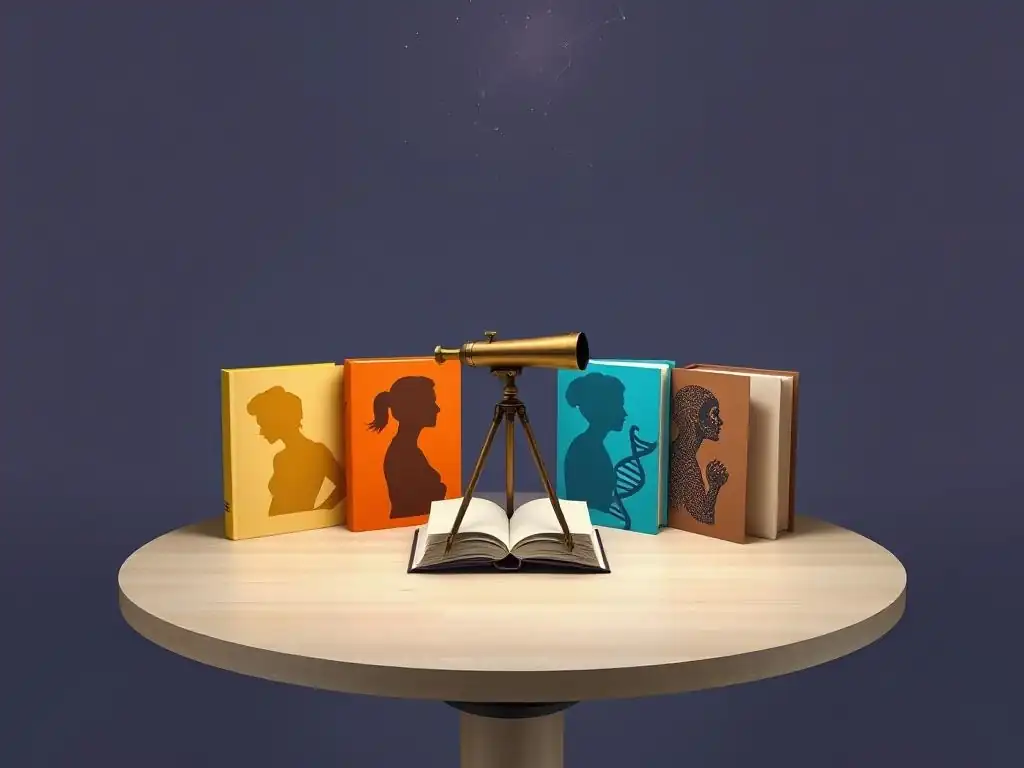
Biographies of Women Scientists on the National Women's History Museum Website
Beyond the pages of women scientists children's books, the National Women's History Museum website offers an invaluable repository of detailed biographies and educational resources about women's contributions across various scientific fields. This online platform provides a deeper dive into the lives and work of countless female scientists, offering historical context, photographs, and sometimes even primary source materials. It serves as an excellent complementary resource for older children, students, and adults who wish to explore the rich tapestry of women's scientific achievements beyond the scope of a single picture book.
Exploring these comprehensive online biographies can extend learning by connecting individual stories to broader historical movements and scientific advancements. For instance, after reading about a specific scientist, a child might research other women in her field, discovering connections between different disciplines like astronomy, botany, or physics. This encourages a holistic understanding of the history of science and reinforces the idea that women have always been, and continue to be, integral to scientific progress.
STEM Building Sets Inspired by Engineering Principles
Hands-on learning is a powerful complement to reading, and STEM building sets offer an engaging way to bring scientific principles to life. These kits, which often involve constructing models, robots, or simple machines, help children develop crucial skills such as problem-solving, spatial reasoning, and an intuitive understanding of engineering and physics. Many sets are designed around real-world scientific challenges or inventions, allowing children to experiment with concepts introduced in children's books about women in science. For example, a child inspired by Mae C. Jemison's journey might engage with a rocket building kit, directly applying principles of thrust and aerodynamics.
These physical activities reinforce the theoretical knowledge gained from books, transforming abstract concepts into tangible experiences. By building and experimenting, children learn through trial and error, fostering resilience and a deeper appreciation for the iterative nature of scientific discovery. Such sets provide a practical outlet for budding innovators, allowing them to engage directly with the engineering principles that underpin many of the scientific achievements highlighted in kids' books on female scientists.
Online Coding Classes for Kids Inspired by Grace Hopper
In an increasingly digital world, coding literacy is becoming as fundamental as traditional literacy. Online coding classes for kids provide an accessible and engaging pathway into the world of computer science, directly echoing Grace Hopper's legacy of making programming more user-friendly. These classes, often utilizing visual block-based coding environments or introductory text-based languages, teach children logical thinking, computational problem-solving, and creative design within a digital framework. They empower young learners to become creators of technology, rather than just consumers.
These classes can transform abstract concepts from kids' books on female scientists like Grace Hopper's story into tangible skills. For instance, understanding how Hopper developed the compiler can motivate a child to learn how their own code translates into actions, providing a foundational understanding of programming logic. This practical application can ignite a lifelong passion for technology and empower the next generation of innovators to contribute to the ever-evolving field of computer science, building on the groundwork laid by pioneers like Hopper.
Conclusion: Nurturing a Lifelong Love of Science Through Inspiring Stories
Investing in STEM Education: Empowering the Next Generation of Innovators
Investing in STEM education from an early age, particularly through compelling women scientists children's books, is not merely about producing future scientists or engineers; it's about cultivating critical thinking, fostering innate curiosity, and developing robust problem-solving skills vital for any career path. These foundational capacities are essential for navigating an increasingly complex world, regardless of a child's chosen profession. By exposing children to the diverse and impactful contributions of women in science, we empower them to see themselves as capable innovators and active participants in shaping the future.
This early exposure has significant long-term benefits, contributing to a more scientifically literate populace that can engage with and contribute to solutions for global challenges, from climate change to medical advancements. The collective effort of parents, educators, and publishers in making these inspiring narratives widely available ensures that a strong foundation in STEM is accessible to all children, fostering a generation equipped to drive progress and innovation.
Continuing the Journey: Encouraging Exploration of Women's Contributions to STEM Fields
The journey of discovery doesn't end with the last page of a book. Encouraging children to continue exploring the vast and inspiring contributions of women to STEM fields is crucial for nurturing a lifelong love of science. This can involve visiting science museums that highlight female pioneers, watching documentaries about groundbreaking research, or delving into more advanced biographies as children mature. The history of women in science is rich and continuously unfolding, offering endless opportunities for further learning and inspiration.
By consistently celebrating these "hidden figures" and their monumental achievements, we not only honor the past but actively shape a more inclusive and scientifically advanced future. The profound impact of women scientists children’s books resonates far beyond the pages, instilling confidence, challenging stereotypes, and inspiring countless young minds to pursue their own illuminating discoveries, ensuring that the legacy of women in science continues to thrive and inspire generations to come.
Frequently Asked Questions
What is the main focus of Illuminating Discoveries: Kids' Books on Women Unlocking Secrets of the Universe?
This resource highlights children's books that tell the stories of female scientists and their contributions to various scientific fields, aiming to inspire young readers.
Why is it important to have children's books about women scientists?
These books help to combat stereotypes and demonstrate that science is for everyone, inspiring girls and all children to pursue STEM fields.
What kind of information can I find in these children's books about women in science?
They typically feature biographies of pioneering women, their groundbreaking discoveries, and the obstacles they overcame in their careers.
Where can I find more information about the women scientists featured in these children's books?
WomenInScienceHistory.com offers detailed biographies and discussions of the work of many female scientists throughout history.
How can these books inspire future generations of scientists?
By showcasing role models and making scientific achievements accessible to young readers, these books encourage curiosity and a passion for science.
Final Reflection: Inspiring Future Explorers
The journey through the pages of children's books featuring women scientists reveals more than just scientific concepts; it illuminates the untapped potential within every child, regardless of gender. These stories are not merely educational tools; they are powerful catalysts for change, fostering a generation that sees no limits to what they can achieve.
The impact of these narratives extends far beyond the classroom, shaping perceptions and challenging ingrained biases. Witnessing young girls, and boys, embrace the idea of women as brilliant scientists is a testament to the transformative power of representation. You can't be what you can't see,
as Marian Wright Edelman so eloquently stated. These books provide that vital visibility, inspiring children to dream bigger and pursue their passions fearlessly.
Now, consider the universe of possibilities that opens when we actively share these stories. Let us commit to nurturing curiosity and encouraging exploration in all children. By placing these books in their hands, we empower them to unlock their own secrets of the universe and become the innovators and leaders of tomorrow.
Unveil the Universe with Inspiring Women!
Thank you for exploring the remarkable contributions of women in science through children's literature. We hope you've discovered new role models and sparked a love for science in young minds. Now, let's turn that inspiration into action!
- Introduce a child to the wonders of science by gifting them one of the featured books. This is the perfect way to ignite their curiosity and show them the amazing possibilities within STEM fields.
- Share this article with fellow parents, educators, or anyone passionate about promoting diversity and inclusion in science. Let's amplify these incredible stories!
- Consider organizing a book club focused on women in science for children in your community.
Which woman in science, featured in children's literature or otherwise, inspires you the most, and what lasting impact do you hope her story will have?