
Pioneering Pathways: Inspiring Journeys of Women in Modern Medical Research

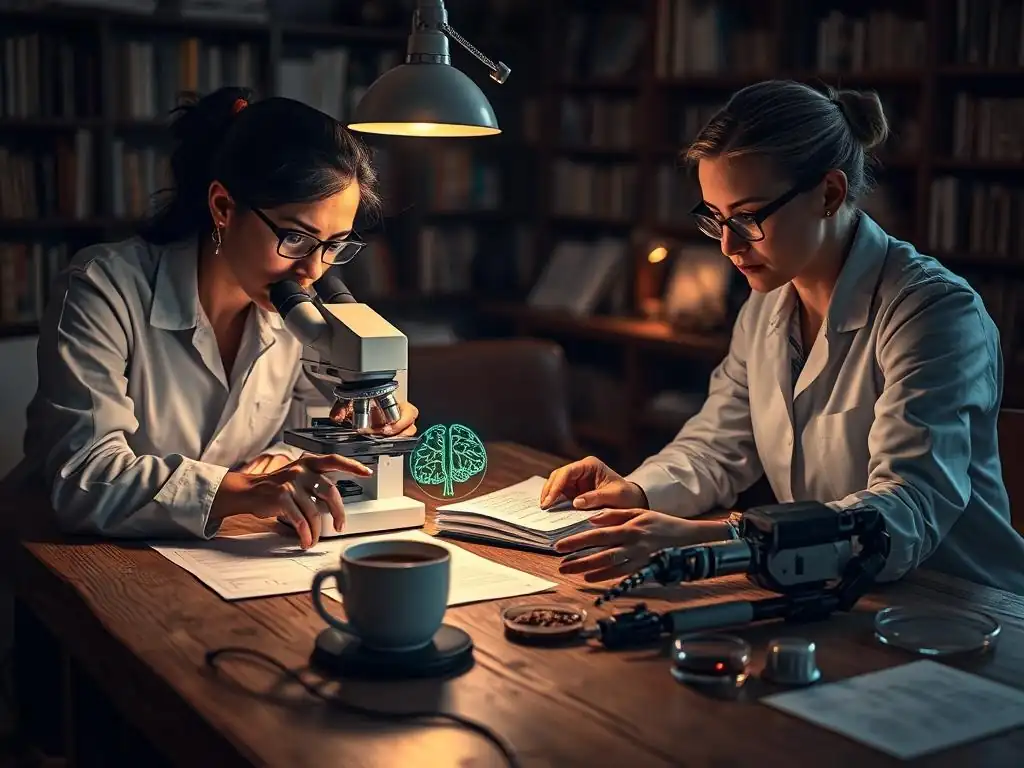
Welcome to WomenInScienceHistory.com!
Dive into the extraordinary world of women in science and uncover the stories of brilliance, perseverance, and groundbreaking discoveries that have shaped our understanding of the world. Are you ready to explore the pioneering pathways forged by remarkable women in modern medical research? Their journeys are inspiring STEM career guides, and we invite you to discover how they overcame adversity and left an indelible mark on medicine. Explore their legacies and ignite your own passion for scientific exploration!
- Celebrating Women in Medical Research: Inspiring Stories
-
Top 5 Women Leaders Shaping the Future of Medicine
- 1. Dr. Jennifer Doudna: Revolutionizing Gene Editing with CRISPR Technology
- 2. Dr. Katalin Karikó: Pioneering mRNA Technology for Vaccines
- 3. Dr. Frances Arnold: Advancing Enzyme Engineering for Sustainable Solutions
- 4. Dr. Tu Youyou: Discovering Artemisinin for Malaria Treatment
- 5. Dr. Emmanuelle Charpentier: Co-Developing CRISPR-Cas9 Gene Editing
- Overcoming Challenges: The Realities for Women in Medical Research
- Resources for Aspiring Women in Medical Careers
- Conclusion: Inspiring the Next Generation of Female Medical Researchers
-
Frequently Asked Questions
- What is the main goal of WomenInScienceHistory.com?
- Why is it important to focus on women in medical research specifically?
- What kind of information can I find about women in medical research on the website?
- What challenges did women typically face in the field of medical research?
- How can learning about these women inspire future generations?
- Final Reflection: Illuminating the Future of Medical Discovery
- Ignite Your Impact: Championing Women in Science!
Celebrating Women in Medical Research: Inspiring Stories
The landscape of modern medical research has been profoundly shaped by the ingenuity, perseverance, and groundbreaking discoveries of countless women. For centuries, the contributions of female scientists were often overlooked or attributed to their male counterparts, yet their unwavering dedication continued to push the boundaries of knowledge.
Today, their stories are increasingly celebrated, revealing a rich tapestry of innovation that has led to life-saving treatments, diagnostic breakthroughs, and a deeper understanding of human biology and disease. These pioneering women in medical research have not only advanced science but have also paved the way for future generations, demonstrating that brilliance knows no gender.
Their journeys, often fraught with systemic challenges and personal sacrifices, underscore a profound commitment to improving human health. From developing revolutionary therapies to unraveling complex genetic codes, these female leaders in medical research embody the spirit of scientific inquiry. Their work has directly impacted millions of lives globally, highlighting the critical role that diverse perspectives play in fostering scientific progress. By spotlighting these remarkable achievements, we aim to inspire aspiring young scientists and ensure that the narratives of women in medical research receive the recognition they rightfully deserve.
Top 5 Women Leaders Shaping the Future of Medicine
1. Dr. Jennifer Doudna: Revolutionizing Gene Editing with CRISPR Technology
Dr. Jennifer Doudna stands as a monumental figure in modern biology, recognized for her co-discovery of CRISPR-Cas9 gene editing technology. Her foundational work, conducted alongside Dr. Emmanuelle Charpentier, unveiled a revolutionary tool that allows scientists to precisely edit DNA, holding immense promise for treating genetic diseases. This breakthrough, published in 2012, rapidly transformed the field of molecular biology, offering unprecedented control over the genetic code. Her research at the University of California, Berkeley, has since focused on refining CRISPR applications, exploring its potential to correct mutations responsible for conditions like sickle cell anemia, cystic fibrosis, and Huntington's disease.
The impact of CRISPR technology on medical research is profound, enabling rapid advancements in gene therapy and disease modeling. For instance, clinical trials are now underway utilizing CRISPR to treat blood disorders, demonstrating early successes in patients with severe sickle cell disease. Beyond therapeutic applications, Doudna's work has also opened new avenues for understanding fundamental biological processes, accelerating drug discovery, and developing novel diagnostic tools. Her relentless pursuit of scientific understanding has cemented her legacy as a leading voice in ethical considerations surrounding gene editing, ensuring that this powerful technology is wielded responsibly for the benefit of humanity.
2. Dr. Katalin Karikó: Pioneering mRNA Technology for Vaccines
Dr. Katalin Karikó is a true visionary whose unwavering dedication to messenger RNA (mRNA) research laid the groundwork for the rapid development of highly effective COVID-19 vaccines. For decades, her work on mRNA technology was met with skepticism and funding challenges, yet she persisted in her belief that mRNA could be harnessed to deliver therapeutic instructions to cells.
Her pivotal discovery, made with Dr. Drew Weissman in 2005, involved modifying nucleosides in mRNA to reduce the inflammatory response, thus making it a viable therapeutic agent. This breakthrough transformed mRNA from a fragile, immune-activating molecule into a stable, potent platform for drug delivery.
Her tireless efforts, often in obscurity, finally gained global recognition during the COVID-19 pandemic when pharmaceutical giants like BioNTech and Moderna successfully deployed mRNA-based vaccines. These vaccines, built upon Karikó's foundational research, demonstrated unprecedented efficacy rates, playing a critical role in curbing the global health crisis and saving millions of lives.
Her journey exemplifies the perseverance required in fundamental scientific research, proving that sustained, long-term commitment to a scientific idea can yield world-changing results. Her contributions underscore the immense value of basic science and the critical role of women in medical research in pushing the boundaries of what is possible in vaccinology and beyond.
3. Dr. Frances Arnold: Advancing Enzyme Engineering for Sustainable Solutions
Dr. Frances Arnold is a trailblazer in the field of directed evolution, a revolutionary method for engineering enzymes and proteins with new and improved properties. Her pioneering work, for which she received the Nobel Prize in Chemistry in 2018, involves mimicking natural evolution in the laboratory to create enzymes that can catalyze reactions more efficiently or perform entirely new functions.
This innovative approach has had a significant impact on sustainable chemistry, leading to the development of greener industrial processes and new pharmaceutical manufacturing methods. By evolving enzymes, Arnold has enabled the creation of more environmentally friendly routes to synthesize complex molecules, reducing waste and energy consumption.
In the realm of medical research, Arnold's directed evolution techniques have opened doors for the development of novel therapeutic proteins and improved drug synthesis. For example, her methods have been used to engineer enzymes that can produce chiral molecules, which are essential components of many pharmaceuticals, with high precision and purity.
This has accelerated the development of new drugs and made existing drug production more sustainable and cost-effective. Her contributions highlight how fundamental advances in bioengineering can have far-reaching implications for human health, demonstrating the vital role of women in medical research in the intersection of chemistry, biology, and medicine.
4. Dr. Tu Youyou: Discovering Artemisinin for Malaria Treatment
Dr. Tu Youyou is a remarkable pharmaceutical chemist whose discovery of artemisinin, a powerful antimalarial drug, has saved millions of lives globally. Her groundbreaking work, conducted during the Cultural Revolution in China under a secret military project known as Project 523, involved meticulously sifting through ancient Chinese medical texts for potential remedies. In 1971, she successfully isolated artemisinin from the Artemisia annua plant, also known as sweet wormwood, a herb traditionally used to treat fevers. Her innovative approach involved low-temperature extraction to preserve the active compound, a critical step based on historical knowledge.
Artemisinin and its derivatives have since become the cornerstone of artemisinin-based combination therapies (ACTs), which are now the standard treatment for malaria worldwide, especially for drug-resistant strains. The World Health Organization estimates that ACTs have contributed to a significant reduction in malaria mortality rates, particularly in Africa, saving an estimated 7 million lives between 2000 and 2015. Dr. Tu's perseverance, often working in challenging conditions, exemplifies the profound impact that dedicated women in medical research can have on global health, bridging traditional knowledge with modern scientific validation to combat devastating diseases.
5. Dr. Emmanuelle Charpentier: Co-Developing CRISPR-Cas9 Gene Editing
Dr. Emmanuelle Charpentier is a distinguished microbiologist and geneticist, best known for her pivotal role in the co-development of the revolutionary CRISPR-Cas9 gene-editing technology alongside Dr. Jennifer Doudna. Her research journey led her to investigate how bacteria defend themselves against viral infections, specifically focusing on the CRISPR system as a bacterial immune mechanism. In 2011, while studying Streptococcus pyogenes, she uncovered a crucial component of the CRISPR system, the tracrRNA, which proved essential for the precise cutting of DNA. This discovery was a vital puzzle piece that unlocked the potential of CRISPR as a programmable gene-editing tool.
The collaborative publication in 2012 detailing the re-engineering of the bacterial CRISPR-Cas9 system into a versatile genetic tool sent ripples across the scientific community. It demonstrated that this system could be simplified and reprogrammed to edit any DNA sequence with high precision.
This breakthrough has fundamentally transformed genetic research, accelerating the understanding of disease mechanisms and offering new avenues for therapeutic interventions for a myriad of genetic disorders and cancers. Dr. Charpentier's meticulous basic science research underscores how deep dives into microbial biology can yield technologies with profound implications for human health, reinforcing the indispensable contributions of women in medical research.
Overcoming Challenges: The Realities for Women in Medical Research

Despite their extraordinary contributions, women in medical research have historically faced, and continue to navigate, significant systemic challenges. These obstacles range from implicit biases and gender stereotypes to a lack of mentorship and equitable opportunities for funding and career advancement. For decades, female scientists were often relegated to supportive roles, their intellectual independence questioned, and their achievements underrecognized. This historical context created a pipeline problem, where fewer women pursued advanced degrees or leadership positions in scientific fields, leading to a noticeable disparity in representation at senior levels within academic and industry research institutions.
Moreover, balancing demanding research careers with family responsibilities presents an ongoing challenge for many women. The intense pressure to publish, secure grants, and maintain a competitive edge in a fast-paced environment can be particularly taxing without adequate institutional support for childcare or flexible work arrangements.
Studies have shown that women, particularly mothers, are more likely to experience career interruptions or slow progression compared to their male counterparts. Addressing these multifaceted challenges requires a concerted effort from institutions, funding bodies, and the scientific community to foster inclusive environments, promote equitable practices, and actively champion the careers of women in medical research.
Resources for Aspiring Women in Medical Careers
For young women aspiring to enter the dynamic field of medical research, a wealth of resources and support networks are available to guide and empower their journeys. Organizations such as the American Medical Women's Association (AMWA) and the Association for Women in Science (AWIS) provide valuable mentorship programs, networking opportunities, and advocacy for women in STEM fields.
These groups often host conferences, workshops, and online forums where aspiring female medical researchers can connect with established leaders, gain insights into career paths, and find supportive communities. Many universities also offer specialized programs and scholarships aimed at encouraging women to pursue research careers, including dedicated STEM initiatives and research fellowships.
Beyond formal organizations, numerous online platforms and publications highlight the work of prominent women in medical research, offering inspiration and practical advice. Websites like "Women in Science History" serve as invaluable archives of trailblazing female scientists, showcasing their biographies and discoveries.
Additionally, engaging with research labs through internships, shadowing opportunities, and undergraduate research programs can provide critical hands-on experience and expose students to the realities of scientific inquiry. Actively seeking out mentors—both male and female—who can provide guidance, open doors, and advocate for their proteges is also a crucial step in building a successful career for women in medical research.
Conclusion: Inspiring the Next Generation of Female Medical Researchers
The inspiring journeys of women in modern medical research underscore a compelling narrative of resilience, brilliance, and profound impact. From unraveling the mysteries of the human genome with CRISPR technology to developing life-saving vaccines and discovering ancient remedies, these female pioneers have not only advanced scientific understanding but have also directly improved the quality of life for millions across the globe.
Their stories serve as powerful testaments to the fact that scientific innovation thrives on diverse perspectives and unwavering dedication, regardless of gender. The contributions of women in medical research are not just footnotes in history; they are foundational pillars upon which the future of medicine is being built.
As we look ahead, it is imperative to continue celebrating these achievements and actively working to dismantle the barriers that still exist for women in STEM. By fostering inclusive environments, providing equitable opportunities, and promoting strong mentorship, we can ensure that the next generation of female medical researchers is fully empowered to pursue their passions and make their own indelible marks on the world. The ongoing progress in medical science relies heavily on attracting and retaining the brightest minds, and by championing women in medical research, we guarantee a more innovative, equitable, and ultimately healthier future for all.
Frequently Asked Questions
What is the main goal of WomenInScienceHistory.com?
The site aims to celebrate and highlight the contributions of women in science throughout history. It seeks to inspire future generations by sharing the stories of pioneering female scientists and the challenges they overcame.
Why is it important to focus on women in medical research specifically?
Historically, women's contributions to medical research have been often overlooked or minimized. Highlighting their achievements helps create a more accurate and inclusive understanding of scientific progress.
What kind of information can I find about women in medical research on the website?
You can find biographies of pioneering female scientists who made significant contributions to medical research. The site also features discussions on their groundbreaking work and the obstacles they faced.
What challenges did women typically face in the field of medical research?
Women in medical research often faced gender bias and discrimination. They encountered difficulties in accessing education, funding, and recognition for their scientific accomplishments.
How can learning about these women inspire future generations?
By learning about the resilience and achievements of women in medical research, future generations can be inspired to pursue careers in science. These stories demonstrate that barriers can be overcome with perseverance and dedication.
Final Reflection: Illuminating the Future of Medical Discovery
The narratives shared in "Pioneering Pathways" underscore a powerful truth: the future of medical research hinges on the full and equitable participation of women. The groundbreaking work of the women highlighted in this article isn't just historical record; it's a vital blueprint for fostering innovation and addressing critical health challenges facing our world today. Their resilience, ingenuity, and unwavering commitment to scientific advancement serve as a beacon, guiding us towards a more inclusive and impactful future in medicine.
The impact of these women extends far beyond the laboratory. Their stories resonate deeply, challenging ingrained biases and inspiring a new generation to pursue careers in STEM fields. They demonstrate that diverse perspectives are not just beneficial, but essential for driving progress and ensuring that medical advancements serve the needs of all populations. You can't be what you can't see.
This quote, often attributed to Marian Wright Edelman, perfectly encapsulates the importance of representation and the profound influence these pioneering women have on shaping the aspirations of future generations.
As you reflect on the journeys of these remarkable women, consider the role you can play in fostering a more equitable and inclusive environment within your own sphere of influence. Whether you're a student, a researcher, a mentor, or simply an advocate for equality, your actions matter. Let their stories inspire you to champion diversity, challenge the status quo, and pave the way for future generations of women to thrive in medical research and beyond. The future of medicine depends on it.
Ignite Your Impact: Championing Women in Science!
Thank you for diving into the inspiring stories of women reshaping medical research. You've uncovered their dedication and groundbreaking contributions. Now, let’s amplify their legacy and empower the next generation.
Here are a few ways you can make a difference:
- Become a champion for change: Nominate a deserving woman in medical research for an award or recognition.
- Share this article: Use the hashtag #WomenInScienceHistory on social media to celebrate these pioneers and inspire others.
- Explore Further: Delve deeper into the lives and work of other female scientists featured on WomenInScienceHistory.com.
What small step will you take today to contribute to a more equitable and inspiring scientific landscape?