
From Telescopes to Rockets: Children's Guides to Women's Space Innovations

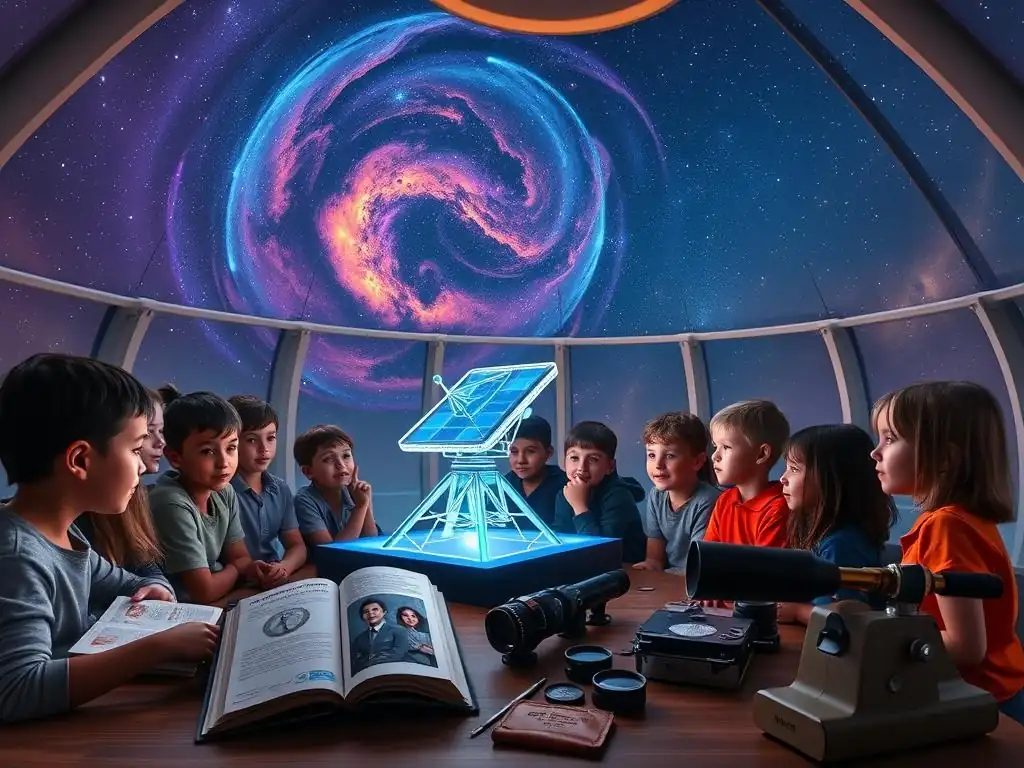
Welcome to WomenInScienceHistory.com, where we unearth the remarkable stories of women who shaped the scientific landscape. Ever wondered how to introduce the next generation to the incredible achievements of female pioneers in space exploration? Dive into our latest piece, "From Telescopes to Rockets: Children's Guides to Women's Space Innovations", and discover engaging books that illuminate the groundbreaking contributions of women to space innovation. Prepare to be inspired and learn how these narratives can ignite a passion for science in young minds – what secrets do these stories hold?
- Trailblazers of the Cosmos: Children's Guides to Women's Space Achievements
- Celebrating Women's Space Achievements Through Children's Literature
- Why Educate Children About Women in Space Science?
- Recommended Children's Books Highlighting Women's Space Achievements
- Expanding Children's Knowledge of Women in Space Beyond Books
- Selecting Appropriate Resources
- Conclusion: Inspiring the Future of Space Exploration
-
Frequently Asked Questions
- What is the primary goal of a children's guide focused on women's space innovations?
- Why is it important to create children's guides specifically highlighting women's contributions to space innovation?
- What types of information would typically be included in a "Women's Space Innovation Children's Guide"?
- What are some of the challenges faced by women in space innovation that might be discussed (age-appropriately) in a children's guide?
- How can a children's guide on women's space innovation inspire future generations of scientists and engineers?
- Final Reflection: Inspiring Future Explorers
- Ignite Curiosity: Launch Your Own Space Exploration!
Trailblazers of the Cosmos: Children's Guides to Women's Space Achievements
Celebrating Women's Space Achievements Through Children's Literature
This guide explores captivating children's books that highlight the groundbreaking contributions of women in space exploration. We'll explore biographies and stories that ignite young imaginations and spotlight the often-underappreciated achievements of female scientists, engineers, and astronauts. Discover the best children's resources for learning about women's space achievements.
Why Educate Children About Women in Space Science?
Inspiring Future STEM Professionals
Highlighting the achievements of women in space science through a dedicated "women's space innovation children's guide" encourages young children to pursue careers in STEM fields. Seeing relatable role models can spark a lifelong passion for science and engineering, combating the trend where interest in STEM often wanes for girls as they advance through education. According to a 2020 report by the National Science Board, women comprise approximately 34% of the STEM workforce, indicating a significant participation gap that early exposure to inspiring figures can help close.
This exposure can be particularly impactful in shaping career aspirations, with studies suggesting that early introduction to role models significantly influences a child's perception of what is possible. For instance, a child learning about Dr. Ellen Ochoa, the first Hispanic woman in space, might envision herself as an engineer or astronaut, seeing a direct path to a similar career. Such a children's guide to women's space innovations serves as a powerful tool to make STEM careers feel more attainable and exciting for all young learners.
Addressing Historical Imbalances in Space Exploration
Traditional narratives of space exploration often emphasize male figures like Neil Armstrong or John Glenn, frequently overlooking the critical contributions of women. This historical imbalance means that a significant portion of the true story of space achievements remains untold to younger audiences. A comprehensive "women's space innovation children's guide" helps correct this by bringing forward the stories of women who were integral to monumental successes, such as the thousands of women who worked as "human computers" at NASA's Langley Research Center in the 1950s and 60s, performing calculations essential for early spaceflight.
By specifically highlighting women, these educational resources provide a more complete and accurate historical perspective. For example, while many are familiar with the Apollo missions, fewer are aware of the pivotal role of Margaret Hamilton, who led the team that developed the on-board flight software for the Apollo guidance computer. Her critical innovation prevented a mission abort during the Apollo 11 landing. This type of nuanced historical presentation is vital for a truly educational children's guide to women's space innovations, ensuring a full understanding of space history.
Fostering Gender Equity in STEM
Introducing children to the stories of women who broke barriers in STEM fields, particularly in space science, is crucial for fostering gender equity from a young age. Children learn that intelligence and capability are not tied to gender, challenging ingrained stereotypes that might suggest certain fields are "for boys" or "for girls." For instance, learning about Dr. Mae Jemison, who defied expectations to become the first African American woman in space in 1992, powerfully illustrates perseverance and the breaking of societal norms.
These narratives demonstrate the importance of diversity and inclusion, showing how different perspectives and talents contribute to groundbreaking achievements. When children see female scientists overcoming obstacles and making significant discoveries, it reinforces the message that anyone, regardless of gender, can pursue their scientific dreams and make a profound impact. This educational approach, often found in a well-crafted "women's space innovation children's guide," is fundamental for building a more equitable future in STEM.
Recommended Children's Books Highlighting Women's Space Achievements
This acclaimed book, adapted from the adult bestseller, vividly portrays the indispensable work of Katherine Johnson, Dorothy Vaughan, Mary Jackson, and Christine Darden. These brilliant mathematicians, often referred to as "human computers," performed complex calculations essential for the success of early American spaceflight, including John Glenn's orbital flight in 1962. The book details how their meticulous work, often done with slide rules and pencils, was critical for trajectories, launch windows, and emergency procedures, directly contributing to the United States' leadership in the Space Race.
The narrative goes beyond just their mathematical prowess, illustrating the systemic racial and gender discrimination they faced and how they persevered. It showcases their resilience in the face of segregation, such as Mary Jackson fighting to attend segregated classes to become NASA's first Black female engineer. This children's guide to women's space innovations provides a powerful lesson in both scientific achievement and social justice, making it an essential read for young minds.
Key Features and Appeal to Children
- Simplified language for younger readers.
- Focuses on problem-solving and teamwork.
- Illustrations bring the story to life.
"Mae Among the Stars" by Roda Ahmed
Based on the life of Mae Jemison, the first African American woman to travel to space, this book encourages children to dream big and persevere in the face of adversity.
"Mae Among the Stars" beautifully captures the early life and aspirations of Mae Jemison, who, as a young girl, dreamed of traveling to space despite being told by a teacher that only boys could become astronauts. The book highlights her unwavering determination and passion for science, illustrating how she pursued her dreams through education and hard work, eventually earning a medical degree and later becoming a mission specialist for NASA. Her historic journey aboard the Space Shuttle Endeavour in 1992 made her the first African American woman to orbit the Earth, a monumental achievement that continues to inspire.
This inspiring children's guide to women's space innovations focuses on themes of perseverance, self-belief, and the importance of following one's unique path. It shows children that big dreams are achievable, even when faced with skepticism or societal barriers. The book's narrative emphasizes that Mae Jemison's curiosity and dedication from a young age were foundational to her groundbreaking success, providing a relatable and empowering story for aspiring young scientists.
Key Features and Appeal to Children
- Beautiful illustrations depicting Mae's journey.
- Emphasis on following your passions.
- Teaches the importance of believing in yourself.
"Sally Ride: America's First Woman in Space" by Lynn Sherr
This biography introduces children to Sally Ride, the first American woman in space, and her groundbreaking achievements.
Lynn Sherr's biography of Sally Ride introduces young readers to a true pioneer who broke a significant barrier when she launched into space aboard the Space Shuttle Challenger on June 18, 1983. As the first American woman to achieve this feat, Ride's mission (STS-7) lasted six days, during which she operated the shuttle's robotic arm, deploying and retrieving satellites. This book meticulously details her journey from a talented young athlete and physicist to a groundbreaking astronaut, showcasing her intelligence, calm demeanor, and dedication.
This particular children's guide to women's space innovations not only celebrates Ride's historic flight but also emphasizes her commitment to encouraging young people, especially girls, to pursue STEM fields after her astronaut career. Sally Ride co-founded Sally Ride Science, an organization dedicated to inspiring elementary and middle school students to consider careers in science, technology, engineering, and math. The book effectively conveys her legacy as both an astronaut and an advocate for science education.
Key Features and Appeal to Children
- Engaging storytelling that captures Sally Ride's determination.
- Provides a glimpse into the life of an astronaut.
- Highlights the importance of education and hard work.
"Margaret and the Moon" by Dean Robbins
A story about Margaret Hamilton, a pioneering computer scientist who helped write the code that landed Apollo 11 on the moon. This book illustrates the crucial role of software in space exploration.
"Margaret and the Moon" shines a light on the often-unsung heroine of the Apollo program, Margaret Hamilton, who was instrumental in developing the on-board flight software for the Apollo command and lunar modules. Her innovative code, developed at the MIT Instrumentation Laboratory, was so robust and error-proof that it famously averted an abort during the Apollo 11 moon landing when an overload alarm sounded just minutes before touchdown. Her software prioritized critical tasks, allowing the mission to proceed successfully, showcasing the indispensable role of computer science in space exploration.
This children's guide to women's space innovations simplifies complex concepts like computer programming and software engineering, making them accessible and exciting for young readers. It highlights Hamilton's unconventional approach and her pioneering work in software engineering, a field she essentially helped invent. The book serves as an excellent introduction to the importance of logical thinking and problem-solving in technology, inspiring children to explore the world of coding and its vast applications in areas like space travel.
Key Features and Appeal to Children
- Explains complex concepts in an accessible way.
- Showcases the importance of computer science.
- Inspires children to pursue careers in technology.
Expanding Children's Knowledge of Women in Space Beyond Books
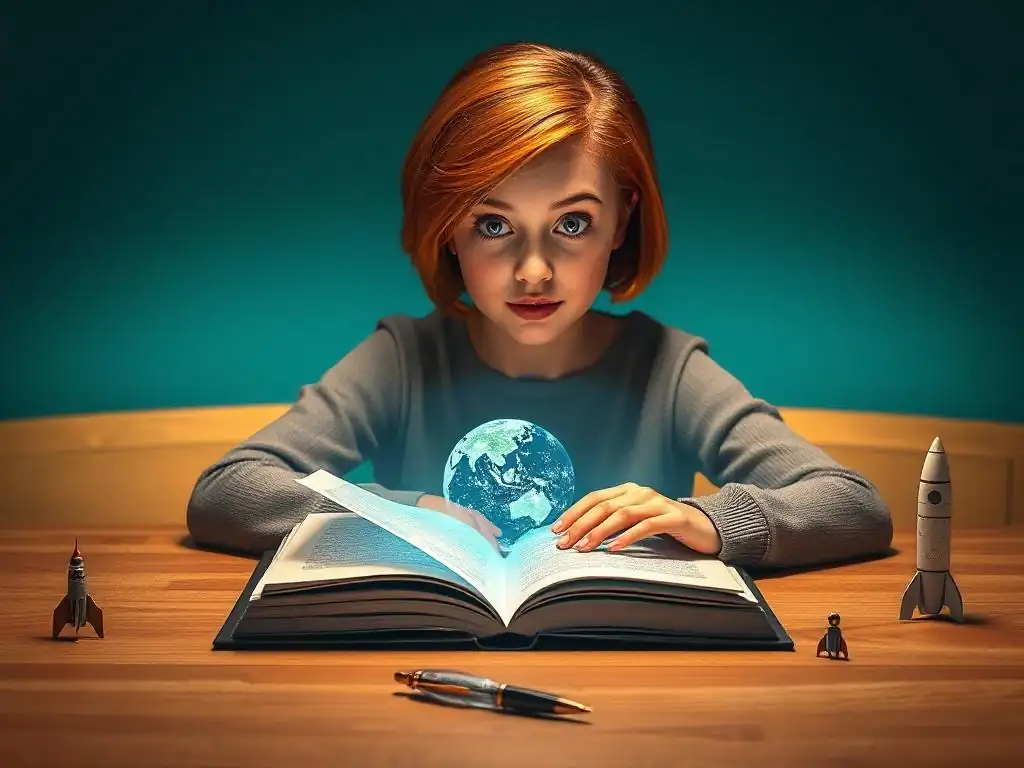
Educational Websites and Resources: NASA Kids' Club
Explore websites and online resources that offer interactive games, videos, and articles about women in space science. Look for sites that provide age-appropriate content and engaging activities. NASA Kids' Club offers a range of space-related activities for kids of all ages.
Beyond traditional books, a wealth of digital resources exists to engage children with the stories of women in space science. Educational websites, such as the NASA Kids' Club, offer interactive experiences that can deepen understanding and spark curiosity. These platforms often feature age-appropriate articles, videos of female astronauts, and games that explain scientific principles related to space travel. For instance, the NASA Kids' Club might have sections dedicated to figures like Sunita Williams, who has spent over 322 days in space across two missions, detailing her life on the International Space Station through engaging visuals and simple explanations.
These online resources serve as dynamic companions to any "women's space innovation children's guide," providing up-to-date information and diverse learning formats. Many also include virtual tours of space centers or interviews with current female scientists and engineers, offering a contemporary perspective on women's ongoing contributions to space exploration. Such digital tools provide an accessible and engaging way for children to explore the vastness of space and the vital roles women play within it.
Space Museums and Exhibits: Smithsonian National Air and Space Museum
Visit space museums and exhibits that feature displays on women in space. These exhibits often showcase artifacts, photographs, and interactive displays that bring the stories of female scientists and astronauts to life. The Smithsonian National Air and Space Museum has exhibits highlighting the contributions of women to aviation and space exploration.
Visiting space museums offers an unparalleled immersive experience for children interested in space exploration and the women who shaped it. Institutions like the Smithsonian National Air and Space Museum in Washington, D.C., house incredible artifacts and exhibits that bring history to life. Children can see actual space suits worn by astronauts like Eileen Collins, the first woman to command a Space Shuttle mission (STS-93 in 1999), or models of spacecraft developed with the help of female engineers. These tangible connections make the stories of women in space more real and impactful.
These museums often feature dedicated sections or temporary exhibits highlighting the contributions of women to aviation and space. For example, an exhibit might showcase the work of Dr. Nancy Grace Roman, often called the "Mother of Hubble," for her pivotal role in planning the Hubble Space Telescope. Experiencing these exhibits firsthand complements a "women's space innovation children's guide" by providing visual and tactile learning opportunities that can solidify a child's understanding and appreciation for these trailblazing women.
Hands-On Activities and Experiments: Building a Model Rocket
Engage children in hands-on activities and experiments that relate to space science. This could include building a model rocket, creating a constellation map, or conducting a simple experiment on gravity.
Engaging children in hands-on activities and experiments is an excellent way to connect abstract scientific concepts to real-world applications, especially when teaching about women in space science. Activities like building a model rocket demonstrate principles of thrust, aerodynamics, and gravity, which were fundamental to the work of female engineers like Yvonne Brill, who invented a propulsion system that kept satellites in orbit. These tactile experiences allow children to actively participate in the learning process, fostering a deeper understanding of the challenges and triumphs of space exploration.
Beyond rocketry, other experiments can reinforce scientific concepts related to space. Creating a constellation projector, designing a lunar lander from household materials, or even a simple experiment on air pressure can ignite curiosity. These activities, when paired with stories from a "women's space innovation children's guide," help children grasp the scientific principles that figures like Kalpana Chawla, the first Indian-American woman in space, mastered. Such practical engagement can be a powerful catalyst for inspiring future innovators.
Selecting Appropriate Resources
Age Appropriateness
Select books and resources that are appropriate for the child's age and reading level.
When selecting resources for a "women's space innovation children's guide," ensuring age appropriateness is paramount. For toddlers and preschoolers (ages 0-5), books should feature simple language, vibrant illustrations, and focus on basic concepts like dreaming big or the joy of discovery, perhaps highlighting a single achievement like Sally Ride's flight in a very simplified manner. For early elementary children (ages 6-8), narratives can introduce more details about specific missions or the challenges faced by women, while still maintaining an engaging and accessible tone.
For older elementary children (ages 9-12), resources can delve deeper into the scientific principles, historical context, and the societal barriers women overcame. For example, a book for this age group might explain Katherine Johnson's calculations for orbital mechanics in a more detailed yet understandable way. Checking the book's suggested reading level and previewing content for complexity and themes ensures that the "women's space innovation children's guide" truly resonates with the child's cognitive development and comprehension abilities.
Interests and Learning Styles
Consider the child's interests and learning styles when choosing books and activities. Some children may prefer biographies, while others may enjoy fictional stories or hands-on experiments.
Children possess diverse interests and learning styles, and tailoring resource selection to these individual preferences can significantly enhance engagement with a "women's space innovation children's guide." Some children are visual learners who benefit from highly illustrated books or interactive digital content, while auditory learners might prefer audiobooks or narrated videos. Kinesthetic learners, on the other hand, will thrive with hands-on activities like building a model of the International Space Station or conducting simple physics experiments related to space travel.
Consider what aspects of space or science already captivate the child. If they love stories of overcoming adversity, biographies of pioneers like Valentina Tereshkova (the first woman in space) might be ideal. If they are fascinated by how things work, a book focusing on the engineering feats of women like Mary Golda Ross, who contributed to early missile and space programs, could be more engaging. A diverse "women's space innovation children's guide" should offer a variety of formats and topics to cater to these unique preferences, ensuring maximum impact.
Accessibility and Cost
Factor in the accessibility and cost of the books and resources. Many libraries offer a wide selection of children's books on women in space science.
When curating a "women's space innovation children's guide," it's important to consider the accessibility and cost of the resources to ensure they are available to a wide audience. Public libraries are invaluable resources, often offering a vast collection of children's books, e-books, and even educational DVDs on women in space science, all at no cost. Many libraries also provide access to online databases or streaming services that feature educational content, making high-quality materials readily available to families.
Beyond libraries, many non-profit organizations and government agencies like NASA offer free downloadable educational materials, lesson plans, and interactive activities on their websites. While purchasing books can be an investment, look for sales, used bookstores, or community book swaps to find affordable options. Prioritizing accessible and cost-effective resources ensures that every child has the opportunity to learn about the incredible "women's space innovation children's guide" narratives, regardless of economic background.
Conclusion: Inspiring the Future of Space Exploration
By introducing children to the stories of women who have made significant contributions to space exploration, we can inspire the next generation of scientists, engineers, and astronauts. These resources provide a valuable guide for parents, educators, and anyone who wants to celebrate the achievements of women in STEM.
Frequently Asked Questions
What is the primary goal of a children's guide focused on women's space innovations?
The primary goal is to introduce children to the remarkable contributions of women in space exploration and technology, fostering interest in STEM fields. It aims to inspire future generations.
Why is it important to create children's guides specifically highlighting women's contributions to space innovation?
It's crucial to address historical biases and promote inclusivity in STEM. These guides help children see diverse role models and understand that science is for everyone.
What types of information would typically be included in a "Women's Space Innovation Children's Guide"?
The guide would feature simplified biographies of female scientists and engineers, explanations of their groundbreaking inventions, and fun facts about space exploration.
What are some of the challenges faced by women in space innovation that might be discussed (age-appropriately) in a children's guide?
The guide could touch upon gender biases, limited opportunities, and the struggle for recognition that many women faced in their scientific careers.
How can a children's guide on women's space innovation inspire future generations of scientists and engineers?
By showcasing inspiring role models, these guides demystify STEM fields and empower children, especially girls, to pursue their passions in science and technology.
Final Reflection: Inspiring Future Explorers
The journey through the lives and achievements of women in space, as chronicled in this guide, underscores the critical need for accessible and inspiring resources for children. Highlighting these often-overlooked contributions is not just about historical accuracy; it's about shaping the aspirations of the next generation and ensuring that young minds, regardless of gender, see themselves reflected in the stars.
This exploration of women's space innovation has profoundly impacted my own perspective, reinforcing the importance of representation in STEM fields. It's a reminder that progress is built on the shoulders of those who dared to challenge the status quo, and that their stories deserve to be told and celebrated. We choose to go to the Moon in this decade and do the other things, not because they are easy, but because they are hard; because that goal will serve to organize and measure the best of our energies and skills, because that challenge is one that we are willing to accept, one we are unwilling to postpone, and one which we intend to win.
- John F. Kennedy. This quote, while not from a woman in space, perfectly encapsulates the spirit of ambition and perseverance that these women embodied, and that we must instill in our children.
As you close this guide, consider the power of these stories. How can you, in your own sphere of influence, champion the achievements of women in STEM? How can you ensure that the children in your life have access to resources that ignite their curiosity and empower them to dream big? Let us all strive to create a world where every child, inspired by the trailblazing women who came before, feels empowered to reach for the stars and contribute to the future of space exploration.
Ignite Curiosity: Launch Your Own Space Exploration!
Thank you for diving into the stories of these inspiring women and their groundbreaking contributions to space exploration! Now, let’s keep that momentum going and fuel the next generation of stargazers.
Here are a few ways you can continue the adventure:
- Choose one woman from this article and dive deeper into her life and work. Write a short biography, create a presentation, or even design a mini-exhibit for your home!
- Start a "Women in Space" book club with friends or family to share these amazing stories and inspire each other.
- Surprise! Design and build a miniature rocket using recycled materials, then explain the science behind it, inspired by the ingenuity of these women.
What discoveries will you help the next generation make?